

 Explore Worlds
 Find Life
 Defend Earth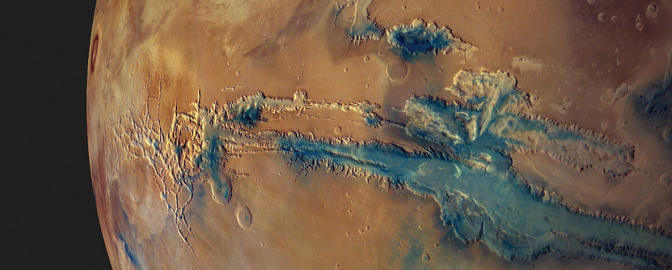


Space Exploration Missions
NASA, the world's space agencies, and other groups explore our solar system and beyond with space missions. Our guides teach you why these missions matter and how to get involved. For weekly space news and tools to advance space science and exploration, sign up for our weekly newsletter The Downlink.
The Sun
World guideIn Progress
- India’s Aditya-L1, launched in September 2023, is the country's first solar mission.
- Launched in 2020, the ESA-led Solar Orbiter mission is imaging the Sun and huge swaths of its corona up close for the first time.
- Launched in 2018, NASA's Parker Solar Probe is studying the Sun’s atmosphere by being in it, the closest any spacecraft has ever ventured.
- Since 2010, NASA’s Solar Dynamics Observatory (SDO) has been comprehensively mapping the Sun’s active regions to understand how solar flares develop and erupt.
- Since 2006, NASA's STEREO-A spacecraft has been providing us insights on solar eruptions.
- The ESA-NASA SOHO spacecraft has been observing the Sun since 1995, particularly using its coronagraph to block sunlight in order to better see the corona and track solar eruptions.
- Launched in 2024, ESA's Proba-3 consists of two spacecraft that will fly in formation to create a coronagraph that will study the inner layers of the Sun's atmosphere.
- NOAA's Space Weather Follow-On-Lagrange 1 (SWFO-L1) launched in 2025 to monitor the Sun and its activity, including solar storms.
Coming Soon
- The Chinese National Space Administration's Solar Polar Orbit Observatory aims to launch in 2029 to image the polar regions of the Sun for the first time in decades.
Mercury
World guide- Europe and Japan's BepiColombo launched in 2018 and enters orbit around Mercury in 2026.

Every mission to Mercury ever
A comprehensive look at all the missions to Mercury, past and present.
Venus
World GuideComing Soon
- India aims to launch a Venus orbiter called Shukrayaan in 2028 equipped with its own and international instruments to map the surface.
- Rocket Lab and MIT plan to launch the Venus Life Finder as soon as 2026 on a mission to scan for organic molecules in Venus' clouds.
- NASA's DAVINCI, launching no earlier than 2030, will descend through Venus' atmosphere and explore its surface geology.
- NASA's VERITAS, launching no earlier than 2031, will map out Venus' topography. The Planetary Society is working to change the launch date to 2029.
- ESA's EnVision will launch no earlier than 2031 to investigate Venus' atmosphere and overall structure.

Every mission to Venus ever
All the past and present missions to Venus, a planet that may have once resembled Earth.
Earth
World GuideIn Progress
- China's Tiangong space station hosts the country's astronauts in low-Earth orbit. Its first module launched in 2021.
- The International Space Station prepares astronauts for deep space missions. Its first module launched in 1998.
- NASA's ACS3 solar sail spacecraft launched into Earth orbit in 2024.
Moon
World GuideIn Progress
- NASA's Artemis II mission launched on April 1, 2026 to send the first astronauts to the Moon in over 50 years.
- China's Chang'e-6 mission launched on May 3, 2024 to return samples from the far side of the Moon. It successfully did so and is now on an extended mission.
- China's Queqiao-2 lunar communications relay satellite launched on March 19, 2024. Also riding to lunar orbit were Tiandu-1 and Tiandu-2, a pair of experimental lunar communications satellites.
- Danuri, also known as the Korean Pathfinder Lunar Orbiter, is South Korea's first Moon mission. It launched in August 2022.
- NASA's CAPSTONE spacecraft launched in July 2022 to explore the fuel-saving lunar orbit that the Gateway space station will use later this decade.
- China's Chang'e-5 returned lunar samples to Earth in 2020, and is on an extended mission testing an advanced lunar orbit.
- India's Chandrayaan-2 orbiter maps the Moon's topography, studies its composition, and scans for water ice.
- China's Chang'e-4 performed the first landing on the Moon's far side in 2018, where it's still studying an ancient region.
- NASA's Lunar Reconnaissance Orbiter has been studying the Moon since 2009 with its comprehensive suite of mapping instruments.
- NASA's Commercial Lunar Payload Services missions are collaborating with private companies in attempts to land several different spacecraft on the Moon, building up the agency's infrastructure there over time.
Coming Soon
- NASA's Artemis program will return humans to the Moon, with a landing mission planned for 2028.

Every Mission to the Moon, Ever
It only takes a couple days to send most spacecraft to the Moon, so it's not surprising that humans have sent more missions there than anywhere else. The Moon is also the only celestial body besides Earth where humans have visited.
Mars
World GuideIn Progress
- NASA's Perseverance rover landed in February of 2021 and is searching for past life and collecting samples for return to Earth.
- China's Tianwen-1 is an orbiter and rover mission that arrived in February 2021 to study the planet.
- The United Arab Emirates' Hope orbiter arrived in February 2021 and is studying the Martian atmosphere.
- ESA's ExoMars Trace Gas Orbiter searches for atmospheric gases linked to life as we know it.
- NASA's Curiosity rover explores an ancient lake bed that once had conditions that could have supported life.
- NASA's Mars Reconnaissance Orbiter studies the planet with a high-powered camera and relays communications between the surface and Earth.
- ESA's Mars Express surveys the planet and searches for subsurface water.
- NASA's long-lived Odyssey monitors surface changes.
- The NASA-funded ESCAPADE twin orbiters launched in 2025 to explore how the solar wind strips away Mars' atmosphere.
Coming Soon
- Japan's Martian Moons eXploration mission launches in 2026 to collect samples of Phobos for return to Earth.
- ESA's ExoMars rover is expected to launch no earlier than 2028 to search for signs of life on Mars.
- China is planning its own Mars sample return mission to launch in 2030.
- India's Mangalyaan-2 mission aims to launch an orbiter and lander to Mars in 2031.

Every mission to Mars ever
There are several spacecraft operating at the red planet. Here are all the Mars missions, past and present.
Small Worlds
Worlds GuideIn Progress
- NASA's New Horizons, launched in 2006, is exploring a region of the Solar System called the Kuiper Belt.
- Japan's Hayabusa2 returned a sample of asteroid Ryugu to Earth in 2020 and is on a journey to two more asteroids. The mission launched in 2014.
- NASA's OSIRIS-REx, launched in 2016, returned a sample of asteroid Bennu to Earth in September 2023. It is now traveling to asteroid Apophis as part of the OSIRIS-APEX mission.
- NASA's Lucy mission launched in 2021 to explore asteroids that share Jupiter's orbit.
- NASA's Psyche launched in October 2023 to visit a metal asteroid of the same name, which may be the core of an exposed planet.
- ESA's Hera spacecraft launched in 2024 to study the asteroid that NASA's DART mission impacted in 2022.
- China's Tianwen-2 mission launched in 2025 to collect samples from a near-Earth asteroid and return them to Earth.
Coming Soon
- The UAE Space Agency's MBR Explorer aims to launch in 2028 to explore seven asteroids in the Solar System's main belt.
- JAXA's DESTINY+ mission is slated to launch in 2028 to flyby and sample dust from asteroid 3200 Phaethon, the parent body of the Geminids meteor shower.
- NASA's NEO Surveyor is scheduled to launch in 2028 on a mission to find 90% of asteroids large enough to destroy a city.
- ESA's Comet Interceptor mission will launch in 2029 to fly past and study a pristine long-period comet as it approaches the Sun for the very first time.

Every mission to an asteroid, comet, or small world, ever
Studying asteroids, comets, and small worlds helps us learn more about Earth and its origins.
Jupiter
World GuideIn Progress
- NASA's Juno studies the Jupiter to help us understand gas giants, the history of the Solar System, and how planets form.
- ESA's Juice launched in April 2023 on a mission to explore Jupiter and its icy moons Europa, Callisto, and Ganymede.
- NASA's Europa Clipper launched in 2024 with the aim of learning more about whether Jupiter's moon Europa could support life.

Every Jupiter mission ever
Jupiter is not only an interesting scientific destination in its own right — it's also an important waypoint for spacecraft heading further into the solar system.
Saturn
World GuideComing Soon
- NASA's Dragonfly launches in 2028 to explore Saturn's moon Titan.

Every Mission to Saturn, Ever
Only 4 spacecraft have ever made it out to Saturn. Our most comprehensive look at the planet came from NASA and the European Space Agency's Cassini-Huygens mission, which spent 13 years exploring Saturn and its moons.
Uranus
World Guide- NASA's Voyager 2 is the only spacecraft to have visited Uranus. It flew past the planet in 1986, and is now exploring interstellar space.
Neptune
World Guide- NASA's Voyager 2 is the only spacecraft to have visited Neptune. It flew past the planet in 1989, and is now exploring interstellar space.
Solar System and Beyond
Exoplanets GuideIn Progress
- NASA's JWST launched in 2021 to help us understand the Cosmos, study whether other planets could support life, and learn about the early history of galaxies.
- ESA's CHEOPS precisely measures the diameters of known exoplanets.
- NASA's TESS hunts for exoplanets around bright, nearby stars.
- NASA's Hubble Space Telescope is a multipurpose astrophysics and planetary science observatory.
Coming Soon
- NASA's Roman Space Telescope will launch as soon as 2026 and image Earth-sized exoplanets.
- ESA's PLATO mission will search for planets around other stars, especially Earth-like planets that could potentially host liquid water on their surfaces. It is slated to launch in 2026.