

 Explore Worlds
 Find Life
 Defend Earth


Roman Space Telescope, discovering planets and exploring dark energy
Highlights
- The Nancy Grace Roman Space Telescope is NASA’s next flagship orbital observatory.
- The mission will discover thousands of planets beyond the Solar System, search for black holes, and help reveal the nature of dark energy.
- Roman will also take direct images of planets around other stars, something scientists have only done relatively few times so far.
What will the Roman Space Telescope do?
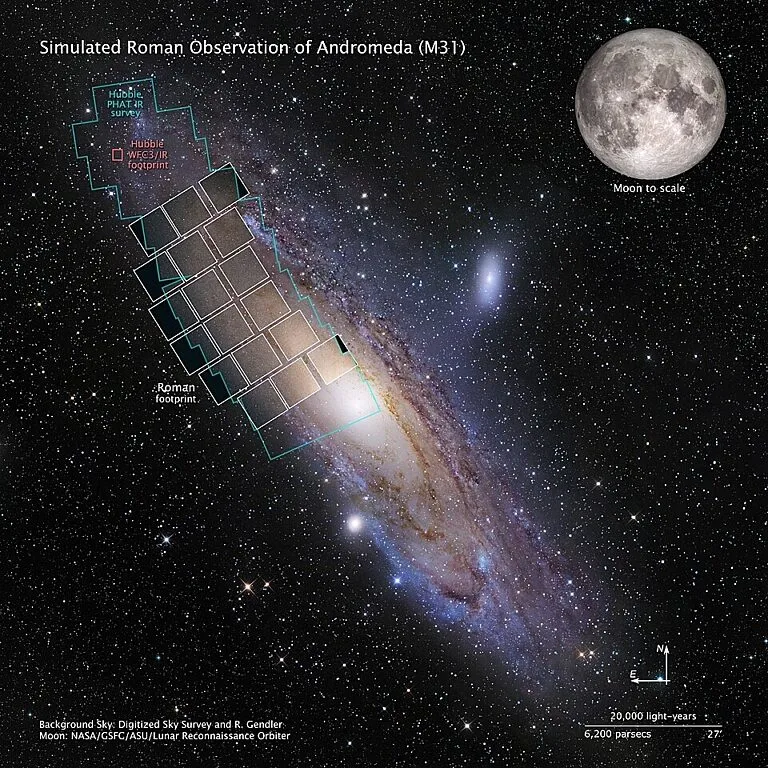
The Nancy Grace Roman Space Telescope is projected to discover as many as 200,000 potential planets beyond the Solar System, survey over 1 billion galaxies, and map the Cosmos to investigate dark energy. It will be able to capture infrared images about as sharp as the Hubble Space Telescope can, while capturing 100 times more of the sky in a single shot.
That wide view will allow Roman to map galaxies as well as spot brief, lucky signals from supernovae and planets around other stars. The supernovae and galaxy measurements will help scientists investigate dark energy and dark matter, mysterious phenomena that shape the Universe on the largest scales.
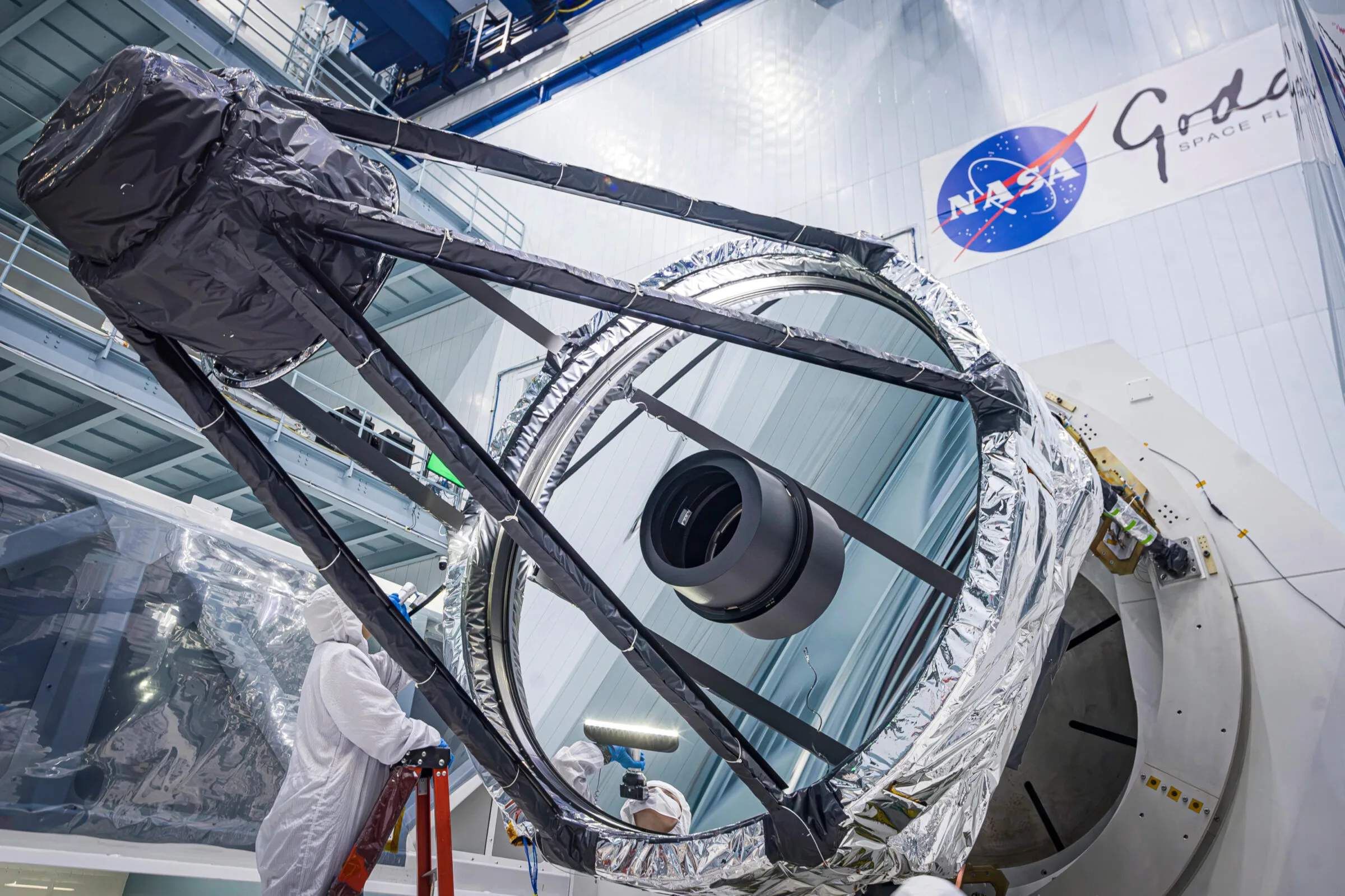
At the same time, Roman will broaden our census of other worlds to include smaller, more Earth-like worlds that pat surveys have been less likely to detect. That will help us learn how typical our own Solar System is and bring us closer to finding an Earth-like planet that could support life as we know it. Roman will also test out a light-blocking instrument called a coronagraph to take direct images of planets around other stars, enabling astronomers to characterize these worlds' atmospheres.
The Nancy Grace Roman Space Telescope launched on Sunday, Aug. 30, 2026, from Launch Complex 39A at NASA's Kennedy Space Center in Florida.
How will Roman explore other worlds?
Roman will search for planets beyond the Solar System, also known as exoplanets, using two main techniques. Most of its discoveries will rely on the transit method, which involves watching stars to see them temporarily dim as orbiting planets pass in front of them and blocks some of their light from reaching Earth.
However, Roman is also expected to discover roughly 1,000 planets through microlensing. This method takes advantage of the fact that the gravity of planets and stars bends the path of light traveling past them. So, when one star crosses in front of another as seen from Earth, the light from the background star is bent and magnified around the foreground star. If that foreground star has planets around it, they will bend and magnify the background starlight further, producing spikes in the amount of light we see from Earth.
Scientists will examine survey images from Roman to look for these microlensing events, allowing them to detect even small, rocky exoplanets. Since microlensing depends on a brief and lucky alignment of multiple stars and Earth, though, once each of these planets are found, they are unlikely to be observed again.
Then there's Roman's coronagraph, which will allow it to take direct images of a handful of worlds. Because planets are typically billions of times dimmer than their host stars, trying to image them directly can be like trying to take a picture of a firefly next to a spotlight — but with a coronagraph, a telescope can block a star's light to see the planets around it. Roman's coronagraph is meant to test out the technology for a future mission, the Habitable Worlds Observatory, which NASA aims to use to look for signs of life from Earth-like planets around other stars.
Who is the Roman Space Telescope named after?
Though originally referred to as the Wide Field Infrared Space Telescope (WFIRST), NASA renamed the mission in 2020 after Nancy Grace Roman, NASA's first chief of astronomy. Roman, who died in 2018, helped develop some of NASA's first space telescopes, including the Hubble Space Telescope.
Editor's note: This page was originally written by Jason Davis. It was revised by Asa Stahl in 2026.

Support missions like the Roman Space Telescope
Whether it's advocating, teaching, inspiring, or learning, you can do something for space, right now. Let's get to work.