

 Explore Worlds
 Find Life
 Defend Earth
Planetary Radio • Dec 24, 2025
Looking back: Space policy and advocacy in 2025
On This Episode

Casey Dreier
Chief of Space Policy for The Planetary Society
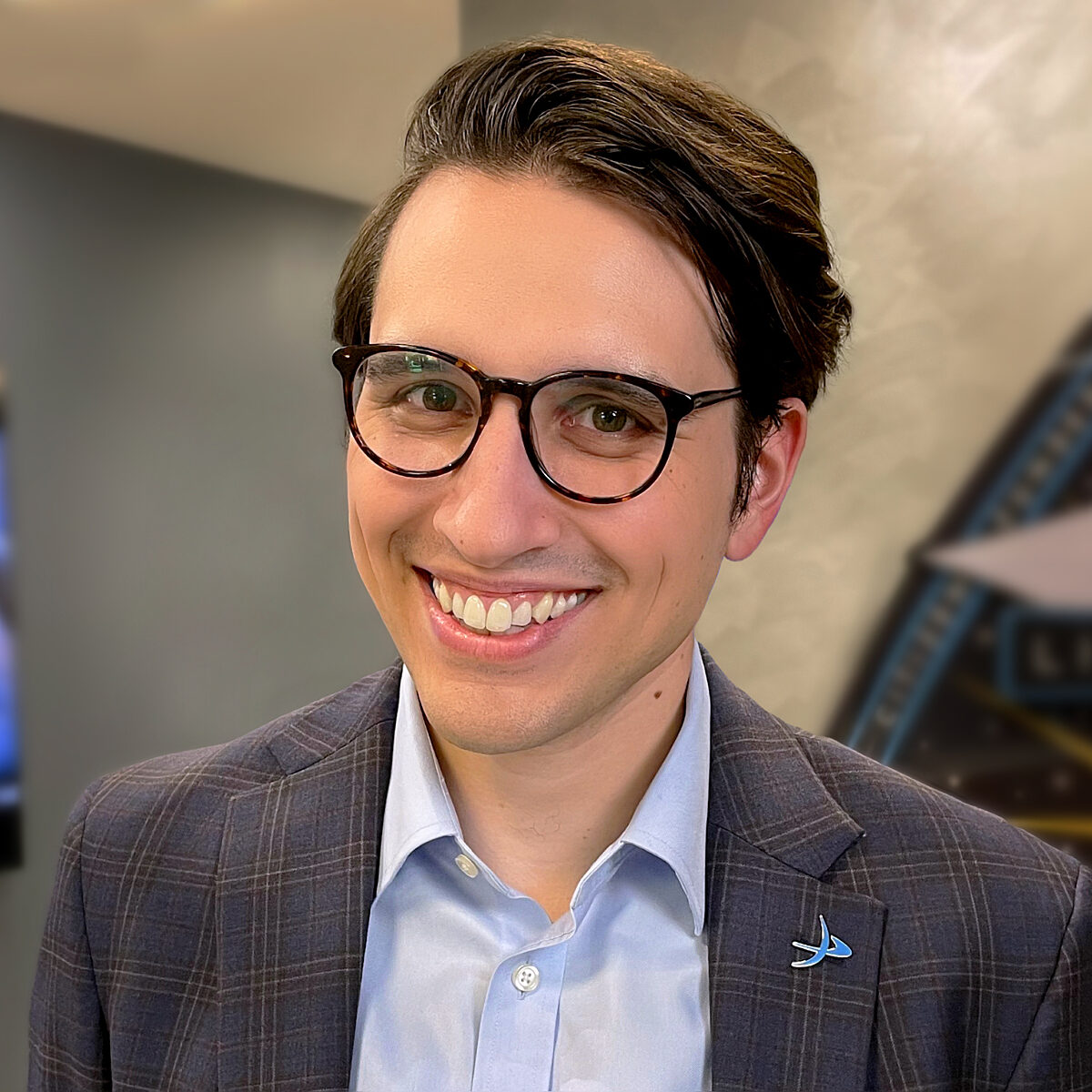
Jack Kiraly
Chief of Advocacy for The Planetary Society

Ari Koeppel
Policy and Advocacy Fellow for The Planetary Society
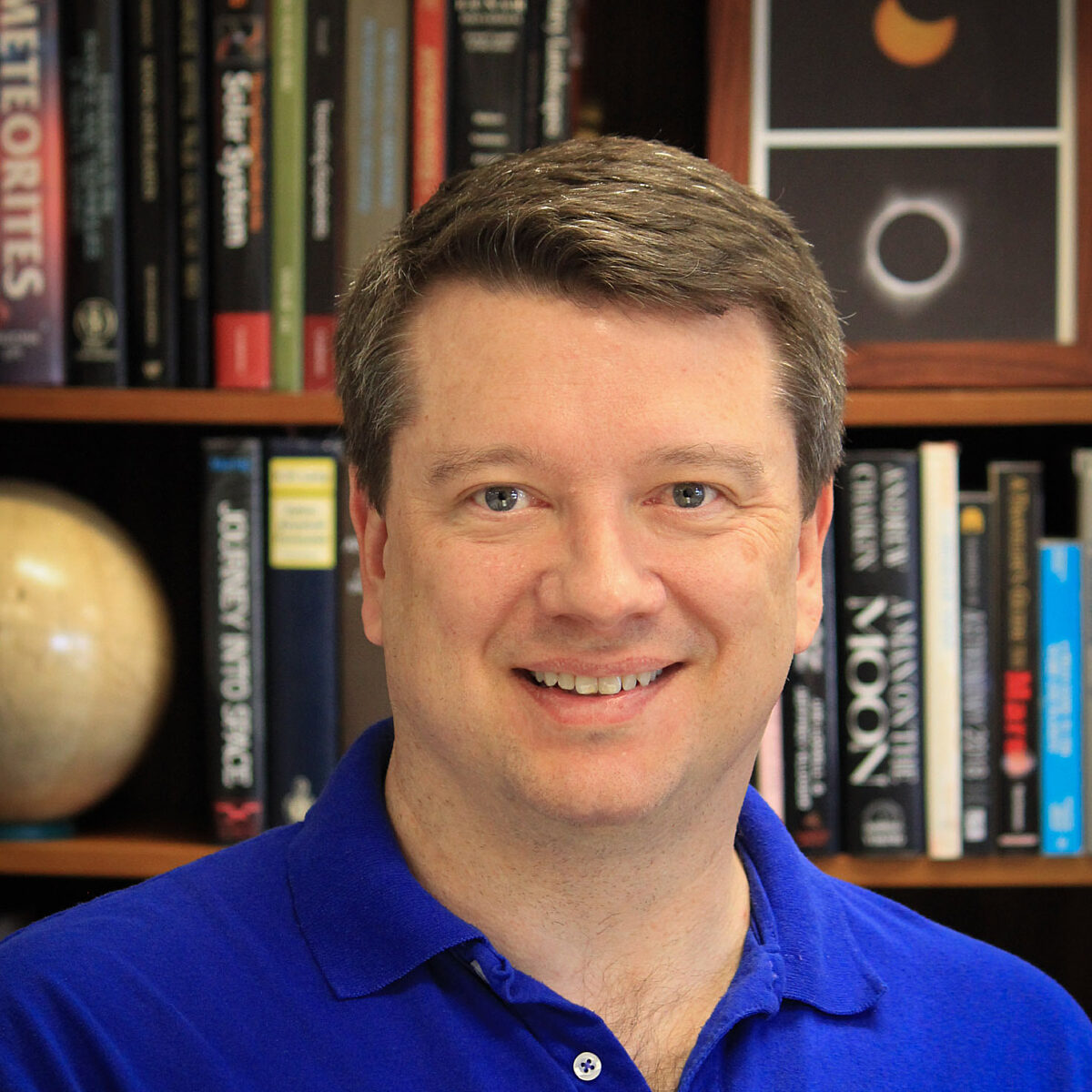
Bruce Betts
Chief Scientist / LightSail Program Manager for The Planetary Society
Sarah Al-Ahmed
Planetary Radio Host and Producer for The Planetary Society
2025 was one of the most consequential years for space policy in modern U.S. history.
In this special year-in-review episode, Planetary Radio takes a deep dive into what happened behind the scenes in U.S. space policy and advocacy as NASA faced unprecedented proposed cuts to its science programs. With nearly half of NASA’s science budget at risk, dozens of missions threatened, and months of leadership uncertainty at the agency, this year became a defining moment for the future of space science.
Sarah Al-Ahmed is joined by Casey Dreier, chief of space policy at The Planetary Society, Jack Kiraly, director of government relations; and Ari Koeppel, an AAAS science & technology policy fellow, to unpack how this crisis unfolded, and how scientists, space advocates, and lawmakers responded. Together, they explore how public advocacy helped shift the conversation in Congress.
Plus, in What’s Up, Chief Scientist Bruce Betts explains why stability matters so much for space science and what’s at stake when long-term missions are disrupted.
This is the first of two special year-end episodes. Next week, Planetary Radio will look back at what humanity accomplished in space exploration in 2025, from new missions and discoveries to milestones across our Solar System and beyond.


The relative change is measured by comparing the White House budget request for NASA to the prior years' congressionally appropriated amount. The FY 2026 proposed budget cut is significantly larger than any other proposed reduction in NASA's history.
Download Options



Never has a White House budget proposed this scale of budget cut, this quickly. If it had succeeded, NASA's budget would have fallen to its lowest level since before humans first ventured into space.
Download Options


Under the FY 2026 White House budget proposal, NASA's civil servant workforce (as measured by FTEs, or Full-Time Equivalent hours) would fall to its lowest levels since FY 1960.
Download Options


In 1984 NASA had a far less ambitious program of scientific exploration. Earth science was not yet a discipline, planetary science was nearly non-existent, and only a handful of missions were in development.
Download Options


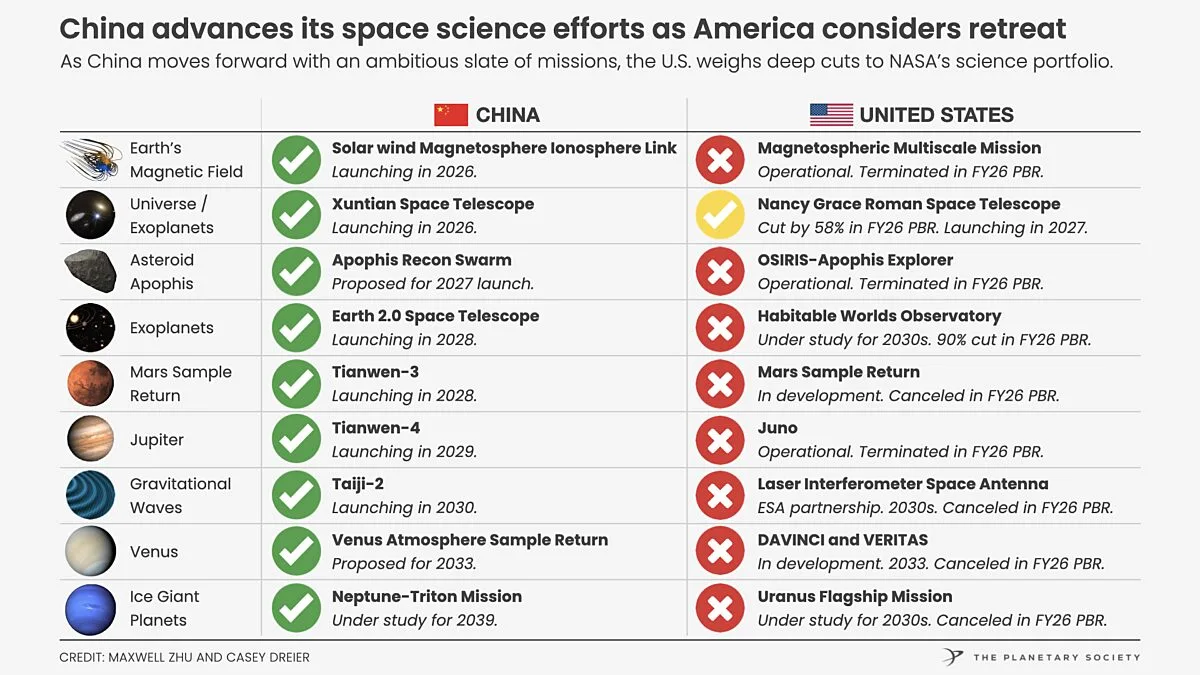
The proposed FY 2026 budget would cancel 19 NASA science missions that are currently active, healthy, and producing invaluable science. These represent a cumulative investment of over $12 billion and years of work to design and build. These are irreplaceable assets.
Download Options


Related Links
- Save NASA Science Action Hub
- 300 space advocates rally in D.C. to Save NASA Science
- Planetary Society Statement on the Senate's Confirmation of Jared Isaacman as NASA Administrator
- The Planetary Society condemns deep, damaging 24% cut to NASA’s budget
- Science, industry, and advocacy groups unite in opposition to deep cuts to NASA science
- The 2025 Day of Action
- NASA Mission Spending Tracker
- NASA's disastrous 2026 budget proposal in seven charts
- Planetary Radio: A Day of Action to save NASA science
- Planetary Radio: Space Policy Edition: China’s growing space science ambitions
- Planetary Radio: Space Policy Edition: Are Democrats falling behind on space policy?
- Planetary Radio: Space Policy Edition: NASA’s 2026 budget
- Planetary Radio: The dark age of NASA science? Analyzing the FY 2026 budget proposal
- Planetary Radio: Space science under fire: Your questions answered
- Planetary Radio: Space Policy Edition: How NASA remembers—and forgets
- Planetary Radio: Passback budget breakdown: A 47% cut to NASA science
- Planetary Radio: Live from Washington, D.C.: The future of space politics
- Planetary Radio: An extinction-level event for NASA science
- Buy a Planetary Radio T-Shirt
- The Planetary Society shop
- The Night Sky
- The Downlink
Transcript
Sarah Al-Ahmed:
A year of historic threats, unprecedented advocacy and a reminder that the future of space exploration is something we have to fight for, this week on Planetary Radio. I'm Sarah Al-Ahmed of The Planetary Society with more of the human adventure across our solar system and beyond. 2025 was one of the most consequential years for US space policy and modern history. The White House proposed the largest single year cut to NASA in the agency's lifetime, nearly having NASA's science budget. Dozens of active missions were suddenly on the chopping block. Entire scientific fields were put at risk and the future of US leadership in space science was thrown into uncertainty. But what happened next tells a very different story.
This week, we're looking back at a year that galvanized the global space community. I'm joined by Casey Dreier, The Planetary Society's chief of Space Policy, Jack Kiraly, our director of government relations and Ari Koeppel, our first ever AAAS Science and Technology Policy fellow. They'll break down what actually happened behind the scenes in Washington, DC, how Congress responded to these threats to NASA Science and why public advocacy played such a critical role in pushing back against these cuts. We'll talk about the unprecedented scale of this year's advocacy efforts, how a three-person policy team helps shift the national conversation and what comes next as NASA faces continuing uncertainty headed into 2026.
Plus, in our What's Up segment, Bruce Betts, our chief scientists and I, are going to reflect on the impact that these kind of cuts can have in the long term and why we at The Planetary Society will never, never stop fighting for the future of space science and exploration. If you love Planetary Radio and want to stay informed about the latest space discoveries and the forces that shape them, make sure you hit that subscribe button on your favorite podcasting platform. By subscribing, you'll never miss an episode filled with new and awe-inspiring ways to know the cosmos and our place within it.
This wasn't just another tough budget year. We've seen some hard times in the past, but this was something else. The proposed cuts to NASA Science were the largest ever suggested, 47%. Basically, an extinction level event for NASA Science, as Casey called it. These proposed cuts came with extraordinary uncertainty about whether even under a continuing resolution, NASA would actually be allowed to spend the money Congress approved. For the space science community, 2025 felt less like a policy debate and more like an existential moment.
That's why at the end of this year, we're doing something a little different. Normally, we wrap things up with a single episode looking back at everything that happened across space exploration. But because this year was so pivotal in the fight to save NASA Science, I decided to split that reflection in two. This episode focuses entirely on space policy and advocacy. And next week, we're going to be looking back at what humanity actually accomplished in space exploration in 2025. This conversation also comes at a key moment for NASA itself.
Literally, as we were recording this conversation, the agency finally gained a confirmed administrator after months of leadership uncertainty, adding yet another layer to an already turbulent year. So I started our conversation by asking a simple but essential question. What made 2025 so difficult and why did it demand such an extraordinary response from advocates, scientists and space fans around the world? Here's my conversation with our space policy team, including Casey Dreier, our chief of space policy, Jack Kiraly, our director of government relations and Dr. Ari Koeppel, AAAS Science and Technology Policy fellow here at The Planetary Society. Hey, everyone. Happy almost end of the year.
Jack Kiraly: Hey, Sarah. Happy end to 2025. Is anyone else limping across the finish line-
Sarah Al-Ahmed: Oh, gosh, so much.
Jack Kiraly: ... [inaudible 00:04:16] this year? Absolutely. It's been a bit of a busy year for us.
Sarah Al-Ahmed: It's been a very interesting time in funding for NASA. Just all the things that have happened this year have really put a lot of pressure on this team, but also this has been our absolute moment to shine. This is the reason why our organization was created. And watching all of you work together, both you, Jack, and Casey, but then also the addition of Ari to our team has been absolutely inspiring this year. And of all the people that I know in this world right now, I'm just so pleased and proud to know you guys after seeing what's happened this year.
Ari Koeppel: Let me just say I'm also very proud to be the addition next to these two guys, learning every day something new about space advocacy, learning new skills. It's been just an exceptional journey even in these first few months of working with them.
Sarah Al-Ahmed: Also, it's been wonderful seeing you join the team and get to go on these adventures, but also the expertise that you've brought in with your background. So I don't know. The fact that all of you guys have been working together, how much we've gotten accomplished together, the fact that we've had to spin off a new planetary society, the office in DC in order to back up all these efforts, it's just been a banner year for space policy, which is why we don't usually do an extra show just on space policy at the end of the year, but if we were ever going to do it, 2025 would be the moment.
Casey Dreier: I've been ... I mean, obviously, just extraordinarily proud of the work that we've done, but I also want to highlight just the work that our members have done and the wildly committed engagement that they've had on this issue. Jack can go through some of the numbers, but our members and support has really stepped up this year too. And as most of them know, we aren't anything without them. They enable us to exist in many different ways, but it was extraordinary and frankly, just really inspiring for us and really helpful during some of those longer slogs when we'd get a nice email or we'd go to do the Day of Action and see them and see that energy and commitment to be there and to be part of this. It was also truly extraordinary.
Sarah Al-Ahmed: Well, we've been covering this ongoing saga for an entire year, but some people may have missed some of the things that have happened in space policy this year. So just to give some context, what made this year so difficult for the space policy community and just for NASA budgeting in general?
Casey Dreier:
Well, I think the largest single year cuts ever proposed to NASA and NASA Science, that's the core, mixed with, I'd say, aggressive effort to call the number of people working at NASA and to radically change how a lot of NASA works very quickly with no engagement to the community and no broader, clear strategy. And so it really threw the workforce for a loop, it threw scientists for a loop, but also just that they were watching the potential future and we were watching our potential future of scientific exploration, but even missions, the Artemis side say was questionable there for a while after the landing, potentially just disappear. And that is a reminder. In some ways, it shook us out of maybe some complacency that this stuff just happens, it doesn't, and we really reminded about why we care about this, the unifying activity of the exploration of space that we do together that elevates our highest values and gives us access to ...
I always say, "What other government agency gives us access to the sublime?" right? It's a pretty rare thing, but also so many other benefits as well. And that core though of willing to destroy, I think, so much and also to see it not implemented, there wasn't any broader strategy or policy goal. This was different factions of this administration doing their own thing, and frankly, undermining even the administration's own stated goals. And so really trying to clarify and remind everyone, this is why we do it. But I'd say we're still in a significant era of uncertainty with this, but we're in a much stronger position now than we were at the beginning of the year.
Sarah Al-Ahmed:
Yeah. We went to Washington, D.C. for our first Day of Action earlier this year. And at the time, Casey, you and I did a show in Washington, DC called The Future of Space Policy. And at that time, we had gotten some inklings of what was coming down the pipeline here, but we hadn't actually seen what was the official presidential budget request. And then in the context of that, I remember people being very skeptical that any of those cuts were actually going to go through. And even myself, it didn't seem to make a whole lot of sense that the administration that in its previous iteration had created the Artemis program also within the Office of Management and Budget had these forces trying to make all these cuts.
So I understood people's skepticism, but once it became apparent that this was actually the situation we were grappling with, it was really inspiring to see the way that the space community rallied to come together for this, but not just the space community, the reaction from Congress and I think this is a really big win and a testament to just the power of space advocacy, was the fact that we managed to get both the Senate and the House of Representatives to boldly reject these cuts. How did that go down from your perspective, Jack, being in Washington, DC? What was it like on the ground during all of that?
Jack Kiraly:
Well, there was a lot of talk early on in the process, and even around our Day of Action in March when we still had yet ... There was a significant leak that happened of some draft documents in the spring that, again, I think confirmed what at the time was a rumor, but there was still a lot of, "Well, don't worry. This is not going to happen. There's no way that they would propose as significant a cut." And that disbelief eventually turned into maybe a bit of belief once we saw the writing pen to paper of what the OMB was proposing. And this is a testament to the fact that Congress, that we have over the last 60 years, built a brand.
NASA has built a brand that is supported by a wide swath of Congress and that this is something that is so deeply popular among the American people, among the electorate, that when push came to shove and they were trying to push through these cuts and there was all this talk of, "We're going to implement the PBR regardless of what Congress says," that Congress responded fully and said, "No, you are not going to do this," and pushed back both publicly and behind the scenes. And that was in large part because of the advocacy that people did, right? Congress responds to the messages and the phone calls they get.
Maybe when you get a automated reply that is a generic, maybe milk-toast response of like, "Oh, well, I support NASA, but there are so many other issues that my office is working for. Thank you for your no," it can feel like that was the end of the engagement, but know that behind the scenes, members of Congress, hundreds of them signed onto letters and sent messages and were part of this effort to respond to what was an existential crisis for the National Space Program. And that was in part because of that coalition of support that has been built up over those 60 years that I mentioned, but also a huge part of it was the fact that you wrote to them and said that this is important to you, a constituent of theirs and the opportunities that were presented to them, they took full advantage of.
Ari Koeppel: As someone who has entered this policy and advocacy world fairly recently, I came from a background of the average person in my understanding of congressional engagement. I was sending letters to Congress, calling congressional offices and often getting those messages back saying, "Thanks for your input. We're considering it," and that was it. And so it was fairly opaque for me coming from that side of things. But now that I've been in DC working with congressional offices, meeting congressional staffers, I'm hearing from these staffers, "Hey, we've heard from your members and it's really pushing us to think more critically about this issue. How can we help make this more at the forefront of the discussion?"
Sarah Al-Ahmed: Well, the reaction from our members and from space fans, not just in the United States, but around the world was very inspiring, but also just a huge amount of people got involved in this, right? So much so that we decided to spin off a second Day of Action, which is not something that we usually do. And it just happened to be through great timing and planning on the staff's part, but also by accident, happened during a government shutdown.
Casey Dreier: That was not good plan.
Sarah Al-Ahmed: That was not.
Casey Dreier: I would've rather had the government open personally. I still blame Jack for this entire successful endeavor.
Jack Kiraly: Absolutely. I will take the blame for that one. I was the one who opened my mouth. Maybe we met, what was it, July 23rd or something, and we were like, "What if we did another Day of Action?"
Casey Dreier: Yeah.
Jack Kiraly: It's my idea.
Casey Dreier:
Yeah, so we can blame Jack for all of that success. And then the government shut down, which just makes things complicated at best. But yeah, obviously it turned out to be from that idle thought that condemned us all to that amount of work, we resulted in, again, arguably, it's hard to prove this with, because there's no real records for this, but I'd say arguably the largest single day of advocacy on Capitol Hill for space science in history. You could not find probably a bigger group dedicated to that topic going out through Congress where we had this amazing press conference right in front of the Capitol with a member of Congress there on the appropriations committee from Maryland, Glenn Ivey.
We had Bill was showing up on cable TV and national TV. I was doing interviews. We met with Chuck Schumer. We met with ... How many offices did all of our members meet with that day? 200-
Jack Kiraly: 454.
Casey Dreier: 54? Just a spectacular outcome and 20 ... Jack should go through it, because again, it's his fault that we did this great thing, but just a spectacular turnout. And again, I think just goes to show that people cared about this and were willing and came on their own dime, on their own dime and on their own time to participate with us.
Jack Kiraly:
And we didn't do it alone, right? That was another unique element of this. Not only this is the first time we've ever done a second Day of Action in a single year, but we also did it with 19 other space organizations representing academia, the commercial space sector, labor unions, nonprofit organizations, professional societies, really representing every facet of the space community as wide a net as you can cast and consider it the space community we had involved in the Day of Action. And that's, I think, what led to a lot of the success, not only in the turnout, which again was substantial, more than 250 people just rank-and-file members of these organizations participating, but also on top of that, the high number of principals, high-level people at each of those organizations that participated, but the response we got from Congress, from people seeing just how many organizations and the amount of effort that went into this.
And I'll just share an anecdote. We were at the post-event, wind-down dinner afterward over by a Union Station. And as in most venues in DC, they had a big projector screen out on the patio showing the local news. And this is the local news, this is bread-and-butter issues that are being covered on screen. And every time we came up on screen, which was we were in the rotation of news stories that were being covered by this station, the whole place erupted in cheers because we all knew we were making that impact and that we really had spread this message of unity and of hope and optimism that I think is intrinsic to space exploration and space science. And it really was this show of commitment to these higher ideals.
And I think it really was a truly phenomenal thing to be a part of. And hopefully, we don't need to replicate that level of intense involvement, organizing that over the course of two months. Hopefully, we have a little bit more time before the next one, April 19th and 20th of next year, but it was truly a spectacular event.
Sarah Al-Ahmed: This was your first Day of Action. Is that right, Ari?
Ari Koeppel: That's right. My first Day of Action with The Planetary Society.
Sarah Al-Ahmed: What was your experience being there? Because I've been there several years now, but this was so many more people than usual.
Ari Koeppel: It was a combination of being thrown into the fray or tossed into the fire without having really made my chops yet and also being surrounded by this movement of people who believe in something which is the fundamental awesomeness of space and exploration in a way that energized me that I wasn't expecting. So my experience was this mixture of like, "What am I doing? I'm a chicken with my head cut off. I have to do all these tasks and help out and I don't really know what I'm doing," and also, "This is awesome." This is such a cool thing to be a part of, to join this organization and be thrust into one of its most monumental events in history, just when I am getting started really made me feel like I was in the right place.
Sarah Al-Ahmed: That was a really interesting time in your life too, because shortly thereafter, in the middle of this government shutdown, one of the space missions that you worked on an instrument for ESCAPADE, you worked on the visions instrument, launched, but in the midst of this government shutdown. So it's been a really interesting year in Ari Koeppel's life, I feel.
Ari Koeppel:
Yeah, in many ways that was full circle. So I did my PhD work on Mars science largely, a little bit of Earth science smattered in there, but remote sensing and space exploration. And there was this little tiny, small project that I got to work on on the side, which was helping build these cameras for some far-off mission that it was nebulous. When was it actually going to launch? We didn't know. And went off and did a couple postdocs, now got involved in advocacy. And suddenly, this ESCAPADE mission is actually launching of the five simplex missions with which ESCAPADE is one of them, three of them failed. One of them is in permanent storage. So the odds seem to be stacked against the ESCAPADE mission of really having any success and it seems like it's actually returning data.
And so I got to go down to Florida during the shutdown, be a part of the festivities around the launch and it feels like my training is coming back full circle and helping inform my advocacy at this point, helping promote the expansion of missions like these to Mars and beyond.
Sarah Al-Ahmed:
Well, a true testament to just the passion of the space community and what you guys accomplished with that mission, but also just the fact that so many wonderful things have come out of this level of love for space this year. While it's very difficult, it's in the hardest times that we find our greatest motivation and our greatest strength and courage together. And I wanted to give the team a little chance to go through some of the numbers that we've achieved this year with the number of letters, the number of people involved. And, Casey, you've been making just some amazing, beautiful graphics to try to communicate these things to people throughout the year.
I think too that this is an interesting point in the strategic change and the way that we've been addressing this. I've been seeing your graphics not only presented by The Planetary Society, but by science communicators all over the United States in the last year.
Casey Dreier:
Yeah. It was one of those things where when we were sketching out our campaign strategy this year, Jack and I like to say, we threw out whatever ideas we had for what 2025 was going to be when we first learned about these potential cuts. And one of the ideas is that it's not enough to provide the data. You have to provide it in a way that people can consume it and make it easy for people to get it, to view it, also to plot it themselves, whatever. And we've really leaned into an investment in our data, I guess you can call it data science, data pipelines. I suddenly became a software developer again, which was my old career from back in the day. We're still a small team. Even with Ari here, we're three people.
So we really leaned into a lot of, and I'll emphasize, responsible use of AI tools to help not just coding, but to provide some pretty novel tools for our members too. And again, a lot of this, we've open sourced and discussed, but it's using it as an assistant to increase the velocity of the things that we can basically ship out the door. But one of those was charts and saying ... It's not enough to say, "We think these are bad, right? These cuts are bad," which we do and most people do, but it lands a lot better and people can respond to it more when you can say, "And we've got the numbers to back it up. Why is this bad?"
And the phrase that we said, "These are the largest cuts in NASA's history," we can say that because we ran the numbers and they are the largest cuts in history. And so it actually enabled our messaging to become more sharp and memorable because we did the work and we had some of the groundwork there, but because then we were able to share it. And I've been very happy to see my charts. Jack will send me ... They're showing up on CNN today or they were in a House hearing the other week and we released them through a Creative Commons license, so everyone can just share them without rights issues and it's just putting that a little bit of work to make it vivid and clear.
That's been a huge aspect of this, I think, that we've been able to take a term used by our new NASA administrator, a force multiplier. So we put the data out there, make it memorable, package it up and then others take it and then share it themselves. That's not always us doing it. And that's how a three-person team can really punch above their weight in terms of getting the word out there. And I think the other thing, and maybe Jack can speak to this a little bit, we got really good at being fast this year, which is not always the easiest thing in any organization, but we got really good at getting things out quickly, so we can help define the narrative before it forms.
Jack Kiraly:
Well, you look at the term extinction level event that Casey, you coined very early on in this situation and that became the ... I think, still today, we're getting pings on social media and traditional media of people using that phrase because it was so compelling and it was backed up by data. And I'll just say to add onto that, that helped tell the story with members of Congress because your average member of Congress probably receives anywhere between 10 and 15,000 messages in a given week. Sometimes that can be in a day depending on what the topic is. And so they're sorting through a lot of information.
And not to say that people shouldn't do that, that's your constitutional right, right? First amendment guarantees you that right to petition your government for a redress of grievances, but the difference that I think we helped make was in telling that, a cohesive story of what this would do, not just to the whole space program, but to individual congressional districts and states and the potential impacts there as well.
Casey Dreier: Jack, let's talk about speed too, because again, I think that's really important that we could get out there fast. We had a very good working relationship with our leadership at the organization. We knew our issues. We were really confident we had the data to back it up, but I think that we could comment, we could be the ones to say, to respond to media requests, but also you could get out there to those offices right away with the data, with the message, with the perspective. I think a good example of when we did that budget briefing in June. Again, you are also to be blamed for, I think with the 24 hours before saying, "What if we do that?" There was, I think, a briefing canceled by NASA for nefarious reasons of the political leadership at the time and Jack said, "What if we do it?" And I said, "Okay."
Jack Kiraly:
To the point that we had responded so quickly in that case and in multiple others that there were questions as to how we had known to time our events and briefings at that time. And it really was just being nimble that helped create this sense that we were, and I think we were, we absolutely were on top of the ball, but it really I think made such a huge impact just in the optics of a period of time of such uncertainty where a lot of the legacy organizations, larger, more established groups were not as quick to respond because that's just the nature of organizations, right?
It's the nature of building consensus in large multimember consensus-based organizations, but it gave us a significant advantage then in that sort of marketplace of messaging, that if we could get our message out first and many members of Congress and members of the administration and our partners were the first to hear about something because we had already put together the statement and responded to it. So that really was I think a major change. And kudos where they're due, Danielle Gunn and the whole communications team and, Sarah, you as well, the amount of time we've spent on these calls, recording at the last minute to get something added to an episode of Planetary Radio.
It just was this whole of organization effort that Casey and I and Ari as well I think can all say that we felt incredibly well-supported by the organization, by our board of directors and advisory council as well to make sure that we could be the first or at least one of the first organizations to respond as things developed and to acknowledge when good things were happening, right? It's very easy when you're in this space to just focus on when bad things are happening and respond to those. And sometimes you miss the good things that happen.
But when the Senate proposed their budget bill, basically rejecting all of the cuts and keeping NASA and the National Science Foundation fully funded, kudos where they're due. And the administration too, when they reversed decisions to fire probationary employees at NASA, in large part because of the pushback that they got from the general public and from Congress. You have to acknowledge when good things happen as a result of your advocacy. And so I think that speed and ability for us to muster the operational ability to put statements and advocacy opportunities out there as quickly as we did, that definitely goes in the plus column as we look to to 2026.
Casey Dreier:
Another number, I just was thinking of this that Amber, our social media colleague, gave us was more than 9 million, which is the number of views of our advocacy reels, just our reels on Instagram in this last year. So getting the word out through these social channels has been huge and really just wildly effective and I think demonstrates that there is an interest and thirst for this type of information and context that a lot of our visuals are shared that way, but just that message. So just that we did this full court press just in types of media too. Print media, Jack and I gave over 200 interviews to the press this year. I think we had at least 1,500 news stories written about us.
It adds up all of the potential readership of those and it became to 46 billion. So I think there's some double counting there in a few places, but a lot of people saw these stories. We had a New York Times op-ed piece that we published this year, which was really fantastic. We took over Star Talk Radio. Me and Bill did a number of other podcast appearances. We just had really, really leaned into that outreach aspect and we hit a lot of new people too, I think, in terms of beyond our members. A lot of new people learned about it and I have a lot of really wonderful emails from people who said, "I saw you on the Star Talk and I became a member," "I saw your article in New York Times and this is such great work," and just that's what we needed to do and we did it.
And it's really about keeping this up going forward, but it was just ... We really did do a good job. Sarah was just like, "Do people just like hearing us congratulate ourselves?" I think this is why we're excited about it and I think we want to just make sure that particularly our members who support this financially, you got your money's worth this year from this program. I think we really did ... As Jack said, we left it all out on the field this year and we did an extraordinary job and I'm really excited about how we build this into the next year.
Jack Kiraly: And while we're talking about metrics and the difference between this year and past years, it was a tenfold increase on the amount of activities, advocacy actions that people took online. More than 84,000 messages were sent through our advocacy portal by, I think, a combined 32,000 people-
Casey Dreier: Just our advocacy and then-
Jack Kiraly:
And that's just our advocacy, right? And that's just people that wrote a letter, made a phone call, signed a petition. We had that global petition that was a very, I think, unique vehicle to show. And part of the reason for that was we wanted to show that this was a global endeavor that space is something and NASA is seen globally as this leader in space science and that the world looks to NASA for that leadership. People from more than a hundred countries sign on to that. It's a handful here and there in some countries. Some countries, it was a couple hundred. That petition really showed to Congress and the administration just how impactful NASA is on the global stage.
And all of those people together created this tapestry, this community of advocates that, hopefully, we can continue to engage. And if you're listening to the show for the first time and want to get more involved, planetary.org/savenasascience is the current action hub that we have set up. We're going to keep that running and have updates and opportunities as we go into next year. We're sitting here congratulating each other on a banner year for advocacy as it was, but the story is not yet over and we still have to finalize fiscal year '26 and we have to start looking to fiscal year '27. Administrator Isaacman's coming in to be sworn in imminently, if not already by the time this episode airs.
So this is something we're going to have to continue to build on. And I think what we have, as we've described, is an infrastructure that did not exist at the beginning of this year. We did not have an office. We did not have a science and technology policy fellow. We did not have a lot of these tools, the data analysis and visualization tools that Casey helped create or created, not helped create, created from scratch in a lot of cases. And this is to build a new advocacy program that can respond adequately and immediately when needed. And so I just want to say thank you to everyone who helped make this year such a monumental success.
Sarah Al-Ahmed: We'll be right back with the rest of our look at space policy and advocacy in 2025 after this short break.
Bill Nye: Greetings, Bill Nye here, CEO of The Planetary Society. We are a community of people dedicated to the scientific exploration of space. We're explorers dedicated to making the future better for all humankind. Now as the world's largest independent space organization, we are rallying public support for space exploration, making sure that there is real funding, especially for NASA Science. Now we've had some success during this challenging year, but along with advocacy, we have our STEP initiative and our NEO Shoemaker grants. So please support us. We want to finish 2025 strong and keep that momentum going into 2026. So check us out at planetary.org/planetaryfund today. Thank you.
Sarah Al-Ahmed: Yeah, it's been a lot. And seeing the way that people have responded, seeing how far we've come has been very inspiring, but there's still a lot left to do. And you've alluded to this a few times. The now official almost confirmation of Jared Isaacman as NASA administrator. As we're recording this, that literally only just happened yesterday. We've been sitting around waiting to see how this plays out. And again, that's another-
Casey Dreier: Actually, as we've been recording this right now, he is now confirmed.
Sarah Al-Ahmed: Oh my gosh.
Casey Dreier: He did the swearing in. I just saw the picture.
Sarah Al-Ahmed: Amazing.
Jack Kiraly: That moved really quickly. Wow.
Casey Dreier: Yeah, he's ready to go.
Sarah Al-Ahmed: But I mean, good because this is the first time that we've ever had a NASA administrator nominated, then had that nomination pulled, then renominated. Nothing about this is usual. And so many of the NASA institutions that we love are left in this interesting limbo as they've been waiting for this confirmation to happen. So between the fact that we now have a NASA administrator and where we're still sitting with what's going on with Congress, what are the next steps for our team, but also just for all the space advocates out there?
Ari Koeppel:
So we've been tracking the congressional process very closely. As folks know, the government reopened in mid-November after a month and a half long shutdown, and that was a result of having passed what's called a continuing resolution and it was a short-term continuing resolution. So it really doesn't specify new funding lines. It doesn't generate new programs. It basically says, "Keep things status quo just so we can reopen the government until the end of January." So our new deadline is January 30th, by which point Congress needs to either pass the appropriation bills that were not passed.
Three of the 12 were passed in November with that continuing resolution and so it needs to pass nine appropriation bills by the end of January or another continuing resolution or the government will shut down again. Now, we've been tracking that the Senate is putting together a potential mini bus, which is a combination of appropriations bills and that includes NASA. And the numbers we're seeing in there, actually, just to applaud ourselves again, include both the numbers that are in the Senate bills, which would actually be an slight increase in funding for NASA and the language that we saw in the House bill, which said, "Let's fund the programs at NASA at no less than the values in the programmatic tables."
And that basically is a safeguard against any sort of redaction and funding later on. And we're expecting that process to play out in the new year. It potentially could come down to the wire again, so we're going to be gridding our teeth in the new year and watching and continuing to advocate for the House and Senate to come to an agreement that's suitable for NASA funding.
Sarah Al-Ahmed: So what's next for our advocates? What can we look forward to doing during the next few months?
Casey Dreier:
Well, I think Jack already mentioned this, but we'll emphasize we already have the Day of Action 2026. So if you weren't able to come to DC with us in 2025, you can come with us in 2026, April 19th and 20th. Registration is open now and it's discounted for the next month or so, so you can save up to 35% registration. That's obviously one of the most impactful things you can do. The other things, the bigger picture things that Jack and I want to do this upcoming year is really about solidifying a lot of the foundations. So this year, we heard that we were laying a lot of infrastructure while we were reacting and building and using it. And now we need to kind of go back and solidify that infrastructure.
We need to simplify our processes and get those in order, so we can actually start putting all of our work into the outward aspect instead of just building up the inward aspect. Thankfully, the organization, and again, because of our super generous members, we've had a lot of new resources. We're able to have now a new office in Washington, DC, strategically located. It really enables us to do a lot more with our partners, enables us to host people and to host events and to do a lot of ... Just to be there in DC really effectively. We want to leverage and continue to build on our tools that we've been building, to leverage responsible use of AI as this force multiplier and to really lean into our role here as a trusted source of insight and of analysis, but also continue to speak clearly, vocally, and with passion about what we believe in.
And I keep going back to this. Because of our independence, we've been able to do that. When we spoke out against these cuts, we didn't have any government contracts that were at risk. We were able to say what we believed in and say it quickly because we had that freedom because of our independence. That is a really unique position. So I really want to continue to grow. Ideally, I think we'd all like to not work as many weekends and early mornings and late nights as we did this last year. I think Jack's calendar, I looked, I did some analysis. I think Jack had something like 1,600 meetings last year. My meetings went up by 25% this year compared to the year before. We could face the same situation again in February or March when the '27 budget request comes out.
So we really want to have a lot of these things in place so we can continue this groundwork that we've laid. Ari is a great addition to have this year because he's here from the beginning now as opposed to coming in late. And so having that extra person. The aspect of being in DC and doing meetings, you can only be in one meeting at once, and so having more than one person, you multiply that. Communicating clearly also to the scientific community, to our members and keeping this momentum up for them and doing a better job at keeping them in the loop and part of this whole process as it goes up and down and in and out of awareness more broadly to make them see where we are in this yearlong effort and to show that advocacy when we ask for it is part of a strategic effort.
So lots of big ideas, lots of more things to come, but I think we got the wind at our backs and we've got a lot of things aligned and our members and supporters should be really excited about what's coming.
Ari Koeppel:
I just want to point out this issue's not going to go away. There are always going to be folks out there who want to slash budgets, folks who don't care as adamantly about space science. There's always going to be changes going on within both the government, but also in the space sector that potentially put at risk the type of exploration and basic research and science that we have all come to find so fulfilling in our lives. We're seeing dramatic changes within the commercial space sector and people don't really have a great understanding of what that means for science.
For example, we were just talking about me having gone down to Florida to watch the launch of the ESCAPADE spacecraft. It launched on board of Blue Origin's New Glenn rocket and New Glenn successfully was able to recover its rocket, making Blue Origin the only company, next to SpaceX, that's able to reuse rockets. And this is changing the game. Now there's two competitors who are able to drive down the costs of launching relatively large spacecraft into orbit and potentially people at some point. And it's going to change the game for space flight.
We're going to see more and more ... We're already seeing more and more flights going out. What did I see, SpaceX has already cleared the 100th flight of the year? And we're going to have to navigate this new world that we're entering for how does science fit into this expanding space industry, how does exploration fit into this expanding space industry and The Planetary Society is the organization that I believe is best suited to help answer that question.
Jack Kiraly:
You're absolutely right, Ari. Those things, we can't take those for granted that science and exploration are the core of what NASA does. And yeah, if anything, we've seen a year of tremendous change and uncertainty. You need stuff to put on top of those rockets. And right now, there is a dearth of missions and instruments being developed at the agency that we're ... I don't think there's really ... I mean, I think maybe Nancy Grace Roman Space Telescope might be the only NASA Science mission scheduled to launch next year and that it might be at the end of next year, depending on how its final testing goes. And so if you took part in our advocacy this year, thank you. Get ready to do it again next year. Hopefully not at such a breakneck speed, but know that we're going to be responding to these circumstances as they develop.
If you're new to advocacy and you want to get involved, let us be your guide. Let us be the people that involve you in this process because democracy is not a spectator sport. Decisions are made by those that show up and that's what The Planetary Society was built to do, is respond to moments like this and to look forward into the future to expand those horizons so that we may know ourselves and our place within the cosmos.
Sarah Al-Ahmed:
I hope that after all of this effort that you guys get a chance to chill out as we go into the holiday season, but quite frankly, this year has really crystallized for me why we do what we do. I've always been very passionate about space exploration and about communicating about space exploration, but I didn't go and get my degree in astrophysics because I thought I was going to be working in space policy and yet here we all are, right? And it's us rising to the unique circumstances of our time and watching the way that we've all come together as a community across the United States, across the world to support something that we care so deeply about has been deeply motivating to me and I think worth all the nights that we stayed up a little bit too late doing the work.
Thank you so much for everything that you guys have done. Thank you so much to all of the advocates out there that have helped in this effort. I can't say that we definitively saved NASA, but from where I'm sitting right now after where we were earlier this year, it really does feel like we accomplished something great, that we were uniquely positioned to do and that could change the future of the way that we explore space together. So it feels like a really banner year and I'm so happy to be here to celebrate it with you all.
Jack Kiraly: Thank you, Sarah. We're always happy to talk about space policy, and hopefully, you get a break as well in these next few weeks. It truly is an honor. It's a pleasure. It's a privilege to be able to work with such an amazing team, including you and Ari and Casey and Bill and Jen and just everybody back in Pasadena and around the globe and all of our members.
Ari Koeppel: Yeah. Thank you so much, Sarah. You are the enabler of getting our voice out there to the public and to the membership. And without being able to communicate, there's this barrier between what's going on in DC and the values of the membership. So you really enable that conversation.
Sarah Al-Ahmed: Thanks for saying that. It is one of the truest privileges of my life, to be able to share these stories and all the stories of the amazing things going on in space exploration around the world. I could not have dreamed that this would be my job. And at the end of such a difficult year, it is just such a joy to be sitting here with all of you reflecting on these moments and what we've done together. But here's to the end of 2025 and to hopefully a brighter 2026.
Jack Kiraly: Here, here.
Ari Koeppel: Here, here.
Jack Kiraly: Ad astra, Sarah.
Sarah Al-Ahmed: This year has made one thing especially clear. Space science is both remarkably fragile and deeply resilient. Fragile because it relies on long timelines. It takes sustained support and people who can devote years, sometimes entire careers to missions that may not bear fruit for decades, but also resilient, because even in moments of uncertainty, the drive to explore and understand doesn't disappear. This is a lesson that scientists and science advocates have been learning for centuries. With that in mind, I wanted to zoom out a little bit from this year's policy fights and ask a broader question. Why does uncertainty and funding for NASA matter so much for the future of space science? For that, it's time for What's Up with our chief scientist, Dr. Bruce Betts. Hey, Bruce.
Bruce Betts: Hey, Sarah.
Sarah Al-Ahmed: Happy almost 2026.
Bruce Betts: Happy almost 2026 to you as well and happy go away 2025.
Sarah Al-Ahmed: Really though, I feel like that was not the official theme of that conversation with Jack, Casey and Ari, but it's been such a really difficult year for everyone in space exploration. And it's not to say that a lot of wonderful things didn't happen, but I am looking forward to a brighter 2026, hopefully, fingers crossed.
Bruce Betts: I hope you're right. No, a lot of science suffered and a lot of people suffered as a result of what happened in 2026 and a lot of things, but certainly with NASA and space science and cuts and firings and downsizing and it was a mess.
Sarah Al-Ahmed: Yeah. And we touched on some of the effects, the number of people that we've lost from NASA and just the uncertainty in funding for a lot of these missions, but I think it's really important to reiterate the fact that this isn't something that just causes short-term harm, right?
Bruce Betts: No.
Sarah Al-Ahmed: When we have this level of uncertainty with NASA and we lose all these people, there are some really long-term detrimental things that happen for space science. So I wanted to take a moment just to acknowledge, even though we've managed to get both the House and the Senate on our side, even some missions we've managed to bring back from the brink like a OSIRIS-APEX, but there's still a lot of damage that can't really be undone from what happened this year.
Bruce Betts:
Yeah. When you lose people, you lose expertise. And when people are forced to seek other fields, whether it be new people trying to come into the field or people with enormous amounts of expertise here, that the people loss is one of the biggest problems. And then planetary exploration is something marked by multiyear, multidecade development and flying and missions. And so you're always, even on a normal cycle with different presidents, different congresses, you're having trouble keeping things funded over time and keeping everyone's eye on the ball. And it's even worse at this point. And then there's just the psychological blow and losing momentum.
And then there are our poor international partners, our in this case being NASA, the trust suffers to say the least. And that's something that's happened over time, various missions that we've backed out of or they've backed out of, usually us. And also you end up with data gaps for given places that we were going to regularly or monitoring that we don't see for a while. And then with the long-term mission ... Look, if you're having trouble funding the existing missions, getting long-term missions into the queue, that with not doing that will leave you with big gaps in exploration. And that also will tie back to losing people from the field. So tell me something hopeful.
Sarah Al-Ahmed: Well, I did talk about this with Jack and Casey and Ari a little bit, but I think despite the fact that it was a really dark year, because it was such a difficult time, it gave people an opportunity to rise to the moment, right?
Bruce Betts: Yup.
Sarah Al-Ahmed:
And man, did people rise to the moment, not just people in the United States, but people all around the world. We had over a hundred countries represented in our international petition, tens of thousands of people riding into Congress and calling them and going to our Day of Action. So I think really crystallized for me is the fact that even when there isn't a lot of obvious political will to fund space science, the entire space community just absolutely perseveres and rallies together in these moments. And because of that, we managed to turn the tide in some really meaningful ways. And we're still stuck in limbo right now because of continuing resolution and who knows what's going to happen with the 2027 budget? There's like all this nebulous uncertainty left over.
But what is very true to me at this point and interesting, because this is my fifth year at The Planetary Society and the most dire year for space exploration and the time that I've been working in the field, is that we have people all around the world, tens of thousands of people ready to ride for NASA and for space science. And that makes me feel not alone and also makes me feel really connected to all the people throughout history that have lived through these moments, either through budget cuts for space science in the modern era or just the denial of very basic scientific principles in the past, right? This ties us to a legacy of people that have been striving for this amount of space science and this amount of breaking down of the understanding of the world around us.
So a dark year, but man, I don't feel alone as much as I used to and my passion for space. I feel like this really proved to me that we've got just so many people around the world on our side.
Bruce Betts: That was extremely well said and I am feeling much better now.
Sarah Al-Ahmed: Aww.
Bruce Betts: No, we did a great job, you did a great job, our policy team, but also all those members and supporters and people who got involved with us and with others to support space science as it was being attacked is the flipside of there being the dark in the world, there's also the light. And there was an awful lot of ... People responded and got together and ... Well, you said it better than I will, so I'll leave it at that. Thank you, everyone. It really demonstrated a great awesomeness within what otherwise would've been a very dark year. There's a lot of hope and there's a lot of great people and you're not alone, Sarah. I think I'm alone, but that's just because of my personality.
Sarah Al-Ahmed: Well, you'll always have me as a friend, Bruce.
Bruce Betts: Aww, that makes me feel different somehow. No, that's wonderful. Thank you. I will rely on it.
Sarah Al-Ahmed: Did I ever tell you the story of a family with a young man and his friends, they must have all been 10 or 11, 12 years old, started a lemonade stand to save up money to help our NASA Science fund? It's just been such an interesting year between the small scale things that individuals have done and all the people that risk their jobs to go protest in front of NASA. I don't know. It's been weird being at the center of the space resistance, but also very hopeful. So here's hoping that next year is a better year in funding for space science, but even if it isn't, we're just going to keep fighting and The Planetary Society is going to keep going. This has been our 45th anniversary year. And as far as I'm concerned, we need another 45 years of standing on the mountaintops and shouting about space exploration. And as long as we're all here together, there's no way it will ever die.
Bruce Betts: Well, this feels a little anticlimactic, but I'm going to go ahead and do a-
Speaker 7: Random space fact rewind.
Bruce Betts: The sun ... Here's something that'll help you be less dark. In your dark moments, remember, the sun is about 440,000 times brighter than the full moon and the full moon is about 30,000 times brighter than the brightest star in the sky. We live in a world blessed with the brightness of night.
Sarah Al-Ahmed: A mote of dust suspended in a sunbeam. That's beautiful. Just don't stare at it.
Bruce Betts: You can stare at the motes of dust. Don't stare at the sun.
Sarah Al-Ahmed: Don't stare at the sun, especially as we go into the next solar eclipse.
Bruce Betts: Use proper sun protection during the totality. You can look at the sun, but you must put the protection back on, but we'll go over that more if you need to. And yeah, the solar eclipse is going to be one you're going to have to travel to probably this year, I believe.
Sarah Al-Ahmed: Oh, definitely. We'll talk a little bit about that next week, but yeah, thanks for shedding a little more light in a dark place.
Bruce Betts: All right, everybody. Go out there, look on the night sky and think about the positivity expressed by Sarah and how it inspires all of us and will inspire our 2026 to moments of greatness and fabulous time and goody, goody, wow, wow, wow. Thank you and goodnight.
Sarah Al-Ahmed:
We've reached the end of this week's episode of Planetary Radio, but we'll be back next week to look back at all of the amazing things that the space science community has learned and achieved in 2025. If you love this show, you can get Planetary Radio t-shirts at planetary.org/shop along with lots of other cool spacey merchandise. Help others discover the passion, beauty and joy of space science and exploration by leaving a review or a rating on platforms like Apple Podcasts and Spotify. Your feedback not only brightens our day, but helps other curious minds find their place and space through Planetary Radio.
And every new space advocate that we inspire is one other person that can help us in the fight to save NASA Science and support space exploration all around the world. You can also send us your space thoughts, questions and poetry at our email, [email protected], or if you're a Planetary Society member, leave a comment in the Planetary Radio Space and our member community app. Planetary Radio is produced by The Planetary Society in Pasadena, California and is made possible by our members, each of whom has been pivotal in such a difficult year for space science.
You can join us and help support space science and exploration in the United States and around the world at planetary.org/join. Mark Hilverda and Rae Poaletta are our associate producers. Casey Dreier is the host of our Monthly Space Policy Edition and Mat Kaplan hosts our Monthly Book Club Edition. Andrew Lucas is our audio editor. Josh Doyle composed our theme, which is arranged and performed by Pieter Schlosser. My name is Sarah Al-Ahmed, the host and producer of Planetary Radio. And until next week, ad astra.