

 Explore Worlds
 Find Life
 Defend Earth
Planetary Radio • Dec 31, 2025
Looking back: Space exploration in 2025
On This Episode
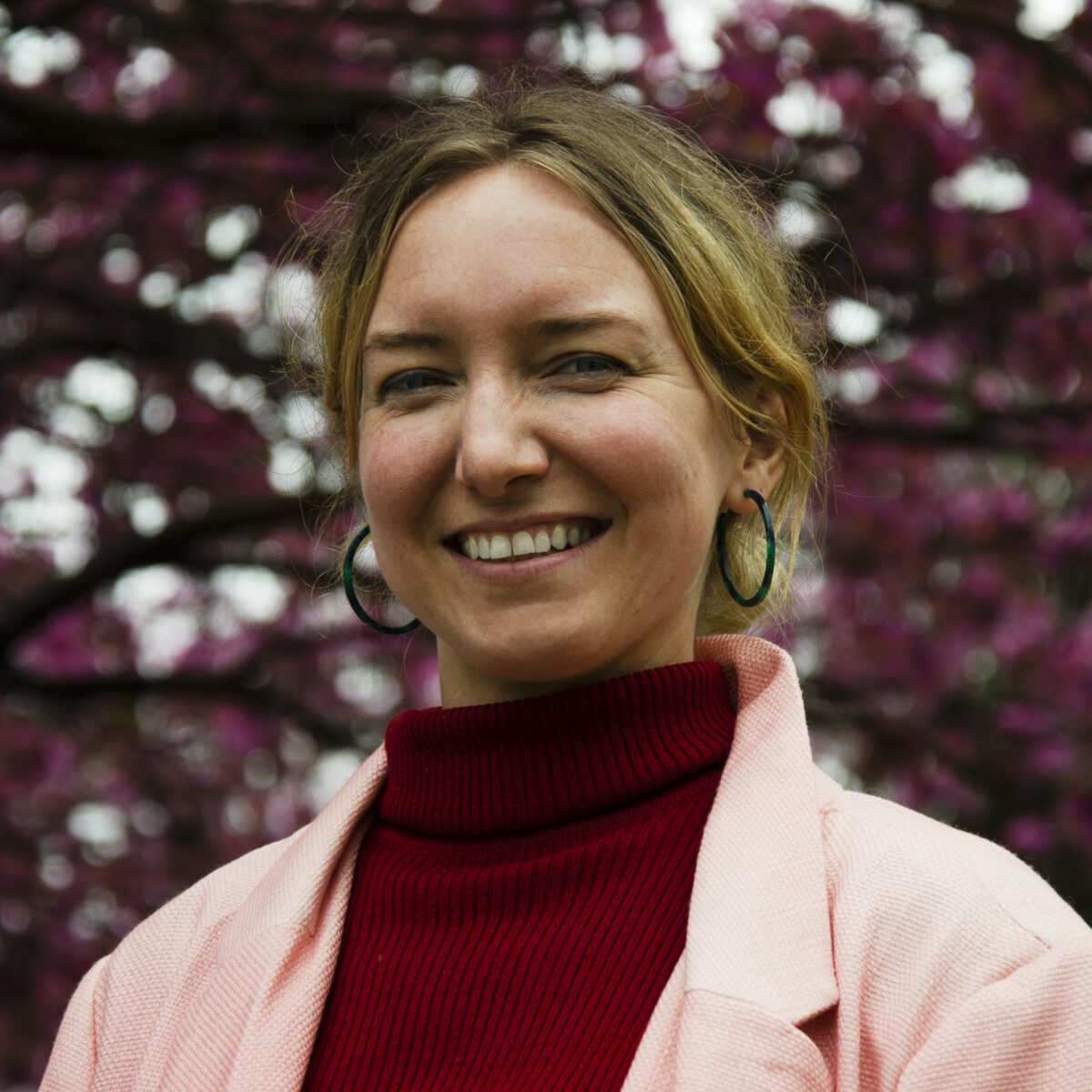
Kate Howells
Public Education Specialist for The Planetary Society
Mat Kaplan
Senior Communications Adviser and former Host of Planetary Radio for The Planetary Society
Asa Stahl
Public Outreach Astronomer for The Planetary Society
Ambre Trujillo
Digital Community Manager for The Planetary Society
Bruce Betts
Chief Scientist / LightSail Program Manager for The Planetary Society
Sarah Al-Ahmed
Planetary Radio Host and Producer for The Planetary Society
As 2025 comes to a close, Planetary Radio looks back on a year that reshaped space exploration, through stunning discoveries, major milestones, unexpected challenges, and the people who carried science forward through it all.
In this episode, Sarah Al-Ahmed, host and producer of Planetary Radio, is joined first by Kate Howells, public education specialist at The Planetary Society, to share results from The Planetary Society’s Best of 2025 campaign and the newly released 2025 Year in Pictures edition of The Planetary Report. They discuss the images, missions, and accomplishments voted on by the global space community, and how space imagery continues to inspire curiosity, connection, and hope.
Then, Sarah sits down with Mat Kaplan, senior communications advisor, Asa Stahl, science editor, and Ambre Trujillo, digital community manager at The Planetary Society for a wide-ranging conversation about the defining space exploration stories of 2025.
PlanetVac operates on the Moon Honeybee Robotic's Lunar PlanetVac instrument successfully collects a sample of regolith from the Moon's surface. Lunar PlanetVac touched down as part of Firefly Aerospace's Blue Ghost Mission 1 on March 2, 2025.Video: Firefly Aerospace


Related Links
- The Planetary Society's Best of 2025 Winners
- The year in pictures 2025
- Blue Ghost Mission 1
- Blue Ghost 1 enters lunar orbit as Resilience flies by the moon
- Touchdown! Carrying NASA Science, Firefly’s Blue Ghost Lands on Moon
- NASA’s Bennu Samples Reveal Complex Origins, Dramatic Transformation
- NASA’s Asteroid Bennu Sample Reveals Mix of Life’s Ingredients
- PlanetVac
- SPHEREx
- 2 NASA astronauts return to Earth after an unexpectedly long mission in space
- 'Doghouse' days of summer — Boeing's Starliner won't fly again until 2026, and without astronauts aboard
- NASA astronauts Butch Wilmore and Suni Williams return to Earth after 9 months stuck in space
- Chinese Space Station Crew Safely Home After Swapping Capsules
- Ever-changing Universe Revealed in First Imagery From NSF–DOE Vera C. Rubin Observatory
- Did NASA's Perseverance Mars rover just see interstellar comet 3I/ATLAS in the Martian night sky?
- James Webb Space Telescope takes 1st look at interstellar comet 3I/ATLAS with unexpected results
- As NASA Missions Study Interstellar Comet, Hubble Makes Size Estimate
- Interstellar Comet 3I/ATLAS: What We Know Now
- Hubble spots interstellar invader Comet 3I/ATLAS for the first time
- NASA Says Mars Rover Discovered Potential Biosignature Last Year
- NASA’s Tally of Planets Outside Our Solar System Reaches 6,000
- Akatsuki, the Venus Climate Orbiter
- Our Last Presence At Venus Has Gone Silent
- ESCAPADE, NASA’s twin Mars orbiters
- NASA, Blue Origin Launch Two Spacecraft to Study Mars, Solar Wind
- First confirmed sighting of giant explosion on nearby star
- Should you be worried about solar storms?
- 'No spacecraft would survive': Europe simulates catastrophic solar storm to warn of real risks
- The NSF Inouye Solar Telescope Delivers Record-Breaking Images of Solar Flare, Coronal Loops
- Strong Flare Erupts from Sun
- NASA Selects Firefly for New Artemis Science, Tech Delivery to Moon
- Solar Orbiter gets world-first views of the Sun’s poles
- Buy a Planetary Radio T-Shirt
- The Planetary Society shop
- The Night Sky
- The Downlink
Transcript
Sarah Al-Ahmed: We're looking back on space exploration in 2025, this week on Planetary Radio. I'm Sarah Al-Ahmed of The Planetary Society with more of the human adventure across our solar system and beyond. As 2025 comes to a close, we're taking a moment to look back at a year that tested space exploration and the people who make it possible, while still delivering some truly breathtaking achievements. First, I'm joined by Kate Howells, our public education specialist here at The Planetary Society. She'll share our best of 2025 voting results and Our Year in Pictures edition of our quarterly magazine, The Planetary Report. Then I'll sit down with members of our communications team, Mat Kaplan, our senior communications advisor. Asa Stahl, our science editor, and Ambre Trujillo, our digital community manager. Together, we're going to reflect on the biggest space exploration stories of 2025, from lunar landings and asteroid samples, to solar storms, exoplanet milestones, new spacecraft, and new generation telescopes. And after all of that, we'll wrap up the year in What's Up with Bruce Betts, our chief scientist. As we look ahead to a brighter 2026. If you love Planetary Radio and want to stay informed about the latest space discoveries, make sure you hit the subscribe button on your favorite podcasting platform. By subscribing, you'll never miss an episode filled with new and awe-inspiring ways to know the cosmos and our place within it. At the end of each year, The Planetary Society invites people all around the world to vote on the best images, missions, discoveries, and accomplishments that defined this recent orbit around the Sun. To talk about this year's results, I'm joined by Kate Howells, our public education specialist here at The Planetary Society. Kate led our best of 2025 campaign, but she also edits The Planetary Report, our quarterly member magazine. In addition to this year's voting results, Kate's going to tell us about the most recent edition of our magazine, Our Year in Pictures, which looks back at 2025 through the images that captured the beauty, emotion, and scale of this year in space exploration. Hi, Kate.
Kate Howells: Hi, Sarah.
Sarah Al-Ahmed: Happy end of 2025.
Kate Howells: I can't believe it's already over. It feels like no time ago that this year began.
Sarah Al-Ahmed: Well, it's been a really wild year for space exploration, but also specifically for space advocacy. So I think our entire team has just been sprinting this year, and I think the whole space community really feels it.
Kate Howells: Absolutely. It has been a weird and wacky and stressful, but also exciting year, just seeing the impact of advocacy is great, but the need for it is not ideal.
Sarah Al-Ahmed: Right. But as you know, this happens every once in a while through history. We've been hearing about this in recent shows, moments in the past. An example was the Galileo episode that we did recently. They went through exactly the same thing and look at what they accomplished afterwards and all the space exploration that came after. So I'm just going to keep that candle of hope burning.
Kate Howells: Yes. Optimism is one of The Planetary Society's core values for a reason. We have to look forward to what is possible.
Sarah Al-Ahmed: Well, each year you run our best of whatever year awards, in this case, the Best of 2025 Awards. When you look back at 2025 as a whole, what images and missions are the ones that stand out to you, but also to all the people that voted in the awards this year?
Kate Howells: Yeah. So image-wise, the winner ... I will say first off the winner, I also agree with. It was my favorite of the pictures that we put forward is the Vera C. Rubin Observatory image of the Virgo cluster. So just showing thousands of galaxies in one image. It reminds me of the Hubble or James Webb Deep Fields, where it just really reminds you how jam packed our universe is with galaxies, stars, planets, moons, asteroids, everything. There's just so much out there. So that new telescope coming online, yes. Standout moment for 2025. And then another thing that ... Again, where I agree with the people and what they voted for was comet 3I/ATLAS.
Sarah Al-Ahmed: Oh, yeah.
Kate Howells: That was voted the best performance by a celestial body, basically it coming into our solar system and surprising us all and opening more people's eyes to the existence of interstellar objects and wondering how that's possible and what it means. That was just another standout moment. But for me, honestly, we started off talking about advocacy and policy has been the defining thing of space exploration in 2025. And again, just to spoil the winners for people who haven't looked at the results yet, The Planetary Society's advocacy was voted the best accomplishment that the society achieved thanks to the support of our members because we have been just busting our butts year round to make sure that the US government understands the value of NASA and NASA Science. And I think that is really the defining thing of the space world of 2025.
Sarah Al-Ahmed: Yeah. I was really curious to see how that one was going to go down because not only was there just the general advocacy effort, but there was also specifically the fact that we did two days of action and also the fact that PlanetVac landed on the Moon. So the contest this year was really, really hard to decide, especially for me, but I think also for all of The Planetary Society members that have voted in this, that was a really difficult one.
Kate Howells: Yeah, absolutely. This year has flown by, but in a way where it seems like, "What? I can't believe that happened this year." It seems like things happening earlier in the year felt like a million years ago. So it has, it has been a jam-packed year.
Sarah Al-Ahmed: Well, where can people find all of the results for what happened this year? Because we haven't gone through all of the results yet, but I want to leave a little bit for people to see if they want to find them online.
Kate Howells: Absolutely. If you go to planetary.org/bestof2025, it will take you to that article that shares all the results and you can see if you agree with the choices that people made. We had people from around the world vote and just a great show of support for this year-end effort. And it's always great to see people get excited about things that have happened over the course of the year. That's why we love doing the best of 2025 campaign, is to look back over the year and say, "Hey, remember this thing that happened in January, but also everything else that happened since then?" Especially in years like this, where there have been a lot of challenges and there's been a lot of frustration and sadness and grief about things being canceled, people being laid off, missions being threatened. It is really nourishing to look back and see all of the positive things that have happened, all of the accomplishments, all the discoveries, the beautiful images. It's just so rewarding to look back in this positive way. So take a look. If you disagree with what people have voted for, we want to hear from you. That's what The Planetary Society's member community is for. That's a place where people who love space can go and talk to each other, share their opinions, share their most interesting new discoveries from their own research. Paintings that they've made, photos they've taken of the night sky. Definitely it's a great place to discuss what you think were the highlights of 2025 in space exploration.
Sarah Al-Ahmed: Seriously, thank you so much to everybody who voted in the awards this year and everybody who participates in this with us and our community. It's really the thing that's been uplifting me and what you said, it has been a very difficult year. But we're taking a few tactics on ways that we can really reflect together and think about all the things that we've done together. In a moment, we're going to hear from some of our coworkers about everything that happened in space exploration this year, but I think it's always the images that really connect with the public. And this year, we've just published our year in images, which you also work on. And you've done something a little special this year.
Kate Howells: Yeah. So I am the editor of The Planetary Report. It is our quarterly member magazine. So members get the print magazine, which is gorgeous. It gets sent to their doors, but anybody can read the online version of the magazine. And traditionally, every December issue, we look back at the year in pictures. Again, it's just a great way to capture what's been going on in space exploration and give people, especially the members who get the print magazine, big, beautiful printouts of space images that you can cut out and put on your walls. So this year, what we did in addition to the top selection of images that made it into the magazine. In the digital version, we actually have a much wider collection. I think there's almost 30 images that we picked to reflect the year in exploration. So anybody can go online and see that. If you go to planetary.org and then navigate to The Planetary Report, you'll see that. It's just a fantastic collection of images from throughout the solar system and beyond and things happening here on Earth, especially capturing some of the human emotion of space exploration. It's just a wonderful look at the array of things that humans and the exploration we do has managed to capture, whether that's familiar images of Earth from space or startling pictures of nebulas, time-lapse photos of Mars passing behind the Moon. I mean, there's so many different beautiful images, so I highly recommend anybody looking at that. And if you share this ... I always say that images are the low hanging fruit of space science. You don't need to know anything about science. You don't have to understand any of the mechanics behind anything to appreciate a beautiful space image. So I always encourage people to share space imagery with their family and friends to see if you might spark a little passion in somebody new.
Sarah Al-Ahmed: You never know who you might inspire. And thank you so much for all of the effort you put into putting this together. I know it takes a lot and I'm actually really glad that we have this online version because when you showed our communications team all the images and we're trying to whittle them down for the magazine. I did not want to have that task. I felt very badly for you. And then you got to put them all up online anyway. So it was perfect.
Kate Howells: Yeah. It's hard to choose the images that capture an entire year of space exploration because there are literally thousands of images coming out all the time from spacecraft throughout this solar system, sent out by many, many different countries. Not to mention astrophotography being done here on Earth. It is an impossible task to actually pick the best or the most representative. So you just have to do your best, pick what resonates with you and then hope people enjoy it. But again, if you disagree with me and you think that there are images that should be on there, get into the member community and talk about it.
Sarah Al-Ahmed: Well, thanks for sharing this with us, Kate. And I hope everybody who hasn't had a chance to see it goes online and looks at both our best of 2025, but also the year in pictures and finds a bit of joy and solace by celebrating the beautiful things that we've done this year in space exploration. There's so much good that we've done together as a community and there's so much more left to come. So thank you so much, Kate.
Kate Howells: Absolutely. Thank you, Sarah. And happy New Year everybody.
Sarah Al-Ahmed: Of course, 2025 was about more than just beautiful pictures. It was a year of launches and landings and breakthroughs and losses, some surprises that we didn't see coming and some hard lessons about how space exploration actually works. To help us reflect on what's happening this year, I'm joined now by three of my colleagues here at The Planetary Society, Mat Kaplan, our senior communications advisor, and the previous host and creator of Planetary Radio, Dr. Asa Stahl, our science editor. And Ambre Trujillo, our digital community manager. Here's our look back on space exploration in 2025. Happy almost New Year, you guys.
Mat Kaplan: Thank you.
Asa Stahl: Hey.
Ambre Trujillo: Yes, I can't believe it's already the end of the year.
Sarah Al-Ahmed: Really though, and recording this a little bit early. So literally at this moment, a lot of the staff that is here at Planetary Society HQ is all in the other room having a giant taco party. And just coincidentally, Jared Isaacman was just made our NASA administrator. So there's a lot of celebration going around right now.
Mat Kaplan: Yeah, there's a highlight for the year. We have a NASA administrator.
Sarah Al-Ahmed: It finally happened, you guys.
Ambre Trujillo: Finally.
Asa Stahl: Yeah, that's the holiday gift to all of us.
Sarah Al-Ahmed: Twenty-twenty-five is an interesting year in that we didn't have a lot of planetary missions, although there were some really big standout discoveries that were made. But if I'm just reflecting on this year in space and how it impacted my life, I think I'm going to think of this as the year of solar maximum. So many people I knew sent me these beautiful pictures of aurora from where they were, although I couldn't see it because I'm here in LA, but I wanted to talk just a little bit about how much solar activity we saw this year. You want to share a little bit, Asa.
Asa Stahl: Yeah. I also didn't see any auroras this year, but I knew so many people who did and I was constantly texting my family and friends saying, "Hey, there's a storm happening. You live in a high enough latitude, maybe you'll see something." It has been an intense year for solar activity. I mean, this was the year we hit the peak of solar cycle, 11-year solar cycle. I think there were a lot of different components that came with that. It wasn't just the frequency of storms, but there were specific events that happened. A lot of solar discoveries as well. I don't know if you talked about this on Planetary Radio when it happened, but there was even some sort of a ... A little bit of danger, a little bit of issues that came about relative to solar activity. There was an Airbus recall because of a glitch in flight software caused by a single event upset from solar radiation. These things impact our daily lives, and this year was all about that.
Sarah Al-Ahmed: Yeah, we'll talk a little bit more about the ESCAPADE mission a little bit, but just a few weeks ago, I was talking with their team and their mission launch actually got delayed by a solar storm. So it's been deeply impacting both space travel, but also just people's experience of space. I think it's a really wild thing for people in everyday life to experience looking up in the sky and seeing aurora all the way as far south as Washington DC or even Florida.
Asa Stahl: Yeah, the duality of the Sun is that we have these beautiful light shows, but then sometimes it also delays our flights or our space missions or a potential hazard in other ways. And then also we got those beautiful images from Solar Orbiter. It looks beautiful in itself just in space.
Sarah Al-Ahmed: Really though, to finally have a mission that's not just looking at the Sun up close, but also going over the polls and giving us views that we've never seen before. I think there's a lot about the Sun that we're about to uncover because of that mission.
Asa Stahl: Yeah, I hope it gets extended as it continues its mission. If it does, it'll be on even more inclined orbits. We'll get even better views, so I really hope that happens.
Sarah Al-Ahmed: Well, there was a lot of solar stuff going on, but I also think too, that this is the year that the commercial lunar services program really crystallized. We've had some successes in previous years, and maybe I'm just biased because of what happened with Planet Vac, but I think we should probably take a moment to talk about how this program is actually seeing the fruits of its labor finally coming into action.
Mat Kaplan: PlanetVac.
Sarah Al-Ahmed: PlanetVac.
Mat Kaplan: And how does Bruce say it, our chief scientist?
Sarah Al-Ahmed: PlanetVac.
Mat Kaplan: Yeah, right. Exactly. You're right. It's sitting on the Moon right now. It has been a good year for Eclipse, the commercial lunar payload services program that NASA had reasonably good luck with commercial crew and getting supplies up to the International Space Station by contracting out. And so they said, "Hey, let's try this at the Moon as well." Yeah, it's a mixed record, of course. IM-1 from Intuitive Machines had already landed and fell over back in 2024, almost two years ago. And they did it again with IM-2, fell over again, but they did get ... They landed on the Moon, they got a little bit of data back until their batteries ran dry. But it wasn't until Blue Ghost Mission 1 from Firefly, that startup that has been around for a while, but is now really for the first time starting to see these big successes, and they were able to put it down very close. Well, Mare Crisium, I guess, and get some science done. And 10 different NASA payloads, including PlanetVac on one of the legs of the spacecraft and PlanetVac apparently is working. It's been doing exactly what it's supposed to do. As Bruce would say, "It's not a vacuum." It uses gas to blow bits of lunar regolith up into a chamber, and it has worked exactly as it is supposed to. So we're pretty excited about that, since we at The Planetary Society had a big role in getting that project up and running through Honeybee Robotics. And it looks like there's enough success that Eclipse is going to just keep on moving forward. They've got a lot of stuff planned right through 2028, 60 different instruments eventually that they hope to put down on the Moon. And we're also looking forward to humans going around the Moon in just a few months here. Not part of Eclipse, more traditional NASA program, but much, much more ahead of us.
Sarah Al-Ahmed: Yeah. One year from now, we're going to be looking back on the Artemis II launch. That's wild. I'm so excited to see people go back around the Moon after all this time.
Mat Kaplan: Yeah, pretty exciting. I mean, this has not been done really ... Well, I guess you could say Apollo 13 did, but that was unintentional. It was that exciting Apollo 8 mission, but it's been a long, long time since humans have been anywhere in the vicinity of the Moon and we're now looking forward to it happening with luck early next year.
Sarah Al-Ahmed: Well, Ambre. I wanted to ask you a little bit about some of the results that we got back from the Bennu samples from the OSIRIS-REx mission. This is a mission that happened quite a while ago, but we've been getting a lot of really interesting results from the actual samples in the past year.
Ambre Trujillo: Yeah. The OSIRIS-REx Bennu sample return is, in my opinion, one of the coolest missions today. And the fact that we're getting all of this science back is amazing because it addresses that foundational and in my opinion, existential question of where did life come from. So Bennu was a great target and it's serving what it needed to serve, if you will. The asteroid contains a really diverse mix of solar system dust, pre-solar star dust, these tiny grains formed around ancient stars before our Sun existed and complex organic molecules. It's really cool because it's reinforcing the idea that the early solar system was rich in these raw materials that are needed for life as we know it, and that asteroids could have been the ones that delivered those ingredients to early Earth, AKA Panspermia. The samples are just something that ... It's the gift that keeps coming.
Sarah Al-Ahmed: Yeah, I was really surprised actually by several of the results there. I mean, not only does it have a lot of the things that are necessary for the basic building blocks of life, the thing that make our RNA and our DNA, but then we found all these sugars on there, specifically ribose, which is part of RNA. And I heard someone online the other day ask just a profoundly silly, but really interesting question, which is like, "How many cups of tea could you make with the sugar inside of Bennu?" And I just thought that was so clever.
Ambre Trujillo: Yeah, that is amazing. And I fully expect that that is going to be what scientists focus on next is just try to figure out how much sugar can go into my cup of tea from the glucose that Bennu has. That was crazy. Those bioessential sugars were really something that haven't been found in extraterrestrial material. And they're so necessary for living systems as we know them to have that primary energy source. So it's just an incredible finding and I'm really excited to see what else they discover.
Sarah Al-Ahmed: Well, Mat. You were speaking a little bit earlier about the Commercial Lunar Payload Services program, which is about partnership between government systems and commercial entities, but there's a lesser funded program called Simplex that has many other missions as a part of it. And one of them was Lunar Trailblazer, which I know we were all really rooting for, but unfortunately this just wasn't Lunar Trailblazers year.
Mat Kaplan: No, I mean, say it with me. Space is hard.
Sarah Al-Ahmed: It's hard.
Mat Kaplan: There are few ventures that are more heartbreaking than a failed mission of exploration across our solar system because you know that years and years of work and people who have dedicated their professional lives to them for years, this is their great hope and the hope is dashed. And it happens because space is hard. This one hit us at The Planetary Society, maybe even a little bit harder because the principal investigator, Bethany Ehlmann, has been president of The Planetary Society for several years now. Bethany is doing well. We're glad to say. Huge disappointment, of course, but she has just moved from Caltech to becoming director of the University of Colorado Boulder's Laboratory for Atmospheric and Space Physics, and that's a wonderful move. And in spite of its failure, probably because it didn't orient its solar panels properly toward the Sun, the instruments, the development of the instruments for Lunar Trailblazer, they are going to have a real legacy because those instruments ... The technology that went into them is already being incorporated into other instruments that are headed out across the solar system. So sad, but even failures move us forward.
Sarah Al-Ahmed: It is a little unfortunate that so many of the missions that were supposed to teach us more about the water content of the Moon in the past year have either not gone so well, or in the case of a VIPER rover, just didn't even get off the ground. So especially as humans return to the Moon, I'm hoping that we find new ways to either bring these programs back into new life, build a new Lunar Trailblazer or something, because we're going to need those resources.
Mat Kaplan: And I'll tell you, one of the things that was the happiest bits of news for me, late this year was that VIPER is going to head back to the Moon. At least that's the plan that NASA has founded another ride, I believe, from Blue Origin.
Sarah Al-Ahmed: Fingers crossed. I mean, Blue Origin is having quite a year launching missions, so far everything's gone well.
Mat Kaplan: Yeah.
Sarah Al-Ahmed: Well, there was one mission that I wanted to bring up, even though it's not our normal planetary affair. The SPHEREx mission, it does have some connection to planet forming discs and things like that, but it is primarily more about cosmology. Do you want to talk a little bit about that, Ambre?
Ambre Trujillo: Sure. So SPHEREx is really cool because it's going ... Unlike telescopes like Hubble or Webb that zoom in on these specific targets, SPHEREx is going to survey the entire sky using 102 wavelengths. And it's going to produce the most colorful all sky map ever created. So it's going to not only be able to identify new objects for Hubble and Webb to zoom in on, but it's going to just create this sky map and it's going to be absolutely gorgeous. It is essentially going to be a workhorse for cosmology. And I'm really excited to see what it does. It's also going to do things like study the epoch of reionization. SPHEREx is going to be a really cool cosmology mission that is going to lend a lot of information to Hubble and JWST, and that's going to obviously overflow into other missions as well.
Sarah Al-Ahmed: Yeah. There's so much going on in the background with things that we're learning about cosmology from some of these missions, this whole debate over the Hubble tension, it's not stuff that we talk about very often on Planetary Radio. And we may cover it when there's some major resolution to these arguments that have been going on for decades. But when you have a mission like this that can teach us so much about cosmology, it also has these knock-on effects. And in this case, it's going to teach us a lot about just star forming regions, but also maybe the planet forming discs around them. So having this amount of information is really, really cool.
Mat Kaplan: Keep fighting for cosmology, Sarah. As I did in my time at Planetary Radio. We need the universe in there along with all those wonderful little worlds.
Sarah Al-Ahmed: Oh, my gosh. I so agree. But of course, I would say that because I studied a lot of cosmology in college. I love it. You think there's deep questions and then there are deep questions about the nature of reality. But I think too, one of the big news stories that really crystallized the public's experience of space exploration this year actually started way earlier this year with the supposed stranding of Butch Wilmore and Suni Williams on the International Space Station. And I'm curious about all of your experience with this story because from my perspective, it took a while to bring them back, but the way that people keep talking about this is if they were stranded and NASA had no idea what was going to happen. That wasn't the way that I experienced the story. What about you, Mat?
Mat Kaplan: Yeah, it wasn't the way you experienced it, and it wasn't the way that Butch Wilmore and Suni Williams experienced it either. Oh, I hate that term, stranded. At absolute best, at least put quotation marks around it because they never were stranded, everybody. It was in the interest of some powers to represent them that way. And of course, the major news media, it was much more dramatic to say that they were stranded up there than that they were just stuck and it was going to be expensive to bring them home sooner. But there was a good story here. And to the degree that it helped bring space back home, a tiny percentage of what Apollo 13 did, personalizing the human space experience. I suppose maybe there was some value in it, but it was probably the biggest space related misrepresentation of 2025. They could have come home on the Soyuz capsule that is kept there for emergencies at the station or NASA could have moved up a SpaceX Dragon flight, brought them home. I'm sure they'd have been happy to pay SpaceX a bonus. Anyway, that eight-day test flight did turn into 286 days, about nine months. They were okay. They liked it up there. I think they were probably really ready to come home. What is especially significant in this is that we've learned since this happened that the Starliner was in considerably more serious situation and possibly dangerous situation than was first reported. There were some serious technical problems and the astronauts have said that they wondered if they were going to be coming home. So the drama happened in the first few minutes of their long stay, longer than expected stay on the ISS.
Sarah Al-Ahmed: Yeah. Now Starliner is grounded at least until next year.
Mat Kaplan: Yeah, and probably will just carry cargo. So that tells you something, I guess. Poor Boeing.
Asa Stahl: From my experience talking with people who are less involved in the space world and just hear about these things more tangentially. There's a lot of shade being thrown against NASA, and it really didn't deserve it. I mean, like Mat was saying, there were some pretty hairy moments in that initial test flight with Starliner, and those astronauts, in my opinion, are heroes. If people want to judge NASA based on any part of what was performed when, that was when decades of institutional experience and astronaut training were put up against the wall of an experimental test flight and met obstacles and overcame them the ... Just a combination of all the things that work well at NASA when NASA works well. So it could have gone worse and it didn't because of what makes NASA special. So if anything, it should have been a moment to celebrate what works instead of coming up with this thing that wasn't even wrong and then saying that that happened.
Mat Kaplan: Yeah. Hear, hear.
Sarah Al-Ahmed: Yeah. I even had some people say like, "Why are we trying to spend all this money in space? We can't even bring home the astronauts." I'm like, "Oh, my goodness." If anything, we should be erring on the side of safety when we're talking about people's lives. And NASA isn't the only organization that deals with these situations where their astronauts might get stranded in space for a little while. Even just recently, there is a situation with the Tiangong space station and the China National Space Administration.
Mat Kaplan: Yeah. To my mind, what happened to this stranded crew, and they were stranded. Shenzhou 20 crew, is much more ominous because it's evidence of something that many of us have been worried about for decades, and that is the growing mass of space junk in lower Earth orbit. Now, We don't know, maybe it was a micro-meteorite, but maybe it was space junk, could have been something tiny that is untrackable from Earth. But China decided that their November 5th return would be delayed because of what they suspect at least was a space debris strike that caused damage to the window on the Tiangong spacecraft. So they very prudently decided to keep them on until they could send up another capsule and bring that one home. But it really drives home this growing challenge and fear of what could happen, the possibility of a real chain reaction happening in space. It's been depicted in a movie or two, but the realistic ... Not opportunity, possibility is certainly there. It's interesting to note that just in the last few days, apparently China has signaled its willingness to work more closely with the United States and other space powers to coordinate the movement, the orbits of all that stuff. Those thousands and thousands and thousands of objects up in low Earth and middle Earth orbit. So maybe some good will come out of this as well. We should say that the three taikonauts did make it back home perfectly safely just about a month ago.
Sarah Al-Ahmed: Yeah. It's been a pretty big year for the China National Space Administration. They've been doing so much. And I'm really hoping that at some point we can find a new way to collaborate between all these different space agencies because there's just so much that we can share in the learning. We were talking earlier about the samples at Bennu, but China itself also has an asteroid sample mission that they just launched this year, and it's the first one they've ever launched.
Mat Kaplan: They're going great guns. They are doing such great work. And they have this advantage, if you can call it that, of a centrally planned government economy. And they have decided that among other priorities, dominance in space exploration, dominance in space science is a very high priority for that nation. And they're making good on it. And that's something that perhaps our new NASA administrator will be paying close attention to. But I agree, there is so much room for us to collaborate because we do a lot of great stuff and they're doing more and more great stuff too.
Sarah Al-Ahmed: Yeah. Space exploration belongs to all of us. The more that we collaborate, the better. We'll be right back with the rest of our look back at space exploration in 2025 after this short break.
Bill Nye: Greetings. Bill Nye here, CEO of The Planetary Society. We are a community of people dedicated to the scientific exploration of space. We're explorers dedicated to making the future better for all humankind. Now as the world's largest independent space organization, we are rallying public support for space exploration, making sure that there is real funding, especially for NASA Science. And we've had some success during this challenging year, but along with advocacy, we have our STEP initiative and our NEO Shoemaker grants. So please support us. We want to finish 2025 strong and keep that momentum going into 2026. So check us out at planetary.org/planetaryfund, today. Thank you.
Sarah Al-Ahmed: Ambre, could you tell us a little bit about the Tianwen-2 asteroid sample mission that they just launched?
Ambre Trujillo: Yeah. I think Mat really nailed everything that China's doing. If they're anything, they're extraordinarily ambitious. As you said, this is their first asteroid sample return mission. It launched back in May and it's a combined mission actually that will collect samples from not only a near Earth asteroid, return them to Earth, but then it'll continue on to study an active comet. They're doing a bunch of interesting things. And one thing that really lends to that ambition is it's not only doing the touch and go asteroid sampling technique, which is what OSIRIS-REx did. And that's when the spacecraft just briefly contacts the surface to collect material and then it goes off. But it's also doing something called an anchor and attach, which is a technique that has never before been used on an asteroid. And it's basically using some mechanical anchors or micro-spikes to grip the surface and that will then stabilize the spacecraft. And then it's going to drill or use some coring device to collect subsurface materials, so not just that dust. It's going to produce some interesting challenges because that has to be done autonomously, which requires really extreme precise navigation because of that communication delay between Earth and the asteroids. So they are going gung-ho on this one, and I'm excited to see how it pans out.
Sarah Al-Ahmed: Yeah. I'm interested to see how that anchor and attached thing works. And I'm sure it really depends on the asteroid that you're trying to sample. If it's as rubble, pilely as Bennu, you're going to have some problems trying to anchor into it. But with more solid objects, that could be really, really useful. It's not like you can just blow rocks off the surface like you can do with some of the ones that are more loosely dissociated. So it's going to be really cool to see those results and then compare them with not just the samples from Bennu, but also the samples that were returned by the Hayabusa missions. So I'm looking forward to learning more about what's going on inside of these asteroids because there's so much chemistry.
Ambre Trujillo: There's so much chemistry. And these are just clues that are just out there that we can just go and collect from and then bring back and we might answer the foundational questions that many of us hold. It's absolutely amazing. So good luck to Tianwen-2.
Sarah Al-Ahmed: Well, I was speaking with Kate earlier about this, about the best images of the year. And clearly there was a big favorite, although there was a runner up that sprite image of the lightning taken from the ISS, but the one that ended up winning was this beautiful image from the Vera C. Rubin Observatory. And I've been looking forward to this observatory coming online for so long. And as a fellow astrophysicist, Asa. I want to ask you how you feel about this observatory and what it's going to teach us.
Asa Stahl: It is so, so cool. Almost everything we've already been talking about today, asteroid defense, cosmology are going to be revolutionized more than revolutionized, I want to say. I wish I could use stronger language because we're always so excited about space missions and new observatories, but this one is really minting a new future here. That image, that first image, when those came out. I mean, that one image of the Virgo cluster has around 10 million galaxies in it. Mind-boggling. It found over 2,000 asteroids in the first night it was online, the first 10 hours. We're talking about the importance of tracking space debris and whatnot, while we have this debris farther afield. We also need to be concerned about asteroids, near Earth objects in terms of planetary defense. And Vera C Rubin is just gangbusters for that. It'll probably find the majority of potentially hazardous asteroids that we're still missing, probably. I mean, combine that with NEO Surveyor and people like our grantees or Shoemaker and NEO grantees, and you have some pretty comprehensive tracking and coverage that makes me sleep a little bit better at night. And that's just the asteroids. There's also the cosmology, mapping the Milky Way and other galaxies to learn about dark matter and dark energy. And then I think there's the sleeper hits, the things that are not as advertised, but I are going to really make headlines in the next couple years. The Vera C. Rubin Observatory could discover one to several interstellar objects every year. I don't know what Avi Loeb will be doing. He's going to run out of things to say hopefully, eventually. Those things make headlines for months at a time when it's one for every few years right now. But soon we're going to be inundated. They're going to be yesterday's news, people won't be able to keep up. And then the thing that I'm really looking forward to in particular is the Kuiper belt exploration, the trans-Neptunian objects. The stuff that's way out in the more distant reaches of the solar system that ... The Vera C. Rubin Observatory is going to be sensitive to. It's going to discover ... It's going to probably more than increase our census of those populations by more than 10 times. And I feel like it's going to be to the Kuiper belt what Kepler was to exoplanets. It's going to show us how little we really know and where our census is representative and where it's not. And maybe it'll even discover planet nine. I mean, I was talking to Mike Brown and a few other corporate belt specialists the other day. And they all were in agreement that if it doesn't find planet nine outright, it'll give us pretty definitive evidence either way, whether it does or does not exist. So that's a bunch of headlines that are going to come our way in the next few years.
Sarah Al-Ahmed: I love that you bring up interstellar objects in the context of this observatory because one of my favorite space artifacts I received this year was actually a Vera C. Rubin quarter that was at the observatory and then brought back to LA and given to me by Laura-May Abron, who was one of the first people on the published paper about the first observations of comet 3I/ATLAS. I don't know, it all ties together in my brain, but there's no denying that comet 3I/ATLAS has got to be one of the biggest stories of the year. Just in the public's mind, when you think about space right now, I am constantly getting asked about this interstellar object, and people should be excited, rightfully so, because it's only the third interstellar object that we've ever seen. Can you tell us a little bit more, Ambre?
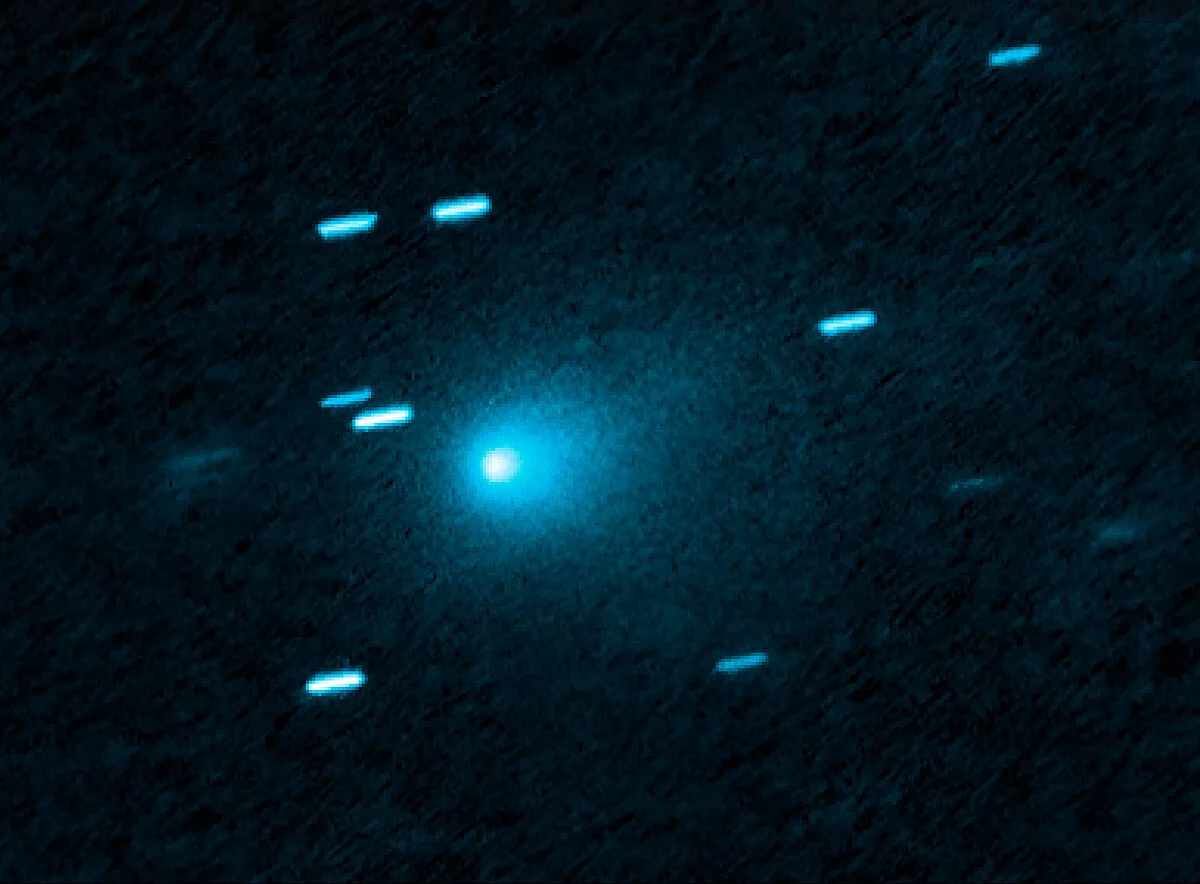
Ambre Trujillo: Yeah. I mean, you nailed it, 3I/ATLAS broke the internet, I think, after it was discovered back in July. As you mentioned, it's one of three interstellar objects that have been discovered. The first was Oumuamua, which was that really funky cigar shaped object. And that one caused a stir, I will say. And then there was Borisov. So 3I/ATLAS is something that has really sparked people's curiosity about what's out there. And it's one of those things that we don't know a lot about. And as Asa mentioned, it's going to be cool when we're discovering these things just over and over and over with the Vera C. Rubin Observatory, because these are very special objects. They're literally objects that come to us from another solar system and they drift through our neighborhood and we have an opportunity to look at them. And one of my favorite things that happened with 3I/ATLAS is ... One of my favorite things in the industry that happens at all is when our spacecraft and our telescopes do an Avenger assemble moment. They all turn their cameras to observe something. And that was something that was super cool that happened with 3I/ATALAS is we had Hubble, we had JWST, we had multiple spacecraft from Mars, Maven, MRO, Perseverance, Psyche, Lucy. All of these different multiple spacecrafts that used their special powers to figure out different pieces of the puzzle of this interstellar object. It's so cool that we're able to do this science because rightfully so, people look at an object like 3I/ATLAS and they think aliens. What is it? Technically it is. It is alien to us because it came from a different solar system. But we have this great opportunity to not only observe it, but to confirm whether it is ... Where its origins were, what it actually is. And we can do that. We can look at it and say, "This is a comet because X, Y, Z." So 3I/ATLAS was the biggest, I think, one of the biggest news of the year because everybody thought it was aliens because we are tied to our logic, we must explore. It's still very cool that it was a comet because we're learning so much more about comet behavior because of 3I/ATLAS is funky. Really cool stuff came out of that.
Sarah Al-Ahmed: Yeah. Some weird tales and all kinds of interesting things on that one. Do you want to add something, Mat?
Mat Kaplan: I was asked about this like you folks, probably more than anything else happening in space this year, even stranded astronauts. And my standard answer is I've talked to Avi Loeb. One of the last interviews I did as host of Planetary Radio and the story doesn't hold up that well. But regardless of his speculations, I tell people, show me an interstellar object passing through our solar system that suddenly changes course on its own and then come back and talk to me some more about an alien spacecraft.
Sarah Al-Ahmed: Right. You can get all kinds of interesting outgassing shenanigans, but until it's like so far out of the physics that we can't ... But everybody wants to speculate because ... We've said it a few times even in this conversation, that question of whether or not we're alone in the universe and the origins of life is such a profound question. And we've been making some good inroads this year, not just with the organics that we've found in asteroid Bennu, but I think the really big news story, although I'm not sure how many people in the public really engaged with it, was that story about Cheyava Falls or rather the Sapphire Canyon sample from Perseverance.
Asa Stahl: Yeah, that's the irony I think of following space science and the day-to-day is that something like 3I/ATLAS, which is super cool, but ultimately it doesn't really have much directly to bring in on astrobiology. That's all about attention of like, "Is it aliens?" The most likely thing to actually be aliens goes under the radar. But of course, how likely is Cheyava Falls to really be aliens? NASA said, acting ... No longer acting, I guess as of an hour ago, NASA administrator Sean Duffy said it was the closest we've ever come to discovering life on Mars. He's not a space science expert, but that was definitely a promising thing to hear. I know that talking to friends and family and other people about this discovery, there's this recurring question of like, "Well, how hopeful should we really be? Is this going to be another sign of life that seems to weaken over time? Is this phosphine on Venus again? Is it thy dimethyl sulfide on K2-18b? Is it the Martian meteorite ALH84001?"
Sarah Al-Ahmed: Allan Hills.
Asa Stahl: Yeah, Allan Hills. Yep, Allan Hills. I mean, so far, no. But we have to wait and see. Cheyava Falls, this was found last year, this region and then particular sample by the Perseverance rover in the Bright Angel region of Mars. But this year was when a paper came out by NASA scientists and planetary scientists that basically said, "We've looked into this much more and we can't find any really ready abiotic explanations for this." Which again, doesn't mean that it's a sign that there was ancient life on Mars, but they saw these poppy seeds, which were like dark dots the size of ultra-fine glitter and leopard spots, which were these larger spots of lighter tones by those dark rims, and then they found organic compounds that were spatially co-located with those signatures. And all that together, those are signs of chemical reactions that Mars microbes could have once used to gain energy. And what's so compelling about this is rocks with patterns like this exist on Earth, and they're most often explained by microbes. And years before we ever launched Perseverance, scientists proposed that rovers on Mars should look for exactly something like this. And so I feel like it's often ... We send probes out into the universe and they surprise us. They do not find the things we expect them to find. Here, we were hoping for this all along and here it is. And now all we have to do is bring these samples back to know for sure. Are those organic compounds? What are they exactly? Are they remnants of past life? Are they things that could maybe make these reactions on their own without being life? What is really going on there? Right now, there's no really obvious alternate explanation. That doesn't mean we won't come up with one later, but it is so, so tempting. And so my letter to Santa this year would be really to Jared Isaacman and say, "Please, can we get those samples back?"
Sarah Al-Ahmed: Really though, Jared, if you're listening. Please bring us those samples back, even if it's not on the timeline we initially thought of. Just the wealth of information that are sitting in those canisters and those sample containers on Mars right now just waiting for us to return them. It's just absolutely mind-boggling. And I hope we do it before we send humans because there are profound questions about what went on in Mars's past with life, potentially. And we might confuse those results by sending humans there before we ever get those samples back. That's one of my greatest fears about this upcoming timeline. Not that one or the other thing won't happen necessarily, but I really hope we do it in an order that allows for this science to be really conclusive. I don't know. We're hoping for that. We're also hoping for some upcoming Venus missions. And now I'm triple hoping for some upcoming Venus missions because the last spacecraft that was orbiting Venus, the Japanese Akatsuki spacecraft has finally gone dark. And I'm so sad because I loved the spacecraft so much. The images were so beautiful.
Ambre Trujillo: We now have a gap. We had a gap of exploring Venus, which is something that is heartbreaking, but we've also been able to gather really great science from Akatsuki because it's been there since 2015, and it worked so hard to study Venus' atmosphere. It had that focus on those super rotating winds. I mean, Venus is just ... It's the gem of our solar system. There's a lot of things that we learned from it and its atmosphere is something that can tell us things about our own planet. It observed Venus continuously over those years. It did things like made it possible to study how atmospheric patterns change over time, rather than just capturing only snapshots. So it showed us that over time thing, instead of just looking at a snapshot and trying to drive certain things from a snapshot, we actually see patterns, which was so very special. But as you mentioned, we currently no longer have any active spacecraft orbiting Venus. And this gives a significant observational gap at a time when science for Venus is experiencing that renewed interest, especially because of the possible future state of Earth, maybe. Under really extreme greenhouse warming. I'm just hoping that the missions that we do have planned go.
Sarah Al-Ahmed: Right. I've had so many intense and emotional and beautiful conversations with both people on the VERITAS and DAVINCI teams and we're rooting for them. We're just going to keep on fighting for them. And it's been such a banner year for space advocacy and just learning more about space politics in general. I know that we're going to keep fighting for it and eventually we're going to get another mission out there because there's so much about Venus that we don't understand.
Ambre Trujillo: Yeah. I hope they both get to go. They were designed to work together. DAVINCI is that atmospheric probe, which will plunge into the depths of Venus and tell us possibly what Venus used to be like. And then VERITAS is going to do the topography and do a really high resolution mapping imaging of Venus, which is so cool to tell us about the geological history. We'll keep fighting for them.
Sarah Al-Ahmed: But hey, at least we have ISAs and vision mission, right?
Ambre Trujillo: Yes. Yeah. Another one that's going to be doing the planet's interior, geology, atmosphere, all that good stuff. That one's right around the corner as well.
Sarah Al-Ahmed: Well, this is the end of the year show, but over the next two weeks, we're going to be talking a lot more about heliophysics and specifically about the interaction between our Sun and where it meets interstellar space. We're going to learn a little bit more about what Voyager taught us about that, but also we're going to be hearing from the IMAP team. And this was a story that I really hoped to cover earlier this year, the launch of IMAP, but unfortunately we had a bit of a government shutdown that messed up all of my interview plans. I want to talk a little bit about that now as we're waiting to learn more about that in the next few weeks. So can you talk a little bit about ... What is IMAP? What is it going to teach us?
Ambre Trujillo: Yeah. Government shutdown. When did that happen?
Sarah Al-Ahmed: It feels like forever ago and literally last week.
Ambre Trujillo: IMAP is a really cool mission. It launched in September and it's going to study the boundary of something called the heliosphere. And that's the bubble of solar wind that surrounds our solar system. And Asa, mentioned earlier about how these solar storms affect a bunch of stuff, including planes, which is my biggest fear. And we need to learn about how space weather basically improves space weather forecasting, especially for radiation storms, because those storms can do things like mess with certain communications and navigation systems, damage satellites, endanger astronauts. But it's going to explain how the heliosphere shields Earth from galactic cosmic rays, that different type of radiation, which is those high energy particles that originate somewhere outside the solar system. And it's also going to improve our understanding of how things like charged particles gain energy and move through space. It's really going to enhance forecasting of that solar wind because we are in ... As you mentioned earlier, we're in peak activity season for the Sun and that's going to happen every 11 years. So we need to figure that out because as we become a more technology dependent society, we need to figure out how we're going to prepare for things like that. And one of those things that we need to do is better forecasting. It completely changed our life when we were able to forecast hurricanes and tornadoes and all of these things. Now we're looking farther out from the Sun and IMAP is going to be able to study a lot of that particle acceleration at the boundary of the heliosphere. So cool stuff.
Sarah Al-Ahmed: Yeah, it's a cool mission. And the way that it does it with the energetic neutral atoms, I'm not even going to get into it because we're going to talk more about it in a few weeks, but it's just a really clever mission concept. And also the fact that it's going to give us like a 30-minute warning on major space weather events for Earth. That time is absolutely crucial, especially for a civilization like ours that's absolutely addicted to our technology.
Ambre Trujillo: Humans are so cool.
Sarah Al-Ahmed: Humans are so cool. That's part of why I love space exploration so much. As a species, we do a lot of really cool stuff, but space exploration has got to be like the cherry on the human sundae of all the weird things, all of the combined expertise that goes into learning something like, "Where is the boundary between our solar systems' solar wind and literally interstellar space?" We even have spacecraft in interstellar space, the Voyager mission. It's crazy that we've managed to accomplish this. Well, there's one more launch I wanted to talk about this year, and maybe I'm a little biased because a lot of this was done by UC Berkeley, which was my alma mater. But we finally got the ESCAPADE mission, these twin spacecraft to Mars. And there's so much about this mission that I think is really cool, but I'm going to give that to you, Asa. Can you tell us a little bit about what ESCAPADE is going to be doing at Mars and why this mission launch is so special?
Asa Stahl: Well, as someone originally from Berkeley, I can also cheer for ESCAPADE. Yeah.
Sarah Al-Ahmed: Go Bears.
Asa Stahl: Twin satellites, Blue and Gold named after the school colors. This is a very cool mission. If successful, because it's still on its way, this would be the first multi-spacecraft mission wholly dedicated to orbital science around Mars. There's a reason that they're sending two spacecraft, it's not just like a two-for-one deal, though it also is a little bit because the launches are expensive, but they're designed to compliment one another. So these are spacecraft that are going to help us understand a bit more about how Mars lost its atmosphere, became less habitable, and they're going to do that by exploring its magnetic field and its atmosphere and how the two respond to one another with respect to the solar wind, this incoming high energy radiation coming from the Sun, charged particles and whatnot. And two spacecraft are better for that than one because then you can get a more complete real-time picture of how incoming radiation is affecting the magnetic field, which is affecting the atmosphere and vice versa, and disentangle those different conditions better. You can have one probe measure the solar wind as it comes in, and then another measure how the atmosphere responds at almost the exact same instant. We've never been able to do that before around Mars. We talk about this year being the peak of solar activity season, what would that mean for planets around other stars, potentially habitable planets, like Proxima Centauri b? That people debate is that habitable or not, living around a very active star? Studies like this, missions like this not only tell us about Mars' past and how it became less habitable, but about the habitability of other plants living around other stars throughout the universe. And to go back to Lunar Trailblazer, this is the last of the Simplex missions to be launched. And so there's this whole other angle to this story that ESCAPADE is of this category of mission that is higher risk, but lower cost. And it's a model of, "Maybe we could do some really cool science spinning these things up faster and paying less for them." But it remains to be seen. So there's a lot of people watching on the sidelines here to see, can this sort of cheaper, higher risk collaboration give us good science? Will it work? Will the spacecraft actually let it do what it is supposed to? But I certainly hope so because it is a very cool mission.
Sarah Al-Ahmed: What I find so impressive about this mission isn't just the mission itself and its science, but the fact that it got delayed and its initial launch plans were waylaid, meant that they had to get really clever about how to launch this thing. And so instead of launching within a normal window to Mars, we're usually very limited in when we can go there, instead it's just loitering around near the Moon and then it's going to come and do a slingshot around Earth and then fly out there. Which says to me that this is the beginning of a whole new way of thinking about launch trajectories to other systems. If we can leverage the Earth's gravity and pull off these kinds of Oberth maneuvers, that means that we can use less fuel, it means we can stage up a bunch of spacecraft near the Moon and then just continuously send them out. It could change the entire timing of the way that we launch missions into space and completely by happy accident because the people working on the mission just had to be really, really clever about what to do when your launch vehicle doesn't go as planned.
Asa Stahl: Yeah. I think it's a really good lesson potentially and how it goes for the future of the new version of CLPS targeted toward Mars. That these lower costs, cheaper, the NASA-sponsored private missions to Mars could potentially do the same thing. That's like a shoe-in for exactly that, that sort of thing.
Sarah Al-Ahmed: One of the last stories I want to share this year, just because it's such a milestone in our understanding of not just worlds in our solar system, but all of the worlds beyond is this massive milestone. The fact that we've now found over 6,000 confirmed exoplanets.
Mat Kaplan: Six-thousand confirmed and another 8,000 or so waiting to be confirmed, and most of those will probably be confirmed. I've told this story before. When I was a kid, my little preteen exploration through books. All those books said, "We'll probably never see a star other than our Sun as a disc and we'll never see a planet going around another star." And now it's like, "Oh, another 20 or 30 confirmed planets across the Milky Way. Yeah, no big deal." Yeah, it's a big, big deal because now we have so many of these worlds. I mean, first of all, we now can extrapolate and we can pretty confidently say every star in the galaxy is likely to have at least one planet. So what does that mean? A minimum of somewhere between 100 billion and more than 400 billion worlds. We've only found maybe 25 so far that are really good Earth analogs, Earth-like worlds, but even that means that there are probably billions across just our galaxy. It is so exciting and there's so much more to come. I mean, we've already with JWST analyzed the atmospheres of over a hundred of these worlds with much more to come and so much more to look forward to with the missions and telescopes that are yet to come, like the Habitable Worlds Observatory. The one that may really answer the questions that we most want answered, about life elsewhere. That could be launched in the 2040s if we get on the stick basically, because that is something that should be way along in its development right now.
Sarah Al-Ahmed: It fills my heart with joy knowing that we've found so many of these and at one point people thought it was going to be impossible to do so. Just think about all of those worlds out there just waiting to be explored. We have so much to look forward to together.
Mat Kaplan: Yep. No, question.
Sarah Al-Ahmed: Well, I want to not only thank you guys for being here to share some of the highlights of this year, but also for sharing them with so many people around the world and for being just generally some of the best people I know on this planet.
Mat Kaplan: It's mutual. Thank you, Sarah.
Ambre Trujillo: Thanks, Sarah.
Asa Stahl: What about the other 6,000 planets?
Ambre Trujillo: No, Asa. We are the ... No, I'm just kidding.
Sarah Al-Ahmed: Someday when we prove that there's life on even one of those rocks out there, I might have to amend my statement, but honestly, it is just such a joy to work with all of you guys and such a joy to share all of this beautiful exploration of the universe around us with so many people around the world that share this passion for just the amazing things that we're going to discover together. And it's only going to get better, especially if we keep fighting for the future of space exploration.
Mat Kaplan: And we will.
Sarah Al-Ahmed: And we will. Well, Ad Astra, you guys have a beautiful New Year.
Asa Stahl: Thank you.
Mat Kaplan: Thank you. Take care. Happy New Year.
Ambre Trujillo: Thank you. Happy New Year.
Asa Stahl: Happy New Year.
Sarah Al-Ahmed: So before we close out our show, it's time to do what we always do here at the end of the year. Look up and ahead. Joining me now is Dr. Bruce Betts, chief scientist here at The Planetary Society for What's Up? We'll talk about what's on the horizon for 2026. Hey, Bruce.
Bruce Betts: Hey, Sarah.
Sarah Al-Ahmed: Okay. We have actually almost actually officially, finally, made it to 2026.
Bruce Betts: Whoa.
Sarah Al-Ahmed: Whoa.
Bruce Betts: Cool.
Sarah Al-Ahmed: Now, there was so much that happened this year. It's really difficult to get a conversation together. That's just about everything that happened. We had to cut out so many amazing things that happened this year in space exploration, and still we went overtime. But that meant that we didn't have any opportunity to talk about everything that we're looking forward to happening in 2026. So I wanted to take a moment and just ask you what things in space exploration are you most looking forward to next year?
Bruce Betts: Oh, there's all sorts of good stuff. The Vera Rubin Observatory and new data it's going to be taking should be awesome.
Sarah Al-Ahmed: Seriously.
Bruce Betts: Find huge amounts of data, should find lots of objects throughout the solar system and do lots of great science beyond the solar system. I'm looking forward to the MMX launch, the Mars exploration mission from the Japanese Space Agency.
Sarah Al-Ahmed: Is that just because of PlanetVac?
Bruce Betts: PlanetVac.
Sarah Al-Ahmed: PlanetVac.
Bruce Betts: No, it's not. It's a cool mission with a Phobos sample return. It certainly helps. One of the instruments is something we were involved with and our members supported and got through some key times to where they were able to propose and get on missions. They have already landed on the Moon. Well, not as part of a mission. It's a sample collection device and it's one of the two sample collection devices on MMX to sample the Mars' moon Phobos.
Sarah Al-Ahmed: Phobos.
Bruce Betts: So that's spiffy-keen. And then just ongoing everything, ongoing space telescope work, ongoing Mars science with all the spacecraft there. There's a lot of good stuff. What about you before I keep babbling?
Sarah Al-Ahmed: Oh, well. Everybody knows I'm in the eclipse girly, so I'm really looking forward to the 2026 total solar eclipse, as going through Iceland and Greenland and Spain. I'm still not sure if I'm going to get to go see it in-person, but I'm really glad that people outside of the United States are going to have a good opportunity to see one because we've been kind of hogging all the good solar eclipses for the last few years, but also-
Bruce Betts: Yeah, but we'll pay for it for the next few decades.
Sarah Al-Ahmed: That's true. That's true. But also the Artemis II launch. I don't know whether or not we'll be able to go, Bruce, but that would be another opportunity for us to miss an Artemis launch.
Bruce Betts: Yeah, I was going to say if you take me, they're not launching.
Sarah Al-Ahmed: You never know. I think I cursed it by leaving the coffee in the trunk, so I'm going to take the blame for that one.
Bruce Betts: All right, that's cool. I don't believe in curses or that my actions would affect a launch, but sometimes you start feeling that way. I think we should send you and keep the coffee inside the car, so that people who happen to be riding with you and really want coffee aren't having to worry about it being in the trunk.
Sarah Al-Ahmed: Lessons learned. Yeah, I think we've got a lot of really wonderful moments coming up. I'm looking forward to them and hopefully just a more chill year for space policy and funding. I'm just going to hope for it, but even if it doesn't happen, we're all going to be here to work together to keep sticking up for space exploration. I've got hope in my heart, Bruce.
Bruce Betts: Stick it up. That could be our motto. That's probably not a very good motto. Okay, let's move on. Are you ready for aurora? Are you ready for aurora?
Sarah Al-Ahmed: [inaudible 01:05:22].
Bruce Betts: Are you ready for [inaudible 01:05:26]? Rewind. Rewind. Rewind. Rewind. Speaking of Mars' moon Phobos. It's weird for people who aren't familiar with its orbit compared to our Earth experience with our one moon. Phobos rises in the west if you're on Mars and passes overhead three times a day because it has a roughly eight-hour period, Mars with a 24-hour and 40-minute or so period. It's quite the opposite end of the spectrum from our having a moon that orbits much slower than we rotate. If you're at the right times of the Martian year, if you're in the equatorial or near equatorial regions, you can get multiple eclipses in one day.
Sarah Al-Ahmed: Wow. It's making me think too, that someday if people are ever living on Mars, someday, maybe fingers crossed. You ask someone like, "Hey, when do you want to meet up?" They're like, "I don't know, maybe by second moon." Because you're going to see that thing several times in a day. It's really cool. Well, happy New Year.
Bruce Betts: Oh, right. Happy New Year to you and to all those listening. May your year be filled with space exploration, excitement, fun, happiness, and the goodness of life. Thank you and goodnight.
Sarah Al-Ahmed: We've reached the end of this week's episode of Planetary Radio and the end of 2025, but we'll be back next year and next week with more space science and exploration. Thank you for sticking around with us through the ups and downs, what was a very challenging but motivating year for the space science community. We've learned and accomplished so much together, and I'm looking forward to continuing to share this human adventure across our solar system and beyond in 2026. If you love this show, you can get Planetary Radio T-shirts at planetary.org/shop, along with lots of other cool spacey merchandise. Help others discover the passion, beauty, and joy of space science and exploration by leaving a review and a rating on platforms like Apple Podcasts and Spotify. Your feedback not only brightens our day, but helps other curious minds find their place in space through Planetary Radio. You can also send us your space thoughts, questions, and poetry at our email, [email protected]. Or if you're a Planetary Society member, leave a comment in the Planetary Radio space in our member community app. Planetary Radio is produced by The Planetary Society in Pasadena, California, and is made possible by our members, the starry-eyed dreamers who know that we can build a brighter future here on Earth and on other worlds by exploring, learning, and sharing together. You can join us at planetary.org/join. Mark Hilverda and Rae Paoletta are our associate producers. Casey Dreier is the host of our monthly Space Policy Edition, and Mat Kaplan hosts our monthly book club edition. Andrew Lucas is our audio editor. Josh Doyle composed our theme, which is arranged and performed by Pieter Schlosser. My name is Sarah Al-Ahmed, the host and producer of Planetary Radio. And until next week and next year, Ad Astra.