Explore Worlds
 Find Life
 Defend Earth


What space agencies are there besides NASA?
Space agencies are essential to how we learn about and explore the Universe. Whether launching astronauts, building satellites, or sending probes out into the Solar System, every space agency helps define humanity’s relationship with the Cosmos in their own way. They have different histories, come in different sizes, can pursue different priorities, and often work in different modes.
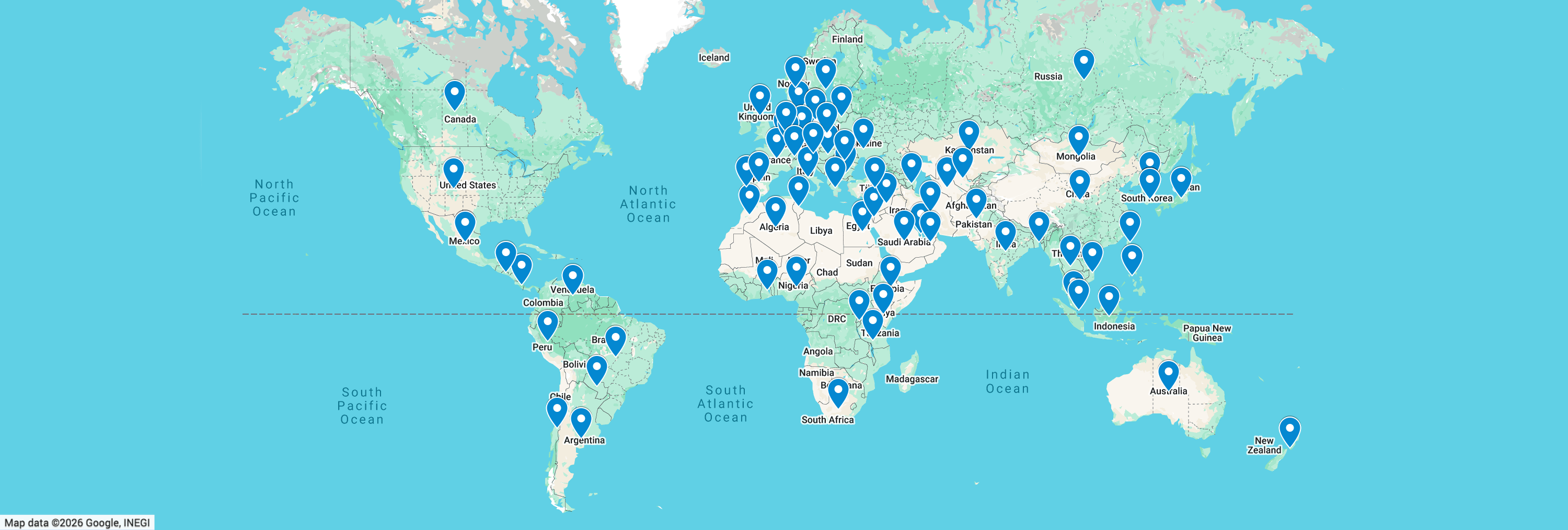
Depending on how you count, there are up to around 80 space agencies worldwide. Here’s a look at some of the agencies that have made major contributions to the scientific exploration of space.

ESA
European Space Agency
Learn More

CNSA
China National Space Administration
Learn More

ISRO
Indian Space Research Organisation
Learn More

JAXA
Japan Aerospace Exploration Agency
Learn More

NASA
National Aeronautics and Space Administration
Learn More

Roscosmos
Roscosmos State Corporation for Space Activities
Learn More
And many more
Beyond these organizations, about a half-dozen countries host public space agencies that have built, launched, or operated space missions dedicated to exploring the Solar System:
- South Korea built and operates the Danuri lunar orbiter, launched in 2022;
- Canada built and operates the Near Earth Object Surveillance Satellite (NEOSSat), launched in 2013;
- The United Kingdom built the Mars lander Beagle 2, which failed to operate in 2003;
- Italy built and operated the LICIACube cubesat that deployed from NASA's DART spacecraft in 2022;
- The U.A.E. built and operates its Emirates Mars Mission around Mars, launched in 2020, and also built the Rashid 1 lunar rover, which was lost when its parent spacecraft crashed in 2023;
- Pakistan operated the ICUBE-Q cubesat, deployed from China's Chang'e-6 mission in 2024;
- Argentina built and operated the ATENEA cubesat, deployed from NASA's Artemis II in 2026.
Many space agencies have also contributed to instruments or payloads onboard science missions that were otherwise built and launched by other countries, including the space agencies of Canada, Taiwan, Saudi Arabia, and Mexico. The majority of ESA member states have independently worked on space missions through their national space agencies, too.
The map below marks every country with any form of space agency, as of July 2026.