

 Explore Worlds
 Find Life
 Defend Earth


Planetary Radio • May 01, 2026
Space Policy Edition: Why humans matter — The philosophy of Artemis II
On This Episode

Rebecca Lowe
Philosophy Senior Research Fellow for Mercatus Center

Casey Dreier
Chief of Space Policy for The Planetary Society
When Artemis II returned its crew safely to Earth, millions of people found themselves unexpectedly moved. The mission was a test flight, a proof-of-concept, and yet it felt like something far greater than the sum of its parts.
In this episode, Casey Dreier, chief of space policy at The Planetary Society, sits down with Rebecca Lowe, philosophy senior fellow at the Mercatus Center at George Mason University, to explore the deeper meaning of humanity's return to deep space. Drawing on philosophy of mind, aesthetics, and theories of value, they unpack why human presence in space feels fundamentally different from even the most sophisticated robotic mission, and why that difference matters.
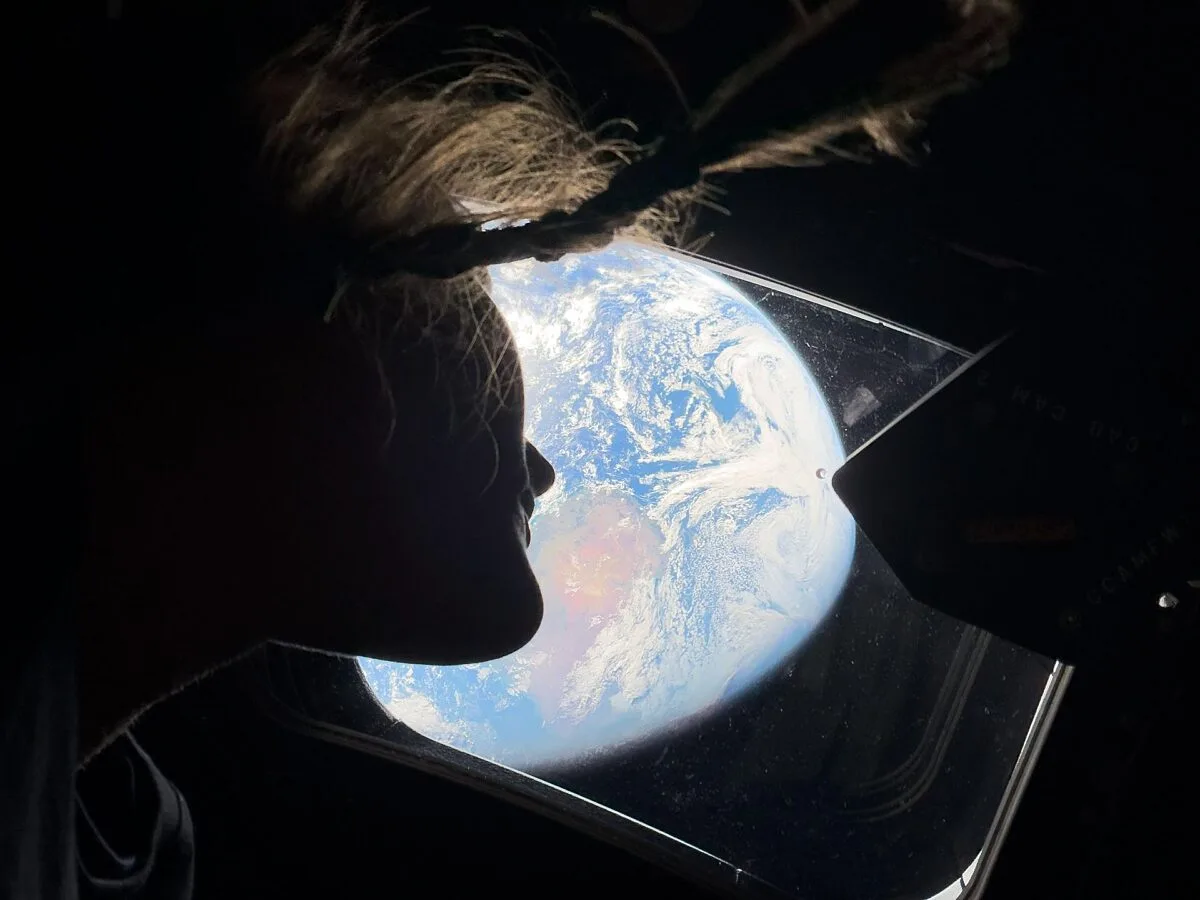
We watch in tears as Artemis II lifts off The Planetary Society's Asa Stahl and Ambre Trujillo were in Cape Canaveral to watch the launch of Artemis II. This was their emotional reaction to witnessing the rocket take off.




Related Reading and References
- The Ends Don't Justify the Means - Rebecca Lowe's Substack
- Rebecca Lowe | Mercatus Center
- The Street Porter and the Philosopher - Podcast
- Working Definition - Podcast
- Our Ethical Obligation to Planetary Science in the Age of Competitive Space Exploration
- Artemis, NASA's Moon landing program
- Artemis II hit Taylor Swift levels of fame. Now what?
- The Planetary Society Celebrates Artemis II, Humanity's First Crewed Journey to Lunar Distance in Over 50 Years
- The best images from Artemis II
- Planetary Radio: Space Policy Edition: Locke, liberty, and the pursuit of happiness (in space)
- Planetary Radio: Space Policy Edition: The Moral Case for Space Science
- Planetary Radio: Triumph and turmoil: Artemis II and the renewed fight to save NASA science
- Planetary Radio: The astronaut health experiments of Artemis II
- Planetary Radio: Artemis II’s AVATAR and a sungrazing comet
- Planetary Radio: Artemis II and III: The science that brings us back to the Moon
- This Life by Martin Hägglund
- Michael Soluri - Photography
- Subscribe to the monthly Space Advocate newsletter
Transcript
Casey Dreier:
Hello and welcome to the Space Policy Edition of Planetary Radio. I'm Casey Dreier, the Chief of Space Policy here at The Planetary Society, welcoming you to another episode that explores the processes and policies behind space exploration. This month, I had to talk about Artemis II, the first lunar mission that I got to experience in my lifetime as it happened, at least a lunar mission with humans. I think actually most people alive on Earth today had never experienced that as well. The mission itself went flawlessly, well, maybe except for the toilet. But overall, the astronauts returned safely. The spacecraft performed as expected, and it opened up a new era of deep space exploration for humans. No longer are humans trapped in Earth orbit. Now, obviously it's just the beginning. This was a test flight. The big missions will be coming down the line. Artemis IV now will be the first attempted lunar landing followed by regular, hopefully, access to the lunar surface and thereabouts going forward in the late 2020s.
Artemis II was an interesting experience for me. Obviously, I have followed space very closely, far too closely compared to many people, but there was something about the experience of riding along with the astronauts themselves, seeing their interactions, their professionalism, their courage, their obvious fondness for each other. There were parts that were incredibly moving, like naming a crater after the late wife of Commander Reid Wiseman. There were moments of pure joy. The pictures were stunning despite, frankly, not having a ton of scientific value, but they were aesthetically astonishing. And I kept going back to this idea of why does it feel so different than looking at similar pictures or even better pictures, more scientifically productive and useful pictures provided by the Lunar Reconnaissance Orbiter, or any number of lunar missions, robotic missions that have been to the similar area of space. Going down that pathway starts to get pretty heady.
To help me unpack this in a productive and grounded way, someone who has a lot of expertise in thinking about meaning and value and formal definitions and logical progressions of such, I reached out to Rebecca Lowe. She is the philosophy senior fellow at the Mercatus Center at George Mason University. She's the host of multiple podcasts, including Working Definition, and a new one with another philosopher called The Street Porter and the Philosopher. She writes a Substack called the ends don't justify the means. And she has been on the show before in one of my most enjoyable past episodes. She is an incredible and insightful thinker, very well-read, obviously, with her background in philosophy, and very interested in this interplay of value and meaning and human relationship to space exploration itself. So she joins me on this episode to unpack in a sense the value, the ways in which we assess value from Artemis II, the ways in which Artemis II means something, maybe even bigger than itself.
And again, even if the scientific value is modest, which I think it is, that the mission itself has value far beyond that. Before we get to that discussion, I need to make sure that you know The Planetary Society, my organization, the organization that produces this show is a public member organization. It is funded by small donors across the world. We don't answer to large aerospace corporations. We don't answer to government. We don't take government funding, which has been incredibly important for our policy and advocacy work over the last few years. But just in broad sense, we represent people, people who love space science and people who love space exploration. We do our job every day, particularly here in the policy and advocacy program, working in places like Washington DC, running things like our day of action, which just brought more than 130 people on their own dime and on their own time to Washington DC in order to promote and advocate against cuts to NASA and space science.
And it depends and actually requires the independence provided by small donors, hopefully like you, but if not like you, not you yet. Please consider joining. Our membership start at just $4 a month at planetary.org/join. If you are a member, first, thank you. And then maybe consider upgrading your membership to enable us to do even more fantastic work in this incredibly dynamic, rapid and changing area of space exploration. That's planetary.org/join or planetary.org/renew, maybe you were, remember, or just go to our website and learn about all the great ways you can support us. And now, my conversation with Dr. Rebecca Lowe.
Rebecca Lowe, thank you for coming back to the Space Policy Edition.
Rebecca Lowe: Thanks so much for having me back.
Casey Dreier: We both watched, followed quite closely, Artemis II. And we were talking the other day and you told me kind of a delightful story about, I believe, the launch of Artemis II and how you experienced that but also kind of built out and brought a number of people around it who may not have known it was happening. Tell us that story.
Rebecca Lowe:
Yeah. So I was at, I'm going to say the pub, it was in a bar because I'm in America. With some of my friends on a Wednesday afternoon, we have the philosophy working group that I run at McKay just where I work and I've instituted this norm that as English people do and also as philosophers do. After the philosophy session, we go to the pub to talk about philosophy. One of my fellow philosophers suggested we go to a new bar. And I was like, "Well, the only condition on this is there has to obviously be a television because our time at the bar is going to coincide with the launch." And he said, "Yeah, don't worry. I've been there before. There's loads of big TVs. It'll be perfect." So we got to the bars, a group of us, the philosophers, and the sports are playing because as you know, in American bars, they play sports, multiple sports.
Even if you're in a hotel bar or wherever you are, any bar has sports playing. And we said to the guy who came over so we could order our drinks, "Hey, is it okay to put on the Artemis launch?" And he said, "Oh no, we don't play news channels here. We have a policy against it." So we had about 45 minutes to try to persuade this guy that he should put the launch on the TV. We all had our laptops out watching it. Finally, he agreed, "You guys can watch it for the last three minutes," but of course it wasn't just us guys, it was everyone else, and it was very exciting and it was a lovely moment. And the bar guy himself watched it too, so that was nice. But it was funny to me that it took some persuasion.
Casey Dreier: It makes you wonder what he thought it was when he was worried about showing news. It's a rocket launch. It's not a statement necessarily beyond that, or maybe it is to some people.
Rebecca Lowe: I agree. I think my guess is they just have a blanket ban on news channels per se. But I agree. This seems to me very reductive. And hopefully, maybe who knows? Maybe there's going to be a change of policy. We'll go back next time.
Casey Dreier:
No news unless it's a rocket launch, so you can come up with that. I mean, that really seems to sum up Artemis II quite a bit. I mean, a colleague of mine was at Cape Canaveral and did interviews on the streets kind of just around NASA Center. And even people around there didn't know necessarily that Artemis was happening. I thought it was fascinating that more people watched the landing, the return, splashdown, I should say, than the launch itself. And that suggests to me that it was... Obviously, it was happening over the course of 10 days and it was in the news a lot, but it feels like there's something deeper going on. And this is what I'm really interested in exploring with you about how the society's relationship to the idea may have changed during those 10 days, that something that was not even maybe feasible became real and immediate in a way that was almost to be dismissed before to experience that myself and to feel like my own relationship with this.
Looking back at Artemis II now that we have kind of the benefit of that, it was a successful mission, they all got back safely. Even before I get into my experience, what was your experience then beyond that as someone who has been involved or followed space, talks about things about space quite a bit, what was it like to watch that as a living person?
Rebecca Lowe:
I thought it was amazing. I mean, just on an aesthetic level, I thought it was incredibly beautiful. I saw that about the splashdown and the launch. The splashdown in particular, actually, there were these very iconic moments, I think, of it hurtling, first of all, halting, hurtling towards a very kind of beautiful, almost monochrome image. And then suddenly the blue with the beautiful colors of the parachutes, I think you could see those becoming sort of art objects in themselves. So there's this great aesthetic benefit of both of these things. And I think this may possibly, if I could posit some kind of simplistic answer to your question around why didn't more people watch the splash down, I do wonder if there was a kind of overheightened sense of anxiety from some people about the launch. I mean, launch, people think, "Oh, the launch is very dangerous." Maybe people had memories of Challenger, Columbia. Maybe they were anxious.
I certainly saw quite a lot of chat. I mean, I don't know, the science guy, one of my group chats, it's all about the WhatsApp group chats, was warning everybody, "Oh, the private sector's involved. There's less security than there were in NASA days. It might all go wrong." And then it didn't go wrong. In fact, it all went really, really well. So maybe there's also just a sense of, "I don't want to watch something horrible." I do think that's a overly simplistic understanding. And I also agree too. I mean, I think you were implying there is just a sense of interest building over that period of time. There's an interesting thing to be said though, because the counter to the idea of the launch being more dangerous, and there will be empirical answers to whether it did or not, that's not the thing I'm saying, but the perception it's more dangerous is of course that it's also more exciting on some level.
So then you think if the interest had been at the level that it was for the splashdown than that of the launch, would you have had even more viewers? I think there are these interesting... And again, these are broadly empirical questions, not ones for philosophers to answer, but I think my guess is there is probably some complicated psychological stuff going on, as well as just a pure lack of information, knowledge, which is, to my mind, very sad. That said, one final thing I would say, I read a piece in The New York Times a couple days before the launch, which reported on sort of looking back over kind of polling data over the decades.
Casey Dreier: I was quoted in that piece, I believe.
Rebecca Lowe: I think you were. I saw you. And it was quite interesting to see that the only month where Americans, at least according to this data, thought that taxpayer spend on NASA was worthwhile, was the very month in which Neil Armstrong set foot on the moon. And then it was, what, was it, like 51% or 53%?
Casey Dreier: Yeah, barely more than half.
Rebecca Lowe: Right. So I do think possibly, I mean, we're talking relatively, but at the same time, it may be the case that people overstate interest in this stuff back in the day too.
Casey Dreier:
Oh, for sure. I mean, I think that's worked by Roger Launius looking at the public opinions of Apollo over time and his whole conclusion is that it was not that popular. I mean, it was a bit more complex than what I just said. People liked it, but they didn't think it was worth it. And that's that key question, was it worth it? And so when Nixon was wound down the program in early '70s, he was in step with public opinion. That was people weren't eager to keep spending at that level, roughly 45 billion a year adjusted for inflation. NASA spent over 300 billion in 12 years to do Apollo the first time. And Apollo didn't reach this kind of broad... I mean, you also had that classic [inaudible 00:13:28] kind of piece of Whitey on the Moon, and you had obviously a lot of mixed feelings, and culture had certainly changed a lot between 1961 and 1969 in the United States.
And that's what I think is actually really key for my experience where I was born after that, like you were, like actually-
Rebecca Lowe: You do.
Casey Dreier:
... most people alive right now. And you can look at some of this polling data that Roger Launius has put together and most people for decades had kind of a mixed view of Apollo, whether it was worth it, not until the mid 1990s when suddenly there was this step function jump in public opinion. And there's no good explanation except for that's when the movie Apollo 13 came out. And it's like, I think you can actually pinpoint that moment when Apollo moved from experience into myth, right, and moved firmly into the era of history and myth, and it became romanticized.
That's when we were a country, damn it, that's when we could do things. That's when John Kennedy stood before and said, "We will go to the moon," and nevermind those other things that he talked about. "We were going to the moon and by God we did it." I think that's how I experienced Apollo growing up and that's how I think most people have seen it now at this age, which has its pitfalls because then when you try to recreate this perceived golden era of history, you succumb and you ignore the messiness of it, I think, and you are trying to now replicate something through maybe nostalgic pursuit rather than acknowledging the messy difficulties of actually making it work.
Rebecca Lowe: It may just also be easier to kind of post-hoc justify something when the cost isn't earned.
Casey Dreier: When someone else has paid it past tense-
Rebecca Lowe: That's right.
Casey Dreier: ... already. True. Yeah. I mean, because I was at the time, Apollo at the time, I mean, the US was not running any kind of significant budget deficit back then. So Apollo was paid for in very much a way this current program is not.
Rebecca Lowe: Right. I mean, that's a kind of general problem at the moment-
Casey Dreier: Indeed.
Rebecca Lowe: ... putting burdens on future generations.
Casey Dreier: But to that point, when I witnessed Artemis II, and when I was watching it, so I was actually commentating on TV for it, and I was convinced it would just not launch because I was there for the first attempt for Artemis I, it didn't launch for months, and I just almost didn't believe it could happen. And so that was the experience for me was actually having something rooted in myth, basically, and this ideal that we could never achieve again suddenly happen in front of me.
Rebecca Lowe: Do you think there's also something to be said for now our ease of access to watch these things?
Casey Dreier: Yeah.
Rebecca Lowe: You can watch rocket launches all the time, and therefore the ordinary person on the street, or at least the sufficiently ordinary person who's also into watching rocket launches knows how often they have to be delayed. Whereas in the past, it would only be the really big things. And there's also then questions about iterative stuff and all kinds of different approaches. But when you can watch all of the things, including the things where it seems much less likely for it to happen because for various reasons, then your expectation just isn't as high.
Casey Dreier:
Very possible. I mean, it depends kind of what your engagement to with the space program is. I'm a freak outlier and probably most people who listen to the show compared to the average person on the street, but I felt like there's been, and maybe you've encountered this over the years, there's a certain type of person who's almost been personally insulted by the lack of moon trips in their lifetime since Apollo. "You promised me a moon base 50 years ago, damn it, and we still don't have it," and they've become so pissed off about it. And this idea that this can't happen, right, that there's just no way this can't, without something radical changing, which kind of leads into the future of this. It's interesting actually that your friends said that the private space involved. This is the last echo of classic aerospace contracting. This is Lockheed Boeing all the way kind of a mission and kind of like their big swan song in a way, right, that they pulled this off. It worked really well, very expensive, kind of boutique spacecraft that they'd made here.
But this idea that NASA can't do it, the moon was always forever out of reach, almost I think played into my experience of watching, which is like this almost can't work anymore. And I think that's almost goes back to maybe when I get a main topic here is about what is the value of this mission and how do we measure that type of value and hopefully leveraging some of your philosophical tools of value definition to play here. But I think it reasserted a certain amount of capability. And I wonder, particularly within NASA itself, did you experience any of that too? Did you have a kind of cynical streak when it comes to the application of space exploration from your engagement with it?
Rebecca Lowe:
I mean, that's a great question. I am the eternal optimist about absolutely everything. I just have a very optimistic personality. I think it's something I'm very lucky about. I don't think it's something I've generated in myself, although I do try to do things to maintain it. I live in America rather than England, everyone is cynical in England. So I think I'm probably less likely even other people to go into watching something like that, assuming it's not going to happen, even though I'm aware of the stats and things and thinking about the weather and all of those kind of unfixable matters. I would say, so one thing I was thinking about in terms of the difference today from our discussion last time is we talked about this in a very abstract sense, didn't we, in terms of space exploration, certainly human space exploration, and now here we are on the other side and it's happening again.
That's just [inaudible 00:19:09] point. But I think it's just the opportunity to kind of apply or have some particular example to think about. So last time we talked in the abstract about things like space exploration, furthering human knowledge, things like... And of course, this isn't to deny that there has been space exploration happening in between the Apollo era now. Of course it's been happening. In fact, we've sent off a load of probes, we've had a lot of robots up there doing very exciting things.
Casey Dreier: And that's my bag.
Rebecca Lowe: That's right, which exactly so, which indeed increased human knowledge on Earth. But some of the other things we talked about, so for instance, experience, the opportunity for humans to actually be there and experience things, we're back fresh into that and that's very, very exciting, I think. It's a new kind of experiential knowledge, different kind of knowledge. Now we have better video footage. People can follow it along much more clearly. As reminded of this very beautiful thing you said in the last podcast where you talked about the importance of vision in the sense of being able to see stuff up in the sky. And I think there's a kind of derived sense in which that is enhanced by new kind of camera technology. I mean, now you can watch every little bit from every little angle.
Casey Dreier: Yeah.
Rebecca Lowe: Of course, that's contrasted with the quite blurry iPhone footage that everyone has been sharing. But you know what it's like when you watch a launch online these days, you get all these different angles, you can see it from inside the machine. I mean, it's very exciting. And it's just this kind of on the spot access all across the world, even if you're on your laptop in the bar because the guy won't put it on the TV, is just entirely different from the Apollo age in a very, very immediate sense.
Casey Dreier: The immediacy. Absolutely. I think that's a huge difference. The Earthrise photo from Apollo 8, no one saw that until after they'd gotten back and two weeks later after they developed the film. It was weeks.
Rebecca Lowe: And so recently that a lot of those things have been taken out of the deep freeze, those photograph. I mean, I love the photo books of some of those glorious pictures from right across the earlier NASA missions, but a lot of them had just been sitting there. I mean, thank God they preserved them, but whereas now, you don't have to go through all of those processes. You literally have it beamed onto your phone.
Casey Dreier: You're swiping with your thumb and you're like, "Okay, this, this, someone doing something silly." And then like, "Oh, view of the Earth from the Moon. Okay, go, go, go." It's like, does that almost like cheapen it though? It kind of pulls it into this stream of feed of overstimulation.
Rebecca Lowe: Yeah. Makes it ordinary. I mean, there's a wonderful way in which that's become ordinary. I mean, what astonishing progress we've made for that to be something banal.
Casey Dreier: Yeah.
Rebecca Lowe: Isn't that-
Casey Dreier: What a ultimate luxury.
Rebecca Lowe: ... incredible?
Casey Dreier: Yeah.
Rebecca Lowe: Yeah.
Casey Dreier: I also thought the video of inside the capsule, I mean, we got so much more... Again, we would see these TV broadcasts from Apollo, but this is like low quality video, brief moments broadcast on TV. And here where it's almost like a stream, you could just follow along. You could stream into mission control. That immediacy was incredible and the openness was incredible. And I think it also contrasted to me the fundamental value of a public program with more of this idea of like, "Please pay attention to..." "Here, take it everything. We are giving it to you. Just pay attention to... Look what we're doing," versus the private aspect of space, which is public to the degree that it's relevant to their bottom line, that it's good for their interest and the moment it's not, they won't do it because they have no public desire or ownership or responsibility to serve that.
Rebecca Lowe: Yeah, I like that. I think, for instance, I mean, I have quite strong views, for instance, that state actors have very particular obligations to be transparent. I think programs funded by the taxpayer, there is an obligation not just to inform the taxpayer about what's going on, but to enable the taxpayer to feel involved when it's something like this. I feel like there are these extra obligations around education, around sharing, around not just in terms of holding state access to account, but in terms of enabling the kind of sharing of the benefits, there are massive positive effects and [inaudible 00:23:30] to be taken from this. And if part of the justification for doing this is to further human knowledge, which I think is an easy part of the argument to make, then some obligations come from that.
Casey Dreier: Even watching them try to fix a broken toilet. I mean, that level of mundane and certainly not what they want. That was about half of some of the depressed-
Rebecca Lowe: That gets the kids into thinking about engineering, then good times.
Casey Dreier: I mean, but that's part of that honesty with it, right, and that kind of-
Rebecca Lowe: The normality again, I mean, what an amazing thing. I mean, you spoke about dealing ... And I think I shared this too, there's a sense in which people who grew up and we did might feel a little shortchanged that we didn't get to be going off to the space hotel or in the flying cars, but all of a sudden, here we are and this stuff has become normal. This stuff has become banal and we can joke about it and we can see the ins and outs and we can follow it. And I mean, we're there, aren't we? I mean, how astonishing is that that this thing can become normal?
Casey Dreier:
Yeah. I had that moment where it broke out or kind of maybe broke through in my brain when I saw the conversation between the Artemis II crew and the ISS crew. And a space station crew is talking to a moon voyager crew. It's just like something just sounds so incredible about that. And the astronauts themselves were like, they could not get over. They were so excited to be doing that. But then the point of conversation was the most like, "Hey, how's the green beans? Do you have the same spicy green beans we do?" And it was like that contrast of the banal with the incredible, which I guess is the essence of human space flight, right? It's the simultaneous, most exciting and boring thing to do, particularly if you're just sitting and floating around.
We're not floating around but waiting to go float around. That was just a remarkable moment. And that's what really got me thinking again what the value of this mission was. I have reflected on the pictures that they've taken, and I think you brought up the aesthetic sense of them as really spectacular. And I think most people love seeing those pictures and love seeing pictures of people themselves, but it's not even, as you said, that with the iPhone images, that's kind of a blurry iPhone video. And the value of that wasn't even the aesthetic sense. It was almost the unifying or everyone knows what it's like to shoot a bad iPhone video pretty much.
Rebecca Lowe: That's right. That's right. Shared experience enables you to have some kind of access, some kind of drive access to their experience there.
Casey Dreier: Why does it seem so critical that humans are, in a sense, witnessing this event rather than getting the same thing from a robotic spacecraft? Why does that feel so differently? This is kind of why I wanted to investigate. Are there philosophical tools that allow this kind of personal connection or projection or shared experience because there's another soul basically experiencing something out there?
Rebecca Lowe:
I think it's a question that has quite broad application value at the moment in terms of emerging technology more generally. So I'm quite interested in this question about the difference, for instance, between a poem that has been written by AI and a poem that's been written by a human. And I think it speaks to the same kind of thing, which is I think we have a natural interest in things that other members of our species do, right? So if a human being does something amazing, there might be some sense in which maybe it furthers our aspirations, maybe we feel some sense of pride, we see it as a human achievement. And I think that's the case when humans go into space and they're all kind of interesting and you can also have quite cynical takes on how this can be used politically. So that's point one.
Point two, I think, beyond that is something like it might tell us something particular about the kinds of things we are as creatures. So again, to use the analogy of the human poem and the AI poem, I wrote something on myself recently about, I'm very, very interested in reading AI poetry. I think it could be very good poetry, but my assumption is there will remain demand for human poetry, not just because of this idea of it's something, some kind of sense of the right achievement or something, but because creating art objects is done in some particular way by humans. There's some sense of intention, which I think you implied. There's some sense of expressing something about what it is to be human. So it doesn't just represent achievement, it also represents something like the human experience, something like that. And I think art objects are a good example of this because if you take a poem, for instance, it can be intense, it can be romantic, it can be expressive, it can be all of these things.
I think it summarizes human capacities quite well. But similarly, I think when people achieve things like going to new places, learning new knowledge, that just means something very specific in a way in which a robot doing it doesn't.
Casey Dreier: Yeah. It's almost some sort of animate perspective where you need the idea of a... I'm going to just return to this idea of the soul for whatever that, just as a placeholder for kind of roughly what that means. But you need to know that a soul is on the other end of that in order to apply value almost, and meaning that it's trying to say anything. And that's interesting you bring that up with... I think the AI poetry, I'll have to read your piece, but that's a really interesting comparison because reading AI writing or novels or an AI essay, I would never seek out an essay to read the... The reading I do of AI text is purely extractive. What's the information I'm getting out of this?
Rebecca Lowe: Exactly, exactly.
Casey Dreier: And I thought about this too at much more superficial level, of course, but this idea that because there's nothing it can say because there's no... I mean, I guess this is what the debate now is the [inaudible 00:29:26] kind of... Is it something to be that AI or not?
Rebecca Lowe:
Even if there were something it would be to be an AI, it would not be the same thing as it is to be a human. So the AI can't experience what it's like to be a human. Therefore, the AI writing about human experience is lacking in something. I mean, my personal view is the AI, there is nothing it's like to be AI. I don't even think it's a particular thing. I have this niche philosophical views about it.
So if it's not even a thing, it's like AI, there certainly isn't a thing it's like for an AI to be a human, but you don't even need to go that far. And you can just say even if there were such a thing as to be AI, it's not the same as the thing it is to be human. We have a particular interest in humans speaking to the human experience. So I think you can make a similar analogous move, which is something like, look, one of the benefits of sending a spacecraft into space is that we can derive new knowledge, right? So we can learn stuff about whether there are shrimpy things on the moons of Saturn. That's very important for us to know that. We might learn things which enable us to make new medical advances. So knowledge can be furthered.
Similarly, when humans go into space, knowledge can be furthered. There might be different kinds of knowledge that can be furthered. Maybe you learn some things about the human body and space that you couldn't learn from just the spacecraft. But then there's this extra element, which is the experiential element.
And I think that's very important. And yes, you're absolutely right. It speaks to this kind of phenomenological sense of consciousness, this sense of there being something it's like to be Casey, there being...
Casey Dreier: God forbid.
Rebecca Lowe: This kind of internal introspective power, this idea that it's not just that stuff happens to us, but we're aware of it. And it's a whole extra world. It's a whole extra thing. And we could talk about that in terms of the distinction between gaining knowledge from the spacecraft, collecting information and actually experiencing the thing. And yeah, the problem then comes, of course, that us here on Earth, we can only derive that value from the astronauts. Although like you say, we have new ways of accessing kind of what it's like in the sense of seeing the footage. But at least it's the kind of thing like us that's doing it. And they can come and they can report and give testimony to it.
Casey Dreier: Yeah.
Rebecca Lowe: And I just think this is-
Casey Dreier: That's why I kind of chose the word witness, right? That they're almost coming back.
Rebecca Lowe: That's right.
Casey Dreier: I have gone and crossed the threshold into the heavens. I have seen the Earth from 200,000 miles above. We can see pictures of that, but there's something fundamentally compelling about, ironically, about someone using their words to tell you that based on their experience beyond just seeing the same shared picture. And I don't know why that is. It's like I can't put my finger on exactly why that is. And I'm sure other people have thought about that to more depth than I have.
Rebecca Lowe:
I think it may speak again to something like the special qualities of human created art. I mean, I've recently got to know through you, thanks, this fantastic space photographer, Michael Soluri. I think he has convinced me, not that I really needed convincing, but I have extra reasons from talking with him, from looking at his wonderful photographs of the kind of the special sense in which space gives us access to beauty.
I think as human beings, we have an interest in beauty. I'm interested philosophically in what beauty is and what the truths of beauty are and those kinds of things. But it seems to me there's just a sufficient reason to go into space to explore the beauty of space. Probably going to be harder to persuade people to put up their 15 cents a day or whatever it is we talked about last time for those reasons. But it does seem like nonetheless, it's a separate reason, aside from the kind of epistemological reasons or the experiential reasons. It's a whole domain. And you might get onto this when you also think about things like music, why music is valuable, this kind of aesthetic type of argument, something special. And again, that's something that the human... The spacecraft can't experience beauty. The spacecraft can't benefit from beauty, whereas the humans can. And yes, you're right, they can then come and tell us about it.
And that in itself can be beautiful too. The writing can be beautiful. That can be one of the points of value about their reportage, that it can have a kind of beauty, and it's a new kind of beauty. It's a new kind of beauty just purely in the sense that nobody has been there before or at least pretty soon they'll be going to places where nobody's been before. In fact, they did go places this time. But you know what I'm saying? I mean, there's the possibility of not just the writing being beautiful, but it reporting on new kinds of beautiful things. This is a kind of slightly airy-fairy philosophy argument, but I do think it's underexplored, and I think people like Michael with these wonderful photographs can help us to appreciate that and the importance as human beings of being able to access beauty.
Casey Dreier: We'll be right back with the rest of our space policy edition of Planetary Radio after this short break.
Bill Nye: Greetings, Bill Nye here, chief ambassador of The Planetary Society. Last year you showed up and it made all the difference. Tens of thousands of you sent messages to Congress, you traveled to Washington, you made your voices heard, and together we stopped nearly 50% in cuts to NASA science. That victory, that was you. But the fight isn't over. New challenges are here. Your gift today keeps our advocacy efforts going strong so that next time we can act fast, fight hard, and win again. Together, we're not just saving NASA's science, we're protecting humanity's greatest adventure. So please check out planetary.org/takeaction, and together we can carry on, keep exploring, and change the world. Thank you.
Casey Dreier:
What happens then when that separation is the same picture taken by a robotic spacecraft? Human hands still planned that observation. Human brains still look at the same... I mean, they're not seeing the same thing. They're seeing electronic representation of photons that were captured on a CCD. There's just one step missing, right? On the immediate receiving end and I guess maybe the intent, the immediate intent, it's like mediated by a few steps of just... But I mean, functionally, it's the same, right? I don't think we're not saying it. There are incredibly beautiful pictures taken by robotic spacecraft. That's my part and parcel of trading and what I do.
But as you're saying though, this is what I'm trying to understand. Why is having a human there seemingly add value? And is it that the implied risk that they themselves have put in creates a sense of meaning because the difficulty itself of putting them there? Is it something about the immediate intent with the flaws inherent in it. right? Because the pictures themselves that come back from Artemis II astronauts, they're not as good in terms of... The scientific, the epistemological value of Artemis II is not much. And to the extent that there is, it's primarily tautological.
It's itself like it tells you more about humans going into deep space. So humans can go into deep space more, or it gives you these bigger kind of perception pictures of the moon, but the moon is already well-mapped, right? They're not revealing anything new. And if you zoom into those pictures, you see that they're a little blurry because unlike robotic spacecraft, they can't slew their camera perfectly to offset their rotational or their horizontal motion relative to the target. But yet, but yet, but yet, but yet there still seems like the experience of watching that, it surprised me how moved I was at that experience, despite all of the lacking of this broader kind of epistemological benefit that we always talk about. They're not doing something for the first time, right, that they're redoing something. And this is where I keep going back again, because it was four souls on the end of that that were behind the camera. And I don't know why that feels that way to me.
Rebecca Lowe:
So I think a couple of ideas. One is something, and I think you put this nicely, it's to do with the risk or it's to do with the particular achievement, to do with the fact that humans manage to do this thing. The problem with that though is that you should feel that regardless of how beautiful the photograph is, I think, or at least you can separate it out. I think there's maybe something to be said, and you said about intention. To my mind, it's not just about the output, it's about the inputs as well. So the robotic arm might have taken the exact same photograph. In fact, maybe the robotic arm just took a billion photographs and this one, the AI selected it as the one that's going to be most appealing to human eyes or something like that. But then that misses the sense that some particular person thought, "I found that beautiful, or I found that interesting, or I found that important and bid on it." They picked it, they made a choice.
Now, of course, you're going to again get the problem, you're going to say, "Oh, but Rebecca, sometimes the greatest photographs are taken by accident." Or they just do the shutter speed thing and they take thousands of pictures and they happen to catch the one where, I don't know, the person catches the baseball or whatever it is. But I do think usually when we're thinking about the value of particular art objects, whether it's photographs or paintings, we tend to find it hard to separate that out from the intentions of the artist. Now, people who are interested in aesthetics debate about this stuff all the time, the role that intention plays, but I think at least on an ordinary account, people do care about that stuff. They still care that it was da Vinci that painted The Last Supper in the same way that they cared that their favorite op-ed columnist wrote the piece.
You can give them a thousand pieces in the words of that columnist. My assumption is the demand will retain for the particular person doing the particular thing. And I think this comes back to this point that you made about intention. It's somebody making some choices, being deliberate about it, picking something out. And aside from anything else, we relate to it. We all have time cost. We do this instead of this and we do this instead of that. And we vote on things, we make choices about things. And it matters when we talk to other humans about how they make those choices, why they make those choices. And in the creation of a photograph, we want to say to the photographer, why did you take that particular photograph or what were the circumstances in which you were able to do that thing? And with the robot, there is no thing to give you reasons. We care about reasons. There is no thing to give you explanations, to give you justifications.
Casey Dreier: But still with the robot, there's the team has told the robot. I mean, there is intention. There are justifications, right? It's just mediated through that robot.
Rebecca Lowe:
No, this is a great point. And to be honest, I think one of the most interesting questions certainly about AI art creation is this point about collaboration. So it's not the neat distinction between Casey paints the picture and AI creates the picture. It's what happens if Casey uses the AI in his creation of the picture. And then what is the point past which we lose that interest or what is the point past which maybe we want to say that our evaluation of it changes? I think these are much more complicated. And my assumption is a lot of what we're going to, at least for now, while we're relatively new in thinking about these things, a lot of our judgment is probably going to weigh on the level of which you have intended something. So if you think, I don't know, another analogy, think back to when composers in the 20th century, so as a niche example, we're experimenting with 12-tone music.
So this is the idea that you kind of shake up all of the semi-tones and then you create scale and you make music out of that. Think about the distinction of example one in which you get some randomizer to create that scale, but then the composer uses that scale and fully composes the piece themselves, right? And then example two, on which they just press a button and the whole thing is generated. So they're still pressing the button. Maybe they even say, "I want the piece to be 12 minutes long." Or maybe they even say, "I want it to express this thing." It seems to me like the work has gone in, the intention has gone in, the thinking, the reasons, all of this stuff, it's just so much more deep in example one.
So the difference between the person having created the robot and clicking the button, not being there to experience it, not being there to feel it, not being there to be taken by the moment and think, "Oh my God, that's so beautiful. I want to share it with other people or I want to put it down in this moment," I just think there's a whole realm of stuff that is missing. Of course, the outputs might be identical, but I think we care about that stuff as humans. Whether we should or not is an interesting philosophical question.
Casey Dreier: No, that's right. This isn't necessarily an endorsement of that as a... Are we basically saying here that experience has an intrinsic value?
Rebecca Lowe: I think experience is something special to living things.
Casey Dreier: Or conscious things in particular, right?
Rebecca Lowe:
Yeah. So then we get onto this interesting question about consciousness. So one thing I'm particularly interested at the moment with these new technological advances, and I'd say this both in terms of AI but also the hope of finding non-human life in space. We have these new kind of comparators. So we thought, philosophers have thought for millennia about things like the relevance of consciousness or the relevance of sentience or the relevance of intelligence to being human. Many people have come up with theories around stuff like obligation that are contingent on our ideas of these things. At their heart, often there's a comparison with other things. So people might think it's okay to treat the human like this, but it's not okay to treat the animal like this because you can't get consent from the animal. Or they might think it's okay to treat the animal like this, but not the human like this, because the human has greater sentience or intelligence.
We can argue all day about whether those theories are right or wrong, but all of a sudden we have these new kinds of comparison. So we have for the first time, at least I assume for the first time, I don't want to deny the possibility that maybe there were really great scientific achievements back in free human times or something like that we've just lost awareness of. But in the first time in our kind of awareness of human experience, we can have conversations with non-living things. This is astonishing to the philosopher because all of a sudden you get this new kind of comparator. Similarly, if we find non-human life in space, we again get this new non-human comparator, which allows us to refine our notions of things like the relevance of consciousness to obligation or what it really means to be conscious. I think this is a very, very exciting time for philosophy and it forces us to reconsider.
So in the same way that now I think the field of aesthetics may well become more focused on who created the thing because all of a sudden we have these non-human things that are capable of creating art with varying degrees of human involvement. Similarly, we have these non-human things that seem to be displaying, again, at least at the outcome level, the kinds of properties that we have previously associated only with humans or only with living things. And here again, I would stress this difference between the outcome of something appearing to be and something actually being the case. So the classic example would be within these different theories of consciousness or notions or conceptions of consciousness, one of which is kind of functionalist account in which people say things like, "Look, the machine is creating these outputs that we think only conscious things can create or which are the same as the things that conscious things create. Therefore, we should treat it as functionally conscious and this phenomenological sense in which it's not the outcome that matters or not solely, but it's, do you have this what it's likeness that you referred to?
So I think it's the same with the art stuff. It's, is the outcome sufficient? Is it enough in terms of our value assignment to just compare the photograph taken by the robot and the photograph taken by the human and say, "Look, they look exactly the same, therefore we should value them the same." And I think what I'm arguing is it's just not as simple as that.
Casey Dreier: Yeah. But again, and I really think it goes then to what are you valuing. And I think that's the distinction here because the scientific output of this mission is not going to be much and it wasn't sold. It's not a science mission. It's not why it happened. I think NASA maybe overplayed the science a little bit, particularly in the context of science being proposed to be cut in half. That's whitewashing, I think, some of the real destructive things that are happening to it. And it's interesting that there's this ongoing attempt to layer on this practical benefit of scientific knowledge, of X, Y, and Z, even inspiration and STEM students and all the things that get that I trot out all the time and people trot out all the time, which aren't necessarily-
Rebecca Lowe: That stuff could be true, but also there can be something else, right? We don't have to give away the instrumental value to say that there's something else or some other kinds of instrumental value. We can have it all.
Casey Dreier: They fixate though on the instrumental value. Whereas I think what we're really getting at here is that, and what reacted to me was the non-instrumental value, which still is a value. And I think we're just not used in this society to talking about that very much in a very secular quantized society of digital titans. But this idea that because there was an experience of individuals doing this, because those individuals experienced something and through those experiences, we can more easily share that experience that it then becomes an almost powerful symbol. None of these are the things that we measure normally. There is no big scientific revelation going to come out of this. That's not why, in a sense, we should do Artemis, I think, because science could be great add-on, but it's not never going to be the priority. And if you want to get the most science out of it, you would make hundreds of robots for that same... The hundred billion dollars is so we spent for that.
Rebecca Lowe: That's right.
Casey Dreier: Same for the technology. I mean, it's just, why aren't we able to just talk about I'd say from an institutional level? And it's interesting. I heard this today to do a brief tangent of this. There were multiple hearings about the NASA budget over the last week. Every member of Congress opened with saying how much they were astonished or felt awe or excited by Artemis. None of it was, "I was so impressed by the scientific return of the images of Artemis II." None of it was, "I counted all the engineering subcontracts awarded to these districts in Artemis II and wow, what an amazing..." No, it was all the... They talked about it from an emotional experience level of something astonishing happened to them. But then it always goes back to the justification just dances around that. Are we just incapable of doing so? Why can't we just acknowledge there are different types of value to these things?
Rebecca Lowe: Yeah, it's very hard, isn't it? I mean, part of it is just it's easier to justify money spend on things that are quantifiable. People like numbers, they like big numbers.
Casey Dreier: Things that are countable get counted, right? I mean, I think we talked about this last time and I talk about this all the time.
Rebecca Lowe: But this isn't really a very good answer, is it? I mean, I think this is an explanation of some kind.
Casey Dreier: Yeah.
Rebecca Lowe: I think there's another point which you made very beautifully last time, which is also we're just not very good at talking about these things. We find sometimes these things... Some people find these things a little embarrassing. It's like talking about emotions more generally in public.
Casey Dreier: Cringe would be... Is that what the young people say?
Rebecca Lowe: It's a bit cringe. Yeah. It's very funny. I find the word cringe funny because of course the word cringe is very cringe. It's like [inaudible 00:49:08].
Casey Dreier: Picking one an old man like myself says it.
Rebecca Lowe:
Or me, one of these self-referential things. I think for me at least, because one of the problems we're talking about, the [inaudible 00:49:17] between instrumental value in the sense of things that are good because they bring about something else good and intrinsic value, which we in short term kind of think of as things that are valuable in themselves, is that oftentimes discussions of intrinsic value shift and slip into discussions of instrumental value. I certainly find when I like to think about intrinsic value, I often think about it in terms of these basic human goods, which I think are not reducible to other things. So I think these things like knowledge and love and friendship, achievement, fulfillment, these kinds of things, you can't reduce them down further. I mean, knowledge. Somebody might say something like, look, education is valuable because it brings about knowledge and knowledge is valuable.
What is the thing that knowledge brings about? I mean, knowledge brings about awareness or something, but then that's just a kind of knowledge. And so I think we can say there are these things and these things are good for humans. But one thing, and I haven't really written about this before, but you've just made me realize, of course, is that all of these things I just mentioned, knowledge, achievement, fulfillment, happiness, friendship, love, all the kinds of things that would not be good for non-self-aware things. It wouldn't mean anything to say that love or friendship is good for the rock.
Casey Dreier: Right.
Rebecca Lowe: And in which that's very special about us and it's morally important about us. This isn't to deny that there might be other things that have those properties too, but it is to say that it's important about us.
Casey Dreier: Those properties were also exhibited by the crew... I mean, the things that you just outlined, it's like the interplay of the crew itself, I wonder as part of this here, right, because that was, I think, that the surprise maybe for most people to see... I mean, they clearly have love for each other. They worked well together. They're friends, but also they showed courage and dedication and tenacity, all of this kind of values that not just individually, but interplay in the group dynamics of them is an ideal.
Rebecca Lowe:
This is a great point. And I think what we're getting onto is saying something like, look, space is the special source of some of these human values. That doesn't mean that you can't get these values in other places, but it means that maybe you can get them in a different way or maybe you can get them into a new way or something like this, or maybe you can get some particular combination of them and that space is some special source in this sense. So it is just in a purely very simplistic sense in that the kind of knowledge, for instance, we get in space is knowledge that we can't get on Earth. Just as the experiential point, a human on Earth can't know what it's like for human to be in space, but also there are going to be facts about the universe that we can only learn by being in space.
Now, again, we come back to the world a robot could be in space, but let us take, again, coming back to my quiet obsession with this, let us take the example of friendship. So you're right. One of the ways in which space activity is a special source of friendship is that people can be friends in space, and that might allow them, for instance, to be particularly courageous to help their friends. You can think of instances where people have suffered great risk in space for their colleagues, and sometimes when they could have saved themself by doing something else. So those kinds of examples of showing friendship in special ways. Again, we might think of analogous instances on Earth, but a really exciting thing to me is the idea that we could potentially become friends with non-humans in space. So people often talk about we need to know if the aliens are out there because then we can update our priors on their likelihood of attacking us and all this kind of clever theories.
Something I think is really underdiscussed is the potential for a new source of friendship or even love. And I don't necessarily mean romantic love. There are going to be all kinds of interesting questions about why that one should-
Casey Dreier: Internet would be on that one. Yeah. But I mean, yes, it's just like an expansion of these types of experiential values to new domains-
Rebecca Lowe: New domains.
Casey Dreier: ... basically, right?
Rebecca Lowe: This is very, very exciting. So the philosopher can come along and say, "Hey, it's going to be instrumentally valuable for my theory of obligation."
Casey Dreier: I'll try that out the next time I go to Congress and see if that...
Rebecca Lowe:
But also just this whole new source set of things. I mean, this is one of the reasons I'm so excited about, and not just in this kind of nerdy philosopher sense of refining my conceptual braining and my apology and stuff, but the idea that there could be this new source of friendship that we could share, for instance, our knowledge with some other life form, we could share facts about our achievements.
Imagine, right, I mean, sorry, I'm getting very romantic on this, but imagine that there's this alien life force out there and they're suffering from something that we solved. I mean, how astonishing the idea that we could share knowledge through our newfound friendship. I just think this is an astonishing sense of the kinds of opportunities I just don't think people are really thinking about. Now, of course, all of this is contingent on the shrimpy things turning out to exist and all of that stuff. And I'm obsessed and we shouldn't forget quite how many missions are ongoing at the moment, which are likely to bring us new information over the next decade or so. I mean, I quickly wrote them down in preparation for this just because I was interested.
I mean, you've got perseverance, you've got curiosity, you've got the orbiters, you've got the Europa Clipper, you've got the Jupiter Icy Moons Explorer, you've got Dragonfly. All of these are either up there or going up there.
Casey Dreier: Yeah. How about World Observatory, Roman Space Telescope-
Rebecca Lowe: That's right.
Casey Dreier: ... James Webb Space Telescope?
Rebecca Lowe:
We are living in the most astonishing moment. I mean, we already are for the AI stuff. I'm fully convinced of that, although I also have by various concerns and all kinds of thoughts about it. But imagine, Casey, we are alive at this time when we might discover that it's true that not only are there these kind of potential bio signatures, but that there is... I mean, is this not just the most amazing time to be alive? There's just the speed of new information about what there is up there so far away. I mean, we talked last time about the sense of intrude we have that I think has been shared by humankind. Ever since humankind first existed, the idea of going out there, looking up and seeing the stars, I can't think of anything which signifies in this, again, to come back to your point about this unifying sense, shared human experience, shared human intrigue.
Imagine that we're alive at the moment when we discover that something is looking back at us. I just think this is the most astonishing moment and information is coming in every moment and it's just an astonishing time to be alive. And that in itself, I think, is a justification for investing in this, not just because of things like medical advances. I just think it's very exciting and we are the kinds of things that can be excited.
Casey Dreier:
I mean, I agree with you and I think that's why I'm never too excited for people who want to go back into the past, not very pleasant for many reasons. I also like everyone take showers and [inaudible 00:56:19] all the time. It's great. But I mean, again, to this point that I think this interesting tension that we live in right now, it's like simultaneously we are kind of doing all those but proposing to get rid of a lot of those or we have like the small... I go back to, I think the Chopin's like, "Small-souled men should not attempt to play this piece." And I was like, "Small-souled men should not attempt to lead our space program and have such a limited idea of what we can or can't do." But, I mean, I think just to bring it back to this core of the values that we're deriving from this are primarily experiential, which I think is what made it so almost shocking for people who followed it closely, that it is not the same.
And this isn't my conversion into only human space flight and like colonized Mars type of a thing, but I think I didn't realize how much I missed... I don't know if I ever had it, but I somehow missed it. I realized I had something that I was missing that was filled by watching Artemis II. I want to reach one more perspective of this, and this is where I'm going to be in some pretty shaky philosophical grounds, you can correct me on this one, but the role of Artemis II... So again, Artemis II, going back to like even within the scale of what is planned for Artemis, Artemis II is very constrained, right? It's success was the fact that it would succeed. It had no goals beyond just going out and coming back safely, pretty much.
Everything else was ancillary. It was a technology, it was a test of the systems, it was a test of the life support. It was, "Can we do this?" And I was wondering like Artemis II as symbol. And I know that there's obviously the role of symbol and the symbol as embodying itself, right? That it's not just a sign. Is it [inaudible 00:58:04]? Right. This idea of the distinction between a representation of something physical and the symbol for something greater than itself.
And Artemis II strikes me as a symbol for something greater than itself, because it's not just Artemis II than Artemis III, IV. Artemis II is it's a return of humans going into deep space. It's a return of pushing outwards. It's a return of somewhat daring missions and the significant uncertainty and unknown, right? We're not just circling anymore. I was reminded of however long ago when I read Martin Buber and this idea of the I, thou, right, that this is the experience of ourselves with almost... It's that experiential aspect engaging with something far vaster than itself, like on the level of the thou. That's where I see almost this expansion role of it, right, that it's not just Artemis II as we saw. It's what it means beyond it. And if any of that makes sense or doesn't, please correct me on it. But something about that is what I'd like to hear your perspective on.
Rebecca Lowe:
No, I like that. I think you put it very eloquently. I think there's a sense in which it represents something, doesn't it? It represents progress because even though we're doing something that we did before, this is what people like to say on the internet about Artemis II that forces us to think how have things changed since those times. So there are obvious ways in which, for instance, we've, as humankinds, made progress, medical advances. I mean, the most obvious thing is on average, humans across the world have access to better goods and services. They live longer on [inaudible 00:59:38] age, healthier lives. So we've made that kind of progress. Then there's the stuff we talked about around technology that enables us to see it more clearly, to understand more about it. I think it forces us in being a moment, being some kind of defining moment to think where are we at and where are we in comparison to that?
Because of course there are also some kind of sad comparisons back during the Apollo era, it was the time Vietnam War and these other kinds of crises for humanity, and we find ourselves suffering some of those similar experiences. Indeed, I think it's underdiscussed the relevance of space tech to militarism. I see all the defense dudes talking about this all the time, and I see my kind of space defense friends saying, "Hey, the defense dudes, the rest of them are finally catching up and understanding this," but I don't really see more general policy people talking about this. In fact, I think if you asked a general policy, this is not I have [inaudible 01:00:32] friendly policy stuff. I'm not talking about them. They're all brilliant and they understand space because I go on about them and stuff. But if you pick the average policy person in DC, for instance, or in London and you said, "Hey, tell me some things I should think about around no war at the moment," my guess is talking about space is what going to come at number 30 if at all.
Whereas, I mean, there are just all of these implications of the way in which satellite technology is used but also potentials for... I saw all kinds of people making these arguments around, look, they're shifting to using this kind of tech because it's going to enable them to do these kinds of things. And I don't think there's sufficient talk about that. So I think there's a sense in which this symbolic moment forces us to compare where we are with where we were, think about the ways in which we've progressed, the ways in which we haven't. I also think there's another kind of negative take on this though, which is that symbols can be instrumentalized, to use your word, themselves, right? So a symbol can be used, for instance, it has political valence.
The symbol of sending people to the moon can represent all kinds of things in different people, and it can be used to represent a sense of domination, for instance, a sense of nationalism. We know that there have been obviously political usages of space programs since space programs first came into existence. So there's a risk to reducing something down to a symbol. There's value.
Casey Dreier: I'd say more than a risk. I mean, that's kind of the explicit value proposition being put forward by a lot in the policy sphere, that this is a way to beat China or to kind of a symbolic dominance, or President Trump's perspective, space dominance-
Rebecca Lowe: That's right.
Casey Dreier: ... which is, to me, cheapens it, but it's a version of that symbolic statement, right? It's the going back to your peacock feathers or whatever, kind of evolved trait.
Rebecca Lowe: Some people are going to say, "Hey, that's the trade-off. The only way you're going to get the taxpayer to buy in is by saying there's this existential crisis or there's this need to..." This is the whole narrative or part of the narrative anyway around the Apollo stuff. I don't think the trade-off is a good way to look at it, but I understand why people do. I think there are a lot of costs which come with that framing.
Casey Dreier: Yeah. How do you evaluate cost and value broadly for things that are harder to measure? When you look at kind of what is a public good and, I mean, your kind of classical liberal kind of philosophical perspective, I would assume generally isn't super excited about a large government program marshaling taxpayer resources for something that makes us feel sublime. Or maybe it is, but how do you measure and judge where that prioritization goes? Or maybe a better way to talk about this would be, what is the metric and what type of way should we approach this as a society that still I think would support the individual, right, and the experience of the individual and individual rights through this almost required large group effort to do something pretty wild?
Rebecca Lowe: Yeah, I mean, that's a great question. I mean, I'll come back to one thing I said earlier, which is I am interested in this idea of, I guess, the way in which different kinds of experiences or different kinds of progress also can further human goods. So I think there's a sense in which you can say humankind derives value from the space program because it enables the advancement of knowledge or something like that. So I think there's that kind of sense which comes back to some of our discussion about the intrinsic value.
Casey Dreier: But the human one does not advance knowledge, right?
Rebecca Lowe:
That's right, because we have all of these other goods that we can depend upon too. And I'm kind of a pluralist about human value in this sense. I'm not somebody who thinks the only thing that is good for humans is happiness and therefore you maximize the happiness. And to be fair, you could be a monist about value and think that happiness is the only important thing without being a maximizer, but I'm neither a hedonist in the monistic sense, nor am I a utilitarian. I don't think that the good things should be maximized. I don't think just one thing. So I have a pluralistic conception, which just gives me more to be able to work on with that. But the other little move I like to make is something like this, usually when we're thinking about state like taxpayer spend, there are a couple of reasons why we think taxpayer spend needs to be well justified.
So one is because it's being done on behalf of the taxpayer and it's not just their money, it's representing them in some way. So if my dollars or my pounds go towards militarism, it's not just that money's been taken out of my pocket, it's something's been done on my behalf. This comes back to my point around state actors having certain obligations, but there is also this sense in terms of opportunity costs. So the dollar spent on a space program is a dollar that could have been spent on healthcare or education, or if those things are already adequately well-provided, then a dollar back in my pocket in terms of the tax decrease. So this always is a problem with justifying taxpayer spend, this problem of opportunity cost.
Now there is a way we can get around it though, and this comes back to something you said about rights. So if it is the case that you think that the public have the right to have access to something, then that means that nothing has to be provided as long as it can be provided. You can kind of skirt over the opportunity cost. So if you're saying, "Look, kids have a right to go to school, we need to pay for the schools," then it's not really like, "Hey, you can use the argument that the money on the schools could have been spent on healthcare or on the space program."
No, money just has to be spent on that thing. So the thing we really want to do is those of us who are interested in this kind of justification, who care about stuff like tax fair spend, who care about stuff like justifying state decisions but also love the space stuff and recognize that the truth of the matter is that nobody's going into space without a lot of taxpayer money, broadly American taxpayer money, but also taxpayer money across the rest of the world because the money that funds education that enables people to be scientific inquirer that enables people in America to be able to... You know what I'm saying, right?
Casey Dreier: Yeah.
Rebecca Lowe:
So not least because of huge permanent contracts, it is still the case. Nobody's going into space without a lot of taxpayer spent. So how am I going to justify that, bearing in mind all of my other concerns? Well, I can come up with these rights-based arguments. I can say things like, maybe we have the right to know about stuff in space. That's quite a hard argument to make, but you get somewhere down the line. I'm quite interested at the moment in thinking about arguments around where you kind of can join the rights-based argument and knowledge-based arguments. So I have an argument I'm working on at the moment in a paper that I wrote, which I'm revisiting where I argue something like there might be the right for people to have the opportunity to know certain kinds of art objects. So imagine people don't spend money on opera tickets, therefore opera dies out in the country.
And you want to say people have only really experienced opera and come to know opera by attending opera performances. You have to make that argument. I can make that argument. You might then say, "Look, it's a really important facet of being a human to experience this great thing of human achievement, which is the form of opera. It tells us something about what it is to be human. It also tells us something about, I don't know, special things in music, like kinds of symmetries or relations between notes." You can come up with all of these kinds of arguments and then you can say, you would be denying something that they have a right to if they didn't have the chance to opportunity or the opportunity to know it. I think you could make a similar kind of argument justifying spend on space. It's going to be probably hard.
These arguments are hard arguments to make, but I think it's something that classical liberals who believe in rights should have in their back pocket, which enables you to evade the opportunity cost problem because you say, "Look, we just require this spending." And of course, you can then say, "Well, the dream of course is that the taxpayer doesn't have to put up the money. Instead, it comes through the money, comes through profits from private space companies who we investing, et cetera, et cetera, et cetera, and the market rides eventually or whatever, however you want to [inaudible 01:08:27] it out. We know we're not at that stage yet, the space exploration, but I think there are these kinds of arguments. They're hard arguments to make, but I think they're underutilized.
Casey Dreier: I like that way of thinking about it. I like the right to know or maybe the right to experience something.
Rebecca Lowe: At least the right to have the opportunity to know-
Casey Dreier: The opportunity.
Rebecca Lowe: ... [inaudible 01:08:45] experience.
Casey Dreier: Yeah. [inaudible 01:08:45].
Rebecca Lowe: Not least because I'm a kind of internalist about knowledge, but yeah.
Casey Dreier: Rebecca, I've taken a lot of your time today. Is there any final thoughts on Artemis II and value that you'd like us to make sure we touch on before we go?
Rebecca Lowe:
One final thing I would say is I was rethinking about this nice piece of yours with James Schwartz the Ethical Obligation to Planetary Science in the Age of Competitive Space Exploration, which I read a while ago. And I think about this often, and a few things you've said in this discussion around maybe the limited scientific value of this particular mission and also the wider sense in which maybe planetary science is not being sufficiently well-supported, argue, [inaudible 01:09:30] funded, whatever the concerns are. You make these very nice points in this piece around the kind of competing kinds of space activities and the cost potentially to scientific knowledge. So for instance, it's a certain kind of, I don't know, for instance, knowledge that you can only get by looking at the surface of one of Saturn's moons, but before the scientists get there, the people have gone and built their missions base in order to fire missiles.
You have an argument which isn't just, "Hey, we need to justify having the missile base." It's also maybe there was a one time opportunity to learn stuff. I think about this often, and I feel it isn't discussed sufficiently, and I think also there may be a risk, use the word whitewashing. There may be a risk that because you have this high profile thing that on some level is being justified in terms of the scientific advancement, but the scientific advancement is relatively limited, that there's a real risk there that this gets missed. And as somebody who's very, very excited about the kind of knowledge we can derive from space exploration, I feel it's something that we should really take very seriously.
Casey Dreier: In a sense that there's a value of the pristine environment before it is disturbed, and particularly given that becomes a much more bigger ethical question too, if there's any potential for biological aspects of it as well. Not a winning argument in face of billions of dollars and perceived resource allocations, extraction it seemingly. I agree too. I think it's a good idea too. I mean, it's one of those things where I think we see space as not constrained by limits. It's unlimited resources, right? And so when you have unlimited anything, the value of it is effectively zero, right? But the whole point is that it's not unlimited. There's a lot of space in space, but most of that we don't care about.
Rebecca Lowe: There's also a particularity point. I sometimes see people making this also around when they kind of perceive that there might just become an end to scarcity because of, for instance, the advantages of AI technology. They say things like, "We're just going to have unlimited resources." But in a world in which even if you had unlimited resources, we'd still attach value to particular things. So let's imagine that there's no limit on how many cakes that we can eat because cakes become so cheap or et cetera, et cetera, et cetera. You cash it out however you want. I want that particular cake if my granny baked this. Similarly, there may be, let's imagine there are infinite planets, but it's that particular planet that holds that particular kind of life with those particular living things. So particularity doesn't shift out the window just because you suddenly have a lack of or even zero scarcity. This is just bad philosophical conceptual thinking, I think.
Casey Dreier:
I've been very influenced by the book, This Life by Martin Hägglund, which came out a few, I don't know, maybe 10 years ago. And this whole argument was meaning only is derived from scarcity, whether it's your own existence, which is limited or any physical thing that you have an intake. Maybe error would be the exception to that. Your life has no value if you're immortal, basically, right? There's nothing driving you to do anything now versus later because time has no meaning to you. Your loved ones are valuable to you because your time with them is limited and one day you won't be there, they won't be there and so forth. You extend that beyond that. And I think there's a lot to that in terms of how you assert value. And I get the same kind of hesitations around infinite resources, it's just kind of asserted without getting there.
But even then if you have infinite resources, they don't necessarily mean anything then. I see what you're saying. You basically like, you're asserting too big of an umbrella. What do you mean by the particularity of the one is the one that's going to give you value because then it's limited again, right, because now you have a finite amount of it.
Rebecca Lowe:
I also think you could apply my particularity argument to the human who exists forever, by the way though. So I think even if you did live forever, I think you'd still have value as you, why you, because you're the only you. It would be very hard to think about how you would govern your life and your relationships if you knew you were going to live forever. I don't think that that would mean that you didn't have objective value as a particular person, in particularly living things, these particular properties like consciousness, but I think it would be very hard to work out how you go about doing anything, particularly lasting.
So if you're going to live forever, suddenly the idea of, for instance, getting married means something quite different. If you're going to live forever, suddenly the idea of studying something, planning something becomes quite complicated. I mean, again, I'm just optimistic about all things. I want to live forever because I want to continue learning things. I want to continue experiencing things. I do think nonetheless that if you did live forever, you probably suffer quite often from this kind of dread from a kind of just being entirely flummoxed about how to assess things out of assigned value and these kinds of things.
Casey Dreier: Prioritization seems like it'd be really difficult.
Rebecca Lowe: Prioritization, that's right. And we gain a lot from focusing hard on things, from prioritizing. And if you just had endless time. That said, my assumption is that if we do get to live forever, it won't be because biological death disappears. It'll just be because we find ways to continue generating human tissues and cells and things. You could probably still die by getting run over by the bus. There is another interesting philosophical sense though in which... And I also have a lot of time for this idea that maybe the mind persists after bodily death. I actually think this is something we should all do a much better job at ensuring our health against in the sense of-
Casey Dreier: I read your chilling essay about that once, and it stuck with me.
Rebecca Lowe: I mean, I thought it was a very positive essay, but yes, the idea that because it's possible that we might persist forever as disembodied minds, therefore we should be spending much more time trying to make ourselves interesting in order such that we can-
Casey Dreier: We are only company.
Rebecca Lowe: ... use ourselves for eternity. But it is hard to think about. And again, it tests some of our notions around these things like scarcity to think about how different it would be if we didn't have these expectations around dying, around aging, around certain things happening in certain times. Some of those norms and expectations are extremely limiting. I mean, they're obviously all just in the baseline sense of, "Hey, you're going to die." But also these kinds of social norms we have around like, "You do your education when you're young." That's a terrible social [inaudible 01:16:08]. I mean, it has some advantages, but it also has massive, massive disadvantages. So I'm quite excited [inaudible 01:16:14] and thinking about the ways in which if new technology can enable new possibilities, we have to rethink some of the things that constrain us.
Casey Dreier: Rebecca Lowe, thank you so much for your input and thoughts on the bigger meaning of all of this. I'm sure we will talk again on the Space Policy Edition.
Rebecca Lowe: I'd love that. Thanks again.
Casey Dreier:
We've reached the end of this month's episode of the Space Policy Edition of Planetary Radio, but we will be back next month with more discussions on the politics and philosophies and ideas that power space science and exploration. Help others in the meantime learn more about space policy and The Planetary Society by leaving a review and rating this show on platforms like Apple Podcasts or Spotify or wherever you listen to this show. Your input and interactions really help us be discovered by other curious minds and that will help them find their place and space through Planetary Radio. You can also send us, including me, your thoughts and questions at [email protected] or if you're a Planetary Society member and I hope you are, leave me a comment in The Planetary Radio space in our online member community.
Mark Hilverda and Rae Paoletta are our associate producers of the show. Andrew Lucas is our audio editor. Me, Casey Dreier, and Merc Boyan, my colleague, composed and performed our Space Policy Edition theme. The Space Policy Edition is a production of The Planetary Society, an independent nonprofit space outreach organization based in Pasadena, California. We are membership-based and anybody, even you can become a member. They start at just $4 a month, that's nothing these days. Find out more at planetary.org/join. Until next month, ad astra.