

 Explore Worlds
 Find Life
 Defend Earth


Planetary Radio • May 20, 2026
Twenty organic molecules found in an ancient Martian rock
On This Episode
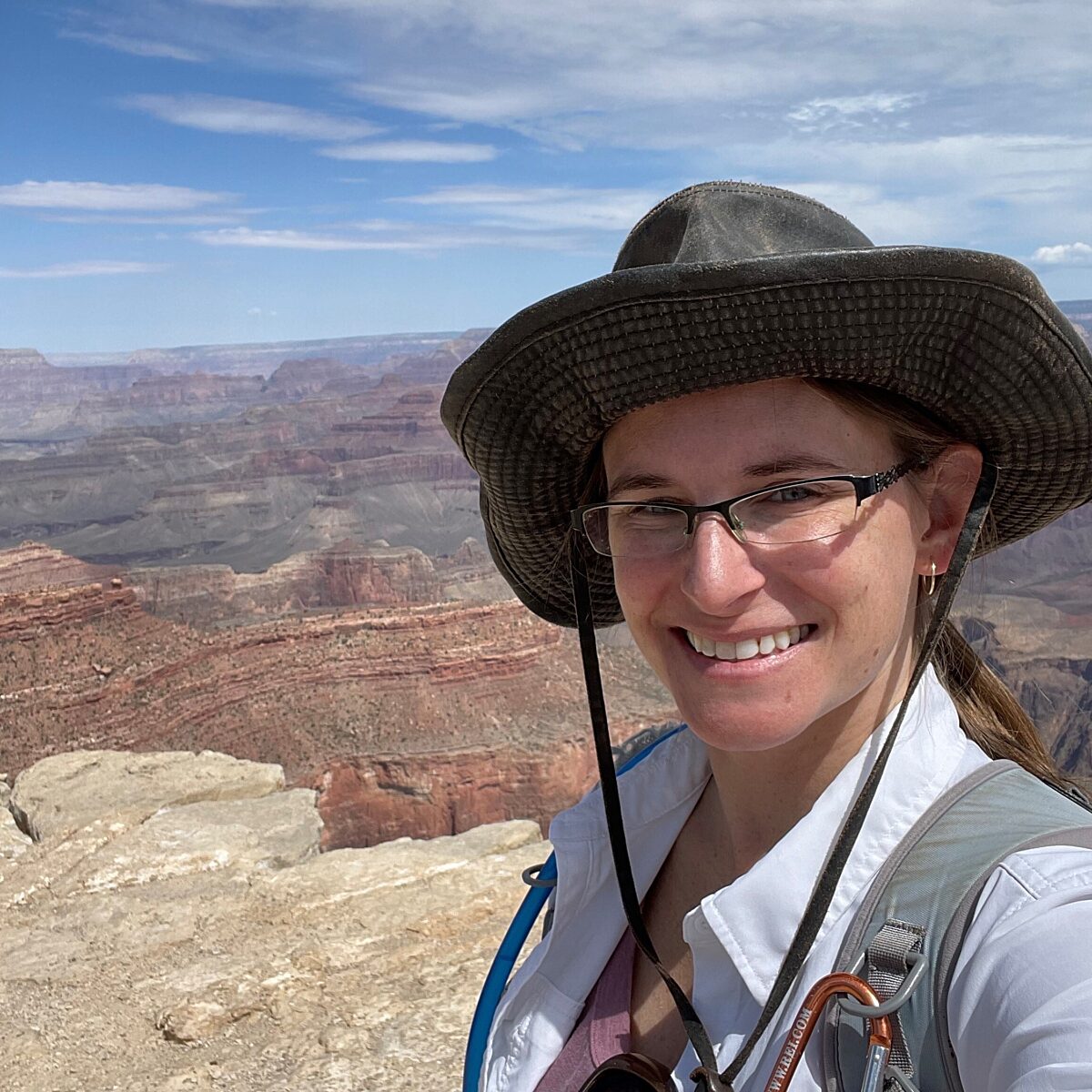
Amy Williams
Associate Professor of Geological Sciences for University of Florida
Bruce Betts
Chief Scientist / LightSail Program Manager for The Planetary Society
Sarah Al-Ahmed
Planetary Radio Host and Producer for The Planetary Society
NASA's Curiosity rover has been exploring Mars' Gale Crater for over a decade. A new analysis of samples collected there reveals something remarkable: more than 20 different organic molecules preserved in ancient rock, including the first detection of a nitrogen-bearing heterocycle on Mars, a type of molecule that's a precursor to compounds essential for life as we know it.
While these molecules aren't evidence of life, they tell us that the chemical building blocks for life were present in ancient Martian environments. In this episode, we talk with Amy Williams, an astrobiologist and associate professor at the University of Florida, about what this discovery means for our understanding of Mars' habitability. Then, Planetary Society Chief Scientist Bruce Betts joins us for What's Up, where we compare the results to samples collected from asteroid Bennu.


Related Links
- Diverse organic molecules on Mars revealed by the first SAM TMAH experiment | Nature Communications
- NASA’s Curiosity Finds Organic Molecules Never Seen Before on Mars
- Planetary Radio: Mars Life Explorer: The search for extant life on the red planet
- Mars Life Explorer
- Curiosity, exploring Mars' surface
- Mars Science Laboratory: Curiosity Rover
- Sample Analysis at Mars (SAM) Instrument Suite
- Cost of MSL Curiosity
- That Asteroid Has a Name: Bennu!
- Planetary Radio: Breaking down Bennu: OSIRIS-REx finds life's building blocks in asteroid sample
- OSIRIS-REx, NASA's sample return mission to asteroid Bennu
- Buy a Planetary Radio T-Shirt
- The Planetary Society shop
- The Night Sky
- The Downlink
Transcript
Sarah Al-Ahmed:
More than 20 organic molecules preserved in ancient Martian rock for three and a half billion years this week on Planetary Radio. I'm Sarah Al-Ahmed of The Planetary Society with more of the human adventure across our solar system and beyond. Today we're talking with Amy Williams, astrobiologist at the University of Florida, and longtime member of the Curiosity rover science team. We'll speak about a landmark experiment that revealed more than 20 diverse organic molecules in ancient Martian rock. Then we'll check in with Bruce Betts, Chief Scientist of The Planetary Society for What's Up and our weekly random space fact. If you love Planetary Radio and want to stay informed about the latest space discoveries, make sure you hit the subscribe button on your favorite podcasting platform. By subscribing, you'll never miss an episode filled with new and awe-inspiring ways to know the cosmos and our place within it.
NASA's Curiosity Rover landed in Gale Crater on Mars in 2012. For more than a decade, it's been making extraordinary discoveries about the red planet's ancient past. Today we're going to be talking about a paper that just came out. It's called Diverse Organic Molecules on Mars revealed by the first SAM TMAH experiment. This is a result that's been years in the making. As I've said, Curiosity found more than 20 different organic molecules in a single rock sample. That includes the first detection of a nitrogen bearing heterocycle on Mars. That's a type of molecule that serves as a building block for DNA and other compounds that life depends on. At least life as we know it. Joining us is Dr. Amy Williams. She's an astrobiologist and associate professor at the University of Florida. You may remember her from her appearance on Planetary Radio back in August of 2023.
She joined us to talk about the Mars Life Explorer mission concept and the search for extent life on the red planet. Amy studies the formation and preservation of biosignatures in extreme environments here on earth. She uses that work to inform the search for life and habitability on other worlds like Mars, Enceladus and Europa. She's a science team member on both the Curiosity and Perseverance rovers and she's the lead author on this new paper, which was released on April 21st in the journal, Nature Communications. Hey Amy, welcome back.
Amy Williams: Hey, thanks so much for having me back.
Sarah Al-Ahmed:
I'm always down to talk about life on Mars, the detection of organics, but I have to tell you this story about how I encountered this paper because I think it's really funny. I was recently in Washington DC for The Planetary Society's Day of Action. We go up there with a bunch of advocates and we talk to Congress and I was flying out, but it occurred to me, I want to go see the Smithsonian Air and Space Museum one more time before I leave. So I was standing in line that morning and the person behind me in line, we got into a conversation. It was a woman and her husband and their two children and she asked me if I had heard about this story.
And I had been so distracted by everything going on with Artemis and our day of action that I hadn't caught it, but after looking it up, the paper had literally just come out the day before and it's wild to me that this got so much press coverage even in a single day that a random person I just met had figured this out. So I just wanted to share that. I thought that was so cool.
Amy Williams: I am honored. And I mean, I think it speaks to the reach of what we're doing as a community, right? I mean, obviously, we don't know who these folks were. Hopefully they are interested, science-minded, just folks who care about what we're doing in planetary science. And so I mean, this makes my absolute day to hear. So thank you for sharing it. And then thanks for tracking me down to get to talk about this paper.
Sarah Al-Ahmed: Well, if they're listening out there, this one's for them because they taught me something. I hadn't heard about it yet. I was like, "Are you talking about the detection of potential biosignatures in the Sapphire Canyon sample?" There's so much amazing Mars science that's been going on since we last spoke.
Amy Williams: Yes, absolutely.
Sarah Al-Ahmed: But this is a whole new thing. So your team's paper is called Diverse Organic Molecules on Mars Revealed by the First SAM TMAH Experiment. So even in the title, there's a lot to unpack.
Amy Williams: Oh yeah.
Sarah Al-Ahmed: So why don't we start at the very beginning? What is a TMAH experiment?
Amy Williams: Oh, excellent. Yes. So as you know, the NASA and NASA affiliate folks like myself, we love our acronyms. So we can break down some of these. TMAH stands for the name of a chemical, which is tetramethyl ammonium hydroxide. So you can think of it as basically just a chemical that we are reacting with drilled samples that Curiosity collects and performing an experiment that gives us new information about organics on Mars.
Sarah Al-Ahmed: Is it an acid or a base? What kind of chemical is this?
Amy Williams: It's actually very basic. It's very alkaline. You basically dissolve this salt in methanol, which is an organic solvent. And we sent 500 microliters, which when you say microliter, it doesn't sound like a lot, but it's actually a ton of this chemical in actually 2 of the 74 sample cups that flew on the SAM instrument on Curiosity. And so there's a decent amount of this chemical onboard to perform this experiment exactly two times. And so there was a lot of, I don't want to say pressure, but we really wanted to get this right. We wanted to pick the right location and perform the experiment to get as much good data out of basically this one or two shot experiment that we were ever going to get on Mars with this mission.
Sarah Al-Ahmed: See, that's what I was wondering about because I mean, bases are pretty corrosive and this has been up there with Curiosity since it landed in 2012. The rover itself is already way past its expected kind of operational lifetime. So the fact that you're doing the experiment now, and this is the first time, made me really curious about why now? What was the timing element?
Amy Williams:
Well, embarrassingly for me, I have to say that we did this experiment in 2020. So it was eight years after we landed and it has now been six years since we performed the experiment that the data were able to be published. So I'll say that we waited eight years to do the experiment first because we... For a while, if you recall, the drill was not functioning nominally on board Curiosity. And so the amazing engineers at JPL had to basically reconfigure how the drill functions. And so once we brought drilling back online, we had all these incredible data from climbing up onto Mount Sharp. We were past the Vera Rubin Ridge, which was this iron oxide bearing, sort of really resistant layer. And then we moved into what we were calling the clay bearing unit and we were getting all these really exciting results from SAM about the presence of organic matter there.
And we always knew we needed this experiment to be in just the right place to hopefully get as much data as possible. And so we finally got to that point in 2020. We knew enough about the clay bearing unit. We were able to pick a location and perform the experiment. And then with the results, you want to be as robust in your interpretation as possible. And so we spent a lot of time testing the different molecules that we thought that we had seen with the experiment, testing it on basically the flight spare instrument or pieces of the instrument that are on the ground here on earth. And so just wanted to make sure that we had our identifications right. So science takes a long time. This one took a little longer than we would've hoped, but hey, it's out there now and we're so excited to share these results.
Sarah Al-Ahmed: And these are really exciting results. There's just a wealth of organic compounds that you guys detected. How many different organics did you find?
Amy Williams: So we've been generally saying more than 20. A couple of the ones that are identified we know are sort of background products that we would expect from the SAM instrument. Like you said, we've been operating on Mars for more than 13 years now. And so we are getting to the point that we need to pay attention to what's in the background basically of our instrument.
Sarah Al-Ahmed: So what kind of rock sample did you put into this and why was that one special enough that it deserved this kind of TMAH experiment?
Amy Williams:
So we did a lot of work on the ground in the years leading up to the experiment testing TMAH and how it reacted with different kinds of terrestrial rocks. We wanted to get a rock that should contain a bunch of organic matter and it turns out that minerals that form clays are the ones that are best at basically binding organic matter to their mineral surfaces. And so we wanted to find a rock that had a lot of clay in it. A mudstone would have been ideal. We ended up with a sandstone with a lot of clay in it for this particular location. And we actually did this awesome sort of survey of the clay bearing unit. We ended up naming it Glen Torridon. So we did this amazing survey of this whole unit and found certain strata seemed to have more organics present than other strata.
And so we actually... At the end of exploring the clay bearing unit, we were almost ready to actually keep moving up slope into the sulfate bearing unit. We made a pitch to the team and said, "Look, we need to detour kind of back down a ways to this particular layer in this unit. We think it's going to have the diversity of organics we're hoping for." And so we, in part, lucked out, but we were also able to apply the things that we learned on the ground to pick the right area to do this. And so the rock, we ended up naming the drill target Mary Anning after the English paleontologist and fossil collector. I think it's really cool to have a first of its kind experiment performed on Mars and then be able to sort of name the location after a really extraordinary woman in history who was really a trailblazer in paleontology.
Sarah Al-Ahmed: Yeah. Having Mary Anning near Vera Rubin on Mars. I mean, that's just cool. Oh,
Amy Williams: It's awesome. Yeah. It means a lot just on that personal as well as professional level to be able to honor some of these extraordinary women.
Sarah Al-Ahmed: So you found this really cool rock. You did TMAH experiments on it. How does the base release materials from this rock in a way that our classic kind of heating experiments don't?
Amy Williams:
Yeah. A good way to think of this is... The way the SAM instrument works is you're right, we take these powdered rock samples and we heat them up in our oven and that can release the volatile materials. So the organics, it can tell us about inorganic gas phases as well. And what we're able to do is when you just heat the sample, it's sort of like taking a sledgehammer to a wall. You're getting all the parts, which you might have bits and pieces of things and you don't really know how it goes back together quite in the same way that you do if you do an experiment with TMAH. So TMAH is really good at breaking down more complex organic matter. It basically cleaves it apart in predictable ways and it adds a little chemical, what we call a functional group, but just imagine a little tiny molecule onto the end of some of these bigger molecules to make them detectable to the SAM instrument.
Otherwise, they just wouldn't be detectable and we kind of miss them in our scans. And so when you use TMAH, it's sort of like... Instead of taking a sledgehammer to the wall, you're taking it apart brick by brick because then you know how to put it back together. So that's the way that I tell people to kind of think about these experiments. It gives us new insight into the same organic matter that was present there. We just happened to carefully pick a location that we expected to have a lot of organic matter and it did.
Sarah Al-Ahmed: So how reliably can we tell that these organic compounds are what we think they are based on the fact that we're altering them with something like TMAH?
Amy Williams: Well, that's a really good question. So I mean, we've been using TMAH in terrestrial experiments like... It has nothing to do with planning for planetary missions for, I think, probably decades at this point. So we know what to expect. We know how the molecules are going to react with the TMAH and when they break down or where they're going to cleave, it's pretty well known. So well known in fact that we ran the experiment, we kind of thought, "A lot of this material kind of looks like what you might see from a meteorite." So if you imagine meteorites raining down on the surface of Mars or off earth in our ancient past, that kind of material is one of the potential sources for organic matter on Mars. And so we actually perform the TMAH experiment with a meteorite, the Murchison meteorite to understand, "Okay, how similar are the distribution of organics that we're seeing from our Mars experiment and from this meteorite?" And it turns out a bunch of the molecules that we saw in Mars are actually pretty consistent with what we saw on Murchison. So we've been thinking that what we actually did was break apart ancient preserved carbon or organic matter that might at least be partially derived from meteorites that rained down on Mars more than three and a half billion years ago. So it's reconstructing, I think so many processes in the ancient past on Mars and gives us this really cool suite of organic... Some of the molecules which we've never seen before on Mars.
Sarah Al-Ahmed: That's so cool because I know that... You found a lot of like aromatic hydrocarbons and things like that and it's not like these can't be made inorganically, right? We've seen them in gas clouds and space and things like that, but the fact that we can then think like, "Maybe these were formed in space," formed these meteorites and then rained down on Mars is just so cool and tells us so much about the history of our solar system and its connection to the broader area around us.
Amy Williams:
Absolutely. I think sometimes people are like, "Well, why can't we say it's indigenous to Mars, this organic matter?" And we can't say completely that some of it isn't, right? But when you look at sort of the character of the suite of organics that we released with this experiment, it's the most parsimonious interpretation to say, "At least some of these look very meteoritic to us." But the excitement of course is always like, "How complex of a molecule can you get to maybe say something more specific about its origin?" Of course, Curiosity is not a life detection mission. It's a mission meant to characterize habitability or environments where life would've wanted to live in the ancient past if it was there. And I think that we have accomplished that profusely with this mission. We've identified so many environments including Mary Anning, which contained this organic matter that if you think about it, raining down on Mars more than three and a half billion years ago, it's the same kind of stuff that was basically the feedstock for the origin of life on earth.
That was what was raining down on Mars as well. And so even if that organic matter isn't telling us about a potential ecological, biological, whatever ecosystem on Mars, it does tell us that so many of the building blocks for what we know life to be on earth were also present on Mars in the ancient past.
Sarah Al-Ahmed: Well, you mentioned this is like 3.5 billion years ago is about the timeline that we're thinking here. Is that because of the age of Gale Crater or did you do some dating process on the rock itself that tells us how old this sample is?
Amy Williams:
Unfortunately, no. We don't have the ability to do radiogenic dating in that way with really any current missions right now. We have to do a little bit of hand waving and here's how we do it. We have an idea roughly for when Gale Crater might have formed and then we have an idea for when water started to dry up on Mars. We will put big error bars on this, but we often point at about three and a half to four billion years ago. If we had samples from Mars that were returned to our terrestrial laboratories, we would actually be able to perform the type of radiogenic dating that we need to say exactly how old some of these rocks are. But without that information, we can take our best guess that the rocks that we sampled for this experiment were clearly laid down by flowing water in Gale Crater and the ancient past.
And we assume based on like crater counting and how we are sort of building up our story of the strata of rocks on Mars that if water stopped flowing roughly three and a half billion years ago, we are going to lean into this being maybe three and a half billion year old material. It could be older, could be a little bit younger, but it's still giving us an insight into rocks that, for the most part, we don't have very many rocks of this age left on earth. And so seeing something like this on Mars not only gives us insight into this ancient Martian environment, but it gives us a sense for what very early earth might have been like as well. It gives us sort of insight into planets basically in their infancy.
Sarah Al-Ahmed: I love the imagery too of these potential meteorites falling down on Mars, encountering water and then being flowed into this rock and then encapsulated for all of this time. It says to me that this is just a really great place to look for these kinds of organics. It's almost like a little time capsule situation.
Amy Williams:
And that's one of the reasons I think Gale Crater was so appealing to us from the very beginning. It presented this suite of environments, this transition from a wet planet to a dry planet, at least in the regional scale with Gale Crater. There's so many cool things to explore and we're still exploring this stuff today, which is like what blows my mind. I don't think I got to talk to the audience last time about this, but I started working with Curiosity before we ever launched as a graduate student. And so I've had the opportunity to sort of grow up with this mission and make all of these extraordinary discoveries and the fact that we are still moving through... We just finished up working in the boxwork area, which is where we have this sort of preserved subterranean groundwater system.
We are moving toward what we call the yardangs, which are these aeolian or wind sculpted features that I remember seeing from orbital images and I remember seeing the first time we looked up at Mount Sharp and took our first images from the crater floor and thinking, "You're never going to get all the way up there." And man, we are pretty doggone close now. It's a good reminder, like we did this experiment six years ago, but we are still doing extraordinary science with an extended mission. I think we're in our fifth extended mission now. I mean, we just keep going.
Sarah Al-Ahmed: It's amazing how much longevity these craft have had. Consistently so many of these rovers and spacecraft are living far beyond their expected lifetimes. I'm so glad that it's still going in the vein of opportunity. I'm hoping it makes it to at least 15 years.
Amy Williams: I know. Yeah. I guess it would be sort of a bittersweet milestone to surpass opportunities lifetime on Mars. But I mean, if you want to talk about expected duration versus extended mission opportunities, still holds that award and I think will for a very long time.
Sarah Al-Ahmed: What are some of the organic compounds that you actually found in this sample? And do we find a lot of these on earth we must. I mean, we're covered in organics, right?
Amy Williams:
We certainly are. Yeah. And so these are all, I would say relatively simple molecules. So as you were describing before, they're what we call aromatic hydrocarbons, many of them. So what does that mean? Hydrocarbons mean that you have carbons bound to each other and they have other molecules, often hydrogens on them. And when you have an aromatic, those carbon molecules have actually bound themself into a ring structure. So like five or six carbons all bound together in a circle basically. So we see those types of molecules, sometimes a single ring, which we call a benzene, sometimes a double ring, which we call naphthalene. These have a bunch of sort of functional groups on them, which make us think that they broke off of a larger macromolecular thing. So that means like a larger chunk of organic matter. That would be pretty consistent with the kind of stuff that we know would've been delivered by meteorites.
But some of the molecules that are not just carbon and hydrogen, one of these is a molecule called benzothiophene. And if you think back to your root words like thio, that means sulfur. So the benzothiophene is actually two of these carbon ring structures bound together and they have a sulfur molecule mixed in there. Now, benzothiophene is really cool because it does form in the modern, it forms on earth as well, but we know that some of this from meteorites actually formed very early on as our solar system was sort of condensing out. And so I like to think there's the chance that maybe this is some of the original benzothiophene that condensed out from our solar system on meteorites and rain down on Mars. Who knows if that's truly the case, but the fact that you're sampling this really ancient material from our solar system, I think just ties even more greatly into sort of the really lovely deep time ecosystem that you see forming between meteorites and planetary bodies forming and as those planetary bodies evolve.
I just find all of this to be like this really beautiful musical little dance that the organics are doing. They're just living their organics life, but I find it to be this gorgeous thing. One of the other molecules that people were really excited to chat about with this discovery is something called a nitrogen heterocycle. So I'm not using a molecule name because we aren't quite sure which molecule it is. It's probably related to what we would call an indole. And so this is, if you picture those carbon rings, it's a two ring structure and instead of the sulfur being in the ring, there's a nitrogen in the ring. That's really exciting because these types of molecules like indoles are actually some of the precursor molecules that eventually build up to making DNA, which I think most people are familiar with is bring the genetic material that drives all life on earth as we know it.
So it's not that we found DNA, it's not that we found evidence for life, but we did find those building blocks for sort of the key molecules that we know life requires at least on earth. And so this is the first time we've seen a molecule like that, a nitrogen heterocycle on Mars. And so I think with each of these discoveries, we're just expanding sort of the library of things that we recognize are or were present on Mars that could have fed into a habitable environment, maybe even having the building blocks for life as we know it present at the same time that life was originating on earth. So I think it's a really exciting discovery feeding into our understanding of the habitability of Mars in the ancient past.
Sarah Al-Ahmed: I love that we're doing this kind of experiment because it's the first time we've seen that kind of thing on Mars, but we now because of our sample return missions have found the precursors of things like RNA on asteroids like Bennu. So the fact that these kinds of chemicals are just strewn about our solar system and probably strewn about the entire galaxy and beyond just says so much about the potential for habitability on worlds that I think we're only beginning to try to unpack.
Amy Williams:
I absolutely agree. It's really exciting to see the things that we expect to see, but we haven't seen yet. And every time you have just that, sometimes it feels incremental, you're just like slightly pushing forward the boundary of our knowledge, but that's how you do science and that's especially how you do science on planetary emissions. I've been so excited to see our sample return from Bennu, giving us this insight into these building blocks for life and we see that in situ on asteroids, now we're seeing it present and preserved on major planetary bodies. I think you're right. I think it's everywhere and the fact that it's been preserved on Mars for this long is also really impressive because that suggests that more complex organic matter is capable of being preserved in the relatively near subsurface of Mars. There was a while where we thought that the radiation environment, which is incredibly harsh, would be destroying everything to a certain depth.
And while that is true, it is still a really harsh radiation environment, we're starting to recognize that perhaps when you have these larger organic matter deposits that they are actually able to resist some of that radiation degradation or at least able to preserve enough that when we roll up and do an experiment, we're actually able to see it.
Sarah Al-Ahmed: It's interesting that you point out that degradation of these chemicals because of radiation, because I know I've read papers about the formation of these chemicals in space and how radiation can actually contribute to the creation of them. How does that work?
Amy Williams:
It's always a balance of building up or polymerizing and breaking down or degrading. It really depends on the environment that you're in, whether you have oxidants. I think part of the reason we were able to discover what we did in the Mary Anning sample is that you had that organic matter bound within those clay minerals. That provides some additional protection on top of this being more complex and what we call recalcitrant organic matter, that's going to be a little more resistant to degradation. One of the other things about Gale Crater, I think mention every once in a while and then we kind of carry on with whatever science we're talking about, but Gale Crater was filled in with sediments at one point. So Mount Sharp in the center of Gale is five kilometers tall. I mean, this is a pretty big mound of sediments and that entire crater was filled all the way up to its rim at some point in the past and then eroded back down by aeolian or wind abrasion.
And so we have to picture that the water was flowing, the rocks were depositing, the organic matter was getting preserved and then all of that was buried underneath a stack of basically rocks sediment for some period of time. Again, if we had some samples back, we might be able to constrain that timeframe better, but I think that, in part, may have led to some of the preservation of these organics because it's not like they've been sitting at the surface for three and a half billion years. They actually had some additional sort of geologic protection for a while.
Sarah Al-Ahmed: That's even better reason why Gale Crater is such a great location for doing this-
Amy Williams: It's amazing.
Sarah Al-Ahmed: ... kind of science. That's amazing. Out of this experiment, could you tell the relative abundances of the different chemical compounds?
Amy Williams: For some of them, we were able to get estimates. I mean, we're still dealing with like picomoles of material. It's still very lean. Some of the molecules like that nitrogen heterocycle, we weren't quite refined in being able to extract the spectra from the original like SAM data to be able to get at those kinds of details. But for some of the more abundant molecules like the benzothiophene and naphthalene, we were able to get some constraints, but it's all in line with what we've kind of been seeing on Mars anytime that the SAM instrument has seen organic matter. So it's still lean, but we are seeing sort of different character that tells us there are sort of these different repositories of organics, some that are maybe a little bit more free or available to be seen with the SAM instrument and some that are coming from this more complex, what we call macromolecular carbon.
Sarah Al-Ahmed: You mentioned the spectra of this material just a little bit ago. Classically, I think a lot of people, when they think about Curiosity, they think about like zap the rocks, look at the spectra, that kind of thing. But you did even more complex analysis on this sample using gas chromatography and mass spectrometry, which I had to learn more about in order to understand how this sample was analyzed. Can you tell us a little bit about how this process works and we might have to break it down. So what is gas chromatography?
Amy Williams:
Yeah, we can break it down into the two components of the SAM instrument. It actually has more than this, but we won't worry about that right now. So gas chromatography is when you take a sample and you somehow get it in the gas form. In our case, we're heating it in our oven. And so when you get it into a gas form, you can actually flow it into a little tiny basically capillary column. This thing is 30 meters long and oh gosh, 0.25 microns in the interior diameter. So it's incredibly thin and super long column. And so what you do is you move those gas molecules through the column and the... Basically think of it as the chunkier molecules. The larger ones are going to move more slowly than the smaller molecules. And so you end up separating... That's the chromatography part, separating the molecules out based on their mass.
And so as they move through the column, at the very end of the column, they get to the mass spec. So this is a way of ionizing those gases so that you can detect the molecule. And so the smaller molecules will come out first and then the larger molecules will follow. And so that is the combination of separating out the molecules and sort of what time they get to the mass spec tells you one part of their identity and then the actual masses that are represented in the mass spectrometer tell you the other half of their identity. And so we get both of those pieces of information back, but then we have to do a bunch of bench top experiments here on earth to confirm what we're seeing. So if you have a molecule that has... There's a lot of molecules that can have very similar mass spectra, but some of them are going to take much longer to get through that column than others. And so it's actually us testing those molecules and seeing when they come out of the column that helps us refine their identity.
Sarah Al-Ahmed: We'll be right back with the rest of my interview with Amy Williams after the short break.
LeVar Burton: Hi, y'all. LeVar Burton here. Through my roles on Star Trek and Reading Rainbow, I have seen generations of curious minds inspired by the strange new worlds explored in books and on television. I know how important it is to encourage that curiosity in a young explorer's life. That's why I'm excited to share with you a new program from my friends at The Planetary Society. It's called The Planetary Academy and anyone can join. Designed for ages five through nine by Bill Nye and the curriculum experts at The Planetary Society. The Planetary Academy is a special membership subscription for kids and families who love space. Members get quarterly mailed packages that take them on learning adventures through the many worlds of our solar system and beyond. Each package includes images and factoids, hands-on activities, experiments and games and special surprises. A lifelong passion for space, science and discovery starts when we're young. Give the gift of the cosmos to the explorer in your life.
Sarah Al-Ahmed: I was wondering too, as I was reading this, how do you figure out what might be leftover remnants from earth or other parts of the machine itself? And so much of this paper is about trying to disentangle all the things that could be misleading within the data and part of that is the instrument itself. So you did these kind of dry runs, basically like control runs on this experiment. How does that work?
Amy Williams:
And like I mentioned before, there are only two cups on board this 74 cup instrument that had the reagent in it. And so we had the choice of... You could use on these cups and do like an actual instrument blank where you are running that reagent through the column and basically cleaning it out, seeing what your background is, and then doing the experiment. But that means we would only have one experiment from flying TMAH. And so we had to make the hard decision to do what we called a dry run, which is sending the instrument through all the paces that it would and seeing what the background looks like in what the mass spec is basically reading that's in our columns and our lines, that organic background that we know is present and then running the sample with TMAH and basically doing a comparison between what's there when you use the exact same program, same temperatures, everything, versus what's there when you react the sample with the chemical.
So that is part of the challenge of doing stuff remotely or on flight because sometimes you only have one chance to do something, so don't mess it up. And if you do mess it up, all right, what data can you still get from this? Still making this a useful experiment. We got really lucky. We were able to bypass a lot of, I think, the trips that we could have run into along this experiment. We actually were planning to perform this using two... There's six gas chromatography columns onboard SAM and we were planning to use two specific ones and one of them got clogged right before the experiment.
Sarah Al-Ahmed: No.
Amy Williams: And so we had to pivot in pretty real time to using a new column that we hadn't used before. And in the end, we got fabulous data from it, but it's all sort of that you have to be ready to respond in pretty real time to changes or curveballs that Mars likes to throw at us.
Sarah Al-Ahmed: Right. Plus, I know this was a few years ago, but you also have to deal with the fact that some things within this instrument itself might degrade over time. I know a lot of this paper was dedicated to talking about specifically the Tenax trap. Can you talk a little bit about what that is and why that was such a thing that you really needed to analyze in order to get this experiment right?
Amy Williams:
Yeah. So if you picture how this gas chromatograph mass spectrometer works, one of the things that you can have on it is what we call a hydrocarbon trap. So basically a way to let some of the other molecules that you're not interested in, flow through the system, but to trap the molecules you're interested in so that you can then re-release them to analyze them, you get much better data that way. And so one of the trapping materials is something that we call Tenax. It's a kind of resin. When we release the molecules from that trap, you heat it up to do it.
So heat is the way to kind of mobilize these gases through the SAM system. When you keep heating up Tenax over and over and over again to... Not even a very elevated temperature, you can start to have some degradation products. And so those are things that we expect to see and we've seen previous experiments, but when you put a new chemical on there, we had to basically figure out which molecules might have come from the Tenax reacting and which ones were actually the molecules that we had trapped and released from the sample.
So yeah, we spent a lot of time kind of figuring out what's likely to have come from the Tenax trap. And there's a couple of molecules, very simple little things, but those that we just need to be aware, we've seen them in other SAM experiments, some of them probably... Or may come from Tenax, but then a lot of the molecules we saw with the TMAH experiment, there's really not a good way to explain how they could have come from the Tenax. So it's all about being, I think, responsible with how we report the data, identifying what are the possible things that could have caused us trouble or given us a background signal and then just trying to be very reasonable and robust in our interpretations of what we think is indigenous to Mars to the sample.
Sarah Al-Ahmed: Yeah. It takes a lot to separate out all of this data, but in the end, we've been talking a little bit about the age of this rover and how that might contribute to degradation, but it also means that we have a wealth of information on how this instrument works and everything that's been going into it. So maybe in the end, it's a little bit of a double-edged sword. It can help you as well.
Amy Williams: Yeah. Yeah, Absolutely. We've been characterizing the background for years now. We've done so many different kinds of SAM experiments that we have a wealth of data to work from. So we can feel pretty confident in the identifications that we've made for this study.
Sarah Al-Ahmed: Well, we talked a little bit about how radiation in the environment could alter these rocks and potentially change these aromatic hydrocarbons, but what about the thermal history of this area? Things have changed a lot on Mars since these were deposited.
Amy Williams: They have, but I think when you consider it in sort of a geologic standpoint, it hasn't been all that dramatic. So there's always the thought that if you bury rocks on earth, let's say, if you bury rocks to a certain depth, then they can thermally mature. There's a big discussion about whether... Like how deep would you have to bury rocks on Mars in order to have a comparable type of what we call diagenesis. And so we're not thinking that these rocks have experienced that level of alteration. There's definitely digenetic fluids that have moved through Gale Crater and Mount Sharp throughout sort of the timeframe that water was active on Mars, but that would be more like fluid interactions and less so that they've been thermally matured in sort of the way that we think of it on earth. So that's actually something that we feel like we can say it's not going to be that big of an impact. Maybe even having the colder temperatures of Mars being a cold, dry desert now, perhaps that actually improves preservation of these organics over deep time.
Sarah Al-Ahmed: Well, meteorites might be a way that this material came down to Mars, but what are some other abiotic explanations for how these were created?
Amy Williams: So there are definitely geologic processes that are capable of generating organics. We often think about these abiotic processes at hydrothermal systems or in serpentinizing environments. In the Mary Anning area, we didn't really have evidence for serpentinites. We have had regions that seem to have experienced some hydrothermalism, but not necessarily where we were at Mary Anning, but these clay minerals are really good at preserving organics that may have come from other places. So it's not to say that there couldn't be a geologic component to these organics that we saw, but you just have to expand your assumptions about where the organics may have come from. So yeah, there's sort of the two types of abiotic ways to make organic carbon are geologically or on meteorites.
Sarah Al-Ahmed: And who knows? I don't want to speculate too much, but we don't know how habitable Mars was in the past, right? So who knows what other biologic processes could have led to this, but that's just something we don't know anything about.
Amy Williams:
Yeah. Unfortunately, because of the nature of the size of the organics and what they look like, you can't really say that anything was biologic. And of course, I keep arguing, I feel like I'm the most pessimistic astrobiologist, but we need extraordinary evidence to support an extraordinary claim. Molecules like this, they can be formed biologically, but they can readily be formed abiotically as well. And so I think it's so important for us to have... If we're going to ever claim having evidence for ancient life on Mars, I think we need to have some really robust data and something that has maybe like corresponding lines of evidence that come together to make us feel confident in a claim that is that extraordinary.
For now, I'm very satisfied to think this stuff looks like the building blocks for life. At least we're answering some of those habitability questions on Mars and we can leave the search for life to Perseverance, Rosalind Franklin, maybe one day some iteration of Mars Life Explorer will fly. So I can always be hopeful for our upcoming actually astrobiology focused missions.
Sarah Al-Ahmed: Well, the fact that you found these in this specific location doesn't surprise me a whole lot. It sounds like these rocks were well-preserved, but you only did this experiment in one location. So we have no idea how prevalent these chemicals are on Mars at large. And now I'm wondering what we could do if we could bring a sample of this rock or even samples like the ones that Perseverance has been caching, what we might be able to do to piece apart how many different organics are in these rocks if we could bring them into an earth lab versus using the experiments on a rover, which they're wonderful, but they're limited because of their size and what we can send to another world.
Amy Williams:
No, it's totally true. And I'll tell you what I'm finding more exciting. The more that I'm digging into not only the work that I've done and that the SAM team has done, but actually across Mars, what I think we're starting to recognize is that there is evidence for this more complex organic matter, what we call macromolecular carbon. So we've actually had hints of it in different locations in Gale Crater. So we've seen other features in SAM data that have made us say, "Man, that really looks like it might be coming from something more complex, a larger kind of organic matter deposit." This experiment is specifically designed to break apart macromolecular carbon. And so getting the data back from that was like a really strong confirmation that we've been seeing macromolecular carbon. And then we also have evidence for it actually with the Perseverance Rover.
Several of the locations that we've explored using the SHERLOC instrument has shown us with the Raman spectra, the presence of these peaks that are associated with macromolecular carbon. So now we have different instruments on different missions and different locations coming up with similar explanations for the organic matter that we're seeing on Mars. So I think you're right. I think that there is more macromolecular carbon in the relatively shallow subsurface of Mars and that there is more preservation than we had initially maybe, I think, rightfully anticipated.
Sarah Al-Ahmed: And the fact that we're detecting these kinds of compounds on space rocks and in space clouds just... I know I've said it already, but that is absolutely startling that the ingredients for life are just all over the place and just sitting in this preserved rock from 3.5 billion years ago.
Amy Williams: Yep. I think that it probably speaks to... I think it gives us more context for the origin of life on earth, that these molecules are pretty prevalent. It's probably very, I guess I would say, like energetically favorable, likely to occur reactions, those chemical reactions that kind of kick started in origin for life on earth. And I mean, it makes sense to me that these same molecules are going to be present at least throughout our inner solar system and probably throughout our full solar system.
Sarah Al-Ahmed: Well, when last we spoke about finding life on Mars, you told me that it was kind of like a childhood dream of yours and this isn't definitive evidence of life on Mars, right? Clearly not.
Amy Williams: Correct, not at all.
Sarah Al-Ahmed: But this is one more step in that story of us trying to understand whether or not it was even possible and this is a really exciting step. I mean, the wealth of the different compounds in this sample just absolutely blew my mind. How surprised were you when you did this analysis to see how much of that revealed itself?
Amy Williams:
I would say that I wasn't surprised, but I was very pleasantly relieved maybe because it's what I anticipated and I really hoped for. And so it was definitely a relief to say, "Okay, we made the right choice with the sample that we collected this from and the experiment worked the way it was supposed to." So I mean, the spectra were so complex with this particular experiment. We picked apart as much of it as I think we reasonably could and we're trying to get these data published for the community to be able to use. But I think that there's more work that we can do to search for sort of maybe smaller peaks of molecules that are less well represented, but to just get some more information out of just this single experiment. I think that there's so much more we can keep doing with just one experiment.
And you're right, each step here is an important step on the path to addressing the question of whether there was ever life on Mars. Sometimes, again, it feels incremental, but remember, to make these extraordinary claims, let's have the best basis, the best evidence that we can to build up to an extraordinary claim in the future. And I think this study is one of those that can hopefully lead us in that direction one day.
Sarah Al-Ahmed: And it's just years in the making. This took a lot of time and a lot of planning. This is your team, but it's also the thousands of people that worked on the spacecraft and sending it out there, all the people that worked on the science before. This is one of those things that literally has taken decades and decades of human ingenuity and love to accomplish. So I'm just so excited about this kind of result. It tells us so much about ourselves and about Mars and I'm just so happy for your team.
Amy Williams: Thank you. Thank you so much. And yeah, it's a huge shout-out to everyone who came up with the concept of having the Mars Science Lab, to those who built it, to all the instrument teams that contributed and the scientists and engineers that operate that mission today. I mean, they're extraordinary people doing extraordinary work on Mars and I just feel so honored to have this little spot to be able to highlight the amazing work that they're doing.
Sarah Al-Ahmed: Well, thanks for coming back on our show and telling us all about this. And I hope that those people in the line at the Smithsonian get a chance to listen to this so they can learn more about the result that they were so excited to share with me.
Amy Williams: Yes. And thank you so much to those folks for telling Sarah about this because I love any excuse to get to chat with Planetary Radio.
Sarah Al-Ahmed: Thanks so much, Amy. And good luck in your future research.
Amy Williams: Thank you.
Sarah Al-Ahmed:
What Amy's work really highlights is just how patient planetary science has to be. An experiment performed in 2020, analyzed for six years, revealing chemistry that's been preserved for three and a half billion years and yet there's still so much more that we can learn about Mars's ancient past. The good news is that this kind of experiment doesn't end with Curiosity. The TMAH experiment that revealed all of these molecules is also planned to be on board the European Space Agency's Rosalind Franklin rover. NASA recently selected a Falcon Heavy to launch that mission in late 2028, though the mission is currently facing uncertainty due to proposed NASA budget cuts. If and when Rosalind Franklin launches, we'll be able to do a similar experiment on a different part of the planet and see if that organic richness is widespread across Mars or unique to Gale Crater.
And it's not just Mars. The Dragonfly octocopter, which is going to be headed to Titan, Saturn's largest moon, is also going to be carrying a TMAH experiment along with a wealth of instruments designed to detect organic molecules in that world's unique chemistry. Dragonfly is also launching in 2028, so that's going to be a really big year for planetary science. Altogether, these experiments could reveal whether the basic building blocks for life are as common across our solar system as we're beginning to suspect, but we're just going to have to be patient for the results as any good planetary scientists would. But first, let's check in with Dr. Bruce Betts for What's Up and our weekly random space fact. Hey, Bruce.
Bruce Betts: Hi there, Sarah.
Sarah Al-Ahmed: Man, another really cool paper out of Mars, but also I'm noting this as I'm having more conversations about samples and sample analysis. We're finding a lot of really cool organic stuff just all over the solar system the more that we're looking.
Bruce Betts: Yeah, it's very, very common and we care sort of because it's a life thing. It makes up life. So that's presumably why certain scientists get all excited when we find things lying around that use the scientific term organic, not to be confused with other uses of organic, more common in general usage. And in fact, organic... I'm sorry, I have to give my little speech about organic and chemists. It's a funny term. I mean, it's like stuff that uses carbon and carbon is really flexible and does life, but not everything that uses carbon. We don't like certain simple molecules. We're not in the mood for that. That's not an organic... And according to Wikipedia, one of the first sentences they state is basically, not all scientists agree on what organics means, but we mean lots of carbon, especially in long chains and stuff. So yeah. And Bennu with the OSIRIS-REx, they found... In fact, as you said, we found... Wherever you look, you find these things. It's like... I mean, literally it's under your fingernails.
Sarah Al-Ahmed: I think that was the really interesting thing about the Bennu results, but even these ones from Mars. And I don't know if I would ever say that at any other point in my life, I wish I had taken organic chemistry, the glass that everyone in college dreads, but there's-
Bruce Betts: Yeah, most people say, "I wish I had never had to take organic chemistry."
Sarah Al-Ahmed: Exactly, but there's so much about this. As you point out, organics can mean a lot of different things and only some of them are important to life, but the stuff that they found on Mars recently, it's all kind of like precursors of what we need for nucleobases and stuff like that. And the Bennu samples similarly were just so complex, but we learned so much more about them because we could take them into a lab. So if you could do an analysis of what's in these things, how do the organics on Mars compare to what we're seeing in the samples that we've collected from asteroid Bennu?
Bruce Betts: Well, that's a simple question with a non-simple answer. Well, first of all, you've got your polycyclic aromatic hydrocarbons-
Sarah Al-Ahmed: Always.
Bruce Betts: ... which are fun to say. And you got those in both places and they're also in carbonaceous meteorites. They were one of the pieces of evidence that later was not really considered evidence in ALH84001, the Mars meteorite was thought to have evidence of past life. So that's both places. You got sulfur bearing stuff. You got all sorts of nitrogen rich good stuff and you said nucleobases. Bennu has all five nucleobases, but the fact you got this stuff lying around being delivered by asteroids, popping up on different planets, certainly, you got... The pantry is stocked, that's the real point, and it may help form life.
Sarah Al-Ahmed: But you don't just need the ingredients, right? You need the right circumstances for life. We found that maybe these things exist out there, but finding a place where they can all percolate together to form something like cats and dogs and us is a whole other story because... Just because it has water, just because it has energy, even that itself doesn't necessarily mean that you're going to build life there. So I don't know. But it bodes well anyway.
Bruce Betts: So anyway, shall we move on to [inaudible 00:52:06]. So you drive. I drive. You drive? Yeah. Yeah. You know what a car is. If you took a car in space, which is only done in Fast and Furious movies and on SpaceX rockets, but you actually were... Okay, this is a theoretical... If you drove a car straight to the sun from earth, which also wouldn't work because of orbital dynamics and you drove at freeway speeds, it would take you over 170 years to get to the sun.
Sarah Al-Ahmed: Oh my gosh, that's the worst road trip in existence.
Bruce Betts: No. If you drove to Neptune, straight to Neptune, freeway speeds, no brakes, no stopping off at the local mart, no stopping for gas, it would take you 5,000 years to drive to Neptune.
Sarah Al-Ahmed: And I'm assuming at freeway speeds in the United States, like 65 miles an hour, or are we speeding on our way there?
Bruce Betts: Well, you probably are eventually because you get bored. Because we have 10 fingers and 10 toes and I like the metric system, I went with 100 kilometers per hour, which still uses hours, but we're stuck with hours and seconds, [inaudible 00:53:20] system. So yes, because it was easy, I used 100 kilometers per hour, so 62 miles per hour.
Sarah Al-Ahmed: Close enough.
Bruce Betts: Yeah, probably not speeding in most places.
Sarah Al-Ahmed: Well, I guess you just need to gather up all the snacks, which are made of organics. We get the organic snacks, put them in the car. We'll drive to the sun-
Bruce Betts: I think it's hard to find snacks that aren't organics in the chemistry form, but-
Sarah Al-Ahmed: I don't know, man. There's some candies in the United States that I would question.
Bruce Betts: Yeah, I didn't really think that went through. So anyway, how about everybody go out there, look up the night sky and think about my dog jumping into the air to catch a Frisbee because that's what we'll be doing shortly. But don't worry, he chews the Frisbee up first. Thank you and goodnight.
Sarah Al-Ahmed:
We've reached the end of this week's episode of Planetary Radio, but we'll be back next week with more space science and exploration. If you love the show, you can get Planetary Radio T-shirts at planetary.org/shop along with lots of other cool spacey merchandise. Help others discover the passion, beauty, and joy of space science and exploration by leaving a review and a rating on platforms like Apple Podcasts and Spotify. Your feedback not only brightens our day, but helps other curious minds find their place and space through Planetary Radio. You can also send us your space thoughts, questions, and poetry at our email, [email protected].
Or if you're a Planetary Society member, leave a comment in the Planetary Radio Space and our online member community. Planetary Radio is produced by The Planetary Society in Pasadena, California and is made possible by our members. If you want to join a community of people who are passionate about space exploration and the search for life, you can become a member at planetary.org/join.
Mark Hilverda and Rae Paoletta are our associate producers. Casey Dreier is the host of our monthly space policy edition and Mat Kaplan hosts our monthly book club edition. Andrew Lucas is our audio editor. Josh Doyle composed our theme, which is arranged and performed by Pieter Schlosser. My name is Sarah Al-Ahmed, the host and producer of Planetary Radio. And until next week, ad astra.