

 Explore Worlds
 Find Life
 Defend Earth


Artemis II hit Taylor Swift levels of fame. Now what?

Written by
Asa Stahl, PhD
Science Editor, The Planetary Society
April 28, 2026
Three days before Artemis II launched astronauts to the Moon, I asked people on the streets of Cape Canaveral, Florida, what they thought of the mission. By far the most common answer was:
“What mission?”
We were only miles from the rocket on its launchpad at Kennedy Space Center, but almost no one had heard of Artemis II.
I went on to interview over a dozen scientists and engineers working on the mission, and nearly everyone I asked agreed Artemis II would come as a surprise to a large portion of the public. The team behind Artemis II had been discussing this lack of awareness as well, says Lisa Carnell, director of the Biological and Physical Sciences Division at NASA. Carnell herself acted as a one-woman advertisement for the mission, handing out Artemis stickers at the airport and on her plane on the way to the launch.

Back then, no one knew how famous the mission was going to be. Now that it’s over, we can unpack just how big a deal Artemis II was, and what its ability to resonate with people — or glance off them — means for the future of NASA’s Moon program.
Famous for a flash
Unless you already followed space exploration, there wasn’t much reason to have heard of Artemis until a few weeks ago. NASA had said for years that it was going to send people back to the Moon, but the specifics and dates of that program had changed many times. Though Artemis I kicked things off with a successful launch in 2022, it did so as a flight test, without any crew along for the ride.
Artemis II was different. It marked the first time astronauts had gone to the Moon in over 50 years, and it risked human lives on board. If NASA’s new Moon program was ever going to have a first truly major public moment, Artemis II was going to be it.
When the mission did lift off, more than 18 million people were watching across the largest U.S. cable networks. Splashdown drew an even larger audience, with 27 million viewers on those same channels. That’s similar to Game 7 of the World Series last year, and almost as many as saw the 2026 State of the Union address.
The mission earned its place as a major cultural moment. Polls show that roughly 70 to 80% of the American public had at least some awareness of the mission as it was happening. By comparison, 77% of adults in the United States are estimated to have heard about Taylor Swift getting engaged to Travis Kelce in August 2025, and 88% saw some visual of the 2017 total solar eclipse.
For some, though, the news coverage may have come out of nowhere. In the run-up to the launch, most major U.S. news sites did not report on Artemis II as a top headline, if at all. Few included it on their front pages over the course of the mission, with the exception of the crew’s lunar flyby and splashdown itself.
This reflects people’s actual interest in Artemis II, which seems to have faded quickly. On Wikipedia, the mission’s page spiked in views after the launch, then almost immediately fell off. Compared to its peak, Artemis II showed less staying power over time than an acclaimed movie (‘Sinners’) and fell below the baseline views of a more steadily popular page (ChatGPT) as soon as the mission was over.
Google search trends for Artemis II are about as fleeting. On April 7 — the day after the mission’s crew flew around the farside of the Moon — the Masters Tournament held more search interest, despite not actually beginning for another two days. The tournament would go on to be more popular on Google overall.

Despite how many caught the news of Artemis II, only a fraction engaged with it. According to one poll, an estimated 20% of U.S. adults actively followed the Artemis mission, as opposed to passively seeing updates. Just as someone might know that Taylor Swift and Travis Kelce got engaged — end of story — someone might know that Artemis II happened, but not know why or how it fits into the larger Artemis program.
The deeper signal
But there are reasons to be hopeful. For one, the American public appears more supportive of Artemis than it ever was of Apollo. While approval for Apollo tended to hover close to 40% during the missions (only later becoming a popular source of national pride), the majority of adults in the United States already consider Artemis worth the cost.
In certain countries, the mission was likely more popular, too. Though international coverage varied, Canadian and British outlets tended to feature Artemis II prominently. The mission was especially big in Canada, with crew member Jeremy Hansen becoming the first Canadian ever to visit the Moon.
People also tend to think of Artemis alongside happy thoughts. In one survey related to Artemis II that asked respondents how space exploration in 2026 makes them feel, over 80% replied with a positive emotion. The most common were excitement, curiosity, hope, pride, and inspiration. That suggests an audience out there willing to engage more deeply with missions like Artemis II, if reached.

At the same time, polling can only measure so much. Jan-Henrik Horstmann, Artemis II’s European Service Module team leader for the European Space Agency, was set on his career path by watching footage of the Apollo missions, decades after they happened. “It inspired me so much,” he said, “inspired me to become an engineer and work in space ultimately.” For those who did actively follow Artemis II, there’s no way to know just how deeply it resonated with them.
Loud and proud
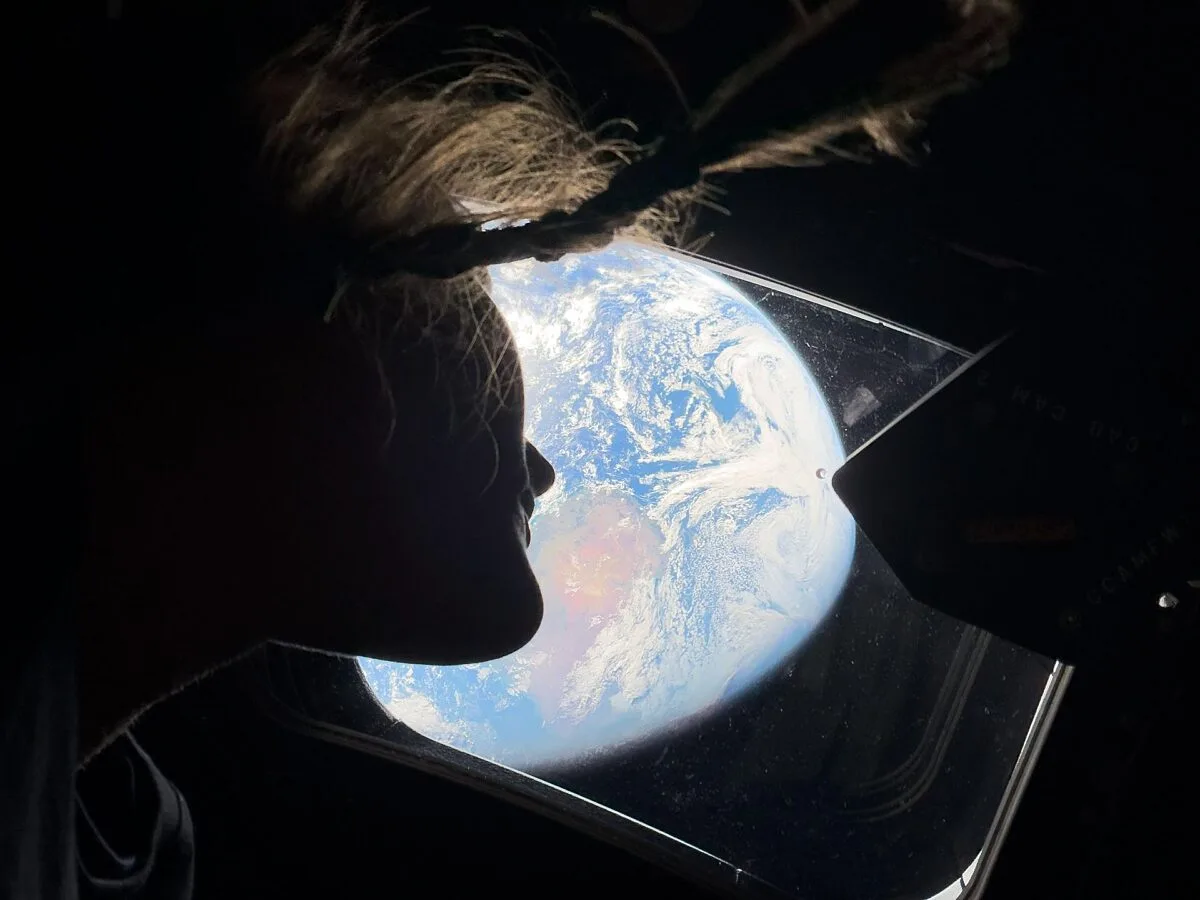
To have this effect, NASA has to share its accomplishments. The agency’s Office of Communications set up an extensive press campaign for Artemis II: continuous livestreams on NASA+ and YouTube, daily press briefings, social media and blog updates, a real-time mission tracker, and a program for the press to interview the crew in space. Some of the most beautiful photos taken by the astronauts were published within hours, while the mission was still underway.
Spreading the news in other ways would take investment. But last year, a White House budgeting office proposed a cut to NASA’s funding that would have shut down dozens of space missions and slashed the agency’s Office of Communications by over 50%. The proposal would have also consolidated almost all Communications staff at NASA Headquarters, instead of distributing them among different NASA centers as they are now.

It is unclear to what extent the planned cuts to the Office of Communications went into effect over the past year, if at all. Some Communications staff may also have left as part of the recent exodus of workers from NASA, which shrank the agency’s full-time staff by over 20%. The Office of Communications did not respond to a request for comment on these topics.
It’s possible that NASA had all the tools it needed, and Artemis II simply hit its ceiling. But that’s hard to square with what the mission’s own workforce described before launch. For its part, The Planetary Society helped engage the public about Artemis II, with our experts appearing on every major news network 37 times over the course of the mission. But only NASA can represent itself to the wider world.
Last year, The Planetary Society helped people around the world raise their voices against the proposed cuts to NASA, and the U.S. Congress restored the agency’s funding. Now, another budget plan aims to slash NASA, and the Society is again organizing to Save NASA Science. That doesn’t mean just saving the missions themselves. It means saving NASA’s ability to share its discoveries with the wider world and to inspire future generations.
That way, when the next Artemis mission launches, everyone will see it coming.
You Power the Next Great Discovery!
Fund future scientific research that advances space science and exploration with your gift today.
Donate