

 Explore Worlds
 Find Life
 Defend Earth


Planetary Radio • Mar 25, 2026
The astronaut health experiments of Artemis II
On This Episode
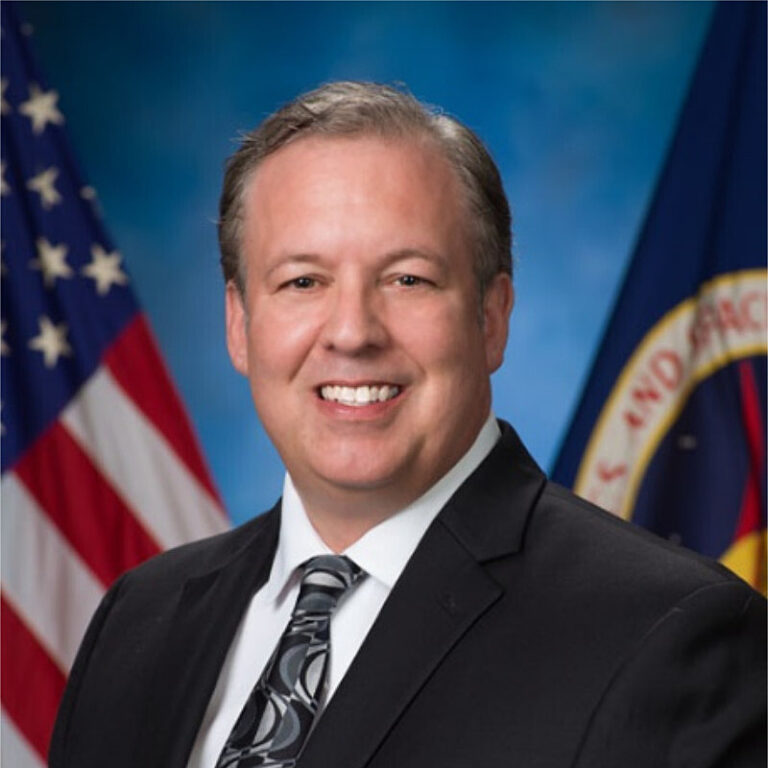
Steve Platts
Chief Scientist of NASA’s Human Research Program

Casey Dreier
Chief of Space Policy for The Planetary Society
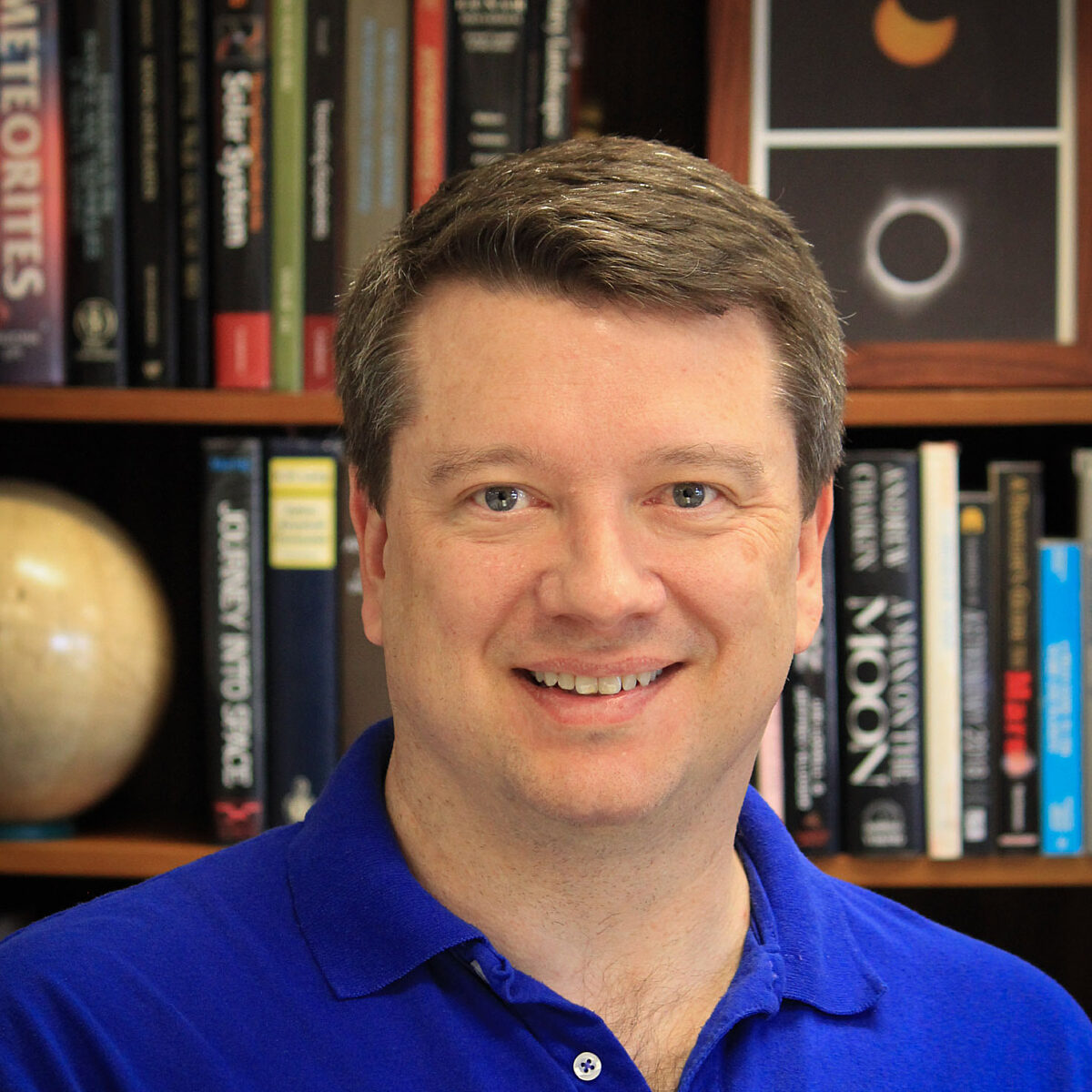
Bruce Betts
Chief Scientist / LightSail Program Manager for The Planetary Society
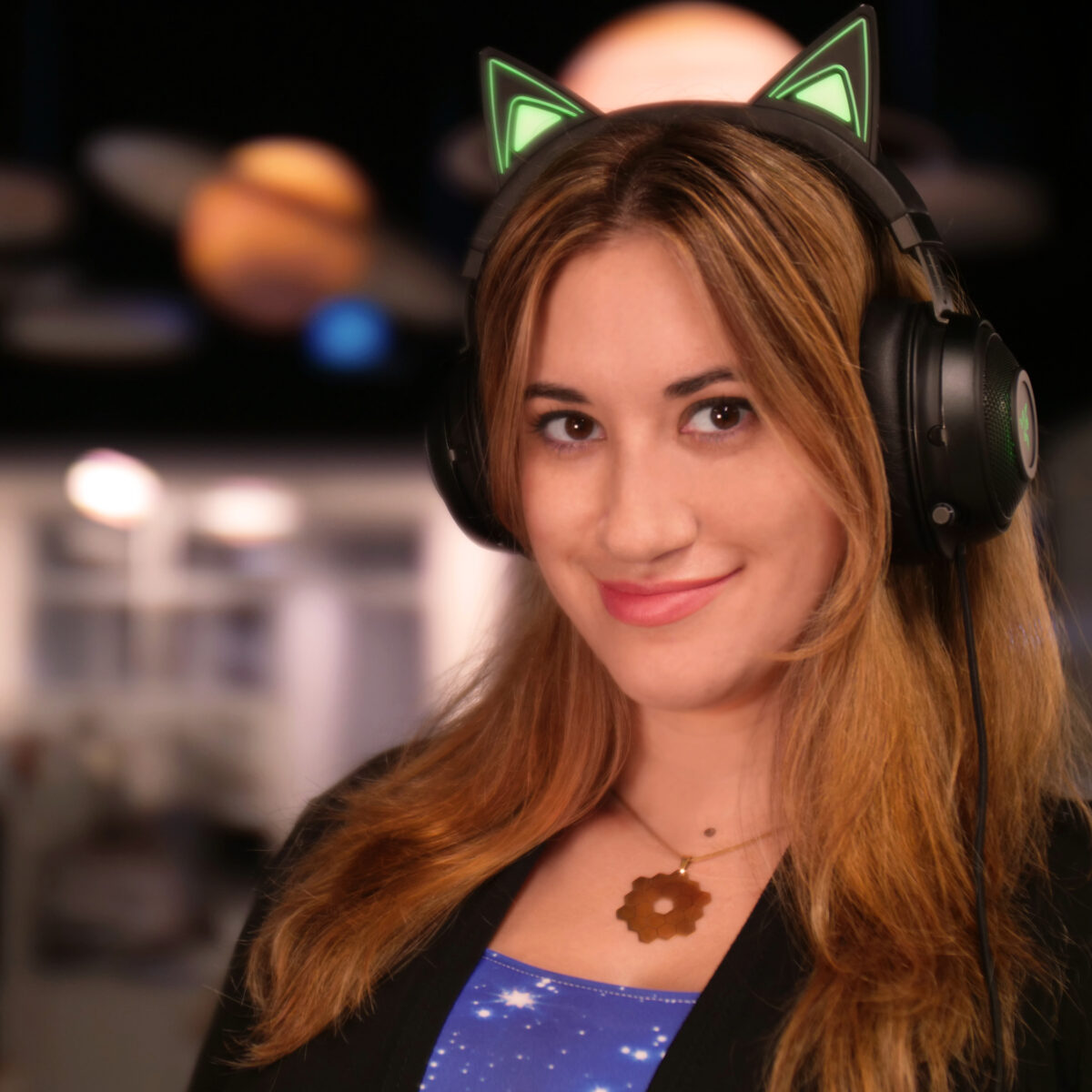
Sarah Al-Ahmed
Planetary Radio Host and Producer for The Planetary Society
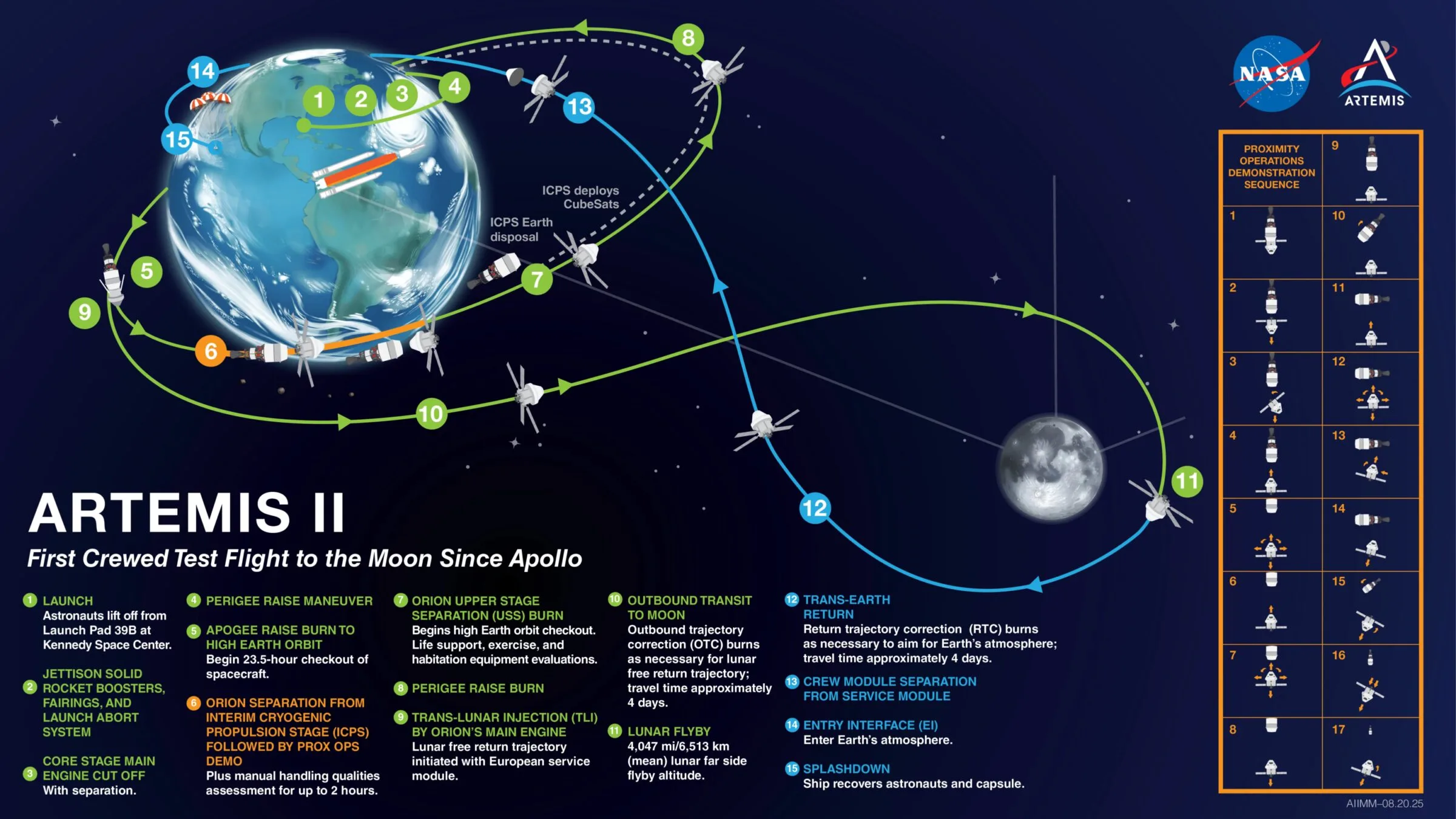
Artemis II is about more than getting four humans to the Moon and back. It's an opportunity to gather data on human health in deep space that we haven’t had in over 50 years.
This week, we’re joined by Steve Platts, chief scientist of NASA's Human Research Program, who walks us through the suite of human health experiments flying aboard Artemis II, from the ARCHER wearable sensors tracking crew health and team dynamics, to dry saliva swabs measuring stress hormones. Then Casey Dreier, chief of space policy at The Planetary Society, helps us make sense of NASA's Ignition Day, a major press event held on March 24 in which the agency unveiled sweeping changes to its lunar exploration plans and beyond.
And we close with Bruce Betts, chief scientist of The Planetary Society, in our weekly What's Up, where we explore one of the stranger phenomena in human spaceflight, the flashes of light astronauts sometimes see when cosmic rays pass through their eyes.


Related Links
- Steven H. Platts - NASA
- Artemis, NASA's Moon landing program
- The Artemis II mission: What to expect
- Artemis II Science - NASA
- ARCHeR - NASA
- Artemis II Crew Both Subjects and Scientists in NASA Deep Space Research
- Artemis II Crew to Advance Human Spaceflight Research - NASA
- Immune Biomarkers - NASA
- NASA Artemis II Science | AVATAR (A Virtual Astronaut Tissue Analog Response)
- Risk from Inadequate Sleep and Irregular Schedules - NASA
- Risk of behavioral changes and psychiatric disorders - NASA
- Risk of inadequate teamwork - NASA
- Planetary Radio: Artemis II and III: The science that brings us back to the Moon
- Planetary Radio: Artemis update: NASA reshapes the road back to the Moon
- Ignition - NASA
- NASA Unveils Initiatives to Achieve America’s National Space Policy
- Buy a Planetary Radio T-Shirt
- The Planetary Society shop
- The Night Sky
- The Downlink
Transcript
Sarah Al-Ahmed:
Artemis II and the science of keeping astronauts healthy in deep space. This week on Planetary Radio.
I'm Sarah Al-Ahmed of The Planetary Society with more of the human adventure across our Solar System and beyond. If everything goes well, we're just days away from one of the most exciting moments in space flight in decades. That's the imminent launch of Artemis II, humanity's first crewed mission to the lunar environment since Apollo 17.
Over the next two shows, we're going to be taking a look at the remarkable science being done on Artemis II that will shape how we keep astronauts healthy on every deep space mission to come. We'll start with Steve Platts, chief scientist of NASA's Human Research Program. He'll walk us through the suite of experiments flying aboard Artemis II. Steve will explain what we stand to learn about human health and physiology by sending four humans beyond Earth's protective magnetosphere for the first time in over 50 years.
Then we'll turn to the big picture with Casey Dreier, chief of Space Policy at The Planetary Society. He'll help us make sense of some of the major announcements from NASA's Ignition Day press event on March 24th. We can't cover it all, but we'll briefly talk about the revised plans for Artemis, a bold vision for a permanent Moon base and a nuclear-powered mission to Mars.
And finally, we'll close with What's Up? With Bruce Betts, our chief scientist. We'll explore one of the stranger phenomena in human space flight. The flashes of light astronauts sometimes see that are caused by cosmic rays passing through their eyeballs. If you love Planetary Radio and want to stay informed about the latest space discoveries, make sure you hit that subscribe button on your favorite podcasting platform. By subscribing, you'll never miss an episode filled with new and awe-inspiring ways to know the cosmos and our place within it.
A few weeks ago, we took a look at the geological science plan for Artemis II, and at the time Artemis III, although now the plans for that mission have changed. We discussed what the rocks, the landscapes, and the lunar environment can tell us about the history of our Solar System. But there's another layer of science happening on this mission that's just as consequential, and that's not focused on the Moon itself, but on the four humans that are making the journey.
For most of human space flight history, our astronauts have lived and worked within a invisible shield, Earth's magnetosphere. It deflects much of the harmful radiation that's streaming in from our Sun and the wider cosmos. The International Space Station orbits at about 400 kilometers or 250 miles above the surface of Earth. That means it sits mostly within the protection of the magnetosphere, but Artemis II is going to be taking these humans well beyond it, into a deep space environment for the first time since the final Apollo mission.
When the Apollo astronauts made that journey, they were stepping into dangers that we only dimly understood. The long-term effects of deep space radiation, the physiological chaos of shifting gravity environments, and the psychological toll of isolation and confinement in a small vehicle. Not to devalue the people on the journey, but they were in many ways the first human data points.
Their experiences began an era of research that spent decades unraveling how the human body and mind respond to the dangers and the wonders of deep space travel. The ultimate return of humans to the Moon is a moment that many in the space flight community have been waiting their entire careers for. And what we learn about the human body on Artemis missions is going to shape the way we send humans to the Moon and eventually to Mars for generations to come.
Plus, those benefits don't all stay in space. Time and again, the medical breakthroughs born of space flight have found their way back to improve lives right here on Earth. To walk us through the human science experiments flying on the mission, I spoke with Dr. Steve Platts, chief scientist of NASA's Human Research Program. For over two decades, NASA's Human Research Program has been working on these questions. And Artemis II represents a major opportunity to gather data that we simply can't get any other way. Here's my conversation with Steve Platts.
Hey, Steve. Welcome to Planetary Radio.
Steve Platts: Thanks. I appreciate it.
Sarah Al-Ahmed: How excited are you about this upcoming Artemis II launch?
Steve Platts: Oh, I can't even tell you. I've been looking forward to this my entire career. I've been with NASA almost 23 years, so getting back to the Moon is just a dream come true for us.
Sarah Al-Ahmed: Right. I've been hoping to see humans go back to the Moon for the longest time. I didn't get to live through the Apollo era, so this is a really big moment for me. I used to watch those videos and just see people bouncing around on the Moon, but we have such better tools now to understand how this is going to be impacting the astronauts and their health. And you started your career at NASA as a cardiovascular physiologist.
Steve Platts: Yeah, that's right.
Sarah Al-Ahmed: And you're basically studying how the heart and the circulatory system reacts to space flight.
Steve Platts: Exactly. Our main focus was on blood pressure control because when the astronauts came back, they couldn't regulate their blood pressure very well. And about 25% of shuttle astronauts banked it upon return. And when early space stations started, it was almost 80% of the crew that were susceptible to this. So we worked on what those mechanisms were and then how do you mitigate that? And we developed a compression suit that goes under their other suit that prevents the change in blood pressure. So that's what I focused on in my early career.
Sarah Al-Ahmed: Wow, that's very, very useful. I mean, knowing that that's an effect from going to space, who even knows what the long-term consequences of that is. But now you're the chief scientist for the entire Human Research Program. How do your roots in cardiovascular science shape the way that you continue to think about human health and space?
Steve Platts:
Oh, that's a great question because many of our chief scientists over the history of our program have been cardiovascular physiologists. And one time we all got together and we talked about that exact question. Why is it that a lot of cardiovascular people end up in this programmatic science? And we came to the conclusion it's because of the systemic view of the cardiovascular system. So the heart and the blood vessels link every single organ and you have endocrine responses and you have pressure responses and it's such an integrated system that it makes us think about the whole organism and all the different parts that go with it.
So that just tends to have us be very interested in that integration of all the different systems. The brain, nutrition, biochemistry, all things. Immunology, all of those things in one way or another can be linked to the cardiovascular system or are very intricately involved with the cardiovascular system. So that was our conclusion is that it just naturally lends itself to the more programmatic science viewpoint.
Sarah Al-Ahmed: Well, before we get into talking more about the specific experiments that are going to be flying on Artemis II, can you talk a little bit about the five hazards that NASA's identified for human space flight?
Steve Platts: Sure, sure. So we created an acronym, of course, we did because we're NASA.
Sarah Al-Ahmed: Always.
Steve Platts:
And everything has to have an acronym. So we call it RIDGE, R-I-D-G-E. And that stands for ... R is radiation, and that's self-explanatory. There are a couple different kinds of radiation that affect the crew members in space flight, and we can talk a little bit more about that if you want to in a few minutes. I is for isolation and confinement. So imagine being stuck with your best buddies in a very small vehicle for an extended period of time. Now, Space Station, we don't really consider that isolation because it's pretty big. It's the size of the football field. So if someone's bugging you, you can float down to the other end and get some privacy. Think about for lunar and then eventually for Mars, that's not going to be the case. So being in that confined space really has a significant effect on humans.
The D is for distance from Earth, and this again can be really important depending on the mission. So for low Earth orbit, they're not that far away. They're 250 miles up in orbit. If they have to come home in an emergency, they can. They have near real-time communication with their friends and family. They can talk over video. They can email all of that. On the backside of the Moon or going to Mars, that's not going to be possible. They certainly won't be coming home during a medical emergency and that communication will be difficult, especially if we're thinking longer Mars missions, where that comm delay can be 20 minutes in each direction. So that's a significant effect. And again, that really affects the human. Imagine if you weren't able to communicate at all with your friends or family like that, it really weighs on you.
The G is for gravity or lack thereof, which is really sort of both are the case. When you go into space, your body gets used to that. It adapts to it very, very well. In fact, too well. And that's why we had that blood pressure issue that I mentioned. Your body adapts to it. And then when you come back to 1G, what is this gravity thing? It's pulling fluids down. It's changing pressures. Your otoliths are changing. All these things are different and that affects how you function.
The thing we have to insert here is, "Okay, now we're going back to the Moon. What does 1/6G look like?" Now, Apollo astronauts weren't really exposed to 1/6 for that long, but if we're going to be exposed for long-term. Weeks or months, that's something we need to understand. So that's an important one for us.
And then the final one, the E is for environment. We call it a hostile enclosed environment because clearly if you go outside of your vehicle, that's a hostile environment. You're not going to survive out there very long. And when you're enclosed, that claustrophobia feeling. Again, small vehicle. We've been told it smells funny, it smells metallic. So that affects you. And the CO2 levels are different in different parts of the vehicle, and that can affect you. That can give you headaches and things like that. So that's another one of those hazards. So those five things. You can categorize almost every effect on the human into one of those hazards.
Sarah Al-Ahmed: I think radiation is the one that I find most personally terrifying and who knows what sci-fi movie is responsible for that one.
Steve Platts: And none of them did it right either.
Sarah Al-Ahmed: Right. But it's one of those things that you can't necessarily see or feel accumulating. And you said this earlier that there's different types of radiation. What radiations are we talking about here?
Steve Platts:
Well, for low Earth orbit, there are three types that we're worried about. So there's the solar particle events or SPEs, they can disrupt your cell phone, things like that. And that can cause acute radiation illness, but we know when they're coming. So we can tell them, "Hey, you have an SPE coming up, get into the safe zone." And there are parts of each vehicle that have more shielding and they can create a safe space where that really doesn't affect them very much.
The other kind is galactic cosmic radiation. And this is the main player, once we get outside the protection of the Earth. It's very complicated. There are lots of different components. So people know X-rays and they may know gamma radiation, but they're not thinking about heavy ions and protons and all this stuff. And it's a big mix and that can really affect you. We can't shield it all that well because if you try to shield it, you create secondary radiation that can actually be more damaging. And so that's the radiation that we're most concerned with going to the Moon and going to Mars.
It can have the biggest effect and it comes from space. This is not radiation coming from the Sun. It's coming from everywhere. So it's really hard to deal with it. When you're on the planetary surface, like if you're on the Moon, that blocks part of it. So that's good. But understanding it, being able to model it is something that we're really interested in. And so Artemis I gave us some preliminary information from the meters that we had on board there. And so that helped us refine our models. This mission is going to take that even a step further.
We're going to go around the Moon and we can take actual measurements and then update our models appropriately there. But really, when we get boots on the ground on the lunar surface is when we're going to be able to get the best measure of, "Okay, what's this really going to be like long-term? How do we deal with that?" And we have a whole program here within the HRP, where we're looking at radiation and what biological effects that has on the human.
Sarah Al-Ahmed:
I mean, there are so many different ways that it can impact you. I think one of the most frightening ones for me was learning about the little flashes of light that some astronauts sometimes see when they're in outer space and connecting that to cosmic rays blowing through your retinas. I mean, that's like the tiniest example of how that can impact you, but there's so much going on there.
And we've been talking on this show a lot about voyager and about all the experiments we're doing out at the heliopause and learning about energetic neutral atoms. There's so much complexity to that issue that I don't think people fully comprehend when we're talking about sending people to space.
Steve Platts: Yeah. And just how do you deal with that? And people are surprised when I tell them, you can't really shield it. Shielding isn't really the answer. In order to shield it, the vehicle would have to be so heavy you couldn't fly it. And then it's not really that effective anyway because you're creating secondary radiation that is still just going to dose the crew. So when we do our calculations now, we set limits on how much the astronauts can acquire and none of the Artemis missions are going to come close to that limit. And so that's the good thing. Planning the Mars missions is where it gets real tricky though.
Sarah Al-Ahmed: Yeah. But that's why this science is so important. If we can do it on shorter timescales around the Moon, then we can actually find ways to figure out how it impacts the human body and hopefully find ways to mitigate it. But it really is a step-by-step process we have to be aware of.
Steve Platts: Yeah. I understand people, their reaction because when they hear radiation, what's the first thing everyone always thinks of? It's cancer. And so that's the instant thing. Oh, my God. Everyone's going to get cancer. We find that's not the case. And cancer is one of the risks that we study, but just one. And so the radiation also affects the cardiovascular system. It also affects the central nervous system. There are lots of things for us to look at.
Sarah Al-Ahmed: Well, you brought up the isolation and confinement issue. I mean, we're already choosing these crews and training them and making sure that they're supported, so they can be in areas with each other for months or maybe even years on end if we're going to be sending them to Mars. And this is a question I asked myself a lot during the COVID era because I used to joke. I've been in this apartment with my partner, my cat so long, I clearly would be fine on a space mission. What has the research actually taught us about what actually predicts how well a person can deal with that isolation environment?
Steve Platts:
Yeah. It's really interesting that the things that happen to people. And a lot of people talk about when we had COVID and all of those circumstances we had to deal with being alone in our apartments for days and days and days. And even when you go to the grocery store, everyone has a mask on and you're not talking to people and you're not really interacting. And your apartment is pretty big generally. Imagine doing that in the size of a Winnebago. That's what we're talking about.
There are ways to screen for how certain people deal with certain things and that works fairly well, but you can't always figure out exactly how the team is going to function together and then what stresses are going to cause issues within that team. That's one of the big risks we're looking at is the team dynamics. And we have what we call analogs here on Earth. Isolation facilities, where we can simulate a lot of these mission scenarios. We have a couple of them here at Johnson Space Center and then there used to be one in Hawaii and there's one in Russia and there's one in Europe, so all over the place. So we do a fair amount of this.
And another place we do research, believe it or not, is in Antarctica. So during an over winter, we study the crews there and see how they deal with not being ... And these folks, it's real. It's real for them. They can't leave. That is a good model. So we found that a lot of the immunology issues we see in flight are replicated in Antarctica and some of the psychological issues that some people have are also replicated well in Antarctica. So that lets us study that.
If we watch two movies a day instead of one movie a day, and it sounds silly, but that's the thing that can really make a difference. Having the opportunity to interact with your family, even though it's not real-time. Reading letters from your family and watching movies and listening to music and interacting and playing games. All these things that we just normally do every day are really countermeasures.
And now some of the more complex things we're looking at is, "Okay, can we design an AI bot to talk with the person and figure out how they're doing? How they're feeling, and then can we teach it how to help a crew member who may or may not be having issues?" So those are some of the more advanced things we're doing. And then what would that be? If it's just a computer screen, well, that's okay. But what if it's like this floating droid that follows them around in a station or something like that? More interactive. And we've seen stuff like that on science fiction movies, but research is really going on that is very, very similar to that.
Sarah Al-Ahmed: Yeah. I'm definitely going to need a little R2-D2 or something if I'm going to be in space.
Steve Platts: Right.
Sarah Al-Ahmed: Yeah. How much have we studied or how much do we understand about how the body handles multiple gravity shifts during a single mission?
Steve Platts:
A little bit. We don't have a lot of experience with that. Apollo, obviously, but that's pretty much it. Where we're going from microgravity, which we call when you're not here on Earth because ... It's never 0G, so we don't use that whole 0G thing. So microgravity to 1/6G, that's really ... We have a little experience with that, but then they go back to microgravity and then they come back to 1G. So we know the microgravity to 1G and there can be some issues there. And we know a little bit about the microgravity to 1/6G, but we don't have any long-term data there.
We know nothing really about 3/8ths G. And so that's a lot of the research we're doing now. So we have a bunch of different experiments we're going to do on Artemis in order to study some of those. We have obstacle courses that they're going to do when they come back to Earth, so we can see how well they're functioning. We have a number of different surveys where we're asking them, "How is this working? How are you doing with this?" They're going to be wearing something very much like this, not this brand, but something very much like it. So that we can look at their activity levels, how well they're sleeping, how close they are to each other. That tells you something about how they're interacting and that will give us more information on that.
That is definitely one of the things we're interested in looking at, those G transitions and the multiple transmissions during a single mission.
Sarah Al-Ahmed: Well, you just pointed at your smartwatch, which is very similar to one of the experiments that you're going to be doing on board to monitor crew interaction and health. The ARCHER experiment, I think it's Artemis Research for Crew Health and Readiness. Did I get that right? But effectively, it's a wearable technology. It's like a really advanced Fitbit or a smartwatch. What data is that going to be collecting from the crew?
Steve Platts:
So it'll give us information like light-dark cycle. It'll give us information about their activity. So how much are they moving around? And that's more informative than people realize because when you're in space, you don't move around with your lower body. You don't ambulate with your lower body, you're grabbing and you're moving this way. So that gives you an indication of how much they're moving around. It can help us calculate calories and everything. They will have some exercise capabilities, and so it allows us to track some of that.
So those types of things are what's going to be on that device. There's also, within ARCHER, a number of different surveys and different ways for us to get at, how are they doing? How are they feeling, what's that interaction like?
Sarah Al-Ahmed: And we've done a lot of studies on isolation and sleep deprivation and stress and things on the International Space Station, but this is going to be the first time that we're really doing these deep studies on people that are going on a lunar crewed mission. How does that functionally change how people might respond to these situations?
Steve Platts:
The radiation is a little bit different, but like I said, for this mission, we're not really too worried about the radiation. The confinement is really a big thing. How is that exercise going to work? We use the Winnebago, the small RV analogy for what it's going to be like, but you have an exercise device. So now you have someone exercising, who's pretty close to you. Then it's your turn, and then it's the next person's turn. How is all of that going to work? Are they going to be able to exercise efficiently, effectively? So that's going to be really important for us to be able to track because that will then allow us to get to the longer duration mission. And so how is that going to work for a longer duration mission?
Again, there, the team dynamics, all of that. Again, isolation, that small size. Those are really going to be the main things. And then part of it ... One of the things that we've seen is the part of your mission you're in can help determine your mental state. So you're looking forward to going to the Moon, you're looking forward to going to Mars. You're excited, and so you're very positive. When you're coming home, that can change a little bit because ... It's not to say you're not excited about going home, but probably the coolest thing you've ever done in your life is now over. And so now everything feels ...
It's like coming home from a vacation. You go to Aruba, you're really excited to get there. You have a blast there. When you're on your way home on that plane, you're like, "Ugh, I don't want to do that. I don't want to go back to work. I don't want to do all these other things." And those little changes can really affect how a person interacts and how they do their job. All of those things pile up. So that's another thing that we will absolutely be looking at.
We'll be looking at how those flights, how those G transitions, how all of that affects the immune system and other parts of the body. So we're looking at ... So we have what we call dry saliva swabs, and those allow us to do something really cool. So normally we collect saliva and we can measure hormones, like cortisol and other biomarkers in that, but we didn't have the up mass or down mass to do that. So we have these dry saliva swabs. Basically, it's a piece of filter paper and they just put it in their mouth, lets the saliva soak into it. And then they just put it in their pocket and then they bring it home with them. And that will allow us to look at cortisol, other hormones, some different biomarkers. We can look at a number of different things to figure out how that trip affected them. And we do it at various stages during the mission, so we can track that. Pre-flight, in-flight, and post-flight. And so that's part of that immune biomarkers study that we're also doing.
And then we have another study called Standard Measures. And that has some similar things in it that allow us to track how they're doing. That's the one that has the little obstacle course in it for when they get back. So we can track how well they can get out of the vehicle by themselves, move around, walk around, do all those things. And that will help us predict for future flights to the Moon, how are they going to do? And then also, when we go to Mars, how are they going to interact? What do we need to do? Are they going to have to rest before they can do an EVA? Are they going to be able to plug modules in and do all those things right away? Do they have to wait a couple days before they get out and about and do those things?
Just the amount of information we're going to be able to acquire, even from just ... People say, "Oh, what can you get from a fly by like this?" You can get a lot.
Sarah Al-Ahmed: So much.
Steve Platts: And so we're really looking forward to it.
Sarah Al-Ahmed: What does the data suggest so far about how going on these deep space missions actually impacts the immune system?
Steve Platts:
So we've seen a number of different things with the immune system. We have what we call viral reactivation. And this is important because ... People don't really know what that means, but I can tell you one great example of what it means, 99% of the US population has had either a vaccine or actual chickenpox. And so chickenpox doesn't leave their system, it hides out in your body. And so when we become older and our immune systems start to deteriorate as we get older, we get shingles. And that's an example of viral reactivation.
And we've seen that in space. That can happen with a number of different viruses. And so we want to be able to predict which ones would happen and how do we treat it? How would we deal with it? Because anyone who's had shingles, they know it's a very unpleasant experience. And so that's the thing. We've done some studies that ... We show some parts of the immune system work just fine. There are actually pictures on the internet from the Twins Study that we did about a decade ago.
One of the astronauts giving himself an injection, which was a flu vaccine, and we tracked how his body responded to the flu vaccine, and it responded quite well. So that part of the immune system works just fine, but we know that they tend to get some rashes and things like that. And some of their T cells respond differently than they do before or after flight. We understand a lot, but there's still a lot that we're trying to learn.
Sarah Al-Ahmed: Yeah. I mean, if something reactivates on a 10-day mission around the Moon, it's not a huge concern. But if we're going to be sending people all the way out to Mars without any way to come home and without a whole backlog of random medications. How do you prepare for something like that? And what is NASA trying to do now that might help us mitigate that situation in the future?
Steve Platts:
That's a good question. We have what we call the medical conditions list, and it's a list of the top 100 medical conditions that we think might occur during a mission. And some of that is just from experience, some of it is from prediction. And other parts of it is ... We have a model that we plug lots of information into and it gives us some of these lists. Some of them might feel very mundane. Like, what if you have a cavity in your tooth? Okay. Well, that might not be that big a deal, but okay. Well, what if you get an abscess? What if you need a root canal and you are halfway to Mars and you're the doctor and the other people have to do it?
So we have to come up with scenarios for how we treat things like this. Some of it is going to be training beforehand. That's also one of our risks that we look at. If you train someone before a mission for something like this, how much of it are they going to forget by the time they get halfway through the mission? So there's just in time training and there's virtual assistance and all these things that we're working on to make it easier for the crew to do things like this.
Our medical operations team is working on things like this every day to make sure that we can treat all of these scenarios and make sure our astronauts stay safe and healthy. One of the best ways we can do it is we have a ultrasound machine, aboard the Space Station now, and we have requirements for it on future missions because that's the main way we can do imagery. We can look at the body. There are no X-rays or MRIs or CT scanners that are going to fly. They're just way too big and heavy. Can you imagine turning on a 3 Tesla MRI when you're in a metal capsule?
Sarah Al-Ahmed: That's a nightmare.
Steve Platts:
That's not going to happen. So ultrasound is the way we do it. And we can look at the eyeballs to see if space flight associated neuro-ocular syndrome is becoming an issue. We can look at blood vessels to look for blood clots. We can look at pretty much every organ in the body. The brain is a little difficult to get to lots of parts of it with the ultrasound machine, but every other organ you can really get to. You can look at tendons to see if there's inflammation. Believe it or not, you can look at some bones to see if the bone is broken or damaged in some other way.
So there are a lot of things, a lot more than people realize that we can do with the ultrasound machine. And we use that type of technology quite a bit. And the ultrasound machine we started with on the Space Station was huge. It took up an entire rack. It was like the size of a washing machine, hundreds of pounds. The current one is about laptop size. And in the future for the missions we're talking about, it's going to be one of these and it's going to have a probe that you plug into it and do the ultrasound right there. And they're using those in emergency rooms right now. And so it's just amazing how that technology has changed.
One of the things we talk about with people is, imagine the shuttle program and their computer that ran the entire space shuttle had a fraction of the computing power of one of these. It's just changed so much. You can't even imagine. The way that research is done now is very, very different from Apollo. There are lots of things we can do now that they could only dream of back then. That relates to another question. Well, we've already been to the Moon. Why is it important to do research now? There's so much more we can ... There were no ultrasound machines for Apollo. They didn't exist. And so we can get so much more information now than we ever could before.
Sarah Al-Ahmed: And think about the way that that miniaturizing of technology not only helps us in space, but can help people all around the world. I'm sure there are little medical facilities and places deep from other cities, where a small scale cell phone size ultrasound could be the difference between someone living and dying. I mean, that could help a lot of people.
Steve Platts: Yeah. And we do a lot of work like that, where we talk about remote medicine or mobile medicine. And ultrasound has been one of the things that we focused on. If we have ways to teach someone or train someone to do an ultrasound without going to a four-year school. So you could have someone way out in the countryside, who might be a nurse or someone. And you could have a doctor on the other end saying, "Okay, turn the probe this way, do it like this. Okay, that's a good image." They can see it through telemetry. "That's a good image. Okay, I know what's wrong and this is how we treat it." Now bring in AI and bring in all these new tools and that's even more powerful. And that's one of the things that NASA does is we don't just develop tools and research that help the astronauts. Our goal is for it to help the whole population. And so we bring that type of thing back to Earth and say, "Hey, this worked in this circumstance and now we have a device that's only this big instead of being this big." And we bring that to the population and make sure that people can utilize it.
Sarah Al-Ahmed: We'll be right back after the short break.
LeVar Burton:
Hi, y'all. LeVar Burton here. Through my roles on Star Trek and Reading Rainbow, I have seen generations of curious minds inspired by the strange new worlds explored in books and on television. I know how important it is to encourage that curiosity in a young explorer's life. That's why I'm excited to share with you a new program from my friends at The Planetary Society. It's called The Planetary Academy and anyone can join.
Designed for ages five through nine by Bill Nye and the curriculum experts at The Planetary Society. The Planetary Academy is a special membership subscription for kids and families who love space. Members get quarterly mailed packages that take them on learning adventures through the many worlds of our Solar System and beyond. Each package includes images and factoids, hands-on activities, experiments and games and special surprises. A lifelong passion for space, science, and discovery starts when we're young. Give the gift of the cosmos to the explorer in your life.
Sarah Al-Ahmed: The data from Artemis II is going to be adding to a long history of studies that have been done on astronauts in low Earth orbit. And I think you mentioned this earlier, the spaceflight Standard Measures experiment. It's been running since 2018. So we have a lot of data on astronauts on the ISS. I think it's like 30 plus astronauts, but now we're going to be adding the data from a crew that's actually going beyond that protective magnetosphere and to the Moon. What questions does that allow us to ask that we couldn't ask before?
Steve Platts:
It's really interesting and that's right, we can make that comparison, but remember the length of missions we're talking about now is similar to the shuttle program. So what data can we compare with shuttle for that similar duration? We also do standard measures in our isolation and bedrest analogs, so we can compare those data. So it's a wealth of information that we're going to be able to do when these data come back. We're planning to release a solicitation to have people come in and say, "Okay, here's our data. Here are all the information we have. Go at it. What do we need to look at? What comparison should we be making? What things should we be looking at?" And that will really open things up when we have the entire research community have eyes on this data.
Again, the main things we're looking at is the radiation, what is that doing? Even though it's not a huge exposure, we will be able to get some of that information and make extrapolations and everything. And as we get to longer missions that are actually on the lunar surface, as we go to weeks and months. That's even better data that we can compare to Space Station.
And we can look at pretty much every organ system. We can look at cognition, how well we're thinking. We can look at the eye, that's a big issue for us and it's something that we're really interested in looking at. How does the eye change? We know that there's a change in shape of the eyeball and you can get wrinkles in the back of your eye and that could affect your vision if it happens in a certain spot. And then we also know that the nerve going to the eye can swell. And so we can look at all these things and compare, and that's going to help us get a complete picture of the health of the astronauts.
Sarah Al-Ahmed: Well, there are going to be a bunch of different radiation sensors all around the Orion capsule, but there's also going to be these dosimeters. Is that how you pronounce it, in people's pockets?
Steve Platts: Yep, dosimeters. Yep.
Sarah Al-Ahmed: What can we learn from having those on the astronauts themselves that we can't learn from the ones that are actually inside the crew capsule?
Steve Platts:
So the astronauts move and different parts of the capsule have different levels of shielding, depending on which direction the radiation's coming from. So if it's an SPE, it's coming from the Sun-facing side. If it's GCR, it's coming from everywhere. But as they move around, they might have a slightly different dose than the dosimeter that's up there in the ceiling or the dosimeter that's down there that has a piece of hardware blocking it partially. So it's really important that it's on the person.
And then different organs in the body have different sensitivities to radiation. And so it's possible to then put dosimeters ... One on the head and one in the pocket and one somewhere else. And now you can start saying, "Okay, this organs set. This organ system received this type of dose." And the closer we can get to doing that, the better our predictions will be about what the actual dose is that the human is getting, and then we can calculate out risks and things for their future health.
Sarah Al-Ahmed: It also means that we might be able to disentangle what's causing some of the effects in all the other experiments, because you're going to be getting all this live data. Sometimes when you're just looking at the human body, it might be really difficult to tell what's actually causing the things we're seeing while they're up there.
Steve Platts:
Exactly. And in space, it's even more complicated because we have what we call multiple stressors. So a lot of the downstream effects we see from space flight is due to stress, but what is stress? And they trigger similar responses. So you have nutritional stress, the exercise stress, psychological stress, the stress of the radiation, the stress of not sleeping well. All of these different things happen and they happen at the same time. And so how do they interact? Are they additive? Do they sum? How does all of that work? And that's one of the central questions we're trying to get to.
When we're doing research here on Earth, we like to separate everything out. A good scientist ... I will only study my one little thing and I will determine exactly what's going on. Then I'll add the next little thing, then I'll add the next little ... That takes decades and we don't have that time. And so that's why our research is a little bit different than what happens just in a laboratory here on Earth. We have to look at those multiple stressors and figure out how that's really affecting the body.
Sarah Al-Ahmed: Well, I want to wish you and everybody who's working on Artemis II so much luck in the future. The general public, they want to see people go to space, but they might not think about just how much burden we're putting on the astronauts that are going up there. How much they're putting themselves at risk in order to do this. And every bit of research we put into this means that every future generation can be safer and safer. So thank you for everything that you and everyone at the Human Research Program is doing right now. I think it's such important work, not just for our astronaut health, but also for human health on Earth.
Steve Platts: Yeah, it's our pleasure. I mean, this is our life's work. It's incredibly exciting and I just can't wait until we're launching Artist II. I'll be leaving the end of next week. So hopefully we'll get a launch this cycle.
Sarah Al-Ahmed: Good luck with that, fingers crossed. I went for Artemis I and missed the whole thing because it changed its timing, but space is hard and it's important that we do this in a thoughtful manner so everyone gets safely there and back again.
Steve Platts: Absolutely.
Sarah Al-Ahmed: Well, thanks so much, Steve.
Steve Platts: Sure. Thank you.
Sarah Al-Ahmed:
There's something deeply moving about the level of thought and care that goes into understanding what happens to the human body in deep space. It reminds me how lucky we are to live on such a hospitable planet, but also how fragile and precious life really is. And that behind every space traveler is a team, family, and friends who ultimately care most about seeing them return safely to the ones they love.
Next week, we'll be taking a closer look at one of my favorite experiments aboard Artemis II, AVATAR. It stands for A Virtual Astronaut Tissue Analog Response. It uses tiny organ-on-a-chip devices made from the actual cells of the Artemis II astronauts to study how deep space travel affects human tissue on the cellular level. And depending on what happens, by the time you listen to that next episode, Artemis II might already be on its way to the Moon. The next launch window begins on April 1st, so mark your calendar.
I feel like calling out sick from work to watch the first crewed lunar launch since 1972 is totally valid, but don't tell your boss I said that. But honestly, for me, it's all about the knowledge we gather as we send missions to space. Much of what we want to learn about the universe requires robotic exploration, but perhaps there will come a day when humans walk on the plains of Mars or orbit the moons of Jupiter or venture into the outer Solar System. And when they look back across that vast distance to Earth, it's going to be because of the careful work of people like Steve and his colleagues that made it all possible.
Of course, we're very far from that point. Right now, we're just trying to find our path back to a human presence on the Moon, and it will surprise no one to learn that that's very, very complicated. Not just scientifically, but strategically. NASA's plans for the Moon and beyond are in the midst of a significant transformation. On March 24th, NASA held a major event called Ignition Day. It was a series of press conferences laying out the agency's updated vision for lunar exploration, including the building of a permanent human presence on the Moon. It was a lot to take in, and what all of these changes ultimately mean for NASA Science is something that we'll still have to judge with time.
But to help us make sense of these recent announcements, I'm joined by Casey Dreier, chief of Space Policy at The Planetary Society. Hey, Casey. Thanks for joining me.
Casey Dreier: Hey, Sarah. What a pleasant surprise. I guess somewhat, most of it.
Sarah Al-Ahmed: I know. We were already going to be talking about all of the amazing human science that's going to be going on in Artemis, but suddenly this Ignition Day event fell into our laps. So what is Ignition Day and what's your initial reaction to the series of press conferences?
Casey Dreier:
Well, how much time do we have? I mean, there was a lot of pretty bold reconfiguration and announcements and statements of intention, I should say, from NASA administrator, Isaacman. And a number of NASA leaders about where Artemis is going and some pretty striking real talk about the feasibility of commercial space stations. So it was a huge news dump. It was striking to me actually just in watching it.
Isaacman even himself said, "For those of you who used to watch Apple product announcements back when they were cool, 10, 20, 15 years ago." He even said, "There's one more thing." It felt like a Silicon Valley product announcement event, which was a very different type of vibe from previous types of NASA press or outreach events like this.
Sarah Al-Ahmed: And we can barely even begin to touch on the details in this short conversation, but let's start with that announcement that they're basically pausing the Lunar Gateway and completely pivoting to a surface Moon base instead. What are the implications of that shift?
Casey Dreier:
Well, I mean, this is hard to read through because it's not clear. They didn't take questions. Maybe some more information will be coming out in the coming days, hopefully, and weeks. The big question to me though is, how much did the international partners ... How much did Congress know before these announcements were made? How much did the aerospace industry know? It seems to be that not a ton of people knew the details of this. That this is a surprise to a lot of folks.
Just the other month, Congress was moving a NASA authorization bill that further ensconced the role of Gateway station. Last year, they had passed a bill that provided roughly three billion dollars over the next few years to finish the Gateway station elements. So this is a pretty radical change, it would require acts of Congress. I assume that he has congressional buy-in from this, but it's ultimately in reaction to a presidential directive that came out last December that said, "Moon is back in play. We've flirted with Mars for a while with humans, but nope, it's going to go to the Moon and we're going to start establishing a lunar base by 2030." So this is the response to that directive and the politics to me are going to be really fascinating to see how they play out.
Sarah Al-Ahmed: Yeah, I think you're right. So much of this is predicated on commercial partners being willing to engage in a base on the Moon, but also there was some talk about de-orbiting the ISS and replacing it with these commercial space stations and also the entire timeline for Artemis depends on these commercial partners also getting the lunar lander right. There's a lot on their plate and I'm wondering about the feasibility of getting all of this done within this tight timeline.
Casey Dreier: I mean, I think that was the other big takeaway that this is happening within the next two and a half years, most of it. I mean, again, we're not used to NASA talking about this. Now, we are professional optimists. Right, Sarah?
Sarah Al-Ahmed: Yeah.
Casey Dreier:
That's our job. And I want to believe this is possible, but it is ... They're talking about ... In addition to this surface build-out, deploying thousands of kilograms of material to the lunar surface over the next two years. Dozens, if not ... Upwards of 30 landed CLPS missions over the next few years. A lunar landing every six months with Artemis. At the same time, building out an extensive array of networks, a satellite communication system over the Moon. This huge infrastructure buildup, power systems to last the lunar night. Rovers, science instruments, tech demos, you name it.
And also, of course, we didn't even mention a nuclear electric propulsion mission to Mars to throw a handful of ingenuity, like helicopters around. Radical reconfiguration of the ISS, extending it. That's all but said they'll extend the ISS now beyond 2030. It's ambitious to say the least. I think maybe the most generous interpretation of this is that these timelines are intended to spur focus and prioritization. And that's the flip side of this too, because what isn't said, what isn't prioritized in this. And you look at Isaacman's language carefully. He's not saying that there's a bunch of new money coming their way. He's saying if NASA is able to basically concentrate its resources to their primary goals of Moon and Mars, then we can do these types of things.
And that makes you wonder, well, what's not in that purview, what happens to those projects? And again, we don't know because there was no opportunity to ask further questions.
Sarah Al-Ahmed: Yeah. They did mention some things about maybe winding down some legacy missions. They clearly said that they've got more of a timeline for when Nancy Grace Roman is going to launch, what's going on with Dragonfly. So they're keeping those missions and they brought up DAVINCI as an example of potentially using that DAVINCI probe style technology for deeper missions. Like say a Uranus orbiter and probe. So they clearly have some hopes for the future, but I'm wondering about what this is going to mean for all the science missions in the short-term.
Casey Dreier:
Yeah. So Nicky Fox, who's the associate administrator of the NASA Science Mission Directorate, she had an opportunity to speak. And I think of all the ... She said a lot less than I expected, which again, probably isn't a great sign for a lot of the detailed science things. I mean, there's a lot of ambitions. We want to look at partnering with private industry. We invite proposals from people with new ideas of how to do things cheaper. We hope philanthropists will come and work with us. There's a lot of hope statements in that, not a lot of clear plans.
A couple of high profile missions, which I love, we're all called out. Talking about planetary defense, even I'd say a bonus Uranus ... Some Uranus probe or Uranus mission. That's a big one.
Sarah Al-Ahmed: Yeah.
Casey Dreier:
That's a top recommendation of the Decadal Survey. It's great. But then they'll just talk about, how do we streamline operating missions? Now, conceptually, streamlining extended operation missions. Hubble spends or costs, I should say. Roughly $85 million a year. Does that have to be that way. It's not all going to science. In fact, most of it is not. Can there be ways to streamline efficiencies and make some of these long-lasting missions cost less to operate? The answer has to be yes, because it's just never been implemented because it's a hassle. You say piecemeal here and there. And a lot of institutional problems make it difficult to save a ton of money, but we could go into a much longer conversation.
So again, there's not inherently bad ideas with that. The question is, do they have the luxury to pursue them smartly, or are they just expected to lop off a bunch of money and then hope efficiencies appear? That was the predicate of the 2016 budget request. It says, "We'll find efficiencies because we cut their budget by 40%." And it's like, "Oh. Well, what's the plan?" It's like, "Well, they'll find efficiencies because it's now more efficient." It's like, "Well, that doesn't work that way."
Sarah Al-Ahmed: Yeah. And especially at a time when last year we had a lot of issues with the NASA budget and lost NASA workers. This seems really, really ambitious in that context, but I'm hoping that this means that we're going to get congressional buy-in and hopefully the presidential budget request, which is going to be dropping soon, is going to reflect this new directive for more Moon and Mars missions.
Casey Dreier:
One would think so. I mean, that's the idea that something this dramatic would not normally be presented without the White House obviously saying yes. This is setting the stage for what's coming. Congressional buy-in is ... Again, that's my initial question. How much did he prep and engage with Congress where they ... One thing Congress hates is being blindsided. That's how number of major space initiatives through a White House or NASA administrator have failed when members of Congress felt surprised by radical change. Gateway is one of those potentially radical changes.
I think a lot of the ideas for the lunar surface are again, conceptually very sound. If you're going to go to the surface, it does make sense to concentrate your work there and not build a station. I've been the one lone apologist for Gateway. That's a very lonely place to occupy, not necessarily because I think Gateway is the most exciting and we have to do it. But within Artemis, it was the point where all of the international partners were coming in to contribute. That was the mission that had all the international partnerships. The surface stuff never did. It was never really defined.
And so if you want to bring international partners along, Japan, European Space Agency, United Arab Emirates had signed up to support it, along with the US, Canada. Then you need to have some clear vision for that and also work at a level that they're capable of contributing to financially or at a level of engineering capability. And so Gateway was that concept. Will that then transfer to the lunar surface? I hope so. Again, it makes sense. And again, they danced around it. They said, "We're not canceling it. We're just going to shelve it indefinitely. And we'll adapt what we can from it to the lunar surface."
Now, again, that's one of those things that I think probably sounds more feasible than it actually is ultimately. You design things for the lunar surface very specifically for the lunar surface, but it's one of those things they're trying to not outright cancel. That's probably trying to be clever, aware of the politics with this. So it's a lot of exciting ideas, but again, the time we're recording, there's two and a half years before 2028 is over.
The pace at which they're proposing to move, and as you said, with NASA having lost a fifth of its workforce and recent polling data coming out just the other week showing hugely demoralized workforce across obviously the US federal government, but at NASA, 40% of respondents to this NASA civil servant poll saying that they believe their teams have become less efficient and are producing lower quality work because of the massive shocks to their workforce.
Isaacman is trying to hire ... They call it NASA Force. They're trying to hire 2,000 or thousands more people, notably for short-term, 10 years. But again, they're trying to bring some skills back. This is a huge lift for anyone, even an agency flush with cash, which it does not seem NASA will be.
Sarah Al-Ahmed: Well, there's a lot to digest after all the things going on today, but I really appreciate you taking the time to pop in here and give us an update on this. And I know that our communications team is already working hard to spin up an article so people can read through all the details. Seriously, good luck in the feature, Casey. This is a big change and I'm sure it's going to impact the way that we communicate in Washington DC, but also ... I'm in agreement with you, I think it's a very hopeful vision of the future on the Moon and even on Mars. And I'd love to see even half of this get accomplished.
Casey Dreier: I'll take it.
Sarah Al-Ahmed:
Thanks, Casey. We'll keep you updated as we learn more about what this all means for the NASA Science missions that we hold dear. And of course, I'll leave a link to all of the Ignition Day press conferences on the webpage for this episode of Planetary Radio, just in case you want to watch for yourself.
Now, I want to go back to something that Steve Platts and I discussed very briefly during our conversation. That's the strange flashes of lights that some astronauts see when they're in space, which are caused by cosmic rays permeating their eyes. We'll talk more about that next in What's up? With our chief scientist, Dr. Bruce Betts.
Hey, Bruce.
Bruce Betts: Hello, Sarah.
Sarah Al-Ahmed: We're getting closer to Artemis launching all the time. At least I hope so.
Bruce Betts: I'd say we are.
Sarah Al-Ahmed: Yeah. This week and next week, we're talking about the human experiments on Artemis, not human experiments. Well, I guess we are experimenting on people, but the human science behind Artemis was something that came up in the conversation, which is one of my favorite weird little tidbits that I learned about the Apollo era, is that sometimes when they were out there in space because of cosmic rays. They'd see these little flashes of light. What was going on with that?
Bruce Betts: They were tripping really hard.
Sarah Al-Ahmed: I mean, I would be if I was on the Moon.
Bruce Betts:
Yeah, weird thing. The astronauts, the Apollo astronauts reported seeing flashes of ... Mysterious flashes during the various missions. A lot of them observed these things, weren't sure what they were. They continued to get space crews experiencing them. Although I'm curious, I would guess if it's more common in deep space outside the magnetosphere because at least you thin out the charge particles, but there are also these neutral particles that are flying in from ... You got them coming from the galaxy, you got particles coming from the Sun and when they interact with your eye, they make you see flashes or think you see flashes. Either may be true.
They've done various experiments on this. They've confirmed that you do indeed get this. There are various reasons. It may happen ranging from Cherenkov radiation, always a personal favorite, which is basically when it comes in and the particle goes into your eye and is going faster than the speed of light. Wait, you can't do that? Yes, you can. If you're in a medium, you can't break the vacuum law, but if you're in a medium like, "Oh, I don't know. Your vitreous humor over your eye." Then it'll give off some nice blue light. And you can also directly stimulate our sensors, the retina one way or the other, or just generally tweaks ...
I'll use the technical terms. Tweak something in your eye and you think you see some light. You may, you may not, but it's real nonetheless.
Sarah Al-Ahmed: I mean, it's one thing to know that at any given moment, even on Earth, but especially in space, that you just have all this radiation blasting through your body that you're completely unaware of. But the fact that in some really weird cases, you can actually physically see the results, even with your eyes closed, that's terrifying.
Bruce Betts: Oh, yeah. Yeah. I forgot to mention that. You don't need your eyes open. It's more exciting this way.
Sarah Al-Ahmed: I'm going to have to go online and look up the helmet things that they put on some of the Apollo astronauts to test it out, so they can figure out whether or not there were cosmic rays blasting through their heads. I got to find a photo of that.
Bruce Betts: I think you should find one and wear it.
Sarah Al-Ahmed: I'm used to wearing space-related Halloween costumes that people don't get, but people really wouldn't get that one.
Bruce Betts: No, that would be pretty obscure. Pretty cool, but pretty obscure.
Sarah Al-Ahmed: Yeah. I wonder though, what that does to the eye over long periods of time. Does it cause any retinal damage when those pop off? I imagine cosmic rays ... In my brain, it's almost like ... When you try to take a picture of a really bright space object and you accidentally burn out part of your CCD.
Bruce Betts: Well, they haven't all come back blind.
Sarah Al-Ahmed: Yeah.
Bruce Betts: I don't know. That's a good question. And we leave it for the listener or you, Sarah, because they certainly do long-term studies of all the astronauts over time to see what things may be long-term issues.
Sarah Al-Ahmed: Yeah. I'm sure they'll get more data on it with a lot of the Artemis human experiments they're doing right now and adding that to all of the standard measures they do for astronauts, all the ones on the ISS and on Artemis. Eventually we'll get even more answers. But the fact remains that space is cool, but sometimes really terrifying.
Bruce Betts: Yeah. Yeah. Yeah, that it is. It turns out ... I know this is probably a shock to you, space is a very nasty environment.
Sarah Al-Ahmed: Yeah. Oh, man. That other thing that Steve was talking about during this conversation, about how sometimes viruses that are dormant reawaken in space. Ain't nobody got time for randomly getting shingles on your way to Mars. I don't know. I learned a lot as I was going through the science of Artemis II. I'm excited for people to learn more about it because there are a lot of applications that we can apply to people down here on Earth. It's wild.
Bruce Betts: Yeah. I don't think you want shingles at any time on Earth or on Mars.
Sarah Al-Ahmed: Nope.
Bruce Betts: Yeah, that'd be bad.
Sarah Al-Ahmed: That'd be bad.
Bruce Betts: That's creepy. Thank you for that.
Sarah Al-Ahmed: You're welcome.
Bruce Betts: How about we go on to random space facts? I'm scared. Okay. I can do this. All right. Saturn, it's a planet. You probably heard of it, is the most ablate or flattened planet in our Solar System. Its spin causes it to be about 10% flatter measured at the equator compared to measured at the poles.
Sarah Al-Ahmed: Huh.
Bruce Betts: That's it.
Sarah Al-Ahmed: Saturn just racks up all these weird facts. It's got more moons than Jupiter. It's got the cool rings. It's super oblate. And if you put it in a bathtub, it would float.
Bruce Betts: As far as we know.
Sarah Al-Ahmed: That's true.
Bruce Betts: Yeah. Good luck finding that bathtub. It also gets super weird because bathtubs we usually assume are in a gravitational well, it's not caused by the person or the planet in the bathtub.
Sarah Al-Ahmed: That's fair.
Bruce Betts: But, yeah. No, that's cool. It's less dense than water.
Sarah Al-Ahmed: Now I'm thinking about spherical bathtubs. Anyway.
Bruce Betts: And on that note ... All right, everybody, go out there and look up at the night sky and think about spherical bathtubs and what pray tell Sarah might've meant by that. Thank you and goodnight.
Sarah Al-Ahmed:
We've reached the end of this week's episode of Planetary Radio, but we'll be back next week with more space science and exploration. If you love the show, you can get Planetary Radio T-shirts at planetary.org/shop, along with lots of other cool spacey merchandise. Help others discover the passion, beauty, and joy of space science and exploration by leaving a review or a rating on platforms like Apple Podcast and Spotify. Your feedback not only brightens our day, but helps other curious minds find their place in space through Planetary Radio. You can also send us your space thoughts, questions, and poetry at our email, [email protected]. Or if you're a Planetary Society member, leave a comment in the Planetary Radio space in our member community app.
Planetary Radio is produced by The Planetary Society in Pasadena, California, and is made possible by our Moon-loving members from all over the world. You can join us as we celebrate the science that allows us to know the cosmos and our place within it at planetary.org/join. Mark Hilverda and Rae Paoletta are our associate producers. Casey Dreier is the host of our monthly Space Policy Edition, and Mat Kaplan hosts our monthly book club edition. Andrew Lucas is our audio editor. Josh Doyle composed our theme, which is arranged and performed by Pieter Schlosser. I'm Sarah Al-Ahmed, the host and producer of Planetary Radio. And until next week, ad astra and go Artemis II.