

 Explore Worlds
 Find Life
 Defend Earth


Planetary Radio Episodes
Since 2002, Planetary Radio has visited with a scientist, engineer, project manager, advocate, or writer who provides a unique perspective on the quest for knowledge about our Solar System and beyond. The full show archive is available for free.

Clayton Swope, deputy director of the Aerospace Security Project and senior fellow at CSIS, joins the show to break down NASA's rocky path toward a commercial replacement for the International Space Station.

Colonel Eileen Collins, the first woman to pilot and command a Space Shuttle, joins us to discuss “Spacewoman,” the new documentary telling the story of her extraordinary life and career.

Casey Dreier, chief of space policy at The Planetary Society, sits down with Rebecca Lowe, philosophy senior fellow at the Mercatus Center at George Mason University, to explore why human presence in space is so different from robotic missions, and why that difference matters.

The Artemis II crew has returned home safely after a historic journey around the Moon. We celebrate some of the most extraordinary moments from the mission. Meanwhile, back on Earth, the new Presidential Budget Request proposes a 47% cut to NASA's science budget, threatening 84 missions.

Lisa Carnell, Director of NASA's Biological and Physical Sciences Division, explains AVATAR, the experiment flying organ chips grown from astronaut cells on Artemis II. Then, asteroid hunter Alain Maury tells the story of discovering a sungrazing comet that could become one of the most spectacular in decades.

Steve Platts, chief scientist of NASA’s Human Research Program walks us through the health experiments aboard Artemis II, followed by Planetary Society Chief of Space Policy Casey Dreier on NASA's Ignition Day announcements.

Astrobiologist Caleb Scharf eloquently explores the future of humanity and what we will become when we live beyond Earth.

NASA has restructured the Artemis program, shifting Artemis III from a planned lunar landing to a low-Earth-orbit systems test following the rollback of Artemis II. We hear remarks from NASA leadership and break down what the changes mean with Planetary Society space policy experts.
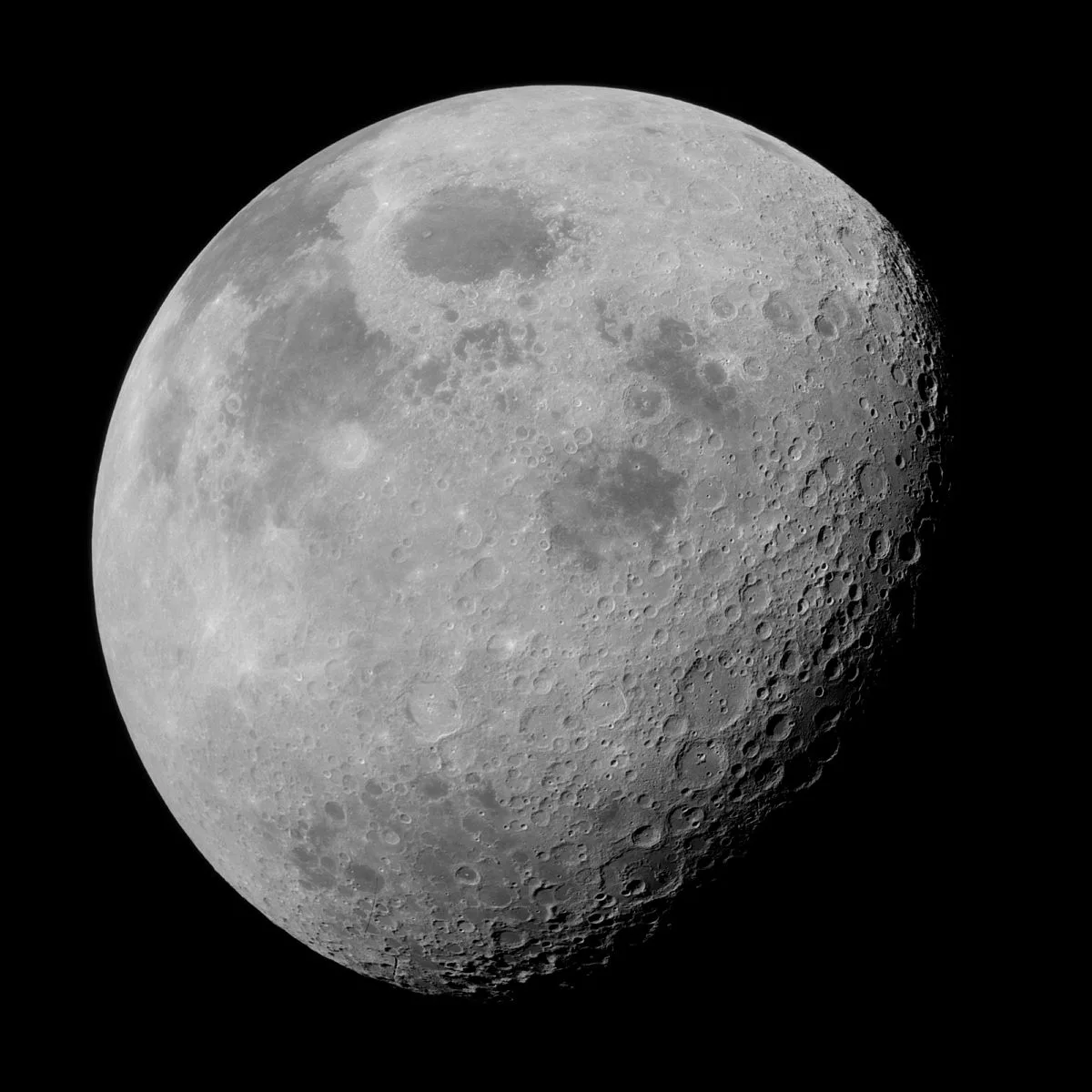
Scientists are using Apollo Moon dust to trace where Earth’s water came from and how our planet became habitable. Planetary scientist Tony Gargano explains how lunar samples reveal the history of ancient impacts, with a short bonus reflection from George Takei on Star Trek and the Artemis era.

This week on Planetary Radio, Sarah Al-Ahmed is joined by Kelsey Young, Artemis Science Flight Operations Lead and lead of the Artemis II Lunar Observations and Imaging Campaign, and Noah Petro, project scientist for Artemis III. Together, they explore how geology and human observation are shaping humanity’s return to the Moon.

After DOGE cuts, mass staff departures, and a blink-and-you-missed-it pivot to Mars, how much did NASA actually change in 2025? Space Policy Online founder Marcia Smith returns to assess a turbulent year.

Why do we explore space? In this Space Policy Edition rerun, Casey Dreier speaks with philosopher Dr. J. S. Johnson-Schwartz about why space science is a moral obligation, beyond economics or prestige.

If the United States is indeed in a space race with China, why are we abandoning space science programs across the Solar System? This question, posed by guest Maxwell Zhu in a recent op-ed co-authored by The Planetary Society’s chief of space policy, reveals the current myopia around human spaceflight and the missing focus on a growing and ambitious new entrant into space science in the 21st century.

Atlantic writer Franklin Foer joins the show to discuss how NASA enabled the rise of Elon Musk, and, in doing so, sowed the seeds of its own decline.

Erin Flynn-Evans, director of the Fatigue Countermeasures Laboratory at NASA Ames Research Center, shares how sleep science is helping astronauts stay healthy in space and prepare for future missions to Mars.

Highlights from the 2025 Humans to the Moon and Mars Summit explore why space science is a vital national interest for the United States and how the Artemis Accords are shaping international collaboration in deep space.

Former NASA chief economist Akhil Rao explains why NASA needs economic expertise to navigate the complex — and often misunderstood — market forces that will determine the success or failure of its private partnerships.

The Fiscal Year 2026 congressional budget justification for NASA could mark the beginning of a dark age for NASA science. We examine what’s at stake and how you can help advocate for NASA’s future.

The space sector is data-rich but insight-poor. Jack Kuhr of Payload talks about how he turns raw numbers into real narratives.

Joanne Higgins joins Planetary Radio to share the untold stories of Black engineers who helped make the Apollo program possible. We explore their legacy, the challenges they faced, and how their stories can inspire a more inclusive future in space.