

 Explore Worlds
 Find Life
 Defend Earth


Planetary Radio • Jan 28, 2026
Artemis II and III: The science that brings us back to the Moon
On This Episode
Kelsey Young
Research Space Scientist at NASA Goddard Space Flight Center
Noah Petro
Lab Chief of the Planetary Geology, Geophysics, and Geochemistry Laboratory at NASA Goddard Space Flight Center
Bruce Betts
Chief Scientist / LightSail Program Manager for The Planetary Society
Sarah Al-Ahmed
Planetary Radio Host and Producer for The Planetary Society
Humans are preparing to return to the Moon. On this episode of Planetary Radio, host Sarah Al-Ahmed is joined by Kelsey Young and Noah Petro, two of the scientists helping turn humanity’s return to the Moon into reality.
Kelsey Young is a research space scientist at NASA Goddard Space Flight Center and serves as the Artemis Science Flight Operations Lead. She also leads the Lunar Observations and Imaging Campaign for Artemis II, defining what astronauts will observe, document, and study as they fly around the Moon for the first time in more than 50 years.
Noah Petro is the lab chief of the Planetary Geology, Geophysics, and Geochemistry Laboratory at NASA Goddard and the former Project Scientist for the Lunar Reconnaissance Orbiter. He also serves as the Project Scientist for Artemis III, helping shape the science behind humanity’s first lunar footsteps of the 21st century.
Together, they discuss how Artemis II and Artemis III build on decades of lunar science, how astronauts are being trained to observe the Moon like geologists, and why the Moon’s south pole is such a compelling destination for future exploration.
Then, we wrap up with What’s Up, where Bruce Betts, chief scientist of The Planetary Society, shares the story of the first and so far only professional geologist to walk on the Moon.
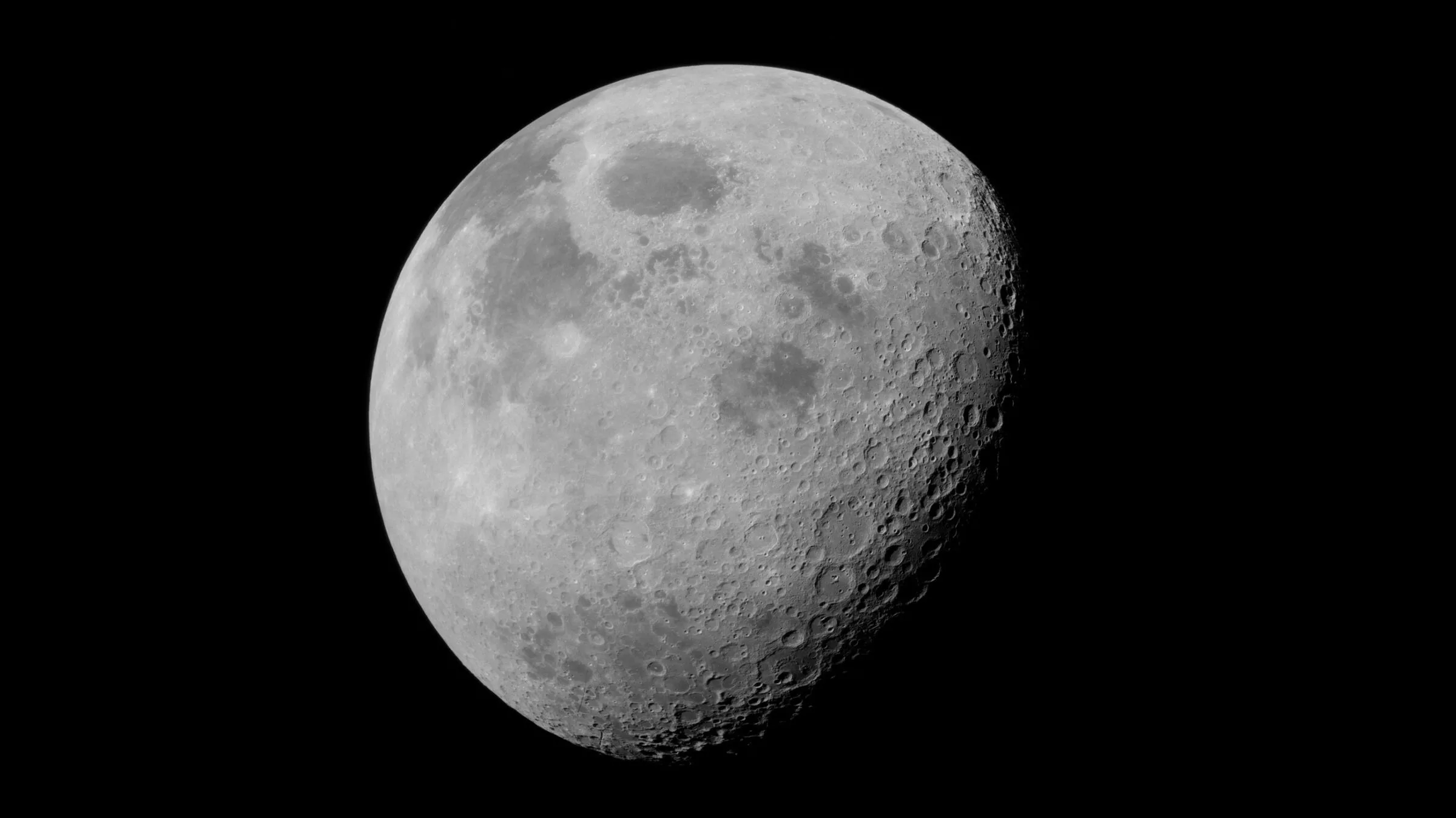


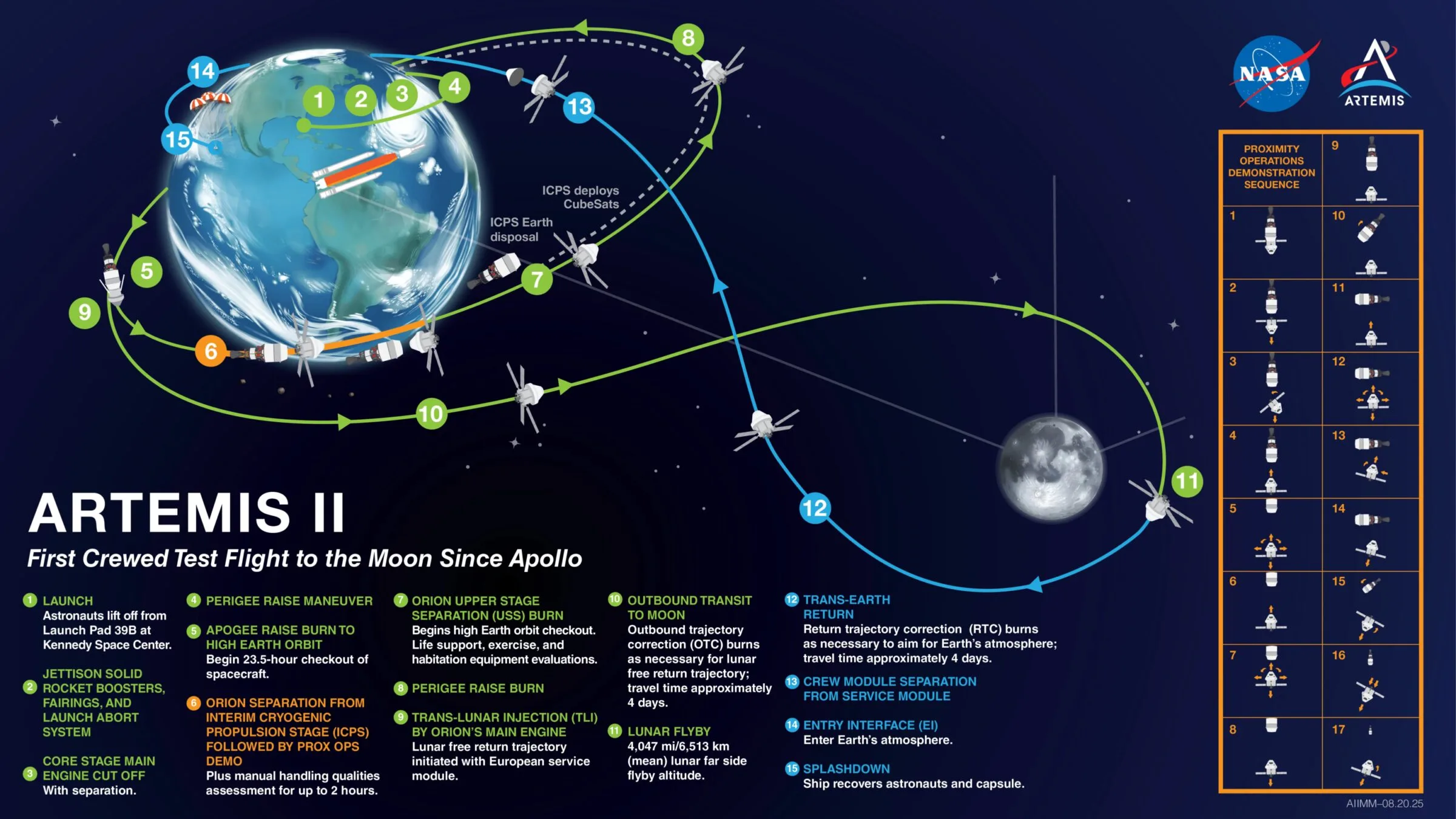


Related Links
- Kelsey Evans Young - Sciences and Exploration Directorate
- Noah Petro - Sciences and Exploration Directorate
- Artemis, NASA's Moon landing program
- Why we have the SLS
- Apollo 17 | National Air and Space Museum
- Our Artemis Crew - NASA
- Artemis II - NASA
- Artemis III - NASA
- Artemis II Posters
- Artemis II Astronauts - NASA
- Artemis II Press Kit - NASA
- Final Steps Underway for NASA’s First Crewed Artemis Moon Mission - NASA
- First Artemis Crew Trains for Mission Around Moon - NASA
- NASA Gears Up to Train Artemis II Crew for Moon Mission
- NASA Progresses Toward Artemis II Moon Mission
- NASA’s Artemis II Lunar Science Operations to Inform Future Missions
- NASA’s Artemis II Mission to Fly Legacy Keepsakes with Astronaut Crew
- NASA’s First Flight With Crew Important Step on Long-term Return to the Moon, Missions to Mars
- Orion Spacecraft - NASA
- Buy a Planetary Radio T-Shirt
- The Planetary Society shop
- The Night Sky
- The Downlink
Transcript
Sarah Al-Ahmed: Humans are preparing to return to the moon, this week on Planetary Radio. I'm Sarah Al-Ahmed of The Planetary Society with more of the human adventure across our solar system and beyond. This week, I'm joined by two scientists that are helping turn that return to the moon into reality. Kelsey Young is a research scientist at NASA Goddard Space Flight Center, she serves as the Artemis science flight operations lead and is leading the lunar observations and imaging campaign for Artemis II. She's helping to define what the astronauts will observe, document and study as they fly around the moon for the first time in more than 50 years.
We're also joined by Noah Petro, the lab chief of the Planetary Geology, Geophysics and Geochemistry Lab at NASA Goddard. He's the former project scientist for the Lunar Reconnaissance Orbiter and the project scientist for Artemis III. He's responsible for shaping the science behind humanity's first lunar footsteps of the 21st century. We'll talk about what astronauts are going to be looking for when they return to the moon and how these missions are setting the stage for a more sustained human presence on our nearest neighboring world. Then we'll wrap things up in what's up with Bruce Betts, our chief scientist, he'll share the story of the first and only geologist to walk on the moon. If you love planetary radio and want to stay informed about the latest space discoveries, make sure you hit that subscribe button on your favorite podcasting platform. By subscribing, you'll never miss an episode filled with new and awe-inspiring ways to know the cosmos and our place within it.
The Artemis program is NASA's effort to return humans to the moon and establish a sustained presence there, one that's built on decades of scientific knowledge, some really hard-earned lessons from Apollo and new capabilities designed for deeper exploration. While Artemis is led by the United States, it's also taking place in a very different geopolitical moment. In January, just ahead of the Artemis II launch preparations, a 60th nation signed the Artemis Accords. The Artemis Accords are a set of non-binding agreements that outline shared principles for how countries conduct civil exploration of the moon and other destinations. They're meant to reinforce existing space law, things like transparency and peaceful use, interoperability and public sharing of scientific data all while helping to avoid conflicts as more nations and companies operate beyond earth.
The next major milestone is Artemis II which is currently scheduled to launch no earlier than February 6th with the usual caveat that launch states can and do change. When it flies, the mission will send four astronauts, Reed Wiseman, Victor Glover, Christina Koch and Jeremy Hansen on the first crude flight around the moon in more than 50 years. It will also mark other historic firsts, the first woman, the first person of color and the first non-American to travel to the moon. And Artemis II isn't just a symbolic return. During their lunar flyby, the crew will act as scientific observers, they'll document things about the moon from orbit while operating in deep space beyond earth's protective magnetosphere and helping to validate the tools and the workflows that future surface crews are going to rely on. That work feeds directly into Artemis III which is planned to return humans to the lunar surface later this decade. Artemis III is expected to land astronauts near the moon's south polar region, a region that's unlike anything we visited during Apollo. It's home to permanently shadowed areas that may contain water ice and to some of the oldest accessible rocks in the solar system.
My guests today are doctors Kelsey Young and Noah Petro from NASA Goddard Space Flight Center. Kelsey Young is a research space scientist at NASA Goddard working in the planetary geology, geophysics and geochemistry lab. She focuses on how astronauts can safely and effectively explore planetary surfaces like the moon and Mars. Early in her career, she worked at NASA's Johnson Space Flight Center as an exploration scientist where she helped bridge that gap between planetary science and mission operations. Much of Kelsey's work revolves around simulating future exploration before humans ever leave earth. She's held leadership roles in major NASA analog missions including serving as the science lead for NEEMO which is NASA's underwater space flight simulator and for NXT where she also piloted submersibles herself. She's the principal investigator for projects like TubeX which study how astronauts might explore lava tubes on the moon and Mars and Sphere which uses high fidelity virtual and hybrid reality environments to train crews and test mission concepts. And within the Artemis program, Kelsey plays a really pivotal operations role. Since 2002, she served as the Artemis science flight operations lead, integrating the science team directly into NASA's flight control structure. She's also the lunar observations and imaging campaign lead, defining the science objectives and photography plans for the first crude mission around the moon.
She's joined by Dr. Noah Petro, he's the lab chief of NASA Goddard's Planetary Geology, Geophysics and Geochemistry Lab and served as the former project scientist for the Lunar Reconnaissance Orbiter, a mission that's been transforming our understanding of the moon since 2009. After finishing his doctorate, he joined NASA Goddard as a postdoctoral researcher in 2007 and never left. I don't blame him either, he's had some amazing opportunities at that institution. His research focuses on the evolution of the lunar crust particularly how impact cratering has reshaped the moon's surface and redistributed materials over billions of years. He played a key role in the moon mineralogy map or instrument flown by India's Chandrayaan-1 mission. You may remember, that's the mission that helped confirm the presence of water and hydroxyl on the lunar surface, a discovery that would later become central to how NASA thinks about sustained long-term lunar exploration. He's also deeply involved in Apollo next generation sample analysis, studying pristine lunar samples that were collected during Apollo 17 that have remained sealed for nearly half a century. Noah is the Artemis III project scientist, responsible for coordinating the science behind the first human footsteps on the moon in the 21st century.
In this conversation, we'll talk about Artemis II and three, how astronauts are trained to observe the moon like geologists, how decades of orbital data guided mission decisions and how Artemis II and three are designed to turn human presence into lasting discovery. Hey, Noah and Kelsey, thanks for joining me.
Noah Petro: Well, thanks for having us on.
Sarah Al-Ahmed: Well, the Artemis II launch is literally right around the corner. I know there's always some uncertainty when it comes to these kinds of launches but how are you both feeling as launch day approaches?
Kelsey Young: I am feeling really excited. I feel like, coming out of the holidays as we've moved into 2026, it has definitely felt a lot more real in the context of I think more people across the agency and across the world are now realizing how close it is and the excitement is really ramping up. So, I think my first emotion of how I'm feeling is pure excitement. Yes, there's also a lot of work to do so trying to stay knuckled down and keep the team focused on the work we still have to do but really excited.
Sarah Al-Ahmed: How about you, Noah?
Noah Petro: I'm in a state of awe that we are living through this. Having seen similar rollout footage of just about every Apollo mission and having seen that for my whole life and then to see this happen and knowing people who are directly involved and to bear witness to this incredible event, I'm just in awe that it's happening. It's happening and people that I work with, admire and support get to be directly involved in this to have this incredible role that we're returning humans to the moon for the first time in over 50 years, to get to see parts of the moon that we've never seen before, I'm just gobsmacked. Kelsey knows more than anyone how much work has been put into putting all of this together and we have a lot of work ahead of us and then there's another mountain behind it called Artemis III and we get to do it all over again and I think that's really cool.
And so, I'm think back to what I would say as a eight-year-old, as a 10-year-old, getting to be in the universe, circling around all of this and thinking, damn, I'm so lucky.
Sarah Al-Ahmed: Along that vein, Noah, your dad worked on the Apollo program, right? What does that feel like now being able to shape humanity's return to the lunar surface? That's got to feel crazy.
Noah Petro: Just extra pressure and self-imposed pressure but there's a lot of pride in that because my dad worked on Apollo very short period of time, right after college before going off to do other things and so he always was this fan of Apollo having had a very small but significant role in it and then to be in discussions now. He was not a planetary geologist, he was an engineer, he built hardware, he built stuff to keep astronauts alive and so, now in meetings, when I hear about the portable life support system that the astronauts will wear while they're walking around the surface of the moon and nobody is talking about, "Oh, well, Dennis Petro this, this," but I think, oh, that's really so cool because the work he did 60 years ago now is still reverberating through. And obviously it's come a lot further than he was able to see in his time but it's just really cool and it's gratifying.
And again I caution, anytime you ask someone to talk about their dads, you'll make someone cry. So, I'm just going to keep it very to the point is there's a lot of pride to have multi-generational Petros supporting sending humans to the moon.
Sarah Al-Ahmed: Well, both of you are geologists by training, what originally drew you to planetary geology and when did the moon become central to both of your works?
Kelsey Young: I grew up going on annual hiking trips with my dad and my sister and my dad would take us to national parks across the country to go on hiking trips. The first one was I was in maybe fourth or fifth grade and we went to Zion National Park first and I had never really done a really big hike but we did Angels Landing which is a pretty iconic hike if you've been to Zion National Park and I was not happy, we got out of the car and I was just being such a pill. And my dad who had planned this wonderful spring break for us was just like, "Fine, you can stay at the car and I'll be back in a few hours," and he just started walking.
Of course, he would not actually have left me at the car but I didn't know that at age 10 or whatever. And so, I was so indignant at the thought of him leaving me there that, to spite him, I went, I was like, "Oh, well, he's not going to get away with this and I'm just going to be a jerk." And within three minutes, I was like, "Oh, hiking, this is amazing." I absolutely loved it, I was running up ahead of him on the trail and, from then on, we did annual trips and I just absolutely loved it.
When I got to undergrad, I got lucky and got a guidance counselor, your counselor in undergrad that helps you figure out your major and your path to graduation and she happened to know of this tiny, tiny department at the university where I went with geology and I took one class and was ... Literally that first class, the first hour, I was like, "Yup, I'm good, locked in." And then, fortunately at this tiny department, we had two planetary scientists, both of whom are really pillars of their respective fields and, again, just got lucky that I ended up at this program that had these two people because I don't think I would've necessarily understood that you could do geology on other planetary surfaces and this is something that it's a team sport and it's not just the astronauts who are doing the field geology on other planets, it's the entire team that supports them. And so, again, I think it was even my first semester of undergrad when I made this connection and I literally not once since then have ever considered another option for me, I just knew that everything clicked into place for me.
Sarah Al-Ahmed: How about you, Noah?
Noah Petro: Yeah, so very similar origin story to Kelsey. My dad having worked on Apollo, when I was a kid, he and I would do trips together and we weren't hiking necessarily but we'd go to space museums. Here in DC, go to the Air and Space Museum and I remember one trip to the Cradle of Aviation Museum in Bethpage, Long Island and they've got the lunar module and they've got hardware and they had on this one table a part of the portable life support system, had it unpacked so you could see it and he says, "Oh, yeah, do you see this piece there? I built that." And I had not known as a kid that my dad had this first career as an engineer working for Hamilton Standard in Connecticut building parts for the portable life support system and for the lunar module and that was like, "Oh, well, that's really cool. I didn't know you worked in Apollo," it made sense why we were doing all these trips to NASA centers and going to space museums and it clicked and that just brought Apollo to me as this real thing that was done.
I remember building a model of the Saturn V with my dad, pretty tall model and asking why did that huge rocket and only this little top piece come back and learning about the rocket equation from him at a young age and that made Apollo very real and got me enthusiastic about it. And then, in the ninth grade, I took an earth science class, I took a geology class and I had a teacher who just, like Kelsey, we had that moment where I was like, "This is what I want to do." First day, first year of high school, Mr. Trilozi stands up at the front of the classroom with a tank of water with a rock and a piece of wood and he says, "What's going to sink and what's going to float?" and everybody says, "The rock is going to sink and the wood is going to float." He puts them in the water and the rock floated and the wood sank and I just remember those synapses firing and, just like Kelsey is saying, that's it. Whatever he tells me for the next school year, I'm all in on and just fell in love with earth science, fell in love with geology and went off to college to become a geology ... An earth science teacher, that's what I wanted to do, I wanted to emulate those teachers.
And freshman year, October my freshman year, we had a guest lecturer, professor from high college who spent the week talking about the geology of the moon and I remember sitting there thinking, "Oh, I had no idea. Oh, yeah, we went to the moon but, that's right, we brought back rocks, we could do things with them," and Gene taught me about lunar science and taught me about what it means to be a planetary scientist, a lunar scientist. And so, I had this merging of the things that I was interested in in geology and lunar science and lunar exploration, bringing those things together and the rest is my career.
Sarah Al-Ahmed: Yeah. And you went on to work with the Indian Space Research Organization on the Chandrayaan-1 mission, right? Specifically on the moon mineralogy mapper that then helped us confirm that there was water and hydroxyl and all these volatiles in various places on the moon but especially near the south pole. At the time, did you realize that that discovery might someday actually influence where humans would land on the moon?
Noah Petro: Certainly not. Having been in those meetings, that's the thing is we remember the discovery and the 2009 paper. I remember the first moment we looked at the data and thought this can't be right. We spent so much time trying to convince ourselves on that team that the data was wrong, that we missed something, that the calibration was off that I almost look back at that paper as like, "Oh, thank goodness we got that done because the effort to get there was so long and fraught and torturous." But when we bring in data from, we worked with data from Cassini and the deep impact space probe to confirm it, no, we did not make a mistake and error in our analysis and thought, okay, this is a great discovery. Of course, that was 2009, here we are, it's 2026, it's like, "Wow, it took us a long time to get to this point but here we are." And that was one of the dominoes that fell to make the story for Artemis, an Artemis exploration of the south pole. There was other data sets that suggest that there's enhancements of water at the south pole or at the poles of the moon, the M3 data, the moon mineralogy mapper data was this ...
It's the first time we had a modern 21st century data set that said, "Ah, there is something happening here and we've just slowly and gradually unfolded the story." LRO launched to the moon, the Lunar Reconnaissance Orbiter launched to the moon shortly after that discovery from M3 came out, too close in time for us to do anything different with the data sets but still confirming the notion that, okay, there's water at and around the surface of the moon and this unfolding story. But never in my wildest dream did I imagine that those tortuous discussions in 2008 would lead to this position that we find ourselves about to send humans back to the moon only 20 years later.
Sarah Al-Ahmed: Yeah. But before we can all happily watch astronauts bouncing around at the south pole of the moon, there's a lot of science that needs to get done and, thankfully, Artemis II along the way. So, let's get some of the basics out of the way. How long is the Artemis II mission going to be from launch to splash down?
Kelsey Young: Around 10 days.
Sarah Al-Ahmed: Ten days. But it's not actually going into orbit around the moon, right, it's just going to be doing a fly by trajectory?
Kelsey Young: That's correct, yeah. It flies around the far side and comes back, it does not orbit the moon.
Sarah Al-Ahmed: What kind of path does it take around the moon and why was that trajectory chosen?
Kelsey Young: First and foremost, Artemis II is a test flight, of course, it's the first crude flight of the Orion vehicle and so a lot of those objectives, including what trajectory the spacecraft will take, is built around making sure that crew can safely fly the Orion spacecraft.
Sarah Al-Ahmed: Are there any particular parts of the moon that the crew is going to be flying over that might later inform Artemis III?
Kelsey Young: We've built out a list of targets for the crew to image and describe that covers 360 degrees of the moon's surface, some of those targets do include the Artemis III candidate landing regions. And so again, of course, what targets will be visible to them will entirely depend on launch date and when they'll get to the moon. We're hoping that we're able to get human eyes on the candidate landing regions for Artemis III.
Sarah Al-Ahmed: Yeah. Well, we're not going to be landing on the moon with this mission but it's still very key in order to make that possible. So, what are the core science objectives for Artemis II?
Kelsey Young: Yes. The science objectives, there are 10 of them, there are also ... We have four objectives that we're calling exploration capability objectives that make sure that our science teams are set up for future success on Artemis III and beyond. But purely talking about our science objectives for the mission, we have 10 objectives that were, of course, pulled and tied to the driving community documents for prioritized lunar and solar system objectives. Actually, Noah was extremely instrumental in developing those 10 objectives in conjunction with his deep knowledge of the community documents. And then we actually prioritize those 10 into priority one, priority two, priority three so three priority buckets based around how high priority they are for the community but also what the Artemis II mission profile is really able to do.
So, given that it's a flyby, they're not orbiting, given the distance that they're going to be from the moon and that they'll have a whole disk view of the lunar surface, we prioritize those objectives based on what we thought human beings with the Artemis II capabilities would be able to do.
Sarah Al-Ahmed: Well, Artemis II includes planned lunar observations and imaging campaign for which you're the lead, Kelsey. So, what are scientists hoping to learn from those images that we couldn't necessarily learn from a mission like the Lunar Reconnaissance Orbiter?
Kelsey Young: Absolutely. I'll give my take but definitely kick it over to Noah, the LRO expert. So, quickly, the benefit of having astronauts who have been really well-trained in geology, and I'm super happy to go into those details of how they were trained and what they were trained to do over a spacecraft and the answer would be true if you were asking me about the difference between a rover on the surface of a planetary body and an astronaut, is that this is a well-trained brain, this is a brain that knows the science objectives and knows what observations are required to address those objectives. And so, from an image perspective, they're able to use their eyes, figure out what's interesting, figure out what's connected to those science objectives, describe it and then image it of taking the image that they know will be scientifically valuable in the moment.
You asked specifically about images so I'll just mention briefly that the critical dataset for us that is really distinct data from other spacecraft and even Apollo is the human being descriptions, the descriptions that the astronauts are going to provide at the lunar surface. But before I get sucked into a rabbit hole, I'll kick it to Noah for his LRO take.
Noah Petro: Yeah. The LRO component of this is really important and, again, every time I said Apollo X, you'd have a dollar so I'm going to start filling that bucket of Apollo references. But in Apollo, we sent humans to the moon, at the same time, we were building up knowledge about the lunar surface and its environment. And so, when we sent humans to orbit the moon, we had them make observations that we couldn't recreate with the orbital data that we had at the time. Now, with LRO, it's been at the moon since 2009, continues to operate and collect this incredible volume of data, I thought, well, we can't just have the crew members make observations that would just as be easily done with LRO data and so that takes away a lot of what Apollo had astronauts do. But what we have, as Kelsey mentioned, with these well-trained eyes and, when you connect well-trained eyes to a well-trained brain, you have this opportunity to harness the curiosity that every human has and especially these four humans.
And so, looking at the moon, having the described color. What do you see when you look at the moon? And we learned, again, Apollo, there's another dollar in the bucket, that there are very subtle color differences on the moon that we think we can capture through LRO data but we really like to be sure that they're there and that we're not overinterpreting the data sets that we have. And so, we know from Apollo 17, Jack Schmitt saw color differences on the near side of the moon as they were leaving the last time we had humans there. Well, doggone, let's have them look for color provinces, color regions and describe those colors of a part of the moon that's very different. So, if we are so fortunate to have a fully illuminated far side or at least get views of the far side, we can have our crew members check that hypothesis that there should be color differences and that they're connected to different regions and that we can then tie those observations to the data sets that we have.
We also can ask the astronauts to look across the whole surface of the moon very quickly. To do that with LRO, we take 53 different slews over several months to build up this dataset, we can do it. But in the time of the flyby for Artemis II, we can have the astronauts look at different surfaces under different viewing geometries and, from their observations, their descriptions, their photographs, we can then make inferences about differences in the properties of the surface. We know that we're given a limited opportunity, we have this one shot with Artemis II to do this particular type of observation of the far side. When we look at Artemis III and the possible orbital geometries that that mission will have, we're going to have a whole different view of the moon that Artemis III will have. So, I view Artemis II as this really important connection between the types of observations that Apollo did and future orbital missions and so, as Kelsey said, we've got these 10 objectives.
I'm most excited to have four enthusiastic people, three of whom have spent an extended amount of time on the ISS looking at the earth practice their trade over the far side of the moon. And so, I'm looking forward to them describing color provinces and looking for textural differences around craters. I'm also just excited to hear four people get excited about looking at the moon and hoping that that excitement translates to excitement for the rest of the population who are stuck here on earth.
Sarah Al-Ahmed: Oh, I hope so. I'm so happy for them, this is such a huge milestone. Especially after all that time spent around the earth on the ISS, to be able to compare it to the moon and get that experience and share it with the rest of us here on earth after all this time.
Noah Petro: And also, I forget that, while they're flying over the far side of the moon, often the distance will be the earth. And again, we haven't had that perspective in 50, over 50 years and so I'm also eager to see what does the earth look like from 200,000 plus miles away. And my first love will always be lunar science but always hovering in the background, reminding us that it's there is the earth and so those observations would be important as well.
Sarah Al-Ahmed: Well, you mentioned Schmitt from Apollo 17 just a little bit ago, the only professional geologist to ever stand on the lunar surface, right?
Noah Petro: So far, so far.
Sarah Al-Ahmed: So far, so far.
Noah Petro: We're going to change that. We're going to change that in the future.
Sarah Al-Ahmed: But Kelsey, how are astronauts without that kind of background being trained today so that, when we send people back to the moon, they'll be able to think of it like geologists would?
Kelsey Young: We train the crew in a lot of different ways but, really, it's with one objective in mind which is based on the fact that they are members of the science team. They are the field scientists actually doing the exploration including the Artemis II crew where their field site is the moon from Orion. And so, we're really trying to prepare the crew with that mentality in mind. If you are a member of this science team and you need to be able to build the skills to be able to execute accordingly like the field scientist who is taking the data. So, our goal is not to, for example, train them only how to swing a hammer and only how to get the sample into the sample bag and only how to take a good picture but it's to train them in the science objectives of why we're asking them to do those things and then to train them in the skills they need to execute those objectives. So, regardless of the landing site, regardless of if the crew is taking images from Orion or actually doing future EBAs or space walks on a lunar surface, our goal is to create a crew that reflects our objectives and the skills you need to accomplish them.
So, we have a training plan, our crew training lead is Dr. Cindy Evans down at the Johnson Space Center, Noah and I are both fortunate to be on her team and have spent a lot of time training both the Artemis II crew and developing the plans for future Artemis III crew and that includes classroom training, them sitting in a classroom and learning fundamentals. We do have a lot of experience also training astronaut candidates when they come in and we have really put a lot of time and effort into making sure that that classroom training is not just flipping PowerPoint charts over and over again, we are very intentional about creating hands-on experiential learning opportunities in the classroom and really trying to acknowledge the fact that astronauts, like every student anywhere, they all learn in different ways so we're really being intentional about how we develop that training.
So, classroom training, we have, of course, field-based training, we have five field sites, three domestic to the US and two international that we are developing to take future Artemis III and beyond crews on. The Artemis II crew, we took to a couple of those training locations as they were getting ready and then, really critically, we have simulations with them as well. So, for the Artemis II crew, we had two SIM environments that we worked with them in, one was in one of the few Orion mock-ups that they train in, there's a few for different purposes and the crew who spends time in all of them. But specifically, there is a mock-up down at the space vehicle mock-up facility at the Johnson Space Center that's a medium fidelity mock-up, it has the physical space constraints and it allows them to practice interior procedures and stowage and all that great stuff.
So, we actually put them in that mock-up and hung a giant inflatable moon globe out the window at the right distance and angle, of course, to make it look pretty similar to what they'll see and actually have them practice the actual managing the hardware, because there's a lot of hardware to manage in a very tight volume of four people, actually taking the images, practicing the descriptions and then, really critically, where they put it all together is in integrated simulations with the flight control team. So, you have crew members in a different Orion mock-up elsewhere at the Johnson Space Center and we actually play amazing visualization videos that our visualization lead Ernie Wright at Goddard put together from LRO data, we play it at the right distance and speed that they'll be seeing the flyby in and we use LRO data so it's really high resolution. And we have the flight control team in mission control in the flight control rooms they'll be supporting from including our lunar science team who will be based out of the science evaluation room.
So, you really have all of the full range of people on the team who will be supporting from a lunar science perspective and it allows the crew to really rep things at pace with the products they're actually going to be using to execute off of during the mission. It allows the flight control team who aren't scientists to hear those descriptions and start to get used to hearing science and moon words on the loops and it allows the science team the experience to get trained in the operation side of things as well as to provide feedback to the crew on the descriptions they're providing. So, this whole comprehensive training program is really designed to create crews that are scientists, that are members of the science team.
Sarah Al-Ahmed: We'll be right back with the rest of my interview with Noah Petro and Kelsey Young after this short break.
LeVar Burton: Hi, you all, LeVar Burton here. Through my roles on Star Trek and Reading Rainbow, I have seen generations of curious minds inspired by the strange new worlds explored in books and on television. I know how important it is to encourage that curiosity in a young explorer's life that's why I'm excited to share with you a new program from my friends at The Planetary Society, it's called The Planetary Academy and anyone can join. Designed for ages five through nine by Bill Nye and the curriculum experts at The Planetary Society, The Planetary Academy is a special membership subscription for kids and families who love space. Members get quarterly mailed packages that take them on learning adventures through the many worlds of our solar system and beyond. Each package includes images and factoids, hands-on activities, experiments and games and special surprises. A lifelong passion for space, science and discovery starts when we're young, give the gift of the cosmos to the explorer in your life.
Sarah Al-Ahmed: How important does the lighting geometry and the timing during Artemis II for interpreting the surface features and especially near the poles where we have those permanently shadowed craters and all kinds of other features?
Kelsey Young: Lighting, lighting, lighting. Artemis, every Artemis mission, lighting will be a thing that we will talk about and care about and think about a lot. For Artemis II, and I know Noah has thoughts on Artemis II and for, of course, when we get to the surface, but for Artemis II, I actually view illumination as an opportunity rather than a challenge because, of course, at any given time, at any given moment, 50% of the moon is illuminated and 50% is not and we don't know what exactly what 50% will be illuminated when the Artemis II crew gets there. So, what we've done is build a list of targets, of lunar targets that is encompassing of all 360 degrees of lunar surface. We are, actually, right now, this week, I think, actually, there's a meeting happening right now, to work on the lunar targeting plan for the February launch window. That plan will be refined once they actually launch and know exactly when they're going to get to the moon because even a difference of several hours could change a few of the targets that we're actually asking them to image.
So, of course, illumination plays a role in so far as 50% of the moon will be illuminated and that's the 50% we're going to be having them spend the bulk of their time on but it also is an opportunity, as Noah was mentioning earlier, about photometric observations. Actually, a little exercise we implemented with the crew during some of their classroom training is we took essentially a sandbox which, of course, if you've sat on the beach ever, you know that sand is not uniform. There are ridges. There are mounds and valleys.
And we took a sandbox, we turned off all the lights in the room and we shined a light directly over on that sandbox and asked them to describe what they see. And what they see is color, is albedo. And then, you move that light source all the way to the side and you lose all of that ability to see the color in albedo, but what pops out is morphology and texture. And both of those observations are equally important, but allow you to understand very different things about surface properties of that material.
For Artemis II, the crew will be moving. And so, we actually have several targets for which during their flyby period, we'll actually ask them to image and describe more than once for that reason. They'll be able to see the same target in a new way. And so, illumination actually becomes, and playing with these light sources and the perspectives of where Orion will be relative to the lunar surface allows us to tease out different parts of the scientific questions we're trying to answer for Artemis II.
Sarah Al-Ahmed: And looking forward to Artemis III, I think about how the astronauts during the Apollo era had to make these critical discoveries on the fly. A lot of that was just like, "Look at this cool rock, I'm going to decide to go after that." What kinds of geological judgment calls will the Artemis III astronauts need to make that might not be fully scripted ahead of time?
Kelsey Young: I mean, this is exactly why we're creating a crew that are capable of executing our objectives because frankly, scientifically, this is one of the primary reasons we send people is that they're able to react to what they're seeing. So, we spend a lot of time making sure that the crew feels empowered and has the scientific knowledge to not just follow exactly the traverse line on the map. Take this step because it's written on your cup checklist and then exactly run things exactly as written.
Of course, there's a safety envelope, of course, and we work very tightly. There's a reason we're integrated so tightly with flight operations, and the team is that we're a critical part of developing those requirements and making sure that our science team understands the envelope in which they're operating within, but there is room for the well-trained crew member to make those decisions real time.
So, you could get to a station on a future EVA or spacewalk where it was a pre-planned station. They're supposed to be here, "Hi. Hello, station two." But you know what? Now that I'm seeing this, what they're asking me to image and what they're asking me to sample isn't really reflective of what I know their science priorities are.
I see this boulder that contains the diversity that we did not expect, or I'm seeing a lithology or a rock type that I don't expect here akin to Jack Schmitt's orange soil excitement and discovery on Apollo 17. They are going to know. They're going to recognize those Easter eggs. They're going to recognize the orange soil and they're going to know why it's important and they are equipped to make those changes real time.
And so, actually in addition to the Artemis II role on the science flight operations lead for all of Artemis, I'm kind of the science mission directorate's lead representative into flight operations directorate down at JSC. And I've spent a lot of time really trying to create this culture of that opportunistic discovery is a success. That's how we know we've succeeded, from a crew training perspective, from we go ahead and act on that discovery. I mean, this is a win scientifically.
And so, I think that mentality is really starting to become ingrained, of course, again, well within the safety constraints that we know that the crew and vehicle and the suit need to operate within. Reacting to scientific discovery is the benefit of sending people, and we are certainly creating a crew and an infrastructure to support that flexible execution of the traverses.
Noah Petro: And every Apollo mission had their own discoveries on the surface that were not part of any plan. Apollo 11, Buzz Aldrin described seeing what he thought looked like biotite on the surface. It wasn't biotite, but he was trained to use words that described what he was seeing. He was seeing impact glass in the surface. That got the scientists in Houston and in Flagstaff all spun up about biotite. But what he was saying was he was surprised at how glassy some of the surface was.
And so, an inordinate amount of effort went into understanding that it was impact glass, micrometeorite bombardment, turning the surface into glass, a profound discovery that we now understand its component of. They didn't know what to expect in Apollo 11 for that. That was a discovery. And every mission subsequent to that had its, wait a minute, I was expecting this and I see this, and as Kelsey said, we're going to go off and do that. Jack's example of the orange soil being a perfect one.
Hey, this is important. I'm going to do this guys. You listen to the recordings. I'm going to go off and I'm going to start taking a trench. It wasn't in the plan, it wasn't... I'm going to do this. And he's going to buy enough time by doing that for them to say, "Okay, we're going to take a double drive tube here and go off and do this and change the plan." So, we want the crew members, as Kelsey said, to have ownership to know, "Hey, this is important, but this thing that I'm observing I know takes precedent. So, I'm going to go off and I'm going to do this other thing." I can't wait for that. And for Artemis three, I mean, I go in, they dream about what I think the surface will be like, and I can't wait to be proven wrong about what we are going to find there because that means we're making scientific progress. We're making an advancement. We are in a position to have discovery and I can't wait for those surprises.
And that's okay too. I think some people might think, "Well, if you're surprised by something, that means you were unprepared." No, it's because our knowledge was incomplete. Apollo 16 went to the moon fully trained to find volcanic rock. They found impact rock. They found impact melts. That wasn't because we made a mistake. Our mistake was an interpretation of this incredible object that we have three days away and we had a moment to learn in progress.
And so, I mean, I hope on Artemis II that there are surprises that crew members say, "Wait, I was expecting this and I see something different," because that means we're learning something. And so, for Artemis III, what are those discovery moments going to be? I can't even begin to speculate what those going to be. And I don't want to seed my mind to get ready for those surprises because it's just going to lead to disappointment, we have a different surprise. I just can't wait for that.
Sarah Al-Ahmed: Are there any lessons from the Apollo era geology training that you've carried forward here or are there any things that you're deliberately doing different this time?
Noah Petro: We are so fortunate to have those lessons of Apollo to build on. First and foremost, that the geology training was well received, that it was positive. Getting crew members, getting support personnel, getting people out in the field to put hands on rocks was viewed as a good thing, partially because it got people out of classrooms.
There's no greater classroom for geology than the field. And being at the side of media creator, being at a lava flow to understand the processes that we're trying to understand, that was maybe the most, A, critical lesson from Apollo is that it worked. And I think just the fact that we're able to do that now speaks to the importance of that legacy.
The other part is that time to spend with crew members to hear them and guide them in their discovery of this incredible science called geology and then getting them to turn them loose on the lunar surface and the opportunity that that presents.
I think the other lesson from Apollo is you can never have too many field components. Obviously, we're in a time constrained environment. We can't do everything we want. And so, every unique opportunity you have to get out and put your foot on a rock is going to be viewed as something we want to do.
Kelsey Young: I think, in Noah's point of it worked, I'll add that it worked so much that we did create Apollo crews, not we, but the NASA trainers at the time and the academic trainers at the time, did create crews that were empowered to be field geologists on the moon, not just Jack Schmitt and actual field geologists by training. So, it worked in so far as the crew really understand what was being asked to them, but it also worked in that they were making active discovery on the lunar surface.
And the second thing I'll add is perhaps more of a personal story from our journey over the last couple years, which is actually Noah was really instrumental in setting this up, Dr. Farouk El-Baz came and talked to the Artemis II lunar science team last year and really talked about his journey training Apollo crews. He was essentially the lead for the orbital science that the Apollo crews were completing, and he trained all of the Apollo crews. And he just told stories of how he integrated the training in a way that the astronauts would resonate with and that would get approved at the time.
And so, listening to how he was doing things like asking them when they're on their flights where they're actually flying aircraft to maintain currency there, that they were actually making observations. And he would literally meet them where they're at of going to where they were flying to and ingesting the training in a way that he knew would resonate, and that's certainly something that we try to do, we really try to do.
We try to think about who the individuals are that we're training and create experiences for them that will resonate with them the best. And some things resonate with part of the crew and not the whole crew, and that's okay, meet them where they're at. So, just listening to him talk was, I've had a lot of really amazing and inspiring moments since I got this job and that just is at or near the top. It was just extremely motivating and inspiring to listen to.
Now, it's like when Noah and I and Cindy and her training team go into these conversations, we have data to say it worked. He did not have that data. He was the one fighting for that time and he got that time and it worked. And that amount of inspiration was just, I mean, incredible. And also, his extremely sharp memory for how he did that and what it looked like all these years later was quite impressive.
Sarah Al-Ahmed: Well, we've learned a lot about the moon in the last six years that we didn't know before, but there are so many mysteries and so many things we have left to discover. Are there any things that both of you are particularly eager to learn that you're hoping the Artemis missions can help us piece together?
Kelsey Young: I'll give two quick answers. So, one is maybe more of the human element for Artemis II. And I think what I'm most excited about for Artemis II is the very first description we hear from them. So, we won't hear every single description they give real time during the flyby period, but we'll hear some of them. And that first description, the first time one of them calls down and gives a description of the actual moon out the actual window instead of the simulations we've done, I might just lose my mind.
I'm just going to be so excited to hear that because I have heard them give descriptions for months and months and months of renderings of the moon, and they are phenomenal descriptions. They are really good and scientifically valuable and exciting because they bring the human element to it. And that's just with fake moons, not out actual windows.
And so, I just truly can't wait for the discovery that these descriptions are going to bring because I know that this crew is prepared to really deliver. Maybe more scientifically, I think all of us lunar scientists have our favorite science questions. We have our favorite places we would want to, if we could just wave our magic wand, pick a specific landing site, we all have our favorite sites.
And I think for me, I'm a South Pole-Aitken basin gal. I just desperately want these crude missions to the South Pole to be able to target getting a better understanding of the exact age of the South Pole-Aitken basin. And this is especially exciting because it's something that astronauts can really do an effective job of helping us address. So, I would say that's my favorite surface science objective.
Noah Petro: And thank you for mentioning SPA, Kelsey, because I had forgotten about the opportunity Artemis II has to be the first humans to ever see it in its entirety effectively. And I mean, it takes my breath away to say that because there's a place on the moon that humans have never seen directly with their eyes. And I certainly never really appreciated that until I started thinking about Artemis II, because I think there's this misconception that oh, what more ... Holy smokes, how much more could you want than humans seeing the oldest geologic feature on the moon and the Earth Moon system than with their own eyes?
And then to describe it, as Kelsey said, just describe, "Wow, the colors inside are so much more pronounced. I can so clearly see the X, the Y, the Z." So, that first time ever observation, imagine if you were able to go back and ask someone the first time they saw a volcano erupt, we're going to have that moment of like, "Whoa, that's really surprising."
And so, that we're on the precipice of potentially hearing that followed by, as Kelsey said, sending humans the South Pole and collecting those samples. And I guarantee you, I shouldn't guarantee anything, but the Artemis III samples will be studied, analyzed in detail, and will be contentious because we only have one set of South Pole samples. We'll compare them to Apollo samples all from the near side, near the equator.
And I hope, again, I'm excited for the scientific debate about what this one Artemis III sample means when compared to this one Apollo 16 sample. But then guess what? We're going to have Artemis IV samples to compare to. And so, we're going to build up this really interesting and complicated story about the South Pole through these different samples that are to come every few years.
And then, we'll have that surprise moment, and I think this will happen where someone will say, "Wait a minute, better part of 60 years, we thought this because of Apollo samples. And now that we have Artemis samples, we have to think something different," and that we'll have this profound, it may be subtle to the rest of the world, but shift in our thinking of the age of the moon. When did this gigantic basin form on the far side of the moon? When did other processes that we don't even begin to know about now take place on a lunar surface?
And so, I'm just eager for the scientific debate that will come from Artemis III samples and then Artemis IV samples and so on and so on, and then, with the comparison to Apollo samples. And we'll probably have a moment in the not-too-distant future where we'll look back and say, "Boy, we thought X, we were really wrong. We were misled. The rocks were right there, but we had an incomplete story and we drew the wrong conclusions. And so, now we need to think why." And that's why we go to these places. That's why we go to the moon in particular is that there's ample discovery opportunity when we go there to the surface and when we bring rocks back and when we leave instruments behind as well. And that's the other part of the Artemis III that I'm looking forward to is what are the instruments that we leave on the surface? What are they going to tell us about our nearest neighboring space?
Sarah Al-Ahmed: Obviously, we're all really excited about the return of humans to the moon. We have been looking forward to this. You have been working on it deeply for years and the entire arc of your careers and your education have led to this moment.
But when I speak to a lot of people about the Artemis missions, they think of it as like Apollo all over again, and I don't think that's true. And you guys have touched on a lot of why that is the case in this circumstance, but what would you say to help people understand why this moment is fundamentally different from all of the other lunar exploration that we've done before?
Noah Petro: Oh man, it's a tough one. I'll give you my perspective on this and why it's different is Apollo was done with a very clear goal of land humans on the moon before the end of the decade. Effectively beat the Russians, beat the Soviets to the surface of the moon and do that. And in the aftermath of that decision, the Apollo program was designed. We're going to have X number of missions. Those got cut short.
We lost three landed missions, but we ended up with an incredible suite of samples, observations, and data. It was great, but it was never intended to be sustainable. Kennedy didn't say, "And we're going to land at the end of the decade and we're going to keep landing two times every year for the next 30 years after that." Artemis is set up to be sustainable. What does sustainable mean? I view it as something that has a natural tendency to continue to grow, evolve, and expand.
One of the main areas and reasons it's different than Apollo. Target is the same, is the international component? We're not just doing this alone. We have international partners building hardware to fly. We're going to be sending international astronauts to and around the moon. There's more momentum built up behind it for competition, different lander companies building their landers to get to the surface.
And I think in this environment, we're looking to find ways to make it not just, well, we're going to do a bunch of missions. We're going to do a bunch of missions, we're going to grow, we want to expand it and have more of a presence than just one-off individual missions. It's going to take dedication, effort, resources, global resources, and global enthusiasm as well.
And I may be myopic and naive, but I also want to see the public getting behind the notion of, "Well, wait a minute, we didn't figure out the answer to the age of SPA. So, of course, we need to go back with Artemis V and VI and VII and do these things. And where are the resources?" Because there is a mystery, there's unknown left to be solved.
And now, today, this generation, Artemis is our opportunity to solve these questions before we go off into Mars and try to do this on the surface of a far more hostile and a far more distant place.
Kelsey Young: Mic drop. No, I don't have too much to add. I guess, I'll maybe focus since Noah covered so beautifully the whole trade space, I'll maybe talk briefly about just scientifically speaking, we are coming at these missions with a much more detailed scientific understanding of the destination than they had when they were planning the Apollo missions.
So, the technology is better. What we know about the lunar surface is better. We have many decades of spacecraft data, most recently, the Lunar Reconnaissance Orbiter that provides us with these insights, and yet we still have so many more questions that are vital to understanding the moon, to understanding the solar system, but also to understand the history and evolution of our own planet that isn't accessible here on Earth, but is accessible on the lunar surface.
So, the level of scientific background knowledge and maturity that we have going into planning these Orion-based opportunities and future surface missions enables us to tailor what we're asking of the crew and what the community is able to provide by way of payloads and sample science. And so, I think it really truly is. I mean, you think about, even though as we talked about earlier, none of us were alive during the Apollo missions, we have been able to observe and, in many cases, be a part of the generation of science that has come out of the Apollo missions.
And I really believe that we stand on the precipice of another really significant leap in solar system and lunar science because of what these missions will be able to provide, and it's because we're standing on the shoulders of giants with Apollo and with all of the orbital and landed missions that have come between Apollo and Artemis.
Sarah Al-Ahmed: I've been so looking forward to this moment for so long. I think even before the Artemis missions were even conceived, I wanted to live in a time where we could all watch humans return to the moon and we are this close, you guys. So, I'm just so happy for you and everybody that's worked on this, and I want to wish you all of the luck going into the next few weeks.
I know we're all going to be on the edge of our seats hoping and wishing for all the best for the astronauts and everything that they discover, but also, I'm so excited for you guys to see all the results that come out of these missions. So, thank you so much for taking the time to talk with us during what I know is a really busy time in your lives.
Kelsey Young: Before we sign off, I might just take a minute to actually ask something of you and of your listeners, if that's okay. And that's that while Noah and I are so fortunate to actually work on these missions, I know that's not the case for everyone, but what everyone is capable of doing is talking about it, of making sure that their friends and neighbors know what we're doing and that there is science that's integrated as a part of these missions.
I think that this mission will hopefully be a really unifying thing for people all across the world to be able to see these four people doing what they're about to do. And so, I hope that your listeners are able to build on that excitement and really communicate and unify the people around them with what we're doing.
Noah Petro: Well said. I'd say this is that moment to wake up your kids in the middle of the night to watch everything. How much of the Apollo story was, "Oh, I remember my parents dragging me out of bed and watching the TV and being in awe." This is our moment.
Sarah Al-Ahmed: I've said this on the show before, but my mom was a kid when the first humans landed on the moon and she told me this story about how she was in that room with her mom and her great-grandmother and her great-grandmother looked over at her as they were stepping out of the litter module under the moon, she said, "I came across this country on a covered wagon and now I'm watching a man walk on the moon." The fact that we have accomplished that in this short amount of time, it wasn't that long ago that humans were just trying to learn how to fly and now we're sending humans back to the moon. So, I'm going to be talking about it. I hope all of our listeners are going to be talking about it. And seriously, I wish you all of the luck in the coming weeks. Thank you so much.
Kelsey Young: Thanks for having us.
Noah Petro: Thank you.
Sarah Al-Ahmed: The Artemis missions are still unfolding and depending on how the launch timeline develops, we'll be talking more about Artemis in the weeks ahead. Here, at The Planetary Society, and across the broader space community, we're sending our best wishes to the Artemis II astronauts and to the thousands of people who worked years to make this mission possible. Reaching this moment reflects decades of effort, persistence, and the belief in the value of exploration.
Now, it's time for what's up with our chief scientist, Dr. Bruce Betts. This time, I'm going to ask Bruce to take us back to the last time a geologist stood on the moon, Harrison Schmitt of Apollo 17. We'll hear more about what he noticed with his geologist's eye while he was there. Hey, Bruce.
Bruce Betts: Hey there, Sarah.
Sarah Al-Ahmed: Well, we're like this close to launching people back to the moon in an age. And during the conversation, we just kept coming around to this guy, Jack Schmitt. And this is interesting, I'd always heard him called Harrison Schmitt, which is his actual full name, but I guess he was better known as Jack. I actually didn't know that.
Bruce Betts: Yes, he's often represented in literature and writing as Harrison "Jack" Schmitt. So yes, he went by Jack and his claim to fame as, well, he's one of 12 people who walked on the moon and he's also the only professional geologist, the only person actually with a geology-related degree coming out that went to the surface of the moon.
So, he was involved with training some of the others, although they had a whole pile of geologists that did that that were not astronauts as well. But then, he actually went there with Apollo 17, what turned out to be the last of the Apollo missions. I mean, all the astronauts got some training, but most of them were test pilots first and scientists second. He was a scientist first and he went on to be a US senator.
So, he also was the only Apollo astronaut who was a US Senator, not to be confused with other astronauts like John Glenn. And he helped discover stuff on the moon when he was looking around. He spotted the famous, if you're an Apollo nerd or lunar nerd, orange glass. So, this not something that wasn't just gray to the human eye, which was really unusual, and it was a glass in the context of volcanic material.
A lot of our listeners probably know it, but one of the confusing things in geology world is glass rarely refers to what we think of normally as glass we look through in windows and refers to an amorphous, so non-crystalline whatever. And so, this was glass beads that had basically been spit out of a volcano and dried, solidified fast enough that they didn't crystallize.
And so, it was a very interesting find that you had the advantage of having someone who was able to say, "Hey, that could be important." And it showed was yet another piece of history of the moon, in this case of explosive volcanic eruptions, about 3.6 billion years ago. You remember that, right?
Sarah Al-Ahmed: Oh yeah. All that time ago, seems like yesterday. It was really cool hearing from them how they've been trying to train all of the upcoming Artemis astronauts to be geologists essentially, because these are the kinds of discoveries it's a little more difficult for the robots to make. So, sometimes there is value with having a human walking around the moon. You might spot things that you might not be able to see otherwise.
Bruce Betts: Shall we move on to the [inaudible 01:00:30]? So, in our little theme here, the Apollo missions returned about 382 kilograms or 842 pounds on Earth of moon rocks and dirt to the Earth. That's about the mass of five adults.
Sarah Al-Ahmed: Just five adults.
Bruce Betts: Yeah. They returned five adults that they found on the moon. Obviously, adults as demonstrated by any time you look around, adults are not a excellent stable measurement of mass, but it gives you an idea of they had a bunch of rocks and we learned it, what is the term? A crap ton about the moon from those rocks and samples.
Sarah Al-Ahmed: And hopefully, this time, hoping all the Artemis stuff happens well, we'll be able to get some samples from the south pole of the moon and then compare all of them. That's going to be really exciting.
Bruce Betts: Yes, it is. It is. I played with lunar samples way back in many, many, many moons ago. I did spectra of lunar samples. If nothing else, it's always quite profound to see stuff that came from another world.
Sarah Al-Ahmed: Right.
Bruce Betts: Of course, that stuff probably originally came from the Earth and originally came from supernova. Anyway, all right, everybody go out there, look up the night sky and think about what's on TV tonight, which is a lot because streaming. Okay, thank you, and good night.
Sarah Al-Ahmed: We've reached the end of this week's episode of Planetary Radio, but we'll be back next week with more space science and exploration. If you love the show, you can get Planetary Radio T-shirts at planetary.org/shop, along with lots of other cool spacey merchandise. And speaking of merchandise, if you're as excited about this moon mission as I am, I'm going to be leaving a link to a bunch of Artemis II posters on the webpage for this episode of Planetary Radio at planetary.org/radio.
Now, might be a great time to print some out for the kids and prepare them to watch humanity return to the moon. Help others discover the passion, beauty, and joy of space science and exploration by leaving a review or a rating on platforms like Apple Podcasts and Spotify. Your feedback not only brightens our day, but helps other curious minds find their place and space through Planetary Radio.
You can also send us your space thoughts, questions, and poetry at our email at [email protected] or if you're a Planetary Society member, leave a comment in the Planetary Radio space in our member community app. I'd love to know what questions you'd like to ask the Artemis II astronauts if you could.
Planetary Radio is produced by The Planetary Society in Pasadena, California, and is made possible by our moon-loving members all around the world. You can join us as we celebrate humans return to deep space at planetary.org/join. Mark Hilverda and Rae Paoletta are our associate producers. Casey Dreier is the host of our monthly Space Policy edition, which is coming up this next Friday, and Mat Kaplan hosts our monthly Book Club edition.
Andrew Lucas is our audio editor. Josh Doyle composed our theme, which is arranged and performed by Peter Schlosser. I'm Sarah Al-Ahmed, the host and producer of Planetary Radio. And until next week, we're going back to the moon, everyone, ad lunam.