

 Explore Worlds
 Find Life
 Defend Earth

Planetary Radio Episodes
Since 2002, Planetary Radio has visited with a scientist, engineer, project manager, advocate, or writer who provides a unique perspective on the quest for knowledge about our Solar System and beyond. The full show archive is available for free.

You haven’t seen the best pictures from the Apollo era and other great space achievements till you’ve seen them in 3D. Queen guitarist and astrophysicist Brian May is also mad about stereoscopic imagery.

The Kepler mission has ended. Listen to highlights of the October 30th media briefing that included the father of the fantastically successful planet finder, William Borucki. Then catch the thoughts of Planetary Society editors and commentators Jason Davis and Emily Lakdawalla.

LightSail 2 is not the only solar sail in the universe. NASA’s Marshall Space Flight Center and the Jet Propulsion Lab are preparing to send NEA Scout on a long, light-propelled journey to a near Earth asteroid.

Our most frequent guest returns with exciting, just-published research enabled by the 20-year mission’s enormous success. Linda Spilker has served as Cassini Project Scientist for 8 years, and was Deputy Project Scientist for the previous 13. You’ll also get the chance to win Bruce Betts’ great new intro to astronomy book in this week’s space trivia contest.

Happy Astronomy Day, October 13, 2018! We salute humankind’s long history of stargazing by checking in on what will be our planet’s largest telescope. Patrick McCarthy is an astronomer and a leader of the Giant Magellan Telescope project. He returns with a report on the instrument’s status, followed by a fascinating tour of the GMT facility.

A mostly SpaceX episode as the ambitious company provides updated details regarding its huge new rocket and introduces its first astronauts. Mat Kaplan shares more from the company’s headquarters, while Planetary Society Digital Editor explains and explores the BFR.

Elsa Montagnon is Spacecraft Operations Manager for the European/Japanese mission leaving for our solar system’s innermost planet very soon. She joins us to talk about the long journey ahead.

The dust is settling on the Red Planet. Is the remaining Mars Exploration Rover about to rise and shine after three months of slumber? MER Project Manager John Callas returns with a realistic yet hopeful assessment.

Mat Kaplan’s Huntsville, Alabama trip wraps up with a tour of the historic and history-making Marshall Space Flight Center. Join him at the control center for research underway on the International Space Station, under a tent where a critical component of the Space Launch System rocket is getting finishing touches, in a conversation about the Fermi spacecraft’s search for the universe’s biggest explosions, and with the Center’s Associate Director for Technical efforts.

Pluto passed in front of a star on the evening of August 14. Mat Kaplan joined pro and amateur astronomers on a mountain to observe this rare event. It may reveal more about the dwarf planet’s tenuous atmosphere and other properties.

We have so much to learn about Venus, says JPL scientist Sue Smrekar. What we learn will help us understand our own world and Mars.

It has been 20 years since we learned the expansion of the universe is accelerating due to the mysterious force called dark energy. Saul Perlmutter shared the Nobel Prize in Physics because of his contributions.

Our world was rocked by last week’s announcement of good radar evidence for a liquid water “lake” under the Red Planet’s south pole. Senior Editor Emily Lakdawalla introduces us to the story that is then taken up by two of host Mat Kaplan’s favorite Martians. The Goddard Space Flight Center’s James Garvin headed NASA’s Mars exploration program, while NASA Ames astrobiologist Chris McKay co-founded the Mars Underground more than 35 years ago.

Japan’s Hayabusa2 is just 6 kilometers from asteroid Ryugu as it prepares to snatch samples of the space rock for return to Earth. ISAS/JAXA Director General and former Hayabusa Mission Project Manager Hitoshi Kuninaka joins us for a conversation about the spacecraft and what’s ahead.

Ceres is the queen of the asteroid belt. Her first Earthly visitor is nearing its last days in spectacular style. Dawn Mission Director and Chief Engineer Marc Rayman returns with stunning images taken from just 35 kilometers or 22 miles above the dwarf planet, and a preview of the spacecraft’s last days.

Freeman Dyson wasn’t the only space star at the ISDC. Mat talks with former astronaut and NOAA Administrator Kathryn Sullivan, leaders of the Cassini mission, innovative students and an expert on dental care in space.
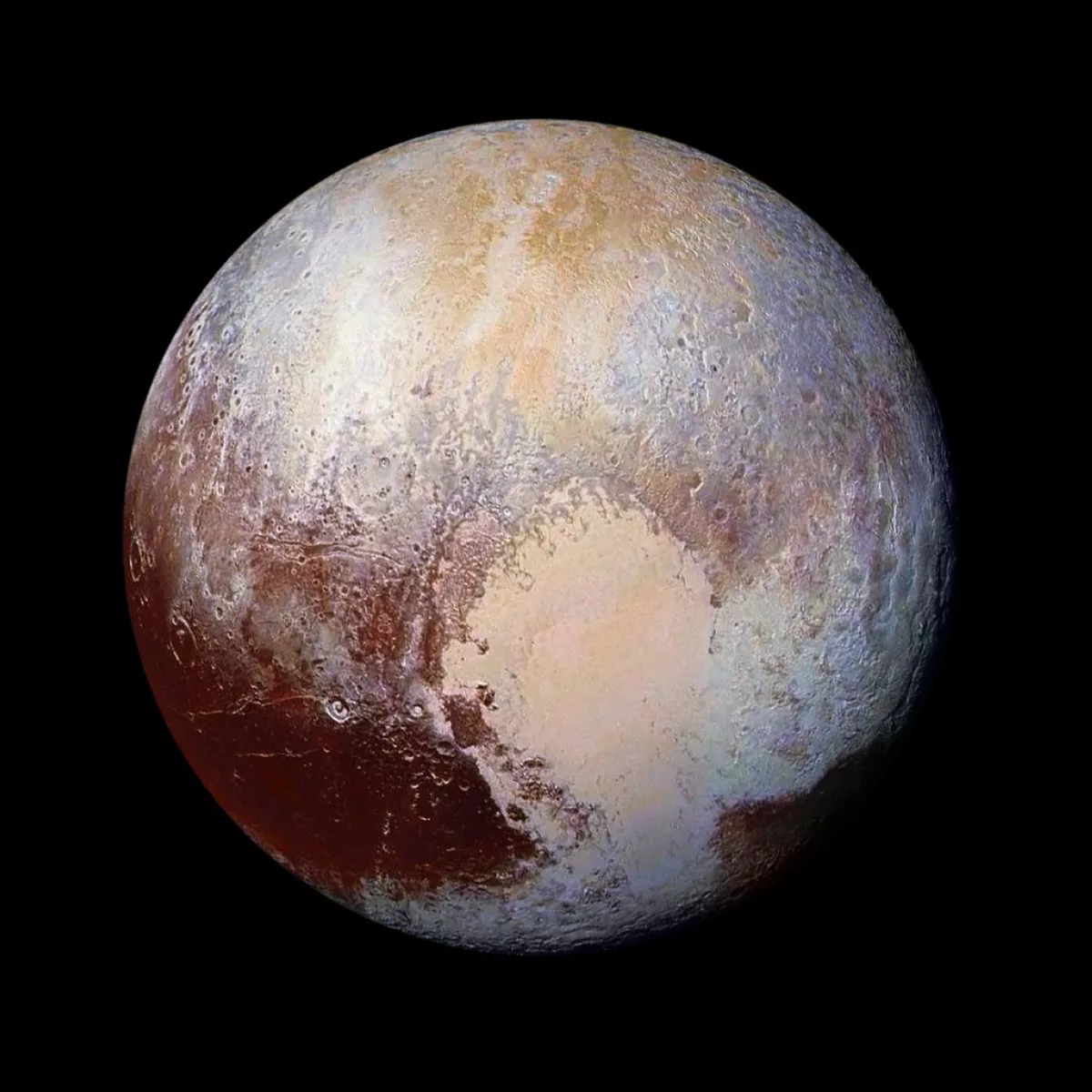
The New Horizons mission was a triumph, revealing Pluto as an utterly unique and beautiful world. But the mission first had to survive challenge after challenge, fighting to be developed, meeting a nearly impossible launch deadline, and then narrowly avoiding disaster when it was barely a week from its destination.

After taking over 10 million images of more than 30,000 solar system objects, the NEOWISE mission is finally in its last months. Principal Investigator Amy Mainzer returns with an update on this phenomenal success and a look ahead toward a much more powerful asteroid and comet hunter called NEOCam.

No mission to Mars has done what InSight will do. The lander’s spectacularly sensitive instruments will use the Red Planet’s heat and marsquakes to reveal its deep interior while also revealing secrets of other rocky worlds like our own Earth.

We have begun to understand the composition of worlds that are hundreds of trillions of kilometers from Earth. Astronomer Nikole Lewis is co-leader of a team that has used the Hubble Space Telescope to do this with the four Earth-like planets circling a star called TRAPPIST-1.