

 Explore Worlds
 Find Life
 Defend Earth


Planetary Radio • Aug 12, 2026
Total solar eclipse 2026: Astrophotography and birdsong
On This Episode
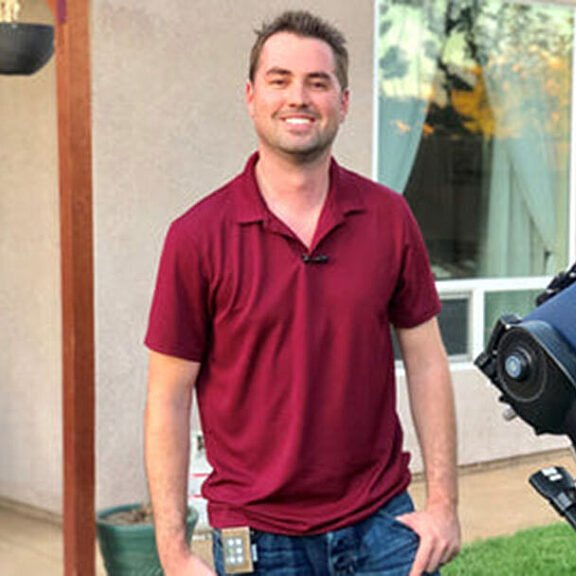
Andrew McCarthy
Astrophotographer and founder of Cosmic Background Photography

David Mann
Bioacoustics Researcher and Founder of Haikubox
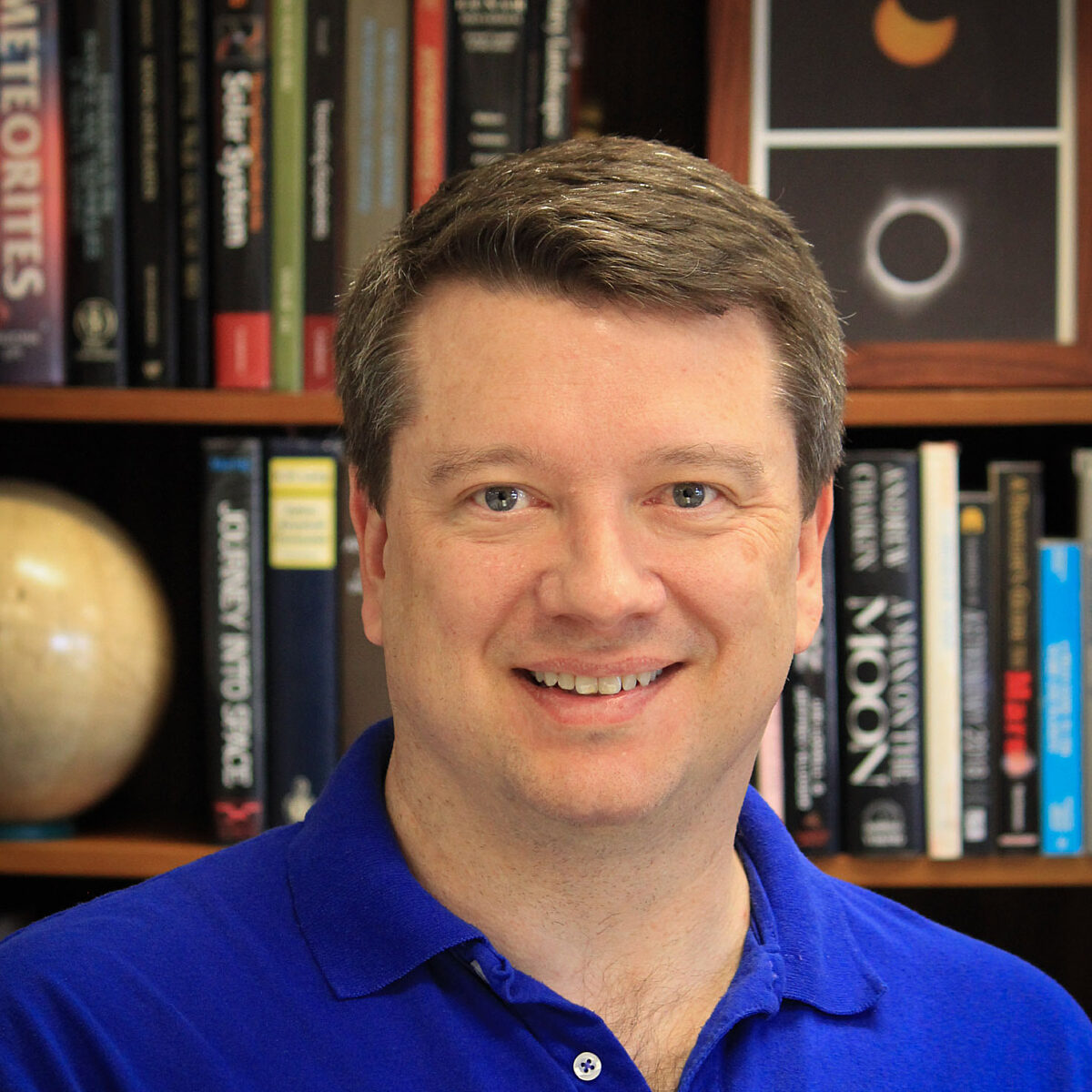
Bruce Betts
Chief Scientist / LightSail Program Manager for The Planetary Society
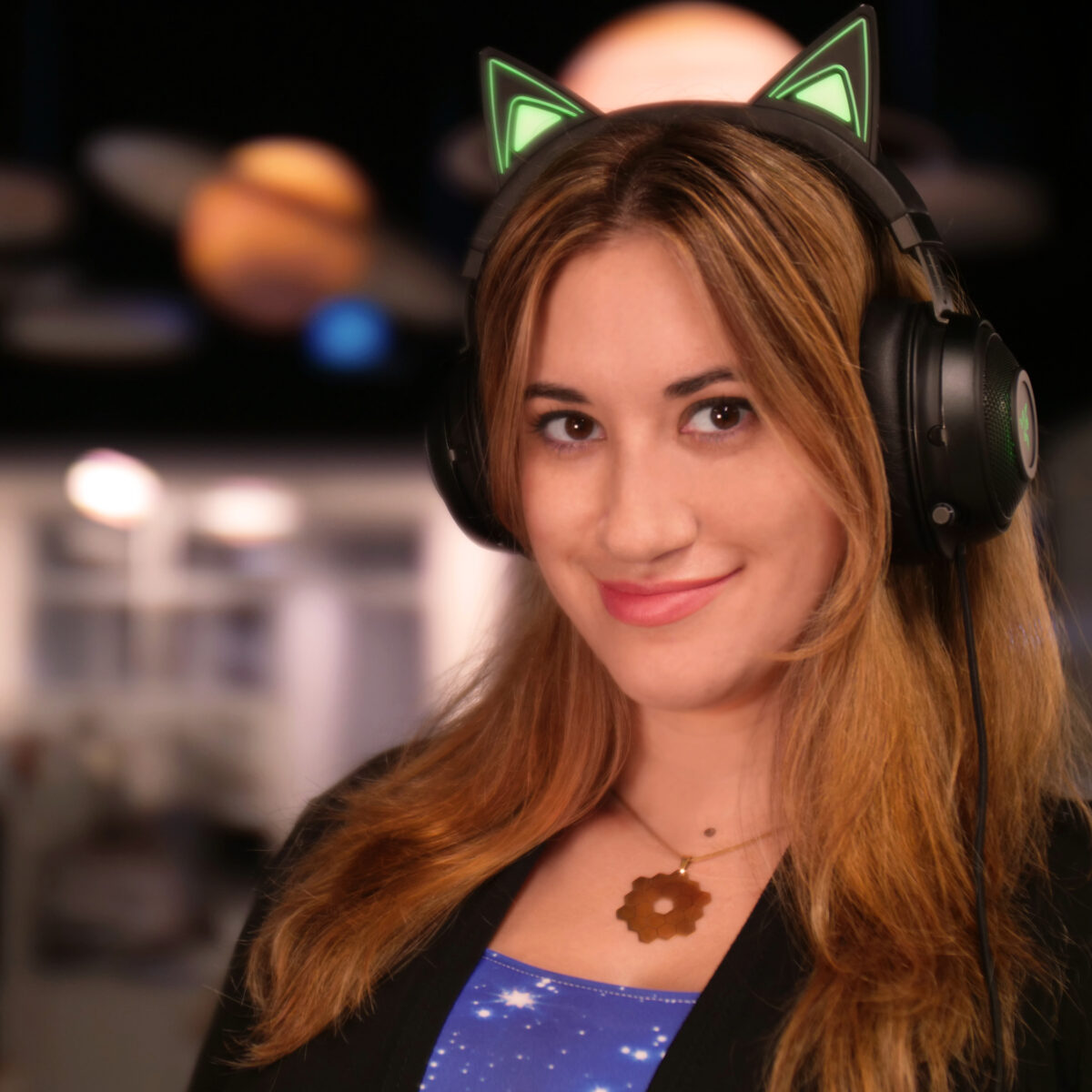
Sarah Al-Ahmed
Planetary Radio Host and Producer for The Planetary Society
On August 12th, 2026, the Moon’s shadow will sweep across Iceland, Greenland, and Spain, bringing the first total solar eclipse visible from Europe since 1999. And because this eclipse happens near sunset, it promises to be one of the most visually stunning in living memory.
Astrophotographer Andrew McCarthy, founder of Cosmic Background Photography, joins the show to talk about his extraordinary 2024 eclipse image, his collaboration with the Artemis II crew to capture the Moon in unprecedented detail, and what he's planning for this unique low-horizon eclipse. Then, bioacoustics researcher David Mann, founder of Haikubox and Loggerhead Instruments, shares the results of the Eclipse Echoes study, which used a network of hundreds of AI-powered bird monitors to reveal how birds across North America responded to the 2024 eclipse. The answer is far more complicated than simply going quiet.


Related Links
- Cosmic Background Photography
- Haikubox
- Continental-scale behavioral response of birds to a total solar eclipse
- Cornell Lab of Ornithology
- Merlin Bird ID
- Xeno-Canto
- BirdNET
- Why it’s worth getting into the path of totality
- Are your solar eclipse glasses safe?
- Experiencing the eclipse/phenomena checklist
- Eclipse words you should know
- What is a solar eclipse? Your questions answered.
- Practical guide to the eclipse for people who want to experience it
- Why partial eclipses are worth seeing
- Your guide to future total solar eclipses
- Sharing an eclipse with kids
- Buy a Planetary Radio T-Shirt
- The Planetary Society shop
- The night sky
- The Downlink
Transcript
Sarah Al-Ahmed:
Europe experiences totality for the first time since 1999, this week on Planetary Radio. I'm Sarah Al-Ahmed of The Planetary Society with more of the human adventure across our solar system and beyond. On August 12th, the moon's shadow will sweep across Iceland, Greenland, and Spain, bringing totality to millions of people who have never experienced it before. This week, Astrophotographer Andrew McCarthy joins us to talk about what made his 2024 Eclipse image so extraordinary and what he's planning to do for this totally unique low horizon total solar eclipse. Then bioacoustics researcher and CEO of Haikubox, David Mann, shares the surprising results from the Eclipse Echoes Project, which used a network of AI-powered bird monitors to listen in on how birds reacted to the 2024 total solar eclipse in North America. If you love Planetary Radio and want to stay informed about the latest space discoveries, make sure you hit the subscribe button on your favorite podcasting platform. By subscribing, you'll never miss an episode filled with new and awe-inspiring ways to know the cosmos and our place within it.
The day that this episode drops, August 12th, 2026, a total solar eclipse is sweeping across the Northern Hemisphere. Depending on when you're listening, totality is either just a few hours away or already behind us. Either way, this one is historic. The path of totality sweeps through Greenland, Iceland, Northern Russia, the Atlantic Ocean, Spain, and a small corner of Portugal, marking the first total solar eclipse visible from Western Europe since 1999. Those lucky enough to be on that path of totality are going to get two minutes and 18 seconds of darkness as the sun's light is blocked by our moon. But the partial eclipse reaches much further than that. Parts of the Northern United States from Alaska to North Carolina, most of Canada, much of Europe, and Northwestern Africa will all experience a partial eclipse today. For many along the western part of the path in mainland Europe and Africa, the sun will actually set while it's still in partial eclipse, giving those viewers a rare chance to see a sunset eclipse.
If you've been listening to Planetary Radio since 2024, you may remember our eclipse coverage before the last total solar eclipse in the United States. In one episode called Eclipse Tips: A Guide to Safe Observing and Astrophotography, I invited Astrophotographer Andrew McCarthy onto the show. He talked about how to photograph and safely observe the total solar eclipse. Andrew is an astrophotographer whose work has captured everything from the sun's surface to the far reaches of deep space. And he's been chasing eclipses since 2017 when a total solar eclipse crossing the United States first inspired him to pick up a camera and point it at the sky. Today, he's back to tell us how that 2024 shot actually turned out and to share what he's been doing since then, including an extraordinary collaboration with Artemis II's commander Reid wiseman.
Hey Andrew, thanks for joining us again. Oh,
Andrew McCarthy: Thank you so much for having me.
Sarah Al-Ahmed: So the last time we talked, it was about the 2024 eclipse. I was headed out for Texas to our Eclipse-O-Rama event, but I think the last time we spoke, you weren't even sure where you were going to be going yet to take that photo. So where did you end up?
Andrew McCarthy: I ended up in Missouri. The forecast in Texas, as you probably remember, was a little dicey.
Sarah Al-Ahmed: Yep.
Andrew McCarthy: Some people saw it, some people didn't, and the people that did see it still had clouds partially occluding the sun during the event. So I didn't want that. So I made the last minute call based on the last minute forecast changes to drive a couple states north to Missouri where I ended up setting up where every forecast agreed there would be clear skies in this one little keyhole. And it ended up working out. I got the great shot and it all worked out the way I wanted. It was just a lot of work. A lot of driving. Ended up just driving just constantly. And then I live in Arizona, so it was just all over the country basically for this thing.
Sarah Al-Ahmed: Oh, it ended up being phenomenal. That photo is just startlingly beautiful.
Andrew McCarthy: Oh, thank you.
Sarah Al-Ahmed: Can you tell us, what were some of the things that you ended up bringing out in that photo and how many photos did you end up stacking to produce that result?
Andrew McCarthy:
Well, it's been a couple years and a million projects ago. I might not have the exact numbers, but I did have five cameras and telescopes going at once. And the idea was I wanted to show you everything that was happening in the sky. Not just the sun, the moon, the corona, the prominences, but there was also a lot of stars that you couldn't even see visually, faint magnitude stars that I wanted to pull out. And I wanted to capture the full dynamic range that was present in the scene. So I only had a few minutes to do it, so I needed as many cameras as possible to gather as much light as possible. And by doing that, I was able to create a really, really high resolution image that has really extreme dynamic range from the faintest stars to the brightest prominences. And that also has the benefit of more closely resembling what you can see visually.
And what I wanted to capture more than anything was the emotion of witnessing an eclipse. So for that reason, as I was downloading these cameras onto my laptop, I was trying not to look at any other eclipse photos that I saw because of course social media was immediately buzzing with them. I try not to have a preconceived notion of how an eclipse should look. I only went on what I had just seen through my binoculars and through my telescope visually and how it made me feel. And I tried to recreate that in the shot as much as I could through balancing the light levels, balancing the color, and preserving some of the highlights and bringing out some of the shadows in the shot. So the result, I wanted to capture not just beyond what my eyes could see, but really go above and beyond in producing the emotion of witnessing the event.
And I did about as good of a job as I think I could have done with what I had at the time. So I'm pretty happy with how it turned out.
Sarah Al-Ahmed: You should be. It is absolutely beautiful. I know that last time you were saying you were going to try to capture that diamond ring effect. And we were speaking a little bit about the dangers to people's cameras when trying to produce that. Did you actually end up damaging any of your cameras while you were taking that photo?
Andrew McCarthy:
Everything turned out pretty good. I've had a lot of cameras going and they all had their own solar filters on them during the partial phase. And I had an alarm go off my phone one minute before the diamond ring would start. And once that alarm hit, I removed all the solar filters across all my cameras. And each camera had various lenses or telescopes or whatever, and they were all stopped down to F8 or slower, which meant there was a little bit of a reduction in that light hitting the lens. Between that and how little of the sun was actually visible at the time, it wasn't enough to permanently damage any of my cameras. Or if it did damage them, it wasn't enough for me to notice.
The biggest drawback of doing that was while the lenses were stopped down doing the eclipse, they did get less light from the eclipse. And it also has the added benefit of exaggerating any dust specs that are on your lens or on your sensor which show up in the final image, meaning I had to calibrate out those defects.
Sarah Al-Ahmed: Yeah, this brings up a point that you said last time, too, which is like if you don't know what you're doing necessarily in a circumstance, maybe focus more on the moment than trying to mess with all your camera gear. Be there in the moment. And then if you fry out a camera, at least you knew what you were getting into.
Andrew McCarthy: Yeah, absolutely. And honestly, that advice still stands today. A lot of people are traveling for this eclipse and I would tell everybody, do not experience it through the back of your camera. I probably will be because it's a very short totality. And because it's so short, I have very limited amount of time to get my shots centered and take the photo. And while I'm doing that, I'm probably not going to have very much time to look at it visually. I'm going to do my best though. I'm going to have binoculars around my neck that I can quickly pick up and look. And so hopefully that'll be enough for me to experience the event. But otherwise, yeah, just get your settings dialed in beforehand. And that way you don't have to touch anything, you don't have to look at anything. You can just sit there and appreciate the spectacle because it is just one of those things where it's like you may only see one in your life, if that. And it's going to be a moment that you'll remember forever.
Sarah Al-Ahmed: This is going to be a really interesting one because this is the first total solar eclipse in that area in the age of social media. So this is not only going to be a lot of people's first time seeing it since it's been so many years. I want to say it was 1999 the last time it happened, but also it's going to be people's first time sharing it. And so people might try to capture it on camera just so they can share it when in fact they should probably just be there and sit in the moment because who knows the next time they're going to get that chance?
Andrew McCarthy: Yeah, I agree completely. You'd have to... Well, technically Spain has one again next year.
Sarah Al-Ahmed: That's true. Yeah. If you live in Spain.
Andrew McCarthy:
But yeah, if you're in Iceland, yeah, I still recommend just to see it visually. You don't know what's going to happen with the weather next year, et cetera. One good thing about the timing of this one is that whole stretch through the Mediterranean has historically very good weather in August. So I think we will see a lot of great photos. It's also going to be really low on the horizon. It makes it worse in some ways, but much better than others. Think about when you see the moon rising on the horizon and just how big it looks because the horizon's contextualizing it for you. Without that context, being only a half degree wide in the sky, the moon, the sun are very, very tiny. So I think this is going to look really big to people. When it's on the horizon, you're going to be like, whoa, it's just huge and it just feels like it takes up this huge field to your view.
Well, of course, the sun and the moon is still just half a degree wide, but because you're seeing it against that ocean or that landscape, you're going to see this context which allows your brain to kind of hyper-focus on it. And you get binocular vision. It's such a weird thing our brains do, and that's going to make it just much more visually impactful, assuming you have clear skies on the horizon. There is a downside though. The downside is it is less sharp because you are seeing it through more atmosphere. And the fainter outer bits of the corona will probably be less perceptible.
Sarah Al-Ahmed: So are people going to be able to get some kind of combo if they combine photos around this time since it's so close to sunset? Are we going to get some really weird kind of colorful images of people stacked that way?
Andrew McCarthy:
Well, I think we're going to see some really interesting photos just because I've never seen an eclipse this low on the horizon before. Of course, I've only seen a couple of them. They were both pretty high, so I'm really not too sure what to expect. Light behaves basically the same though. A sunset produces those colors, not because of how bright the sun is or whatever, but because of how really scattering splits the spectrum of light as it goes in at such a steep angled or atmosphere, the atmosphere almost acts like a prism. As the sun gets lower, we shift more into seeing more of the red end of the spectrum. And that's going to happen even during totality. So I do think we're going to get some sunset effects. It's not going to be as bright of a sunset, so it might not be as prominent visually, but it should show up in photos.
So my hope is that I'm capturing beautiful colors of that red light in addition to those blue hues of the Corona. But I don't really know how it's going to turn out just because I think the last one of these that we've seen that's this low on the horizon was kind of taken before the era of digital photography when we had the dynamic range to really pull out a lot of what was happening in the shadows.
Sarah Al-Ahmed: That's going to be so cool. Oh my gosh. And I want to know more about where you are going to be going and that next phase of your eclipse photography. But first I wanted to acknowledge what I think is one of the coolest eclipse photos of this year, which came from the Artemis II mission. When you saw that for the first time, how did that make you feel?
Andrew McCarthy:
My reflex was, wow, how is this real? And then being thankful that they went when they did because this was only possible during certain launch windows and hoping that the crew just didn't spend too much time working and spent a little bit of time just sitting and appreciating. But of course they are astronauts, they are very hardworking, so they were focused on capturing that moment and taking a lot of photos. But those photos that came back were just unbelievably mind-blowing. And what it does for me personally is it helps focus my energy towards the future of human space flight because scenes like this won't become as rare. I think about how those experiences would transform you as a person. There's only four people on this earth that have experienced that. And getting more people to experience those profoundly beautiful moments I think would just be very good for humanity.
So it's why I go down and I cover the starship missions. I go down to Florida and cover crude spaceflight missions because I want more people to be aware of what's happening and hopefully get more help with more public support towards those things. So those photos that came back were very motivating for me to do my part and use my platform in getting more people to think big picture long-term for the future of human crude spaceflight.
Sarah Al-Ahmed: I understand you actually worked with the Artemis II crew on their photography. How did that happen?
Andrew McCarthy:
Oh yeah, so very interesting story here. So Reid reached out to me on social media about something else. He has one of my moon prints and wanted to comment on it and it was very nice. So I had this avenue to communicate with Reid. And leading up to the mission, it dawned on me that we haven't had digital photography operated by a human beyond the moon ever. So not just since Apollo, because Apollo, they had limited film cameras, but just ever. And digital photography is what allows me to do very high dynamic range images of the moon where you see not just the moon, but the shadowed side of the moon, the stars behind the moon, the vivid colors that are present in the regolith, but not visible to your naked eye.
And I thought, well, it's worth a shot asking Reid if he was interested in capturing the moon like this because he has familiarity with my work. And he was just immediately like, "Yeah, teach me," because he's a humble dude. And even though he's been through a million digital photography courses for moon photography, he still saw an opportunity to learn. I guess that's what makes him an astronaut.
So we basically just went back and forth, came up with a plan for how to capture the moment because you always do very limited windows because they're flying by so fast. And that was incorporated into the official plan that the actual NASA media team in charge of the Artemis photos would put together. Basically, yeah, he went up and was shooting these bracketed shots in specific bursts and got enough photos for me to stack together and bring out the colors of the moon in a way that we'd never seen before on the dark side. Or I should say the unlit... Or the far side because it is lit. But that's a little bit of a misnomer as well because most of the far side was actually in shadow when they went behind the moon, which was unfortunate, but of course made for a very beautiful crescent earth rise photo, which I loved.
But the downside of that is we weren't able to see all of those colors on the rest of it. But we were able to see some incredible definition in Mare Orientale, which is that giant impact crater. I forget how big it is, like a thousand miles wide or something. And that area was of particular interest to me. And because of the phase, we actually got some really nice crater relief in it. So those photos that turned out, even though they are showing technically the moon from the side, showed us details that we have never seen before. And in fact, as I was processing that data, I may have been the first human to ever see them, which is a really weird feeling because even they weren't visible in the raw photos they sent over to me, only in the stacked photo once those colors were brought out. Can't believe it happened.
Sarah Al-Ahmed: That's so amazing. I mean, I remember thinking when they had to delay the launch of that mission that it was such a bummer that we weren't going to get more lighting on the far side of the moon. But then by circumstance, it meant we got to get that eclipse photo. So in the end, it all came together, but I'm really glad that you got to take the time to do that. And I would love to see future Artemis crews get to learn more from you and other photographers because I think there's something really special about trying to bring out the emotion of the thing that you've been speaking about. Not just the technicality of the imagery, but there's so much that goes into astrophotography.
Andrew McCarthy:
Yeah, I agree. It would be nice to actually spend some quality time out there to work through some of these challenges that you face with photography. Astrophotography, it's taken a long time to get to where it is because it's not like point-and-shoot landscape photography. You're capturing very, very old photons. And thanks to the inverse square law of light, they are very faint and very dispersed by the time they reach your camera. And because of that, there's a lot of techniques that have to be developed. A lot of times, you're shooting an object that is so dim that it's not even above the noise floor of your camera. Literally, the black body radiation that strikes your sensor is the strongest signal compared to what you're actually trying to capture. And doing that from orbit presents even more challenges. You're dealing with reflections from the inside of the spacecraft and lights that can't be turned off inside the spacecraft that are interfering with this.
You're dealing with a distortion through that pressure window, the multi-layered glass that has to keep the astronauts alive. You can't mess with that. So you have to figure out a way to work through it. And then of course you have the challenges of just floating and not having a stationary tripod to set your camera on while you're shooting. And you have the stars that are moving faster and they're moving at different rates depending on what your spacecraft is doing. If it's changing angles relative to the moon, then the stars are moving at a weird speed. And the 500 rule no longer applies. The 500 rule being how long you can expose for with the rotation of earth blurring your photos. So there's all these challenges, and some of them have been addressed from the space station. Don Pettit's very resourceful and has come up with a few different trackers, for example, that compensates for the spacecraft's motion and has done some incredible astrophotography from low earth orbit.
But as space flight expands and we send more missions out beyond low earth orbit, it's going to present even more challenges. And it'd be really great to be able to get some incredible photos of earth against the zodiacal light or even just deep space objects unfiltered through earth's atmosphere in a wide field of view that we've never seen because space telescopes generally have a very narrow field of view. So all of these are challenges that we should overcome in the future of astrophotography in space.
Sarah Al-Ahmed: Thankfully with this upcoming eclipse, you don't have to deal with any of those challenges. You just get to take it from here on earth. There's enough challenges there as it is. So what is your plan for coming up in August on the 12th?
Andrew McCarthy:
So my plan is always going to be depending on the weather. So I actually had a primary location that I had picked out that just yesterday I ruled out based on what's going to be happening on the island with officials closing down certain viewing places. And so I was going to shoot it from Majorca. And now that I know I'm not going there, I don't mind sharing that. I don't like saying exactly where I'll be because then people will show up and be like, "Hey, can I talk to you while you're shooting this really important photo?" And I get too distracted. But I was going to shoot it from Majorca and I always subscribe to Google alerts if I have a big shoot coming up, filtering for keywords surrounding that location. And I got an alert that officials are closing down both my primary, secondary, and tertiary locations on that island that I was planning on shooting at because they're worried about overcrowding, fire safety, evacuation safety, a lot of things that are of course very important.
So I'm not going to speak ill of the regulators that stepped in and said, "No, no, no, no, no, we've got to keep people safe." But it meant they are funneling 300,000 people into one beach on the west side of the island. Because of the nature of the terrain there and the location of the eclipse, there's really only one spot to view it, even though the path of totality covers the whole island. And I'm going to have a lot of equipment. Setting up on a crowded beach full of people is going to be very, very hard for me to get a shot. One, seeing over that many heads. That alone is a problem. And also frankly, like I was saying earlier, I get distracted. If people are out constantly asking me questions about my gear, which they do by the way, I will unfortunately forget things.
So it's frustrating because I actually really love talking to people. When people ask me about space just like you're doing, I won't shut up about it for hours. But in the seconds leading up to a total solar eclipse, I got to be locked in. So for that reason, I ruled out Majorca and now I'm evaluating other locations, which I'm not sure which will work out. It will depend on weather, it'll depend on our logistics such as am I even allowed to shoot there? Yeah, hopefully I'll have some really cool photos, but I'm still very much in somewhat of a limbo. I'm not really sure exactly where I'll end up.
Sarah Al-Ahmed: But for people who aren't going to be using five cameras and a telescope and all those other things, what's a good beginning setup for someone who maybe has a DSLR or something like that, but hasn't attempted something like eclipse photography before?
Andrew McCarthy:
Well, as mentioned, priority should always be experiencing it visually. That said, if you're dead set on getting a photo and you feel like you'll have massive regret if you don't, what I'd recommend doing, if you do have a DSLR, use a nice long focal length. Use something like an F8 aperture. The reason for that is just basically it's a nice middle ground. It lets enough light in while also stopping down the lens enough to keep things sharp. And you can use autofocus, but I would actually recommend just focusing on something that's infinitely far away first. There's actually depth of field calculators that you can use to figure out if something's far enough away to technically count as infinity to the lens. For example, you can focus on the horizon, you can focus on a distant cloud, not the closer clouds, like the distance clouds, distant mountains, that type of thing.
And once you've done that, switch to manual focus because the last thing you want your lens to do is to try to focus on something while it's trying to shoot it and you only have a minute, so you really don't want to mess with the focus during the shot. And then of course, the actual shot itself. Now, there's a lot of dynamic range in the eclipse, so it's hard to know what to do. You're like, "Well, should I just use the automatic settings?" Well, automatic setting is going to try to balance your histogram. And if your histogram is balanced, it will actually be overexposing right around the lunar limb where all that bright detail is happening, prominences and the brighter parts of the corona are right there. And they will be blown out and you will lose detail if you use automatic settings.
But if you shoot too low, then you're no longer going to get the outer bits of the corona. You're only going to get the inner bits, which are still really cool. That's where you see the pink prominences flying off the sun. Those are the coolest parts of the 2024 eclipse, and I can't wait to capture those again. I hope we get a big one. How do you get the best of both worlds? And the answer of course is HDR photography, like I mentioned earlier. HDR photography is when you capture different brackets of shots. So you get short exposures where you capture those really, really, really bright bits. And then you also do longer exposures that allow you to capture those faint outer bits and maybe some stars if there's enough stars visible. And then you can end up with something that more closely resembles what the human eye can see once you've combined all of this data together. Now, combining the shots together are a challenge that not everybody's necessarily up to.
But by bracketing your shots, you will allow yourself the opportunity to go through and pick which style you like best. Really hard to know how things are going to turn out if you don't have the experience going into it. But then you might be like, "Oh, I have a photo of the very, very bright corona and it shows up really great in this photo." But then also you can look at some of your darker exposed shots and zoom in on the prominences around the sun and say, "Wow, now check this out. I also saw this during clips." So getting that variety of shot, even if you don't know anything about HDR photography, I think is really helpful in just capturing as much of the scene as you can. And it's actually pretty easy to set up on your camera. You just go through and set like, "Oh, I want five or seven bracketed shots."
And you can set up your little spread on the automatic exposure bracketing setting. But yeah, you can look it up for your camera, basically how to bracket the shots for the upcoming eclipse. And then use an intervalometer. Intervalometers are really important to not shake your camera while you're shooting, have it on stable ground, stable tripod, and set it up so that it'll fire these shots automatically so you don't have to sit there and adjust settings, look through the eyepiece. You can just watch the eclipse and know your camera is doing the work for you, and then you can review those shots later. And then even if your photos don't turn out, you know you don't regret it because you experienced the event, and that's the most important thing.
Sarah Al-Ahmed: What technology would you recommend people use for actually stacking the photo once they get it?
Andrew McCarthy:
For a beginner, I would say probably the easiest thing to do is if you have Photoshop, just throw all your photos in Photoshop, manually align them. You drag them around until they're more or less perfectly aligned. And then you can do a very simple median blend of all the photos so that you're combining the brighter shots with the dimmer shots. And once you've done that, you can just edit the photo from there. If you know anything about just editing photos, there's a million ways to do this and there's not necessarily one distinct right answer. I would actually encourage people to try to just tinker with the shots and not worry about following some tutorial. There are tutorials out there for editing these, but if you do it yourself without trying to follow some kind of pattern, you're going to come up with something that's very unique to you.
And these photos are somewhat of an artistic expression, too. So getting something that's very unique is how we discover new things. It's how we inspire people by coming up with something that's new. And that's what I always try to do with these shots is I'll put it together and instead of following some method that's tried and true, I try to make my own way, come up with my own ways of blending the HGR data together. And once I've done that, I can usually come up with a shot that stands out above some of my peers that are maybe doing it the technically most correct way, but that's not necessarily what I want to do. What I want to do is create the piece that evokes emotion, and I would encourage other people to attempt to do the same.
Sarah Al-Ahmed: That's fantastic advice. And I hope that it produces all kinds of fun images and that for the first time ever, people get to share these things online from a whole part of the world that's never had the opportunity to do that with social media. So this is going to be really exciting for everybody involved and I cannot wait to see your photo. Just seriously, so much luck to you and everybody who's going to be taking these photos.
Andrew McCarthy: Thank you. I'm really looking forward to it. Hopefully I don't let you down.
Sarah Al-Ahmed: We'll be right back after this short break.
Kirby Runyon:
Hi, I'm Kirby Runyon, planetary geologist at the Planetary Science Institute and founder of Planetary Experience Consulting. Think of your favorite photograph from the moon or Mars. Have you ever wanted to read the stories recorded in those rocks? You can learn how. This October, I'm co-leading a three-day expedition to some of New Mexico's finest planetary geology analog sites, and I'd love for you to join me. From October 15th through 19th, we'll explore tube-fed lava flows at Carrizozo. Soak in the volcanic desolation of Kilbourne Hole volcanic crater and stand at sunset over the sublime White Sands National Park. These are some of the same landscapes where Apollo and Artemis astronauts have trained. We'll also visit Spaceport America, the New Mexico Museum of Space History, and the Las Cruces Challenger Learning Center. Space is limited to just 20 people. And for every person who registers, The Planetary Society will receive a donation.
Head to planetary.org/travel to learn more and save your spot. I hope to see you there.
Sarah Al-Ahmed:
A total solar eclipse is without a doubt one of the most awe-inspiring events in nature. People travel for miles to stand in that path of totality. And when that moment comes, there are tears, cheering, and sometimes stunned silence. But what about the animals? There's a long history of anecdotal reports that birds go quiet during totality. Scientists have been trying to pin down what's actually going on, and the 2024 eclipse gave them a rare chance to find out.
Our next guest, Dr. David Mann, is the founder and CEO of Haikubox and Loggerhead Instruments. He led a team that used a network of hundreds of AI-powered backyard microphones to listen in on birds across North America during that April 8th, 2024, total solar eclipse. It passed through Mexico, up through the United States, and into Canada. Their findings published in scientific reports tell a much more complicated story than anyone expected.
Hey, David, thanks for joining me.
David Mann: Thanks for having me.
Sarah Al-Ahmed: So first, I want to say how excited my colleagues at The Planetary Society are to talk about both birds and eclipses. We have a lot of avid birders on the team.
David Mann: That's great.
Sarah Al-Ahmed: It's funny because just the other day, I was talking with a coworker about how much my mother loves birds. She sits out in her yard, she listens to the birds, and she tries to identify them. And they all told me that I should give her the Merlin Bird app, which I understand has this similar connection to your Haikubox technology through Cornell. Have you ever used the app before?
David Mann: Yes. Yeah, we use Merlin all the time when we're outside trying to figure out what a bird is. Yeah, it's free. Everyone should get it. Everyone should use it. It's wonderful. Yeah, so it's similar to what we do. So I can briefly explain what Haikubox is. So if you use Merlin, Haikubox is like a Merlin that's running all the time at your home. And so it's listening for birds. And when it hears one, it runs it through neural networks to identify what bird it is. And then it's all kind of recorded in a cloud system. So you can sit on your phone whenever, you can get a notification, "Oh, we heard a screech owl," and then you can go run out and find it. So people have these, mostly in the United States, but also in Europe and scattered places. And so it's running continuously. So we have these great records of bird activity around the world.
Sarah Al-Ahmed: That's so cool. I mean, it's a great way to track bird migrations or just figure out what's happening outside your door. In my area, we mostly have those red crowned Amazon parrots. They're everywhere in Pasadena.
David Mann: Nice. Yeah. In Florida, we have these Nanday parakeets that are flying around. It's like, you're not from here.
Sarah Al-Ahmed: I know, right? It's wild hearing them all go over. But out in the wild, there are so many different animals to identify, which is why I'm glad we're doing this kind of science, both just for bird identification, but also for this kind of eclipse science, which I know people have tried in the past to try to figure out how animals react to eclipses, but this is a very different take on doing that kind of experiment. How did the idea for Haikubox come about?
David Mann:
Haikubox actually came about when I was talking with Holger Klinck, who's a director of the Center for Conservation Bioacoustics at the Cornell Lab of Ornithology. So he and I both have actually an oceanography background. And so we've done a lot of work on marine bioacoustics like fish and dolphin whale sounds. My company has been making underwater acoustic recorders for quite a long time. I was talking to him about, I was like, "We want to do something that's more a consumer bioacoustics product." And he said, "Hey, we have this new thing. I have this grad student in Germany, Stefan Kahl, who developed BirdNET." And what BirdNET was, it was the first convolutional neural network that was really good at doing birdsong ID. And so we hooked that up in a Raspberry Pi and I stuck it in my backyard in Florida and I was like, "Oh, this is cool." And then we had funding from National Science Foundation, small business program for a few years around 2020.
Originally we were going to do oceanography stuff and then it was sort of like we were all at home in the pandemic. So that actually... The pandemic was a big sort of driver for us to kind of focus on Haikubox and get that going.
Sarah Al-Ahmed: How does Haiku Box work and what kind of science are you trying to do with it?
David Mann:
So Haikubox is basically, it's got a microphone on it and we're digitizing the recordings. And we've been through a few iterations of what the hardware is on the device. So we call it the edge device. And so in the early days, we were running these Raspberry Pi compute modules. And then we had a supply chain crunch in 2021 and we couldn't get them for a year and a half. It was like, okay, that's not good for our business. So we ended up switching over to just a much lower power computationally and power power microcontroller. And so now we run a small net on device that can do, like, 100 species ID. So the BirdNET, just FYI at the time was like a thousand species, which it covers pretty much North America and Europe. And now they're up to, the latest version is like 11,000 species.
Yeah, it's really incredible. So we've now switched to this hybrid thing where we were doing detection of common species and birds, but then there'd be a bird that's not common and it's not in our local edge net. And so we basically send the audio clips to a cloud system and then that is running much larger neural nets over the audio that comes in. And so basically that's how it works. Now it's sort of like a somewhat smart microphone in the device and then there's a lot of processing on cloud servers to do the detections and classifications.
Sarah Al-Ahmed: And what kind of science can you do with that much bird noise data?
David Mann:
I wish we could do more. Actually, so anyone listening who's a scientist or want to be, we will make the data available. So we share the detections with Cornell, but there's so much that can be done. So we have billions and billions of detections now. The eclipse study was sort of perfect that we did because one, we knew it was coming. So we could get ready and make sure like, are we collecting everything we want to collect from this? And it's an event that has a beginning and sort of end. And so you can isolate it. But other things that we want to look at, like the effects for... Right now there's wildfires in Canada with smoke that's coming down into the U.S., kind of like Michigan through the East Coast of the U.S. So it'd be very doable to look at how do the birds react to that?
Just very simple question. And so I'll just quick flip around and go like, "Where's the worst smoke? And are the birds still calling?" And I'm like, "Oh yeah, there's still birds calling there." It's not obvious. And so that stuff, it just gets a lot more complicated. So we have a few thousand of them running now. And when you have that scale. It doesn't matter that some birds are calling some days and not other days. You can kind of average all of that out. So those sorts of things are things we can look at. We can also look at, as you mentioned, migration. The first ones we set up in Florida are still running, so we have over five years of data. It is open if people want access to it. So there's a lot you can do and lots of questions you can ask. What we're doing now is actually trying to develop tools to make it easier to actually work with the large data set and integrate other data sets like weather.
Sarah Al-Ahmed: And I want to ask this next question just to put some minds at ease. I know there's been a lot of public backlash to these kind of AI enabled listening devices, like passive recording devices over the years. How do you handle data privacy with Haikubox? And is the data strictly used for scientific purposes?
David Mann: Yeah. So we don't sell the data and we will never sell the data. So for privacy, the main thing is human speech. So we basically have... On the edge device, we have a net that detects human speech and sounds. And so we try not to upload that ever. We sort of need to know that it's happening. So for example, during the eclipse study, we analyze the data around the eclipse. The one thing that's weird that happens during eclipse are hundreds of thousands of people go out in the middle of the day and are in awe and screaming or shooting off fireworks or doing all sorts of things. And so that will affect bird behavior just as much as the eclipse will. And so actually to some extent more. And so our system, since we're rejecting speech, it'll suddenly look like there's no birds calling, but what's really happening is we're just rejecting all of this human noise. Yeah. So we had to go sort that out and only half of our sites were quiet, human ones.
Sarah Al-Ahmed: Yeah. No, I was thinking about that actually during our Eclipse-O-Rama festival that we threw in Texas during the last big event in the United States because we were trying to add to the citizen science on this by recording the sounds. But even on my own recording, all I got were humans screaming at the sky basically. And I'm sure that that's been really tricky for previous groups that have been trying to do this science around eclipses. How do you separate that out? So in your case, you just basically got rid of all of the tracks that had human noises in them?
David Mann: Yeah, we basically... I think it was like an hour before and an hour after if we detected any human, we just excluded the site.
Sarah Al-Ahmed: Oh, wow. But I mean-
David Mann: That's why we got rid of half of them. And even some... We have a fireworks detector. That was going off. And I'm like, no, if you're shooting off fireworks, we're not going to look at bird call rates.
Sarah Al-Ahmed: So in the end, when you finally ended up going through the data without any human interference, what did it actually show about what the birds were doing during the eclipse?
David Mann:
Yes. So since we knew it was coming, we spent a lot of time trying to get ready so we could, oh, we would have an answer instantaneously, which we did, but that didn't have the human exclusion part in it. And so it was just like, oh, it got really quiet during totality, was sort of our initial reaction. And then we went back and just looked in a lot more detail at it and we're like, okay, well, we have to throw away half the sites or exclude them from the analysis because there's people doing things. And then there's no one blanket thing, like birds get quiet during the eclipse. So it was a highly variable response. There was clearly a response. In some cases it was like, oh, the birds really got quiet. So in our paper, I'm just kind of looking at it now. It's like this one site, Pine Siskin, they started increasing their calling right before totality. Then it drops to almost zero and then it picks right back up again.
But I go to a different site and I can see American Robbins just started calling... Six minutes before total obscuration, they just started calling a ton and then they got quiet. And then six minutes after the total obscuration, it's like Northern Cardinals started calling it this site. And I can go to a different site where there's American Robins and they don't do the same thing. So it was highly site dependent, highly species specific. And if you looked at just one of them, you can tell a great story. But when you look at all of them taken together, you're like, I don't know if I could predict what even us species will do at a site during eclipse. I mean, it's a weird thing. If you think of yourself as a bird.
So a lot of birds have a thing called a dawn chorus, especially in the spring and even now. So right now, I'm up in Massachusetts and there are cardinals calling it 4:30 AM. And I'm like, oh my gosh. So some species will have this dawn chorus where they just call a lot in the morning and then they kind of quiet down a couple hours or even an hour after sunrise. And then some have a dusk chorus, what they'll call a lot, too, but it's not nearly as strong as the dawn chorus. So if you're a bird and the eclipse is going to be passing you kind of late midday, it's going to seem like dusk is coming and nightfall is coming, but then as soon as it starts going away, it's sort of like another dawn. And then they have a circadian rhythm that other things in their bodies are controlling that are triggering whether they're going to call or not.
And then the other thing is the eclipse in the U.S. was April 8th, the spring, and it went from Texas all the way through Main Canada. So that's right when a lot of birds are migrating. So there's early migrants and later migrants. And so there's just different communities of birds in different stages of migration, or ones that don't migrate, they're getting ready to breed. So a lot of those things are all overlaying on this weird thing that's happening. And then there's other stuff that happens, too. The winds change, it gets noticeably cooler. So it just feels like a storm is coming. And so your reaction to that might be like, "Oh, let's hunker down." There was a lot of them that peaked three or six minutes after total obscuration and pretty commonly. And so I don't know if that is sort of a dawn chorusy thing.
I don't think so. It might be a dusk chorus thing. But also, that's when the weather effects are not immediate. So a lot of them I think happen after totality or after peak totality. And so they may be reacting to that as well.
Sarah Al-Ahmed: Yeah, that was really surprising to me during my first total solar eclipse. The temperature dropped. And then immediately after the eclipse left, we got these really intense winds that literally almost blew my tent away. So trying to figure out the difference between what things the birds are responding to is really complicated.
David Mann: Yeah. So across sites, we looked for effects of temperature, wind speed, cloud cover, and whether the site was northerly or southerly in the U.S. And we didn't really see any consistent relationship to change in vocalization rates with any of those other things.
Sarah Al-Ahmed: But it did appear that at least during totality, there was a significant drop-off, even if some birds-
David Mann: On average, yeah.
Sarah Al-Ahmed: On average. Yeah. So it's like even if all the different bird species are reacting differently and every circumstance and every location is different, on the whole, we can say that they did in some way quiet down during that time.
David Mann: Yes. Yes. On average. And it had to be in a place with more than 99 point something percent obscuration, too. So I was in Massachusetts and so we didn't get total obscuration. And then one of our employee that does the AI stuff, he actually traveled to Indiana. And so he was texting us during it. I was like, "It's okay here."
Sarah Al-Ahmed: But from a bird's perspective, what's the difference between 99% totality and 95% totality?
David Mann: The amount of light change is very drastically different. Even 99% covering the sun, it's still pretty bright. It's like a cloudy day, like a bad storm cloudy day versus night. And so I've never experienced it, but for you, is it like night has fallen extremely rapidly?
Sarah Al-Ahmed: Exactly. Everything goes so dark and you can even see the shadow oncoming. I don't even know how to describe it, but it is. It's very dark. All the stars and planets come out in the middle of the day. It's a trip.
David Mann: Yeah.
Sarah Al-Ahmed: God, it's going to be so confusing for the birds. Yeah. And the dip in vocalization wasn't even centered during peak darkness. It started at totality, but then extended for a while afterwards, maybe about 12 or so minutes if I'm reading the paper right. So what do you make of that asymmetry?
David Mann: I had a sense that it was related to it getting colder, which it gets dark faster than it gets colder. And so that's the only thing I think it could be. Or it's really sinking in like, oh, something's going on.
Sarah Al-Ahmed: Right. Yeah. I mean, that's got to be so wild. And unfortunately, we don't have another total solar eclipse in the United States until 2045.
David Mann: Yeah, I just looked at the path on your website for the upcoming one. And we only have three in the past in Spain. We have one in Iceland, but it's on the North Coast. Yeah.
Sarah Al-Ahmed: For people who live in Europe, I mean, clearly the one coming up, you don't have a lot of Haikuboxes, but we have several coming up in the next few years. So what would you recommend that people in Europe and the Middle East do in preparation for something like this if they want to contribute to bird science during that time?
David Mann: I mean, if they can make any recording without people that is sustained, like, an hour long recording, that would be useful to have. And you can record with anything. You can record with your phone. Yeah, whatever.
Sarah Al-Ahmed: Yeah. Where would they want to submit it in order to be helpful?
David Mann:
So Cornell will take submissions of bird audio clips. And then there's a website called Xeno-canto, X-E-N-O, dash, C-A-N-T-O, that has a lot of just user-contributed animal recordings, which is great. And just going back to the neural nets that are doing the ID, they are all built off of people making known recordings of known species. And so you basically want thousands of recordings from lots of different places of each species to be able to train the net to do the ID. So that's where a lot of the value is coming from are sites like those. The things about Haikubox are most of our data are from 30 species or less. So the common species, which are the crows, the cardinals, the jays, chicadees, and tit mice and things like that, a lot of them are very broadly distributed. So you can find American Robins in a lot of different places.
When we were first starting off with Haikubox, a lot of avid birders really want to find the rare bird. And I was like, "We're going to have to find a way to make blue jays interesting." But they are. So some of the birds that are the most challenging for us in terms of false detections are things like blue jays, because they'll imitate hawks to try to scare other birds away. They're like, "Oh, I'm going to imitate a hawk and affect my neighbor's behavior." They can just make all sorts of crazy sounds.
Sarah Al-Ahmed: Well, I love knowing that even beyond humanity, the animal world is interacting with this completely strange, very earth-centered phenomenon. I mean, the chance at all that the angular size of the sun and the moon would be the same size on our sky is so rare, let alone finding a world with life that has that circumstance. Thank you so much for joining us to talk about this.
David Mann: Thank you so much.
Sarah Al-Ahmed:
For links to all of the amazing images and research that we talked about in this episode, along with a lot of eclipse resources, you can go to the website for this episode of Planetary Radio at planetary.org/radio.
So birds have complicated feelings about total solar eclipses, but what about planetary scientists? Now it's time for What's Up with our chief scientist, Dr. Bruce Betts.
Hey, Bruce.
Bruce Betts: Hello, Sarah.
Sarah Al-Ahmed: Man, I'm just a little jealous of everybody that's over in Europe right now. They actually get to see this eclipse. Meanwhile, in California.
Bruce Betts: You can always root for it to be cloudy.
Sarah Al-Ahmed: Nah, they deserve it. It's been so long since they had a total solar eclipse over there. 1999, they deserve it. I hope it's beautiful.
Bruce Betts: Yeah. Well, any given spot doesn't get a total solar eclipse very often. It's a little path. But yes, of course we wish happiness and beauty and joy. Total solar eclipses are super cool.
Sarah Al-Ahmed: I mean, I know I've said this on the show before, but I think about this a lot. How lucky and weird is it that we live on a planet where the angular size of our moon and our star on the sky are exactly the same and they align such that you can see a total solar eclipse? There's all this sci-fi about aliens going through the universe looking for water or some kind of thing. If I were some kind of extraterrestrial, I would travel the universe looking for total solar eclipses. That's how weird it is.
Bruce Betts: That's how weird you are.
Sarah Al-Ahmed: Yeah, that is also true. What's the coolest total solar eclipse you've ever seen?
Bruce Betts:
I've only seen two, which is still pretty cool. And the coolest was in, I saw 2017 and 2024, the two that crossed portions of the U.S. In 2017, I'd have to rate higher in terms of the eclipse because it was a clear blue sky pretty much all the way around. So it was just spectacular and impressive with the darkening. But if you look off at the horizon, you can see parts that are still lit up and just the experience to be able to see the corona. Of course, they always say, "Don't use cameras. Focus on the event yourself." But part of my joy is in trying to get pictures. And so I went ahead and did that and got pictures and that was cool.
And then the other total solar eclipse was our eclipse event that we had in 2024 in Texas. And that was super cool because it was cloudy, but the clouds cleared just enough to see it for the totality. And of course, having hundreds of people being excited at the same time.
Sarah Al-Ahmed: That was super cool. And I was so grateful that the clouds parted just for that moment of totality. The entire day, I was just like, "Oh, is this going to..." We've got 800 people in a field out here for an eclipse festival, and then it's like raining on your star party, right? No, but it actually, just for that moment, the clouds parted, we got to see it. It was magical.
Bruce Betts: Well, I look forward to hearing how people... The experience goes with the European eclipse in Greenland, and we'll see what happened. And a lot of partial eclipse all over Europe and Africa and the Atlantic, if you just happen to be hanging out there.
Sarah Al-Ahmed: Right.
Bruce Betts: All right, let's move on to random space fact.
Sarah Al-Ahmed: Rewind. What you got?
Bruce Betts: I got comets. And this is one of those things that a lot of us know, but if you don't know, it's pretty weird. Comet tails always point away from the sun, at least basically. This is true even when they're going away from the sun. So the tail leads as they're headed away from the sun because it's an effect of the solar light and the solar wind, depending on which tail you're talking about. And you don't have the atmosphere that we have on earth, which makes you think all of that. Tails are always behind the thing. It's just weird. It's weird. You look at it, your brain tends to go, "It's going that way, but it really can be going the other way." There you go. That's your random space fact.
Sarah Al-Ahmed: Super weird. And also interesting, I mean, for whoever is listening to this episode on the day that it comes out, the earth will currently be plowing through the trail of debris left by comet Swift-Tuttle.
Bruce Betts: Swift-Tuttle.
Sarah Al-Ahmed: Swift-Tuttle for the Perseid meteor shower. I learned that from you and got it right at a trivia contest at Astronomy on Tap the other night. So I credit that one to you, Bruce.
Bruce Betts: All right. All right. Well, I guess that makes sense. It would be at an astronomy gathering that you would get that as a trivia question.
Sarah Al-Ahmed: Always.
Bruce Betts: All right everybody, go out there and look up at the night sky and think about the joy you see when you look up, whatever you see. It's a bird. It's a plane. It's a total solar.
Sarah Al-Ahmed: Total solar clips.
Bruce Betts: Thank you, and goodnight.
Sarah Al-Ahmed:
We've reached the end of this week's episode of Planetary Radio, but we'll be back next week with more space science and exploration. If you love the show, you can get Planetary Radio t-shirts at planetary.org/shop, along with lots of other cool spacey merchandise. Help others discover the passion, beauty, and joy of space science and exploration by leaving your review and a rating on platforms like Apple Podcasts and Spotify. Your feedback not only brightens our day, but helps other curious minds find their place in space through Planetary Radio. You can also send us your space thoughts, questions, and poetry at our email, [email protected]. Or if you're a Planetary Society member, leave a comment in our Planetary Radio space and our online member community. Planetary Radio is produced by The Planetary Society in Pasadena, California, and is made possible by our members around the world. You can join us as we continue to marvel at our amazing place in this universe at planetary.org/join.
Mark Hilverda and Rae Paoletta are our associate producers. Casey Dreier is the host of our monthly space policy edition, and Mat Kaplan hosts our monthly book club edition. Andrew Lucas is our audio editor. Josh Doyle composed our theme, which is arranged and performed by Pieter Schlosser. My name is Sarah Al-Ahmed, the host and producer of Planetary Radio. And until next week, happy eclipse viewing and ad astra.