Planetary Radio • Nov 11, 2026

Space artist Don Davis and a new view of Voyager 1

Please accept marketing-cookies to listen to this podcast.

Download MP3

On This Episode

20121011 davis don

Don Davis

Emmy award-winning space artist
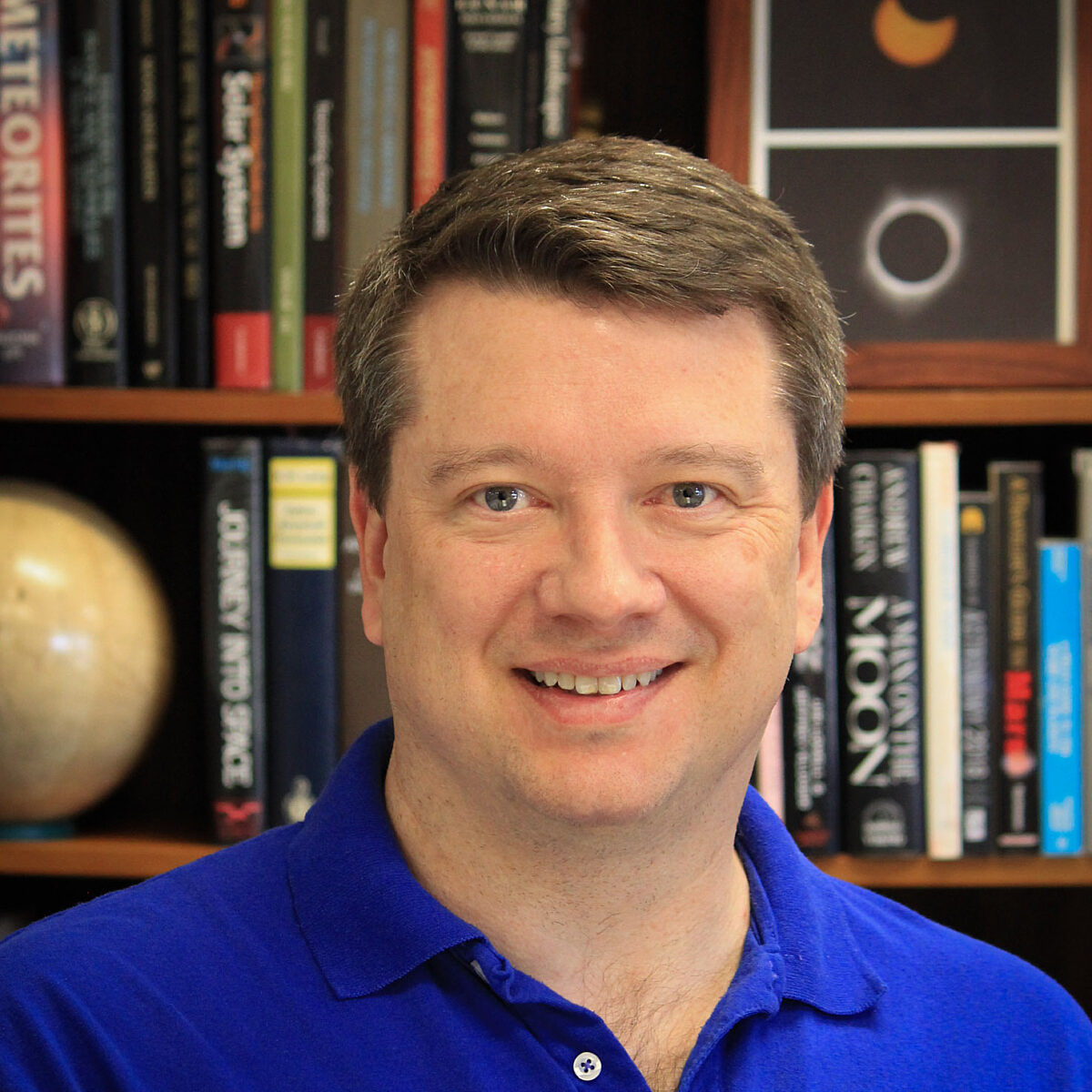
Bruce betts portrait hq library

Bruce Betts

Chief Scientist / LightSail Program Manager for The Planetary Society

Sarah al ahmed headshot

Sarah Al-Ahmed

Planetary Radio Host and Producer for The Planetary Society

For more than 50 years, space artist Don Davis has shown us worlds no camera could reach. A protégé of Chesley Bonestell, the father of modern space art, Davis went on to paint the ancient Moon for the U.S. Geological Survey, built models for Carl Sagan's Cosmos, and was present at NASA centers for planetary encounters from Viking to New Horizons. As Voyager 1 approaches one light-day from Earth, Davis created a new artwork imagining Voyager's view looking back toward home. We hear his remarkable story and celebrate the power of space art to show us what our cameras cannot. Then, Bruce Betts, chief scientist at The Planetary Society, tells you where to point when you wave at Voyager 1 during its big moment, and we learn about NASA's "Shine Bright for Voyager's Light-Day" celebration.

This content is hosted by a third party (youtube.com), which uses marketing cookies. Please accept marketing cookies to watch this video.

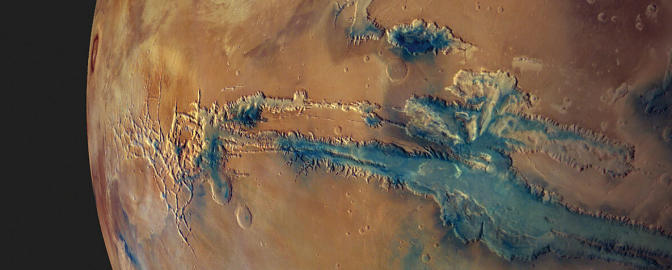
Don Davis’s Ius Chasma terrain model at The Planetary Society HQ
Don Davis’s Ius Chasma terrain model at The Planetary Society HQ This terrain model of Ius Chasma, a section of Mars’s Valles Marineris canyon system, was created by space artist Don Davis for the original Cosmos television series in 1980. Davis sculpted the model by hand using cardboard, plywood, and plaster-soaked fabric, then filmed it for a canyon flyover sequence. While the larger 24-foot Valles Marineris model built for the same series was destroyed immediately after filming, this tabletop version survived and now hangs on the wall at The Planetary Society’s headquarters in Pasadena, California.Image: Don Davis / The Planetary Society
A sunset postcard and a special shadow from Opportunity
A sunset postcard and a special shadow from Opportunity Near sunset on sol 2847 (27 January 2012), Opportunity gazed backward to the east-southeast and the distant line of peaks that mark the far rim of Endeavour crater. The setting Sun throws very long shadows from the very low-standing ridge that Opportunity, is in turn, standing on. In fact, Opportunity's own shadow is visible, a blurry speck standing on the ridge's shadow.Image: NASA / JPL-Caltech / Cornell / color mosaic © Don Davis
The Galileo Probe
The Galileo Probe Image: NASA / JPL / Don Davis
Impact on an Ancient earth, by Don Davis
Impact on an Ancient earth, by Don Davis During the first few hundred million years after oceans appeared on the young Earth, life may have repeatedly begun only to be erased in planetwide sterilization events as very large planetoids were colliding with the larger worlds. In time the frequency and sizes of impact events dwindled, allowing stable conditions for life to develop over billions of years.
Mars as seen from Deimos (painting by Don Davis)
Mars as seen from Deimos (painting by Don Davis) This artist concept shows Mars from the perspective of Deimos.Image: © Don Davis, http://donaldedavis.com
Sunrise on Yutu
Sunrise on Yutu This is an artist's concept of the slow lunar sunrise on the Chang'e 3 rover. The faint inclined glow in the sky is the Zodiacal light, made of sunlit fine particles forming a flattened lens-shaped mass along the plane of the planets' orbits.Image: Don Davis
Origin of the Martian crustal dichotomy?
Origin of the Martian crustal dichotomy? Geophysical modeling suggests that a Pluto-sized body may have slammed into Mars early in its history, erasing the cratering record of half the planet and leaving behind the low-lying, flat volcanic plains that now form the northern lowlands of Mars.Image: © Don Davis. All rights reserved.