

 Explore Worlds
 Find Life
 Defend Earth
The Downlink • Nov 13, 2026
Legacies and impacts
Space Snapshot

The European Space Agency’s Hera spacecraft is closing in on the asteroids Didymos and Dimorphos. It took this image during its approach, 60 kilometers (37 miles) away from Didymos. Dimorphos (the smaller, more distant asteroid toward the bottom of the picture) was impacted by NASA’s DART mission in 2022, shortening its orbit around Didymos. More detailed results from Hera are expected to be released on Nov. 25. Image credit: ESA.
Fact Worth Sharing
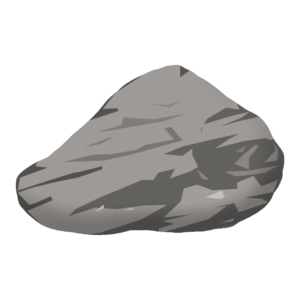
When DART crashed into Dimorphos, it was moving at 6.6 kilometers per second (4 miles per second) relative to the moonlet. Hera is a lot slower, orbiting the center of gravity of the two bodies at just 12 centimeters per second (4.7 inches per second) – about as fast as a rapidly crawling insect.
Mission Briefings


NASA is converting a test Mars rover into a Moon mission. The agency announced it is moving ahead with the development of PROMISE, which will aim to launch in 2028 and explore the lunar south pole for 18 months. PROMISE will be built from the testbed rovers that were being used to troubleshoot problems with the Perseverance and Curiosity missions, in combination with copies of the science instruments on the agency’s VIPER rover, among other hardware. The Planetary Society previously determined that PROMISE was more expensive than implied by its original presentation as a cost-saving effort. Image credit: NASA.

Want to be an astronaut? Now’s your chance. NASA has opened a new round of applications for astronauts. Applications are due Dec. 3, and selections will be announced next year.

Voyager 1 is about to reach one light-day from Earth. On Nov. 18, the NASA spacecraft will become the first human-made object to hit this milestone. We’ll be celebrating with a livestream with leaders of the Voyager mission and science team in our online member community and on YouTube. Renowned space artist Don Davis, who was featured on this week’s episode of Planetary Radio, will also join us to reveal a new work commemorating this tremendous achievement.
From The Planetary Society


Explore the science impact of NASA’s missions with our new dashboard. We’ve analyzed how many peer-reviewed papers resulted from over 140 missions to better understand what kinds of missions return more science faster, and are now publishing our results. Our main finding? The cheapest missions can’t replace the science return of larger ones. Image credit: The Planetary Society.
On its 90th anniversary, we look back at the legacy of the Jet Propulsion Laboratory. In our latest episode of Planetary Radio: Space Policy Edition, host Casey Dreier discusses the nuances of JPL’s story with Peter Westwick, director of the Aerospace History Project and adjunct professor of history at the University of Southern California. Only weeks before, Dreier hosted a discussion of JPL’s history with prominent figures from the lab, including former director Charles Elachi. A recording of their conversation is available here.
We are hiring a Community Organizer. As part of our Space Policy and Advocacy team, this new role will help build a powerful network of advocates to scale up the Society's grassroots movement for the scientific exploration of space. Applicants must be authorized to work in the United States.
What's Up
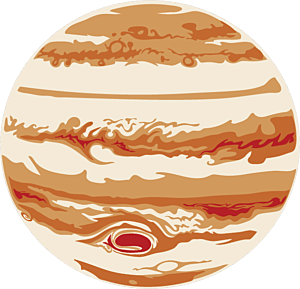
This week, look for yellowish Saturn in the southern evening sky. Later in the night and toward the pre-dawn, find bright Jupiter and reddish Mars very near one another to the east. Venus also appears low in the east shortly before sunrise. Find out what else to look for in November’s night skies.
Join now and save space missions

If you are not one already, become a member TODAY and help shape the future of space science and exploration by fueling mission-critical advocacy efforts. Here’s just one example: The Planetary Society led efforts in Washington to Save NASA Science in 2026. Thanks to the support of our members, we were able to prevent an extinction-level budget cut to planetary exploration this year. This means more missions, more science, and exploration in our Solar System.
Will you join us and protect the future of exploration?
Wow of the Week

In recognition of NASA’s Neil Gehrels Swift Observatory, which fell back through Earth’s atmosphere last week, this mosaic uses thousands of images captured by the spacecraft's Ultraviolet/Optical Telescope to build up an impression of Swift’s overall shape. It was originally made to celebrate that instrument’s one millionth image. Image credit: NASA / Swift and AndreaMosaic.
Send us your artwork!
We love to feature space artwork in the Downlink. If you create any kind of space-related art, we invite you to send it to us by replying to any Downlink email or writing to [email protected]. Please let us know in your email if you’re a Planetary Society member!