

 Explore Worlds
 Find Life
 Defend Earth
Planetary Radio • Oct 28, 2026
How Perseverance drove itself into the record books
On This Episode
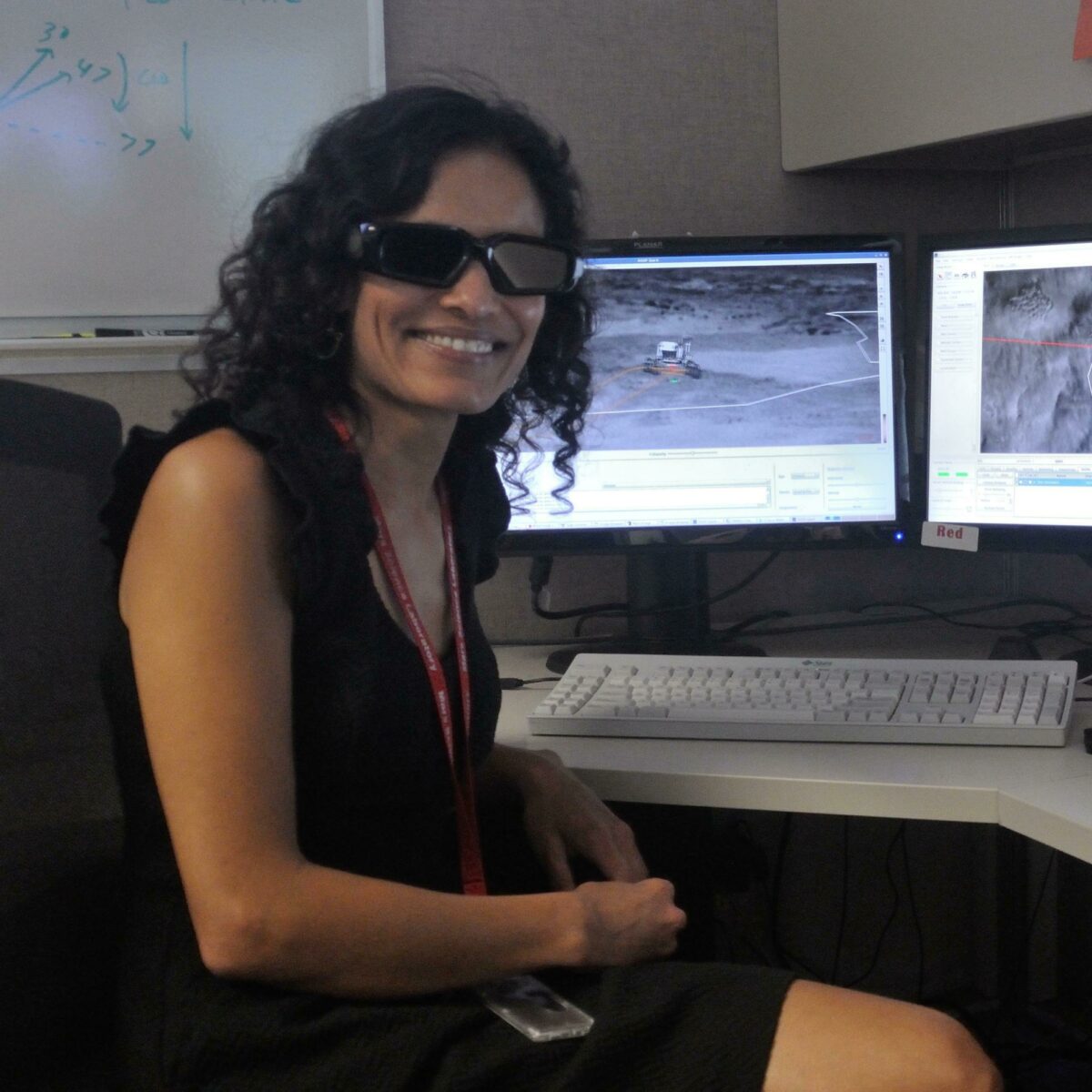
Vandi Verma
Perseverance chief engineer for robotic operations and assistant section manager for mobility and robotic systems at NASA’s Jet Propulsion Laboratory
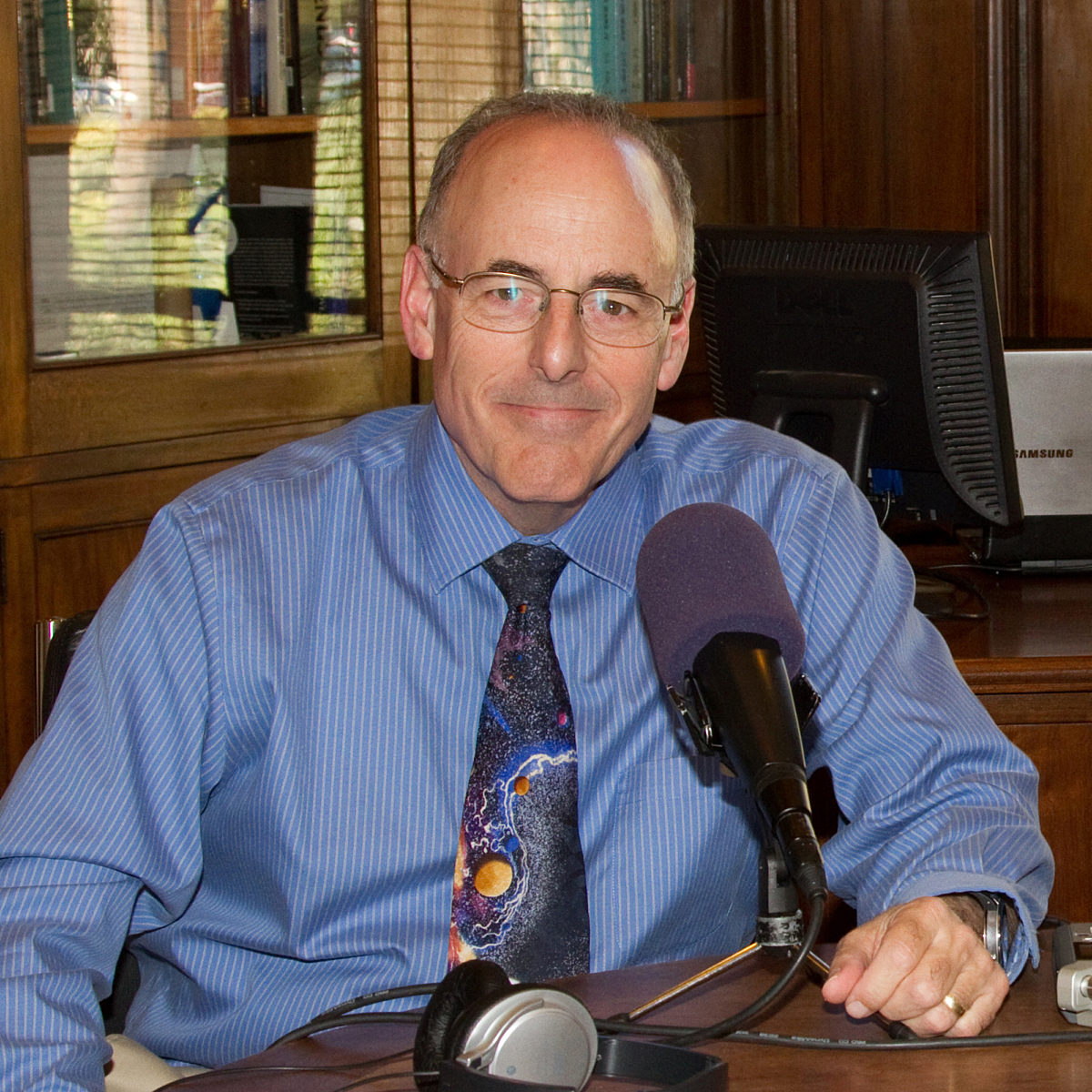
Mat Kaplan
Senior Communications Adviser and former Host of Planetary Radio for The Planetary Society
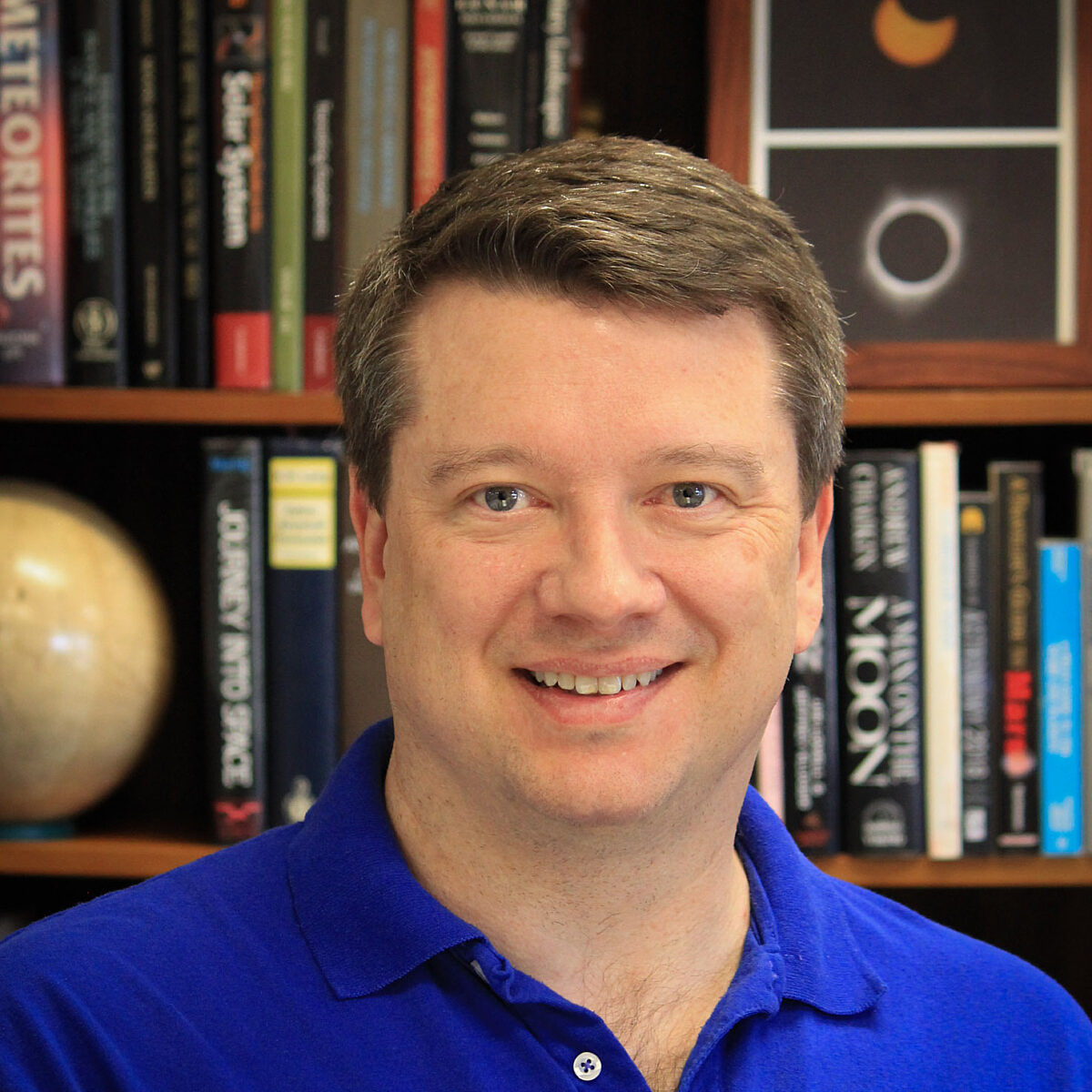
Bruce Betts
Chief Scientist / LightSail Program Manager for The Planetary Society
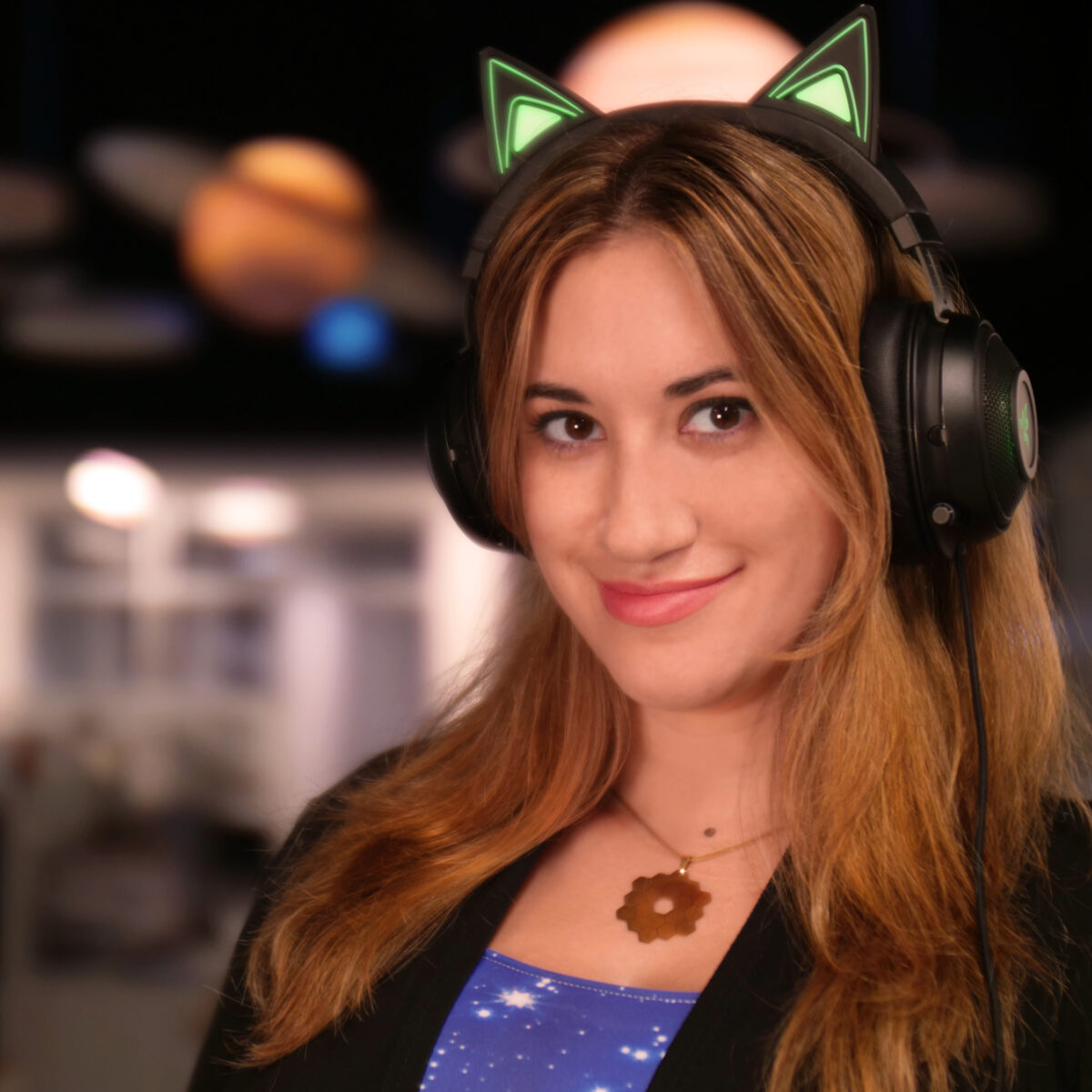
Sarah Al-Ahmed
Planetary Radio Host and Producer for The Planetary Society
NASA’s Perseverance rover has driven farther than any other vehicle on another world. On Oct. 11, 2026, its odometer reached 45.22 kilometers (28.10 miles), passing the record Opportunity spent about 15 years setting. Perseverance did it in about five and a half years. To celebrate, we’re revisiting previous Planetary Radio host Mat Kaplan’s 2021 conversation with Vandi Verma, chief engineer of robotic operations for Perseverance at NASA’s Jet Propulsion Laboratory. She explains AutoNav, the self-driving system that has carried the rover more than 90% of the way, and the careful work of collecting rock samples on Mars. Host Sarah Al-Ahmed catches us up on what’s happened since and marks 25 years of Mars Odyssey. Then stick around for a vintage What’s Up with Mat and Chief Scientist Bruce Betts.


Related Links
- Planetary Radio: How Perseverance drives itself around Mars
- JPL Robotics: Vandi Verma
- NASA’s Perseverance Sets Off-World Record for Total Distance Driven
- Perseverance rover
- Perseverance, NASA's newest Mars rover
- Cost of Perseverance
- Perseverance Rover Landing Videos
- Odyssey Celebrates 25 Years at Mars
- BepiColombo’s arrival at Mercury, latest updates
- BepiColombo, studying how Mercury formed
- Ingenuity, NASA’s Mars Helicopter
- Curiosity, exploring Mars' surface
- NASA's Odyssey, studying Mars' surface
- Mars Reconnaissance Orbiter
- LightSail, a Planetary Society solar sail spacecraft
- Sailing the Light | The Planetary Society
- Buy a Planetary Radio T-Shirt
- The Planetary Society shop
- The Night Sky
- The Downlink
Transcript
Sarah Al-Ahmed: The farthest driving robot on any world beyond earth, this week on Planetary Radio.
I'm Sarah Al-Ahmed of The Planetary Society with more of the human adventure across our Solar System and beyond. NASA's Perseverance Rover has driven farther than any vehicle has ever traveled on the surface of another world. To celebrate, we're revisiting a 2021 conversation between Mat Kaplan, the creator of Planetary Radio and senior communications advisor at The Planetary Society, and Vandi Verma, a principal engineer and deputy section manager for mobility and robotics at NASA's Jet Propulsion Laboratory. They talk about AutoNav, the self-driving system that helped make this record possible, and the amazing robotics behind the Rover sample collection. We'll also wish a happy 25th anniversary to NASA's Mars Odyssey Orbiter. And then we'll take a trip back in time to 2021 with Bruce Betts, our chief scientist, and Mat Kaplan for What's Up.
If you love Planetary Radio and want to stay informed about the latest space discoveries, make sure you hit that subscribe button on your favorite podcasting platform. By subscribing, you'll never miss an episode filled with new and awe-inspiring ways to know the Cosmos and our place within it.
Earlier this month, NASA's Perseverance Rover made history. On October 11th, 2026, on the 2006th sol or Martian Day of its mission, its odometer reached 45.22 kilometers or 28.10 miles. That's farther than any vehicle has ever driven on the surface of another world. It just edged past the record of 45.16 kilometers or 28.06 miles that was set by the Opportunity Rover, which explored Mars from 2004 to 2018. Opportunity needed 15 years to cover that distance, but Perseverance did it in just five and a half. To put that in perspective, Perseverance's original mission only called for about 20 kilometers or 12.4 miles of driving. Along the way, it's rolled past the lunar records that were set by the Apollo 17 astronauts and by the Soviet Union's Lunokhod 2 rover.
A huge part of the credit goes to AutoNav, which is the rover's self-driving system. Perseverance has driven more than 90% of its total distance with AutoNav. For comparison, Spirit and Opportunity used their version of AutoNav for only about 5% of their driving. On the best of its days, Perseverance can now cover 412 meters or 1,351 feet in a single sol. The record came as Perseverance headed toward an area called Idubi in a region off the western rim of Jezero Crater nicknamed Lac de Charmes. The rocks there may be some of the oldest terrain ever explored in our Solar System, and the team hopes Idubi holds traces of ancient hydrothermal systems. NASA also approved the rover's first extended mission, which began this month and runs through the end of 2028.
To celebrate, we're revisiting a conversation from August 2021, just a few months after Perseverance landed. A few things to keep in mind as you listen. This interview was recorded during the COVID-19 pandemic, so you're going to hear about the team working remotely and about JPL's open house being on hold. A lot has also changed for the plan to bring Perseverance's samples back to earth. You'll hear Vandi describe how a future mission would collect these samples and launch them from Mars back to Earth. That mission, Mars Sample Return, has since been canceled, at least for now. For the moment, there's no mission scheduled to bring the samples home and they remain sealed in their tubes on Mars.
This conversation is between Mat Kaplan, who created and hosted Planetary Radio for 20 years before I became show host and Dr. Vandi Verma of NASA's Jet Propulsion Laboratory. When this interview was recorded, Vandi was the chief engineer for robotic operations on Perseverance and the assistant section manager for JPL's mobility and robotic section. Today, she's a JPL principal engineer and the deputy section manager for the same section, and she still serves as chief engineer for robotic operations for Perseverance.
Vandi has been part of the robotic operations on Mars since 2008, working with Spirit, Opportunity, Curiosity, Perseverance, and Ingenuity. She and Mat talked about AutoNav right as the rover was starting to stretch its wheels, and it's such a joy to hear the team's hopes for this machine, knowing how far it's actually come since then.
Here's Mat Kaplan and Vandi Verma.
Mat Kaplan: Dr. Vandi Verma, welcome to Planetary Radio, your first appearance on Planetary Radio. I also want to congratulate you on beginning Perseverance's trek across Jezero Crater. We've all been waiting for this.
Vandi Verma: Thank you for having me. And yes, we are very excited about finally being at Jezero Crater and exploring that location.
Mat Kaplan: I am only sorry that we're not talking to each other across a table or a desk at JPL because frankly, I really wanted to try those 3D glasses that you and the other Rover drivers get to use. Have you been doing a lot of your work from home like so many of us?
Vandi Verma: Like a lot of people, we've had to make adjustments because of the pandemic. Close to landing, our entire operations facility was redone, but it meant that a lot fewer people can be on lab. So a large part of our team is remote and we do a lot of our strategic work remotely, but to actually drive the rovers and operate the robotic arm and sampling system, we are on lab for that. So I go into JPL regularly to drive the rovers. And I wanted to add that you'll have to come back when we can have guests and we'll be sure to get to you that experience with the 3D goggles.
Mat Kaplan: Thank you. You will hear from me. I cannot wait because I have read how you sometimes when you're wearing the goggles, you just like to stare at Mars.
Vandi Verma: Putting those goggles on and the cameras we have on this rover are so spectacular that it's a really immersive experience. You feel like you're right there because you can take such a panorama and you can pan in different directions. It's sort of like you're turning your head and you can control where you want to look. It really makes the terrain come alive. Jezero is an incredible location and it's so rich in the variation and the features and the geology that it really is neat to see in 3D.
Mat Kaplan: We have talked to other rover drivers over the years, I think at least going back to Spirit and Opportunity, but I think it's worth repeating, if not for this audience, well, there must be one or two people out there who are still thinking that maybe you rover drivers have a joystick or a steering wheel. Could you give us the little speech that I'm sure you've given a hundred times that explains how it doesn't exactly work that way?
Vandi Verma: Yeah. So one of the reasons we can't drive the rovers in real time is just the relative distance between Earth and Mars. The distance is such that the fastest, just for one way light time, for a signal to get from Earth to Mars can take four minutes, but because Earth and Mars are also rotating around the sun and the distance varies, it could take up to 24 minutes. Just for us to send a signal one way, that really isn't sufficient for us to be able to hit the brakes and stop the rover. It also would mean that we're sending a command and then we're waiting this long to send the next and we'd make really slow progress.
So what we do is we plan the entire sol's plan and a sol is a Martian day and we have to think through all of the possibilities that the rover could encounter as it's doing this drive. It might slip, the wheels might actually slip in the sand such that it's making less forward progress and it's digging deeper. So the odometry may show us that we've covered 10 meters, but we may only have gone nine. So you have to think, if I'm trying to turn around a rock, what does that mean? So when we drive the rovers, we send the entire sol's plan to the rovers and then it takes the images and sends the data back to us. We use those to create this 3D terrain environment in which we plan the subsequent drive. And there are nuances to this, which also mean why we don't drive in real time. We send the signals from earth to Mars direct to the rovers, but they go through the deep space network and there are antennas all around the world, but we also have a lot of deep spacecraft and we have to share the time with them.
So there is the coordination with the deep space network. On top of that, the rovers take so much data that we transmit it to orbiters around Mars and then transmit the data back to earth. So there is this coordination that has to happen between when it's daylight on Mars, because that's how we take the images and drive the rovers at that time when the orbiters are flying over the rover and when we have the deep space network time and all of this results in us having a complex schedule in which we can actually drive the rovers.
Mat Kaplan: So all of this also explains why it would be a high priority to develop a rover that is smart enough to do some of this driving on its own. And of course, that's one of the things we were hoping to talk to you about. AutoNav, you must be thrilled to see Perseverance beginning to find its own way across Mars with the guidance that you folks provide on a sol by sol basis.
Vandi Verma: Yes, it's been very exciting to be able to drive distances beyond what we can see in the last images the Rover sent to us. And that's what we get with AutoNav. Because there's so much variability in the terrain, the cameras beyond a certain distance can see the horizon and the orbital images don't have enough accuracy for us to be able to drive the Rovers and avoid the hazards. So what autonomous navigation allows us to do is the rover itself is analyze the terrain, detect the hazards and find its path around it. But it's actually a lot of fun for Rover drivers, even with AutoNav, because all autonomous technology, especially when you're putting it on processes that are radiation hardened for space and are computationally limited, there's certain things they can't do very well, such as in the case of Perseverance, detect sand. And so rover drivers still have to plan the overall path and guide AutoNav so that we tailor the drive to maximize the success for AutoNav.
Mat Kaplan: We'll put up a link on this week's show page at planetary.org/radio to a lot of great resources, including a video that actually documents this first AutoNav roll across the red planet in kind of an S-shaped curve. I mean, did it function the way? Is it functioning the way you all hoped?
Vandi Verma: Yes. AutoNav has been doing really well. One of the things we really wanted to do was speed it up for Perseverance. And so we have a dedicated processor, which is allowing us to run AutoNav a lot faster than we could on any previous mission. The drive that I think you're talking about, which was the first AutoNav checkout drive, we had identified a set of obstacles, rocks that we wanted it to go around and actually drove it around those and it detected the rocks and did exactly what we had intended it to do. So that's been great. As you initially try out technology, you really are seeing it in the environment it was designed for and we take these steps so that we can make sure that some of the assumptions we had made are still valid. Earth, we do everything we can on earth to test it, but Mars is Mars.
Mat Kaplan: And Mars is hard. Didn't Curiosity have an earlier version of AutoNav that ended up not being used much?
Vandi Verma: So Curiosity also had AutoNav, in fact, as did Spirit and Opportunity. So there's a couple of differences. The first being that we didn't have a dedicated processor for us to do the image processing. So it was a lot slower than it is on Perseverance. We could drive... If we did both visual odometry, which is how we drive the Rover such that we can detect slip and we do AutoNav, we could drive about 20 to 30 meters an hour, with Perseverance. We expect to be able to drive up to... In a given solve, we expect to drive about 200 to 300 meters with AutoNav in a single saw.
Mat Kaplan: Wow.
Vandi Verma: We are now just going and doing shorter drives, but we expect to reach that milestone. And so that's made a huge difference. Another thing is it's driven by science. On Curiosity, the science team wanted to frequently stop and do science investigation. And if you are driving shorter distances, those are distances you can already see in the imaging you have. And if your AutoNav is so much slower than your directed driving, then you might choose to just do director driving. And then the last part of it is Curiosity had some wheel wear. And so AutoNav, when you're letting the vehicle decide, but the vehicle didn't have a model of wheel wear, it's just looking for hazards and what was these small vendor fact rocks, which actually weren't large hazards, could still damage the wheel. So Rover drivers would more carefully work their way around the terrain. That has been mitigated by subsequent technology we put on the rover, but those are some of the factors as to why AutoNav on Perseverance is going to be used a lot more than on previous missions.
Mat Kaplan: Quite an improvement in velocity, getting across Mars. Still, you compare that to a human walking across the planet, it would still seem pretty slow, but for a robot, not bad at all. I think we've all seen those pictures of those beefed up wheels that Perseverance has to avoid those pock marks the Curiosity was getting. There's one other factor that I read about, and there's a cute phrase to describe it, which maybe it has to do with having that dedicated processor for handling AutoNav. It's thinking while driving, what a concept, people should try that on the freeway.
Vandi Verma: Yes. There is in fact this additional capability. On previous missions, what we would do is we would take an image, which is the image in which AutoNav is going to analyze the hazards, and we would have the robo stop, think about, as we call it, where the hazards are and then turn the wheels. The reason is because it allows us to do this in steps where you know where you're at, you're analyzing the hazard and you can proceed. With thinking while driving, it's doing that autonomous processing while the wheels are turning. So you have to take factor that into account in terms of the model you have of the expected distance it's going to cover and do the drive. But that results in a significant speed-up as well because you're not stopping to do the terrain hazard analysis.
Mat Kaplan: I also read about something called ENav. I wonder if you can contrast that with AutoNav. Is it just a component of AutoNav or what does that mean?
Vandi Verma: Right. It is a component of AutoNav, Enhanced Nav, and AutoNav consists of the whole infrastructure of the modules that take the images, process the image, build the train model, all the messages that have to be passed between different flights off air modules to actually turn the wheels. AutoNav is used for the encompassing term and ENav is a library that is used to do the hazard analysis and the path evaluation.
Mat Kaplan: The other news that came out actually since we scheduled this interview is that we are getting closer now to Perseverance beginning to collect its first sample, which of course is what everybody has been excited about. We often on this show call sample collection the holy grail of Mars exploration or at least robotic Mars exploration. And so now I guess we're getting close, but I don't think a site has been selected yet, has it?
Vandi Verma: So the science team has selected a location that we expect we will collect the first sample. So we are very excited about this. We are actually today doing a long drive to get close enough to that location such that we will need to just do a precision bump to get to precisely the location in which we want to position the robotic arm in the orientation in which we can because we are limited because we have a five degree of freedom arm into where we can reach. So we are driving to close enough such that we can do that precision drive. So it's about to start and it's a very, very exciting part of the mission. It is the prime reason we're there, is to cache these samples for a subsequent return to bring back to earth.
Mat Kaplan: The process of sample collection is so much more than just rolling up, let's roll over there and drop the drill down and pick up a sample. I know this is not specifically speaking your area, although you support the robotics, the mechanics of all this. Can you talk about the complexities of this and maybe about the sampling and caching system itself, which is an absolute mechanical, or maybe I should say robotic marvel.
Vandi Verma: We always say on this mission, we actually have two robotic systems, one is on the outside, the one you see, and there's an entirely second system inside the rover for sample and caching. It really is quite incredible. There are so many steps involved in the sampling process. It's a finite resource. We have a finite number of tubes, and so we think very carefully about what we're going to collect in those tubes for subsequent return to earth. And the science team worries a lot about diversity of sample and the value of that specific sample to bring back for subsequent return to earth.
To do that, there are multiple steps which combine the science analysis, but also there are engineering constraints because you do have this robot deploying a 2.1 meter arm with a 45 kilogram torrent at the end of it on freeform features on Mars that we are looking through sensors where there are inaccuracies, and yet you have to make contact with the surface and both of these constraints come together to do a series of steps.
Now, in addition, for the first sample we collect on a mission, as was the case with Curiosity, there are additional steps because this is the very first time you are exercising the hardware on Mars in that particular way. And subsequently, we eliminate some of those steps as we have done the checkout and determine that we can skip those or we've got enough information. So for this very first sampling that we're going to do at this location, and we are currently calling it the far pavers, where we get to and the science team will have a name and the names on this mission have been incredible.
Mat Kaplan: Very [inaudible 00:20:23].
Vandi Verma: Very, very [inaudible 00:20:23], and meaningful. And so that's been great. And that's the case with all of the missions, right? Naming of things is taken very seriously and there is a number of scientists who decide why something should be named. I think that would be a podcast in itself.
Mat Kaplan: That's a good idea. I'm going to make a note of that. We talk a lot about the names. We've never dedicated a segment to it, so I like that.
Vandi Verma: So what we do, once we have determined that we've identified a location with high probability, we'll do a precision drive. In fact, we do a precision drive for any location in which we want to do careful robotic arm analysis, which I'm differentiating from the case where we may just have ended up in a drive location and the scientists look at the image and say, "Wow, this is neat," and opportunistically deploy the robotic arm. But when we are going for a dedicated reason, we do a precision drive because we are evaluating in that the robotic arm moves that we can do to get to that target because we have a constrained arm, we have a five degree of freedom robotic arm, we can't reach arbitrary positions in arbitrary orientations.
In addition, if you move the [inaudible 00:21:38] in certain ways, it might collide with adjacent terrain features or rocks, and then we have to think of all the things we're going to want to do while we're there and do them all without repositioning the rover. And so you're not just thinking about that one first thing you're going to do, you're thinking about the entire sampling campaign that is involved just in the first step of this, which is the precision drive.
And once we've done that drive, we have to evaluate what of the targets, what is the precise location in which we're going to select a target? We do this iteratively where we might do what we call remote science. The first is just taking images. So from the images, you can tell so much. Then we use instruments such as the SuperCam, which has LIBS laser on it and can study from a distance what the composition of those potential targets is.
Mat Kaplan: So SuperCam will zap it with its laser and you can get an idea of the composition of that side as well?
Vandi Verma: That's right. And what's so neat about SuperCam, you're shooting the laser so that you can study the plasma, but on Perseverance, we even have a SuperCam microphone.
Mat Kaplan: Oh yes.
Vandi Verma: So by hearing the sound of that pop, you can tell something about the hardness and other characteristics of the rock. Based on these analysis, then the next expensive thing, when you talk about expensive, for us, it's in terms of power, energy and time spent, the rover is spending doing something. Those are the resources we try and manage because the rover is capable of so much stuff. We really have to think about what specific thing are we going to have it do from this huge selection of possibilities. The next thing we do in that is after those features have been looked at, the science team might decide, here are the few on which we are going to do additional analysis by what we call contact science. Some of this is close proximity, essentially using instruments mounted on the robotic arm to study very closely the surface, and those are SHERLOC and PIXL.
We position these instruments very close to the surface within a few centimeters of the surface and get additional information now really in context. And once we have additional information from WATSON and SHERLOC, then we can further refine precisely which target has the characteristics that the science team wants. The steps for sampling and acquisition here are we actually abrade the surface. We have the ability on the robotic arm on the drill to do a bit exchange so we can switch out which bit it's using for what purpose. So we'll abrade the surface and that process creates a more even surface, which allows us to take scientific measurements with the instruments that are more precise.
A lot of the instruments we send to Mars don't like dust. Which really doesn't go with Mars very well-
Mat Kaplan: No.
Vandi Verma: ... because Mars is such a dusty plate. We have on this mission a really, really great tool to take care of that, which we call the Gas DRT, the Gas Dust Removal Tool.
In previous missions, Curiosity and the Spirit and Opportunity rovers, we've had brushes, which we have these brushes that we can put in contact with the surface and they brush away the dust. Here we have nitrogen gas, which we can puff out and clear the surface. The advantage is it really doesn't care about the roughness of the surface and it can be used in a lot of different contexts. We're then going to do the bit exchange and then collect a sample core.
There are so many steps when we do sampling and coring, we also have to analyze the hardware to make sure that after a particular activity, the hardware is as expected, especially for the very first time we do this. So interleave with some of this is imaging of the hardware itself. So we may operate and we take images just to make sure that the engineering hardware is operating as expected.
And then once we have this very first core after a lot of excitement, because it really is a momentous occasion because people hear about the rover once it's landed, but for those of us who worked on it's many, many years leading up to this day. And so it'll be a very exciting day when we collect that first core. And that really isn't even the end of the story because as I was mentioning, we have this entire second robotic system on this rover, which we call the adaptive caching assembly. The external robotic arm with the core docks with the bit carousel, which if you're looking at images of the rover, you see this big circular piece of hardware on the front of the rover, that's the bit carousel. It docks with that. Inside the rover, we have an entire second robotic arm. That robotic arm then takes that tube and there are various steps in it where it is characterizing that by taking images, weighing it, measuring so that we know exactly what we have collected and are documenting it for subsequent return to earth so that we can characterize the sample.
Mat Kaplan: This struck me. It reminded me of the process the Apollo astronauts went through. They didn't just pick up rocks and stuff them in a bag. They had to take pictures of the location. They had to make notes. They had to do the same kind of documentation that you're going to be doing, you and the team will be doing remotely on Mars using this wonderful robotic equipment.
Vandi Verma: That's actually a really good analogy. Not just the sample by itself has value, but the context in which it was taken. So all of this data from all of the various instruments is labeled all together in order for us to know what we're documenting essentially the context of that sample. And also we have to seal the tubes because it's going to be many years before we actually bring them back to earth and we're going to cache them in multiple different ways, but drop them to the surface where the subsequent Fetch Rover is going to collect them and we're going to have a launch from Mars where they're going to launch from Mars, rendezvous in orbit, and then be returned to earth. So they're going to have quite an incredible journey, and so we have to make sure that the sample we collect survives that and is pristine.
Mat Kaplan: Exactly as I was saying, a far more complex process than somebody might think just hearing, "Oh, we're going to be picking up samples on Mars."
Sarah Al-Ahmed: We'll be right back with the rest of Mat's interview with Vandi Verma after the short break.
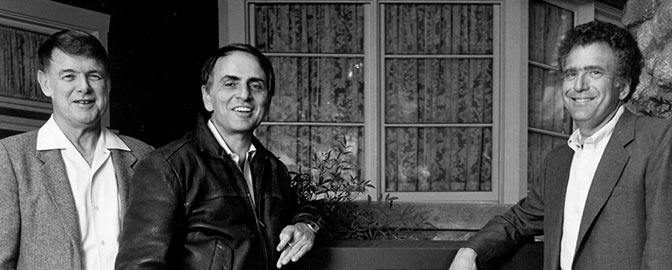
Rae Paoletta: Hi, I'm Ray Paoletta, program operations director at The Planetary Society. I also produce this podcast. You don't have to work in the space industry to help explore the Universe. Let me explain. Back in 1980, the astronomer Carl Sagan saw a problem. All over the world, people were falling in love with space, but here in the United States, NASA's planetary missions were getting cut because politicians didn't believe the public cared. So Carl, along with Bruce Murray and Lou Friedman, started The Planetary Society for one simple reason, to prove that people do care and to give anyone anywhere a real say in how we explore the Cosmos.
46 years later, that mission hasn't changed, and no matter where you live in the world, you can be a part of it. Memberships start at just $4 a month. That helps us champion the search for life beyond earth, the defense of our planet from asteroids, and the exploration of other worlds in our Solar System and beyond.
It also powers our fight to protect NASA's science missions from being cut, and you get a lot back, a T-shirt when you join, our quarterly magazine, and a place in our member Community app with a book club, conversations with authors and scientists, courses, and so much more. This month, we're hoping to welcome 200 new members. Will you be one of them? Join at planetary.org/join and help us explore the Cosmos together.
Mat Kaplan: I'm also thinking of the software that you and others spend so much time writing, the algorithms that you have to create to control these processes. Is it all pretty much done from scratch, like a lot of the hardware is custom-built for this? Or are you able to pick and choose bits of other software that can be used for this? Or is it just starting from zero, or maybe I should say zeros and ones?
Vandi Verma: You're talking about something that is very near and dear to my heart. I have written different parts of the software and in this specific series of events that'll unfold, I worked on the rover collision model, which as we are moving the robotic arm, allows the rover to analyze trajectory such that it doesn't collide with its own body. And also the SuperCam laser is not shot at the rover's body. And we were talking about this broad strokes view of all the sequence of engineering and science events happening. But just for a sol of robotic arm activity, such as when we took the selfie, we did hundreds and hundreds of collision checks. So there is hardware where we modeled the rover up to 500 geometric shapes, checking collisions with other shapes. So for just a small part of these moves, there is all this other stuff in software happening in the background.
There'll be so many people who worked on different aspects who all see their work finally doing what it had been designed to do. And a lot of it may not even be visible in the forefront. To get back to the question you were asking, we have had rovers on Mars before. And so some of the infrastructure and lessons we've learned in ways we do carry from a mission to the other. But everything for Perseverance is custom-built for Perseverance. These missions are so unique and our resources in terms of the computation we have is so limited that we really do try and optimize it. When I talk to people who are software programmers, I joke that I worked also on the terrain model for the workspace. We literally think about what we call loading in a bit of information, the maximum information in the way we represent things, just because we are limited in memory and we are limited in computation.
So there's really creative ways in which we program space rovers that is different from other high risk applications that you might have on earth, such as self-driving cars and others, because the computers have to be radiation hardened. There's a lot of radiation on Mars and there are only computers that have gone through the radiation hardening that are available to us, but they can be very limited in their computing power. And so the software we design is sort of custom built in order to be able to do these complex activities while still working with those operating systems.
Mat Kaplan: I am not a coder, but I know that we have coders in the audience and they are just going crazy right now listening to this and imagining what is happening and that this is all part of your job. Another piece of your job, turning away from sample collection, we have recently welcomed back Mimi Aung, the project manager for Ingenuity, the Mars helicopter. I read that you also had a part in contributing to the wonderful success of that little flying machine that was a passenger for so much of its life on Perseverance.
Vandi Verma: It's been really exciting to be in some small way associated with the Mars helicopter Ingenuity because that really is... It captures some of what we try to do is push the envelope of what we can do with the technology on Mars. We have a prime mission we are trying to accomplish. The risks we can take in some aspects of the mission, we evaluate them differently because there is a higher consequence if it didn't go according to exactly the intent. But in other areas, we really want to take some greater risk in order to push the envelope for what we can do in the future. And the Mars helicopter was that. And for the roboticist in me, that was just such an exciting moment to see that we could actually fly a robotic vehicle on Mars. It was very exciting to be part of that. And my part was more in the interface between the helicopter and the rover.
We worked really closely. The robotic operations, which is what I'm part of, consists of driving the rover, operating the robotic arm, the sampling system, and it includes the interface to the Ingenuity helicopter, which has an operations team that works together with the robotic operations team, which we call the helicopter integration engineers to coordinate how we would send the commands and where the rover is with respect to the helicopter. The helicopter talks to earth via the rover. It talks to the rover and then we transmit the data.
Some of the parts in the early mission were just so interesting. The helicopter, as you mentioned, was actually strapped onto the rover sideways. There were a whole series of steps that we had to take to have it be upright and drop it to the surface. We didn't really know how challenging it would be to fly on Mars. So there was some constraints of selecting that airfield and it was both the helicopter and the rover teams. In fact, since the day we landed, we met almost daily for a while to analyze the terrain to pick the airfield and the flight zone. Once we picked that, we had to actually get the rover to that location. But there was a series of other things the rover was doing in that time, checking out whether the wheels could turn and deploying the robotic arm and doing other checkouts. It was interleaved with doing the flight zone selection.
And then to me, one of the really interesting parts really early on was the helicopter while it was attached to the rover was powered by the rover. But as soon as we would drop it to the surface, it needed its solar panel to be able to get charged. Otherwise, Ingenuity wasn't going to survive. We had 25 hours. And so that drive was really critical, the drive where we drive off of the helicopter. Because if you just sat there after dropping it off, there was risk to the helicopter. So that was a lot of fun from the rover driving perspective.
When you're trying to maximize the success of a drive, sometimes you actually remove some of what we call the fault protection, which are ways in which it tries to keep itself safe because some of those can be cases where it though something was an issue and it isn't. We really shaved off a lot of that margin to say we really don't want to end the drive unless it's a real issue with a risk to the rover. And the rover really was the prime mission, so we couldn't risk the rover. But at the same time, we didn't want to be so conservative. So that drive, we removed a lot of the conservatism to just drive so that we could maximize the success. And seeing that drive work and that the helicopter was alive was really exciting.
And then of course we had to drive off to this location from which we would observe the first flight. And so it's been really interesting. And I work with the helicopter integration engineering team, which works with the helicopter team as we're going now into the extended mission.
Mat Kaplan: And now to see that helicopter doing real work, doing its own useful essentially research or observations of Mars and assisting the rover, it does seem to be a realization of a dream. I also think of your use of the word fun that you made a few moments ago. And your other job at JPL as the assistant section manager for mobility and robotics at the Jet Propulsion Lab, where you work with, you help to manage something like 150 roboticists. I'm sure it's not all fun, but it sure sounds like a very cool professional community to be part of.
Vandi Verma: It actually is quite a lot of fun.
Mat Kaplan: Oh good.
Vandi Verma: Because in that role, so we have a JPL, most people do multiple things and it's a very unique place in that way. And in that role, we're looking to the future of what are the technologies that will enable the missions of the future? So you get really brilliant and creative people thinking about technologies that we will need for possible missions. Now you also work with the scientists very closely because it's guided by what the science interests are on other planetary bodies and otherwise in the Solar System and beyond. So that's a really interesting part of it. And there's a connection between these because when you see, when we're driving on the surface, we're already doing this actually, which is really interesting. As we are already still doing the prime mission and collecting the sample, we're already thinking ahead to extended missions and what we could do in the future.
You start to see what is it that we could improve and do better? And that's kind of the role of the robotics technology development.
Mat Kaplan: Speaking of the future, I note that you also worked, contributed to Europa Clipper and to the effort to come up with something to land on that moon of Jupiter. And the need for autonomous activity by those spacecraft, I imagine is obvious to everybody. Do you see a bright future for our robots around the Solar System? I mean, are they just going to get smarter and smarter and more capable?
Vandi Verma: That's so neat that you looked all this information up.
Mat Kaplan: It's part of the job.
Vandi Verma: I'm very impressed. But yes, I think that it becomes even more important as we go further out in the Solar System because the communication delay just gets longer. If we want to have missions that go further out, they need to be more and more autonomous. And there are other constraints such as the example you gave of the Orbilander mission that we had been looking at. And these are all hypothetical missions other than Clipper. Clipper is a real mission.
Mat Kaplan: Thank goodness.
Vandi Verma: Right. But I think in some of these cases when we're looking at possibilities, which we have to sort of take a concept and study it carefully in order to make it a potential possibility for scientists to be able to evaluate, there are certain missions where they're constrained by the lifetime because you're going to locations that are just so harsh, either thermally or radiation wise, that the robot, whether it's a land or a rover or other mobility platform, if you're looking at snake robots and various other aerial platforms, will have a lifetime on the order of weeks. And so now you really need to be autonomous because you can't wait for the signal from earth to tell you what to do next because you're wasting precious time if you're waiting for that. And so those missions are going to be more and more autonomous. I'm really excited about this because it really enables science, allows us to investigate these places and study them.
I just think the future is going to be very interesting.
Mat Kaplan: Let me go in a slightly different direction as we wrap up here. You know, we know, I know, kids love robots. Do you see robots, robotics as a gateway for young people into STEM careers? I mean, you've been fascinated by robotics and programming since you were pretty small.
Vandi Verma: Yes. I think robotics is a fantastic way to get kids excited about just the process of science in general, because you can do something and then you have to go and potentially study a particular area and then apply it. You learn through that process of applying the theory you learn and it can start in really small ways. And JPL before, right now we are still in a pandemic transition, but we have an open house and we get thousands of people who come through there. And I always try and volunteer at these because the kids who come through there, it's just so interesting to see how much they already know about these missions. Sometimes they think of these robots as their friend and they'll come and give you these... They've though about the problems you've encountered and they're really creative and interesting. And I think it's a great way to get them excited about it, to feel as part of following the story, they're problem solving along with this. I try and do as much as I can to try and connect with students. I always say robots and dinosaurs, they're a really great way to get kids excited about science.
Mat Kaplan: So boys and girls, keep it up and you just might end up building robots that will help us explore the Solar System and maybe someday even beyond.
Vandi Verma: That statement is actually really, really almost so literally true for Perseverance because we're collecting these samples and it's going to be the 2030s. By the time these samples are brought back to earth, some of the young people who are still in school may be the ones who are sort of analyzing and studying these samples. So I think they really are, that generation really is part of this mission.
Mat Kaplan: Vandi, it has been absolutely delightful talking with you. This is a great place for us to end, but we won't really end because I look forward to celebrating with you and the rest of the team when that first sample is safely in its little tube packed away, at least temporarily inside the Perseverance Rover and then to be dropped off to be picked up later, returned to Earth, and who knows, maybe we will make that discovery of whether we are alone in the Solar System and the Universe. Thank you, Vandi, for all of this work that you and the team do and for joining us today.
Vandi Verma: Thank you. I really appreciate your covering the work we do.
Sarah Al-Ahmed: What a fun trip back in time. A lot has happened since Mat and Vandi spoke in 2001, and I really cannot believe it's been five years. I remember listening to this episode when it came out back when I was just a fan of Planetary Radio. You heard the team hoping AutoNav could someday drive 200 to 300 meters in a sol. And as you heard at the top of the show, Perseverance has definitely beaten that. And when this conversation was recorded, Perseverance had just made its first attempt at collecting a sample. Today, it's collected 29 rock and regolith samples from the crater floor, an ancient river delta, and the crater rim.
One of those samples has become especially famous. It's called Sapphire Canyon, and it came from an arrowhead-shaped vein-filled rock named Cheyava Falls. Perseverance found that rock in July 2024 in the Bright Angel Formation, which is along the Neretva Vallis River Valley in Jezero Crater on Mars. It holds what the team calls a potential bio signature, a possible sign of ancient life, but it's going to take a lot of study to confirm or rule out.
You also heard Vandi talk about Ingenuity, the Mars helicopter. Ingenuity went on to make 72 flights before it ended its mission in January 2024. But really, it was amazing. If you haven't seen any of the videos of it flying around Mars, highly recommend. And Perseverance isn't the only Mars explorer celebrating a milestone this month. On this most recent Saturday, October 24th, NASA's 2001 Mars Odyssey Orbiter marked 25 years since its arrival at the red planet. No mission has been active at Mars longer. Odyssey was the first to give us global maps of what the Martian surface was made of. That includes how much water is hiding in that top meter or three feet of ground. Its THEMIS camera has captured more than one million images that scientists use to study Martian geology and to pick landing sites. And Odyssey has been a key part of the Mars Relay Network, sending data from the NASA rovers and the landers back to Earth. Happy anniversary Odyssey. You continue to amaze us.
And now it's time for What's Up with Dr. Bruce Betts, The Planetary Society's chief scientist. Back in 2021, What's Up had a slightly different format. Each week, Bruce and Mat talked about what we would look forward to in the night sky. Then they shared a moment from this week in space history, a random space fact, and a space trivia contest. We've trimmed out the night sky bit this time since those planets and that year's Perseid Meteor Shower are long gone. The rest is just as it aired in August 2021, which means the contest and the deadline have passed as well. So please don't send in your answers, but you are more than welcome to join us for the weekly trivia contest in our member community app.
Since we're taking a trip down memory lane, there are a few quick updates on the spacecraft that you're about to hear about. Bruce mentions the Mars Reconnaissance Orbiter, which launched in 2005. More than 20 years later, it's still working at Mars. Bruce also mentions two spacecraft that flew past Venus just 33 hours apart, Solar Orbiter and BepiColombo. Since then, Solar Orbiter has captured the first ever views of the sun's poles and is due for another Venus Gravity Assist in December. BepiColombo, as you may have heard, hit some thruster trouble that pushed its arrival at Mercury back, but it's now on final approach. It's set to enter orbit around Mercury in November and its science operations begin in April 2027.
And at the end of this What's Up, you'll hear Mat talk about the premiere of sailing the light. That's our documentary about LightSail 2, The Planetary Society's Solar Sailing Spacecraft. LightSail 2 has since de-orbited, but you can still watch that film on The Planetary Society's YouTube channel. Here are Mat and Bruce for What's Up?
Mat Kaplan: Welcome.
Bruce Betts: Hi, Mat.
Mat Kaplan: As you know, because we just discussed it, interesting predicament with the question that will be answered in a few moments today from the question, the quiz that you posed a couple of weeks ago that I know you are prepared to deal with.
Bruce Betts: I am prepared. Thanks to you. We move on to this week in space history. 2005, Mars Reconnaissance Orbiter was launched with its tremendous science instruments to study Mars and still working.
Mat Kaplan: It's quite a performer, has certainly done a lot of great work for us.
Bruce Betts: We move on to random space fact.
Mat Kaplan: For some reason, it makes me feel like I ought head for the drag strip.
Bruce Betts: Hey Mat, you and I, you originally pointed this out to me a while back, but now it's actually happened to European Space Agency spacecraft with totally different missions, totally unrelated to Venus, flew past Venus during the last week, only 33 hours apart. The Solar Orbiter spacecraft, which is of course studying the sun primarily, and the BepiColombo spacecraft that's headed to Mercury, both used Venus for a gravity assist to help them head farther into the inner Solar System.
Mat Kaplan: Quite a random space fact. Congratulations to the teams for both of those missions. Best of success as you head toward your final destinations.
Bruce Betts: I'll put this out to listeners. I could not find an example of two flybys of another planet so closely timed. I can't imagine there would've been, but if anyone knows there is, let us know.
Mat Kaplan: Bet you are right about that. It seems like something we would've heard about. Are we ready for the contest?
Bruce Betts: Oh, we are so ready for the contest. I asked after Mir and Skylab, what was the most massive artificial object to reenter the Earth's atmosphere? And I meant to say uncontrolled end of mission kind of didn't think to say that. So how'd we do, Mat? Had people tell us?
Mat Kaplan: Well, like I said, I've already given Bruce a heads-up about this. We had more people come up with an alternative answer, an alternative to what Bruce had in mind than probably we ever have before. I'd say half or more of people who entered this one came up with a variety of space shuttles, all of them basically, although some people even differentiated among the different orbiters because some were heavier than others, but that's not what you were looking for, was it?
Bruce Betts: No, but depending on what random.org found, I'm happy to take that answer because the space shuttle was indeed incredibly massive and was more massive than anything else that we're talking about. What else did people say?
Mat Kaplan: I'll get to our winner in a moment, but here is our poet laureate Dave Fairchild in Kansas with the answer I think you were looking for. "Kosmos 1686 was docked with Salyut 7. Round the earth they traveled in a low earth orbit heaven. Salyut 7 had six crews that served in the arena until in 1991 she crashed in Argentina where according to Tourist and Zimmer in Germany, nobody cried for it." Little Broadway reference thing. Get it? Get it?
Bruce Betts: Yeah, I get it. I get it. Salute Evita.
Mat Kaplan: Here's our winner and he's a first time winner, although I think he's been listening for quite a while. Michael Caspol in Germany who sure enough said, "Salyut 7, coupled with the Kosmos 1686 TKS spacecraft. Total mass, he says about 40,000 kilograms, thus a VNEO, a very near earth object." Congratulations, Michael. You have gotten yourself a copy of a great book, Across the Airless Wilds: The Lunar Rover and the Triumph of the Final Moon Landings by Earl Swift. I've read a little bit more of it since we first said that we were going to offer this book. It is really fascinating about the development of the rovers and how much they contributed to Apollo, as we discussed recently with Andy Chaikin when we talked about Apollo 15, the first of those folks on the moon to have one of these to tool around in. It's published by Custom House.
Bruce Betts: Excellent.
Mat Kaplan: I'd like this approach from Kent Murley in Washington who gave the impression that he misheard you. He thought you wanted the third most massive art official object to re-enter Earth's atmosphere. And so he gave us some candidates of spacecraft that had artists aboard, including Skylab, Skylab two because Alan Bean, who was quite an accomplished artist was on there. Kent actually revealed toward the end that he did understand what you were after.
Vlad Bogdanov in British Columbia said that Salyut 7 was up there for 8.8 years, a record until Mir, six crews as we heard, including Svetlana Savitzkaya, the first woman to perform an EVA, an extra vehicular activity, a spacewalk.
Bruce Betts: And the second woman in space.
Mat Kaplan: John Guyton in Australia. This is cute. "The Saturn V first stage with a weight of around 131,000 kilograms almost made it to Richard Branson's definition of space with an energy of about 70 kilometers." Yeah, a nice ride, but not what most people call space. We're sorry to say.
From the Netherlands comes this little ditty from Ipa Vandermeer, "Be a good comrade and hold your hand to your head for a flaming streak of yellow and red. Be sure to give a proud salute for Soviet Space Station Salyut," number seven to be precise. He says he loves listening to us from there in the Netherlands.
Finally, from Gene Lewin in Washington, "When spacecraft come back from afar and reenter Earth's atmosphere, we like to know where they'll roughly land and hope that place is clear. The Mir space station made a splash when it returned to earth. Some Skylab parts though missed the drink and littered the ground near Perth. The third largest would be the seventh salute if we don't count the space shuttle line. And though this too ended up on land, it avoided a littering fine."
Bruce Betts: Well, there's just all sorts of good information in there.
Mat Kaplan: Yeah. Nice job everybody. Thank you so much. We're ready for a brand new one of these.
Bruce Betts: I checked and I don't think I've ever asked this. What is the tallest mountain on Venus? Go to planetary.org/radiocontest and give us your answer.
Mat Kaplan: I don't know how this never got asked in the past, but shouldn't be too hard for you to find. Just make sure that you find it and enter by Wednesday, August 18 at 8:00 AM Pacific Time. And here's what you might win. It's another great book, Lighten the Darkness: Black Hole's The Universe in Us by Heino Falcke. He's an award-winning astrophysicist. He's the guy who actually went up to make the announcement of the first image, actual image of a black hole from the Event Horizon Telescope. A fascinating book with a little bit of a Spiritual angle to it as well, published by a HarperOne. That'll be yours if you're chosen by random.org as Michael Caspol was this week.
Bruce Betts: Hey, I've got a hint for the trivia contest that's completely not useful. The answer has been an answer to a previous trivia contest, and in fact, that was one of my favorite pieces of trivia. Nevermind. Totally not useful, but made me happy. We done, Mat?
Mat Kaplan: No, we're not, because I want to say that we have this wonderful movie premiere coming up, actually the documentary about the mission of Lightsail 2, which you are a prominent player in. It's going to premiere on the 28th of this month, August 28th at about 10 o'clock, really to be specific, 10:15 Pacific Time, and people will be able to watch it on The Planetary Society's YouTube channel, also at planetary.org/live. That's on the 28th. Very exciting stuff.
And then you're going to be in a discussion that I'll be moderating with the boss, our CEO, Bill Nye, and some other good folks. I'm looking forward to that. This is going to be quite a celebration. Have you seen the film?
Bruce Betts: I have probably seen all the pieces, but I have not seen all the pieces put together.
Mat Kaplan: Goody. Well, try and to avoid it then until you-
Bruce Betts: It's really nice.
Mat Kaplan: It's great stuff. Yeah. It's a wonderful story. All right. Now we're done.
Bruce Betts: All right, everybody. Go out there. Look up the night sky and think about metamorphosis. Thank you and goodnight.
Sarah Al-Ahmed: We've reached the end of this week's episode of Planetary Radio, but we'll be back next week with more space science and exploration. If you love the show, you can get Planetary Radio T-shirts at planetary.org/shop, along with lots of other cool spacey merchandise. Help others discover the passion, beauty, and joy of space science and exploration by leaving a review and a rating on platforms like Apple Podcasts and Spotify. Your feedback not only brightens our day, but helps other curious minds find their place and space through Planetary Radio. You can also send us your space thoughts, questions, and poetry at our email, [email protected]. Or if you're a Planetary Society member, leave a comment in the Planetary Radio space in our online member community app.
Planetary Radio is produced by The Planetary Society in Pasadena, California, and is made possible by our members. You can join us as we celebrate amazing space exploration milestones across our Solar System at planetary.org/join.
Rae Paoletta is our producer. Kate Howells and Mark Hilverda are our associate producers. Casey Dreier is the host of our monthly Space Policy edition, and Mat Kaplan hosts our monthly book club edition. Andrew Lucas is our audio producer. Josh Doyle composed our theme, which is arranged and performed by Pieter Schlosser. My name is Sarah Al-Ahmed, the host and executive producer of Planetary Radio. And until next week, ad astra.