Planetary Radio • Nov 04, 2026

The night the Universe got bigger: An event to honor Hubble’s discovery

Please accept marketing-cookies to listen to this podcast.

Download MP3

On This Episode

John mulchaey portrait

John Mulchaey

President, Carnegie Science

Jessica rodriguez portrait

Jessica Soto

Public Engagement Specialist, Carnegie Science
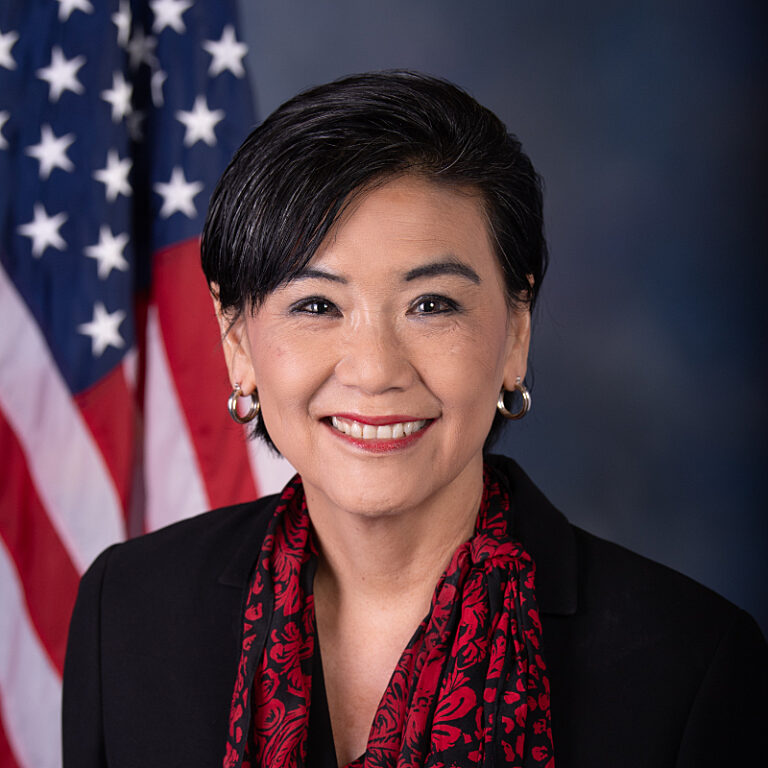
Judy chu portrait 2019 05 02

Judy Chu

Co-chair, Congressional Planetary Science Caucus, Representative for CA-28

Jennifer vaughn profile update

Jenn Vaughn

Chief Executive Officer for The Planetary Society

Laura may abron portrait

Laura-May Abron

Vice President and Centennial Committee Chair, Los Angeles Astronomical Society
Asa stahl portrait

Asa Stahl

Public Outreach Astronomer for The Planetary Society
Sarah al ahmed headshot

Sarah Al-Ahmed

Planetary Radio Host and Producer for The Planetary Society
Bruce betts portrait hq library

Bruce Betts

Chief Scientist / LightSail Program Manager for The Planetary Society

On the night of Oct. 5, 1923, Edwin Hubble spotted a variable star in Andromeda from Mt. Wilson Observatory above Pasadena, California, proving that our galaxy is just one of countless others in the Universe. Now, California Rep. Judy Chu, co-chair of the Planetary Science Caucus, has introduced a resolution in the U.S. House of Representatives supporting the designation of Oct. 5 as National Beyond the Milky Way Day in the United States. John Mulchaey, president of Carnegie Science, and Jess Soto, Carnegie Science’s public engagement specialist, join Planetary Radio to share the story of the discovery and the push for national recognition. We also bring you highlights from the Oct. 13 ceremony at Carnegie’s Hale Library, along with conversations with Rep. Chu, Planetary Society CEO Jennifer Vaughn, and astrophysicist Laura-May Abron. Asa Stahl, our public outreach astronomer, shares how you can vote in The Planetary Society’s Best of 2026 Awards. Then Bruce Betts, our chief scientist, explains why it took humanity so long to realize Andromeda was a galaxy and how you can see it for yourself.

Edwin Hubble, Albert Einstein, and fellow scientists at the Hale Library, 1931
Edwin Hubble, Albert Einstein, and fellow scientists at the Hale Library, 1931 This framed historical photograph is on display at Carnegie Science’s Hale Library in Pasadena, California. It shows a group of scientists who gathered at Mount Wilson Observatory’s Hale Library, Santa Barbara Street offices, Pasadena, California. Standing, left to right, are Milton L. Humason, Edwin Powell Hubble, Charles St. John, Albert Abraham Michelson, Albert Einstein, William Wallace Campbell, and Walter S. Adams. The photo was taken during Einstein’s visit in early 1931, eight years after Hubble’s discovery that the Andromeda Nebula was a separate galaxy. The same library hosted the Oct. 13, 2026, ceremony celebrating the resolution supporting National Beyond the Milky Way Day.Image: Sarah Al-Ahmed / The Planetary Society. Original photograph: The Huntington Library.
John Mulchaey and Rep. Judy Chu with the Beyond the Milky Way Day resolution
John Mulchaey and Rep. Judy Chu with the Beyond the Milky Way Day resolution Carnegie Science President John Mulchaey and California Rep. Judy Chu hold the framed House resolution at Carnegie’s Hale Library in Pasadena, California, on Oct. 13, 2026. Rep. Chu introduced the resolution on Oct. 5, 2026, expressing support for designating that date as National Beyond the Milky Way Day in the United States. It honors Edwin Hubble’s 1923 discovery at Mt. Wilson Observatory that the Universe extends far beyond our galaxy.Image: Sarah Al-Ahmed / The Planetary Society
John Mulchaey with Hubble’s VAR! plate
John Mulchaey with Hubble’s VAR! plate Carnegie Science President John Mulchaey points out details on Edwin Hubble’s original VAR! plate during the Oct. 13, 2026, ceremony at Carnegie’s Hale Library in Pasadena, California. The glass plate is rarely on public display, and Mulchaey said he worked at Carnegie Science for 20 years before seeing it in person. He called Hubble’s discovery the most important result in astronomy in the last 400 years.Image: Sarah Al-Ahmed / The Planetary Society
Edwin Hubble’s VAR! plate
Edwin Hubble’s VAR! plate Edwin Hubble’s original glass photographic plate of the Andromeda Nebula, known as the VAR! plate, was on display at Carnegie’s Hale Library in Pasadena, California. Hubble took the image with the 100-inch Hooker Telescope at Mt. Wilson Observatory on the night of Oct. 5, 1923. He first marked one star with an “N” because he thought it was a nova, then crossed it out and wrote “VAR!” when he realized it was a Cepheid variable star. Using Henrietta Swan Leavitt’s discovery that these stars can reveal cosmic distances, Hubble showed that Andromeda is a separate galaxy far beyond the Milky Way.Image: Sarah Al-Ahmed / The Planetary Society. Plate courtesy of Carnegie Science.
Rep. Judy Chu at the Beyond the Milky Way Day ceremony
Rep. Judy Chu at the Beyond the Milky Way Day ceremony California Rep. Judy Chu speaks at the Oct. 13, 2026, ceremony at Carnegie’s Hale Library in Pasadena, California. Rep. Chu represents California’s 28th Congressional District, which includes Pasadena, and is a co-chair of the Congressional Planetary Science Caucus. During her remarks, she presented the resolution she introduced in the U.S. House of Representatives supporting the designation of Oct. 5 as National Beyond the Milky Way Day.Image: Sarah Al-Ahmed / The Planetary Society
Jess Soto and Laura-May Abron examine the VAR! plate
Jess Soto and Laura-May Abron examine the VAR! plate Jess Soto, public engagement specialist at Carnegie Science, watches as astrophysicist Laura-May Abron uses a magnifier to examine Edwin Hubble’s original VAR! plate at Carnegie’s Hale Library in Pasadena, California, on Oct. 13, 2026. Soto spearheaded the effort to get a congressional resolution supporting National Beyond the Milky Way Day. Abron, a museum guide at Griffith Observatory and vice president of the Los Angeles Astronomical Society, attended the ceremony and shared her experience of seeing the historic plate in person on this episode of Planetary Radio.Image: Sarah Al-Ahmed / The Planetary Society