

 Explore Worlds
 Find Life
 Defend Earth


The Downlink • Jan 09, 2026
On cloud nine
Space Snapshot

There’s always something new to discover in space. This week, researchers announced the discovery of a new type of astronomical object: a starless, gas-rich, dark matter cloud nicknamed "Cloud-9." The object is thought to be a relic of the early Universe, perhaps a dark matter cloud that couldn’t accumulate enough gas to form stars. This image of Cloud-9 combines visible observations by the Hubble Space Telescope and radio observations from the Very Large Array.
Fact Worth Sharing
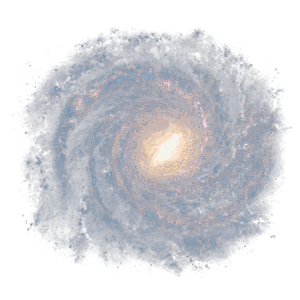
You might think that astronomers were having a little fun when they chose the name “Cloud-9” for the newly-discovered dark matter cloud. But its idiomatic familiarity is just a coincidence: Cloud-9 was named for being the ninth gas cloud found on the outskirts of a nearby spiral galaxy.
Mission Briefings


If you could see in infrared, this is what the sky might look like to you. NASA’s SPHEREx Observatory recently created this infrared map of the entire sky. The colors of this image represent different wavelengths of infrared light emitted by stars (blue, green, and white), hot hydrogen gas (blue), and cosmic dust (red). Image credit: NASA/JPL-Caltech.

New research suggests Europa may not have the geological activity needed for life. Calculations based on the icy moon's size, the makeup of its rocky core, and the gravitational forces from Jupiter led a research team to conclude that Europa may lack the geological activity needed for subsurface habitability. NASA’s Europa Clipper mission, which is due to arrive at the Jupiter system in 2030, will collect data to help better understand the moon’s potential habitability.
Space Advocacy Update

Congress has drafted a budget that would reject cuts to NASA. This week, Congress released a draft budget deal that would fully fund NASA and its science programs. The budget would include $24.4 billion for NASA, including $7.25 billion for NASA Science. It also protects major NASA science missions targeted for termination, including VERITAS and DAVINCI, NEO Surveyor, the Habitable Worlds Observatory, and many more. The budget is not yet final — take action now to encourage your Senators in Congress to support NASA funding. Pictured: Advocates at the Save NASA Science Day of Action. Image credit: The Planetary Society.
From The Planetary Society


What does it really mean to enter interstellar space? In this week’s Planetary Radio, we explore what Voyager 1 and 2 have taught us about the Solar System’s outer frontier with Voyager project scientist Linda Spilker. Pictured: An artist’s impression of a Voyager spacecraft. Image credit: NASA/JPL-Caltech.
Catch up on the latest book club meeting. Planetary Society Chief Scientist Bruce Betts joined members this week for a rollicking conversation about the latest books in his excellent space science series for young people. Planetary Society members can join live virtual Q&As with the book club’s featured authors. Not yet a member? Join today!
Thank you for making our year-end fundraising a success. We are thrilled to report that we met our Dec. 31 flash match challenge, raising over $16,000 on the last day of the year and unlocking $5,000 in additional funds. We couldn’t do it without you!
What's Up
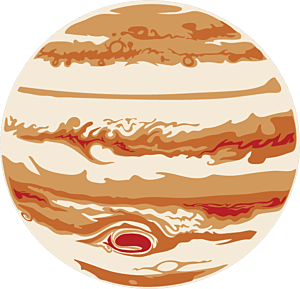
Jupiter reaches opposition on Jan. 10, meaning it is on the opposite side of Earth from the Sun. This makes it especially bright, rising around sunset and setting around sunrise. Yellowish Saturn is up in the west in the early evening, not far from the Great Square of Pegasus asterism and the constellation Andromeda. Learn more about what to look for in January’s night skies.
Join now and save space missions

If you are not already a member, become one TODAY and help shape the future of space science and exploration by fueling mission-critical advocacy efforts. Our fight for space science is only possible because of the support of our members.
Will you join us and help save more missions?
Wow of the Week

Planetary Society member Barbara Fee Sheehan created this painting, titled “Star Burst,” inspired by the Hubble Space Telescope’s image of the Rho Ophiuchi cloud complex. If you live in the greater Washington, D.C., region, you can see this painting on display as part of a traveling exhibit that will tour through 20 galleries in the area. Image credit: Barbara Fee Sheehan.
Send us your artwork!
We love to feature space artwork in the Downlink. If you create any kind of space-related art, we invite you to send it to us by replying to any Downlink email or writing to [email protected]. Please let us know in your email if you’re a Planetary Society member!