

 Explore Worlds
 Find Life
 Defend Earth


Planetary Radio Episodes
Since 2002, Planetary Radio has visited with a scientist, engineer, project manager, advocate, or writer who provides a unique perspective on the quest for knowledge about our Solar System and beyond. The full show archive is available for free.

Mat Kaplan brings us to USC for the 2025 Mars Society Convention, where leaders in science, engineering, AI, biology, architecture, and advocacy share bold visions for humanity’s future on Mars.

NASA’s ESCAPADE mission is on its way to Mars to study how the solar wind interacts with the planet’s magnetic fields and atmosphere. This week, we talk with Ari Koeppel and PI Rob Lillis about the mission’s launch and science goals, and examine Martian aurora in What’s Up.

Planetary Radio shares Casey Dreier’s appearance on Smart Girl Dumb Questions, where he and host Nayeema Raza explore why space exploration matters and whether NASA’s budget is worth the cost.

This week, Planetary Radio explores how Epic Spaceman uses visual effects and everyday metaphors to make the vast scale of the Universe feel human and understandable.

The Planetary Society visits TwitchCon 2025 to explore how livestreamers like Moohoodles are bringing space science to new audiences. The episode also features a Space Policy Update on Jared Isaacman’s renomination as NASA Administrator and celebrates the third anniversary of the LightSail 2 mission with Bruce Betts.

Physicist Daniel Whiteson and cartoonist Andy Warner join Sarah Al-Ahmed to explore their new book, “Do Aliens Speak Physics?”

Historian Dagomar Degroot joins Planetary Radio to discuss his new book, “Ripples on the Cosmic Ocean: An Environmental History of Our Place in the Solar System,” which reveals how events across the Solar System have shaped life on Earth.

Planetary Radio continues its coverage from the 2025 NASA Innovative Advanced Concepts Symposium in Philadelphia, highlighting technologies that could shape future missions, from detecting exoplanet magnetospheres to exploring Venus and Saturn’s moon Enceladus with innovative robots.

Planetary Radio explores visionary ideas from NASA’s Innovative Advanced Concepts Symposium. In this first of two episodes, discover how researchers are turning science fiction into reality, from glass habitats on the Moon to starshades that could reveal new Earths.

Hundreds of advocates joined The Planetary Society and partner organizations in Washington, D.C., to urge Congress to protect NASA’s science budget. Hear from Ari Koeppel, Britney Schmidt, Bill Nye, Rep. Glenn Ivey, Marcel Agüeros, Brandon Jones, and Casey Dreier about this historic Day of Action.

NASA’s Perseverance rover has found potential biosignatures in Jezero Crater’s Bright Angel formation. Host Sarah Al-Ahmed speaks with Joel Hurowitz, associate professor of geosciences at Stony Brook University and lead author of the new Nature paper, about this remarkable discovery.

Bill Nye, CEO of The Planetary Society, celebrates his new star on the Hollywood Walk of Fame and joins us to reflect on its meaning. We also receive the latest space policy updates as NASA faces significant budget challenges.

Join host Sarah Al-Ahmed and Mark McCaughrean, adjunct scientist at the Max Planck Institute for Astronomy, for a tour of “111 Places in Space That You Must Not Miss”, a cosmic travel guide to the Universe.

Host Sarah Al-Ahmed speaks with Staci Horvath, outreach coordinator at NASA Goddard Space Flight Center and director of International Observe the Moon Night, and Theresa Summer, astronomy educator at the Astronomical Society of the Pacific, about the history and global impact of International Observe the Moon Night.
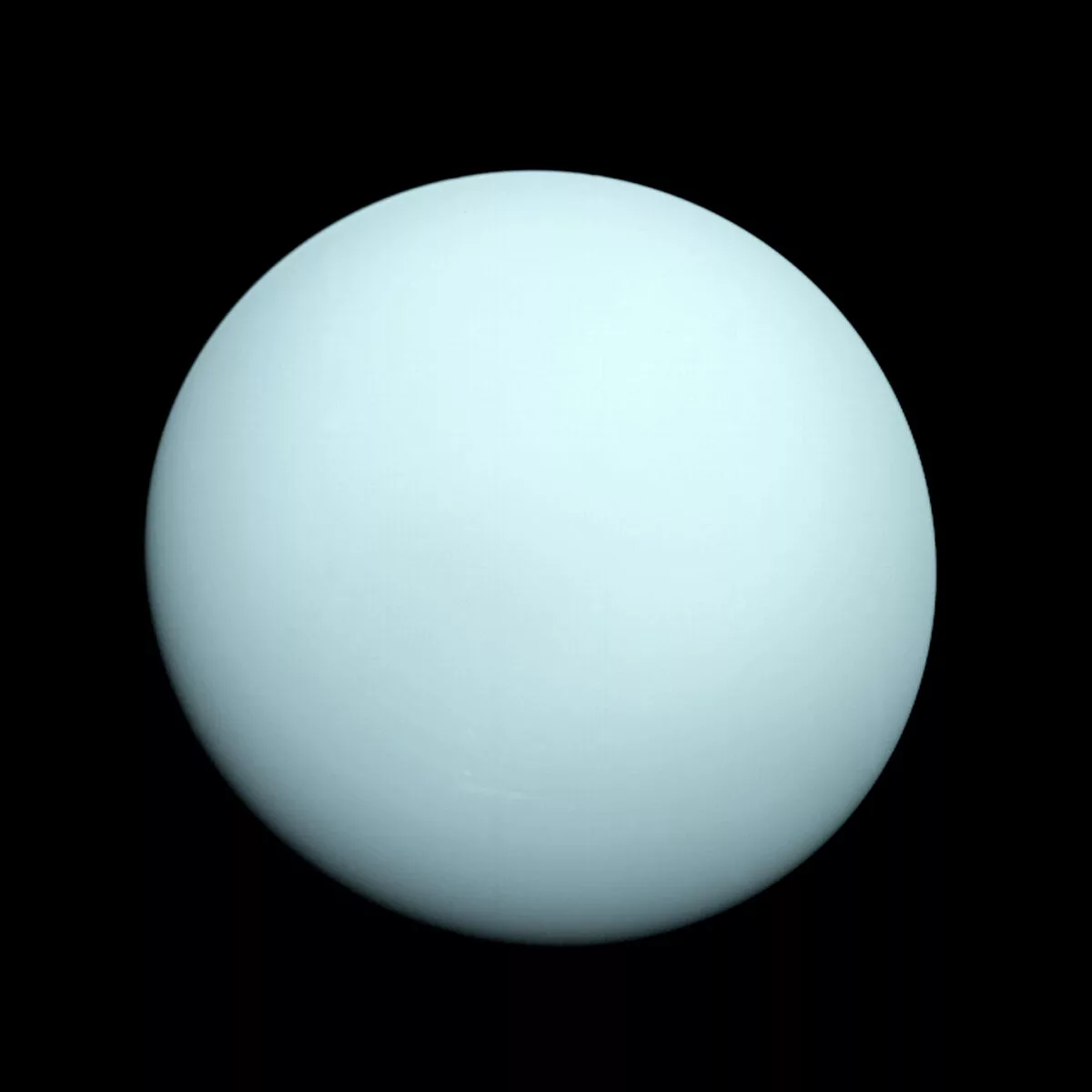
Michael Roman, assistant professor at the Universidad Adolfo Ibáñez in Chile, joins Sarah Al-Ahmed to discuss new research confirming that Uranus radiates excess heat, finally resolving a decades-long mystery first sparked by Voyager 2.

What happens when pro gaming and space science collide? Kyle Hill, head of science education and outreach for the esports team BASILISK, joins us to share how the team is inspiring the next generation of scientists.

JWST has uncovered silicate clouds and a dusty circumplanetary disk in the YSES-1 system. Kielan Hoch and Emily Rickman from the Space Telescope Science Institute join us to explore what these surprising findings reveal about young giant exoplanets.

Star Trek actors Robert Picardo and Tim Russ join Planetary Society staff members Ambre Trujillo and Andrew Pauly at STLV, a “Star Trek” convention, to explore how “Star Trek” inspires real-world space advocacy.

Astronomers have discovered a new interstellar comet, 3I/ATLAS, the third object ever seen entering our Solar System from another star. We speak with Bryce Bolin, research scientist at Eureka Scientific, about what makes this visitor unique and what it can teach us about other worlds.

Erin Flynn-Evans, director of the Fatigue Countermeasures Laboratory at NASA Ames Research Center, shares how sleep science is helping astronauts stay healthy in space and prepare for future missions to Mars.