

 Explore Worlds
 Find Life
 Defend Earth


Planetary Radio Episodes
Since 2002, Planetary Radio has visited with a scientist, engineer, project manager, advocate, or writer who provides a unique perspective on the quest for knowledge about our Solar System and beyond. The full show archive is available for free.

Japan’s Hayabusa2 is just 6 kilometers from asteroid Ryugu as it prepares to snatch samples of the space rock for return to Earth. ISAS/JAXA Director General and former Hayabusa Mission Project Manager Hitoshi Kuninaka joins us for a conversation about the spacecraft and what’s ahead.

One of the Planetary Society’s 2018 Shoemaker Near-Earth Object grants has gone to astronomers searching the sky from a mountaintop in the North African nation of Morocco.

Ceres is the queen of the asteroid belt. Her first Earthly visitor is nearing its last days in spectacular style. Dawn Mission Director and Chief Engineer Marc Rayman returns with stunning images taken from just 35 kilometers or 22 miles above the dwarf planet, and a preview of the spacecraft’s last days.

The dinosaurs regret their lack of a space program. 200 million years later, humans are gearing up to defend themselves from a species-ending rock.

There’s so much more to Freeman Dyson than the Dyson Sphere. The mathematician, physicist, futurist and author is one of the greatest and most original minds of our era.
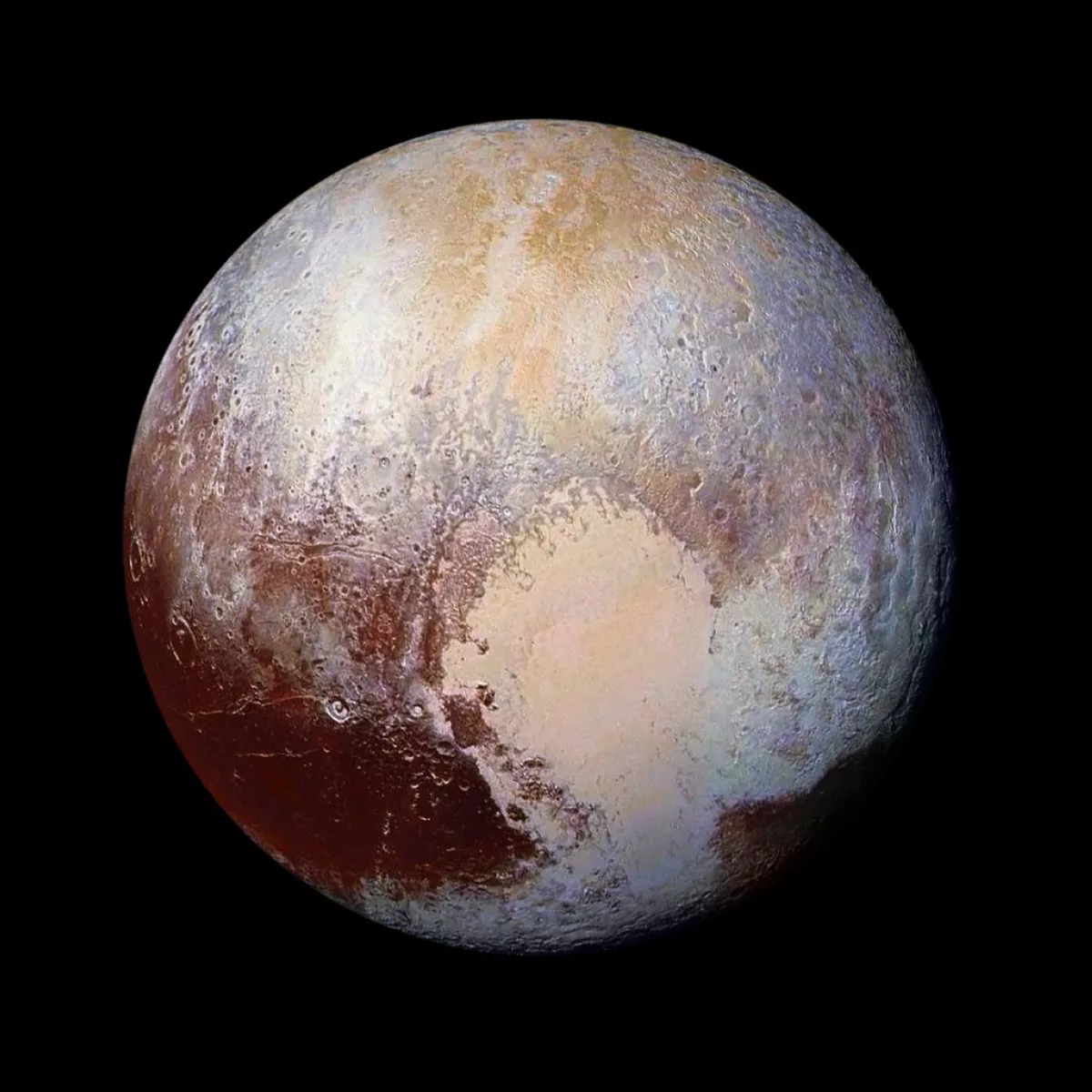
The New Horizons mission was a triumph, revealing Pluto as an utterly unique and beautiful world. But the mission first had to survive challenge after challenge, fighting to be developed, meeting a nearly impossible launch deadline, and then narrowly avoiding disaster when it was barely a week from its destination.

No mission to Mars has done what InSight will do. The lander’s spectacularly sensitive instruments will use the Red Planet’s heat and marsquakes to reveal its deep interior while also revealing secrets of other rocky worlds like our own Earth.

We have begun to understand the composition of worlds that are hundreds of trillions of kilometers from Earth. Astronomer Nikole Lewis is co-leader of a team that has used the Hubble Space Telescope to do this with the four Earth-like planets circling a star called TRAPPIST-1.

Seven astronomers have been selected to receive Shoemaker NEO (Near Earth Object) grants from the Planetary Society. They and their observatories span the planet. We’ll meet an American and an Australian. Society Chief Scientist Bruce Betts provides an overview of the grant program and later returns for this week’s edition of What’s Up. The Planetary Society’s Kate Howells reports on the outlook for space funding in Canada’s newly-released federal budget. She and Society CEO Bill Nye also met with Prime Minister Justin Trudeau.

Join Mat Kaplan on a visit to Naval Base San Diego and the USS Anchorage, the amphibious ship that has just completed a round of Orion spacecraft recovery testing and practice.

Mat Kaplan talks with participants in the National Space Society’s recent Space Settlement Summit about human destiny in space.

A computer model based on our best data about Saturn’s cloud-shrouded moon says that torrential liquid methane pounds the surface far more frequently than previously expected. Sean Faulk and Jonathan Mitchell of UCLA explain.

It may not host an alien “megastructure” but Tabby’s Star still guards many mysteries of science. Astronomer and astrophysicist Tabetha “Tabby” Boyajian leads the worldwide team that is revealing this strange light in the sky.

Mars scientists dubbed them recurring slope lineae or RSLs. They sure looked like evidence of liquid water flowing down hillsides and ridges on the Red Planet. New research led by USGS Planetary Geologist Colin Dundas says otherwise.

A holiday edition of Planetary Radio welcomes the Planetary Society’s Senior Editor back from the annual meeting of the American Geophysical Union. Emily reports on amazing developments in planetary science she discovered at the huge conference.

On December 11th President Donald Trump signed a memorandum that firmly points the US space effort toward the Moon, but without providing many details. Planetary Society Director of Space Policy Casey Dreier fills in some of the gaps left by this executive directive.

The first confirmed interstellar visitor to our solar system is a needle-shaped asteroid given the Hawaiian name ‘Oumuamua. Karen Meech leads the team that is learning as much about it as possible before it leaves our neighborhood, never to return.

Moon Express Founder and CEO Bob Richards shares an inspiring vision for a return to the Moon. It includes introduction of a sophisticated line of robotic spacecraft, the first of which may make a soft landing next year.

The author of #1 bestseller

Astronomer Pamela Gay tells us how anyone can work with images of Earth taken by astronauts, turning them into terrific scientific resources.