

 Explore Worlds
 Find Life
 Defend Earth


Planetary Radio Episodes
Since 2002, Planetary Radio has visited with a scientist, engineer, project manager, advocate, or writer who provides a unique perspective on the quest for knowledge about our Solar System and beyond. The full show archive is available for free.

Dawn Mission Director and Chief Engineer Marc Rayman helps us salute the ion-engine powered spacecraft that first orbited asteroid Vesta in the main asteroid belt and then moved to dwarf planet Ceres, revealing two fascinating worlds.

More than 1,100 fans of the just-completed 20-year mission to Saturn joined us for a live tribute.

Join us at JPL and Caltech on the bittersweet morning the Cassini spacecraft plunged into Saturn.

Robert Zubrin of the Mars Society talks with Gregory Benford, David Brin, Geoffrey Landis and Larry Niven about terraforming Mars, the origin of life, the drive to explore and more.

With hours to go before the Great American Eclipse, nine outstanding guests joined host Mat Kaplan for Planetary Radio Live in front of 1,100 rowdy eclipse and space science fans.

It’s the Grandest Finale. The spectacular Cassini mission’s exploration of Saturn will end on September 15th when the spacecraft plunges into the planet. Cassini Project Scientist Linda Spilker is back with one last mission update.

It is most space fans’ favorite planetary science mission, and with good reason. We visit with the man who has been in charge of Voyager mission science for more than four decades.

JPL astrophysicists Alina Kiessling and Jason Rhodes were brought together by their fascination over the mystery of dark energy. They talk with Planetary Radio about their research and the many missions they are contributing to, including WFIRST, a unique new space telescope.

The world’s most powerful solar telescope has just been renamed for the man responsible for its creation. We’ll meet astrophysicist and helioseismologist Phil Goode, and we’ll enjoy a tour of the Goode Solar Telescope.

Will humans live, work and thrive on Mars? What challenges must be met before we can become Martians? On July 20th, the anniversary of the Apollo 11 moon landing, Mat Kaplan welcomed an outstanding panel of experts for conversation in front of a Pasadena, California audience.

The Cassini Mission has less than two months to go before it ends with a spectacular plunge into the beautiful ringed world. Planetary Society Senior Editor Emily Lakdawalla has prepared a guide to the last orbits by the historic spacecraft.

When the Pathfinder lander reached Mars 20 years ago it began a Martian renaissance that has never paused. JPL scientist Matt Golombek was the mission’s Project Scientist. He looks back and to the future of our explorations at the Red Planet.

A new report builds the case for long overdue returns to Uranus and Neptune, while another proposal calls for exploration of the many bodies in our solar system that hide vast water oceans. Jason Callahan, Casey Dreier and Mat Kaplan dive into the troubled waters that determine which planetary science missions will get the limited funds available.

Veteran astronomer and cosmologist Sandra Faber has just been awarded the Gruber Prize for Cosmology, honoring more than forty years of pioneering work. She talks with Mat Kaplan on this week’s show.

Asteroid Day, June 30th, marks the anniversary of the great Tunguska impact that leveled a Siberian forest. It reminds us that a Near Earth Object can destroy a city or even a civilization. Former Minor Planet Center Director Tim Spahr reviews our efforts to find and understand these bodies.

Former NPR science reporter David Baron discusses the stories of men and women who made their way across the American West to view and document the total solar eclipse of 1878.
How do you keep a dazzlingly complex spacecraft in good health after 20 years in space? That’s the challenge for Julie Webster and her team of engineers supporting the Cassini mission at Saturn.

Have you seen its stunning image of Jupiter’s south pole? The Juno orbiter is surpassing expectations and delivering surprising science. Scott Bolton, the mission’s Principal Investigator, is back with a thrilling report.
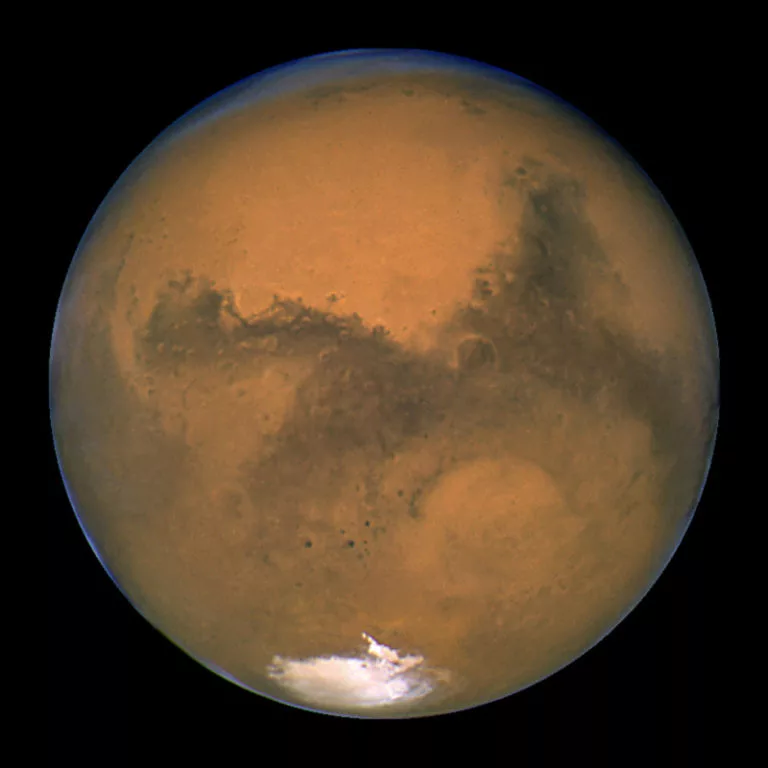
The Trump Administration released its proposed FY2018 budget just days ago. Casey Dreier, Jason Callahan and Mat Kaplan dive deep into what this controversial plan means for NASA and how it has been received by Congress.

He walked with Neil Armstrong on the moon, but that may not be his greatest legacy. Buzz Aldrin was joined by other space stars at the recent Humans To Mars Summit.