

 Explore Worlds
 Find Life
 Defend Earth


Save NASA Science returns to Capitol Hill
Back in action

Written by
Jack Kiraly
Chief of Advocacy, The Planetary Society
April 24, 2026
On Monday, April 20, 2026, more than 130 space advocates from 34 states and the District of Columbia came to the nation’s capital for The Planetary Society’s annual Day of Action. Over the course of the day, these volunteer advocates held 280 meetings with House and Senate offices to deliver a simple message: Save NASA Science, again.
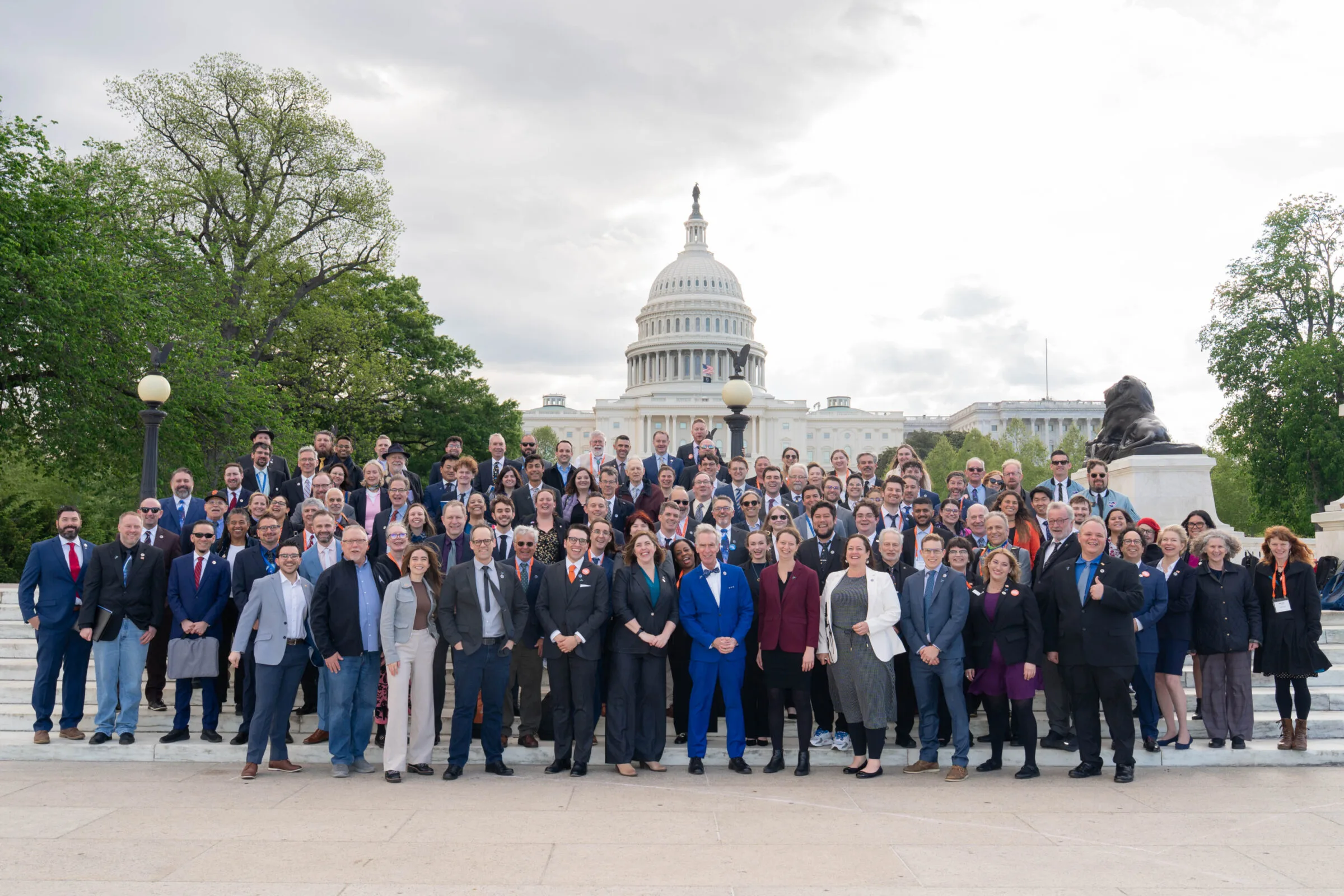
This Day of Action felt different from last year’s historic event.
The difference is that this year, we have momentum. For the first time in a long time, we walked those august halls with the wind at our backs. Artemis II was a major success and generated global enthusiasm for space exploration. The public, across the political spectrum, had just been reminded of what the United States, with its international and commercial partners, can do in space. And in January, Congress delivered a resounding verdict on the Office of Management and Budget’s FY 2026 budget proposal to gut NASA and its Science Mission Directorate (SMD). The House voted 397-28, and the Senate voted 82-15 to reject the cuts. This victory was in no small part due to the tireless efforts of thousands of advocates from every corner of the nation.
That’s the mood these advocates carried onto Capitol Hill. Not desperation; momentum.
A different conversation
Last year, meetings often ended with hedged language: “We’ll see where appropriations go.” “Be prepared for cuts, but keep pushing.” This year, conversations felt more assuring of Congress’s intent to keep NASA fully funded.
Members and staff didn’t need to be convinced. Many even asked what they could do to help. And even more assured advocates that Congress would come to the rescue yet again. This was emphasized on April 22, when, during a hearing on the NASA budget with Administrator Isaacman, Chairman Brian Babin (R-TX) announced in his opening statement that “many of the proposed budget cuts [in FY 2026] were rejected by Congress previously, and [that he was] confident they [would] be rejected again.”
“We must ensure that NASA is funded at a level that allows it to pursue those missions,” Babin said.
Our message for this Day of Action wasn’t a plea for help, but instead an expression of gratitude and a call to keep moving. Our topline ask, beyond the likely rejection of the OMB proposal, was to grow the NASA topline.
The Senate’s bipartisan NASA Authorization provides a 2.5% increase in NASA’s budget, including for Science. This would largely counteract the effects of inflation. This was the baseline ask. But as 103 House Representatives and 22 Senators have argued in letters to congressional appropriators in the last two months, we are urging Congress to restore the NASA SMD budget to $9 billion, the inflation-adjusted level NASA Science was funded during the first Trump Administration.
The meetings we held were substantive. Advocates spoke about how NASA benefits their districts, their jobs, their kids, and their classrooms, and they connected with what their representatives care about: economic prosperity, technological leadership, and geopolitical imperatives for space exploration. Every conversation was different, but what tied them together was a shared conviction that the United States should continue to lead the world in the scientific exploration of space.

This is what democracy looks like
This is true about every one of our Days of Action: the participants are not paid lobbyists. These are not representatives of industry or trade. They are members of the public: students, teachers, scientists, engineers, small-business owners, retirees, parents, lifelong space enthusiasts. They took time off work, arranged their own travel, and showed up in D.C. because they believe humanity’s exploration of the Cosmos is worth it.
This is our community, our movement to Save NASA Science. It’s a student sitting across from a staffer and explaining, in their own words, why the James Webb Space Telescope changed how they think about their place in the Universe. It’s a retired engineer telling a Senator’s aide why the NEO Surveyor matters for planetary defense. It’s a parent telling their Representative that their child wants to work for NASA one day.
When a group this large and diverse walks into more than half of the offices on Capitol Hill, these elected officials and their staff notice. Not because of the raw number, but because of what the number represents. There is a constituency of space advocates in every state and congressional district across the country. The Day of Action is how we make this movement visible to the people who write laws.
Where the movement goes from here
Every year, we get a handful of people who have never done this before. They arrive a little nervous, unsure they belong in a congressional office. By the end of the day, something has shifted. They realize democracy isn’t a spectator sport. Civic engagement involves showing up, sitting across from a staffer, and telling a story only you can tell. In a moment when so much of our politics feels out of control, the Day of Action is a reminder that the table is not closed. You can pull up a chair. That is the lesson I hope every advocate carries home, and it is the lesson I hope every reader takes from this.
The FY 2027 appropriations process is moving quickly. The House Science, Space, and Technology Committee held its budget hearing on April 23. The House Commerce-Justice-Science (CJS) Appropriations Subcommittee will hold its hearing on April 27, with the Senate CJS hearing on April 28. House CJS will then release their bill and mark it up on April 30. The Senate is expected to follow suit in May. By the summer, we could have an outright rejection of the OMB request. This would be a stunning dual defeat of two functionally identical budget requests in the span of six months. We must keep up the pressure to make this a reality.
To everyone who joined us in Washington: thank you. You made this Day of Action what it was. To everyone who couldn’t make it: we’ll be back next year. And in the meantime, consider sending a letter to your representatives, joining the Save NASA Science campaign, and keep showing up.
Save NASA Science Action Hub
Updates and actions on the proposed cuts to NASA science in FY 2027.
You Power the Next Great Discovery!
Fund future scientific research that advances space science and exploration with your gift today.
Donate