

 Explore Worlds
 Find Life
 Defend Earth


All
All
 Sun
Sun Mercury
 Venus
Venus Earth
Earth Mars
Mars Jupiter
 Saturn
 Uranus
 Neptune
 Small Bodies
Stories, updates, insights, and original analysis from The Planetary Society.

One Ocean World Among Many
I'm absolutely floored when I stop to think that our beautiful blue ocean is only one of perhaps a half dozen or more oceans on other worlds in our solar system, and only one of probably millions (or more) oceans on other Earth-like planets in our galaxy. Oceans abound!

Dawn Journal: Thrusting to a new personal best
Traveling from one alien world to another, Dawn is reliably powering its way through the main asteroid belt with its ion propulsion system. Vesta falls farther and farther behind as the spacecraft gently and patiently reshapes its orbit around the sun, aiming for a 2015 rendezvous with dwarf planet Ceres.
Finding faces and animals on Mars
This week's

Say "hi!" to asteroid -- actually, asteroids -- (285263) 1998 QE2
A large asteroid is passing reasonably close to Earth in a few hours, and astronomers at the great radio telescopes at Goldstone and Arecibo are zapping it. The latest discovery: QE2, like many asteroids, is a binary.

Lesser-known views of Uranus and Neptune
Despite the fact that Voyager 2 returned relatively few high-resolution images from either Uranus or Neptune, there are many more photos in the archives than regularly make it to public view.

The Shores of the Kraken Sea: Great Place Names in the Solar System
Nothing reflects the romance of deep space exploration more than the evocative names of places on the planets and moons.

Astronomy Enters a New Era
A live conversation about just a few of the powerful new instruments that will revolutionize our knowledge of the cosmos once again.
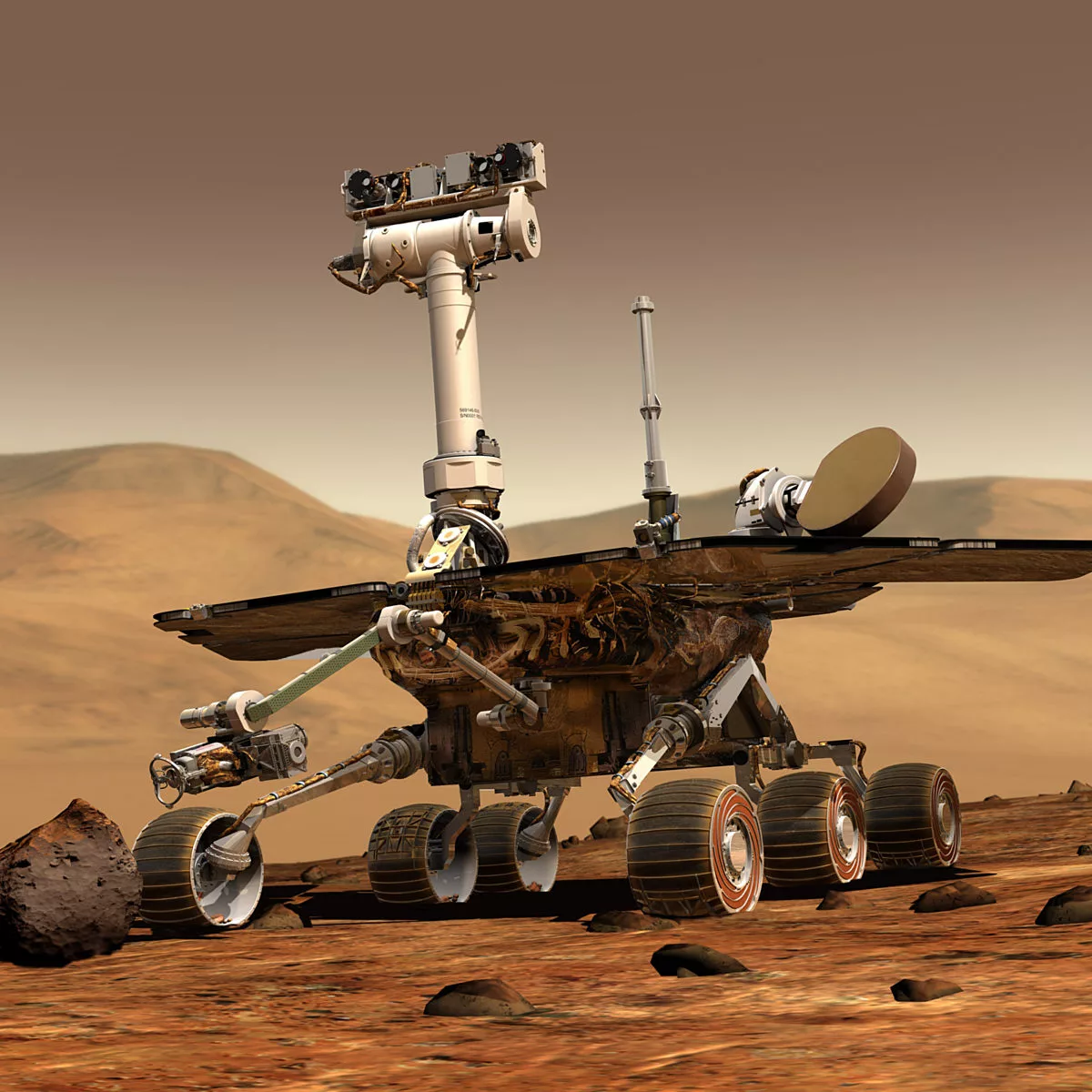
Mars Exploration Rovers Special Update: Opportunity's Findings at Endeavour, So Far
Mars Exploration Rover Opportunity left Cape York on May 14th and embarked on a 2-kilometer journey south along the western rim of Endeavour Crater. The rover is heading now to Solander Point, where it will spend the coming Martian winter.

Friday fun: Every moon in the solar system in an homage to Tom Lehrer
A girl named Hope Johnson performing an homage to Tom Lehrer's
Field Report From Mars: Sol 3317- May 24, 2013
Opportunity finally started driving south from its location on the outcrop where it had been since solar conjunction.


Asteroids – what you can do
Partnering with our friends from The Planetary Society, the Space Generation Advisory Council (SGAC), whose members hail from all over the globe, is bringing you an update on our activities and something you can join in on—at least if you are a student or young professional aged 18–35.

Opportunity and Curiosity updates: Rolling and drilling and a little wear on the wheels
For most of April, while Mars scuttled behind the Sun as seen from Earth, both Mars rovers were pretty inactive. Now that conjunction has ended, both are doing what rovers should be doing: roving and exploring. As of sol 3312 Opportunity had moved more than 300 meters southward toward Solander Point, while on her sol 279 Curiosity drilled at a second site, Cumberland.

Many More Colors than Red: Exploring Mars with Spectroscopy
Mars gives up its secrets through the unseen colors of its rocks.

A serendipitous observation of tiny rocks in Jupiter's orbit by Galileo
A look at an older paper describing Galileo's possible sighting of individual ring particles orbiting Jupiter as companions to its inner moon Amalthea.

New Horizons: Encounter Planning Accelerates
Back in 2005 and 2006, when Pluto’s second and third moons (Nix and Hydra) were discovered, searches by astronomers for still more moons didn’t reveal any. So the accidental discovery of Pluto’s fourth moon by the Hubble Space Telescope in mid-2011 raised the possibility that the hazards in the Pluto system might be greater than previously anticipated.
Field Report From Mars: Sol 3310- May 17, 2013
Opportunity has finally completed the detailed survey of the outcrops on the Cape York segment of the rim of the 22-km diameter Endeavour crater.

ISIS: Blasting a Crater on Asteroid Bennu
An exciting new option to enhance NASA's OSIRIS-REx asteroid mission has been proposed by Steve Chesley at JPL. The ISIS spacecraft would impact asteroid Bennu to expose its interior structure to OSIRIS-REx.

Mimas and Pandora dance
I've been out of town for a couple of days and am overwhelmed with work and an overflowing email box. So what do I do about that? I ignore what I'm supposed to be doing and play with Cassini raw image data, of course. Here is a

Doing a science on Titan
A tale from the scientific trenches: laboratory work to simulate Titan's rich atmosphere.