

 Explore Worlds
 Find Life
 Defend Earth
All
All
 Sun
 Mercury
 Venus
 Earth
 Mars
 Jupiter
 Saturn
 Uranus
 Neptune
 Small Bodies
Stories, updates, insights, and original analysis from The Planetary Society.

New Horizons: Encounter Planning Accelerates
Back in 2005 and 2006, when Pluto’s second and third moons (Nix and Hydra) were discovered, searches by astronomers for still more moons didn’t reveal any. So the accidental discovery of Pluto’s fourth moon by the Hubble Space Telescope in mid-2011 raised the possibility that the hazards in the Pluto system might be greater than previously anticipated.
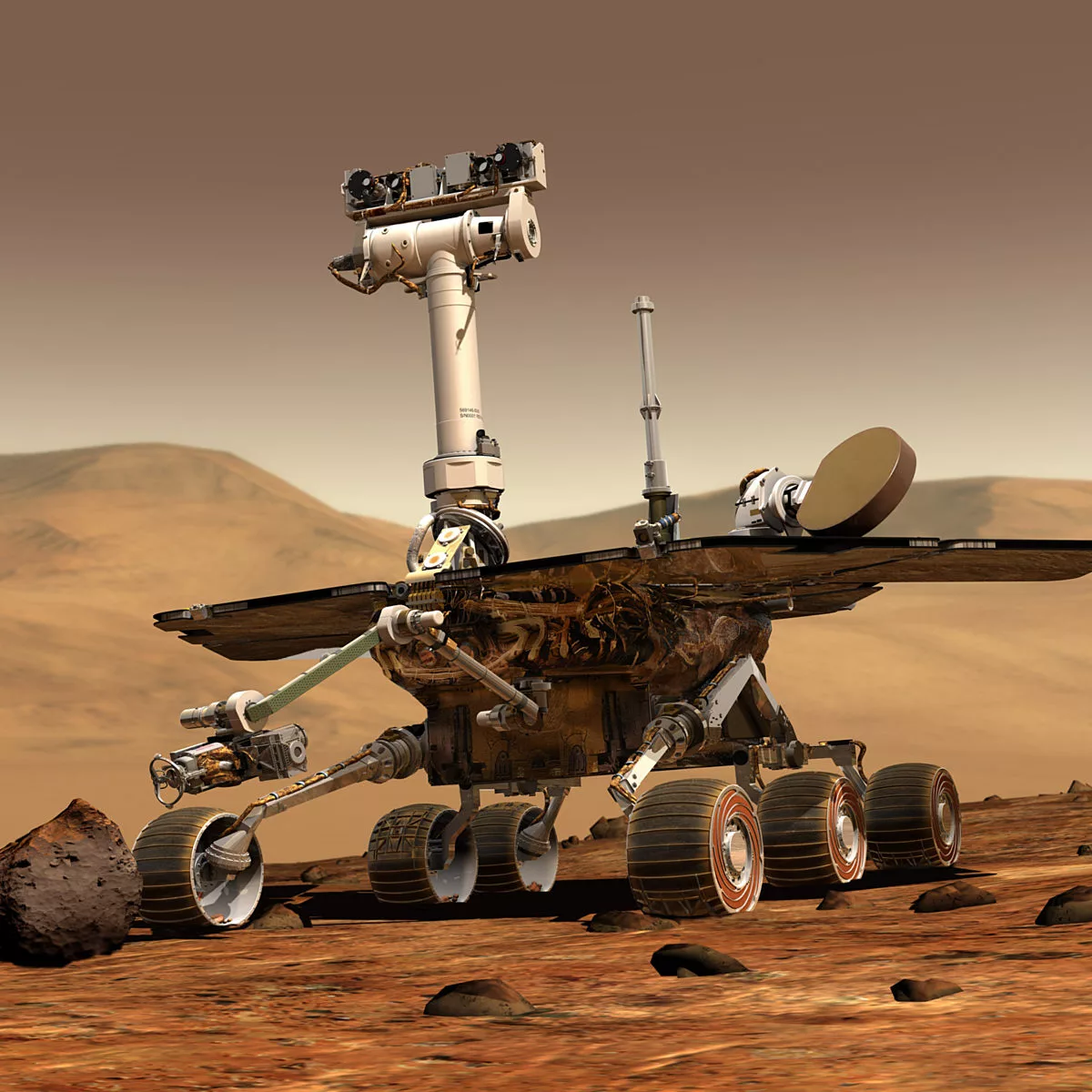
Field Report From Mars: Sol 3310- May 17, 2013
Opportunity has finally completed the detailed survey of the outcrops on the Cape York segment of the rim of the 22-km diameter Endeavour crater.

A serendipitous observation of tiny rocks in Jupiter's orbit by Galileo
A look at an older paper describing Galileo's possible sighting of individual ring particles orbiting Jupiter as companions to its inner moon Amalthea.

ISIS: Blasting a Crater on Asteroid Bennu
An exciting new option to enhance NASA's OSIRIS-REx asteroid mission has been proposed by Steve Chesley at JPL. The ISIS spacecraft would impact asteroid Bennu to expose its interior structure to OSIRIS-REx.

Mimas and Pandora dance
I've been out of town for a couple of days and am overwhelmed with work and an overflowing email box. So what do I do about that? I ignore what I'm supposed to be doing and play with Cassini raw image data, of course. Here is a

Doing a science on Titan
A tale from the scientific trenches: laboratory work to simulate Titan's rich atmosphere.

Dueling Desolations: Mercury vs. the Moon
They look so similar they can be hard to tell apart, but each hides its own mysteries.

Saving the Planet can be Exciting!
Planetary Radio for the week of May 6 visits the Planetary Defense Conference one last time to join a

New Deep Impact Hartley 2 data set
Just messing around with a recently released processed version of the Deep Impact Hartley 2 data set.

Planetary Society Weekly Hangout (Special Time): MESSENGER at Mercury with Larry Nittler, Fri May 3 5pm PDT / midnight UTC
Note the special time! In this week's Planetary Society hangout at 5pm PDT / midnight UTC, I'll talk with MESSENGER deputy principal investigator Larry Nittler about what MESSENGER has accomplished in its prime and extended missions at Mercury, and what it stands to do if awarded a mission extension.
Mars Exploration Rovers Update: Opportunity Emerges from Solar Conjunction to Wrap-Up Work on Matijevic Hill
As the Mars Exploration Rover (MER) team waited out solar conjunction, Opportunity spent most of April atop the western rim of Endeavour Crater, conducting a chemical analysis of an ancient waterborne vein on Matijevic Hill. It was by the book until the last week of the month when the robot field geologist suffered an electronic

Dawn Journal: A low-orbit shortcut to Ceres
Marc Rayman's latest Dawn Journal explains why Dawn is currently closer to the Sun than both Ceres and Vesta.

Pluto's seasons and what New Horizons may find when it passes by
New Horizons might see a Pluto with a northern polar cap, a southern polar cap, or both caps, according to work by Leslie Young.

That Asteroid Has a Name: Bennu!
9-year-old Mike Puzio of North Carolina submitted the winning name for the asteroid target of NASA's OSIRIS-REx spacecraft. The Planetary Society, MIT's Lincoln Laboratory, and the University of Arizona asked students around the world to suggest names.

We have a winner! The OSIRIS-REx asteroid's name is: Bennu!
We received more than 8000 entries from all over the world in the Name That Asteroid contest, and we can finally announce the winner. The asteroid formerly known as 1999 RQ36 is now formally named (101955) Bennu, for a heron associated with the Egyptian god Osiris.

2011 HM102: A new companion for Neptune
This month my latest paper made it to print in the Astronomical Journal. It's a short piece that describes a serendipitous discovery that my collaborators and I made while searching for a distant Kuiper Belt Object for the New Horizons spacecraft to visit after its 2015 Pluto flyby.

Dark No More: Exploring the Far Side of the Moon
The first human beings to see the mysterious
Name that Asteroid! Finalists and Semifinalists
Semifinalists ranged in age from 5 to 17 and came from the USA, Brazil, France, India, Italy, the Netherlands, and Turkey.

One of my favorite image processing tricks: colorizing images
An easy image processing trick -- using lower-resolution color data to colorize a black-and-white photo -- is relied upon by many space missions to keep data volumes low. Here's how to do it.

An Amazing Evening for Planetary Defense
Bill Nye, Bruce Betts, Mat Kaplan, Meteorite Man Geoffrey Notkin and stars of planetary science at the Planetary Defense Conference public event in Flagstaff.