

 Explore Worlds
 Find Life
 Defend Earth

All
All
 Sun
 Mercury
 Venus
 Earth
 Mars
 Jupiter
 Saturn
 Uranus
 Neptune
 Small Bodies
Stories, updates, insights, and original analysis from The Planetary Society.

A rare clear day in Alaska
NASA recently shared a gloriously detailed image of an unusual clear day in Alaska as seen from the Terra satellite.

Laser Bees Papers
For those wishing to bore into more details of our Laser Bees project itself, graduate student Alison Gibbings from the University of Strathclyde has sent their technical paper that resulted from the 2013 Planetary Defense Conference.

Programmable Mars Watch for $50
Time is kept differently on Mars. This is because Mars itself rotates a little slower than Earth. This proves to be a pain when it comes to timekeeping.

Scale comparisons of the solar system's major moons
A few presentation slides with pretty pictures, sized to scale, of the large moons of the solar system.

Uranus or Bust (and on a budget)
New plans may make a mission to Uranus affordable within NASA's new, constrained budget.
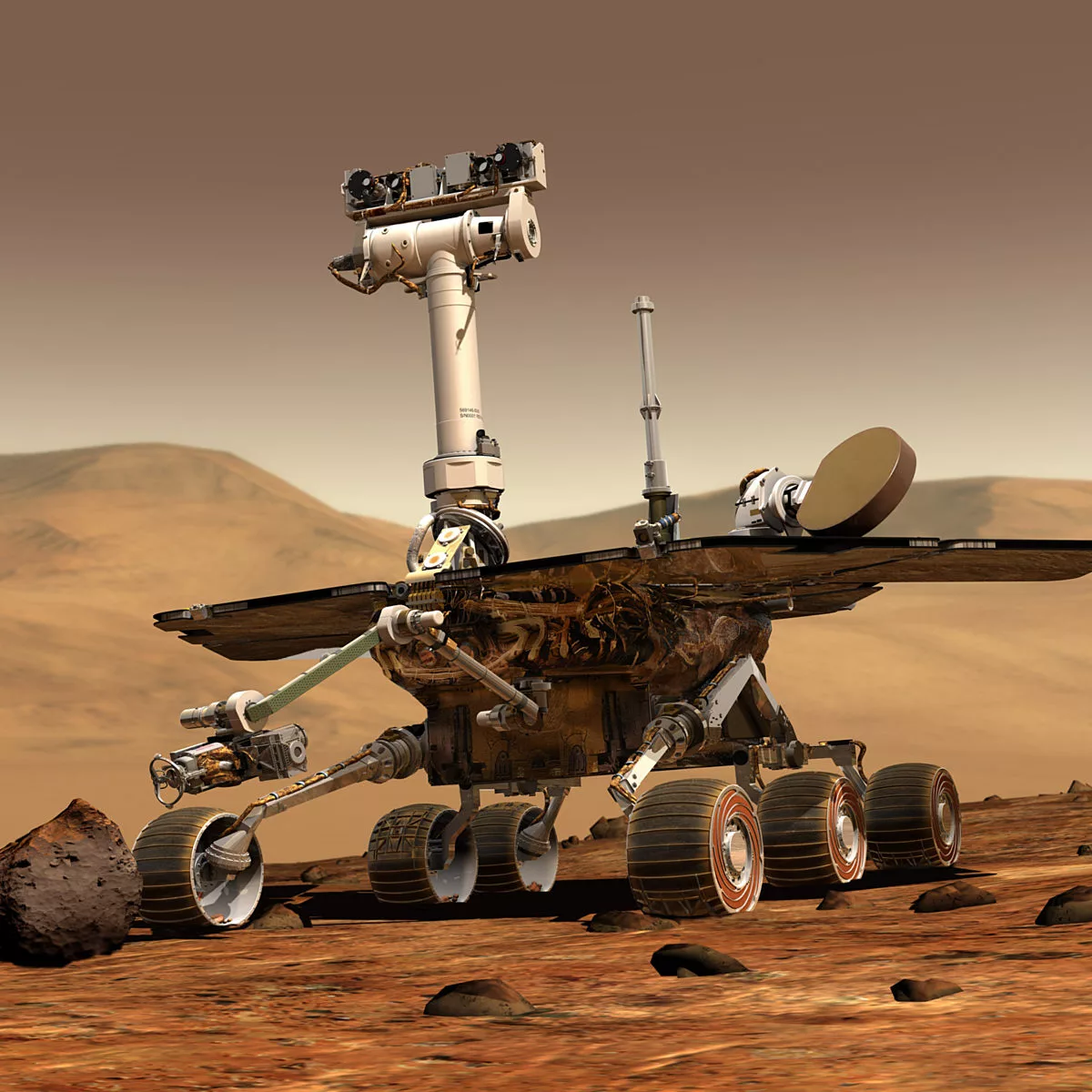
Field Report From Mars: Sol 3355 - July 2, 2013
By Sol 3325 Opportunity has driven up onto the next

Found a Killer Asteroid? Who Ya Gonna Call?
Astronomer Timothy Spahr directs the Minor Planet Center, the global clearinghouse for asteroids, comets and other relatively small objects in the solar system, including moons. He also coordinates the Society's Shoemaker NEO grant program.

The Ice Pits of Mars
The south polar cap of Mars is riddled with strange landscapes.

Hubble captures time-lapse of comet ISON
The Hubble Space Telescope captured a series of images showing Comet C/2012 S1 (ISON) plunging toward the sun.
Mars Exploration Rovers Mission Update: Opportunity Continues Sprint to Solander Point
The Mars Exploration Rover (MER) mission celebrated its 10th anniversary of leaving Earth in June, as Opportunity continued the sprint to its next winter haven at Endeavour Crater.

Dawn Journal: Breaking Velocity Records
The indefatigable Dawn spacecraft is continuing its extraordinary interplanetary flight on behalf of inquisitive creatures on distant Earth. Progressing ever farther from Vesta, the rocky and rugged world it so recently explored, the ship is making good progress toward its second port of call, dwarf planet Ceres.

Planetary Radio: Don't Step in That Puddle!
The Planetary Science Institute's Amanda Hendrix is the guest for our July 1 episode. She finds water in the least likely places, including Luna.


IRIS safely in orbit, ready to eye sun's atmosphere
IRIS, the Interface Region Imaging Spectrograph spacecraft, was launched from Orbital Science Corporation's Stargazer carrier aircraft over the Pacific Ocean at 7:27 p.m PDT.

Stationkeeping in Mars orbit
It had never occurred to me to think about geostationary satellites in Mars orbit before reading a new paper by Juan Silva and Pilar Romero. The paper shows that it takes a lot more work to maintain a stationary orbit at an arbitrary longitude at Mars than it does at Earth.

Worlds in Collision
Meet some worlds that were nearly shattered, literally.

How radar really works: The steps involved before getting an image
Arecibo Observatory is known for its 1000-foot diameter telescope and its appearances in Goldeneye and Contact. Aside from battling Bond villains and driving red diesel Jeeps around the telescope (grousing at the site director about the funding status of projects is optional), several hundred hours a year of telescope time at Arecibo go toward radar studies of asteroids.

If we started today, how long would it take to get to Mars? With this budget, never.
The House of Representatives held a hearing today to discuss their proposed NASA authorization bill, which would fund Planetary Science, cut Earth Science, forbid asteroid retrieval, and command NASA to pursue a path to Mars via the Moon.

Enormously detailed photo of Kasei Valles from Mars Express
ESA celebrated the tenth anniversary of Mars Express' launch with a several-day science meeting during which they issued lots of press releases and numerous spectacular photos. My favorite of them all is this enormous image of Kasei Valles on Mars.

A Little Moonlight
From far away, or from so near you could almost touch it, the moon is beautiful.