

 Explore Worlds
 Find Life
 Defend Earth


All
All
 Sun
Sun Mercury
 Venus
Venus Earth
Earth Mars
Mars Jupiter
 Saturn
 Uranus
 Neptune
 Small Bodies
Stories, updates, insights, and original analysis from The Planetary Society.


Notes from the Lunar and Planetary Science Conference: Is there ice at Mercury's poles?
Water ice at Mercury's poles? That's crazy, right? Mercury is so close to the Sun that it seems inconceivable that you could have water ice there. But Mercury's rotational axis has virtually no tilt (MESSENGER has measured its tilt to be less than 1 degree), so there are areas at Mercury's poles, most often (but not always) within polar craters, where the Sun never rises above the horizon to heat the surface.

Notes from Titan talks at the 2012 Lunar and Planetary Science Conference (LPSC)
One of the topics I found most exciting yesterday was a series of talks on Titan's climate. Bob West showed how Titan's detached haze has shifted with time. Zibi Turtle presented about how Titan's weather has changed with these seasonal changes. Jason Barnes followed up Zibi's talk -- which was based on Cassini camera images -- with a study of the same regions using data from Cassini's imaging spectrometer, trying to figure out what was going on with that brightening. Ralph Lorenz talked about rainfall rates on Titan. Jeff Moore asked: what if Titan hasn't always had a thick atmosphere?

Snapshots From Space Video: Revealing Jupiter's (Mostly) Unseen Treasures
Tens of thousands of Jupiter images were taken by the Voyager spacecraft, but relatively few have been processed to reveal their true beauty and wonder. The latest Snapshots video from Emily Lakdawalla explains why.


New views of Lunokhod 1 and Luna 17 from Lunar Reconnaissance Orbiter
It is always thrilling to see relics of human exploration out there on other worlds. Today, the Lunar Reconnaissance Orbiter Camera team posted some new photos of two defunct spacecraft: the Luna 17 lander and the Lunokhod 1 rover. I've posted images of the two craft before, but the ones released today are much better.

Pretty Picture: A snapshot of Voyager 1's departure from Jupiter
In this week's Snapshots from Space video, I talk about the Voyager 1 images of Jupiter -- how many there are (tens of thousands), and what a challenge they represent for image processors. But, I promise, the effort is worth it. Here's just one example: it's a color, crescent view of Jupiter, taken by Voyager 1 as it departed.

Pretty picture: A study in ringlight
Clearly, this is Saturn, and its rings, and if you look closer you can see a tiny circle, on top of the rings, which is Mimas, and two stars in the background. It should look weird to you that while the rings are bright, Mimas is a black dot. What is happening here? Nearly everything in this picture is lit by light that has not arrived directly from the Sun.
Solar storm in progress
Last night the Sun unleashed a large coronal mass ejection in our direction. Here is a compilation of images from SOHO's two LASCO cameras, plus a prediction from the new space weather prediction model that I learned about at the American Geophysical Union in December. The storm will arrive at Earth on March 8.
New "Snapshot From Space": Defending Our Planet
A new installment of our

Venus' very pretty craters
Each Magellan images of Venus seems to be a work of abstract art.

Pretty pictures: Voyager 2 at Jupiter
Here are two perfect examples of Voyager 2's amazing untapped treasures.

Mars Above, Mars Below
With Mars at opposition once again, astronomers around the world will soon be looking up for our best telescopic views of the Red Planet. But next weekend, I and a group of scientists will be turning our gaze downward for views of that alien planet.
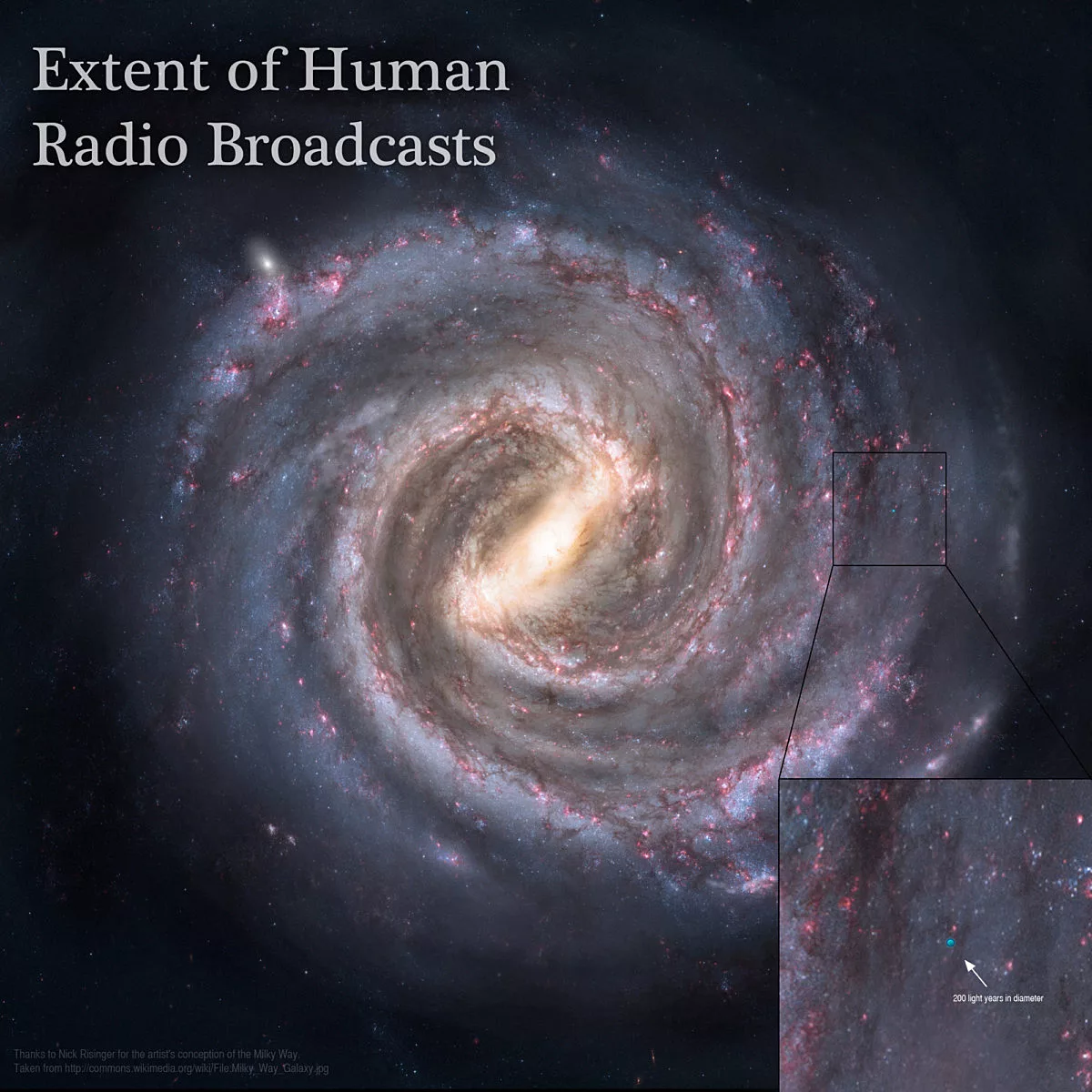
This is how far human radio broadcasts have reached into the galaxy
There is an ever-expanding bubble announcing Humanity's presence to anyone listening in the Milky Way.

Iapetus' peerless equatorial ridge
A new paper in the Journal of Geophysical Research - Planets by Dombard, Cheng, McKinnon, and KayI claims to explain how Iapetus' equatorial ridge formed. Cool!

Pretty picture: A sunset postcard and a special shadow from Opportunity
It took Don Davis many hours of meticulous labor to assemble this beautiful postcard from Mars.

Emily's New Video Series: Snapshots From Space
This is the first episode of editor Emily Lakdawalla's new video series exploring the solar system.

More Dawn Vesta approach images: First color views
On June 30, Dawn stopped thrusting for a full Vestian day -- five hours and 20 minutes -- and just watched the asteroid rotate. But unlike the previous observations, they used all of Dawn's color filters to acquire the best-ever color photos of the lumpy world.

The Scale of the Universe, by Cary and Michael Huang
Cary and Michael Huang present a basic

Where are the big Kuiper belt objects?
Earlier today I wrote a post about how to calculate the position of a body in space from its orbital elements. I'm trying to get a big-picture view of what's going on in trans-Neptunian space.