

 Explore Worlds
 Find Life
 Defend Earth


All
All
 Sun
Sun Mercury
 Venus
Venus Earth
Earth Mars
Mars Jupiter
 Saturn
 Uranus
 Neptune
 Small Bodies
Stories, updates, insights, and original analysis from The Planetary Society.

In Honor of JUICE, a New View of Europa
To celebrate ESA's selection of the JUICE mission to Jupiter, Ted Stryk produced a new global view of Europa from Galileo data.

Pretty pictures from Cassini's 1 May 2012 Dione flyby
Cassini performed its last of three close encounters with Enceladus for 2012 two days ago, and followed the flyby with some spectacular images of Dione.

3D view of an unnamed lunar crater
Grab your red-blue 3D glasses and dive in to this small but spectacular unnamed lunar crater as seen in a Lunar Reconnaissance Orbiter photo.
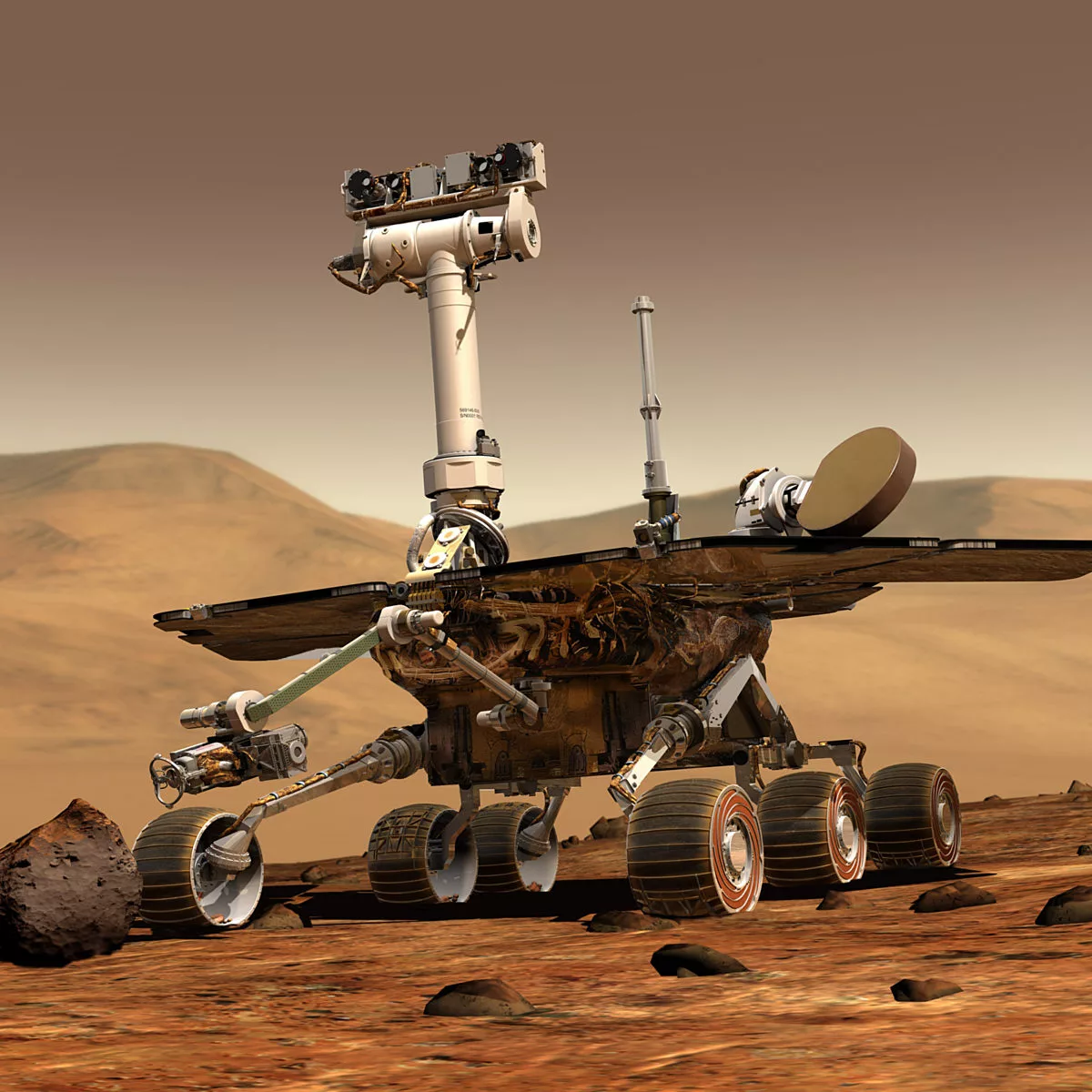
Mars Exploration Rovers Update: Opportunity Begins to Wrap Winter Science, Mission Celebrates Month 100
As winter began to retreat in the southern hemisphere of the Red Planet, Opportunity was commanded to finish up her science assignments in April in preparation for leaving its refuge, and the Mars Exploration Rover mission rolled through its 100th month of exploration.

Titan, Dead or Alive? A Debate
A lively discussion and debate between planetary polymaths Ralph Lorenz and Jeffrey Moore about Titan, hosted by the Denver Museum of Nature and Science, moderated by David Grinspoon.

Examining India's new RISAT 1 Earth observation satellite
Last week, India launched RISAT 1, a new Earth-observing satellite. How does its synthetic aperture radar compare to that of Envisat, which has fallen silent?

Swirly lava patterns in beautiful HiRISE images
In a channel near a pedestal crater on the plains of Cerberus Palus, Mars, there are wacky swirl patterns.

Planets around Alpha Centauri?
Do planets circle our closest stellar neighbors, the system loved by science fiction: Alpha Centauri? We don’t know. But, Debra Fischer, Julien Spronck, and their colleagues at Yale University, in part with Planetary Society support, are trying to find out.

Ski Helene?
I enthused about these Helene images the first time they came down from Cassini, and then forgot about them, and then was thrilled anew a couple of weeks ago when Daniel Macháček posted his version, processed from data published by the Cassini imaging team on April 1.

Cheat sheets for Vesta's craters and Dawn's Vesta timeline
I made myself a cheat sheet to many of Vesta's distinctive-looking craters, and also wrote down a list of the major dates in the timeline of Dawn's exploration of Vesta.

Planetary Radio: Taking Back the Night
Planetary Radio for April 16, 2012 features an interview with Scott Kardel of the International Dark Sky Association.

Pretty pictures from Cassini's weekend flybys of Enceladus and Tethys
Cassini flew past both Enceladus and Tethys on April 14. Here's a cool animation of its approach to Enceladus' plumes, and a pretty global picture of Tethys.

MESSENGER Mission Update: First burn performed to lower extended mission altitude
The MESSENGER mission just issued a press release announcing that they have completed the first step in the two-step process of lowering the spacecraft's orbit around Mercury.

Pretty Pictures: Amazing Asteroid Lutetia
A long-awaited data set is finally public (well, long-awaited by me, at least). The Rosetta team has now published their data from the July 10, 2010 flyby of asteroid (21) Lutetia. This data set is absolutely stunning, and my friends in the amateur image processing community wasted no time in creating art out of it.

A possible nine-planet system
Someone on Twitter pointed me to a paper recently posted to ArXiv titled

Pretty picture: Janus and Saturn
In the last few days as it's rounded periapsis in its current orbit of Saturn, Cassini has taken a lot of great photos of Saturn's moons. One series of photos was taken from pretty close to Janus, a moon about a third the diameter of Enceladus that orbits between the F and G rings. And among those, several were taken with the moon sitting in front of Saturn.

What Saturn's moons can tell us about comets (Notes from LPSC 2012)
My notes on a two-part presentation by collaborators Jim Richardson and David Minton about the sizes of things in the Kuiper belt, a story they told by looking at Saturn's moons. How does that work? What connects Saturn's moons to the Kuiper belt is craters.
Mars Exploration Rovers Update: Opportunity Gets Energy Boost and Works Through Depths of Winter
March came in like a lion and went out like a lamb at Meridiani Planum, Mars: Opportunity felt the cold wind on her solar panels, then

La Sagra Observatory discovers very near-Earth asteroid 2012 DA14
With a new CCD camera configured to shoot rapid, short exposures bought with a Planetary Society Shoemaker NEO Grant we caught near-Earth asteroid 2012 DA14.

Notes from the Lunar and Planetary Science Conference: Making Cassini's radar images prettier
One of the more exciting talks last week was given by Antoine Lucas about his work with Oded Aharonson