

 Explore Worlds
 Find Life
 Defend Earth


All
All
 Sun
Sun Mercury
 Venus
Venus Earth
Earth Mars
Mars Jupiter
 Saturn
 Uranus
 Neptune
 Small Bodies
Stories, updates, insights, and original analysis from The Planetary Society.

Pretty picture: Halo on a halo?
An interesting set of images of Titan that Cassini took recently shows a peculiar cap at Titan's south pole.

Yet more planet transits
A reader comment on Jay Pasachoff's post last week about Venus transits viewed from other planets had me asking whether transits of other planets were also interesting to astronomers. Jay provided some answers!

Chang'E 2 has departed Earth's neighborhood for...asteroid Toutatis!?
According to a Chinese spaceflight forum, Chang'E program chief scientist Ouyang Ziyuan recently announced that Chang'E 2 has departed the Sun-Earth L2 point and is now en route to asteroid 4179 Toutatis!

Steins, a jewel in the asteroid belt
A notice of some new names for features on asteroid 2867 Steins inspired me to dig up the data set from the September 5, 2008 Rosetta flyby and explore it to see what it contained.

Hold the Moon in Your Hands
Sky & Telescope and Replogle Globes teamed up to take advantage of the fabulous new Lunar Reconnaissance Orbiter image mosaic of the Moon to make an equally fabulous new Moon globe.
More Venus transits in 2012
A transit of Venus as seen from Jupiter may be observed by Hubble on September 20 and a transit of Venus as seen from Saturn will be observed by Cassini on December 21.

Remembering Ray Bradbury
Mat recalls stories from his many interactions with Ray Bradbury, and provides links to Ray's Planetary Radio episodes.
Not Necessarily Your Last Venus Transit!
Unless you are lucky and healthy enough to live for another 105 years, tomorrow will be your last chance to see a Venus transit from the surface of the Earth. But this need not be the last transit of Venus that you will ever see.

Artist's views of a night sky transformed by a galaxy merger
A measurement of the Andromeda galaxy's proper motion shows it's coming directly at us, and will collide with the Milky Way in 4 billion years. The event will transform the appearance of our night sky.
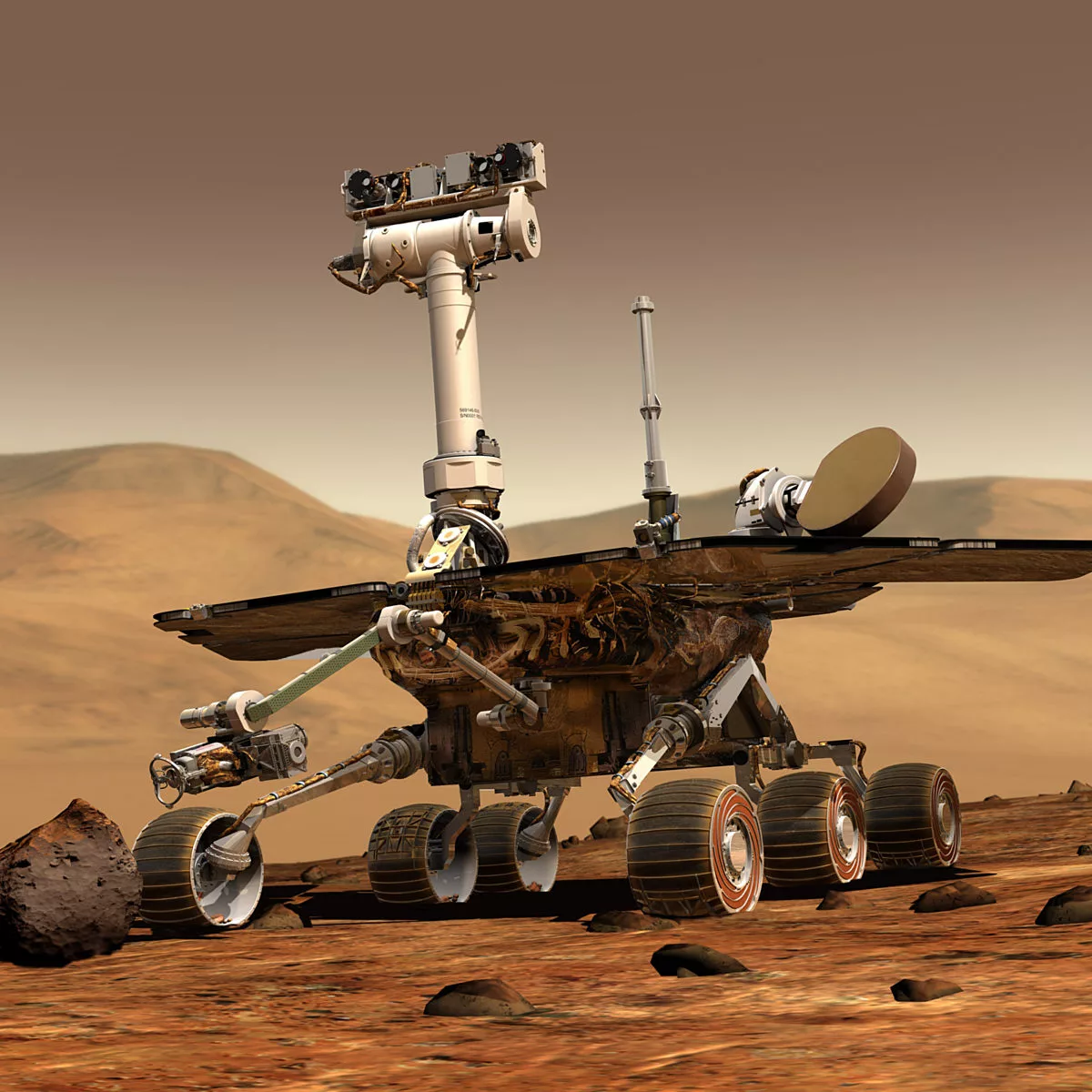
Mars Exploration Rovers Update: Opportunity Departs Winter Site for Field of Veins
The Mars Exploration Rover Opportunity strolled out of her winter haven this May to continue the expedition around Endeavour Crater, roving into yet another Martian spring.

A solar eclipse - as viewed from the Moon
A solar eclipse isn't just a spiffy sight to Earthlings; it looks pretty cool to lunar dwellers as well.

Video: Saturn makes its own drama (with a little help)
The apparently simple device of running Cassini images together like a flipbook makes for a dramatic movie, especially with the help of well-timed musical cues.
Some Details About Transits of Venus
The upcoming rare transit of Venus is one step in a long dance among Earth, Venus and the Sun. Transits of Venus follow a peculiar pattern—two transits 8 years apart, then 105.5 years with no transits, then two transits 8 years apart, then 121.5 years with no transits, for a total cycle of 243 years—and thereby hangs a tale.

Methone, an egg in Saturn orbit?
Cassini obtained its first high-resolution images of Methone on May 20, 2012. Methone is one of the smallest regular moons of Saturn, having a diameter of only about 3 kilometers. It was the first moon that Cassini discovered, very early in Cassini's mission at Saturn, in 2004.

A stunning view of Mars from Argyre to Thaumasia
Image magician Daniel Machacek has done it again, producing a jaw-dropping view of Mars from Viking Orbiter 1, featuring a frosty Argyre basin and stretching across to a series of faults called Thaumasia Fossae.

Cool video: Jupiter, its moons, a comet, and...the Sun?
Here's a neat video posted by SungrazerComets (the Twitter identity of the U.S. Naval Research Laboratory's Sungrazing Comets website) this morning.

Making eclipse magic
How to enjoy a solar eclipse with your kids, making shadow magic with a pinhole viewer.

Third Martian Anniversary for Mars Climate Sounder
May 16, 2012 is the third martian anniversary of the start of Mars Climate Sounder (MCS) observations from Mars Reconnaissance Orbiter. MCS started measuring the atmosphere of Mars three Mars years ago, on September 24, 2006. We can now compare the weather and behavior of the atmosphere in three different years, and find the temperature differences to be surprisingly large.

Night Sky Guide for Summer 2012
This summer should provide great opportunities for stargazers to view planets, meteor showers, the transit of Venus, and for some, the annular solar eclipse. Check out these highlights of what you can look forward to this summer.

More Evidence for Impact Origin for Colombia’s Vichada Structure
Evidence continues to pile up that the Rio Vichada structure in Colombia is indeed the largest impact structure in South America.