

 Explore Worlds
 Find Life
 Defend Earth


Days after Artemis II, scientists warn of deep cuts to NASA missions

Written by
Asa Stahl, PhD
Public Outreach Astronomer, The Planetary Society
April 27, 2026
On April 3, 2026, the White House announced a plan to cancel over 50 space missions — including spacecraft already paid for, launched, and making discoveries — as part of a devastating 46% cut to NASA science. The proposal would likely eliminate thousands of jobs at an agency that has just launched astronauts to the Moon for the first time in decades, and dozens of other space missions would see their operations reduced or slowly wound down to a halt.
To learn what’s at stake, The Planetary Society interviewed some of the scientists behind these threatened missions. They are world-class experts who speak from personal experience. In many cases, they have devoted decades of their lives to these projects.
Here is what they have to say, in their own words.
A full guide to the NASA missions at risk is available here. To help Save NASA Science, check out our action hub.
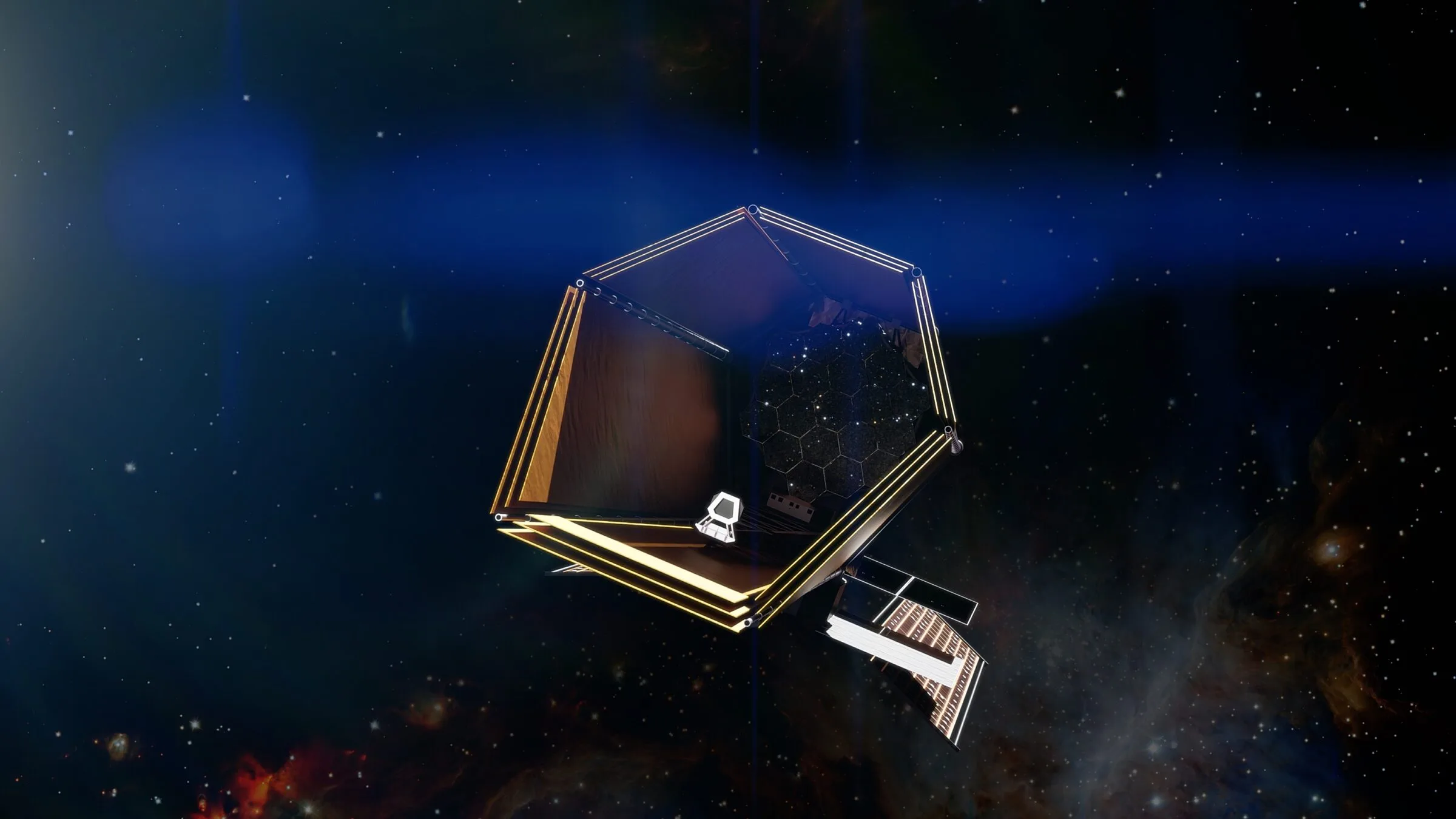
Evgenya Shkolnik — Habitable Worlds Observatory
NASA’s Habitable Worlds Observatory (HWO) is a flagship space telescope currently under development. Evgenya Shkolnik, PhD, is the co-chair of the mission's Community Science and Instrument Team and a professor at Arizona State University's School of Earth and Space Exploration.
In one sentence, what does HWO aim to do?
The Habitable Worlds Observatory is NASA’s next flagship mission in development, built to search for life on dozens of Earth-like planets beyond our Solar System while addressing fundamental questions about our Universe, including how galaxies evolve, where heavy elements come from, and how the most extreme stars form and emit their powerful energy. These science goals are a direct response to the nation’s top astrophysical priorities.
What potential discoveries are at stake if HWO is defunded or canceled?
Canceling HWO would destroy humanity’s first real opportunity to detect life on another planet and determine whether life is common or rare in the Universe. After millennia of wondering, “Are we alone?”, we finally have the technological means to answer it, and it would be a great shame to abruptly halt all this progress.
How does HWO fit into NASA’s overall mission?
HWO is the direct successor to the Hubble Space Telescope and the James Webb Space Telescope, advancing NASA’s core mission to explore the Universe and search for life. NASA is the only agency in the world with a demonstrated track record of delivering transformative observatories of this scale, and sustaining that leadership is critical as other nations rapidly expand their capabilities and seek to lead in these same science areas.
Why should this mission matter to people?
HWO matters because it tackles one of humanity’s oldest questions, “Are we alone?”, at a moment when we finally have the capability to answer it, while also building the savvy workforce needed to drive technological innovation, strengthen U.S. STEM leadership, and deliver discoveries that will expand our understanding of our place in the universe.
How many people are on your team?
Approximately 200 people are directly on the HWO team, with over a thousand additional U.S. astronomy and aerospace experts volunteering their time and expertise through working groups, program analysis groups, and science interest groups.
How many states are represented by the mission team?
At least 16 states are represented across NASA centers, industry partners, and the HWO Community Science and Instrument Team.
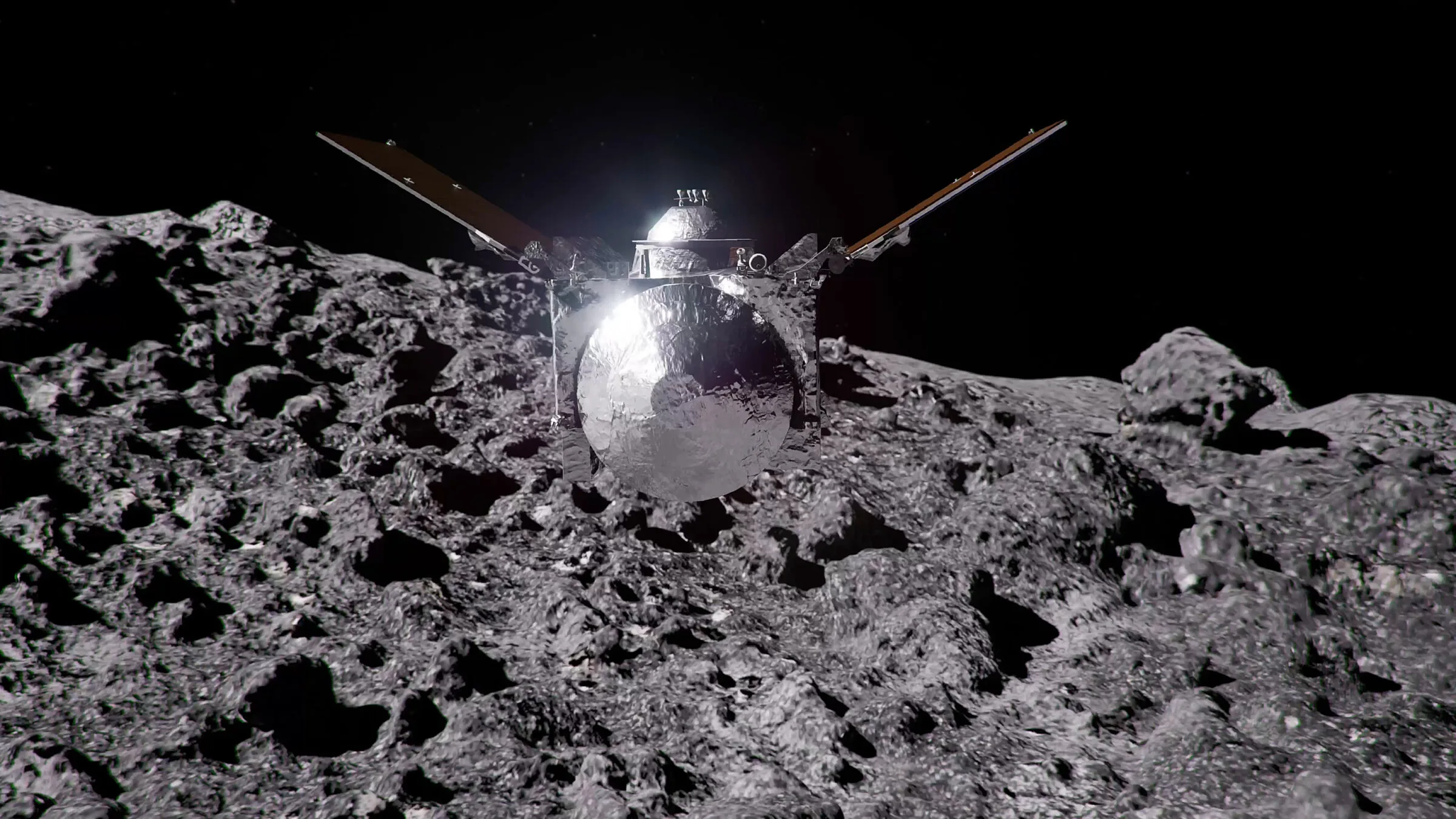
Daniella DellaGiustina — OSIRIS-APEX
NASA’s OSIRIS-APEX (Origins, Spectral Interpretation, Resource Identification, and Security – APophis EXplorer) is a probe currently on its way to intercept the asteroid Apophis. Daniella DellaGiustina, PhD, is the mission’s principal investigator and a professor at the University of Arizona's Lunar and Planetary Laboratory.
In one sentence, what does OSIRIS-APEX aim to do?
OSIRIS-APEX capitalizes on the exceptionally rare 2029 Earth flyby of the potentially hazardous asteroid Apophis to advance planetary defense strategies and reveal how Earth’s gravity alters an asteroid’s surface and interior.
What potential discoveries are at stake if OSIRIS-APEX is defunded or canceled?
Canceling the mission would forfeit our only in-flight opportunity — and NASA’s sole planned mission — to observe how Earth’s gravity affects the near-Earth asteroid Apophis during its once-in-7,500-year encounter. We would lose crucial insights into asteroid surface evolution, impact risk, and planetary defense mitigation strategies.
How does OSIRIS-APEX fit into NASA’s overall mission?
OSIRIS-APEX directly advances NASA’s goals in planetary defense, Solar System exploration, and spacecraft reusability by enabling transformative science at low cost — repurposing the existing OSIRIS-REx spacecraft for a new mission.
Why should this mission matter to people?
On Friday, April 13, 2029, asteroid Apophis will fly by the Earth at one-tenth the distance from the Earth to the Moon, closer than geosynchronous satellites, and will be naked-eye visible to two billion people worldwide. This will be the largest object to pass Earth this closely in recorded history. OSIRIS-APEX protects our future. What we learn from Apophis could help safeguard Earth from asteroid threats, inform resource-extraction strategies on small bodies, and inspire the next generation through a dramatic and accessible planetary encounter. By observing the asteroid and Earth together in a remarkably close "near-miss" encounter, OSIRIS-APEX will help convey both the scale of the event and just how close Apophis will come.
How many people are on your team?
170.
How many states are represented by the mission team?
12.
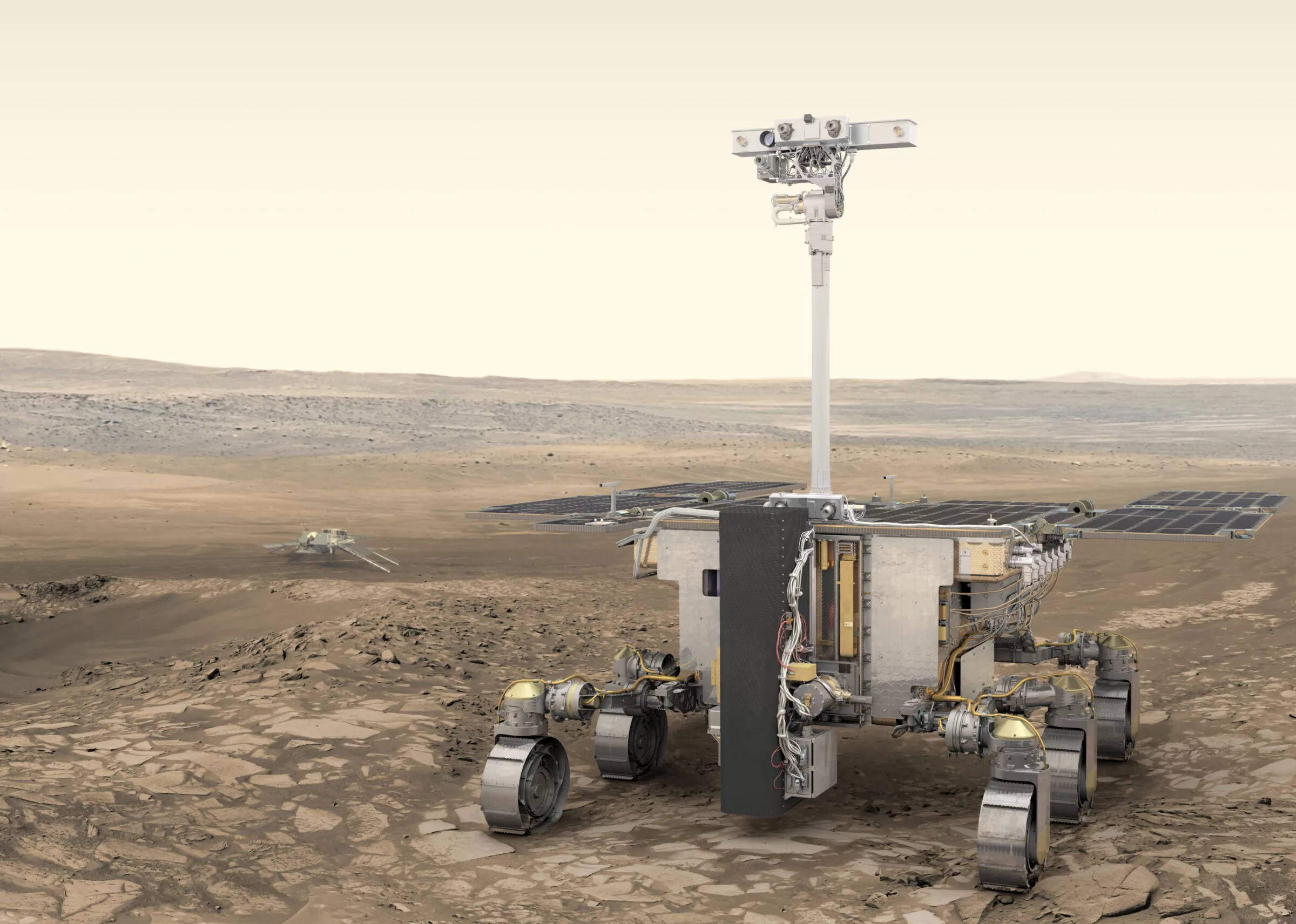
Ricardo Arevalo, Jr. — Rosalind Franklin ExoMars Rover
The European Space Agency's Rosalind Franklin rover is slated to launch to Mars in 2028, with NASA collaborating on the mission and providing one of its key instruments. Ricardo Arevalo, Jr., PhD, led the development of part of this key instrument and is a professor in the Department of Geological, Environmental, and Planetary Sciences at the University of Maryland. As of April 2026, NASA appears to be moving forward with its contribution to Rosalind Franklin, but since there is no funding allocated for the project in the new budget plan, it is unclear if the agency intends to draw on other funding that is not being reported, complete the project during this fiscal year, or is moving forward despite a projected lack of funds.
In one sentence, what does Rosalind Franklin aim to do?
The ExoMars Rosalind Franklin rover will deliberately search for signs of life [on Mars] by analyzing the composition of samples collected from as deep as 2 meters below the surface, where fragile biomolecules and other prospective "biosignatures" may be protected from harmful radiation and oxidizing chemicals.
What potential discoveries are at stake if Rosalind Franklin is defunded or canceled?
The ExoMars Rosalind Franklin mission represents our best chance to observe physical, chemical, and/or morphological evidence for extant or extinct life on Mars.
Why should this mission matter to people?
The recent release and box office success of the Project Hail Mary film illustrate that the public remains highly interested in astrobiology and planetary exploration. The ExoMars Rosalind Franklin mission promises to bring science fiction into reality by searching for life signs on Mars with a cutting-edge payload that can uniquely access and characterize subsurface materials on Mars.
How many people are on your team?
More than 100 scientists, engineers, managers, etc. have contributed to the development of the Mars Organic Molecule Analyzer (MOMA) mass spectrometer, a highly advanced chemical sensor developed by NASA and the key astrobiology instrument for the entire mission.
How many states are represented by the mission team?
Nearly a dozen U.S. states have been involved with the development of MOMA.

Stephen Kane — DAVINCI
NASA’s DAVINCI (Deep Atmosphere Venus Investigation of Noble gases, Chemistry, and Imaging) is a planned atmospheric descent probe to Venus. Stephen Kane, PhD, is a member of the mission’s science team and a professor of planetary astrophysics at the University of California, Riverside.
In one sentence, what does DAVINCI aim to do?
The DAVINCI mission is an atmospheric probe that will be deployed to our sister planet, Venus, and provide the first detailed measurements of the composition and chemistry of the atmosphere all the way down to the surface of the planet, as well as imaging some of the oldest terrain on its surface.
What potential discoveries are at stake if DAVINCI is defunded or canceled?
Venus research is fundamental to understanding how planets evolve through time. Although Venus is the same size as Earth and often referred to as our twin planet, the surface of Venus is frequently considered to be the most hostile environment that exists within the Solar System. However, Venus likely once had surface conditions similar to Earth, complete with oceans, and we still don't understand how it became the hellscape we see today.

How does DANVINCI fit into NASA’s overall mission?
First, the study of Venus is the study of Earth, since Venus is Earth's twin and yet underwent a very different evolution. Second, Venus is one of only a handful of terrestrial bodies within the Solar System with a substantial atmosphere, and so the science of how Venus produced and maintains its atmosphere is a major component to understanding terrestrial planet evolution as a whole.
Third, Venus is a fundamental part of the NASA astrobiology story. We don't know how or why Venus diverged from a habitable state. Analysis of exoplanet atmospheres will rely heavily upon models that are built from in situ data acquired here in the Solar System, but those models are woefully incomplete due to lack of data for the Venusian deep atmosphere. Indeed, many exoplanets may be in a state like Venus, but we may fail to recognize such planets without adequate understanding of the Earth-sized planet right next to us.
Why should this mission matter to people?
The missions to Venus represent a giant step forward in planetary science that pushes the boundaries of studying Venus significantly further than ever before. Also, the technology needed to overcome the challenges of the hostile Venus environment is resulting in numerous advances in our understanding of material tolerances and behavior in high temperature and pressure conditions.
America has fallen behind in Venus science over several decades, but the combination of science and technology that is being pushed forward by these missions will ensure that the United States of America regains and preserves its leadership in the study of our sister planet. Furthermore, the missions and their frequent discoveries will inspire a new generation to pursue science and technology research that will greatly benefit our country.
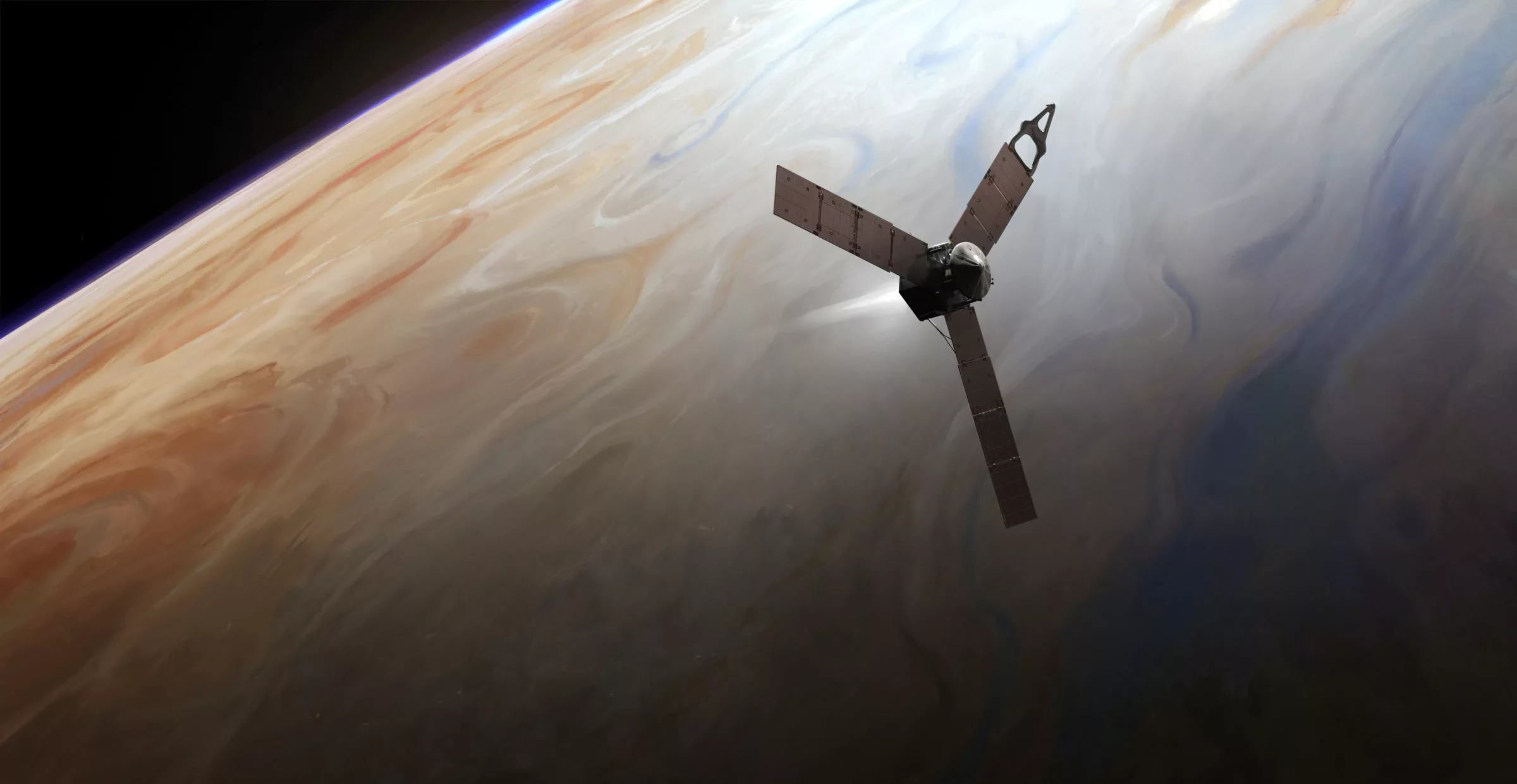
Scott Bolton - Juno
NASA’s Juno spacecraft is currently in orbit around Jupiter. Scott Bolton, PhD, is the mission’s principal investigator and associate vice president of Southwest Research Institute's Space Science and Engineering Division.
In one sentence, what does the mission you’re working on aim to do?
Initially focusing on Jupiter’s interior, atmosphere, and aurora, [Juno] has expanded during its extended mission to be a full system explorer capable of investigating the Galilean satellites, rings, inner moons, radiation belts, and boundaries of Jupiter’s magnetosphere.
What potential discoveries are at stake if Juno is defunded or canceled?
Juno provides a unique opportunity to investigate previously unexplored regions of the Jovian system. Its next phase includes close flybys of the moons Thebe, Amalthea, Adrastea, and Metis. In addition to scientific exploration, Juno is providing critical new information directly relevant to national security by teaching us how space systems can survive and even reverse degradation from exposure to intense radiation.
How does Juno fit into NASA’s overall mission?
In addition to helping to lay a foundation for NASA’s Europa Clipper and ESA’s Jupiter Icy Moons Explorer (Juice) missions en route to Jupiter, Juno is providing the basis of understanding to compare the characteristics of Jupiter with the other giant planets in the Solar System: Saturn, Uranus, and Neptune. This is vital for our understanding of Solar System formation and evolution, and for understanding planetary systems throughout the galaxy.
Why should this mission matter to people?
Continuing NASA’s Juno mission is a strategic investment in planetary science, offering continued insights into the Jupiter system and informing future exploration missions. The mission’s unique capabilities, cost-effectiveness, and alignment with strategic priorities make it an invaluable asset to the scientific community and the nation’s space exploration goals.
How many people are on your team?
There are about 200 people working on Juno, mostly part-time.
How many states are represented by the Juno team?
10 states.

Darby Dyar — VERITAS
NASA’s VERITAS (Venus Emissivity, Radio Science, InSAR, Topography, and Spectroscopy) is a planned Venus orbiter. Darby Dyar, PhD, is the mission’s deputy principal investigator, a professor of astronomy at Mount Holyoke College, and a senior scientist at the Planetary Science Institute.
In one sentence, what does VERITAS aim to do?
VERITAS will create unprecedented, global, high-resolution datasets [of Venus] designed to answer a fundamental question for rocky planets: how did Earth and her twin Venus evolve into two entirely [different] examples of planetary habitability?
What potential discoveries are at stake if VERITAS is defunded or canceled?
VERITAS will be the first mission to search for the fingerprint of prolonged potentially habitable surface water [on Venus], find out if there are abundant active volcanoes, assess whether Venus today has some of the same process[es] as formed in Earth’s first 1-2 billion years and shaped its evolution, and determine why Venus has no magnetic field[, among other things].
VERITAS is poised to make discoveries beyond what we can imagine today. Ultimately, VERITAS addresses whether our home planet is unique, how Venus and Earth evolve over time, and how likely we are to find Earthlike planets around other suns.

Why should this mission matter to people?
VERITAS is a once-in-a generation mission. [It will] pioneer new spacecraft navigation and will utilize machine learning (AI) to both improve orbit knowledge and the ability to navigate precisely around planetary bodies. VERITAS will generate critical datasets at 10–100× the resolution of existing data, strengthening ties with space-faring allies. [It will be] an inspiration and rich dataset for supporting the education of the next generation of STEM workers.
How many people are on your team?
In the United States currently ~100 people work on VERITAS. Similar numbers of people are working on the mission as part of our international partner contributions.

Paul Byrne — EnVision
The European Space Agency’s EnVision spacecraft is a planned Venus orbiter. Paul Byrne, PhD, is a member of the mission’s science study team and a professor of Earth, environmental, and planetary sciences at the Washington University in St. Louis. NASA is a key partner in the mission and has been slated to contribute an important instrument to the spacecraft, called VenSAR. Recently, the possibility of NASA withdrawing support has led ESA to open up a contract for a European replacement of VenSAR.
In one sentence, what does EnVision aim to do?
Help answer questions about the history, geology, and climate of Venus.
What potential discoveries are at stake if EnVision is defunded or canceled?
The EnVision mission will address questions as fundamental as whether Venus was once habitable, and whether (and to what extent) geological processes are taking place there today.
How does EnVision fit into NASA’s overall mission?
One of NASA's core missions is the pursuit of scientific questions related to planetary formation and evolution, including our very own world. Choosing to no longer provide the VenSAR instrument [to EnVision] directly strikes at one of the primary reasons for why NASA exists — to explore the Cosmos and, ultimately, help answer why we're here and whether we're alone.
Why should this mission matter to people?
Venus is the only other Earth-size world we will ever send spacecraft to. If we're to fully understand Earth's own habitability and the origin of life here, then understanding what made modern, hellish Venus so different is key. EnVision has the ability to tackle and answer some of these questions, providing new information not only on why our nearest planetary neighbor is so un-Earth-like, but why our own world has managed to remain hospitable for billions of years.
How many people are on your team?
Likely several dozen, at least.
More at stake
The missions described here are just a few of the dozens put at risk of being defunded or canceled. The new budget proposal would shut down New Horizons, the first spacecraft to fly by Pluto up close, while it is actively exploring the outermost reaches of the Solar System. It would roughly halve the budget for NASA’s Perseverance rover, forcing it to slow operations. It would turn off some of the most powerful space telescopes ever built, and lead to job losses, stalled innovation, and setbacks for U.S. space leadership.
We are encouraging Congress to reject the White House’s plan and organizing ways you can show elected officials that space science and exploration matter. If enough people take action, there is still time to save NASA science from this extinction-level event.
Save NASA Science Action Hub
Updates and actions on the proposed cuts to NASA science in FY 2027.
You Power the Next Great Discovery!
Fund future scientific research that advances space science and exploration with your gift today.
Donate