

 Explore Worlds
 Find Life
 Defend Earth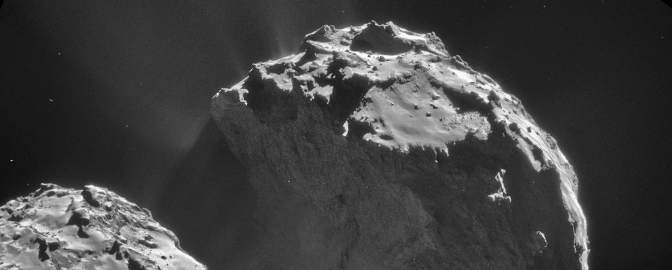


All
All
 Sun
Sun Mercury
 Venus
Venus Earth
Earth Mars
Mars Jupiter
 Saturn
 Uranus
 Neptune
 Small Bodies
Stories, updates, insights, and original analysis from The Planetary Society.

Desert Moon, Narrated by Former Astronaut Mark Kelly, Now Available Online
Desert Moon, a 35-minute documentary that tells the story of Dr. Gerard Kuiper and the dawn of planetary science, is now available online.

Mars Academy
A new project—

Announcing: Planetary TV!
Planetary Society Media Producer Merc Boyan presents our new video resource.

The Mapping of Pluto Begins Today
When New Horizons flies past Pluto in July, we will see a new, alien landscape in stark detail. At that point, we will have a lot to talk about. The only way we can talk about it is if those features, whatever they turn out to be, have names.

Report: NASA May Be Hard-Pressed to Launch SLS by November 2018
A report released by NASA’s Office of Inspector General warns that the agency may be hard-pressed to have its Kennedy Space Center launch facilities ready by November 2018.
Slides from the LPSC 2015 Session on the Community Response to NASA's Budget Request
The Planetary Society helped organize a community response to the latest NASA budget at the 2015 meeting of the Lunar and Planetary Science Conference.
LPSC 2015: "Bloggers, please do not blog about this talk."
One presenter at the Lunar and Planetary Science Conference asked the audience not to blog about his talk because of the embargo policy of Science and Nature. I show how this results from an incorrect interpretation of those policies. TL;DR: media reports on conference presentations do not violate Science and Nature embargo policies. Let people Tweet!

LPSC 2015: First results from Dawn at Ceres: provisional place names and possible plumes
Three talks on Tuesday at the Lunar and Planetary Science Conference concerned the first results from Dawn at Ceres. Chris Russell showed a map of

Launch Pad Animals, Ranked
A semi-authoritative ranking of creatures that co-inhabit rocket launch sites around the world.

LPSC 2015: Philae at comet Churyumov-Gerasimenko
In my first post from the 2015 Lunar and Planetary Science Conference, I discuss the latest work on Philae images, and some cometary polymers.

How Do We Know When We Have Collected a Sample of Bennu?
A huge amount of effort goes into deciding where to try to collect a sample on Bennu. There are roughly nine months to survey, map and model the asteroid to help make this decision.
LightSail Featured on CBS Evening News
The Planetary Society's LightSail spacecraft made an appearance on national television Monday night during a two-minute segment by CBS Evening News.

Is the Opportunity Rover a Mission 'Whose Time Has Passed'?
The NASA Administrator declared that the Opportunity rover is a mission 'whose time has passed' and will be defunded next year. Will Congress act to save it?

If it's March, it must be LPSC
Next week is the 46th Lunar and Planetary Science Conference (LPSC), and Emily Lakdawalla will be attending to tweet and blog about news from Rosetta; Curiosity; MESSENGER; GRAIL; Chang'e 3; Dawn; New Horizons; Cassini; and more.

Adding Churyumov-Gerasimenko to my scale comparison of comets and asteroids
Having found a color photo of the comet, I finally added Churyumov-Gerasimenko to my scale comparison of comets and asteroids visited by spacecraft.

An internal ocean on Ganymede: Hooray for consistency with previous results!
A newly published paper confirms a subsurface ocean at Ganymede. An ocean there was already suspected from its magnetic field and predicted by geophysics; new Hubble data confirms it, and even says it is in the same place we thought it was before. Such consistency is rare enough in planetary science to be worth celebration.

In Pictures: Expedition 42 Crew Returns to Earth
Three International Space Station crew members are back on Earth today following a morning Soyuz landing on the snowy steppes of Kazakhstan.

NASA and Orbital ATK Complete SLS Booster Test (Updated)
A blast of fire and smoke lit up the hills of Promontory, Utah this morning as NASA and Orbital ATK completed a test firing of a Space Launch System solid rocket booster.

What to expect when you're expecting a flyby: Planning your July around New Horizons' Pluto pictures
As New Horizons approaches Pluto, when will the images get good? In this explainer, I tell you what images will be coming down from Pluto, when. Mark your calendars!

Interview with an SLS Engineer: How Booster Test May Help Drive Golden Spike for Interplanetary Railroad
With NASA and Orbital ATK preparing for an important test tomorrow in Utah, an SLS engineer describes the inner workings of the vehicle's new solid rocket boosters.