

 Explore Worlds
 Find Life
 Defend Earth


The Downlink • May 29, 2026
Big impacts
Space Snapshot

Hokusai crater on Mercury, pictured here on the upper right near the limb, may have reshaped the planet in more ways than one. This image from NASA’s MESSENGER spacecraft captures the rays of debris that the impact splashed across much of the planet’s surface, which are the longest known on Mercury. In a recent study, astronomers found the same impact could have delivered much of the water now known to be frozen in permanently shadowed craters at the planet’s poles. The impactor could have been 17 kilometers (11 miles) wide, about as large as a major city. Image credit: NASA / Johns Hopkins University Applied Physics Laboratory / Carnegie Institution of Washington
Fact Worth Sharing

The rays extending from Tycho crater, one of the most visible craters on the Moon, are longer than those around Mercury’s Hokusai crater. They span more than 1,500 kilometers (930 miles), over 40% of the Moon’s diameter.
Mission Briefings


NASA announced a major reorganization. Administrator Jared Isaacman rolled out significant structural changes to NASA, which are not expected to result in any layoffs, facility closures, or canceled missions. They involve two mergers of mission directorates, the creation of a new Science Operations Center for science missions in extended operations, and recompeting the contract to manage the Jet Propulsion Laboratory for the first time in nearly 50 years. Read more about the changes on our Save NASA Science action hub.

Asteroid impact sites could have fostered life on Earth — and beyond. Researchers have discovered stromatolites, a kind of rock mainly produced by ancient microbes, in an asteroid impact crater in South Korea. The findings hint that the asteroid impact that carved the crater might have made for the sort of temperate environment that is hospitable for early life. Since Mars once hosted impact craters full of water, too, they may be worth exploring for evidence of past life.

A base on the Moon just got a little closer. NASA awarded contracts for the first wave of landers and rovers that will assist the Artemis astronauts in building an eventual base near the south pole of the Moon. The agency also renamed a number of existing commercial lunar missions into a “Moon Base” mission program, while providing more details on the MoonFall drones that will help prepare for the base.
From The Planetary Society


What would it be like to fly through Saturn’s rings? Our new article takes you on a tour through one of the Solar System’s most beautiful wonders, explaining the many ways it looks entirely different up close. Image credit: NASA / JPL-Caltech / Space Science Institute
One of the oldest and largest amateur astronomy clubs turns 100. To celebrate, join Planetary Radio host Sarah Al-Ahmed on this week’s episode as she attends the Los Angeles Astronomical Society’s centennial star party and speaks with some of its major figures, including Griffith Observatory Director Ed Krupp.
How will Artemis search for life? Last week, Society staff helped lead two events at the Astrobiology Science Conference in Madison, Wisconsin. Chief of Space Policy Casey Dreier led a discussion on “Astrobiology Strategy in the Age of Artemis,” while Director of Government Relations Jack Kiraly held an event on communicating with the U.S. Congress.
Our book club goes live with “The Edge of Space-Time.” Join host Mat Kaplan for a live conversation with Chanda Prescod-Weinstein, author of “The Edge of Space-Time: Particles, Poetry, and the Cosmic Dream Boogie,” as they explore the physics of the universe through popular culture and Black feminist thought. Members can join in the online member community at 9 p.m. EDT on Tuesday, June 2, and participate in the discussion. Not yet a member? Join today.
Experience the aurora in Alaska

Join The Planetary Society’s travel partner Betchart Expeditions on their Alaska Aurora Borealis Expedition, Feb. 28 - March 6, 2027. Explore Alaska and witness the aurora borealis, the greatest light show on Earth! Enjoy a rail journey passing Denali, the Ice Art Festival, the Poker Flat Research Range, a sled dog demonstration, the Wildlife Conservation Center, and more. Contact: 1-800-252-4910 or [email protected], or visit their website to learn more.
What's Up
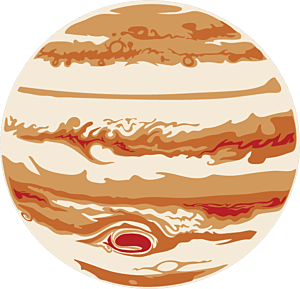
In the early evening, look for super-bright Venus in the west with Jupiter above it. Mercury will be below both, just after sunset. Saturn will be visible low in the east before dawn. Learn more about what to look for in June’s night skies.
Help save space missions. Join today!

If you are not already a member, we need your help! Funding for space science is not guaranteed. It requires the voice of passionate advocates like YOU.
NASA funding must grow, not shrink, if the agency is to succeed in returning to the Moon, exploring the Solar System, and seeking out life beyond Earth.
We must prevent future budget cuts. When you become a member of The Planetary Society, you join the world’s largest and most influential space advocacy nonprofit. Will you join us and support a future full of space exploration?
Wow of the Week

We tend to think of Saturn’s rings as flat, but they have “spikes” that rise up to 3.5 kilometers (2.2 miles) from the rest of the ring material nearby. These are thin towers of ice, caused by nearby clumps of orbiting material called moonlets. The moonlets’ gravitational pull interacts with the ring material to compress the ice and force it upward. Image credit: NASA/JPL-Caltech/SSI
Send us your artwork!
We love to feature space artwork in the Downlink. If you create any kind of space-related art, we invite you to send it to us by replying to any Downlink email or writing to [email protected]. Please let us know in your email if you’re a Planetary Society member!