

 Explore Worlds
 Find Life
 Defend Earth


The Downlink • Oct 09, 2026
Born from fire
Space Snapshot

The Arsia Mons Elongated Cloud, which regularly stretches out to nearly the same length as Italy, is one of the most famous clouds on Mars. Using data from the European Space Agency’s Mars Express orbiter — which also took the photograph above — researchers have now found it may form unlike any other cloud in a planet’s atmosphere observed to date. The ice that makes up this giant cloud may form directly out of water vapor, the scientists claim, rather than coalescing on specks of dust, salt, or other tidbits like clouds do on Earth. Image credit: ESA/DLR/FU Berlin.
Fact Worth Sharing

Arsia Mons, the volcano beside the cloud pictured above, is one of the largest volcanoes on Mars. It hosts several deep pits along its flanks, some of which may be cave entrances that could offer potentially interesting destinations to explore.
Mission Briefings


NASA’s DAVINCI spacecraft can take the heat. To prepare for DAVINCI’s mission to Venus, an engineering model of the spacecraft’s atmospheric descent probe was put through a series of furnace tests at Rex Heat Treat in Bedford, Pennsylvania, this past August and September. The tests — which the probe passed — mimicked the rapid, extreme heating that DAVINCI will experience as it descends through Venus’ atmosphere. Image credit: NASA/Mike Guinto.

Astronomers may have discovered a planet that formed during the death throes of its star. According to a recent study, the candidate Jupiter-sized world may have been born out of material thrown off from a star as it ran out of fuel. By comparison, most known planets are thought to have come together out of the material left over from the formation of their host stars.

NASA is building science into its Moon Base plans. The agency selected three investigations that could be incorporated into a future Moon Base: an instrument suite to look for underground lava tubes, an experiment to measure properties of the Moon's surface and any water ice present, and a station to monitor for seismic events, micrometeoroids, and other environmental conditions.
From The Planetary Society


Check out our guide to sidewalk astronomy. If you’ve ever thought about setting up a telescope outside and offering passersby a glimpse of the Cosmos — and with Halloween coming up, now may be the time — it comes with a few best practices. Our latest article offers our top tips on hosting your own sidewalk astronomy event, drawn from both personal experience and that of The Planetary Society’s members. Image credit: Grand Canyon National Park.
Hear about the latest innovations in space exploration. In Planetary Radio’s second episode at the 2026 NASA Innovative Advanced Concepts (NIAC) Symposium, host Sarah Al-Ahmed speaks with several scientists behind bold, early-stage ideas for space exploration, including new ways to reach the outer Solar System quickly or produce oxygen on long-duration space missions.
This month, The Planetary Society’s book club is all about cosmic beauty. If you missed it, you can watch a recording of this month’s discussion of “The Art of the Cosmos,” a book of 100 beautiful space images by author Jim Bell. Bell is a planetary scientist at Arizona State University and a member of The Planetary Society’s board of directors. Next month, the book club will host author Annalee Newitz for a conversation in our member community on their sci-fi book “A Wall is Also a Road.” Not a member yet? Join today.
Enter to win Celestron EclipSmart Solar Binoculars

As part of our Egypt 2027 Eclipse sweepstakes, now through October 20, enter for your chance to win Celestron EclipSmart Solar Binoculars, built to give you safe, detailed views of the Sun! Every entry gets you closer to the grand prize: a 10-day, astronomer-led journey through Egypt for two to witness totality in Luxor. Your next adventure could be closer than you think. Enter today!
What's Up
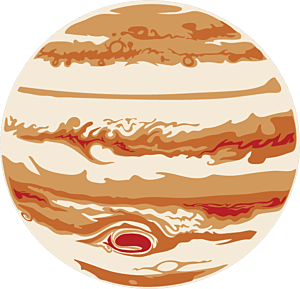
This week, look for Saturn in the early evening east, while very bright Jupiter rises in the middle of the night and is high up in the pre-dawn sky. Reddish Mars is up in the late night and morning eastern sky, located above Jupiter. Find out what else to look for in October’s night skies.
This is Anything But A Hail Mary

Hi Downlink reader! I’m Andy Weir, sci-fi author, NASA superfan (just look how stoked I am in that photo visiting Johnson Space Center!), and proud member of The Planetary Society.
I spend a lot of time thinking about space and dreaming about what’s possible. My writing — from “The Martian” to “Project Hail Mary” — is how I explore the Universe without ever leaving the atmosphere. It’s this passion that drives me to support real space science however I can. That’s why I support The Planetary Society.
Wow of the Week

This is the official launch poster for the Japan Aerospace Exploration Agency’s MMX mission, which is slated to launch later this month with the goal of bringing back the first-ever samples from the Martian moon Phobos. According to the agency, the orange circle is inspired by “ensō,” a Zen concept relating the Universe and enlightenment to a circle. The brushstroke is intentionally natural-looking to reflect the real people whose hands put the spacecraft together. Image credit: JAXA.
Send us your artwork!
We love to feature space artwork in the Downlink. If you create any kind of space-related art, we invite you to send it to us by replying to any Downlink email or writing to [email protected]. Please let us know in your email if you’re a Planetary Society member!