

 Explore Worlds
 Find Life
 Defend Earth


The Downlink • Jan 30, 2026
Better together
Space Snapshot

When spacecraft work together, great science happens. In the center of this image, you can see the Sun’s surface as seen by NASA’s Solar Dynamics Observatory. In light yellow, you see the Sun’s inner corona, imaged by the European Space Agency’s Proba-3 mission — a pair of spacecraft flying in precisely controlled formation to create an artificial solar eclipse. Together, they created an animation of prominences erupting from the Sun across its surface and corona. Image credit: ESA/Proba-3/ASPIICS, NASA/SDO/AIA.
Fact Worth Sharing

Creating an artificial solar eclipse in space is no easy feat. Proba-3’s two spacecraft must hold millimeter-level alignment so the occulter spacecraft’s shadow falls exactly on the other spacecraft’s coronagraph; any slip and the Sun’s glare can easily overwhelm the faint corona.
Mission Briefings


“Dark matter and regular matter have always been in the same place. They grew up together.” So says Richard Massey, an astrophysicist who helped create one of the most detailed, high-resolution maps of dark matter ever produced (pictured). Massey and his co-authors used data from the James Webb Space Telescope to detect the invisible substance (shown in blue) by its gravitational influence on ordinary matter. Image credit: NASA/STScI/J. DePasquale/A. Pagan.

The Moon’s preserved surface can teach us a lot about early Earth. Without processes like plate tectonics and erosion due to liquid water, the lunar surface has remained relatively unchanged over billions of years. New research has used this “lunar archive” to analyze how much water meteorites may have brought to the early Earth-Moon system. The results suggest that meteorites may have supplied a much smaller fraction of ancient Earth’s water than previously thought.

Jupiter’s moon Io might have deep, interconnected magma reservoirs. New research using data from NASA’s Juno spacecraft suggests that a 2024 eruption on Io may have been the most powerful volcanic eruption ever seen beyond Earth. Infrared data show a vast, synchronized multi-volcano event releasing up to 260 terawatts of energy, suggesting there could be interconnected magma systems deep below the moon’s surface.
From The Planetary Society


The Planetary Society’s leadership is changing. After 15 years at the helm, Bill Nye is handing over the role of Planetary Society CEO to longtime Chief Operating Officer Jennifer Vaughn (pictured with Bill at the 2025 Day of Action). Jenn and Bill have worked together to lead the Society for many years. Bill will continue to work with The Planetary Society in a new role as Chief Ambassador. Image credit: Jason Dixon for The Planetary Society.
Science plays an important role in the Artemis program. This week on Planetary Radio, we’re joined by Kelsey Young, Artemis Science Flight Operations Lead and lead of the Artemis II Lunar Observations and Imaging Campaign, and Noah Petro, project scientist for Artemis III. Together, they explore how geology and human observation are shaping humanity’s return to the Moon.
What's Up
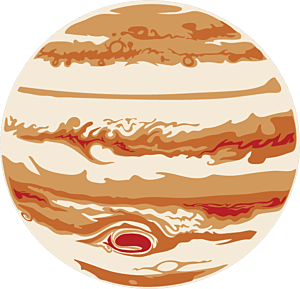
On the evenings of Jan. 30 and 31, the full Moon will be near bright Jupiter and the bright stars Castor and Pollux in the east. Yellowish Saturn is in the evening southwest. Find out what to look for in February’s night skies.
Help save space missions. Join today!

If you are not already a member, we need your help! Funding for space science is not guaranteed. It requires the voice of passionate advocates like YOU.
NASA funding must grow, not shrink, if the agency is to succeed in returning to the Moon, exploring the Solar System, and seeking out life beyond Earth.
We must prevent future budget cuts. When you become a member of The Planetary Society, you join the world’s largest and most influential space advocacy nonprofit. Will you join us and support a future full of space exploration?
Wow of the Week

It’s not often that two spacecraft get to explore a planet together. But Perseverance and Ingenuity did just that, spending nearly three years traversing Mars’ Jezero Crater as a pair. Artist and Planetary Society member Ted Ollier depicted their paths in this print, which also shows the Martian terrain in colorless relief. Image credit: Ted Ollier.
Send us your artwork!
We love to feature space artwork in the Downlink. If you create any kind of space-related art, we invite you to send it to us by replying to any Downlink email or writing to [email protected]. Please let us know in your email if you’re a Planetary Society member!