

 Explore Worlds
 Find Life
 Defend Earth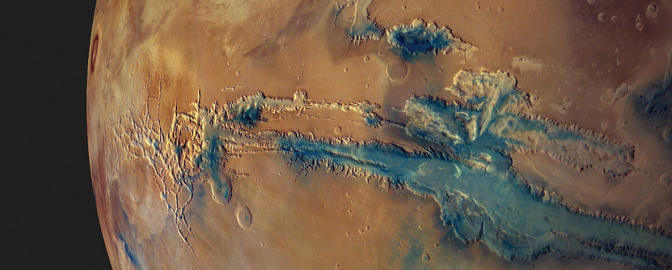



On the Cover: This image, captured by the European Space Agency’s Mars Express orbiter in June 2025, shows the Arcadia Planitia region in the midnorthern latitudes of Mars.
Download PDF
Features
December Solstice 2025

The images of the Universe put at risk by proposed NASA cuts
Cosmic views put at risk by proposed NASA cuts

The year in pictures 2025
The most memorable and impactful images from space exploration in 2025.

Our Story
An overview of milestones in The Planetary Society's history.

Saving NASA science: Reflections on a historic year for space advocacy
Reflections on a historic year for space advocacy.
Your place in space
New findings underscore why we must explore
By Bill Nye, Planetary Society CEO
A year ago in our 2024 Year in Pictures issue, we wrote about an intriguing rock that NASA’s Perseverance rover found in the Bright Angel formation on Mars. Its “leopard spots” — a pattern of black and tan dots observed on the surface of a particular rock — are often associated with living things on Earth. But scientists are a cautious bunch and don’t like to jump to conclusions. More research had to be done to see if these features could have been produced abiotically — i.e., not by living things.
In September of this year, a group of researchers announced that this Mars rock, named Cheyava Falls, likely didn't form these spots by any of the nonliving processes we know of. With known alternative explanations eliminated, the possibility that these spots could be signs of ancient microbial life is very strong.
So, what now? The Perseverance rover itself isn’t equipped with the instruments sensitive enough to say for sure what we’re seeing, but it has collected a sample from that intriguing rock and cached it away for return to Earth. If we can get that rock here, we’ll be able to study it in the best laboratories using the most advanced instruments and techniques we have. Wouldn’t it be something — astonishing, really — to prove that there was once life on Mars? Then, we’d all wonder: Is it life as we know it? Or are these the remains of something else entirely — a yet unknown type of living thing?
NASA has spent almost 50 years and about 23 billion dollars studying the most likely places to look for life, especially where there has been water flow. We’ve been planning to send a follow-up mission to retrieve the samples that the Perseverance team has been diligently collecting for a long time. We’ve partnered with the European Space Agency on this project. They too have made significant investments toward it. However, the sweeping budget cuts proposed by the Trump administration could cancel the Mars Sample Return program altogether.
We are so close to making discoveries that could forever change the way you and I think about our place in the Universe. We have the tools, the talent, and the knowledge we need to go out there and answer the biggest questions that intrigue us all. All we need to do is commit to doing it.
The role of advocates like you and of organizations like The Planetary Society has never been more important. Together, we’re working to make sure science doesn’t lose its place in space exploration. And I’m hopeful that we’ll get it done. We’ll bring that rock home, put humanity’s best minds to work figuring out what it means, and come one step closer to understanding the Cosmos and how we fit in.
Thank you for being part of this effort. We truly couldn’t do it without you.
Members on deck
A space for all
Growing up, I had glow-in-the-dark stars on my ceiling and loved classic sci-fi. I was one of those kids who asked a lot of questions, the kind adults didn’t always have answers for. When I read “The Demon-Haunted World” by Carl Sagan, I realized astronomy is where people ask some of the biggest questions. That book cracked open the Universe for me and made me want to find others who felt the same. I wanted to make space nerd friends, learn, and talk about the Cosmos with curious people. But with no connections to the space industry, I had a really hard time finding those friends and that community.
Years later, I found myself in a full-circle moment. I was hired at The Planetary Society, the very organization Sagan co-founded, as its digital community manager. Part of my role is to help build the kind of community I once searched for. When our online member community launched in 2023, our goal was to grow it to 700 members. In 2025, we’re nearly 20,000 strong. That growth happened because you — our members — saw the value in a space built just for you. You brought your passions, your stories, and your curiosity.

Every week, I hear from members who’ve taken our free courses and come away with new knowledge about asteroids, the search for life, the night sky, or the inner workings of space policy. And this year’s book club? A hit. Hundreds of you have tuned in to live discussions with book club host Mat Kaplan and guest authors, bringing thoughtful questions and reflections to every conversation.
Your engagement, generosity, and willingness to learn together make this space come alive. This is a community where people uplift each other, share resources, celebrate discoveries, fight for space science, and make even the vastness of the Universe feel personal. While the community is flourishing, there’s still so much room to grow. We hope to soon build out more ways for members to connect, whether through smaller groups, local meetups, or deeper collaborations.
I spent years looking for my space community. Now, I’m honored to have helped build one — with members who’ve become friends.
From the chief scientist
A cosmic roundup from The Planetary Society’s chief scientist
By Bruce Betts, Planetary Society Chief Scientist
In the sky
Very bright Jupiter is low in the evening east, getting higher as the weeks pass. Yellowish Saturn is up in the evening western sky, getting lower week after week. Super-bright Venus starts to appear very low to the western horizon soon after sunset in March. On Feb. 17, 2026, there is an annular solar eclipse visible in the southerly portions of Africa and South America as well as Antarctica. On March 2-3, 2026, there is a total lunar eclipse visible in North America, South America, and portions of Europe, Asia, and Australia. The Quadrantids meteor shower will peak on the night of Jan. 2-3, but this usually above-average shower is likely to be less spectacular this year because the peak coincides with a full Moon that will wash out all but the brightest meteors. For more night sky tips, you can always check out planetary.org/night-sky.

Random space fact
Uranus and Neptune are rather similar in size and mass. Neptune is smaller but has more mass. About 63 Earths could fit inside Uranus, and 58 could fit inside Neptune. Neptune is about 17.2 Earth masses, while Uranus is approximately 14.5 Earth masses.
Trivia contest
Our June Solstice contest winner is Jimmie Stutts of Cocoa, Florida, USA. Congratulations!
The question was: Which of the 88 standard (IAU) constellations are named after marine mammals?
The answer: Cetus the whale and Delphinus the dolphin. As a half-mammal fictional animal, Capricornus the “sea goat” was not counted as right or wrong.
Try to win a copy of the new book “Jupiter: The Largest Planet” by Bruce Betts and a Planetary Radio T-shirt by answering this question: Three astronauts traveled to the Moon twice. One of those did not land on the Moon either time. Who was it?
Email your answer to [email protected] or mail your answer to The Planetary Report, 60 S. Los Robles Ave., Pasadena, CA 91101. Make sure you include the answer and your name, mailing address, and email address (if you have one). By entering this contest, you are authorizing The Planetary Report to publish your name and hometown. Submissions must be received by Feb. 15, 2026. One entry per person. The winner will be chosen in a random drawing from among all the correct entries received.
Space art
"Past the first quarter Moon"

Cameras aren’t the only way to capture space imagery. Planetary Society member Thomas Bucci of Maine, USA, takes a more artistic approach. Looking through his homemade 8-inch f/6 Newtonian reflector telescope, he paints what he sees.

More from Thomas:
"I’m a watercolorist living in coastal Maine. After working briefly as an architect, I moved to painting full-time.
I am happiest when painting on location and directly from life. Although I like to work “en plein air,” I blend direct observation and imagination to create my own interpretation. Painting the Moon through my telescope, was a unique experience in painting from life, as I’m relying on the optical assistance of the telescope. It was a perfect marriage of my lifelong passions of painting and amateur astronomy.
My fascination with the night sky goes back as long as I can remember. At around age six, I got a simple 3” Newtonian reflector and marveled at the craters on the Moon and rings of Saturn. By the age of 16, I started building this pedestal base and German Equatorial mount. It’s evolved steadily over the years. The original optical tube assembly was a 6” f/8 Newtonian Reflector, completely handmade except for the optics. The current optical tube assembly was adapted from a 1990s-era Meade 8” f/6 Dobsonian. I built a dovetail and ring mount to support the O.T.A. and upgraded all the other elements, to arrive at this current configuration.
I’m an active member of the Central Maine Astronomical Society. We regularly gather at one of several club-operated observatories in central Maine for observations and discussions.
In my painting career, I’ve won many awards over the years in both watercolor society shows and plein air painting competitions. My work has been featured in PleinAir Magazine, Fine Art Connoisseur, and the Art Renewal Center publications. I’m an artist member of many arts organizations like the Salmagundi Club of NY, the American Impressionist Society, the National Watercolor Society, and the Transparent Watercolor Society of America."
Learn more at thomasbucci.com
Do you want to see your artwork here? We love to feature our members throughout this magazine. Send your original, space-related artwork to [email protected].
Society notes
Meet the asteroid hunters
In August, The Planetary Society announced the recipients of a new round of our Shoemaker NEO (near-Earth object) Grant program. Named after pioneering planetary geologist Gene Shoemaker, this program supports very advanced amateur astronomers — aka asteroid hunters — around the world in their efforts to find, track, and characterize near-Earth asteroids.
Thanks to the support of our members, we were able to award $87,562 this year, our largest amount ever for one round of Shoemaker Grants. The observatories of the 10 winners (another record) are in eight countries on four continents.
More on the winning projects can be found at planetary.org/neogrants.

Join the 2026 Day of Action
Speaking up for space has never been more crucial. During this time of extreme budget uncertainty, it’s more important than ever that our members in the United States convey their support for space to Congress. The best way to do that is through in-person meetings during our next annual Day of Action, taking place in April 2026. We’ll train you to advocate effectively, organize your meetings with your representatives, and connect you with a nationwide community of advocates. Early bird registration is now open. Sign up at planetary.org/dayofaction.

Celebrate your impact
This year, as ever, The Planetary Society championed the importance of space science and exploration through our advocacy and policy work, education and outreach, science and technology, and global collaboration. You can see some of the key moments and achievements your membership has made possible in our year-end impact report, now available on our website at planetary.org/impact-2025.
New horizons in travel
The Planetary Society is excited to relaunch and expand our travel program with new opportunities for exploration and discovery. This month, we welcome Sirius Travel, Inc. as a new partner, joining our longtime friends at Betchart Expeditions in offering members unforgettable journeys to experience the wonders of the Cosmos. From time to time, we’ll also share unique trips from other trusted partners.
Whether your dream is to stand in the shadow of a total solar eclipse, watch an aurora dance across the sky, or take in the Milky Way from the serenity of a dark-sky park, Planetary Society Travel will have an adventure for you and your family to enjoy together.
We’re also opening a new travel space in our online community, where members can share stories, photos, and tips from their space-themed adventures.
Read on for details about the exciting upcoming trips from our travel partners. Let’s explore the universe — together.
Your year-end gift
Your year-end contribution to The Planetary Society fuels our shared mission to advance space science and exploration, making a real and lasting impact. Donate today at planetary.org/planetaryfund.
There are important tax law changes that may affect the deductibility of your gifts to charity. For more information, go to planetary.org/taxwise.
For U.S. tax purposes, gifts must be received by Dec. 31, 2025. Here are some common methods of making a gift and their associated deadlines:
- Online credit card gifts: transactions completed by 11:59 p.m. EST (8:59 p.m. PST), Dec. 31, 2025.
- Credit card gifts via U.S. mail: received and processed on or before Dec. 31, 2025.
- Check sent via U.S. mail: postmarked on or before Dec. 31, 2025.
- Check sent via third-party shipping (such as FedEx or UPS): delivered on or before Dec. 31, 2025.
- Stock transfer: broker-to-broker instructions issued in time for completed transfer on or before Dec. 31, 2025.
Questions? Please contact Richard Chute, chief development officer, at [email protected] or call 626.793.5100.
The Planetary Report • December Solstice 2025
Help advance space science and exploration! Become a member of The Planetary Society and you'll receive the full PDF and print versions of The Planetary Report.