

 Explore Worlds
 Find Life
 Defend Earth


Planetary Radio Episodes
Since 2002, Planetary Radio has visited with a scientist, engineer, project manager, advocate, or writer who provides a unique perspective on the quest for knowledge about our Solar System and beyond. The full show archive is available for free.

First we return to JPL for an update on the Mars Helicopter that has just been attached to the belly of the 2020 Mars Rover. Then it’s across the pond for a review of the amazing science coming from the Rosetta mission that spent years exploring comet 67P/Churyumov-Gerasimenko. We wrap things up with another What’s Up view across the solar system and beyond.

Leaders of the global effort to avoid a catastrophic Near Earth Object impact gathered at the 2019 Planetary Defense Conference. On the evening of May 1st, The Planetary Society partnered in an exciting PDC public event at the University of Maryland College Park. Presentations by Society CEO Bill Nye and NASA Chief Scientist Jim Green were followed by Planetary Radio Live.

A rare alignment of planets and other objects will enable the solar-powered Lucy spacecraft to examine seven asteroids, six of which are among the thousands of Trojan asteroids that orbit ahead of and behind Jupiter. The mission team, include Hal Levison, Cathy Olkin and Mike Sekerak, hope to unlock secrets of our solar system’s origin through these ancient artifacts.

When will we return to Uranus and Neptune? Planetary scientist Amy Simon explains why a mission to the so-called ice giants is a high priority as she tells us about these mysterious, blue worlds.

Why did the dinosaurs die? They didn’t have a space program! The upcoming DART mission will test our best thinking about how we may someday deflect a Near Earth Object that is speeding toward fiery Armageddon on Earth. Nancy Chabot of the JHU Applied Physics Lab is the mission’s Coordination Lead.

Spacecraft OSIRIS REx is now orbiting a 260-meter asteroid named Bennu. Principal investigator Dante Lauretta returns to tell us what has already been learned, and to preview the excitement that is still to come, including the probe’s descent to the surface for collection of a pristine sample.

Join us at the Applied Physics Lab in Maryland for the New Horizons encounter with the most distant object ever visited. You’ll meet mission leaders, friends and even a rock and roll star as we dive deep into this triumph of exploration.

The New Horizons spacecraft will reach faraway Kuiper Belt object 2014 MU69 in the first minutes of 2019. Will the body informally known as Ultima Thule be as mysterious and exciting as Pluto?

The InSight lander has only just arrived on Mars. Now, OSIRIS REx has reached asteroid Bennu after traveling through deep space for a year and a half.

LightSail 2 is not the only solar sail in the universe. NASA’s Marshall Space Flight Center and the Jet Propulsion Lab are preparing to send NEA Scout on a long, light-propelled journey to a near Earth asteroid.

A mostly SpaceX episode as the ambitious company provides updated details regarding its huge new rocket and introduces its first astronauts. Mat Kaplan shares more from the company’s headquarters, while Planetary Society Digital Editor explains and explores the BFR.

Pluto passed in front of a star on the evening of August 14. Mat Kaplan joined pro and amateur astronomers on a mountain to observe this rare event. It may reveal more about the dwarf planet’s tenuous atmosphere and other properties.

Japan’s Hayabusa2 is just 6 kilometers from asteroid Ryugu as it prepares to snatch samples of the space rock for return to Earth. ISAS/JAXA Director General and former Hayabusa Mission Project Manager Hitoshi Kuninaka joins us for a conversation about the spacecraft and what’s ahead.

One of the Planetary Society’s 2018 Shoemaker Near-Earth Object grants has gone to astronomers searching the sky from a mountaintop in the North African nation of Morocco.

Ceres is the queen of the asteroid belt. Her first Earthly visitor is nearing its last days in spectacular style. Dawn Mission Director and Chief Engineer Marc Rayman returns with stunning images taken from just 35 kilometers or 22 miles above the dwarf planet, and a preview of the spacecraft’s last days.

The dinosaurs regret their lack of a space program. 200 million years later, humans are gearing up to defend themselves from a species-ending rock.
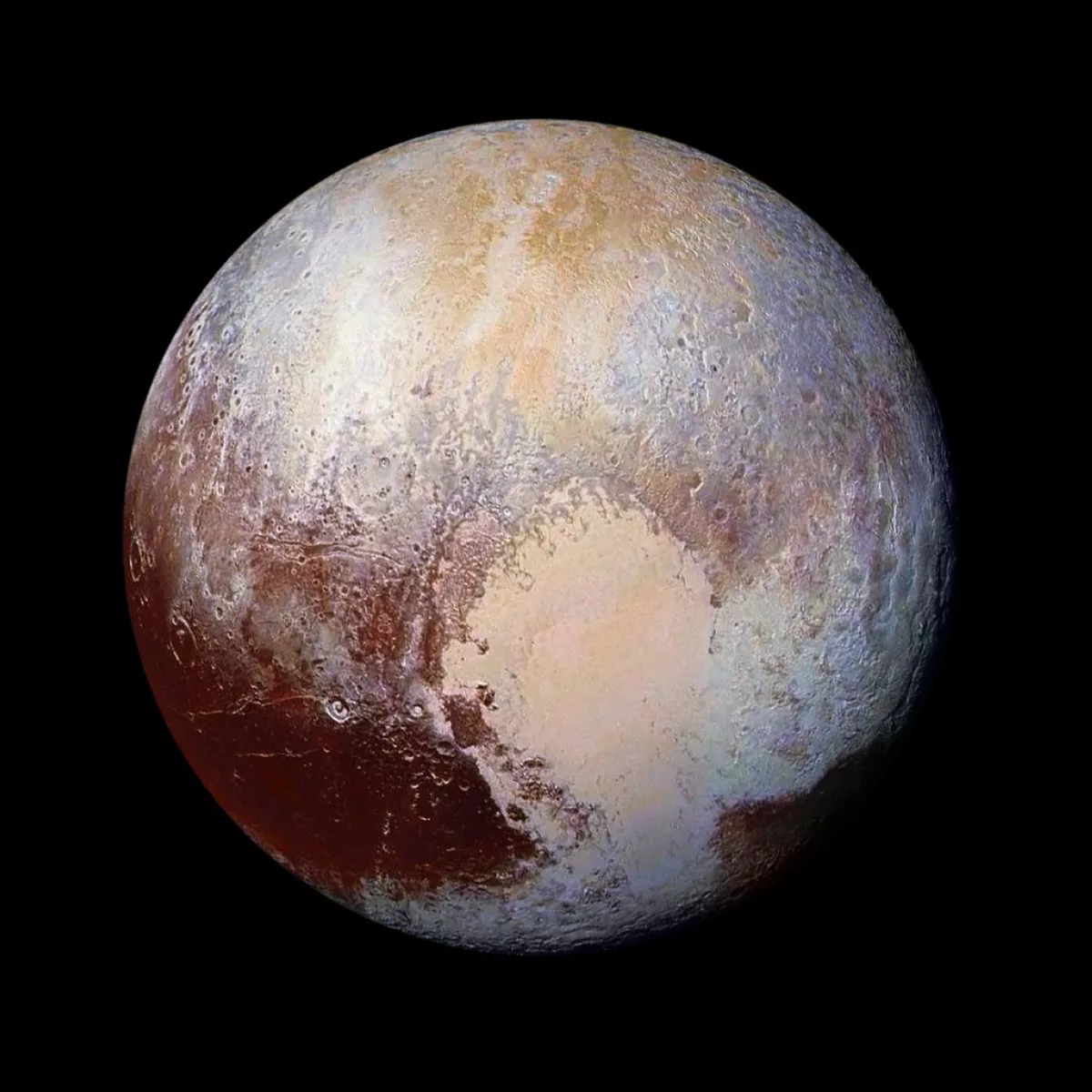
The New Horizons mission was a triumph, revealing Pluto as an utterly unique and beautiful world. But the mission first had to survive challenge after challenge, fighting to be developed, meeting a nearly impossible launch deadline, and then narrowly avoiding disaster when it was barely a week from its destination.

Seven astronomers have been selected to receive Shoemaker NEO (Near Earth Object) grants from the Planetary Society. They and their observatories span the planet. We’ll meet an American and an Australian. Society Chief Scientist Bruce Betts provides an overview of the grant program and later returns for this week’s edition of What’s Up. The Planetary Society’s Kate Howells reports on the outlook for space funding in Canada’s newly-released federal budget. She and Society CEO Bill Nye also met with Prime Minister Justin Trudeau.

The first confirmed interstellar visitor to our solar system is a needle-shaped asteroid given the Hawaiian name ‘Oumuamua. Karen Meech leads the team that is learning as much about it as possible before it leaves our neighborhood, never to return.

Astronomer Pamela Gay tells us how anyone can work with images of Earth taken by astronauts, turning them into terrific scientific resources.