

 Explore Worlds
 Find Life
 Defend Earth


Planetary Radio • Sep 16, 2026
Star Trek at 60: What Vulcans and Klingons can teach us about being human (Part 2)
On This Episode
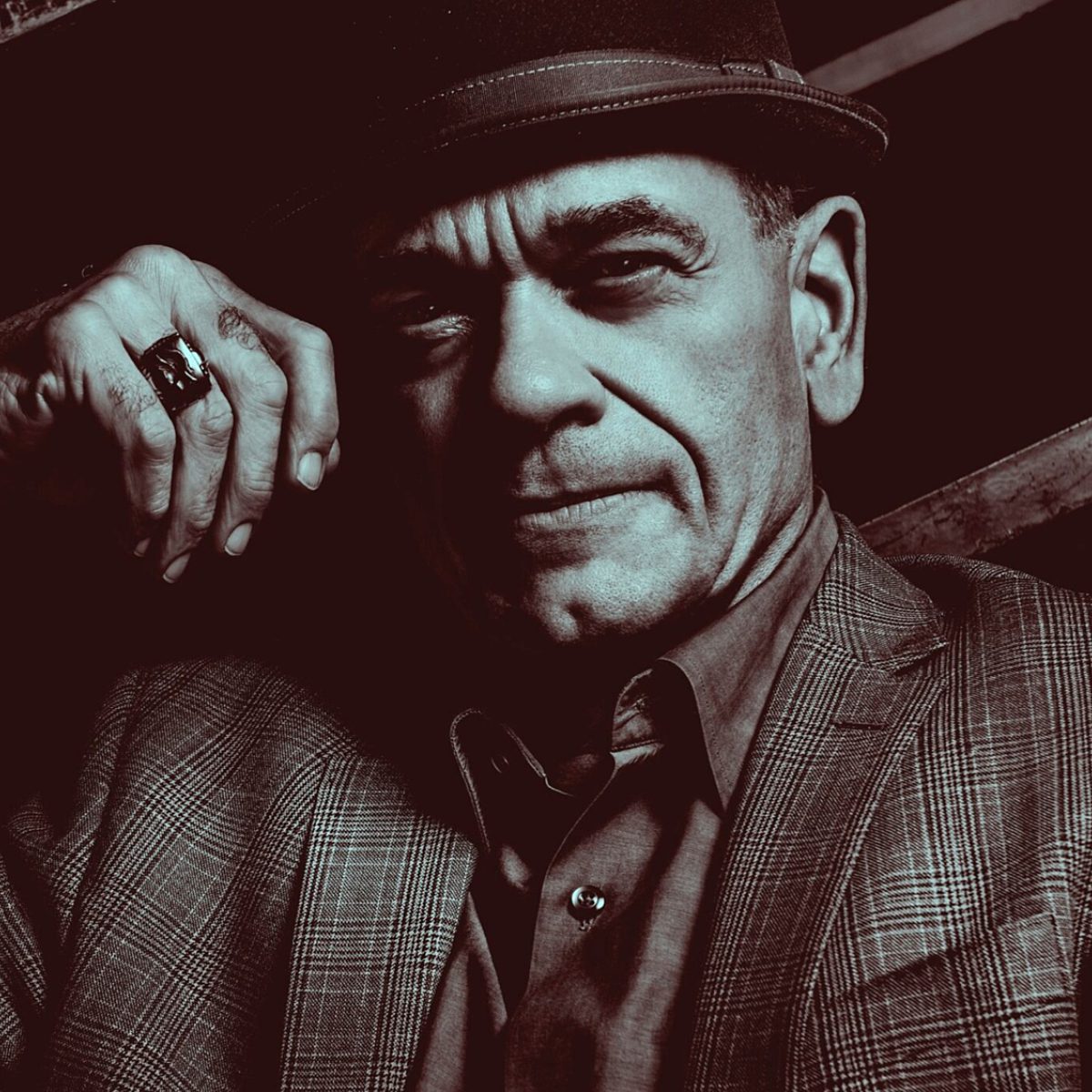
Robert Picardo
Board of Directors of The Planetary Society; Actor, Member of the Academy of Motion Picture Arts and Sciences
Tim Russ
Actor and Amateur Astronomer

Karim Diané
Actor, Star Trek: Starfleet Academy
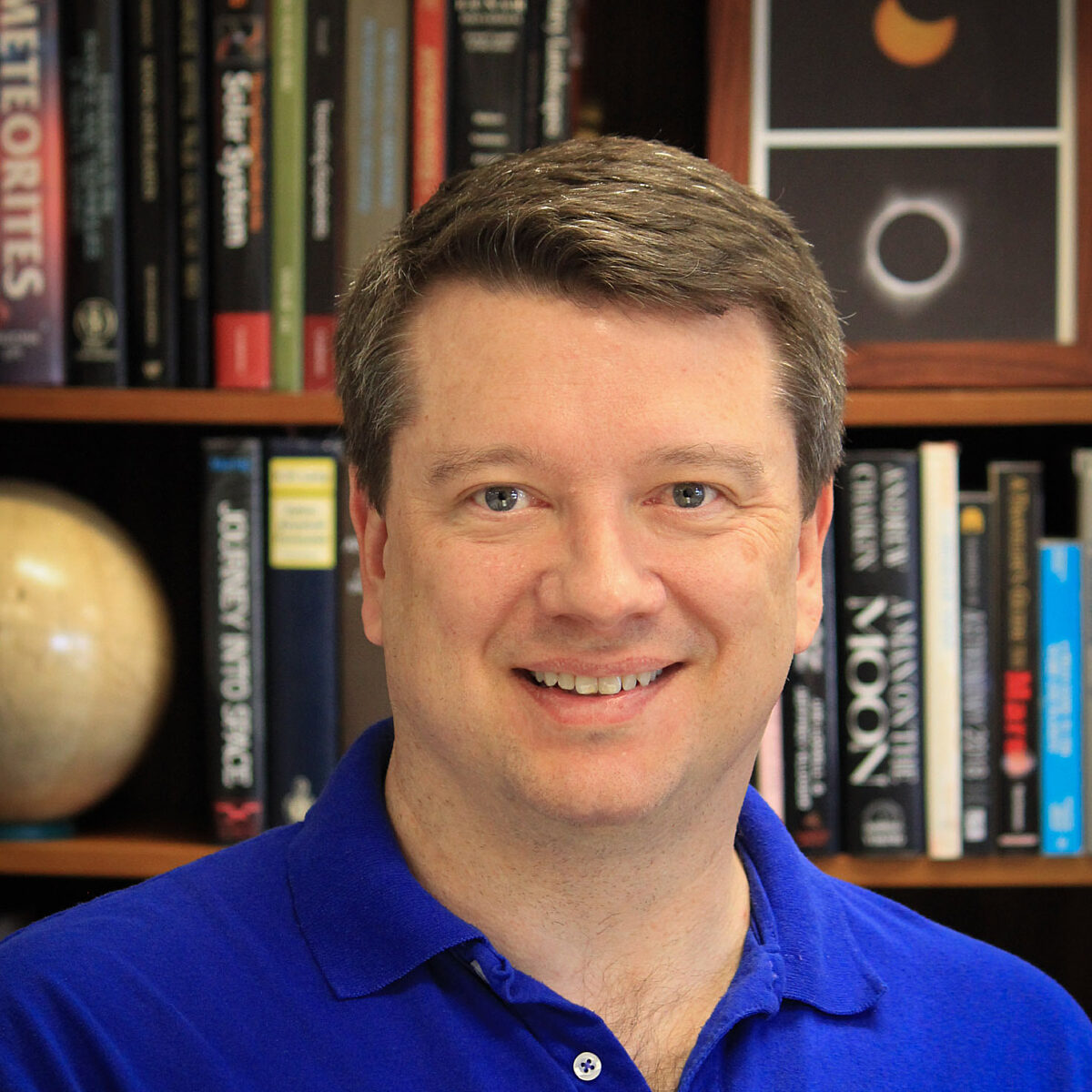
Bruce Betts
Chief Scientist / LightSail Program Manager for The Planetary Society
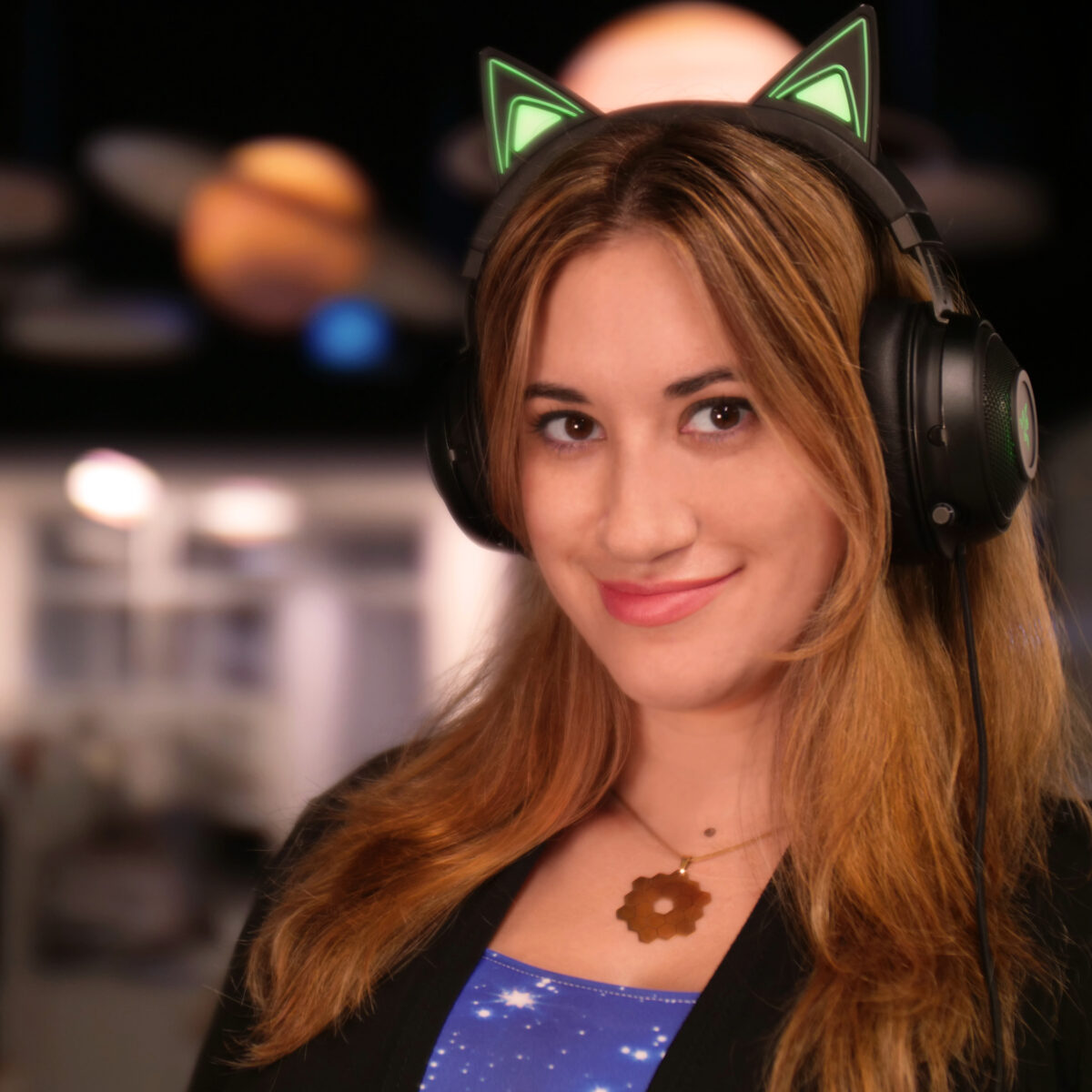
Sarah Al-Ahmed
Planetary Radio Host and Producer for The Planetary Society
This is part two of our Star Trek 60th anniversary series. Robert Picardo, the Emergency Medical Hologram on Star Trek: Voyager and a member of The Planetary Society's board of directors, reads a vintage letter from Star Trek creator Gene Roddenberry asking fans to join a brand new organization called The Planetary Society. Tim Russ, who played Tuvok on Star Trek: Voyager, Deep Space Nine, Lower Decks, and Picard, joins us to talk about what the Vulcans can teach us about the discipline we'll need to survive in deep space, and shares his own experience as an amateur astronomer who contributed data to NASA's Lucy mission. Karim Diané, Jay-Den Kraag on Star Trek: Starfleet Academy, talks about playing a Klingon who defies everyone's expectations of what it means to be strong. And Bruce Betts, chief scientist of The Planetary Society, is here with What's Up, discussing Star Trek technologies.
A rare letter from Star Trek creator Gene Roddenberry In 1980, the creator of Star Trek, Gene Roddenberry, wrote a letter and sent it out to a Star Trek fans mailing list. In the letter, Gene invited his fans to join us on our mission to explore the cosmos.
What can we learn from Star Trek? Tim Russ played the logical Tuvok on Star Trek: Voyager. His inspired passion for astronomy and exploration continues to this day. Now he asks what we can learn from stories like Star Trek to become better explorers in the real world.
Tim Russ at the Griffith Observatory - The Planetary Post In this update from The Planetary Post with Robert Picardo: star parties are magical events where one can observe the wonders of our night sky...and have a surprise Star Trek: Voyager reunion. Also, news about seven Earth-sized planets orbiting a red dwarf star, plus learn how you can help prevent an asteroid impact disaster.
Related Links
- Here's How I'm Celebrating 53 Years of Star Trek
- Star Trek actors endorse The Planetary Society over the years
- A Conversation: Star Trek's Robert Picardo and Kate Mulgrew
- Captain Kirk, Data, Riker, and the Doctor urge you to join The Planetary Society
- JWST's 1st pics with Robert Picardo from Star Trek
- Robert Picardo reading Star Trek letter from Gene Roddenberry - The Planetary Society
- Planetary Radio: NASA Goes for Star Trek Science: Bob Cassanova of the Institute for Advanced Concepts
- Planetary Radio: Farewell to Star Trek Enterprise
- Planetary Radio: Sweet Sound of Success...The Huygens Probe on Titan
- Planetary Radio: Thunderbirds Director Jonathan Frakes of Star Trek Fame
- Planetary Radio: Holographic Doctors and Galileo's Daughter: A Visit With Robert Picardo
- Planetary Radio: Star Trek Science
- Planetary Radio: Miguel Alcubierre, Inventor of Warp Drive?
- Planetary Radio: Advocating for Planetary Science/Star Trek Meets Spacefarers
- Planetary Radio: Yuri’s Night: For all SpaceKind
- Planetary Radio: A “Star Trek” future: Your place in space
- Buy a Planetary Radio T-Shirt
- The Planetary Society shop
- The night sky
- The Downlink
Transcript
Sarah Al-Ahmed:
To the Stars through Hardship, part two of our Star Trek 60th anniversary series, this week on Planetary Radio. I'm Sarah Al-Ahmed of The Planetary Society with more of the human adventure across our solar system and beyond.
Last week, Robert Picardo, the EMH from Star Trek: Voyager, helped us explore what Star Trek values most. This week he returns to read a letter from Gene Roddenberry, Star Trek's creator, who wrote Star Trek fans, asking them to join a brand-new organization called The Planetary Society.
Then we're looking at what Star Trek's extraterrestrial races reveal about what humans still need to become. Tim Russ, Tuvok from Star Trek: Voyager, joins us to talk about the Vulcans and what they can teach us about the discipline that we're going to need to actually survive out there.
And Karim Diané, Jay-Den Kraag from Star Trek: Starfleet Academy, shows us what a pacifist Klingon can teach us about redefining strength. Plus, Bruce Betts is here for What's Up? We're going to talk about Star Trek technologies and how far we've come in the last 60 years.
If you love Planetary Radio and want to stay informed about the latest space discoveries, make sure you hit the subscribe button on your favorite podcasting platform. By subscribing, you'll never miss an episode filled with new and awe-inspiring ways to know the cosmos and our place within it.
If you caught last week's episode, you already know Robert Picardo, the EMH from Star Trek: Voyager. He's also a member of The Planetary Society's board of directors. The connection between Star Trek and The Planetary Society goes all the way back to the very beginning.
In the late 1970s, when Carl Sagan, Bruce Murray, and Louis Friedman were just getting the society off the ground, Roddenberry did something he'd never done before. He lent his name and his mailing list to endorse our mission. Bob found a copy of that letter, and we asked him to read it.
Robert Picardo:
Dear Star Trek friends, you probably know that the Star Trek following is one of the largest groups of its kind in the country. As such, I have frequently been asked to endorse many worthwhile causes. What you may not know is that I have never done so, nor have I ever made available any Star Trek mailing list for these purposes.
But now I am breaking with that tradition to tell you of The Planetary Society, an organization formed by Carl Sagan and Bruce Murray to encourage and popularize our exploration of the solar system and the search for extraterrestrial life. The essence of the Star Trek missions are to discover, to learn more about our universe, and to apply that knowledge to the benefit of mankind.
Star Trek is of course fiction, but its idea is very real and very important. It is this idea which The Planetary Society is devoted to, and I believe they can help turn into a reality. If we humans are to continue our exploration of the solar system on a peaceful, rational, and scientific basis, then it is important to demonstrate to the decision makers in our country that millions of us want our space program to continue.
To prove our point, all of us must join together in a focused effort, scientists and non-scientists alike, to insist that our elected leaders reflect our support of space exploration.
Well, the letter goes on. Gene mentioned some other famous supporters of the society like Ray Bradbury, Isaac Asimov, Johnny Carson. He even mentions a solar sail. Gene closes the letter with these words, "The links between science fiction and science are well established, and I am very pleased to associate myself with The Planetary Society."
If you are interested in supporting those goals by joining The Planetary Society to write for information to Carl Sagan... He actually gives Carl Sagan's address at Jet Propulsion Laboratory. People across the globe, spanning generations, continue to be moved by Star Trek's optimistic vision of what we could become.
And having served on both the USS Voyager and the executive board of The Planetary Society, I wholeheartedly agree. The Planetary Society is bringing us closer to Gene's vision of a better future. So, are you with us?
Roddenberry believed that the journey to the stars wasn't just a scientific effort, it was a cultural one. And if there's one species in Star Trek that embodies that idea, it's the Vulcans. In Star Trek's universe, Vulcans are a species that nearly destroyed themselves, not because they lacked intelligence, but because their emotions were so powerful, they couldn't be trusted with their own technology.
Their answer was to build an entire civilization around logic, discipline, and emotional control. It's one of Star Trek's most enduring arguments that reaching the stars isn't just an engineering problem. It's a question of whether or not we are ready. Tim Russ played Tuvok, the Vulcan security officer aboard the Starship Voyager for seven seasons beginning in 1995.
He's since reprised that role on Deep Space Nine, Lower Decks, and Picard. But what makes Tim a particularly fitting voice for this conversation is that he's also a dedicated amateur astronomer. He's a member of the LA Astronomical Society, runs public star parties, and even contributes data to NASA using his own telescope. I asked him what the Vulcans and what Voyager's long journey home from the Delta Quadrant can teach us about what it's really going to take to survive out there. Hey Tim, it's great to see you again.
Tim Russ: Thanks for having me on.
Sarah Al-Ahmed: How have you been celebrating the 60th anniversary of Star Trek?
Tim Russ: For the most part, it was primarily a convention. It was a large convention that I attended recently in Las Vegas, and that was probably the only, I don't want to say celebration for Trek because it is a huge Trek convention. So, in a way, I was there obviously with some of my castmates that I hadn't seen in a while and of course all the fans and things. So, that was, so far this year my, I want to say, most significant celebration of it.
Sarah Al-Ahmed: It's funny because two other people who have worked on Star Trek have told me the exact same thing, that Star Trek Las Vegas is the place to be.
Tim Russ: Yeah. I mean, we're talking about everything. I mean, it's 100% Trek. There's eight or 9,000 fans, and you've got your castmates, not only from your show, but you've got cast from other shows as well, and you're sharing that space with them, participating in the panels and all the other things that they've lined up. Yeah, that's basically it.
Sarah Al-Ahmed: It sounds like so much fun. It's definitely someplace I'll have to go someday. So, I've heard you say before that science fiction for you was a gateway, that it started with sci-fi first and eventually it wound up with you going into this other realm of astronomy. Do you remember the moment that that shift happened for you?
Tim Russ:
Well, I mean, I was always fascinated with sci-fi ever since I was a kid. So, I was in my early teens when I started watching all of the old sci-fi movies and became enamored with them. I just really loved them and the genre of science fiction to begin with.
The astronomy took over when I was in my early 30s. I was a working actor at the time, and I just decided one day that I was going to go out and buy a telescope. There was actually a telescope store here in the valley at the time, a physical store you could walk in and get advice and gear and all that stuff. And I bought my first two or three telescopes from that store and just started going out on my own into the dark skies north of Los Angeles and learning the constellations one by one and the objects that were in those constellations.
At those times, we had star charts, we had books that we had to use in order to find the objects to look at, and eventually just upgraded the telescopes to bigger and bigger, of course, that's what you do, and just kept pursuing it and keeping track of all the science stuff. So, it was a progression. It started off as a fascination with science fiction and space science. And then it was about actually getting my hands dirty and pursuing visual astronomy. That's what I do mostly.
Sarah Al-Ahmed: I've also heard you speak about the Apollo program and the impact that had on you, but also about speaking with Buzz Aldrin about his experiences. What was it like after all of that to see humans return back to cislunar space during Artemis II?
Tim Russ:
Well, I was able to watch the Moon landing. I was in school at the time, and they had it televised, and we actually watched Neil Armstrong step down on the Moon's surface. It was amazing, and I never forgot it. I can still see that image in my head. Meeting Buzz Aldrin, the next big thrill I had was meeting him, and we've come together a couple of times for different events at Griffith Observatory. Wonderful guy, so much fun, and just so honored to be able to meet him.
As far as going back to the Moon, it is interesting to me. I'm curious, in a way, as to what their plan is long-term for going back to the Moon, if there's going to be a permanent lunar base, if we're going to launch missions to Mars from the Moon, if that's going to be the case, because it would be so much easier in terms of the gravity and all that good stuff.
But I am also concerned about how difficult it is going to be to inhabit the Moon permanently. That is no easy task, man. That is no easy feat, right alongside going to Mars. But in the Moon in particular, it is unbelievably hostile to anything human and also to the machinery that we have. So, it's fascinating that we are getting out and exploring space again with people. That's always fascinating, but I'm just wondering what's going to happen down the line in terms of what kind of obstacles are going to have to overcome in order to stay there as a permanent lunar base.
Sarah Al-Ahmed: There's a lot that's going to have to happen. Thankfully, we have our robotic explorers and our ability to look through telescopes. So, there's a lot we can learn without actually going there, but it is going to be really interesting to see how this all plays out over time.
Tim Russ: Yes, it is.
Sarah Al-Ahmed: I wonder if we're going to end up in that Star Trek future or if it's just going to be functionally too difficult.
Tim Russ: Yeah, there are some physicists and scientists who believe that it is going to be too difficult. It's not going to be easy because we're not designed for space. We are designed for Earth. We're terrestrial. So, making that transition, there's going to have to be a whole lot of technological advances and changes that come up that we have to adapt or adapt to in order to survive out there. It's not going to be pretty. That much we know.
Sarah Al-Ahmed: I feel like the term amateur astronomer is a bit of a misnomer, right? Because amateurs contribute to science all the time. And you're a great example because you actually participated in gathering data for NASA's Lucy mission. What was that like?
Tim Russ:
I was surprised when they contacted me and reached out to me. I was like, "Excuse me, what? I just roll my telescopes out for public star parties and things like that. I'm not really a pro at this." I mean, the difference obviously is that I don't make a living at astronomy. That's all.
I mean, that's the difference. That's the way our society is constructed. And if you're a professional, you're making a living at it. That's the main difference. And I'm not a degreed astronomer. I don't have a degree. I don't have a master's, a Ph.D., or whatever in astronomy. So, that's only what basically sets me apart as far as participating in staying and keeping up with the technology, keeping up with the discoveries, that I can do quite well.
Now, when they contacted me, because I live in Los Angeles, that's the reason they reached out. This occultation, as it were, was taking place where the shadow of this asteroid crossing a star's path was going to cast a shadow right over Los Angeles. And so, I literally just went down the street to a park near my house and put the telescope up.
They had already sent me the coordinates for the telescope. I just had to aim it to the right place. It took four minutes to get that exposure. I sent the data to them, and they sent me back the videotape of the whole thing. And it was fascinating. I actually got a chance to see a model because they were looking to get an approximation of what the shape was of that asteroid.
It's a Trojan asteroid, which means it's in the Jupiter's orbit. It's right in the same orbit as Jupiter. So, it's called a Trojan asteroid. And Lucy mission was to fly this probe past all of those asteroids. There are several. They just were trying to get an idea of what the approximate shape of that asteroid was prior to the mission arriving at Jupiter.
So, that's what it was. And I said, "Sure." It was a Unistellar telescope. It's the company that I bought the telescope from. It's an imaging telescope. It's very powerful and very capable. And because I had that, that's what they wanted me to use, and it worked out perfectly. I still have the videotape on my computer.
Sarah Al-Ahmed: It's going to be so interesting to see what happens when Lucy actually reaches there and see if the shape of the object is actually similar to what they've figured out from that occultation, right?
Tim Russ: There was like four or five or six of us who also got that image on the same night. So, I think when they correlated all of that data, I did see a mold of it at one of the conventions I was at. Somebody had the mold of the asteroid. It was round and flat-looking with some... The edges were beveled and things like that. So, I saw it. I actually held it. It was a 3D print of what the asteroid supposedly looks like, but I guess we'll see. I know which one it is. So, when they get there and they go fly by the image, I want to see what it looks like as well. I'd be curious, yeah.
Sarah Al-Ahmed: I want to come back to what you were saying about the difficulties of living long-term in a place like the Moon or Mars, for example. I think as far as Star Trek goes, except for maybe one-off episodes, Voyager is this great analog for what we're actually going to experience when we're doing that because Voyager was essentially cut off from humanity, stuck on this decades-long journey with limited resources, and we're going to have to grapple with that as humanity in order to do that. What do you think Voyager got right about the psychological reality of deep space isolation?
Tim Russ:
We were so busy dealing with all the stuff that we ran into and the civilizations and the aliens and the dilemmas and the phenomenon, and stuff like that, that they didn't spend a tremendous amount of time dealing with the crew and not only their anxiety, their mental state, and how they were holding up.
And there weren't a lot of episodes, if any, that I can recall that dealt with the mental state and emotional state of the crew as much as it was, we have to survive on this lifeboat and look what's coming. Oh, my goodness, we got to deal with that. Oh, my goodness, we got to deal with this. Oh, my goodness, we got to... Everybody was in the same situation, and everybody has to pitch in order to survive in order for any chance of getting back home. And that's what they signed up for.
So, in comparison to that, there will be challenges for the Moon, obviously challenges for Mars as well. And I think that, with any luck at all, that will keep the astronauts focused more so on that and survival than anxiety or depression or whatever it might be that could seep in, even differences among each other.
We don't know how that's going to play out, but I would think that they're going to be so busy trying to make sure that they survive on Mars or the Moon, as it were... That I think that I'm fairly certain that will take place. I haven't heard of many horror stories coming from the space station, and that was probably a lot less difficult because you had supplies coming up all the time.
So, you didn't have to worry about growing food or trying to find water and manufacture water and blah, blah, blah and all that stuff. So, they didn't have those kinds of issues to worry about, and they still got along pretty well on the space station for weeks and months. So, I don't know, man. It's going to be interesting. That's all I can say. It's going to be interesting.
Sarah Al-Ahmed: Yeah. I mean, I think Voyager deals with this pretty well out the gate with what happens between the members of the Starfleet crew and the Maquis, which are essentially enemies, right?
Tim Russ: Yes.
Sarah Al-Ahmed: But they have to come together as a single crew in order to survive. So, things like tribalism basically go right out the window the moment that you're actually grappling with these deep space problems.
Tim Russ:
100%. I dare say that if astronomer looked up one day and saw an asteroid that peeked out from behind the Sun or a comet, as it were, and they didn't know it was... They couldn't tell it was there beforehand, so they only had three or four months to... And it's got our name written on it for collision, I'm pretty sure we're not going to have time to be arguing about politics or anything else at that point.
It would be about how are we going to survive? Are we going to survive? What are we going to do? This kind of thing. Sure, absolutely. That kind of dilemma, that kind of potential catastrophe, that kind of difficulty that is universal, that affects everyone, whether it's an earthquake, whether it's a giant fire, whether it's storms that destroy, everybody does pull together when everything is at stake, and everybody's in the same boat. They're in the lifeboat, so they got to come together. So, yeah, I think that's exactly what's going to happen.
Sarah Al-Ahmed: I think that Vulcans are frequently misunderstood as very cold creatures, but the canon shows that they actually possess this overwhelming level of emotion, and that's why they choose to govern themselves with logic. How necessary do you think that ability for emotional self-regulation is going to be if we're ever going to have any long-term success in space?
Tim Russ:
Yeah. In fact, that is yet another element of it, not only that everybody has to pull together in order to survive and make sure that they do their jobs and focus on what they have to do in order to complete the team and to serve the team, but yeah, the profile of the individuals that they take, they're going to have a psychological profile for sure of these astronauts, and that's going to be part of the situation as well.
They're going to have to have an idea or an understanding of how these people function, what are their personalities like, what are their attitudes like? Some people were talking about the fact that one of the most ideal astronauts might be somebody who spends all their time reading alone because they won't need the social connection.
They're going to be in isolation for a very long time. Even though there's fellow crewmates, they are basically in isolation, and living in close quarters with people, they cannot get away, they cannot go anywhere, they're stuck with them. So, that personality profile may be something that benefits whoever they choose to go out, and they're going to have to have whatever psychological counseling may be part of the journey.
There may be one of the crew members, may be a psychologist or a psychiatrist have that degree and be able to counsel people as they're up there. They will be able to communicate and get messages from home, from loved ones. I don't know if that's a good or bad thing. Does it make them miss their loved ones at home? Would they, in some sci-fi movies, they might select somebody who doesn't have any family connections back home? They don't have anything, anyone that's missing them back home. That may also be a parameter.
We don't know. I mean, there's presumably very intelligent, smart, experienced people in NASA who have got to be researching and thinking about all of this stuff prior to these missions. Somebody has got to be on the ball, I'm sure they are, because to go up for a couple of days around the Moon and come back, that's nothing, man.
To go to the Moon and sit there for six months or whatever, seven months, to go to Mars, two years, three years, yeah, that's a tremendous sacrifice. In point of fact, some of those people who go there, if they're there too long, it may be difficult for them to come back, and that's also a fact. Who wants to sacrifice that?
Sarah Al-Ahmed: It would have to be someone very brave.
Tim Russ: Yeah, to say the least. And if they're going to do it, somebody's got to do it. They have to choose to do it. And that's a real risk is maybe not being able to come back home unless they can figure out a way to minimize the effects of the lower gravity over that period of time, radiation, and all kinds of other issues that they're going to have to deal with. It's going to be tricky, that whole thing.
Sarah Al-Ahmed: Yeah. And I felt so badly for Tuvok having to be stuck out there all that time away from his wife and family, but he seemed to grapple with it pretty well, except for some circumstances, right?
Tim Russ:
Yeah, except for some circumstances, yes. He has the ability to... Their ability to suppress their emotions was crucial for the survival of their species. They were going to obliterate themselves or each other. They were so violent. They were so horrific in that sense. They had to figure out something in order to save their entire species, their planet, and that's what they did.
And as human beings, we may not be as emotionally volatile, but we have those issues. We have similar issues that we have to overcome over time. I've said many times in the last year or so that you've got to eliminate all of the nuclear weapons on this planet. That's our first step, and that's just a geopolitical concept.
It's something that has to happen from world leaders to decide in order to save the human race, to preserve the human race beyond the point of self-destruction, we have to get rid of the objects that would create the self-destruction. So, we have a great big challenge ahead of us, just like the Vulcans did with our nuclear weapons, and we don't blow ourselves to kingdom come.
Sarah Al-Ahmed: Do you think that your experiences playing a Vulcan in any way changed the way that you deal with the hard things in your life?
Tim Russ: It doesn't work so well on the 405 freeway, I can tell you that. I'd love to have Tuvok's zen right about that time.
Sarah Al-Ahmed: You mean the 405 parking lot?
Tim Russ:
Yes, the 405 parking lot. There are similarities, as my friends have pointed out, between myself and his character. In terms of really demanding or wanting or seeking or appreciating practicality, functionality, logic, and efficiency and things like that, and I'm so much more focused on those kinds of things today than I was before because it just drives me absolutely insane when things aren't thought out, aren't efficient, aren't well-designed, aren't practical, more time-consuming, repetitive, I hate that one.
So, those kinds of things, from a personal standpoint, they just drive me crazy. And so, I don't know if Tuvok's character would go off that much, but he can certainly appreciate not having to deal with that kind of stuff and looking for systems that are set up and designed to work efficiently. And we have the technology, AI, computers. Come on, man. I should be able to send a PDF to somebody, and they should be able to open it. Yeah.
Sarah Al-Ahmed: Yeah. I mean, what is life going to be like when we have just our own computer? We can just open our mouth and ask, or an EMH that could actually help us deal with individualized medicine. I mean, we're right on the cusp of this whole new age of technology, and it's going to be really interesting to see that part of the Star Trek reality become our reality.
Tim Russ:
Well, just like I said, on Voyager, the replicator worked all the time. I mean, stuff's working unless they were under attack or something got banged up, things basically worked. The issue is whether or not it works. It's not whether or not anybody designed it or put it together or enabled, it's a question of it working.
I mean, we have computers now, and we have iPhones now, and how many times do those bloody things just not work because whoever put it together has not thought it through, and that is human error. That is not the machine, it's people not doing what they're supposed to do.
Sarah Al-Ahmed: Yeah. I'm immediately channeling that scene in Star Trek: Lower Decks where Boimler's trying to get Earl Grey hot, and it keeps giving him bananas. So, it does even in the Star Trek universe sometimes go absolutely wrong, but we'll get there.
Tim Russ: Yeah. We'll get there. I shudder to think that as the Mars lander is on its way down through the atmosphere to land and something goes wrong with the computer and the mission control tells them to unplug it and plug it back in again, you know what I mean?
Sarah Al-Ahmed: Yeah.
Tim Russ: Yeah, with all of that sophistication. Mm-hmm. Yeah.
Sarah Al-Ahmed: Well, I just want to say Voyager was just monumental for me as a kid. I loved that show. I've probably seen it six times at least, which is wild considering how long it is. And I just want to say thank you from me as a Star Trek fan, but from the whole community to you and everybody else on that show and in the whole franchise, you've made such a huge impact, not just because we love science fiction, but because of the things that it asked us to be and to question, and I'm just so happy that you guys get to finally celebrate the 60th anniversary.
Tim Russ:
We were very fortunate to be on board for that journey because the original concept that Roddenberry kicked off has been carried through the shows. It's so important because we do tackle a lot of issues. We tackle a lot of themes. We have difficulties that have to be overcome. We have difficult decisions to make, extraordinarily difficult decisions and responsibilities, and that's what makes that series work.
It obviously takes place in the future, a future that we can only hope would be as harmonious for the most part as it is portrayed, and people all treated the same regardless of who they are, what they own, and things like that. But the writers and the creators of that, from Gene Roddenberry all the way through to the current shows that we have now, those people are the ones that really... They're the ones behind the stories. They're the ones that are behind what the viewers are watching, yourself included.
We as actors are hired to carry out those stories, but you've got to have the concepts and you've got to have the stories, otherwise you've got nothing. And it's my hat's off to the people that created this concept that carry it out through the writing of the scripts and the stories and the concepts and things. That's what makes that show what it is and tackling all of the difficult issues and things that our society always has to wrestle with. So, it's such a cool thing.
Sarah Al-Ahmed: Well, thank you so much, Tim, and I hope you have a beautiful Star Trek Day.
Tim Russ: Thank you very much for having me. I appreciate it. Take care of yourself.
Sarah Al-Ahmed: We'll be right back with the rest of part two of our Star Trek 60th anniversary celebration after the short break.
George Takei:
Hello, I'm George Takei, and as you know, I'm very proud of my association with Star Trek. Star Trek was a show that looked to the future with optimism, boldly going where no one had gone before.
I want you to know about a very special organization called The Planetary Society. They are working to make the future that Star Trek represents a reality. When you become a member of The Planetary Society, you join their mission to increase discoveries in our solar system, to elevate the search for life outside our planet, and decrease the risk of Earth being hit by an asteroid.
Co-founded by Carl Sagan, The Planetary Society exists for those who believe in space exploration to take action together. So, join The Planetary Society and boldly go together to build our future.
Sarah Al-Ahmed:
If the Vulcans ask whether we have the discipline to survive out there, the Klingons ask whether we can learn to accept our differences, to welcome each other, and maybe even make allies out of people that we don't understand.
In Star Trek, Klingons are a warrior species. Their entire culture is built around honor, combat, and family legacy. For 60 years, they've gone from Starfleet's greatest threat to some of its most unlikely allies. That arc is one of the franchise's most powerful arguments that no divide is permanent if we're willing to do the work to understand each other.
Star Trek: Starfleet Academy, the newest series in the franchise, is set in a future where that work has never been more urgent. A catastrophic event called the Burn destroyed most of the galaxy's dilithium. That's the fuel that makes faster-than-light travel possible in that universe. Starships were lost. Civilizations were scattered. The Federation nearly collapsed.
The show follows a new generation of cadets trying to rebuild Starfleet in the aftermath. And for species like the Klingon, the Burn didn't just take their ships, it made them refugees and scattered their people across the galaxy. Karim Diané plays Jay-Den Kraag, a Klingon cadet at Starfleet Academy. Karim was actually new to Star Trek when he got this role. We talked about what it was like playing a character who defies everyone's expectations of what it means to be strong. Hey, Karim. It's wonderful to meet you.
Karim Diané: Hey, how's it going? What's up?
Sarah Al-Ahmed: What a fun time. I mean, 60 years of Star Trek. Have you been able to get together with some of the cast of Starfleet Academy and celebrate this moment yet?
Karim Diané: Yes. I mean, we are stuck with each other forever because we see each other at conventions every month or two. So, yeah, we've definitely had a handful of moments to hang out in Vegas. Probably the most fun I've had in such a long time. I love my cast so much.
Sarah Al-Ahmed: They seem like such fun people. I mean, I only know everyone through their portrayals in this show, but I mean, I imagine that off the clock it's fantastic connecting with them.
Karim Diané: Honestly, everyone's not too far off from their characters on the TV show, to be honest with you. Everyone just has... It's just such youthful energy in this cast. It's a really good time.
Sarah Al-Ahmed: Well, you weren't a big Star Trek fan when you first got this role, right? Which I actually think is a really interesting place to come at it because it gave you the opportunity to really see Star Trek through fresh new eyes. What was it like for you trying to get into the Star Trek lore, and what did Starfleet's vision of the future feel like to you?
Karim Diané:
It was a really interesting process. I mean, what a dream for an actor to prepare for a role with ability to have so much rich history. As a backdrop, I immediately started diving in and watching essentially every episode that ever even remotely mentioned a Klingon inside of it. Obviously, watched a ton of Worf, but also paid attention to Alexander and other kinds of Klingons, and learned to speak a whole alien language and drop my voice, a bit of voice acting, and learning how to deal with prosthetics.
So, yeah, it was a really involved process, and I feel really lucky because I feel like a much stronger performer because of it. As an actor, you don't always get the chance to tell a story that really has real weight to it, that really speaks to the past, the present, and the future, and that really is rooted in humanity and bringing people together and giving people hope and inspiration and confidence within themselves and within their community and within their own future.
So, yeah, Starfleet Academy really, for me, was, I feel like I was experiencing what the students were going through at the same time. I came to this role just a little nervous because this is a very different take on a Klingon. I wasn't sure how it would be received. I was just tiptoeing around certain things, but truly not only my cast and my crew, but the Star Trek fan base has made me feel so welcome, but also very confident in just being myself. And I'm chronically online, and at first, I was nervous to share my personality on the internet.
Sarah Al-Ahmed: I'm sure.
Karim Diané: But a lot of people really responded well to it and encouraged me to lean more into myself. And that's what I think Star Trek is about, what Starfleet Academy is about, and what our entire message is for people now and to the future is just lead with yourself, lean into yourself, be as radically yourself as you can possibly be, and only good things will come of it. Yeah.
Sarah Al-Ahmed:
It's interesting because I feel like the science of Star Trek is something that really, really captured me as a kid. But if I'm truly honest about it's that feeling, that feeling of understanding what humanity is and what it could be. And the science within Star Trek felt like a vehicle toward this future where we could actually all be our best selves and be the people that we want to be.
And maybe that's what drew me to the science so much, not just the exploration of space, but this idea that maybe through that we could truly value each other in our differences and strive together towards something really difficult. So, I think that really is the heart of Star Trek, even though a lot of us think of it as just a lot of fun science fiction.
Karim Diané: A lot of people that I've met are scientists or, like you said, astrophysicists and even astronauts. And that's what I think brings people to the table. But once they really look around and realize, "Oh, my gosh, this is genuinely about accepting everyone's difference." Not only accepting, but championing everyone's differences. Yeah, I can't even express how much. I came to the table very new, but I'm such a hardcore fan now. I'm so passionate about the messaging, and I feel really lucky that I get to live it, honestly.
Sarah Al-Ahmed: I'm sure that your position in this show is going to inspire other people because you do, you play a very different take on a Klingon. For people who haven't seen Starfleet Academy, can you tell us just a little bit about who Jay-Den is?
Karim Diané:
For sure. Jay-Den is a Klingon like Klingons we've seen before, and unlike Klingons that we've seen before, he comes from a very long line of warriors, people who are very enthusiastic about battle and about weaponry, but Jay-Den has completely stepped outside of that tradition, and he's come to Starfleet Academy to follow the medical track.
He has dreams of becoming a doctor, and that is scary. It's very scary for anyone who is stepping outside of what they're expected to do. It's also very, very inspiring. Jay-Den also happens to be the first openly gay Klingon in Star Trek's entire 60-year history. And honestly, it's been so interesting to see how the world has received him.
There is a large part of the internet who have not received that at all and who are bothered by it and feel very uncomfortable by it, don't like the fact that it's different from what's come before. But I honestly, it's not that I don't care. I care. I do care, and I understand that change is hard for a lot of people, especially when you're used to something for decades.
And so, I do care about that process, but I just care 20 times more about the kid who came to my table, the trans kid who came to my table in tears because they felt like they had never really seen themselves fully represented in Star Trek in a youthful way like this and who was shaking so much that they could barely speak.
I'm so new to this. This is my first series regular role, so I'm still processing the fact that people are nervous to approach me or meet me, or how much Jay-Den means to them in their lives. And it's been a slow walk for me, and I'm still processing it, to be honest with you, but I care way more about that kid. You know what I mean? I can't even tell.
That is my entire manifesto as an artist. My job on this planet is to make people feel confident as themselves and help them understand that they were perfectly made, that there's absolutely nothing wrong with them, and for them to walk out into the world with their head held up high. And so, yeah, that's so cool. And that's what Jay-Den means and represents and is doing in the world.
I understand, again, there are homophobic people in the world and people who don't like Jay-Den, not because of anything else other than the fact that he is a gay alien and that I can't change that.
But again, the way that this Klingon has inspired not even just young people, but I've had a lot of older people who've been in my DMs like, "Hey, I've never got the chance to come out. I'm 70 years old, and I love this character, and he's giving me more confidence to live my real life." And I'm like, "Holy crap." I will sit there and just, with my head in my hands, reading that message again in disbelief. I've gotten thousands of messages like this, and so I would do it all again, honestly, and I would change nothing about this entire thing.
Sarah Al-Ahmed:
I think Star Trek has always been trying to push those boundaries of the way that humanity sees each other, what we are accepting of, and the ways that we love each other, and I'm sure that it makes people uncomfortable, but this has been something that I know even Gene Roddenberry wanted to realize in Star Trek early on.
There was a moment he wanted to create a gay character in the first Star Trek and couldn't do it because the interracial kiss between Uhura and Kirk almost got the show canceled, right? Now, we don't even think twice about that, and it's really interesting seeing that arc from those moments and all of the steps along the way to a character like Jay-Den, really fascinating to have it be a Klingon.
I think too that Klingons, because they're the most aggressive species within the Star Trek universe, their entire identity and sense of honor and family is wrapped up in this idea of their ability to be capable of violence, essentially. But this character comes in there, and you're a pacifist, you want to be a doctor.
There's even an episode where you get upset at the idea of having to enter a debate because that's conflict, right? But it's interesting to me because it seems to me like we're trying to redefine what it means to be strong as a Klingon, right?
Karim Diané: Yeah.
Sarah Al-Ahmed: What would you say Jay-Den would say strength actually is?
Karim Diané:
I don't think strength is just how often you go to the gym. That's a really silly thing to believe. I mean, it's one form of it, but there's a lot of other ways to be strong. Sometimes being strong is literally just existing as yourself. It takes strength to be a healer, honestly. I think Jay-Den would say that as well.
I mean, not everyone has experienced death, but when you experience death, it really changes you. Every nurse on this planet is my hero. My sister is a nurse, and before hearing her experiences, I was just like, "Oh, whatever, that's just her job." And then I remember one day she sat down with me. She very passively was like, "Oh, yeah, we had somebody die today," and then she moved on. I was like, "Wait, wait, wait. Wait, you moved past that really fast." She's like, "Yeah, it's my job. I'm a nurse."
And I was just like, my world rocked. That takes so much strength. If I'm meeting somebody and they're like, "I'm a nurse," I immediately have respect for them because the amount of strength it takes to be around that every single day and the things you have to do, it's just... Yeah, strength is a lot more than how big your muscles are, truly, truly, truly. And I think Jay-Den would say that. Yeah.
Sarah Al-Ahmed:
It's really difficult for his character, though, because he's not just struggling to try to be himself in the context where all these expectations are put on him, but this is a situation that in the Star Trek lore is post-Burn. Most of the Klingons are gone at this point. They're essentially refugees. So, he's not just carrying the burden of trying to be who he is against friends and family, but he's bearing the weight of what it means to represent one of the last of the Klingon species.
And I'm sure that makes it so much more complicated whether or not you want to pursue being different in that context when you're all that's left.
Karim Diané:
100%, yeah. I mean, the weight on his shoulder is immense. It's really, really heavy, and I relate to it so much. I'm a first-generation American, and so in a sense, we are the last generation of my family that will really have a direct touch to our heritage. You know what I mean? It's different. It's different when it feels like, "Okay, this is it, guys."
We're not in Guinea, or we're not in Congo where I'm from anymore or where my family is from anymore. We are in America now, and first-generation Americans often come with a lot of expectations, like, "We want you to become a doctor, and we want you to become a lawyer, or we want you to become something that is a traditional job because we need you to have a check every single week and you cannot fail. You can't be an actor. Are you insane? Are you nuts? That is a woo-woo dream. Do you know the odds? Do you know how low the odds are of becoming a series regular, not just on television, but on Star Trek?"
I actually sat there and calculated it out with the calculator, and it was so many zeros. The odds are so low. And so, it makes sense. I actually understand my parents, and I understand the pressure that's on Jay-Den's shoulder because they only want what's best for us. It's a form of love, but it makes it a much harder decision to be yourself in the face of all of that.
And my hope is that Jay-Den and anybody out there who feels that pressure, my hope is that you choose yourself every single time because I don't think there's anything worse in the world than bending or conforming to what everybody else wants you to be. It's not a way to live. I just want everybody to be free so bad.
Sarah Al-Ahmed: I relate to that so much. I mean, my family on my dad's side comes from Saudi Arabia, so you can imagine that the weird cousin that lives in the United States and decided to become a woman in science was not what they expected, right?
Karim Diané: Yeah.
Sarah Al-Ahmed: I, too, every day, I'm so grateful that I find myself here in this job, in this role, in this space and time, and none of this would've happened if I hadn't decided to try to be true to myself, right?
Karim Diané: Mm-hmm.
Sarah Al-Ahmed:
I'm sure that's why this character resonated with me so much. But also, I love this moment in Star Trek history, this idea that they're trying to rebuild this vision of Starfleet after this horrible cataclysm has destroyed everything. I want that feeling to be given to the next generation of people, this dream that we can not only go to space, but that we can be in it together and really treat each other with the respect that we deserve in order to do it.
But what has it been like being in a show geared more toward young people trying to share these ideals, not just of the scientific exploration of space, but of self-love and self-actualization?
Karim Diané:
It's been truly amazing to see people receive that message and to see the girls that get it get it. You know what I mean? The girls that really understood what we were saying really understood it. DMs and internet are one thing, but I keep coming back to these conventions because actually seeing them get it and hearing them relate that message back to you or tell you a personal story about their life and how they've implemented the messages from the show of self-love, of community, and embracing diversity, hearing them say it back to you is really, really, really special.
I'm just in awe. I really, really am in awe. It's the coolest thing. The only thing I want when I leave this world is to know... I'll be happy if I know that I made it a little bit better, that I made at least a handful of people confident enough to be themselves, whatever it might be. So, yeah, I feel like I'm living in my purpose, and I just feel like I've sparked something that I'm just so excited to continue building. And again, like I said, I'm so passionate about this messaging. I really am trying to live and breathe it with everything I do. And yeah, it's really exciting.
Sarah Al-Ahmed: Well, from one space nerd to you and the entire rest of the cast, I want to thank you for everything that you've done, not only just to carry on this franchise and really celebrate it all these years later, but also to make my community more welcoming and more diverse. I think space people are some of the kindest people I've ever met, and I attribute that directly to Star Trek. So, thank you for coming on the show and for sharing some of this with us.
Karim Diané: That's so sweet. Thank you for having me. Live long and prosper.
Sarah Al-Ahmed: Live long and prosper. Star Trek spent 60 years challenging us to become better people, but it also spent 60 years imagining the technologies that would get us to the stars, and a surprising amount of the things that it imagined have actually come to pass since the show first began. Dr. Bruce Betts, our chief scientist, joins us for What's Up? Next, we're going to take a look at some of those technologies that Star Trek dreamed up. Hey, Bruce.
Bruce Betts: Hey, Sarah. How are you doing?
Sarah Al-Ahmed:
Doing well. Although this week, as the show is coming out, I will be at the NASA Innovative Advanced Concepts Symposium, NIAC, hosting their webcast, which actually ties into the theme of this What's Up? Because I feel like that program is all about future-thinking technologies, and Star Trek has really evoked a lot of both wacky and impossible, but also real, tangible technologies.
And so, it all ties together. So, I always love this kind of stuff, even if none of these things become reality. The fact that we're thinking so far into the future, I think, is fantastic, and I love that Star Trek has done this for humanity.
Bruce Betts: Yeah, they nailed some things. They also had to go crazy to do science fiction on reasonable time scales and reasonable transportation. But communicators, I mean-
Sarah Al-Ahmed: Great.
Bruce Betts: ... Kirk Enterprise, that's the phones. We have phones, they nailed that one. The tablets are always taking the tablets around for bureaucratic signatures and things like that.
Sarah Al-Ahmed: Although, it's funny because I think this is right, the tablets that they used in Star Trek could only have one bit of information on them at a time. So, it's like you'll see scenes where they're carrying multiple tablets-
Bruce Betts: Oh, that's funny.
Sarah Al-Ahmed: ... instead of just one iPad, right? So, even there, it's like our technology has surpassed, at least in some of the Star Trek series, their conception of a tablet.
Bruce Betts: Wow. And I guess Samsung used clips from The Next Generation in their Apple patent fight as showing there was prior art representing these things.
Sarah Al-Ahmed: Isn't that funny? Although I think I might just be pulling this out of my memory of what Casey Dreier said during one of our long-ago COVID hangouts. We watched 2001: A Space Odyssey, and they had some kind of tablet in there that was hand-drawn before computers ever really existed in that capacity with screens. So, tablets, I think, go back way further than even Star Trek.
Bruce Betts: Oh, undoubtedly. They did other stuff. I mean, there's the whole computer voice interface, whether used on the show or in Star Trek IV, they have the joke where Scotty picks up a mouse and says, "Computer." And it's very funny, but now it's like we all talk to whatever permutation of electronics, and it's a real thing.
Sarah Al-Ahmed:
Oh, man. I had a moment where me and my family, we were all staying in Airbnb for a holiday, and the entire place was hooked up with a bunch of Alexas, and we started pranking each other by making the Alexas in other rooms activate. And the only way I could stop it actually was changing the name on the Alexa to Computer.
So, you would have to say "Computer, please blah, blah," and that's what stopped it. But I love that you bring up the scene with Scotty trying to talk to the mouse because that's a scene in Star Trek IV: The Voyage Home where they're trying to figure out how they can get transparent aluminum, but it doesn't exist yet. And so, he's trying to get the computer to help him produce the designs for this transparent aluminum, and that's actually one of the technologies that we've partially achieved at this point in time.
Bruce Betts: Can I just go down to a hardware store and buy some transparent aluminum?
Sarah Al-Ahmed: I mean, my understanding is that it's military-grade and it's not just aluminum, it's like a ceramic aluminum, oxygen, nitrogen blend. So, it's lighter than glass. It can stop a bullet, technically has aluminum in it, but it's not the same conception that Star Trek has, right?
Bruce Betts: It's still, yeah. And how about that universal translator? We're not quite there because that would be odd, but in terms of languages that are known, boy, you can sure get a lot of translation in your phone, much less your computer these days.
Sarah Al-Ahmed: Isn't that great though? I've had interactions with people... Living in Los Angeles, we're very international, and so there are moments where I've encountered tourists that will come up to me speaking a language that I can't even identify, let alone speak, and using things like Google Translate, we can help each other out, and I'm so grateful. Plus, ChatGPT on the side has been teaching me some space words in other languages because I'm curious.
Bruce Betts: It's true. Whereas artificial intelligence, that's a thing, and it was kind of a thing. In Star Trek, they were talking to the computer all the time.
Sarah Al-Ahmed: Right. But also, Data, like artificial creatures.
Bruce Betts: Oh, right.
Sarah Al-Ahmed: And also, the Emergency Medical Hologram.
Bruce Betts: It's played by that guy.
Sarah Al-Ahmed: The guy on our board of directors, Bob Picardo, who, if you listened to the show last week, he was our main interview, but it is so trippy that we're in the realm of LLMs now. We don't have a general intelligence yet. We're not at full AGI, but the fact that we're where we are now with AI...
Bruce Betts: You're using initials.
Sarah Al-Ahmed: Yeah. We'll just call it an actual, a general intelligence created out of AI. We don't have actual thinking machines yet, but when I was a kid watching Star Trek, I thought that was one of the most ridiculously futuristic things ever. And now, I could just use an LLM for personal projects. I don't know, with the way that technology is advancing so rapidly, I have no idea where we're going to be in a few years. Who knows? Maybe I think it's impossible. Maybe we'll have transporters or replicators in the future, although...
Bruce Betts: Nope.
Sarah Al-Ahmed: Why do you think nope?
Bruce Betts:
I'm sorry. My future, I have trouble going beyond things measured in tens or at most hundreds of years when we're not talking about geology and the concept of transporters breaking down all the molecules, atoms in your body, transporting them. I mean, I think it's just lunacy, but maybe it's because I'm not well-trained in such things.
No, it's lunacy, as is warp drive. I mean, that warping time and space that we're just going to do that recreationally. Now, maybe I hope that we're popular enough that 500 years from now, when they're transporting people all over and using warp drive, they play that ridiculous guy who was an unbeliever back in 2026.
But no, I view those as they're science fiction useful things. I mean, you can't play in space without some way to speed up getting places. And so, everyone invents something, and I just try to cut them slack. The transporter was fun, but they could, and they did go down on ships, but the actually being able to go faster, even going at the warp speeds they're going, it's unclear how they were getting places so efficiently. But then you get into crazy relativity thoughts, or just some writer said, "Hey, I want them to end up there."
Sarah Al-Ahmed: Why not, man? Yeah. I know that Miguel Alcubierre, who Mat Kaplan actually had on the show many years ago to talk about this, designed this conception of what an Alcubierre drive could be because of the warp drive in Star Trek, only to come down to the thought that it requires a state of matter that to our knowledge does not exist in our universe. So, we have the math, we have the framework.
Bruce Betts: These are no major problems.
Sarah Al-Ahmed: Right. But the thing that freaks me out about transporters is that the entirety of people in the Star Trek universe, except for maybe Lieutenant Barclay, who sees the truth, and the people in Enterprise who are still dealing with transporter psychosis and the like, most people don't think about the fact that they're literally destroying themselves on one side and reappearing on the other. Is that not just death over and over again? And they're all just chill with it.
Bruce Betts: Well, I thought I thought about things too much, but you definitely win.
Sarah Al-Ahmed: Oh, my gosh. And then the fact that they have replicators that can take that state of existence and replicate them suggests to me that if the transporters and the replicators are the same technology, they've basically invented an immortality machine and could be buffering people into the machine and printing them out anytime they die. They just choose not to. I've definitely thought too much about this.
Bruce Betts: It's science fiction.
Sarah Al-Ahmed: Yeah.
Bruce Betts: Fiction.
Sarah Al-Ahmed: It's the science fiction that helps us think about what's possible in the future. Even if it's not a thing we can actually do, having these conversations and these thoughts sparks something. And people have, in fact, done experiments trying to use quantum coupling to transport information from one place to another. It's not a full human, but it's a start.
Bruce Betts: Let's ground ourselves for a moment here.
Speaker 7: Captain, incoming message. We are being hailed, sir.
Speaker 8: Proceed. This is Captain Jean-Luc Picard of the USS Enterprise. Would you mind identifying what you are?
Speaker 9: [inaudible 01:02:29].
Speaker 8: No, no.
Speaker 10: Automatic defense procedures initiated.
Speaker 11: You are an insulting, pompous fool. And if you were not an ambassador, I would disembowel you right here.
Bruce Betts: I feel exhausted from that conversation.
Sarah Al-Ahmed: I apologize for nothing.
Bruce Betts: In a very tangible way, our solar system, think about this one, how many... Which planet has the most moons that are over a thousand kilometers in diameter?
Sarah Al-Ahmed: Ooh. I mean, I'm going to guess Jupiter, even though currently Saturn, we think, has more moons that we know of than Jupiter, but I might be wrong.
Bruce Betts: It is Saturn.
Sarah Al-Ahmed: Ooh.
Bruce Betts: Saturn has five. Jupiter and Uranus, lest we forget, has four. So, this isn't the big suckers like the Titan and all the Galilean satellites, but it's fairly near the transition where you expect things to get round, and Saturn wins five to four.
Sarah Al-Ahmed: Interesting.
Bruce Betts: There it is.
Sarah Al-Ahmed: Is that because Ganymede just ate up too much of the stuff around Jupiter?
Bruce Betts: Ganymede was hungry. Anyway, that's what I got for you.
Sarah Al-Ahmed: That's awesome.
Bruce Betts: All right, everybody, go out there, look up in the night sky, and try to think about things that are things now, please. Thank you and goodnight.
Sarah Al-Ahmed:
Every week for almost 24 years, we've ended Planetary Radio with the same two words, "Ad Astra," to the stars. It's a phrase that goes all the way back to antiquity.
The Roman poet Virgil wrote of journeying to the stars. Seneca wrote that there is no easy way from Earth to get there, but over the centuries, that idea became a motto. Ad Astra per Aspera. To the stars, through hardship. It's on the Apollo 1 memorial plaque. It's the state motto of Kansas, a state where I'm actually visiting for the first time ever today.
And in Star Trek: Strange New Worlds, Commander Una Chin-Riley is asked what Starfleet's version of that motto means to her. It's one of my favorite episodes of Strange New Worlds. Una Chin-Riley says that she took it literally. She thought that if she endured enough hardship, she could reach those stars.
And that's what this whole series is about, not just the science of how we're going to get there or the technology that makes it possible, but the harder work, the discipline, the acceptance, and the willingness to see each other clearly. Star Trek has spent 60 years telling us that the real mission isn't just reaching the stars, it's becoming the people who deserve to be there.
We've reached the end of this week's episode of Planetary Radio, but we'll be back next week with more space science and exploration. If you love the show, you can get Planetary Radio t-shirts at planetary.org/shop, along with lots of other cool spacey merchandise.
Help others discover the passion, beauty, and joy of space science and exploration by leaving a review or a rating on platforms like Apple Podcasts and Spotify. Your feedback not only brightens our day, but helps other curious minds find their place in space through Planetary Radio.
You can also send us your space thoughts, questions, and poetry at our email, [email protected], or if you're a Planetary Society member, leave a comment in the Planetary Radio space in our online member community app.
Planetary Radio is produced by The Planetary Society in Pasadena, California, and is made possible by our members, including our charter members who joined the day that they received a letter from Star Trek's creator. You can join us as we work together to welcome everyone on this journey to boldly go where no one has gone before at planetary.org/join.
Rae Paoletta is our producer. Kate Howells and Mark Hilverda are our associate producers. Casey Dreier is the host of our monthly Space Policy edition, and Mat Kaplan hosts our monthly book club edition. Andrew Lucas is our audio producer. Josh Doyle composed our theme, which is arranged and performed by Pieter Schlosser. My name is Sarah Al-Ahmed, the host and producer of Planetary Radio. And until next week. Ad astra.