

 Explore Worlds
 Find Life
 Defend Earth


Planetary Radio • Feb 18, 2026
A new chapter at The Planetary Society: Jennifer Vaughn becomes CEO
On This Episode
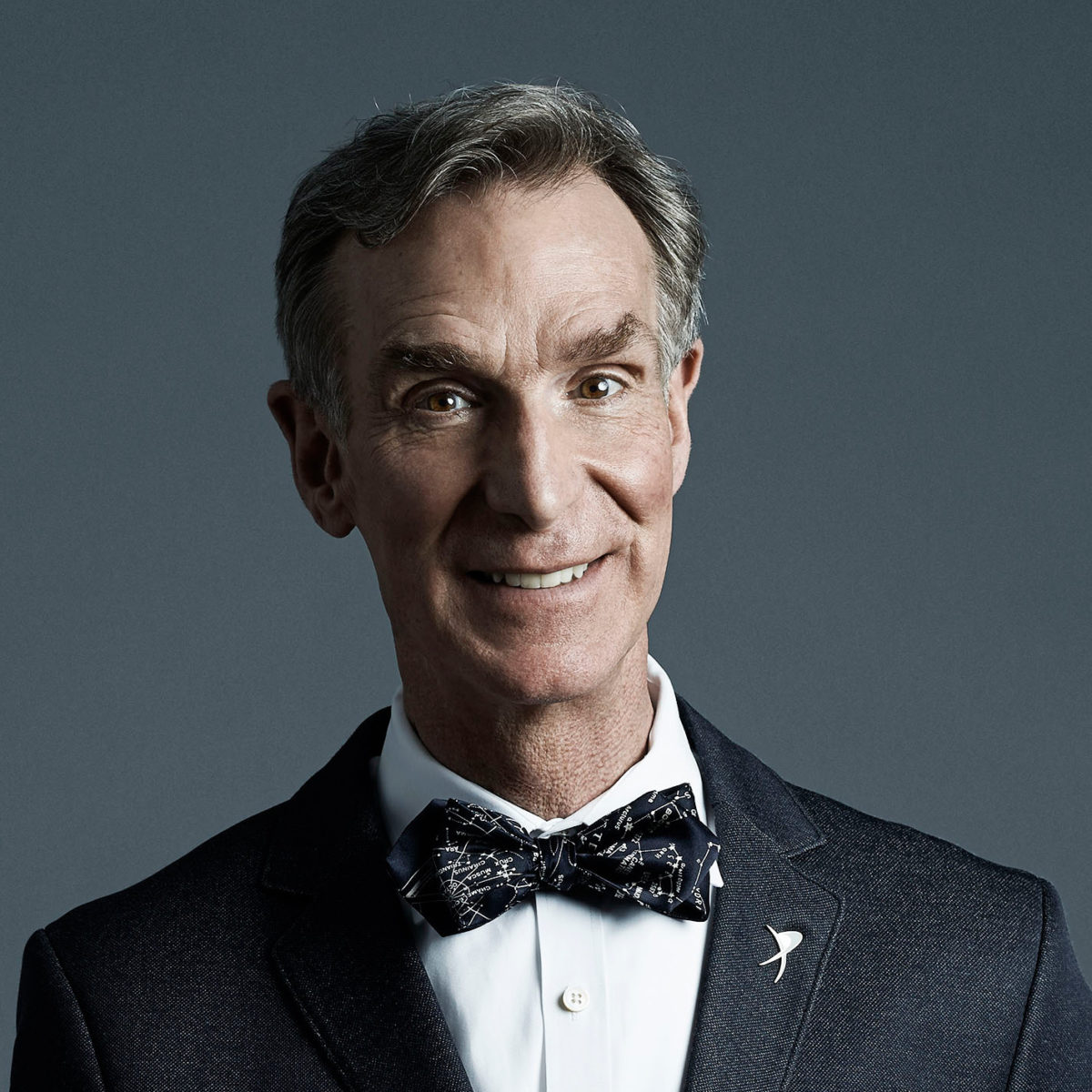
Bill Nye
Chief Ambassador and Vice Chairman for The Planetary Society

Jenn Vaughn
Chief Executive Officer for The Planetary Society
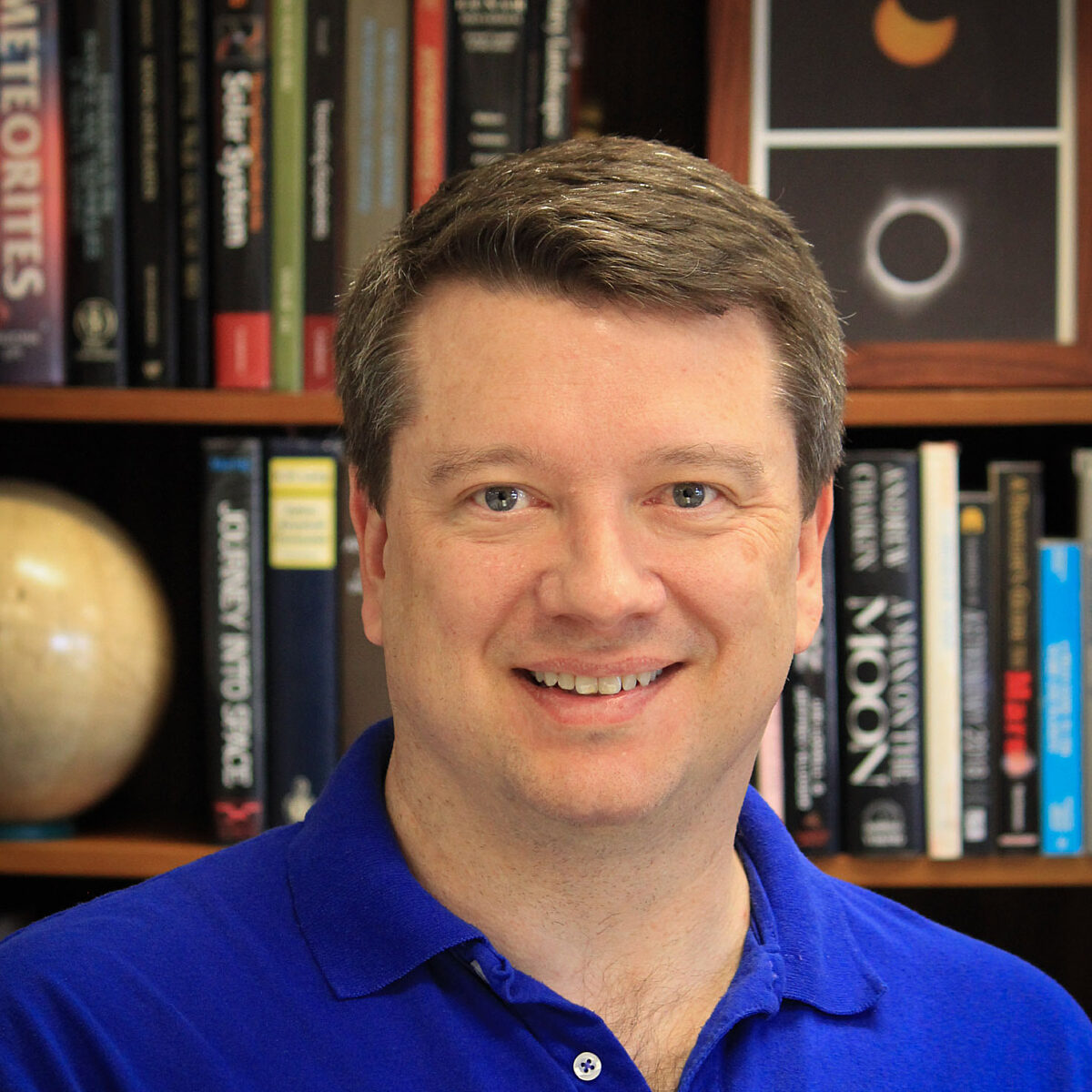
Bruce Betts
Chief Scientist / LightSail Program Manager for The Planetary Society
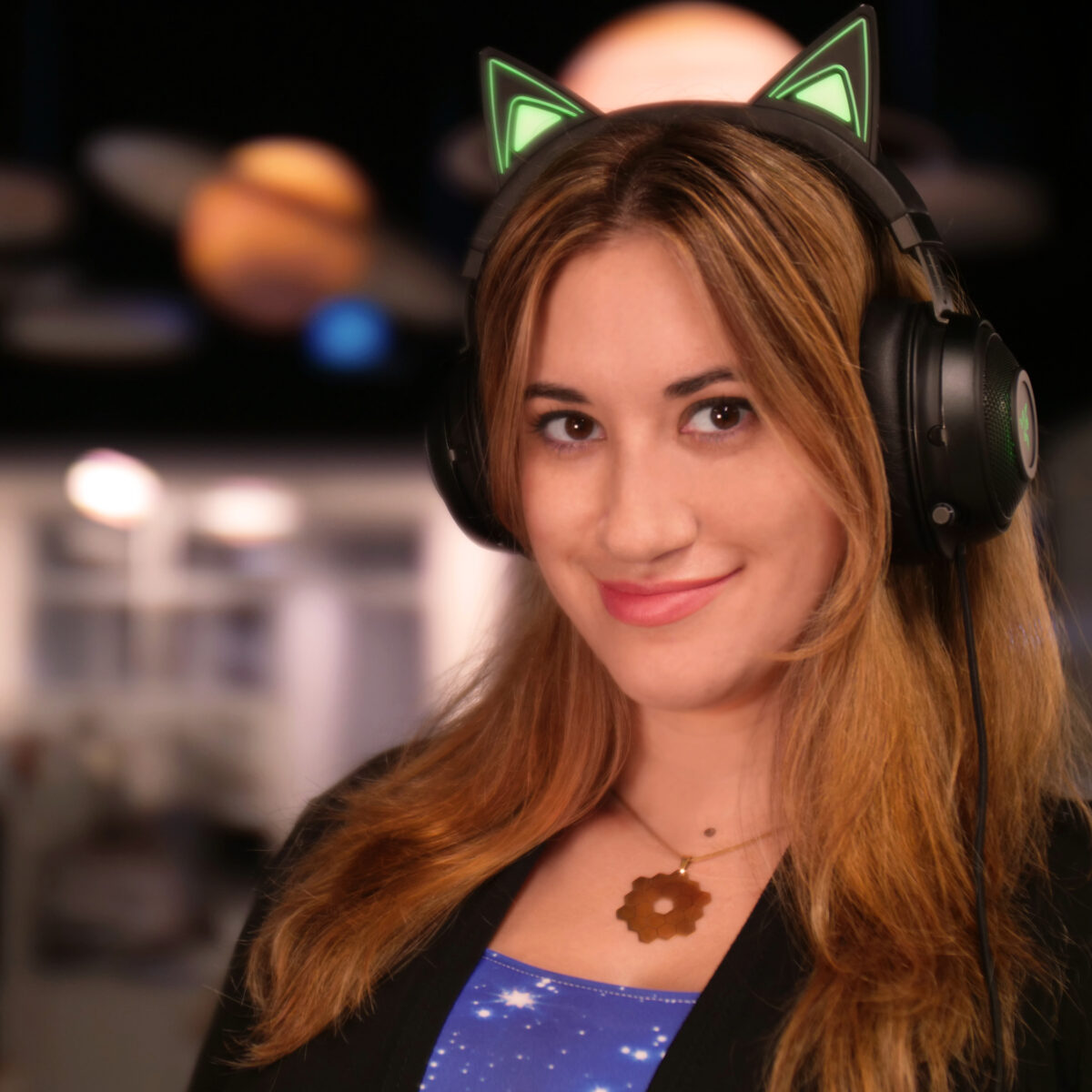
Sarah Al-Ahmed
Planetary Radio Host and Producer for The Planetary Society
This week on Planetary Radio, we mark a major leadership transition at The Planetary Society. Host Sarah Al-Ahmed sits down with Bill Nye, outgoing chief executive officer and newly appointed chief ambassador of The Planetary Society, and Jennifer Vaughn, incoming chief executive officer and former chief operating officer, for a candid conversation about this long-planned transition. Together, Bill and Jenn reflect on how the organization, under their shared leadership, grew into the world’s largest and most effective nonprofit dedicated to advancing the scientific exploration of space.
Then, Bruce Betts, chief scientist of The Planetary Society, joins Sarah for What’s Up. They discuss an upcoming planetary alignment on and around February 28, 2026.


Related Links
- Jennifer Vaughn, Chief Executive Officer
- The next chapter begins: Announcing my new role with The Planetary Society
- The Planetary Society announces leadership transition as CEO Bill Nye steps into two new roles
- Why I Explore: Welcoming the Unknown
- Orion poem - Adrienne Rich
- About The Planetary Society
- Save NASA Science Action Hub
- LightSail
- Shoemaker Near Earth Object Grant Program
- PlanetVac
- Day of Action
- Calendar of Space Events 2026
- What’s up in the night sky: February 2026
- Europa Clipper, a mission to Jupiter's icy moon
- Artemis, NASA's Moon landing program
- Buy a Planetary Radio T-Shirt
- The Planetary Society shop
- The Night Sky
- The Downlink
Transcript
Sarah Al-Ahmed:
A new chapter begins at The Planetary Society this week on Planetary Radio. I'm Sarah Al-Ahmed of The Planetary Society, with more of the human adventure across our solar system and beyond. This week's episode is a special one. After 15 years as our CEO, Bill Nye is stepping into a new role as Chief Ambassador of The Planetary Society, I sat down with Bill and our incoming CEO, Jennifer Vaughn, to talk about this transition, what it feels like, why now, and what the future of our organization really looks like from the inside.
I'm so excited for you all to get to know more about Jen. She's been a guiding force within The Planetary Society and a champion for the scientific exploration of space for decades. She's also one of the kindest and most skilled leaders I have ever met. To mark this moment, our staff flew in from across the United States and Canada to gather at our headquarters in Pasadena, California. We don't all get to be in the same room very often, so we took the opportunity to really work. It was three days of brainstorming of what the next chapter of our organization looks like. Of course, there were hugs and cake and karaoke, but mostly it was thoughtful conversations about our future. People who have been working at the organization for decades, sat alongside people who joined just this year, all of us trying to figure out how we can make this movement for space science and exploration stronger in the years ahead.
You'll also hear a beautiful moment from the gathering as Bill ceremonially passes the torch to Jen. And then Dr. Bruce Betts, our chief scientist, joins me for What's Up. We'll look forward to an upcoming planetary alignment in the night sky on and around February 28th. If you love Planetary Radio and want to stay informed about the latest space discoveries, make sure you hit that subscribe button on your favorite podcasting platform. By subscribing, you'll never miss an episode filled with new and awe-inspiring ways to know the cosmos and our place within it.
This leadership transition comes at a really pivotal moment for The Planetary Society. Just weeks ago, we were facing the possibility of a nearly 50% cut to NASA's science budget. It would've reshaped the future of planetary exploration for a generation, not just in the United States, but around the world. The damage to NASA would've cascaded onto our international partners and the scientists who depend on that funding to help understand our place in the universe. Through our Save NASA Science campaign, working alongside our partner organizations and thousands of engaged supporters around the world, the United States Congress restored NASA Science funding.
When people who love space show up together, they can change the course of history. Of course, there are still battles ahead. There always are, but right now, we're standing in the afterglow of a hard-fought victory. The organization is strong, our members are engaged, but the stakes for space science remain very high.
Over the past 15 years, under the leadership of Bill Nye and Jennifer Vaughn, The Planetary Society has grown into the world's largest and most effective non-profit organization dedicated to the advancement of the scientific exploration of space. And it's in that context that Bill is stepping out of his role as CEO and into a new one as our chief ambassador. He's not going away. He's going to continue to represent the society as a champion for exploration around the world. And this transition didn't happen overnight. It's something that we've been planning very carefully, making sure that it reflects who we are and carries us forward from a position of strength. And at the center of that next chapter, is Jennifer Vaughn.
Jen began working at The Planetary Society not long after the death of our co-founder, Carl Sagan. The organization was grieving. The future was very uncertain. She arrived at a moment where belief in the mission mattered deeply. She grew alongside the society, helping to build its membership and guide its programs and strengthen our advocacy work. We launched our LightSail missions. We saved Europa Clipper from the chopping block along with many other missions. And recently we helped save NASA Science. As chief operating officer has shaped much of what this organization has become over the past two decades. So I sat down with Bill and Jen to talk about what it means to pass and receive this responsibility and where they believe The Planetary Society is headed next.
Hey, Bill and Jen, thanks for joining me.
Bill Nye: Thanks for having us.
Jennifer Vaughn: Thank you so much.
Sarah Al-Ahmed: And good to see you both at HQ during our co-working week. It's always so much fun to see you all in person, but also to have the entire Planetary Society crew in one place.
Jennifer Vaughn: What a week?
Bill Nye: So everybody understand, people that work at Planetary live all over the place. Two people flew in from Canada, from Denver, San Francisco, somebody who lived in New York is now moving out west and so on, and so on. So it's good to have everybody together.
Sarah Al-Ahmed: We had a kind of emotional moment earlier today, and our listeners will hear this later on in the show. But you had a moment where you actually kind of exchanged the moment of power, the CEO role from Bill to Jen. So is it officially happened? Is this the moment that you are now no longer officially the CEO of The Planetary Society, Bill?
Bill Nye: By the time you hear this, I will not be CEO. Jennifer Vaughn will be CEO.
Sarah Al-Ahmed: But it's been 15 years. You've done so much in this role, we have accomplished so much. Is this a bittersweet moment for you or is this something that you've really been looking forward to kind of laying down this burden?
Bill Nye: Oh, I've been looking forward to this. No, I'll tell you guys. The guy at the circus with the plates on the sticks and the saber dance, and then he runs back. Yeah, I've been looking, all the plates are spinning. There's no plate wobbling that's about to fall off of its post.
Sarah Al-Ahmed: Why is now the moment that you feel like it's time to step out of this role? Is it just a nice round 15 years or is there some moment in your life that you've kind of decided as the catalyst for this?
Bill Nye: Both. 15 years is a round number. My anniversary was in September of 2025. For you listeners who may not be listening in 2026, and I turned 70, seven, zero years old, so it's a round number, but a good one. So I think this is a good time. And by the way, everybody, they're not letting me leave. I'm staying on the payroll as chief ambassador because I think you can ask around. But I think where I'm effective is on Capitol Hill and interacting with space professionals about the reason that we do what we do, which is to advance the scientific exploration of space. And that's where I can contribute and I hope to continue to contribute in those venues.
Sarah Al-Ahmed: I'm really glad you're going to be sticking around. In so many ways, the notoriety you bring is very helpful to The Planetary Society, I think. But also just you as a person, as someone who's been leading our organization and as a human who I've known for a while, I'd be very sad for you to entirely leave. So knowing that you're stepping into this role, we're still going to be going to Washington DC together. That makes me feel so happy about this because we're not going to be losing you, Bill.
Bill Nye: So thank you, Sarah. Everybody, keep in mind, I am OG on this thing. I joined the Society in 1980 as a regular person who had taken one class from the famous guy Carl Sagan, stayed connected to the Society. They asked me to be on the board then to be vice president, an unpaid position. And then when Louis Friedman was going to step down, they were looking around for somebody to step in 15 years ago, and they asked me to do it. And here we are.
Sarah Al-Ahmed: Well, I know you had a bit of trepidation stepping into that role of CEO, and I think in part that's because you're one of the most self-deprecating humans I've ever known. You do so many amazing things, but at the same time, I think you're keenly aware of where you could be better. And it comes out like, "I am just a human guy." But honestly, reading what you said when you first took on the role, I was like, he's so prepared for this. And I don't think he feels it. It might be a little bit of imposter syndrome in there.
Bill Nye: Oh man, fake it until you make it. That's me. You guys, I was a producer on a kid's television show. It is a leadership role. Ain't quite the same as trying to influence Congress fund, NASA's Science Mission Directorate. It's a little different thing, but it's worked out. And what we've been able to do, and Jennifer will go on and on soon, we've accumulated the best crew we've ever accumulated. We have hired the best group we've ever had. And it's because of Jennifer's leadership as chief operating officer. She has just made excellent decision after excellent decision.
Sarah Al-Ahmed: Well, you joined The Planetary Society ages ago. You were one of our earliest members. But Jen, you've been working here for almost 30 years at this point.
Jennifer Vaughn: You got it.
Sarah Al-Ahmed: What was it like working under all the other CEOs?
Jennifer Vaughn:
So it was Louis Friedman for 30 years, and I think it was maybe hard for those of us who had been with the organization for a while to imagine moving on without Louis. Louis was the organization in many ways. But when we learned it was going to be Bill, I think everyone very quickly saw, this is going to be great. This is going to be great for the organization and this is going to be a lot of fun. So there was also this sense of excitement that we were going to get this passion, and excitement, and humor, and care. Bill is such a caring person and it comes right through right away. It was an easy transition.
I think what might've been the most challenging for us at the time was thinking through how the organization comes across. We started off with the voice and the vibe and maybe a bit of the branding of Carl Sagan and then Louis continued in that tradition. And with Bill, we recognized, well, this is a very different feeling. And so we were just talking earlier about that word, avuncular. You have that sense of you're the fun uncle showing up to get us all excited about science, and about space, and about the future and the optimism, that role model out there. And so we were able to shape the organization to match the spirit of Bill.
Bill Nye: So avuncular, everybody, is a great word. Having the characteristics of or pertaining to an uncle. Come on. It's not saying I have some experience as an uncle. I have thousands of nieces and... Okay, maybe seven.
Jennifer Vaughn: Thousands of them.
Bill Nye: Maybe seven nieces and nephews, and I've got grand nieces, grand nephews, all these people. But that aside, I'm a different personality from Louis, especially from Bruce Murray, who was one of the founders who considered himself proudly an intellectual, he was a professor at Caltech. And these guys had clear vision as to what NASA ought to be doing. Although I may feel some of that, that's not always the best way to approach things. So did my best to shape the organization. But Jen, you were there when not everybody who is here now was there when I took over or when you started working here.
Jennifer Vaughn: Very true. Yeah. No, of course. That's the way these things work. People come, people go. There is this constant change. And what we've been able to say throughout this tenure of Bill's is that we're working with the best team we've ever worked with. And as Bill rightly points out, we meant it when we said it 10 years ago, we mean it now. And that just means that the team is consistently, as I like to say, leveling up. Everyone's getting better all the time. Each time we're reaching out and bringing new people on board. I think we have moved our expectations to a new level as well. And so it just grows and develops, and we're just so proud of the group of people that are making The Planetary Society's future a reality.
Bill Nye: So for those of you listening, who listen every week, to Plan Rad, as Mat says, Mat Kaplan, the original host of this podcast, we flew LightSail 1, just barely.
Jennifer Vaughn: Just barely.
Bill Nye: We flew LightSail 2, and that was not just barely. That worked.
Jennifer Vaughn: Worked really well. Yeah.
Bill Nye: Then you guys probably know the last few months there's been a proposal to cut NASA Science funding and cut NASA 20%, a fifth, get rid of all these people, lay them off and tell them to take another job. And then cut NASA Science by half, 47%. Well, it is the effort of The Planetary Society that stopped that. We pushed back, got members of Congress and the Senate to not put up with this and pushed back. And that's because of the financial support from listeners like you because of the development department, because of communications getting the word out, and because of the expertise we have now in policy, the two guys who work full-time in policy, we are able to do this analysis and marshal these resources and lead 19 other science organizations in changing the course of space history. So that's all something we couldn't have done 15 years ago. We didn't have the means, but it's everybody pushing the one direction at the same direction. And because of leadership from Jennifer. It's fabulous.
Jennifer Vaughn: And from Bill. Yeah.
Bill Nye: No, you. No, you.
Sarah Al-Ahmed: Both of you together though, you've worked hand-in-hand for all of these years. So it is really comforting knowing that in this moment as we're making this transition, that it's not like we're taking on an unfamiliar person into the midst of this organization that does something so specialized, and so specific, and so important. We know that we can trust Jen and we know that she knows how to CEO because she's been working with you all this time.
Bill Nye: Yeah, you use the term partnership.
Jennifer Vaughn: Yeah, no, it's always felt like a really solid partnership. Yeah. I've just loved working with you.
Bill Nye: Oh, I love working with you.
Jennifer Vaughn: I have loved all that.
Bill Nye: There's a lot to it you guys. So what we have done at The Planetary Society, largely everybody with Jennifer's leadership is promote from within and bring in expertise from the outside. I feel we have a very good mix of long time people and new people who share the vision, who are contributing in niches, boxes, areas that we just didn't have capability in before. We were bringing in people from the outside. But I think about, there's a couple of stories. One day I said to you 15 years ago, or let's say 14 and a half years ago, I think we should hire Brandon full time. Brandon Schultz is our internet or information technology guy. And you said something like, "I did that six months ago, Bill." I said-
Jennifer Vaughn: Good idea, Bill.
Bill Nye: Yeah, yeah. And then, "You should hire Mat Kaplan full time." "Yeah, I did that last year, Bill." It's just what you have, Jennifer, is this excellent judgment of people. You guys, we're recording at Planetary Society headquarters. I'm very proud of the building. If you haven't visited, I encourage you to swing by, call ahead. Ever since the pandemic, people are only really here now and then physically. Call ahead and we'll greet you and wander around. But assembling the crew, the team has been just really fantastic.
Jennifer Vaughn: It's always the people.
Bill Nye: Are the asset here at The Planetary Society.
Jennifer Vaughn: Yeah. And that's our team. It's also our members. It's our broader community. It's all of us working together in this movement, this movement for the scientific exploration of space. And nothing showcases as well. I think as what we just went through where we had a long period of time where NASA budgets were pretty strong, and so we didn't have a crises to go after. And we kept this movement going all throughout by celebrating, by having a great time on Planetary Radio, by keeping people deeply involved with the organization and its mission. Reminding people that we are all here pushing for a future in space. And then when the crises came, we were ready. We were absolutely ready to go. And that says a lot about ultimately how well everyone is working together and the clarity of the purpose of this organization.
Bill Nye: And so we're talking about the past, you guys, and that's good, but I am very excited about the future. Jen, what do you have planned for the next five years?
Jennifer Vaughn:
What do I have planned? No, what do we have planned? We've been working all week just really trying to internalize this next chapter for The Planetary Society. And it is not surprisingly, fully informed by what we just went through. This idea that we were able to move quickly and effectively and make change because we have this movement. And so we are going to work more on building that movement. So we are very committed to trying to increase the global appreciation for the scientific exploration of space, specifically trying to know more about our place in the cosmos and what it means for us here.
We're going to be mobilizing, we're going to be finding ways to connect people who share this passion and get them more engaged, more involved with the society, more involved with their communities, more involved with taking action. We're going to lead, we're going to bring scientists and engineers together. We're going to build coalitions. We of course, are going to be advocating and seed funding science and technology. And we are working to thrive. We're nearing our 50th anniversary, as you know, at 2030. We'll be 50 years, The Planetary Society. So we want The Planetary Society to be the strongest, healthiest organization it can be. So it's ready to launch to new heights in that new chapter
Bill Nye: And everybody talking about the start of the organization and what's happened in the last 45 and a half going on 46 years. When Carl Sagan produced the original Cosmos, you can look at episode four. Oh, the ancient dinosaurs disappeared. Nobody knows why. Moving on. Okay. But then the next three years after that, between 1980, 1983, the Alvarez has figured out their ancient dinosaur fossils below the layer of iridium around the world and none above it. And the layer of iridium almost certainly came from an asteroid. Very rare in the Earth's crust, very common in asteroids because it's so dense, it sinks to the middle. I understand. So you guys, that's just an example of something, a discovery made since the organization was started.
Jennifer Vaughn: Well, another one that immediately comes to mind is early in the days of The Planetary Society, there's a lot of speculation about exoplanets.
Bill Nye: Are there any?
Jennifer Vaughn: Do they actually exist? We funded early research studies back in the early '80s. It was one of our first projects was this hypothetical idea of planets around other stars. And now we have more than 6,000 confirmed. It's just amazing how much that has changed in a relatively short amount of time.
Sarah Al-Ahmed: You came onto The Planetary Society right around the time of that first deep field image from Hubble that blew the lids off all of our brains. But also just around the time of Carl Sagan's passing and that moment in the history of The Planetary Society. What was it like for you to join the organization in that time of mourning?
Jennifer Vaughn: Well, it's interesting because when you're young and just stepping into it, you don't fully understand. It takes time to be able to look back and say, "Wow, that was a profound moment I stepped into." So indeed there was a deep grief. So when I was hired, when I got the call that I got the job, Carl was still alive. But when I started, he had just passed.
Bill Nye: Wow, I didn't realize that.
Jennifer Vaughn: So I really-
Bill Nye: 1996.
Jennifer Vaughn: Yeah. I really walked in right then in that moment. And while Carl wasn't a day-to-day figure, he really had this spiritual leadership over the organization and there was a deep sense of questioning of how do we move forward now. And there was a lot of focus on the scientific integrity that Carl brought to everything that we did. What do we do? Do we organize an entire group of scientists that are advising us? Do we bring more scientists onto the board? How are we going to handle this? What role is Bruce Murray going to have now without Carl? Does anything change with Louis job? It was a lot. So we had a lot of meetings back then, and I didn't really... I didn't notice for sure that there was an emotional heaviness to the organization. What I didn't recognize is how much of that was probably just grief and confusion, just this newness that no one really could get their heads around just yet.
Bill Nye: You've triggered a memory, my friend. So as you guys know, through if I may a self-deprecating fashion, a clerical error, I got into Cornell University Mechanical Engineering. I finished my requirements, and then as a senior, I took a freshman class from Carl Sagan. That's how I got involved in this whole thing. So I got invited back to Ithaca to speak at Carl Sagan's memorial service, and that's where Louis Friedman, founder of The Planetary Society, he came up to me and asked me to join the board. And I'm thinking back about his manner, his posture, his gait at that meeting or that event rather, he carried that heaviness that you're describing. And I admit, I had not really stopped to think about that till just now.
Jennifer Vaughn: Interesting.
Bill Nye: Thank you. It was a big deal.
Sarah Al-Ahmed: It was a big deal, not just for the organization, but for the space community in general. I think even to this day, I mourn his passing. I wish I got to meet him, but for lack of a better way to say it, I feel his presence in this building and in the spirit of the people here every day. But also it's those moments of sadness that give us pause and make us recontextualize our lives. And I think it's an interesting point to make is that, Jen, you came around to your love of space kind of later in life and in part because of a moment of hardship in your own personal life, someone in your family got sick. And through that experience, you kind of came around to your love of space. How did that happen?
Jennifer Vaughn:
Yeah, thank you for bringing that up. So I meandered my way into space. I had a dear friend of mine who that was kind of his catchphrase was meander darling. And I think I did just that where I had followed a love of literature and I'd followed a love of poetry, and that was my route into university. And I really enjoyed writing. And then I became in love with publishing. I really loved the process of publishing other people's thoughts. And so I was on one path that I thought was going to be down the publishing path and maybe this new-fledged thing called the internet. And kind of around the time I was nearing my probably senior year at the time in college, my mother had a stroke. And it's one of those things where you're still in that stage of your life where if you're lucky enough, you're feeling that you're invincible and no one ever dies and things don't go wrong.
And I had been pretty fortunate so far in my life to avoid those things. And so I was having kind of a reckoning with tragedy. And I had been reading or doing a research project on a poem from Adrienne Rich called Orion. And I had had to do kind of a response poem, my own version of an Orion poem to respond to Adrienne Rich's. And I had been working with a professor during this time, and I had a very long night driving to the Bay Area from Southern California. So that's a good six-
Sarah Al-Ahmed: Seven-hour drive.
Jennifer Vaughn: ... seven-hour drive in the middle of the night in the fall. And my best friend was driving me and I was crying and I was watching Orion rise in the east.
Bill Nye: The constellation.
Jennifer Vaughn:
Yes, the constellation. And of course, I'm thinking about Adrienne Rich, and I'm thinking about my own poem response that I had done. And there was something in that moment where there was an awakening. And this is I think with everyone in their space love story, it's about an awakening. And I had this awakening that night that it was just clear that this is my own little moment of crises, but Orion is a reminder of all the people who have ever lived on this planet, have looked up in the night sky, and they've seen this, they've seen these stars. And everything moves on and we're part of something so much bigger and so much more beautiful. And in that moment of understanding kind of again my place in space, it kind of goes back to that as I had a moment where I felt my place in space, and my place in humanity, my place in history, it allowed me to face a very tough moment in a new way.
So I had had this experience that was all internal, and then I got back to school and my very, very kind professor who I will always be grateful too, just said, "I imagine you haven't been sleeping so well. I don't sleep well either. So I learn about stars. So here's some background I've done for you on all the stars of Orion, learn about Orion, learn about the Orion Nebula." And it was my entree. And so I just stepped into this world that I knew nothing about, nothing. But because I'd written a poem and an explication on another person's poem, all of a sudden he just reached out his hand and just brought me in. And then I was able, a year later or whenever it was, I was looking for a job to look at a publishing job, which is what I wanted to do at The Planetary Society and say, "Maybe I could do this. Maybe I could actually take my interest of publishing and work for a space organization and really dig into this." And so it was a moment that really set me on my trajectory.
Sarah Al-Ahmed: And you started with the Planetary Report, right?
Jennifer Vaughn: I did. I was editorial assistant on the Planetary Report, and I was half time on the website, which was really the early days of the website. And so I did a lot of hand coding of HTML, uploading images of Pathfinder. And back then you had to kind of piece jobs together to make a full-time job. So I was like half over here and half over here, and part of my job was on another project that got funding outside, and so it was hard to get a full-time job at the time.
Bill Nye: Bruce Murray said, "Louis, this internet, this could be our strategy. We're going to be the only ones doing it." Well, I paraphrase a little bit.
Jennifer Vaughn: And in many ways the digital revolution has been a massive breakout strategy for us because before then, our entire reach was our membership. And while the membership is the core of all we do and is like the engine of this organization, our reach is huge now. Our reach is so huge, and it's because we have things like podcasts, and the website, and social media. This is a way to bring so many more people into this movement, this collective passion for the exploration of space so much more than we were ever able to do when we were all just getting a magazine in the mail.
Bill Nye: Because the magazine still, many, many of our members, and I'm among them, I'm of a certain age. I like the paper glossy magazine with the happy, glossy photos.
Jennifer Vaughn: I love when it shows up in the mail, it makes me so happy.
Sarah Al-Ahmed: I know. I collect all of them.
Bill Nye: Yeah. Well, yeah.
Jennifer Vaughn: Yeah, exactly. It makes me really happy.
Sarah Al-Ahmed: We'll be right back with the rest of my interview with Bill Nye and Jennifer Vaughn after the short break.
LeVar Burton:
Hi, y'all, LeVar Burton here. Through my roles on Star Trek and Reading Rainbow, I have seen generations of curious minds inspired by the strange new worlds explored in books and on television. I know how important it is to encourage that curiosity in a young explorer's life. That's why I'm excited to share with you a new program from my friends at The Planetary Society. It's called The Planetary Academy, and anyone can join designed for ages five through nine by Bill Nye and the curriculum experts at The Planetary Society.
The Planetary Academy is a special membership subscription for kids and families who love space. Members get quarterly mailed packages that take them on learning adventures through the many worlds of our solar system and beyond. Each package includes images, and factoids, hands-on activities, experiments, and games, and special surprises. A lifelong passion for space science and discovery starts when we're young, give the gift of the cosmos to the explorer in your life.
Sarah Al-Ahmed: But really though, you started as CEO in a very challenging time for The Planetary Society. And then in this moment in the last few weeks as we've made this announcement that we are changing CEOs, I got this flood of messages. It was like, "Oh, no, did something happen? Is something wrong?" They imagine that it has to take some kind of moment of crisis for a change in leadership, but actually it was because everything was going right.
Bill Nye: That's right.
Sarah Al-Ahmed: Right? We've planned for this.
Bill Nye: Everything is going extremely well. It doesn't mean we don't need your support on the website. Hit the donate button, donate, donate, donate, hit it over and over, often. But things are really good shape. So as Jen takes over, it's very smooth.
Sarah Al-Ahmed: It's interesting because you've been here around for quite a long time, 30 years, right? How did you go from working on the magazine to chief operations officer and now CEO? What was the arc in those intervening years?
Jennifer Vaughn: Yeah, it is wild, isn't it?
Sarah Al-Ahmed: Yeah.
Jennifer Vaughn: I look back on it and think, "Oh, I'm not quite sure how that happened." And I think a lot of it is people taking chances with me. I've been so supported in this organization, and again, I couldn't have-
Bill Nye: Jen, you're so good at it. You're so competent.
Sarah Al-Ahmed: That's true.
Bill Nye: That's why people kept taking chances. No, everybody. So when I took over this and that, look, I'm an engineer, love math, kooky for a spreadsheet, all good. But there were a lot of personnel issues. There was who's going to say what to whom? And so the board wanted me to hire somebody whose title would be managing director, so to help Bill get anything done. And Jennifer took over and things just got better and better and better. And then, see, if you look up chief operating officer in the dictionary, that may be an older reference for some of you, you will see her picture. I mean, she's just brilliant at it.
Jennifer Vaughn: So kind, really far too kind. I was thinking though, back on your question, which in a lot of ways when you work in a small organization, there's a lot that needs to be done, always. You never have enough team to do all of the activities. And so what that allows for is a lot of learning opportunities and to be able to step in and just take on new work. And so I started on the publishing side for sure. I was just a full on editor. That's what I did. I edited and I did web work. But with time, I was able to get more deeply involved with marketing and direct marketing, understanding the real financial processes that helped keep the organization strong, became more involved with development. And then over time, I had a bit of my hands in everything. And so I think that that's why I was positioned to be able to make a move into the operating position. And I realized once I was in the operating position, that was a job I always wanted. I just didn't know I wanted it beforehand.
Bill Nye: Right on.
Jennifer Vaughn: But I do love the holistic work of nonprofit development. So I love seeing all the pieces working together towards something great. And so that's what's really lit me up over this time. And I'll admit, I'm actually very comfortable being a little bit in the background. So I think that their partnership with Bill has been perfect too, because I've been able to really focus on the non-profit management side of the house. And it's great that you are out there and you're still going to be out there, which is fantastic.
Bill Nye: Oh yes. I'll be ambassadating.
Jennifer Vaughn: You'll be ambassadating. I love it.
Bill Nye: So everybody, what we're going to do, just spiritually, org chart-wise, there are people on the board of directors who have said for years, "What is out there? Let us get out there." Okay people, pay attention. It's going to be Jim Bell, Bethany Ehlmann, Britney Schmidt, these people we're going to put them out there, man. And then Casey Dreier-
Jennifer Vaughn: Got it.
Bill Nye: ... chief of policy, you're going to see him. Jack Karali, you're going to see him. We're going to change from having me always get the call from CNN or what have you, to having the right issue be addressed by the right person.
Jennifer Vaughn: You got it. That's perfect.
Bill Nye: And you are going to manage that.
Jennifer Vaughn: Yeah, I am. Yeah. And occasionally I'm the right person to talk about it like right now. But for the most part it is going to be this shared role as far as who is out there speaking for the organization.
Sarah Al-Ahmed: It's going to be fun having both of you in DC together as we all go for a Day of Action and do things like that.
Bill Nye: Oh, Day of Action is a high point for you.
Sarah Al-Ahmed: Are you excited to take a little bit more of that role on being out there and about being more of a public voice for The Planetary Society?
Jennifer Vaughn: I am. I really am. So I say that indeed I'm very comfortable in the process that we've had. So that's been something that suits me. But I'm always up for a challenge. And what I think I'm most excited about is this next year we're doing a tour, we're getting out on the road.
Bill Nye: This is a cool idea. This is all her idea, you guys.
Jennifer Vaughn: And I am really excited to get out there and talk with members. So we don't have the full list of cities just yet, but maybe even by the time this airs, we will. We are laying that out right now. The idea is that we gather members in different areas of the country for now, and then we'll start looking beyond the US borders, and just get a chance to get to know people and also to become more known. Because indeed, I've been here for a long time, but a lot of people don't know me.
Bill Nye: And also, they don't know The Planetary Society as well as we want everybody in the world. We're at 40,000 members. The dream is to get 200,000 members, million.
Jennifer Vaughn: Or 200,000.
Bill Nye: 200,000. Sure. No. So stay tuned everybody, and if you're listening to this podcast, thank you for your support. If you're a member, thank you. Thank you for your support. If for some reason you stumbled onto this podcast and you're not a member, check us out at Planetary.org.
Sarah Al-Ahmed: I think both of you have been just so wonderful in your previous roles and you're both so skilled in what you do. But the thing that I value most in both of you is just how kind and compassionate you both are. I know I've seen it in my own personal life in the conversations we've had, but also in the last year I've seen it in the relationship between you. There was a very difficult moment about a year ago, the Eaton fire-
Bill Nye: Oh man.
Sarah Al-Ahmed: ... ate Altadena. So many fires in the area happened. I was just a few blocks outside of that evacuation zone, so I escaped it. But Jen-
Bill Nye: But did everything smell like smoke for you?
Sarah Al-Ahmed: Absolutely. Even my cat had horrible eye crusties and respiratory issues. It was stressful.
Jennifer Vaughn: So awful.
Sarah Al-Ahmed: But Jen, you've lost your home and in the midst-
Bill Nye: You guys have went by her lot many months later.
Sarah Al-Ahmed: Gone.
Bill Nye: It just, the mailbox was still there and there was an orange tree with sort of not all the way dead. You guys, I know you've heard about the fires in California last year. It was a real deal.
Sarah Al-Ahmed: It was. And I think something really interesting that happened in that moment is that when you lost your home, Jen, you and your family were able to find a place as you found your new footing because Bill provided you a place to stay in his home.
Jennifer Vaughn: Exactly. Exactly.
Sarah Al-Ahmed: And when people ask me, what is it like to work at The Planetary Society or what is Bill Nye like as a boss? I always like to come back to this story, not because trauma dumping, but because I think it gets to something really important about The Planetary Society and our identity as an organization. Not just as one that wants to advance the scientific exploration of space, but humanely. And with that idea of the way that knowledge, and that community, and that society makes us better and allows us to contextualize each other, but also makes us more kind toward one another.
Bill Nye: Really good.
Jennifer Vaughn: And we really cannot thank you enough for that.
Bill Nye: Well, it worked out great.
Jennifer Vaughn: No, it is those moments too. And I think by going through that, we had it just relatively easy because we had such wonderful support. But going through that also taught me a lot about how I can help others in the future. Because you notice, you really notice when you need it and people are there and doing things like, "Please, Jen, stay longer. I'm good over here on the other coast. Just stay put. Take your time." And I knew he meant it. I know how I think to be even more generous and kind to others now. And I love that you're bringing up the kindness attribute because it is such a part of this environment and it stems from you, Bill. You're a very, very kind person.
Bill Nye: God, listen to you guys.
Sarah Al-Ahmed: No, it's true.
Jennifer Vaughn: You absolutely are. You love people.
Bill Nye: Most of them. There are a few.
Jennifer Vaughn: I figured I'd led you into that.
Bill Nye: We got a one-way ticket to Mars, well.
Jennifer Vaughn: No, but you really do. It shows in all you do. It shows in the show that you created all those years back. You see the best in people. And you saw the best in children, you saw the best in what humanity can do for the world. You definitely see the best in what humanity can bring to our future in science and exploration. And so, it really does permeate throughout the organization, I think certainly within our team, but I hope it permeates in all that we provide the world as well. I hope people can see it in our work.
Bill Nye: Got to say back at you. So she leads the meetings, Jennifer, and nowadays many of the meetings are conducted remotely because people are all over the place. And you just say, we care about you, we want to know what you're doing, we... It's all you. You lead pal. Not to go on and on. You got listeners, we're trying to cover some ground, cover some orbits. But Jen is just a natural leader. It's going to be better than ever you guys. Thank you for your support.
Sarah Al-Ahmed: But really though, I feel like we're trying to put even more society in The Planetary Society, and we are not only giving people a sense of community that I wish I had more of when I was younger. But also letting them know that we care through our advocacy actions, right? The scientific community in the United States, but also in the world beyond for the last year has been suffering. And I think a lot of people have taken solace in our efforts to try to support that community. And it very much stems from the kindness that you both have shown, and it makes me very happy to know that we didn't have to look outside. We had someone here all along who could take on that new CEO role and that kindness that is the heart of The Planetary Society, that wonder, and that joy, and the passion for communication that you've had forever, Jen. That's going to stay with us and be the cornerstone along with Bill as our new chief ambassador-
Bill Nye: Chief ambassador.
Sarah Al-Ahmed: ... and the entire team to go on to this next era, and one of the coolest eras of space exploration ever.
Jennifer Vaughn: Absolutely.
Bill Nye: You guys, we're about to make just discoveries that are going to change the world. We're so close.
Jennifer Vaughn: We are.
Bill Nye: Life elsewhere, a way, an actual way to keep from getting hit with an asteroid and the farther and deeper we look, the more discoveries we're going to. I think all the time, I was talking about this today, all four of my grandparents were born in the 1800s. I'm of a certain age. They didn't know there was relativity, let alone that it would end up in your mobile phone.
Sarah Al-Ahmed: Wild.
Bill Nye: You know what I mean? Quantum mechanics. No one had any idea when they were born, they lived through discovery of the neutron, discovery of nuclear energy, and so on. They lived through discovery of the Big Bang, black holes, neutron stars, white door, the whole thing. People don't know what's going on in the cosmos, but I would not be surprised in the next 30 years it gets figured out and it ends up in the spiritual equivalent of the future phone, whatever that is.
Jennifer Vaughn: I can't wait.
Sarah Al-Ahmed: People are going to be looking back on this-
Jennifer Vaughn: I can't wait.
Sarah Al-Ahmed: ... conversation saying they didn't know that it was machos, or wimps, or whatever it turns out to be.
Bill Nye: Yes, true. Yeah, yeah, yeah, yeah.
Jennifer Vaughn: Exactly. That's why space never stops giving.
Bill Nye: That's right.
Jennifer Vaughn: And there's-
Bill Nye: And we're just on the verge of some extraordinary stuff, everyone.
Jennifer Vaughn: Absolutely. And the wonder is endless. So there's always more to explore and learn and grow from. It's amazing. Can't wait.
Sarah Al-Ahmed: Well onward, you guys. It now begins a totally new era of The Planetary Society, but not so new familiar and slightly changed.
Jennifer Vaughn: Yep. You got it.
Sarah Al-Ahmed: Well, thank you so much for taking the time to sit down with me and for all that you've both done in my own life. But the role that you've played at The Planetary Society, you've helped so many people through your passion, but also they've helped us all together. We are building this movement for something that I think is so beautiful and meaningful, but not just for us, for all the generations that come.
Jennifer Vaughn: Oh, so well said. So well said.
Sarah Al-Ahmed: Let's do this.
Jennifer Vaughn: Yep, let's do this.
Sarah Al-Ahmed: I'm going to remember having that conversation with Bill and Jen for the rest of my life, probably just before the music started and the cake came out, we all gathered in one room. The transition wasn't elaborate, just Bill and Jen marking this transition in their own way, surrounded by the team that will carry this work forward.
Bill Nye: So Jennifer is taking over. Yes, please. This is for you from me.
Jennifer Vaughn: Thank you.
Bill Nye: As you may know, many of us are wearing pins, as we call them, with magnetic fastening. But from time to time, people on our staff managed to issue a pin that is literally golden. So I would like to take my [inaudible 00:47:04] and put it on your little pin.
Jennifer Vaughn: It's weird. That's really sweet. That's very, very sweet.
Bill Nye: So proud of you. I'm so proud to know all of you. With Jenn's leadership, you all are going to, how do say it? Change the world. Let's cheers for the new CEO. Hep, hep.
Audience: Hooray.
Bill Nye: Hep, hep.
Audience: Hooray.
Bill Nye: Hep, hep.
Audience: Hooray.
Bill Nye: Let's change the world.
Sarah Al-Ahmed:
Moments like this really remind me why we do this work in the first place. It's not just about the spacecraft and the missions as amazing as all of that is. It's about the people that make them possible and the way that exploring worlds beyond our own reshapes, how we see ourselves and our connection ,to each other. When we look up and out, we're reminded of the scale of the fragility of the possibility. We're reminded that we're small creatures living on a rock in a vast and complicated universe. And that's not necessarily something to fear. It's something that connects us. We choose to do this work because exploration makes us better. It demands cooperation, it rewards curiosity. It asks us to think long-term beyond election cycles, beyond quarterly returns, beyond our own lifetimes. It invites us to build a future that we may never personally see. Just one person, one step, and one transition at a time.
And sometimes when I'm trying to reflect on these giant moments like this in my own life, the best thing for me is to step outside and look up. So it's time for What's Up with our chief scientist, Dr. Bruce Betts. Hey, Bruce.
Bruce Betts: Hey, Sarah.
Sarah Al-Ahmed: Slightly hoarse today from all the celebration karaoke at the office yesterday. How are you doing?
Bruce Betts: So good. A little tired. A little tired.
Sarah Al-Ahmed: Yeah. It's one of those things we get everyone together in the office and it's just, it's so much fun. But also, whoo. But at the end of the day, I got to sit down with Bill and Jen and talk about this transition of power as Jen steps into this role. And it's cool. You've been around for all of the CEOs of The Planetary Society. How are you feeling about where we are now and what the organization is like in this moment versus the entire arc of the history of the place?
Bruce Betts: Great. Such a better place than we have ever been in terms of stability, in terms of what we're able to accomplish, in terms of the overall staff, the morale. Bill has been just wonderful as a CEO, and I'm super excited about Jen as CEO. She has all the history and competency to lead us forward in these coming years. And the past was great, the present is greater, and the future is the greatest.
Sarah Al-Ahmed: Wow. You actually genuinely sound happy. I'm kidding.
Bruce Betts: Yeah, I know. It's weird. I almost sounded optimistic.
Sarah Al-Ahmed: Yeah.
Bruce Betts: Well, it was about The Planetary Society rather than whether any given mission will work. It's a great time with people, and I also am going to go against my usual plan and say, we have great people like you, Sarah. And I actually meant that. Now I will not be nice again for a while.
Sarah Al-Ahmed: Really though it was so wonderful seeing all the generations of the people that have worked at The Planetary Society for so long, some of which have been around working at the organization for almost as long as it's existed. And all of the new people, all of us together in one place celebrating this moment right after we've collectively helped save NASA Science, looking forward, all the things we're going to do together. I think it was just a really special day, and I am glad to know you, Bruce.
Bruce Betts: I'm glad to know you too, Sarah.
Sarah Al-Ahmed: Well, we've got plenty to celebrate among our team, and I want to give other people a nice way to celebrate in the future. We've got a beautiful planetary alignment coming up, not this week, but over the next week or so, we're going to start seeing a bunch of planets up in the sky. And we haven't done a What's Up actually looking up at the sky in a while. So what's coming forward in February 28th?
Bruce Betts: Well, now I get to mix in some negativity as well as positivity.
Sarah Al-Ahmed: Yeah.
Bruce Betts: Because I kind of have a pet peeve with planetary alignment-
Sarah Al-Ahmed: Oh, fair and valid.
Bruce Betts:
... because it always smells like whenever the planets are up, they're pretty much in a line anyway because they all orbit in the same orbital plane, so you always are going to be following them across the sky. Even the moon is roughly in the same plane. That having been said now that I've whined about most of it... Oh no, I had one more whine, which is you'll need probably a telescope to see a couple of the ones and you'll need a really clear view to the western horizon and you'll have to do it shortly after sunset. But if you do all that, even if you don't, Jupiter is super easy to see. It's a high up in the east. It's the brightest thing up there. It's brighter than any of the other stars. It's not that far away from Sirius, which is the brightest star. And so check that out on the east.
As you move west across the sky, you've got yellowish Saturn, dimmer, but still looking like a bright star looking yellowish. And as you come down to the horizon around the 28ths, so a few days before and after, Venus and Mercury are dancing, but they're dancing very low to the horizon. So you're going to need to look soon after sunset as soon as it kind of darkens and with a pretty clear view to the western horizon. But if you get that, Venus is brighter than Jupiter, brighter than any other natural object besides the moon, so you will be able to see it if you can get a shot at it. And Mercury's off either above it or off to its right, depending on which day you look and is also bright. But that's the challenge.
Now, if you really want to get crazed, well, first of all, get mildly crazed, you can look for Uranus, which is hanging out kind of if you take Orion's Belt and follow it off one direction, you get to Sirius, the brightest star on the sky. You go the other direction off to its right as we would see it in the Northern Hemisphere, and you'll get sort of to Aldebaran and the Pleiades. Well, Uranus is actually hanging out really near the Pleiades. You either need a really dark sky and great eyes or binoculars or telescope. And if you really crazed go for Neptune, which is the sixth of the planets that are technically visible and it's not very far off from Saturn. If you're going to do that, I would get something that tells you exactly where to look because Neptune's a wee bit of a challenge. I don't know they knew this, but it's really far away.
Sarah Al-Ahmed: Yeah. I always try to use either Stellarium or SkyMap or one of those free things I can either put on my phone or my computer to help me figure out where things are in the sky. But of course at any given moment when someone's like, "What's that shiny thing in the sky?" I'm like, "Let's look it up immediately." Because I think that's part of the power of these so-called planetary alignments. It's something that people can look up in the sky and go, "Huh, that's weird." But that gives us an opportunity to be like, "Well actually, have you met my friend ecliptic?" It's a powerful moment to actually teach that kind of science.
Bruce Betts: No, that is the positive thing is that it gets a lot of coverage. Just my pet peeve that it gets oversold and I worry about getting people more excited, like they're going to go out and see six giant planets right in front of them looking huge and bright. And then be disappointed and blow it off when they say things in the future. It's still super cool.
Sarah Al-Ahmed: That's true.
Bruce Betts: I'll mention on the 26th, you've got the moon right next to Jupiter, which will be a very cool view. And below that, you've got Orion and you've got all the bright stars for the winter, northern winter, the Hexagon, Winter Hexagon, which has the Sirius, and Procyon, and Capella, and all these good choice. A lot of lots to look at over in the eastern sky, high up in the eastern sky as well. So easy to see for at least the mid-latitude northern observers. So have fun with the night sky and don't take my negativity about things being oversold as a negativity about night sky, which I do still very much love.
Sarah Al-Ahmed: For me, it's the term blood moon. That's the one that gets me.
Bruce Betts: I've got a list. I've got a list, my friend. Anyway, you'll find if you want more information, go to Planetary.org/night-sky, and then you can click through to that to the monthly thing. That'll have what's going on right away. And then you can click through to the monthly segment I do, which focuses as we did here on easy things to see in the night sky with just your eyes or some binoculars.
Sarah Al-Ahmed: We also have our 2026 space calendar that came out earlier this year. So I'll link all these things on this episode of Planetary Radio, so you'll have all the resources you need to go out there and look it up at the sky and have a little bit of wonder.
Bruce Betts: Do it. Go out there, look up the night sky. I've heard people say that it's a good idea.
Sarah Al-Ahmed: Right?
Bruce Betts: There's cool stuff. Is it time for...
Bruce Betts: Random Space Fact.
Bruce Betts: So just a few weeks ago I talked about the quantity of lunar samples that came back from the moon, and I usually try to spread things out. But because we also have the Winter Olympics going on right now, I wanted to mention a combination of Winter Olympics stuff coming back from the moon fact. Which is the mass of rocks and dirt brought back from the moon by astronauts in the Apollo program is approximately equal to 21 granite rocks or stones used in the sport of curling. 21 of those things they slide. That's about what we got back in mass from the moon from the Apollo program.
Sarah Al-Ahmed: That's awesome.
Bruce Betts: There you go.
Sarah Al-Ahmed: Oh man. Just don't put me on ice. Don't send me to Enceladus with some ice skates. It will not work out.
Bruce Betts: Oh, let's go. Let's do a group ice skate. That'll be fun.
Sarah Al-Ahmed: Oh man. Maybe at the next co-working week when all of us can get together and then instead of listening to me go horse-singing karaoke, you can watch me fall on my face or practice my angular momentum.
Bruce Betts: That sounds fun. Let's do that.
Sarah Al-Ahmed: Let's do that.
Bruce Betts: All right, everybody go out there and look on the night sky and picture. Oh, go ahead. Picture Sarah falling on her face but not getting hurt. Thank you and good night.
Sarah Al-Ahmed:
We've reached the end of this week's episode of Planetary Radio, but we'll be back next week with more space science and exploration. If you love the show, you can get Planetary Radio t-shirts at Planetary.org/shop, along with lots of other cool spacey merchandise. Help others discover the passion, beauty, and joy of space science and exploration by leaving a review and a rating on platforms like Apple Podcasts and Spotify. Your feedback not only brightens our day, but helps other curious minds find their place in space through Planetary Radio. You can also send us your space thoughts, questions, and poetry at our email, [email protected]. Or if you're a Planetary Society member, leave a comment in the Planetary Radio space in our member community app.
Planetary Radio is produced by The Planetary Society in Pasadena, California, an organization that I am eternally grateful to be a part of. It's made possible by our members all over this beautiful and precious planet. You can join us as we continue to celebrate the joy and the power of space science at planetary.org/join. Mark Hilverda and Rae Paoletta are our associate producers. Casey Dreier is the host of our monthly space policy edition, and Mat Kaplan hosts our monthly book club edition. Andrew Lucas is our audio editor. Josh Doyle composed our theme, which is arranged and performed by Peter Schlosser. My name is Sarah El-Ahmed, the host and producer of Planetary Radio, and until next week, ad astra.