

 Explore Worlds
 Find Life
 Defend Earth


Space in the 2026 elections
A space advocate’s guide to the U.S. midterm elections

Written by
Jack Kiraly
Chief of Advocacy, The Planetary Society
October 21, 2026
Author’s note: In this article, I will discuss close electoral contests. Any mention of close races or expected outcomes is neither my personal hope nor an expert analysis, but rather the result of an amalgamation of three election-rating outlets that I look to for insight: Cook Political Report, Larry Sabato’s Crystal Ball, and Inside Elections. None are perfect, but these ratings can give a sense of the state of play in a given contest based on analysis of historical trends, campaign finance data, early voting statistics, and public polling. The following is my attempt to make sense of the effect that the current electoral circumstances may have on U.S. space policy in 2027 and beyond.
It is important to note here that The Planetary Society is a nonpartisan, nonprofit organization that does not endorse candidates for Congress or any other elected office. The analysis provided here is meant to be educational. We look forward to working with members of both parties in the 120th Congress to advance the scientific exploration of space.
Election day
On Nov. 3, 2026, tens of millions of Americans will take part in the midterm elections. Space policy will not decide a single race, but the results will go a long way toward deciding the future of the space program.
As things stand, the 119th Congress is on track to leave three unresolved items for NASA: a new authorization, a full-year budget for fiscal year 2027, and the proposed overhaul of science grants. The administration’s top priorities for the agency (the Moon base and the Ignition initiatives) have not been tested in law. And the science program is running with fewer people and less research funding than Congress intended.
All of that lands on the desks of the 120th Congress, roughly a fifth of whose members will be brand new.
Knowing how space fits into the national conversation is as important as understanding how the dynamics of this election will affect the composition and leadership of the new Congress.

Freshman year
On the morning of Jan. 3, 2027, the current session of Congress will adjourn, ending the 119th meeting of the legislature. At noon, the 120th Congress will begin deliberations, looking very different from its predecessor.
Even if each party held on to every seat they currently hold, there would be 90 freshman (first-term) members of the 120th Congress. This is due to the unusually high number of members not seeking reelection, whether by choice or by defeat in their party’s primary earlier this year. This is the highest rate of incumbents not seeking reelection since at least the 2012 election cycle.
But the number of new members of Congress will likely soar even higher, as 26 House members and three senators are running for reelection in seats rated toss-ups or leaning toward the opposite party.
This influx of new members and possibly new majorities in both the House and Senate will have a significant impact on committee membership, institutional expertise in the legislative process, and dynamics for big-ticket items like appropriations.
Down dais
Civil space policy is largely determined through four committees, two in each chamber. Policy directives, like committing to send astronauts to the Moon or reaffirming congressional support for the decadal surveys, are handled by the authorizing committees: the House Science, Space, and Technology Committee and the Senate Committee on Commerce, Science, and Transportation. Each chamber also has an Appropriations Committee that fulfills the legislature’s constitutional duty to approve funds for government activity. The Commerce, Justice, and Science (CJS) subcommittee of appropriations drafts the budget that includes NASA, the National Science Foundation, and other science agencies alongside the Departments of Commerce and Justice.
A seat on the Appropriations Committee is sought after, given the influence inherent in setting budgetary priorities. As such, the average seniority of its members is roughly 13 years or 6.5 terms in the House or just over two terms in the Senate. Though there are some first-term members on the committee, it is exceedingly rare. Appropriators tend to stay put, both in Congress and on the committee, and that continuity builds deep expertise in the budget process. It also means the appropriations committees should look much the same in January, with a couple of notable exceptions.
On the House Appropriations Committee, five members are running in seats rated toss-up or leaning toward the other party, and three are not seeking reelection. Most of the panel, including almost all of the CJS subcommittee, are expected to remain in office. The bigger variable is which party holds the gavel. A change in the House majority would flip every subcommittee chairmanship and create open seats for members of the new majority party.
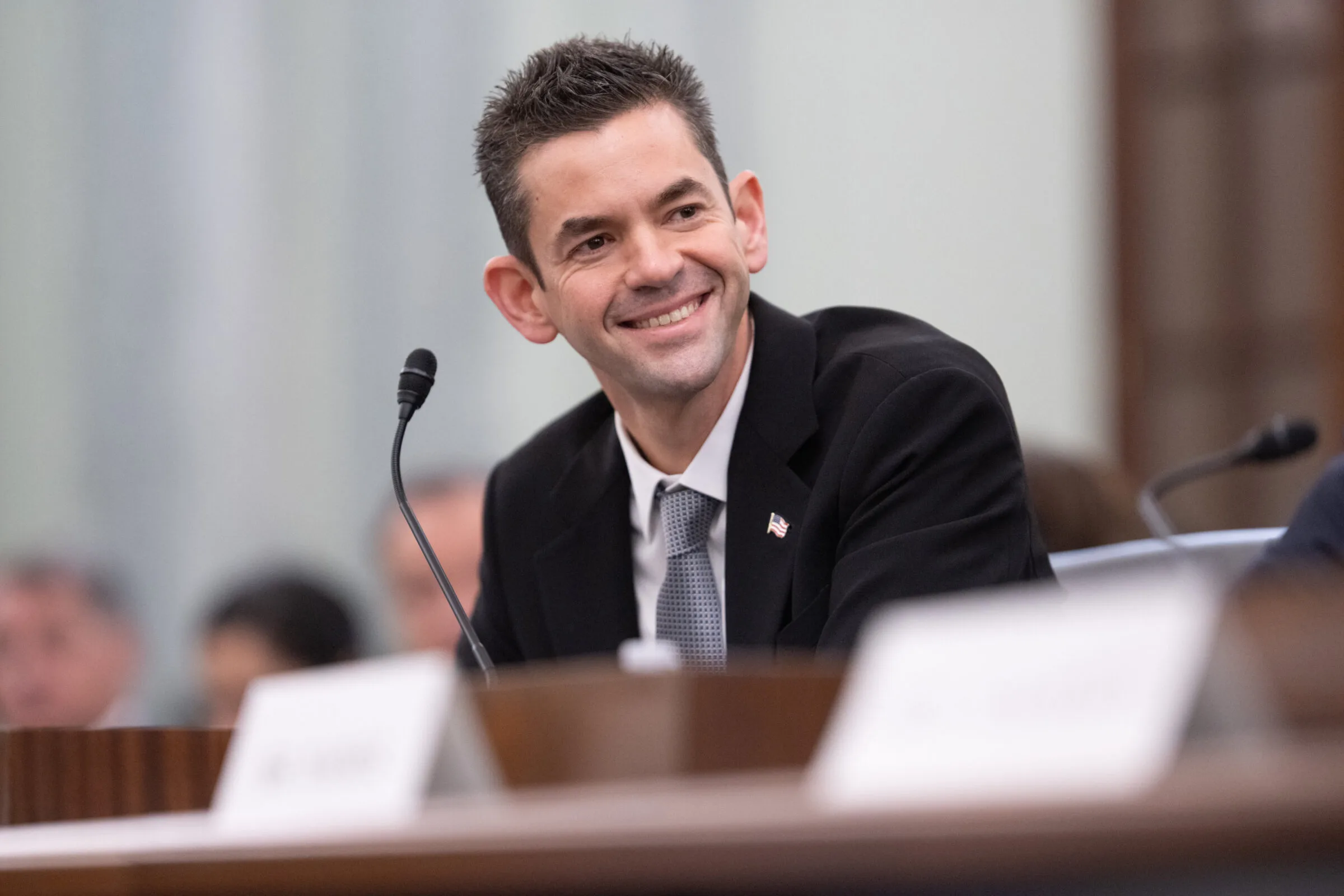
The Senate is where the appropriations story gets interesting. Senator Susan Collins (R-ME), who chairs the full Appropriations Committee and sits on the CJS subcommittee in an ex officio position, is running in a race rated as a toss-up. Senators Jeanne Shaheen (D-NH) and Gary Peters (D-MI), who both serve on the CJS subcommittee, are retiring, and both states are rated as toss-ups. However those races turn out, there will be many new faces on the Senate CJS subcommittee, and a possible leadership fight for the full committee could also shift the balance of power.
On the Senate authorizing committee, the story is a little different. By virtue of the staggered six-year terms and the broader remit of the Committee on Commerce, Science, and Transportation, the membership is unlikely to change dramatically, with only the Alaska and Michigan seats, currently represented by Senator Dan Sullivan (R) and retiring Senator Gary Peters (D), respectively, rated as toss-ups, and Senator Cynthia Lummis (R-WY) retiring. The remaining four senators on the panel up for reelection are not in competitively rated states, and 21 senators are not up for reelection. Therefore, the Commerce Committee roster likely won’t change much.
But nowhere else will the spate of new Members of Congress be felt than in the House Science, Space, and Technology Committee. At the end of the 119th Congress, the current roster for this committee will have an average seniority of just over six years or three terms in office. It typically comprises many low-seniority Members of Congress who often don’t stay on the Committee for long after their first term. So it stands to reason that with such high turnover in the House, there will be many new Members of Congress on the House Science Committee.
Representative Frank Lucas (R-OK), a former chair of the House Science Committee, referred to it as the “committee of the future.” Its members understand the visionary nature of the agencies they oversee. Thankfully, members regularly reach across the aisle to get things done. That culture has survived plenty of turnover before. New members will need time to learn the ropes, but they will be joining committees where cooperation on space policy is the norm. For the 120th Congress, that is a solid foundation to build on.
Same legislation, different Congress
In parliamentary procedure, there is a phrase: “to lay on the table.” While it might sound like instructions for prepping for supper, it means to set a matter aside indefinitely. Come early January, a good deal of pending space legislation will be laid on the table.
Each Congress lasts two years. Any bill that has not become law by the end of that term does not advance, no matter how far it got. In the new Congress, a bill has to be reintroduced and run the gauntlet again: hearings, a committee markup, votes in both chambers, and a final agreement between the House and Senate before being sent to the president for their signature. And if the bill isn't reintroduced, it may be consigned to the annals of the Congressional Record.
That is the predicament where the NASA authorization finds itself. A quick refresher on process: authorization bills set policy direction. These laws tell NASA what Congress wants it to do and recommend a funding level, but they do not appropriate funds — that’s another process. The last NASA authorization became law in 2022, folded into the CHIPS and Science Act. The last standalone authorization became law in 2017, almost a decade ago. Since then, civil space policy has largely been determined through budget allocations and guidance by congressional bully pulpit.
Both chambers have come achingly close to passing an authorization in 2026 after starts and stops in 2024 and 2025. The House Science Committee unanimously approved H.R. 7273 on Feb. 4. A month later, the Senate Commerce Committee unanimously approved its own version. The Senate bill authorizes a slightly-increased agency budget of $25.3 billion in FY 2027, directs NASA to build a permanent base on the Moon, and extends International Space Station operations to 2032, among many other directives.
Still, neither bill has passed its full chamber, let alone been considered by the other. A final push is possible after the election, but the NASA authorization will have to compete for floor time with many “must-pass” bills, including the annual defense policy package, the farm bill, expiring health care programs, and government funding. And with barely 20 in-session days left before the end of the 119th Congress, timing will be tight. NASA authorization could hitch a ride on a must-pass bill, but that would require significant agreement during final negotiations.
If history repeats, the 120th Congress will see one or both of the current bills reintroduced, but that will be up to the newly formed committees, possibly with new leadership in both chambers.
The money question
The federal government is currently running on a continuing resolution, or CR. This keeps agencies operating at the prior year’s funding level until Congress passes full-year appropriations. Under a CR, agencies generally cannot start new programs or change course on existing ones.
The current CR became law on Sept. 2 and funds the government through Dec. 11. It holds NASA at its FY 2026 level of $24.4 billion, well above the $18.8 billion the White House requested for FY 2027. The CR also pauses implementation of the Office of Management and Budget’s deeply unpopular Uniform Guidance changes. But without a funding deal by midnight on Dec. 11, the government will shut down, and these grant changes will begin to be implemented, though reports indicate that some agencies have preemptively implemented political reviews and grant slowdowns. More on that later.
Congress is still a long way from a final deal on FY 2027 appropriations. The House Appropriations Committee passed all 12 of its FY 2027 bills, including the CJS bill that funds NASA, and the full House passed three of them, excluding CJS. When Congress broke for recess at the end of September, the Senate Appropriations Committee had not released any of its 12. The House bill rejected many of the proposed cuts to NASA, but it would still reduce NASA Science from $7.3 billion to $6 billion while increasing human spaceflight. Though the Senate did not release a CJS bill, both Senators Jerry Moran (R-KS) and Chris Van Hollen (D-MD), the Chair and Ranking Member of the CJS subcommittee, respectively, indicated strong support for a fully funded NASA during their hearing with NASA Administrator Jared Isaacman in May.
Given unlimited time, the two sides of Capitol Hill could come to an agreement. But again, the outcome of FY 2027 appropriations is constrained by the 20 working days left this year. And with a CR expiration date in the middle of that time, and a mounting list of to-do items, Congress will be stretched for time.
Historical precedent
If you want to know how this might play out, look back two years. In 2024, the government entered the post-election lame-duck period on a CR set to expire on Dec. 20. That election handed Republicans control of the White House and both chambers of Congress. Days before the deadline, Congress instead passed a CR through March 14, 2025, allowing the incoming government to set FY 2025 spending levels. Congress ultimately passed a year-long CR, which added to funding uncertainties and threats of impoundment that shook the space community last year.
The lesson is pretty simple. When an election shifts the balance of power, the incoming majority has little reason to lock in spending before it takes the gavel. The outgoing majority has little leverage to force a deal. And so funding decisions slip into the new session of the legislature.
A shift in control of the House, the Senate, or both on Nov. 3 would set up the same incentives. To be fair, some leaders, including Senate Minority Leader Chuck Schumer (D-NY) and House Appropriations Chair Tom Cole (R-OK), have said they want to finish appropriations in the lame duck. That remains possible but unlikely given the timing and ongoing issues, particularly related to defense spending, driving a wedge between Democrats and Republicans.
Pilot light
The administration has laid out an ambitious new direction for NASA. Congress has yet to vote on it.
At the agency’s Ignition on March 24, 2026, Administrator Isaacman announced the biggest changes to NASA’s exploration plans in years. The Gateway lunar station was paused indefinitely. In its place, NASA would build an outpost at the lunar south pole over three phases spanning a decade, starting with up to 30 robotic landings beginning in 2027. NASA estimated it would spend about $20 billion on the base over seven years and another $6 billion on expanded Commercial Lunar Payload Services. For good measure, the agency also announced a nuclear demonstration mission to Mars dubbed Space Reactor-1 that would deploy the Skyfall mission comprising three Ingenuity-class helicopters to the Martian surface.
Here is the catch: none of this has faced a legislative test. The FY 2027 budget request, released days after Ignition, did not include funding lines for the Moon base or any other initiative. Isaacman has said NASA does not have a top-line problem, only a question of where it puts its resources. In practice, that means moving money from existing programs into new ones. Significantly reprogramming appropriated funds requires congressional approval, and the current CR does not provide it.
Congress has signaled support in principle. The Senate authorization provides clear direction for the Moon base. The administration points to roughly $10 billion for human spaceflight in the 2025 reconciliation law, but those resources are stretched across multiple programs, including accelerating the Artemis timeline. Even so, no regular appropriations bill has funded the Moon base—or any of the Ignition programs for that matter—as its own program.
In service of science
It’s an understatement to say that the space science community has faced a harrowing two years. The White House proposed cutting NASA science nearly in half for FY 2026. Congress ultimately rejected that proposal, in large part thanks to advocates like you. The Office of Management and Budget (OMB) ran it back for FY 2027 and has experienced similar opposition from both Democrats and Republicans. Additionally, this year, the OMB proposed a massive rewrite of the rules governing federal grants that would prevent researchers from using funds to share results with the public and require a political appointee to approve funding decisions. These changes, too, have received bipartisan backlash and public opposition.
The OMB is pulling what levers it can to interrupt science funding. Unfortunately, the pain shows up first in NASA’s research and analysis (R&A) programs. These are openly competed grants for basic research and for analyzing data from flight missions. These grants pay scientists to turn spacecraft data into discoveries and train the next generation of researchers. If missions are the headline, R&A is the reporting behind it.
Two recent investigations by planetary scientist Mark Sykes uncovered the extent of the threat to scientific research, and the issue dates further back than just the last two years. Using budget records obtained through the Freedom of Information Act, Sykes found that planetary R&A was effectively flat from FY 2011 through FY 2025, while inflation ate away more than 30% of its value. Both the current planetary decadal survey and the CHIPS and Science Act set a goal of spending 10% of the science budget on R&A. In FY 2025, planetary R&A fell almost 50% short of that goal.
The second set of records obtained by Dr. Sykes was worse. As of June 30, 2026, a full nine months after the end of the fiscal year, NASA had spent less than half of the FY 2025 planetary R&A budget.
The agency’s workforce has taken a similar hit. About 3,870 NASA employees applied to leave through the deferred resignation program in 2025, shrinking the civil service from about 18,000 people to about 14,000. The Goddard Space Flight Center was one of the hardest hit by these departures. And though Administrator Isaacman has led a campaign to rehire for positions and transition contractors into civil servants, you cannot backfill that kind of experience overnight. Meanwhile, students and early-career scientists are watching the grant pipeline shrink and making career decisions accordingly.

And that is all before the proposed changes to grants proposed by OMB or the massive cuts proposed to the developing and active flight projects in the FY 2027 budget request.
This all goes back to the need for Congress to provide the stability and clear direction that science depends on. Though the 119th Congress has done great work in addressing the immediate challenges, from rejecting the deepest proposed cuts to blocking the OMB grant rule through Dec. 11, much of that work is temporary. Those protections expire with the current CR, and the authorization that could make them durable may not pass during this Congress.
These are alarm bells that any new or returning Member of Congress should heed and prioritize addressing in 2027. The findings about R&A, the loss of experienced staff, and the uncertainty facing researchers should drive congressional action to restore stability and funding for the agency’s fundamental research programs, especially as Administrator Isaacman has made clear that accelerating science and discovery is a priority of his tenure. More frequent missions and new ways of flying them are part of that picture. Discovery also depends on the researchers who analyze the data, the grants that fund their work, and the experienced staff who keep the enterprise running. Congress can help the administrator deliver on that promise by investing in all steps of the data-to-discovery pipeline.
Space on the campaign trail
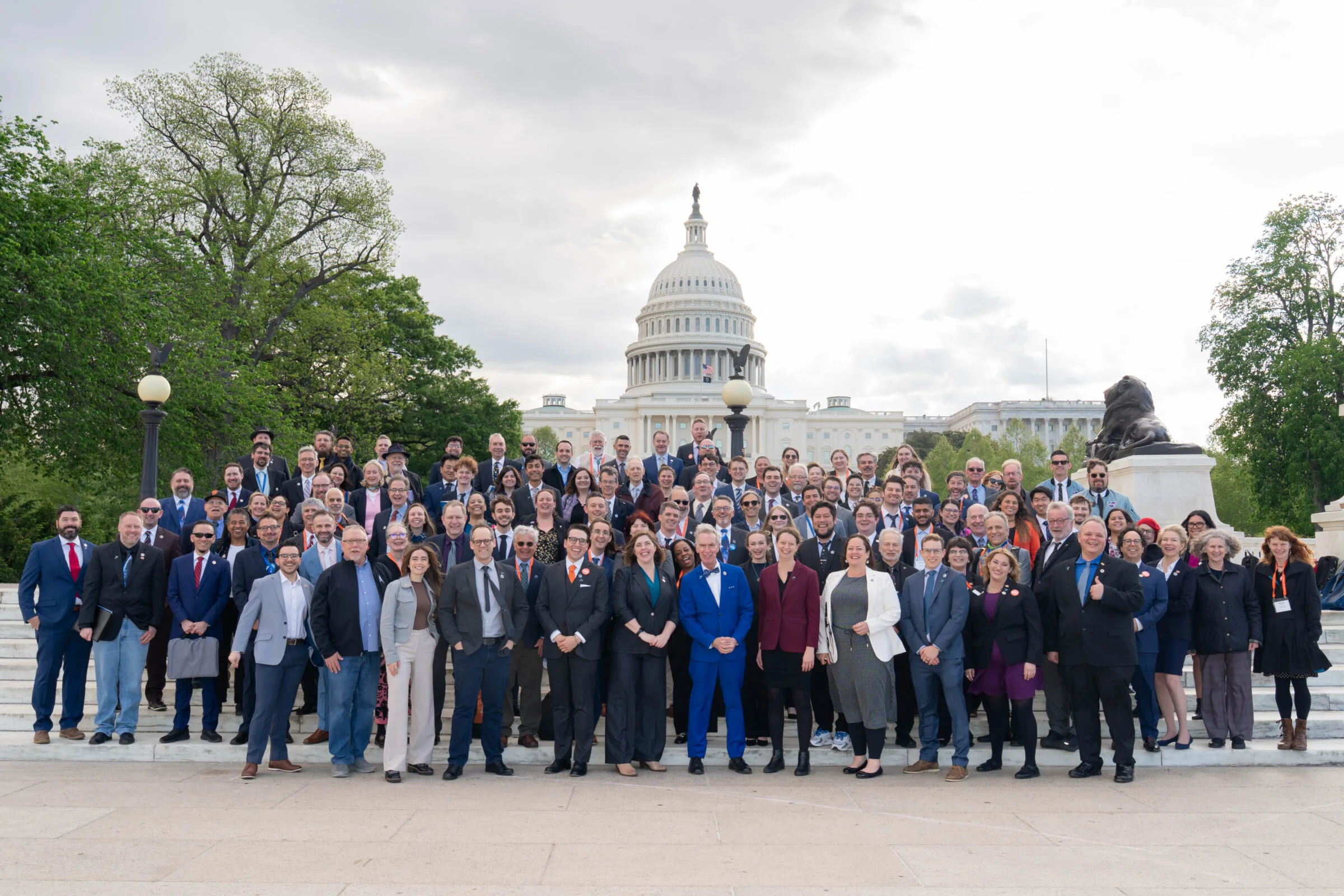
If space shows up anywhere in the 2026 elections, it is through the people who have flown there. In April, over 100 former NASA astronauts launched Astronauts For America, a group that describes itself as a nonpartisan voter education effort, co-chaired by Garrett Reisman and Steve Lindsey. Starting this summer, this group kicked off a tour of college campuses and town halls to use their literal star power to encourage young and first-time voters to head to the polls.
To me, that is indicative of the relationship between space and electoral politics. Space carries enormous public trust, and astronauts are some of its most trusted messengers. On the campaign trail, that trust shows up as a symbol of competence, teamwork, and national pride. The specific decisions on NASA’s funding and direction get made later, in committee rooms, by the members voters send to Washington. That is why advocacy work continues long after election day.
Here’s where you come in
Freshman Members of Congress will need to learn quickly how NASA works and why stable funding matters, and The Planetary Society will be in Washington, D.C., to make that happen. With the support of members and advocates, we will work with members of both parties to advocate for a balanced, well-funded space program.
And individual advocacy actions matter here, too. Regardless of how competitive your district or state might be this cycle, it’s never too early to start engaging with your representatives about the space policy issues that matter to you.

Advocacy Action Center
The Planetary Society is organizing a new space constituency that is educated, empowered, and loud.
You Power the Next Great Discovery!
Fund future scientific research that advances space science and exploration with your gift today.
Donate