

 Explore Worlds
 Find Life
 Defend Earth

All
All
 Sun
 Mercury
 Venus
 Earth
 Mars
 Jupiter
 Saturn
 Uranus
 Neptune
 Small Bodies
Stories, updates, insights, and original analysis from The Planetary Society.

Checking in on Jupiter: the belt is coming back
Since it's been several months since I last took a look at Jupiter, I thought it was time to see what's up with the South Equatorial Belt.

In honor of Stardust: The Annefrank encounter
Since Stardust is being decommissioned today I thought it'd be fitting to take a look back at one of its data sets. I hadn't fiddled with the Annefrank data set before, and it was small and easy to deal with.
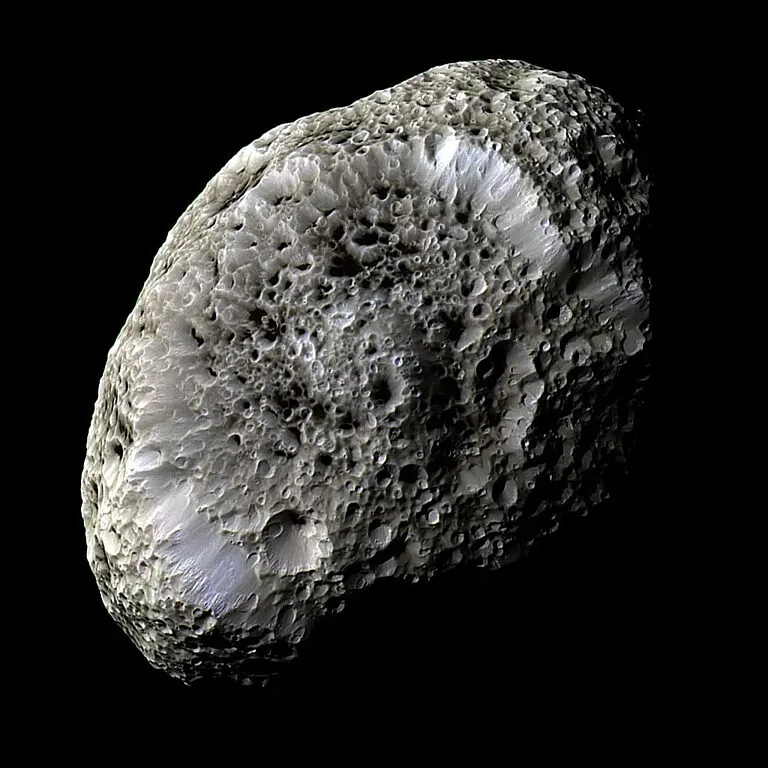
LPSC 2011: Sponge-moon Hyperion
Saturn's moon Hyperion has a bizarre sponge-like appearance that is in dramatic contrast to other heavily cratered bodies in the solar system.

Evidence for rain on Titan
Last week, Zibi Turtle and Jason Perry and a dozen other coauthors published a paper in Science discussing evidence for rain on Titan.

Dawn's instruments are being roused for Vesta approach
Today the Dawn imaging team released a photo from the main camera, the Framing Camera, symbolizing that they're preparing to start Dawn approach science; the other two science instruments, a spectrometer and a neutron detector, are also being turned on and checked out.

Mercury: a moon-scale body
As I wait for the MESSENGER Mercury Orbit Insertion webcast to start, I thought I'd fiddle with some images to point out that Mercury is a bridge between the scales of planets and the scales of moons.

How to follow MESSENGER's orbit insertion today
The day is finally here! In only five and a half hours, at 00:45 on March 18 (according to the spacecraft's clock), MESSENGER must ignite its main engine and run though a third of its fuel in only 15 minutes in order to enter its planned orbit around Mercury.

LPSC 2011: Day 4: Ted Stryk on icy moons and The Moon
Here are Ted Stryk's notes from the sessions he attended in the afternoon of Thursday, March 10, at the 42nd Lunar and Planetary Science Conference.

Nick Schneider: Notes on an earthquake
I was heading south to Tokyo with Seiko and Ishi, two students from the conference. We were planning a dinner together, maybe catching the nighttime skyline from the top of Tokyo Tower. I dozed off as the train flew silently through the countryside. Next thing I knew, Seiko was shaking me awake saying

LPSC 2011: Analysis of the grains returned by Hayabusa
I'd been despairing of finding a good source for a writeup of the presentations in the Hayabusa session at last week's Lunar and Planetary Science Conference, but am happy to report that I've finally found an excellent one.

Two days from MESSENGER's Mercury arrival
Today the MESSENGER team briefed the press on the impending arrival of their spacecraft at Mercury.

LPSC 2011: Kirby Runyon on Mars, the Moon, Hartley 2, and Ganymede
Kirby Runyon, a second-year grad student at Temple University, offered to send me some writeups of selected presentations from last week's Lunar and Planetary Science Conference, and I enthusiastically agreed.

The curse of living on a geologically active planet
As the disaster of the magnitude 8.9 Sendai quake of Friday, March 11, at 05:46:23 UTC continues to unfold in Japan, I have been unable to tear my attention away.

365 Days of Astronomy Podcast: A MESSENGER to Mercury
I've got another 365 Days of Astronomy podcast airing today, this one an overview of the MESSENGER mission with particular attention to what's been learned in the three Mercury flybys, and what's going to happen when it enters orbit only a little more than three days from now!

LPSC 2011: Wanted: Pioneer 10 & 11 digital data
This is both a Lunar and Planetary Science Conference (LPSC) update and a public service announcement. Ted Stryk has been working for years to locate the original Pioneer 10 and 11 image data from the Jupiter and Saturn encounters.

LPSC 2011: Day 3: Deep Impact at Hartley 2
Wednesday's sessions at the Lunar and Planetary Science Conference (LPSC) on the Deep Impact flyby of Hartley 2 were one of two that I was most looking forward to, the other being this morning's talks on Hayabusa's samples from Itokawa, about which I don't yet have any notes. I am again grateful to Franck Marchis and Andy Rivkin for sending me their notes on Hartley 2.

LPSC 2011: Day 3: Moon, Mars, and Venus
Wednesday morning included some interesting conversations. Notably, I spoke with Pamela Gay, who is responsible for the MoonZoo citizen science program and who is presently working on developing a site through which the public will be able to help search for potential Kuiper belt objects for the New Horizons mission to encounter after the Pluto flyby.

Martian timekeeping
While scanning through the talks scheduled for this week's Lunar and Planetary Science Conference I came across the following talk title:

Pretty picture: Viking 1 across Mars
Image magician Daniel Macháček has been turning his energies to Viking Orbiter views of Mars lately, with some stunning results, like the one below. I'm not sure how he makes images that look so sharp and clean and with such rich color out of the Viking Orbiter data.

Dawn Journal: HAMO2; the destination glows bright
Deep in the asteroid belt, Dawn continues thrusting with its ion propulsion system. The spacecraft is making excellent progress in reshaping its orbit around the sun to match that of its destination, the unexplored world Vesta, with arrival now less than five months away.