

 Explore Worlds
 Find Life
 Defend Earth


The Downlink • Mar 13, 2026
The view from the top
Space Snapshot

This long-exposure photo captures an amazing view of the Vera C. Rubin Observatory and its target: the night sky. This week, Rubin documented its first scientific alerts, including detections of supernovae, variable stars, active galactic nuclei, and Solar System objects such as asteroids. Later this year, the observatory will begin its Legacy Survey of Space and Time, scanning the Southern Hemisphere sky nightly for ten years to precisely capture every visible change. Image credit: RubinObs et al.
Fact Worth Sharing
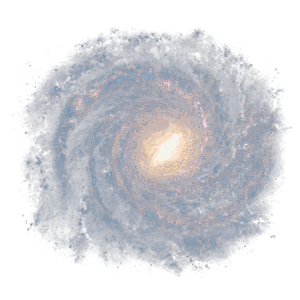
In the first year of the Legacy Survey of Space and Time, the Vera C. Rubin Observatory is expected to image more objects than all other optical observatories in human history have ever done — combined.
Mission Briefings


ESA has lost contact with its Proba-3 Coronagraph spacecraft. The European Space Agency recently announced that there was an anomaly with the spacecraft, which flies in precise formation with another spacecraft to create artificial solar eclipses to study the Sun’s corona. The root cause of the anomaly is under investigation, and mission teams are working hard to recover contact with the spacecraft. Pictured: An artist’s impression of the two spacecraft creating an artificial eclipse. Image credit: ESA.

The Senate has cleared a new NASA spending authorization. The Senate Commerce Committee unanimously approved the NASA Authorization Act of 2026 last week, supporting the proposed changes to the Artemis program, extending the International Space Station through 2032, and directing NASA to establish a Moon base.

Asteroid 2024 YR4 won't hit the Moon. The asteroid, which made headlines last year for having a brief, non-zero chance of impacting Earth, has now been officially cleared of any chance of striking the Moon. New observations from the James Webb Space Telescope show that it will safely pass the Moon at a distance of more than 20,000 kilometers (over 12,000 miles).
DART changed Didymos's orbit around the Sun. New research shows that NASA's DART spacecraft, which impacted asteroid Dimorphos in 2022, also shifted the orbit of the larger companion asteroid Didymos around the Sun. This marks the first time a human-made object has measurably altered a celestial body's orbit.
From The Planetary Society


Why do some planets have rings and others don’t? Our latest article answers that question, exploring what planetary rings are made of, how they form, and why only some planets (and even smaller bodies) are adorned with them. Pictured: Saturn and its rings imaged by NASA’s Cassini spacecraft. Image credit: NASA/JPL/SSI/Alson Wong.
This week on Planetary Radio: An interview with a space legend. After nearly five decades at NASA's Jet Propulsion Laboratory, Gentry Lee has worked on every Mars landing mission, helped Carl Sagan create Cosmos, and served as Chief Engineer for Solar System Exploration. One day into retirement, he joined us to reflect on his career and the question that always motivated him: Is there life beyond Earth?
Is the United States really in a new space race with China? In the latest episode of Planetary Radio: Space Policy Edition, Casey Dreier, chief of space policy at The Planetary Society, speaks with Patrick Besha, former NASA strategic advisor on China, to explore the realities behind China’s rapidly advancing space program.
Members, meet your new CEO! On March 10, members joined Jennifer Vaughn, The Planetary Society’s new CEO, and Bill Nye, outgoing CEO and newly minted Chief Ambassador, for a live virtual Q&A. Watch the recording of the event to learn more about these new roles, the Society’s evolving mission, and how members will continue to be central to our effectiveness.
What's Up
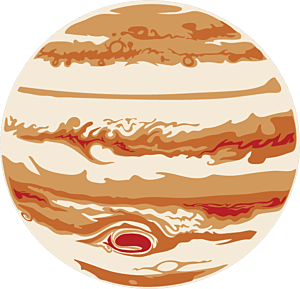
Very bright Jupiter is up high in the east at sunset, more than twice as bright as the brightest star in the sky. Super-bright Venus is visible low in the west in the early evening. Learn more in our guide to March’s night skies.
Help save space missions. Join today!

If you are not already a member, we need your help! Funding for space science is not guaranteed. It requires the voice of passionate advocates like YOU.
NASA funding must grow, not shrink, if the agency is to succeed in returning to the Moon, exploring the Solar System, and seeking out life beyond Earth.
We must prevent future budget cuts. When you become a member of The Planetary Society, you join the world’s largest and most influential space advocacy nonprofit. Will you join us and support a future full of space exploration?
Wow of the Week

The Vera C. Rubin Observatory has quite the view of the Cosmos, but its earthly views are nothing short of stunning as well. This image shows the observatory atop the snowy Cerro Pachón mountain in Chile, capturing just how breathtaking its location is. See NOIRLab’s Rubin image gallery for more photos. Image credit: NOIRLab/NSF/AURA/C. Corco
Send us your artwork!
We love to feature space artwork in the Downlink. If you create any kind of space-related art, we invite you to send it to us by replying to any Downlink email or writing to [email protected]. Please let us know in your email if you’re a Planetary Society member!