

 Explore Worlds
 Find Life
 Defend Earth


The Downlink • Dec 05, 2025
Festive light displays
Space Snapshot

The results are in — meet the Best of 2025! People around the world have voted for their favorites from the last year of space exploration. The winners include this image from the Vera C. Rubin Observatory, the newest powerful telescope, which was voted the best space exploration image. The millions of points of light in this image are the stars and galaxies of the Virgo cluster, a collection of 1,300–2,000 individual galaxies about 55 million light-years away. Image credit: NSF–DOE Vera C. Rubin Observatory.
Fact Worth Sharing
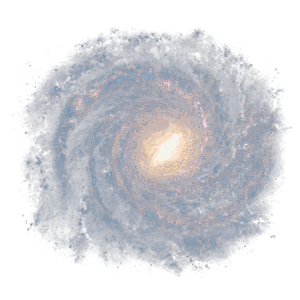
Galaxy clusters (gravitationally-bound collections of galaxies) can be truly enormous. One of the largest, called El Gordo (Spanish for “the fat one”), spans millions of light-years and has an estimated mass of 3 million billion times the mass of our Sun.
Mission Briefings


Perseverance may have found a meteorite on Mars. NASA’s Perseverance rover has spotted an unusually shaped rock (pictured) that differs from the surrounding rocks. Further investigation revealed it to be rich in iron and nickel, suggesting it may be a meteorite originating from an asteroid core. If confirmed, this would be Perseverance’s first meteorite find since landing in 2021. Image credit: NASA/JPL-Caltech.

The first private space telescope has launched. The U.K.-based company Blue Skies Space recently launched the first privately built space telescope, named Mauve. From an altitude of about 500 kilometers (310 miles), Mauve will observe ultraviolet radiation to help astronomers determine which stars might host habitable planets.

A Hong Kong mission aims to study lunar bombardment. The proposed Yueshan lunar orbiter would monitor meteoroid strikes on the Moon. The mission will be designed and built entirely in Hong Kong, with a target launch date of 2028.
ESA’s new budget is the largest in its history. The European Space Agency’s 23 member states have pledged 22 billion euros (more than 25 billion USD) for the next three years of programs — a 32% increase over the previous cycle. The human and robotic exploration “envelope” of ESA’s budget received less funding than requested, which may impact some programs. But the ExoMars Rosalind Franklin Mars rover received full funding to meet its 2028 launch goal. NASA has also confirmed its commitment to providing a launch vehicle and other contributions to the mission.

Bennu samples have been found to contain sugars, “gum,” and stardust. Recent analyses of the samples of asteroid Bennu delivered to Earth by NASA’s OSIRIS-REx spacecraft have found signs of sugars essential for biology, a gum-like substance not seen before in astromaterials, and an unexpectedly high abundance of dust produced by supernova explosions.
From The Planetary Society


Casey Dreier has won a SpaceNews Icon Award. This week, The Planetary Society’s Chief of Space Policy was honored with the SpaceNews Icon Award for Individual Achievement. This award recognizes individuals whose leadership and innovation have set new benchmarks for excellence and inspired progress across the space community. Pictured: Casey Dreier (second from left), with Planetary Society colleagues Ari Koeppel, AAAS Policy Fellow; Bill Nye, CEO; and Jack Kiraly, Director of Government Relations. Image credit: Jason Dixson for SpaceNews.
ESCAPADE is on its way to Mars. NASA’s twin spacecraft will study how the solar wind interacts with Mars’ patchy magnetic fields and drives the loss of its atmosphere. Rob Lillis, ESCAPADE’s principal investigator and associate director for planetary science at UC Berkeley’s Space Sciences Laboratory, joins this week’s Planetary Radio to discuss the mission and what it aims to teach us about the red planet.
Up next in the book club: "The Little Book of Aliens." Join us on Dec. 9 as we welcome famed astrophysicist and author Adam Frank for a live conversation about our November book club selection, "The Little Book of Aliens." Planetary Society members can join the live virtual Q&A. Not yet a member? Join today.
Let’s finish the year strong and help save NASA science! Together, we are a community of explorers working for a better future for humankind. And your support is vital as we head into 2026 and beyond! Your gift of any amount today will go a long way in helping us close out the year strong and maintain our momentum in 2026. Please show your commitment to the future of independently funded space exploration and research, and save NASA science with your donation today.
What's Up
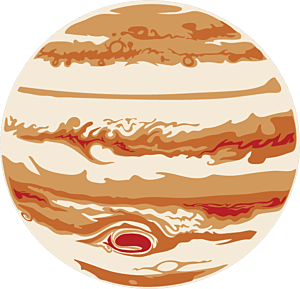
Very bright Jupiter rises in the east in the mid-evening, near the Moon on Dec. 7. Yellowish Saturn is also high up in the early evening west. Mercury is low to the horizon in the pre-dawn east, reaching its highest point on Dec. 7. Find out what else to look for in December’s night skies.
Help save space missions. Join today!

If you are not already a member, we need your help. NASA is at a crossroads, and your support is needed today! Funding for space science and exploration is at risk. It needs the support of passionate advocates like you.
NASA is facing major budget cuts for the first time in a decade, and thousands of skilled scientists, engineers, and technicians have already been laid off at NASA centers across the United States. NASA funding must grow, not shrink, if the agency is to succeed in returning to the Moon, exploring the Solar System, and seeking out life beyond Earth.
We must prevent budget cuts. When you become a member of The Planetary Society, you join the world’s largest and most influential space advocacy nonprofit. Will you join us and enable the future of space exploration?
Wow of the Week

From space, Earth’s night side appears strung with the most festive of light displays. Billions of bulbs illuminate our buildings and streets, visible in this shot of southern Europe and the northwestern Mediterranean coast captured by JAXA astronaut Kimiya Yui aboard the International Space Station on Aug. 30. Earth’s atmosphere adds to the light show with its faint greenish glow. Image credit: JAXA/Kimiya Yui.
Send us your artwork!
We love to feature space artwork in the Downlink. If you create any kind of space-related art, we invite you to send it to us by replying to any Downlink email or writing to [email protected]. Please let us know in your email if you’re a Planetary Society member!