

 Explore Worlds
 Find Life
 Defend Earth


The Downlink • Sep 25, 2026
Amoebas and anniversaries
Space Snapshot

Astronomers just announced this newly-formed crater on the Moon. It was formed in 2024, when an asteroid or comet the size of a small apartment building crashed into the lunar surface. The crater, which is shown here from an oblique perspective in an image taken by NASA’s Lunar Reconnaissance Orbiter, is about as wide as two football fields placed end-to-end. It has been dubbed McGetchin Crater, after lunar scientist Thomas R. McGetchin. Image credit: NASA/LRO.
Fact Worth Sharing

There are over one million craters on the Moon wider than 1 kilometer (0.62 miles), as well as many more smaller ones. A recent survey witnessed the formation of roughly one new lunar crater around a few meters wide every hour and a half.
Mission Briefings


The Hubble Space Telescope marked 200,000 orbits around Earth. The NASA/ESA observatory, now 36 years old, has collectively traveled over eight billion kilometers (five billion miles). Scientists have estimated that Hubble will reenter Earth’s atmosphere around 2033 unless reboosted. Pictured: View of Hubble captured by astronauts from the space shuttle Columbia in 2002. Image credit: NASA/ESA.
Scientists have discovered life that defies super-hot temperatures. NASA-funded researchers found a species of amoeba native to Lassen Volcanic National Park, in California, that can reproduce at 63 degrees Celsius (145 degrees Fahrenheit). This is a new record for eukaryotes, a domain of life that also includes humans. The discovery further expands the range of conditions in which we know Earth-like life might thrive.
From The Planetary Society


We’ve crowdfunded three new cutting-edge research projects. The latest winners of our Science and Technology Empowered by the Public (STEP) Grants are a Solar System shadow-tracker, a new telescope tool to help defend Earth, and an asteroid database for the scientific community. You can power the next great discovery by supporting our current STEP Grants funding campaign with a gift of any amount today. Image credit: StarryEarth.
What did Hayabusa2 find at asteroid Torifune? Hear from Paul Abell, Chief Scientist for Small Body Exploration at NASA's Johnson Space Center, as he discusses the JAXA mission’s asteroid flyby with host Sarah Al-Ahmed on this week’s episode of Planetary Radio. They also chat about what's next for Hayabusa2 as it moves on toward its next target.
Our latest Book Club events talk cosmic beauty and alien oceans. If you missed last month’s book club with Kevin Hand, Director of the NASA/JPL Ocean Worlds Lab, catch host Mat Kaplan’s conversation about Hand’s book, “Alien Oceans,” here. On Oct. 1, join the live discussion in our member community on “The Art of the Cosmos,” a book of 100 beautiful space images by author Jim Bell. Bell is a planetary scientist at Arizona State University and a member of The Planetary Society’s board of directors. Not a member yet? Join today.
The Planetary Society is partnering with GalaxyBox. The mailing service for space enthusiasts, which delivers packages of space memorabilia and accessories to enthusiasts around the world, will now feature The Planetary Society in its materials.
Stamp your own space scene!

ChopShop, long-time partner of The Planetary Society and maker of many of the cool items in our store, is accepting backers for a scientifically accurate set of space stamps until Sept. 29. The set of 40 stamps allows you to build scenes based on real aspects of space science and exploration, from Io and ice geysers to NASA’s Voyager and Artemis’ Orion spacecraft. Image credit: ChopShop.
What's Up
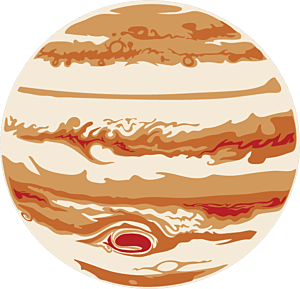
In the evening skies this week, look for stunningly bright Venus in the west, with yellowish Saturn rising in the east after sunset and crossing the sky over the course of the night. In the pre-dawn, very bright, white Jupiter dominates the eastern sky, with reddish Mars higher up. Learn more about what to look for in our guide to September’s night skies.
Help save space missions. Join today!

If you are not already a member, we need your help! Funding for space science is not guaranteed. It requires the voice of passionate advocates like YOU.
NASA funding must grow, not shrink, if the agency is to succeed in returning to the Moon, exploring the Solar System, and seeking out life beyond Earth.
We must prevent future budget cuts. When you become a member of The Planetary Society, you join the world’s largest and most influential space advocacy nonprofit. Will you join us and support a future full of space exploration?
Wow of the Week

This NASA tool will show you what the NASA/ESA Hubble Space Telescope was observing on your birthday. The above image of Jupiter partially occulting its largest moon, Ganymede, was taken by selecting a birthday of April 9 — that of Mary Jackson, NASA's first black female engineer. Image credit: NASA, ESA, and E. Karkoschka (University of Arizona).
Send us your artwork!
We love to feature space artwork in the Downlink. If you create any kind of space-related art, we invite you to send it to us by replying to any Downlink email or writing to [email protected]. Please let us know in your email if you’re a Planetary Society member!