

 Explore Worlds
 Find Life
 Defend Earth

Planetary Radio • Oct 14, 2026
From the Mojave to Phobos: PlanetVac rides with MMX
On This Episode

Asa Stahl
Public Outreach Astronomer for The Planetary Society

Kris Zacny
Vice President and Director of Exploration Technology for Honeybee Robotics

Bruce Betts
Chief Scientist / LightSail Program Manager for The Planetary Society

Sarah Al-Ahmed
Planetary Radio Host and Producer for The Planetary Society
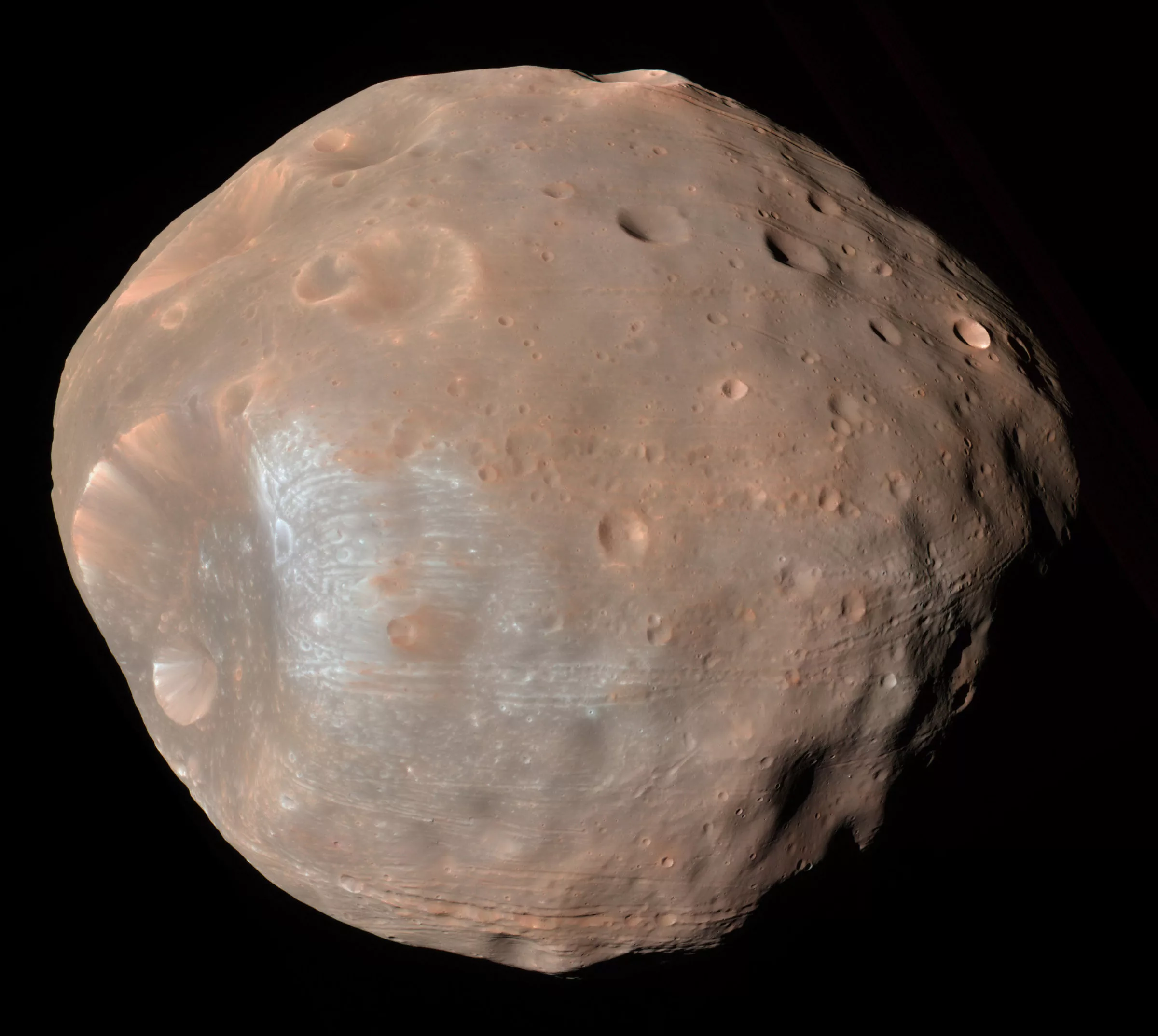
Japan’s Martian Moons eXploration mission, MMX, is about to set out for Phobos and Deimos, the two small moons of Mars. If all goes well, it will bring the first-ever sample from the Martian system back to Earth. Asa Stahl, public outreach astronomer at The Planetary Society, explains why these strange little moons are still such a mystery and what a piece of Phobos could reveal. Then Kris Zacny, vice president and senior research scientist at Honeybee Robotics, tells the story of PlanetVac, a sampler that Planetary Society members helped get off the ground more than a decade ago. From its first tests in a vacuum chamber to the surface of the Moon aboard Firefly Aerospace’s Blue Ghost lander, PlanetVac has come a long way, and its descendant is now headed for Phobos. Plus, Bruce Betts, chief scientist at The Planetary Society, joins us in What’s Up.


PlanetVac: A New Approach to Sampling Planetary Surfaces Some of the biggest discoveries we make in planetary science rely on the seemingly simple act of picking up pieces of other worlds. But grabbing samples is not easy, and these kinds of missions are expensive and filled with risk.
PlanetVac operates on the Moon Honeybee Robotic's Lunar PlanetVac instrument successfully collects a sample of regolith from the Moon's surface. Lunar PlanetVac touched down as part of Firefly Aerospace's Blue Ghost Mission 1 on March 2, 2025.Video: Firefly Aerospace
PlanetVac Testing on Xodiac Rocket In 2018, Planetary Society members and supporters helped fund a test of the PlanetVac sample collection technology aboard a rocket called Xodiac. Xodiac, built by Masten Space Systems, takes off and lands vertically in California's Mojave Desert, allowing hardware developers to simulate the stresses of a rocket launch and landing. PlanetVac was attached to the rocket’s leg and successfully collected 332 grams of simulated Martian soil.
PlanetVac, Assemble! A new low-cost, reliable approach to sampling planetary surfaces. Help this technology through the next level of testing for consideration on future missions!

Related Links
- Mars moon mission set to launch with tech funded by Planetary Society on board
- MMX, the Martian Moons eXploration mission
- Phobos and Deimos, the moons of Mars
- What is the Japan Aerospace Exploration Agency (JAXA)?
- JAXA’s MMX mission site
- NASA’s MMX mission page
- ESA’s MMX factsheet
- The Story of PlanetVac
- PlanetVac project underway (2013)
- PlanetVac’s successful ride (2018)
- PlanetVac selected for a ride to the Moon
- Firefly Aerospace’s Blue Ghost Mission 1
- JAXA’s #GoodLuckMMX campaign
- Mars, the red planet | The Planetary Society
- Every mission to Mars, ever
- Buy a Planetary Radio T-Shirt
- The Planetary Society shop
- The Night Sky
- The Downlink