

 Explore Worlds
 Find Life
 Defend Earth
Planetary Radio • Feb 11, 2026
Where did Earth’s water come from? Clues hidden in Apollo Moon dust
On This Episode

Tony Gargano
Postdoctoral Fellow at the Lunar and Planetary Institute; Research Affiliate at NASA Johnson Space Center

George Takei
Actor, Activist, and Author
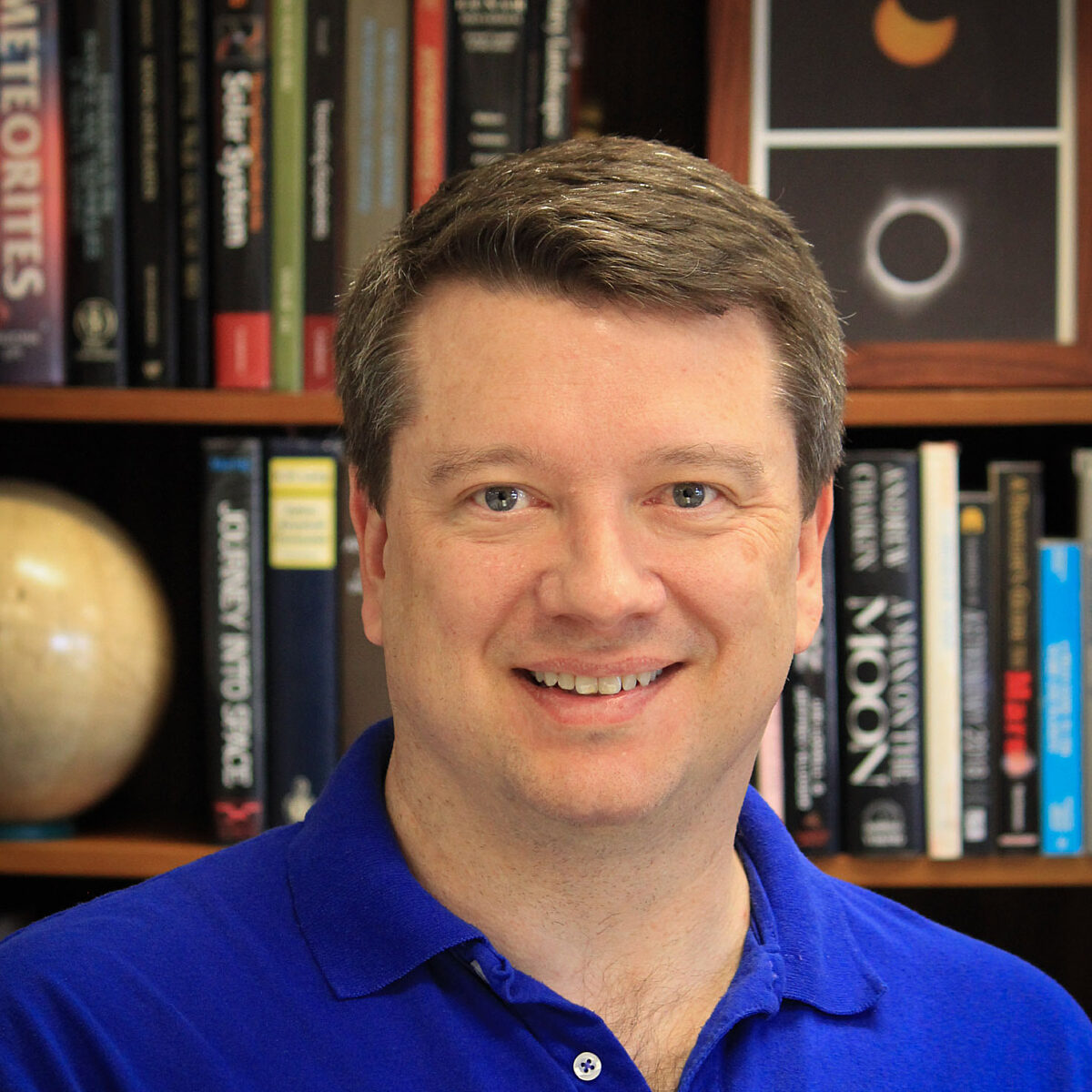
Bruce Betts
Chief Scientist / LightSail Program Manager for The Planetary Society
Sarah Al-Ahmed
Planetary Radio Host and Producer for The Planetary Society
Where did Earth’s water come from? In this episode of Planetary Radio, we explore how scientists are answering that question by studying a remarkably well-preserved record of the early Solar System: lunar samples brought back by the Apollo missions. Host Sarah Al-Ahmed is joined by Tony Gargano, postdoctoral fellow at the Lunar and Planetary Institute with the University Space Research Association and a research affiliate at NASA’s Johnson Space Center. Gargano studies lunar rocks and regolith to understand how planets form, evolve, and acquire key ingredients like water over time. By analyzing subtle chemical fingerprints preserved in Apollo-era lunar regolith, his work helps constrain how much water meteorites could have brought to Earth and what that means for our planet’s path to habitability.
The episode also features a short bonus segment with actor George Takei, recorded at the Academy Museum of Motion Pictures during a screening of “Star Trek IV: The Voyage Home.” Takei reflects on the enduring legacy of “Star Trek,” its influence on generations of scientists and explorers, and why he is excited about humanity’s return to the Moon in the Artemis era. He connects science fiction’s hopeful vision of the future with the real science helping us understand our origins today.


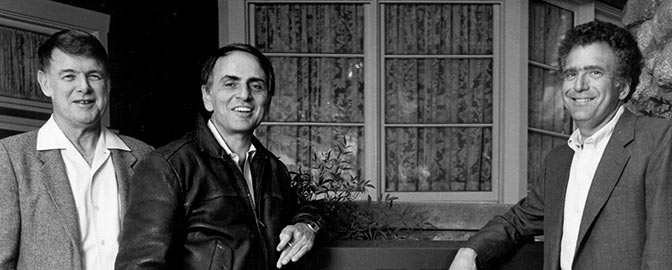
Star Trek actors endorse The Planetary Society over the years Star Trek has always looked to the future with optimism. It represents a future when we've worked past our differences on Earth and look to the stars. The Planetary Society understands that vision for a better future, believing that space exploration brings out the best in us. If you believe in that future, you should join today as a member. The actors behind the iconic characters of Captain Kirk, Sulu, Uhura, Riker, Q, Data, Janeway, Tuvok, and Voyager's holographic Doctor believe in our mission as did the founder of Star Trek, Gene Roddenberry.


Related Links
- Constraints on the impactor flux to the Earth–Moon system from oxygen isotopes of the lunar regolith
- A new study of lunar rocks suggests Earth's water might not have come from meteorites
- Dr. Anthony M. Gargano
- 'Star Trek' legend George Takei talks Nimoy's directing, the future of exploration, and his sad plastic umbrella (interview)
- To Infinity: Space Travel in the Movies
- Buy a Planetary Radio T-Shirt
- The Planetary Society shop
- The Night Sky
- The Downlink
Transcript
Sarah Al-Ahmed:
Scientists are using Apollo Moon samples to trace the origin of Earth's water, this week on Planetary Radio. I'm Sarah Al-Ahmed of The Planetary Society, with more of the human adventure across our solar system and beyond. How did Earth get its water? It's one of the most profound questions we can ask about our planet, and part of the answer may be written in dust and rocks that were collected more than half a century ago. In this episode, we'll explore new research that uses Apollo-era lunar samples to trace the history of ancient impacts and place new limits on how much water meteorites could have delivered to Earth. Our guest is Tony Gargano, a postdoctoral fellow at the Lunar and Planetary Institute with the Universities Space Research Association. He's also a research affiliate at NASA Johnson Space Center. He's the lead author on a new paper that uses moon dust to investigate the origin of Earth's water.
But we'll begin our show with a short, special bonus segment featuring George Takei, an actor, author, and activist who reflects on the enduring legacy of Star Trek. He'll talk about its influence on generations of scientists and explorers and why he's so excited for humanity's return to the Moon in the Artemis era. And of course, we'll wrap up with Bruce Betts, our chief scientist who joins us for What's Up. He'll talk about the Allende meteorite, which broke apart as it fell to Earth over 50 years ago. Its many recovered fragments remain some of the most scientifically important rocks ever studied. If you love Planetary Radio and want to stay informed about the latest space discoveries, make sure you hit the subscribe button on your favorite podcasting platform. By subscribing, you'll never miss an episode filled with new and awe-inspiring ways to know the cosmos and our place within it.
Before we get into our main conversation about the Moon and Earth's water, we're going to start today's show with a short bonus segment recorded at the Academy Museum of Motion Pictures in Los Angeles. The museum is currently hosting the To Infinity: Space Travel in the Movies film series, which is supported by the Alfred P. Sloan Foundation. The series explores how science and space exploration are portrayed on the screen. As part of that program, the museum screens Star Trek IV: The Voyage Home. It's a story that centers on the survival of intelligent creatures living in Earth's oceans and humanity's responsibility to protect life beyond itself. Ahead of that screening on January 30th, I spoke with George Takei, an actor, author, and activist best known for his role as Hikaru Sulu in Star Trek. We talked about the broader legacy of Star Trek as it approaches its 60th anniversary later this year, and how its vision of science and exploration has inspired generations of scientists and engineers.
Hi, George. It's wonderful to meet you.
George Takei: Good to be chatting with you.
Sarah Al-Ahmed: Thank you for your work that you've done, helping people become familiar with The Planetary Society. You, in your appearances in our online PSAs and things, have really motivated a lot of people to help get behind the cause of space advocacy and learning more about space.
George Takei: We are denizens of space. The Earth is part of space, and we ought to get the creatures that live on this planet, this rock that flies around in this space, people to get to know our place in this vast, magnificent and fascinating and mysterious neighborhood that we live in.
Sarah Al-Ahmed:
We're here today in LA at the Academy Museum of the Motion Pictures to watch Star Trek IV: The Voyage Home, which was one of my favorite movies when I was a kid, which I think connects to what you're saying. I think that movie's themes of environmentalism, but also of our understanding of our place and time was very interesting.
When you go back and you re-watch these movies, are there things that stick out to you now that you didn't really think about at the time when you were actually filming them?
George Takei: Actually, I was a preservationist and certainly had contributed some money to the Cetacean Society, of whales. I hadn't been to the cetacean museum when we were filming on location in San Francisco, so this gave me an opportunity to visit that as well. Movie-making is a lot of fun, but it's also very educational. The fact that we shot in that area gave me that opportunity to visit the institution, whose mission it is to educate people on our interdependence on each other. The large mammal that we share this planet with is something that contributes to the equal imbalance of life and existence here. So, a lot of good things that came from being an actor.
Sarah Al-Ahmed:
Star Trek fans will note that Cetacean Ops in Star Trek actually came from this movie. That was one of my favorite details going forward as they continued on with this legacy from the original Star Trek all the way into modern-day Star Trek.
I want to congratulate you on 60 amazing years of the show. What has it been like watching so many generations of people be inspired by Star Trek, not just to treat each other more fairly, but to go into the sciences?
George Takei:
Isn't that amazing? 60th anniversary of Star Trek. We tend to feel a very paternalistic. We consider the spinoff shows our children, and I'm told that the latest spinoff is the 12th one of the whole saga. I am just overwhelmed by that. What other TV series has that kind of history to claim? Six centuries and 12 generations.
We're very honored, certainly by the fan support that gave us this longevity, but the unique phenomenon that Star Trek is and the place that it occupies in motion picture history. Here at the Academy Museum of Motion Pictures, arts and science museum, it's going to be part and parcel of the education process of the movie going public on movies. And Star Trek's unique and fantastical history is a part of that.
Sarah Al-Ahmed: I think it's really interesting, because not only has Star Trek inspired people to go into science, but it's truly shaped the vision of how we think about humanity going into space. When you began your role as Sulu, no human had ever even walked on the Moon yet. What was it like seeing that become a thing that was driving the future?
George Takei:
I remember seeing it on television. But the other wonderful thing about being an actor, we got to go to a convention where Buzz Aldrin was a guest and got to know him, shared dinner with he and his wife at that time, they got divorced, but meet these historic figures. And then at another convention, I met Neil Armstrong, the very first person whose quote has become a part of this history. Isn't it just absolutely incredible? The next Artemis voyage, their plan is to land there and walk, but they're blazing another trail. And there are a few that think that that's going to be a launching base for even further and going out onto Mars.
We can conceive it and you set a goal, and who knows, we might eventually find our way to going there. I'm curious and I want to know and I hope I enjoy that.
Sarah Al-Ahmed: If we ever do become an interplanetary species, I hope we do it with the love and the eye for exploration and honoring all the people of our planet as we do it. I think if we're going to make that possible, it's going to be in part because of Star Trek and because of people like you and the role that you've played inspiring the future of space. So, I really want to thank you for giving us the time to do this and for everything you're doing to continue to inspire people around the world.
George Takei:
That's the positive, optimistic side. We want to live long and prosper. However, we also need to know about the human mind by knowing human history. We have also a violent and reckless and destructive history as well. Right now, as we talk, we are going through another one of those periods in human history.
So, the other challenge isn't just the excitement and the wonder and the collection of information, but to get to know ourselves better, more profoundly, and deal with our capacity for destruction, for evil, for not being able to learn from our past history, and combining that with the hope of exploring new parts of our solar system and sharing that with whatever life forms that we might encounter there.
Sarah Al-Ahmed: Well said. Thank you so much, George.
George Takei: Thank you.
Sarah Al-Ahmed:
That conversation was a pretty special moment for me personally. Like a lot of people in this field, Star Trek played a huge role in sparking my own curiosity about space, so being there at that event and getting to meet all the people in the audience, and especially getting a chance to speak with George Takei was genuinely meaningful.
But now, we're going to turn to the research that's helping scientists answer one of the biggest questions about our own planet. Our main guest today is Dr. Tony Gargano of the Universities Space Research Association. He's a postdoctoral fellow at the Lunar and Planetary Institute with a research affiliation at NASA's Johnson Space Center. Tony studies planetary materials, especially moon rocks and lunar regolith, to understand how planets form and how they change over time and where those key ingredients, like water, may have come from.
He earned his PhD in Earth and planetary sciences from the University of New Mexico, and during his doctoral work, he conducted research at NASA Johnson Space Center's Center for Isotope Cosmochemistry and Geochronology. While he was there, he helped develop new techniques to measure extremely small chemical differences in rocks. Those measurements act as fingerprints, allowing scientists to determine whether materials originated on the Moon itself or were delivered there over billions of years.
Tony is the lead author on a new paper called, "Constraints On The Impactor Flux Of The Earth-Moon System From Oxygen Isotopes Of The Lunar Regolith". It was published on January 20th, 2026 in the proceedings of the National Academy of Sciences of the United States of America. In this work, he and his co-authors use Apollo-era lunar samples to treat the Moon as a natural archive of solar system history. Because the Moon doesn't experience weather or plate tectonics the way that the Earth does, it preserves a record of that ancient impact history that Earth has lost. By reading that record, Tony's research helps place new limits on how much water meteorites could have actually delivered to Earth and sheds new light on how our planet became habitable in the first place.
Hey, Tony, thanks for joining.
Tony Gargano: Thanks for having me.
Sarah Al-Ahmed:
Over 70% of the surface of our planet is covered in water. We think of it as central to habitability. Of course, we're thinking very Earth-centric life there. But we still don't know exactly where all of this water came from. And for decades, the common story has been that meteorites and comets delivered most of this water to Earth during the Late Heavy Bombardment, right? Some scientists I've spoken with have argued that maybe asteroids played a key role there, so there's still some debate. But I'm personally interested in knowing the answer to this question, because for years I taught school field trips up at Griffith Observatory and I ran a show called Let's Make a Comet, which was literally about the key ingredients for life and how water came to Earth.
I'm finding out through this paper that you and your collaborators have published that I may have been lying to tens of thousands of 10 year olds on accident for many years. So, I'm really glad that you've done this research because clearly we need to know more.
Tony Gargano:
Yeah. I don't think you're lying at all there. I think really the story parallels the humid advance and the science and the understanding of what meteorites are, what the Earth is, where it came from, how old it is. And really, it shows how young this field of science is, meteoritics, cosmochemistry, and planetary science, and how the ideas of how the Earth's water came from has really changed over the past 70 years or so. That's a story that combines a complete random experience of meteorites falling on Earth of a particular type, smart people finding them and interpreting them in ways that are informative to how the Earth forms, and how the Apollo missions brought back samples that provide us ground truth and an anchor point to compare those samples to.
Really, over the past 70 years or so, combined with these samples from the Moon and other meteorites, our technological ability has advanced a lot too. So, our ability to measure things at high precision, to be able to tell when things are different or when the same has advanced a lot. Really, I'm standing on the shoulders of giants here, of generations of scientists that have studied meteorites and lunar samples and try to come up with a coherent story that describes how everything works and just how most things are, nothing is perfect. We're constantly readdressing how to interpret these things, measuring things better, and trying to make a story that makes the most sense in terms of accounting for all these things.
Sarah Al-Ahmed: It's really interesting to be doing this kind of science in a time when the Apollo samples are over 50 years old. We're looking toward going back to the Moon, sampling other locations that might be really key to understanding this mystery some more, but it's got to be really interesting to be part of that legacy of Apollo scientists, but as someone who was born long after those missions happened.
Tony Gargano:
Yeah, absolutely. It's something that I can't get over. Every time I walk in the lunar vault, it's a new experience of, I can't believe I'm here, I can't believe things are stored this way. I really can't convey how important it is that these samples exist. Most planetary materials we had until recently with [inaudible 00:15:55] missions, they're meteorites. Sometimes we see them fall and collect them pretty quickly and we have a really fresh sample, but for the most part, they've been laying on Earth and been rained on for however long.
So, the moon rocks are not only a really diverse suite of materials in terms of different rock types, they're pristine, they're clean, something that you really can't expect on any other planetary material that you sample. It is a national treasure. It's described like that very often. I can't agree more.
Sarah Al-Ahmed:
Really though. May those samples last forever. May we collect them from all places across the solar system. It could reveal so much, especially if we can do comparative planetology. We get more from other worlds as well, that could really help us answer a lot of these questions.
Your team's paper suggests that while meteorites clearly hit the Earth-Moon system, they're not the dominant source of Earth's water. Instead, late addition basically seems negligible, which points to this idea that maybe there's an earlier internal origin to Earth's water. Why has this late delivery idea been so persistent in planetary science?
Tony Gargano:
This is a really interesting human story again, and it's largely involved how the Apollo missions went to a pretty small part of the Moon. An area that we now know is a little bit exotic. It's called the Procellarum KREEP Terrane. It's very chemically strange. It's really apparent it's chemically strange too. A lot of early ideas about bombardment over time and whether there was a particular spike in time was more or less... I shouldn't say this confidently, but it was an artifact of the fact that most of the rocks you brought back are from a single place. It's been a really longstanding idea in the literature because it's related to life persisting on Earth as well, but it's one that hasn't really been tested intensively, and it's hard to test it.
In geology, this is what's difficult, is that we can form conceptual ideas, whether by field observations or satellite observations or comparing samples together, but having a definitive test for saying, "Does this idea make sense and can you prove it to make sense?", it's hard to come by. That's how this work was conceived of in the first place several years ago, and to now is that it's providing that critical test to test the hypothesis of can these rocks be a dominant source of Earth's water and other volatiles, and what types of materials seem to be coming here in terms of meteorites over time?
Sarah Al-Ahmed: Earth is constantly erasing its own history, essentially, through whatever process. The Moon is a lot more chill, but it makes it a very uniquely powerful way to test these ideas about Earth's earliest history. But even then, you're not talking about a single impact event. You're talking about impacts that have gone on over billions of years, right? How's this long-term time event over the course of the Moon's history give us some idea into specific moments in Earth's past?
Tony Gargano:
This is a great question. It's a beautifully complex system, really. I'm not sure if I'd call the Moon's surface "chill". It's the opposite, I would say, actually. It's exposed to a lot of radiation. A lot of materials there exhibit features of damage to their crystal structures. It's impacted at a high rate, and it's been overturned ever since that crust form, more or less. I think the key thing here is that the Earth is geologically active. We're still producing and melting new rocks every day, and it's that recycling process that has caused the Earth's record of impact over time to be lost.
The Moon doesn't have this. The Moon's crust is really well age-dated. It's the most well age-dated thing we have from the Moon, more or less, and that crust is 4.35 billion years old. What we did in this study, more or less, is look at these regular materials at different locations and the age of the bedrock there, and to build this timeline of how this impact of debris over time looks like. Really, it's that geologic inactivity that means that the Moon's crust now is basically this bombardment parcel over the past four billion years. It's the only record that exists like this, and this is the first time we have interpreted it, and it's a fascinating time to be around for this.
Sarah Al-Ahmed: Right. You're talking about lunar regolith. I've had many people ask me over the years, "What is regolith? Why are you calling it that versus soil?" For people who are unfamiliar, what is going on with regolith? What is it comprised of and what processes change it over time?
Tony Gargano:
I love this question. It's something that I've been studying for years now, and I'm not sure everyone will agree upon the definition of it. Most people don't have the experience of crushing rocks to powder by their own hands. It's a rock powder. That's the material that it is, more or less. There is some macroscopic materials in it that are in the 1 to 4 millimeter size range, but the average grain size is in the range of 50 to 100 microns. It's a rock powder.
The importance of it is that most of the mass we brought back from the Moon is this regolith. We have cores that go down meters of depth. We have a great archive of the rocks that presumably make it up. A lot of the early research in the lunar science days took this material apart, learned as much as they could from it. At the time, the tools that I used in this paper didn't really exist yet to do these kind of measurements. It's this unique archive of a natural rock powder that is more or less showing the history of space weathering, which is a catchall term that describes this irradiation on the surface of airless bodies, as well as this process of impact vaporization and all those things occurring simultaneously.
There's no way to age-date this material. The current thinking of how it operates is that it's being overturned continuously over time. That rate most certainly changed, but our measurements are diagnostic of a majority of mass of rocks, more or less. Rocks are comprised of silicate minerals for the most part, which are SiO4-based compounds. Oxygen is most of the [inaudible 00:22:04] of the material. Our measurements on this rock powder is tracking that long-term oxygen. We call it mass balance, the input-output from either mixing new material in or removing it by impact vaporization.
Our measurements are showing us this long-term temporal record of a material that has to represent the impactor flux to both bodies, Earth and the Moon.
Sarah Al-Ahmed: The Earth is much larger, both physically and more massive than the Moon is, so naturally it gets impacted more. How do you use impacts on the Moon in order to set an upper bound on impacts on Earth?
Tony Gargano:
Back in the Apollo era when these missions were occurring, we didn't have a great collection of meteorites to really understand the diversity of materials that could be delivered to the Earth and Moon system. And really, over the past 50 years, that's changed a lot. Our understanding of meteorites has increased dramatically. We now understand the chemical and isotopic composition of more or less most materials that could be brought here.
That allows us to play this numerical test of, if that's the thing we want to bring here, what would it do to this material? That's what we're able to do, is that we're able to compare the signature of that meteorite type, which people previously supposed was brought here and test it with an isotopic mass-balance model to say, "Can that be definitive or not?" It turns out it can't.
Sarah Al-Ahmed: For decades, scientists have used the so-called metal-loving or siderophile elements to track meteorite delivery to the Moon and Earth. You guys are using oxygen isotopes instead. What are these metal-loving elements and what are the limitations of using this kind of science to answer the kind of question that you're trying to answer?
Tony Gargano: There's a classical scheme that are used to describe the... They're called geochemical affinities. It's the behavior elements want to bond with, more or less. In the case of these metal-loving elements, they're called siderophiles...
Sarah Al-Ahmed: Siderophiles.
Tony Gargano: ... meaning iron-loving. Yeah
Sarah Al-Ahmed: See, I'm going with like sidereal time. Yeah.
Tony Gargano:
They're siderophiles, which means that they like going into metal alloys. Since the cores of planets are made of metal alloys, the process that is called differentiation when a body melts and it separates its metal from its silicate, these elements go into the core of the planet. The complexity that arises from this is that if you want to use these elements to tell you about how much impact your mass was added, you have to know when that core formed. This is when the conceptual complexity arises, is that if we don't know when the core forms or when a body forms, there's unknowns in your calculation of how much impact your mass was brought back, based upon those metal-loving elements.
For the Moon, this is really problematic. It is difficult, if not impossible, to uniquely define when the giant impact happened and when the core formed on the Moon. All these things mean that these metal-loving elements, they're a little ambiguous in terms of how you can interpret them. Previously, this 20-times scaling of impactor flux, the Earth and the Moon, that is derived from these elements, because those elements were previously how we conceptualized impact [inaudible 00:25:13] mass addition over time.
Sarah Al-Ahmed: So instead, you are. You are using these high, ultra-precision oxygen isotope measurements. Why is that a good option? You've mentioned a little bit about this, but why is that a good option for answering this question instead?
Tony Gargano:
I'm a stable isotope geochemist. That means that I study the isotopic composition of stable isotopes. For the Moon, we know how the Moon looks really well. We have a large suite of measurements of what the oxygen-isotope compositions of lunar materials are. We know what the values of meteorites are. What this means is that we can set up a pretty simple model of mass addition, mass loss by vaporization from a lunar baseline and construct more or less this mixing array of how much and what type of impactors were brought to the Moon.
The oxygen is really powerful here because not only is it most of the mass of silicate rocks, it's something we can measure to really, really high precision. What this means is that we're able to tease out sub-percent level [inaudible 00:26:16] for some of these things.
Sarah Al-Ahmed: You're using these oxygen isotopes to quantify how much impact or material actually ends up in the lunar rocks. But if comets were contributing these volatiles or the water along with the meteorites, would their oxygen isotopes be distinct enough that you'd be able to tell that in this analysis?
Tony Gargano: We now know from various measurements that the water in comets is very isotopically exotic. It is extremely strange material. When you do the math on how much of that material can you add to something, it'd show up super, super clearly. It's really this idea of let's actually test the idea of that material being delivered here at some amount. And when you do that, it's just hard to defend it because they are so different to anything that occurs on Earth to where hundredths of a percent would be super apparent.
Sarah Al-Ahmed: But why is the water in these comets so isotopically different from what we find on Earth?
Tony Gargano:
Oh, that is a beautifully complicated question as well. To my understanding, comets largely form an intercellular space, and the way that I conceptualize this space is that it's all the debris and [inaudible 00:27:27] from stars. People who study pre-solar grains or various dusts that occur in this intercellular media, isotopically, it's very, very strange because it's sampling a pure isotopic composition, more or less. If you look at these nuclear reaction to describe how stars form and evolve over time, they're ejecting pure isotopic materials over time. If you look at the isotopic ratios, different things on a planet, for example, if you were to add something like that, it's just very exotic in that manner.
Whether it be oxygen or nitrogen or carbon or silicon, more or less, the materials that are in intercellular space are just very different to what appears to be most the mass in our solar system. Which is a broader story of, where does the mass come from that comprises things? That's a problem for an astrophysicist, not a geochemist.
Sarah Al-Ahmed: But also one more reason why I would love to get samples of things like 3I/ATLAS, as an example.
Tony Gargano: Yeah, absolutely. We're developing these conceptual ideas as we work on the science, and they're all linked up together. Likewise, we don't really understand unambiguously how planetary accretion works. We most certainly don't understand unambiguously how a solar system develops. It's through these targeted tests that I find really rewarding to work on, is contributing that testable hypothesis to say, "Are we thinking about this wrong?"
Sarah Al-Ahmed:
Right. And we only have one system to look at, so even if we figure out our system, who knows what's going on with the other ones based on their different composition.
In order to do this analysis of lunar rocks, you use laser fluorination to extract the oxygen from tiny amounts of lunar material. Clearly we need to be very careful with how much of the lunar material we're using because it's so precious, so you got to do it in tiny amounts. What is this laser fluorination and why is that the gold standard for doing this kind of work?
Tony Gargano:
This is another part of the scientific history here. Some of the first measurements done were by similar technique, but this specific technique was largely developed by my PhD advisor, Zachary Sharp, and it allows you to measure really small amounts of mass and yield high-precision data from that measurement. Despite all the complicated terms going on for the chemical procedure, more or less fluorine as a reagent enables us to break apart silicate, so SiO4-based frameworks, into oxygen gas. And oxygen gas allows us to do other chemical treatments to purify that via cryogenic practices, to purify it, isolate it, and measure it over a long time.
The technique is more or less you're vaporizing a rock in this atmosphere that strips it of everything down to oxygen gas. And that's what we're measuring.
Sarah Al-Ahmed: We'll be right back with the rest of my conversation with Tony Gargano after the short break.
George Takei:
Hello, I'm George Takei. As you know, I'm very proud of my association with Star Trek. Star Trek was a show that looked to the future with optimism, boldly going where no one had gone before. I want you to know about a very special organization called The Planetary Society. They are working to make the future that Star Trek represents a reality. When you become a member of The Planetary Society, you join their mission to increase discoveries in our solar system, to elevate the search for life outside our planet and decrease the risk of Earth being hit by an asteroid.
Co-founded by Carl Sagan and led today by CEO, Bill Nye, The Planetary Society exists for those who believe in space exploration to take action together. Join The Planetary Society and boldly go together to build our future.
Sarah Al-Ahmed:
The problem here is that we're trying to figure out how much water is on Earth [inaudible 00:31:40] these things using samples that you've brought to Earth. So, contamination is a large concern here, especially when you're dealing with parts per million precision.
How do you remove terrestrial water, surface contamination, and all the lab artifacts, especially with these tiny, tiny, little samples?
Tony Gargano:
This is another really nuanced topic related to what different elements and their isotope values tell you about. Some elements are very easy to contaminate, others are not. In terms of oxygen, this is also why it's a really powerful system here, because it makes up most of the mass of the material. It's really hard to contaminate it, in fact. The chemical procedure we do more or less strips the outside of any contamination that does exist. What we're measuring is inside of a crystal, more or less.
It's difficult, if not impossible for that to become contaminated, especially in the Apollo curation vault.
Sarah Al-Ahmed: You also ran these controlled silicate evaporation experiments. I immediately was like, "Are they smashing things with rocks?" You're using giant rock accelerators, those are always some of my favorite things. But that is not at all what this is. How did you recreate impact-like vaporization in the lab?
Tony Gargano:
This is a great story, and one that was very difficult to do. There's a lot of great research done out of impact labs across the country and at NASA as well. They have done the physical recreation of let's shoot something going 20 kilometers a second into something else and measure how the physical properties of the impactor and the target control everything. That's beautiful work.
In my case though, I'm a geochemist. I need to recreate the chemical process and do it in a way that I can compare to something. This process of vaporizing rocks is hard to do. The lab where I work at, largely, we do a lot of stuff inhouse. We build a lot of instrumentation. We just try to build things and see if it works or not. We tried a variety of practices by vaporizing rocks, whether it be using an induction furnace or using a laser, doing it under vacuum, not doing it under vacuum, doing different atmospheres, all these things. These are very difficult experiments to do.
Really, we're confronting this mixture of thermodynamics and fluid dynamics with material science. And we're trying to just compare a process in the lab to a process we think occurs on the Moon as well. Through this effort of iterating through different techniques and building different apparatuses, we were able to show this and compare to older data and see that this works out. In terms of other science being done [inaudible 00:34:14], other systems show similar features of... We have this ubiquitous feature of vaporizing the materials as it's impacted. And it's expected. We expect to see this.
Sarah Al-Ahmed:
These experiments are letting you separate out these two effects that get really tangled together. There's the meteorite addition, so essentially you're changing the chemistry because you're adding new stuff, and then there's that impact-induced vaporization, so you're removing stuff because you're vaporizing it.
Why has this always been such a hard problem historically to try to disentangle?
Tony Gargano:
The power of this study we did here is that we're measuring the three isotopes of oxygen. What that allows us to do is that we're able to separate processes that get overprinted typically. In the case of those previous metal-loving elements, for example, if you're going to estimate how much impact your mass was added to something, you need to know how much was there in the first place. That makes it a non-unique solution depending upon if you're assuming how much was there in the first place.
This triple isotope framework allows us to really easily say, "Is this one process or two processes? And if it's two processes, how much of each is happening?". That's the strength of these triple isotopes and it allows us to make these quantitative estimates.
Sarah Al-Ahmed: I feel like lab work is always just so much fun. But was there ever a moment where you were either in the lab, doing the thing, or doing the data analysis that it really occurred to you that, whoopsie, we're about to seriously challenge the prevailing hypothesis on how water came to Earth?
Tony Gargano:
Yeah, yeah. This is a long-winded story of the past three years of my life really. And there's been several instances of this happening. I guess to begin with it, I would say that studying lunar regolith for chemistry and isotopes has been done for a long time. It's interpreting it in a broader framework that is what's very interesting and very important, but also very hard to do.
For this study in particular, what I did is I tried to address all the things that previous studies didn't do. Previous studies largely focused on, "Is there an effect of the particle sizes in the regolith?", et cetera. What I did, more or less, is compare everything, the size fractions, the larger materials that represent the stuff before it gets broken down to make the powder. And I measured all this stuff together. I did this complicated measurement scheme to see, is there any differences? I measured stuff from the oldest part of the Moon to the youngest part of the Moon. After a few months of measuring things... I think I had about 20 or 30 measurements at the time. Mind you, I get about four unknowns per day. After a few months of doing this, I was like, "All these look the same." I kept recreating it and the story became clear at that point.
And then the next difficulty was, how do I broaden this conceptual framework to talk about something that is a bigger story than we're sampling a certain type of meteorite in the regolith? That's tying together the story of the metal-loving elements with the other ones called lithophile elements, which refer to rock loving. So, oxygen is a lithophile element here. It's comparing those signatures of the metals and the lithophiles that allow us to make that story of regolith a broader one of the Earth as well.
Sarah Al-Ahmed: We've given away the too-long, didn't-read version of the answer to this, which is that we do not think most of Earth's water came from here. But what percentage of the lunar regolith actually comes from impactor material based on your analysis?
Tony Gargano:
Based upon our measurements, we're yielding about a 1% minimum estimate of impactor mass addition to the lunar regolith. As we broaden the story out for what it means to the Earth as well, we start addressing questions for what is the Moon structure like? In this paper, what we did is, using hypothetical extreme [inaudible 00:38:06] to say that if we assume the Moon's crust 10 kilometers deep is this material, how much absolute mass addition can be explained for the Earth as well?
Really, there's a broader question here of, what is the lunar structure like and what does it represent? This is a complicated story in terms of deconvolving what is an igneous rock relative to what is a impacted rock. And oftentimes those lines can be very blurred. This is also where the strength of the study and using oxygen comes into play, is that those lines get less blurred by this process of remelting and recrystallizing. Based upon our measurements, the lunar regolith is comprised of around 1% of impactor material.
Sarah Al-Ahmed: What does that tell us about the amount of water that was delivered to Earth by this process and how that compares to the actual volume of our oceans? Let alone, as you said, each of these bodies is a very complicated structure and there's a lot of water underneath the surface of Earth that we're not even seeing in this case.
Tony Gargano:
We're able to define pretty definitive estimates in terms of the amount of water-mass addition that can be yielded from this. It's a percent of an ocean at most for these extreme assumptions. More broadly, in terms of our understanding of Earth's water reservoirs has increased a lot over time. A lot of scientists are now measuring the water contents of, what are called, nominally anhydrous minerals. That allows us to make estimates for what is the whole Earth's mantle water budget like. Depending upon what estimate you favor, that ranges between two to eight ocean masses, so we have a lot of water in the Earth.
What this story is confronting again is our conceptual idea of how the solar system forms. We're working off the best we know. Really over the past 10 years or so, what's been a paradigm shift in the field, but most certainly a paradigm shift, is that these meteorite types that bear a lot of water, they're referred to as carbonaceous chondrites. They contain isotopic compositions that are incredibly distinct relative to the Earth and the inner solar system.
Our conceptualization, I guess mine, throughout going to grad school to now has entirely flipped. It's changed. Everything has changed. The way that we think of planetary accretion has changed. Really, what before was the question of the only source of water can be meteorites, is now... Really, our ideas of planetary accretion are now arguing for the fact of if Earth grows really quickly, we can begin to more or less dissolve the solar nebula, the gas that made the sun more or less into the Earth. That process allows us to explain this very high water budget via a process that decouples the water from the rocks that we think the water came from.
This is very much a topic in flux and one that this work provides us further evidence to think about other processes and putting the older ideas of how the solar system formed away for a bit to think about other ideas.
Sarah Al-Ahmed:
It's interesting, because while this does suggest that this isn't the mechanism that brings water to Earth, maybe it's more complex and something we're not understanding about actual planetary formation. But it does tell us a lot about the available water on the Moon, which is more and more going to become important as humanity tries to go back and have a sustained presence.
Why is this relatively small amount of water something that matters so much for our future on the Moon specifically?
Tony Gargano: Yeah, absolutely. There's a rich topic called In-Situ Resource Utilization that refers to the ability to use the resources on the Moon, whether it be ice from impactors or particular gases that are implanted from solar wind into it for space travel, whether it be sustained missions on the Moon or other enterprises. As far as me, I'm a scientist. The processes that are going on on the surfaces of bodies are the ones that interest me.
Sarah Al-Ahmed: How do these findings connect to the permanently shadowed craters that are at the lunar poles?
Tony Gargano:
Based upon our estimates of the regolith bearing this 1% impactor mass addition, that same regolith doesn't contain that water that we think was there in the first place. What ends up happening is that the lunar cold traps are an area where more or less most volatiles... Volatiles, meaning these elements that have vapors... get transferred. There's this complex processes by which the sunlight portion of the Moon vaporizes things and that those vapors travel to the cold parts and get condensed there.
Similarly to where the regolith is this long-term impactor archive, the cold traps are this long-term volatile archive of basically everything that isn't happy sitting in the sunlight.
Sarah Al-Ahmed: Which is going to be really interesting because I mentioned this earlier, but it's not going to be the Artemis II mission, but the Artemis III mission is actually targeting the lunar South Pole as a place to put humans and potentially collect these lunar samples. If we could get that, what do you think that could do for answering this question more specifically? We know generally that water probably didn't come from these meteorites, but is there anything about this that we can really hone in on by getting those other samples and comparing?
Tony Gargano:
Absolutely. This is a difficult topic to talk about because there's so many different focuses you could focus in on. In terms of the lunar-science side, the South Pole is really important because it is another impact basin. It's called the South Pole-Aitken basin. Not only is this important for giving us information about an area that wasn't where Apollo was at, it's an area that provides us more knowledge about what is the importance of these impact processes in terms of how planetary bodies evolve.
This is something that is gaining more attention and more favor as time goes on, but we don't really understand well in terms of how much of the geochemical evolution... What I mean by that, this process that a body crystallizes and differentiates. How much of that is influenced or muddled by impact processes? And how much of those processes obscure our understanding of things like when did that body form? When did it core segregate? Was there multiple periods of core segregation? What made that body up? There are many fundamental questions that can be addressed while at the same time going to a new part of the Moon.
That's really the beauty of the Moon is that we're able to do not only lunar science and understand how the Earth and Moon evolve together, but it also provides us critical information for cosmochemistry and meteoritics as well.
Sarah Al-Ahmed: This could teach us a lot about how water is brought to more terrestrial worlds or worlds that are closer to our sun, but does it have any impact on how we think about planets and moons that form past that snow line out in the outer solar system?
Tony Gargano:
Most likely. This is a funny topic to where the process of forming moons in general is one that's a bit complicated and not really agreed upon. I guess I would say that I am by far not an expert on outer solar system moons, but what I will say is that our Moon is unique and it's a problem that has fascinated people for generations now. The ideas of how the solar system forms are dependent upon, can you get the Moon to form right?
So, so much of our collective understanding, our conceptualization of more or less everything, it's based upon these ideas and this science, and we have to be comfortable saying, "Oh, that was wrong actually. That was something else going on." That's what the Moon is. The Moon is the truth we can compare things to and understand more broadly about the solar system.
Sarah Al-Ahmed: It's interesting too, because if Earth didn't rely on late meteorite delivery for water, that might say things not just about our planet, but about how common habitable worlds are just in general, not just in our solar system, but far beyond the other exoplanets.
Tony Gargano:
Yeah, absolutely. There's a whole field of research related to studying exoplanets now and trying to understand, is our solar system unique, is it not unique? That's not my specialty, exoplanet-based thinking. But really, it's that we don't know our place in the universe. We don't know if we're the oddballs, if we're the normal ones. We don't know these things.
It's through this work of sample science and geochemistry and geochronology that we're developing testable hypotheses of how our system formed, to which we can later see, are we weird, are we different, or are we a normal place to be?
Sarah Al-Ahmed: Right. Does this result change our timeline for when we think the Earth became potentially habitable?
Tony Gargano: I will not touch that one. And it's because the geochronology around these things are not only conceptually complicated in interpreting, but also measuring. There's only a handful of people in the world that have the ability to interpret some of these things and piece together all the evidence to say that, "Okay, we know this age state, plus or minus this amount." I guess what I would say is that the geochronology of these things are incredibly complicated to address and this work is the first stepping stone that I hope someone else tries to prove me wrong.
Sarah Al-Ahmed:
If the history of the last maybe 50-plus years of lunar science is any indication, there's going to be a lot of debate over this one, and it's all going to evolve as we get more samples, which we hopefully, hopefully will. We're wishing all the best for the Artemis astronauts and for all of the future missions that are going to go there because there's so many lunar puzzles that we have yet to get the answers to.
Imagine it's 10, 20 years in the future and you gain access to those Artemis samples. Are there any specific isotopic measurements that you'd be most excited to do once you actually have those, not in hand because you can't touch them, but in lab?
Tony Gargano:
Oh, absolutely. I'm someone who in my free time looks at periodic tables to try to understand what can I test for this particular process. So, I'm always thinking about this. Really, the Artemis samples and the idea of samples from other parts of the Moon, they're giving us other tests for this similar idea. I'm incredibly excited at the opportunity to apply new tools, to collaborate with more people, to use these materials to try to understand more about the solar system.
It excites me so much. I'm so motivated to address some of these longstanding ideas.
Sarah Al-Ahmed: What do you think are the biggest remaining uncertainties that you would love to resolve in this work?
Tony Gargano:
I'm very interested in natural processes. In this case, it was one of, how do rocks vaporize? That process of rock vaporization is very relevant in terms of the earliest period of the solar system. But in particular, it's this process of, how do things condense as well? It's this incredibly complicated phase-pathway of whether things go from being vaporized and how that stuff condenses and whether it's lost from a body or retained on the body. That process is one that really fascinates me because it describes the earliest period of the solar system evolving in terms of the very first condensed solids that are formed and how those materials shaped the chemical and isotopic composition of bodies that formed later over time.
Really as a geochemist, it's the process of how materials vaporizing [inaudible 00:49:40] that really fascinate me and it's one that I'm really excited to expand upon later from this work.
Sarah Al-Ahmed: Do you have any other big research questions that you're hoping to tackle next?
Tony Gargano:
Yeah. What really fascinates me about this process of how materials vaporize is going to the earlier part of the solar system to discuss, how do these processes influence the chemical and isotopic compositions of materials that made the Earth, for example? So, instead of looking at the Moon, looking at ancient meteorites and things that are called primitive achondrites. These are rocks that have melted, began the process of differentiation, but are what are referred to as the accretionary feedstock materials that form the Earth.
My biggest interest now is looking at that really earliest record of meteorites and using these natural processes to understand to what degree the elemental inventory of the Earth is controlled by these processes.
Sarah Al-Ahmed:
It's so fascinating to try to piece together the formation of entire systems from some chemical bits on local worlds. It's such a key thing, not just to life on Earth, but larger questions about how worlds form and habitability in general. This is the beginning of a larger conversation about how worlds even become places that we could go and live on.
I'm glad that... As frustrated as it was when I first saw this, I didn't want to lie to those kids. But it is, it's a part of the process of science that we have these hypotheses and then we test them and we break them. That's the magic of science, right there. In the end, I'm really grateful to have this information, because what a wacky situation would it be if actually all that water was just in the solar nebula and just waiting to cool out of these worlds as they formed. That is such a cool result.
Tony Gargano:
Yeah, absolutely. I guess, really, the job of a scientist is to be delighted when you're proven wrong. For me, that's most certainly true here. If you can show me a story and defend it, I love it. It's something that advances our understanding and provides a new thing to address, a new thing to improve upon. What I think is so beautiful about this story in particular and this combination of how meteoritics and lunar science work together is these random events.
For example, here, a really important rock called Allende, which is one of these carbonaceous chondrites fell just a few months before the first Apollo mission. It was a material that not only was a lot of it, there was a couple tons of material that was delivered here, but here it was, a random moment in time where in the same year we had the first moon rocks and this new meteorite to compare to, and the ideas of what the Moon represented and how the Earth formed and how the solar system formed were evolving in tandem. And they weren't wrong, they were working with the best they had at the time.
Sarah Al-Ahmed:
Right. This is a beautiful result to come out of such [inaudible 00:52:26] material that we have from the Moon. This is some really key science.
I wish you all the luck in your future research, because we need to know these answers if we're going to truly understand our place in the universe. Thank you for absolutely blowing my mind with this one. I'm going to be thinking about it for a while.
Tony Gargano: Thanks so much for having me.
Sarah Al-Ahmed:
And now it's time for What's Up with Dr. Bruce Betts, our chief scientist. He'll join us to talk about the Allende meteorite that Tony mentioned just a little bit ago, one of the most important meteorite falls in modern history.
Hey, Bruce.
Bruce Betts: Hello. How are you, Sarah?
Sarah Al-Ahmed: Learning more about lunar science every single day, just a little salty that I've accidentally been lying to young people about where all the water on Earth came from, but that's a whole other thing.
Bruce Betts: Oh, that just assumes that you believe... Isn't there still a debate going on? I guess when I listen to the episode, I'll find out there's not.
Sarah Al-Ahmed: There is a debate and it keeps getting weirder all the time, right?
Bruce Betts: Yeah.
Sarah Al-Ahmed: Something that Tony brought up in the conversation was that... Because he's working a lot with Apollo lunar samples and he spoke specifically about the Allende meteorite and the brilliant timing with which it fell to Earth right before the first Apollo astronauts walked on the Moon. It's one of the most studied meteorites in history.
Bruce Betts: Yeah.
Sarah Al-Ahmed: I'd heard about it, but I didn't really know much about it.What made Allende so scientifically interesting and why did it end up in so many labs all around the world?
Bruce Betts: One was the timing you just mentioned, that it fell just months before Apollo 11. One of the other things is, it was huge on the scale of dropping meteorites without causing lots of damage. They actually recovered a couple tons of it, so...
Sarah Al-Ahmed: It's crazy.
Bruce Betts:
... 2,000 metric tons or so when it fell in the state of Chihuahua in Mexico. It was also observed. A lot of people saw the fireball, so that helped. And then getting scientists there quickly, you can learn more about meteorites, at least certain things if you recover them quickly. You can do dating of the outside based upon how much cosmic-ray stuff has happened, whereas things get all messy on the Earth, as you know.
Anyway, that's an aside, but it's those different elements combined. So, you had a bunch of stuff, you had people get to it quickly, you had labs that were all geared up or about geared up for Apollo sample analysis, so they also were able to pop this puppy into their spiffy, new 1969 technology and learn about it. And then it also got shared, because again, you had so much of it, so people were sharing it to different labs around the world, and it was all viewed as part of getting ready for Apollo samples. And indeed, it did help with that.
It's a carbonaceous chondrite, it's a specific kind, but in terms of carbonaceous chondrite, they're common, but also by digging into what's in them, that's where we get the earliest dating of the solar system and the... To use the wrong term... congealing of the rocks occurring 4.5, 5 billion years ago or whatever the precise number is currently.
You had all this in a good, groovy meteorite that had enough weirdness to be interesting, but enough normalness to represent a lot of different stuff, and you had people ready to go. And there you have the tale mediocrely told of the Allende meteorite.
Sarah Al-Ahmed: What I think is interesting is that we call it a meteorite, even though it broke up into many smaller pieces. Is it technically the Allende meteorite is the entire thing altogether, but also you could call it Allende meteorites because it broke into a bunch of pieces?
Bruce Betts: That terminology is already so messed up and you've just pressed me in a region that I don't know that...
Sarah Al-Ahmed: I don't know.
Bruce Betts:
I know what I would do, but I don't know what is proper.I think, yeah, if you're holding a piece of it, I would probably say it's a piece of the Allende meteorite, but you've made a good point. If it breaks up before it hits, as they do often, then are they all part of the same meteor? I mean, essentially all the pieces are considered part of the Allende meteorite, so I think you've got a dual usage because it was one object.
It's already you got the meteor is the flash of light, the meteoroid in space. But if it's big enough, it's an asteroid. And if it hits the ground, then it's a meteorite. And then now you've just made it even more exciting and complicated. Thank you.
Sarah Al-Ahmed: Right. You're welcome. I don't know what the answer's going to be as we suss out the differences, especially once we get the Artemis III samples back, being able to compare those lunar samples to all the Apollo samples, because it's a very different region. We're going to learn a lot. And who knows? Maybe in a few years, we'll be right back having more arguments on this subject of where all of Earth's water came from.
Bruce Betts: I mean, was it bottled or filtered or...
Sarah Al-Ahmed: Evian.
Bruce Betts: Okay. Let's get into the [inaudible 00:57:55]. Rewind.
MUSIC: (instrumental heavy metal music)
Sarah Al-Ahmed: There's a diabolical rewind right there.
Bruce Betts:
Diabolical rewind.
The oldest artificial satellite, the oldest spacecraft, still in space, Vanguard 1 launched in March of 1958...
Sarah Al-Ahmed: Wow.
Bruce Betts: ... is still in space. It hasn't been working for most of that time, only a few years at the beginning. It was one of the first spacecraft, but it was put in a high orbit and so that's kept it from being pulled down into the atmosphere. It's also basically like a softball size with some things sticking out of it, so it doesn't have much drag even with what atmosphere does hit.
Sarah Al-Ahmed: So, someday it will come down eventually. What was it for?
Bruce Betts: Science.
Sarah Al-Ahmed: Science.
Bruce Betts: One, it was a test. They were still trying to figure out how to fly satellites, but it did have some rudimentary instrumentation. I'm trying to remember. I think they got information about the Van Allen belts, but I wouldn't swear to it.
Sarah Al-Ahmed: They didn't know so many things we know now. That's crazy.
Bruce Betts: Man, they were stupid back then.
Sarah Al-Ahmed: They just didn't have the access to the amazing information that the space age has allowed us.
Bruce Betts: I-
Sarah Al-Ahmed: I mean, man, what do I not know that we're-
Bruce Betts: I...
Sarah Al-Ahmed: ... going to know in 300 years?
Bruce Betts: I was just kidding, by the way. They weren't actually stupid. I mean, some people were. Some people are now, but-
Sarah Al-Ahmed: Always.
Bruce Betts: They weren't stupid as a whole. I mean, there's-
Sarah Al-Ahmed: The human condition.
Bruce Betts: But you're right. That was a good plug. The space age really pushed us ahead. And yes, 300 years from now, we hope that you will be considered one of the incredibly ignorant.
Sarah Al-Ahmed: I hope that for humanity, truly.
Bruce Betts: I hope that for humanity as well. It's hard to imagine that not happening.
Sarah Al-Ahmed: Right? Getting better all the time.
Bruce Betts: << Getting better all the...>> Oh, I don't want to get any copyright problems.
Sarah Al-Ahmed: Is that a Beatles song?
Bruce Betts:
Yeah. No one wants me to sing anyway, especially ruin The Beatles of all things. That would be terrible. That would be blasphemous.
All right, everybody. Hey, there. Go out, look up the night sky, and think about what's getting better in your life.
Thank you. Goodnight.
Sarah Al-Ahmed:
We've reached the end of this week's episode of Planetary Radio, but we'll be back next week with more space science and exploration. If you love the show, you can get Planetary Radio T-shirts at planetary.org/shop, along with lots of other cool spacey merchandise.
Help others discover the passion, beauty, and joy of space science and exploration by leaving a review or a rating on platforms like Apple Podcasts and Spotify. Your feedback not only brightens our day, but helps other curious minds find their place in space through Planetary Radio.
You can also send us your space thoughts, questions, or your poetry at our email, [email protected]. Or if you're a Planetary Society member, leave a comment in the Planetary Radio Space in our member community app.
Planetary Radio is produced by The Planetary Society in Pasadena, California, and is made possible by our wonderful members from all over this planet. You can join us as we work together to support the scientists that are helping us understand more about the Earth and all of the worlds beyond at planetary.org/join.
Mark Hilverda and Rae Paoletta are our associate producers. Casey Dreier is the host of our monthly Space Policy Edition, and Mat Kaplan hosts our monthly Book Club Edition. Andrew Lucas is our audio editor. Josh Doyle composed our theme, which is arranged and performed by Pieter Schlosser. I'm Sarah Al-Ahmed, the host and producer of Planetary Radio. And until next week, ad astra.