

 Explore Worlds
 Find Life
 Defend Earth


All
All
 Sun
Sun Mercury
 Venus
Venus Earth
Earth Mars
Mars Jupiter
 Saturn
 Uranus
 Neptune
 Small Bodies
Stories, updates, insights, and original analysis from The Planetary Society.

Somewhere Over the Bay of Rainbows
Pay a visit to the Chang'e 3 lunar landing site.

Multiple views of comet ISON from solar-observing spacecraft
When comet ISON passed through perihelion last week, solar observing spacecraft had a ringside view. Here are several animations of ISON's perilous passage from the SOHO and two STEREO spacecraft.

The Mariner Mars Globe
In 1971 I was being trained to work with the airbrush by the map artists at the U.S. Geological Survey's Branch of Astrogeologic Studies in Flagstaff. However, the project I ended up spending about a quarter of a man-year on was a hand-painted map globe of Mars.
Schrödinger's Comet
After impressing us yesterday, comet ISON faded dramatically overnight, and left us with a comet with no apparent nucleus in the SOHO/LASCO C2 images. As the comet plunged through the solar atmosphere, and failed to put on a show in the SDO images, we understandably concluded that ISON had succumbed to its passage and died a fiery death. Except it didn't. Well, maybe...

A case of the measles for Jupiter?
Amateur astronomer Christopher Go has found Jupiter to be putting on a fun show for observers: it's sprouting little red spots

Comet ISON: Your Half-time Report
I am heading out to Kitt Peak to join my fellow CIOC-ers Matthew and Casey for perihelion observations of Comet ISON, and I find myself having an early moment of reflection.

Planetary Radio: Rise of the Europa Underground?
This week's PlanRad talks to one of the creators of a new effort to build support for the Europa Clipper, a spacecraft that would tell us far more about what's going on under that icy moon's surface.

Cosmos with Cosmos Episode 6: Travellers' Tales
The Voyager mission may be the ultimate expression of our desire to explore, but why does that will exist in the first place? Why is it unique to humans?

Curiosity update, sols 453-464: Electrical problem causes delays; rover back to work
An electrical problem frustrated progress on the Curiosity mission this week, but the problem is now understood and the rover back to work.
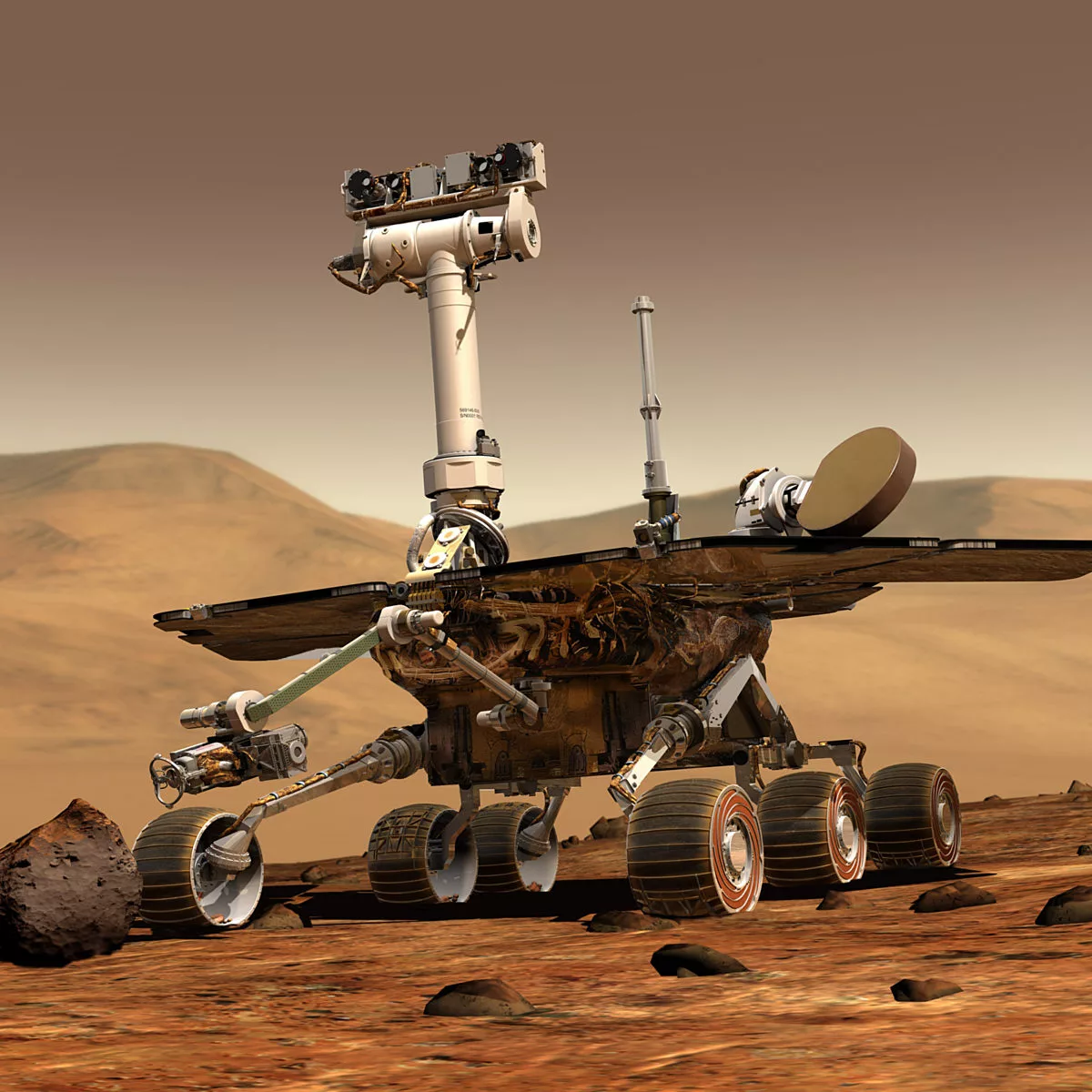
Field Report From Mars: Sol 3494 - November 21, 2013
On sol 3485 Opportunity pulled up next to a large outcrop here on the rim of Endeavour crater. The outcrop appears to be impact breccias like those we saw a few sols ago lower down on the ridge. But the texture of the rocks is somewhat different.

ISON, Encke, Mercury, and Home
Comet ISON has entered the field of view of the STEREO HI-1A camera, and, in an awesome animation, it joins a large cast of characters already present there.

Imaging results from the Chang'e 2 Toutatis flyby
There is a paper in press at Icarus by Xiaoduan Zou and five coauthors that provides the first peer-reviewed publication I've seen on the results of the imaging experiment performed during the Chang'e 2 flyby of near-Earth asteroid (4179) Toutatis.

First image from India's Mars Orbiter Mission
Here, for your enjoyment, is the first image of Earth taken by the mission's Mars Colour Camera.

Martian Maps: the North Pole
The polar plains, charted in unprecedented detail.
Comet ISON Enters the Final Countdown
We're now less than two weeks away from comet C/2012 S1 (ISON) reaching perihelion and, if we’re honest, we are still none the wiser as to how the situation might play out!

SpaceUp LA and the MAVEN Launch on Planetary Radio
Check into the latest Southern California

Features at both rover field sites on Mars named for Bruce Murray
The Jet Propulsion Laboratory announced today that the geologists on both Mars rover teams -- Opportunity and Curiosity -- have named landmarks at their field sites after the late Bruce Murray.

ARTEMIS Mission Update
ARTEMIS is a mission that retasked two probes from the 5-spacecraft Heliophysics constellation THEMIS to study the interaction of the Moon with the space plasma environment.

Curiosity Update: A stop at Cooperstown and a warm reset, sols 433-451
Having racked up several kilometers in the drive to Mount Sharp, Curiosity paused for a second science stop at an outcrop called

Just what is going on in that magnificent Cassini image of Saturn?
It took months of work (and no wonder) but the wait was worth it: here is Cassini's spectacular view of Saturn, captured on July 19, 2013, as Cassini passed through Saturn's shadow. If you're a little confused by the image, I'm here to help: I've posted a video explainer.