

 Explore Worlds
 Find Life
 Defend Earth


All
All
 Sun
Sun Mercury
 Venus
Venus Earth
Earth Mars
Mars Jupiter
 Saturn
 Uranus
 Neptune
 Small Bodies
Stories, updates, insights, and original analysis from The Planetary Society.

Did a Planetary Society citizen scientist help find one of Earth’s biggest impact craters?
Scientists have found what appears to be a 250-kilometer-wide crater near the Falkland Islands. Is it ground zero for Earth's largest-ever extinction event?

Despite setbacks, SpaceX continues to gain momentum
SpaceX lost rockets in both 2015 and 2016. But an analysis of Falcon 9 launch data shows the company continues to gain momentum, while making giant strides forward in reusability.

Space station partners weigh in on NASA’s Deep Space Gateway plans
In March, NASA officials revealed updated plans for a small space station near the Moon called the Deep Space Gateway. Anatoly Zak reports the plans threw a monkey wrench into years-long planning efforts by NASA’s international partners.

Recap: India's new GSLV-MK3 rocket completes successful test
The first operational launch of the Geostationary Satellite Launch Vehicle Mark 3 rocket, or GSLV-MK3, developed by the Indian Space Research Organization (ISRO), was successfully conducted on Monday.

Remembering planetary scientist Michael A’Hearn
Planetary scientist Michael A’Hearn passed away on Monday, May 29, leaving a remarkable legacy in cometary science—but even more importantly in the careers of many younger scientists who flourished with his encouragement and mentorship.

Announcing a New Paper on NASA's Mars Exploration Program
NASA’s robotic Mars Exploration Program is on a troubling path of decline—and decisions must be made now in order to stop it. A new report by the Society explains why.
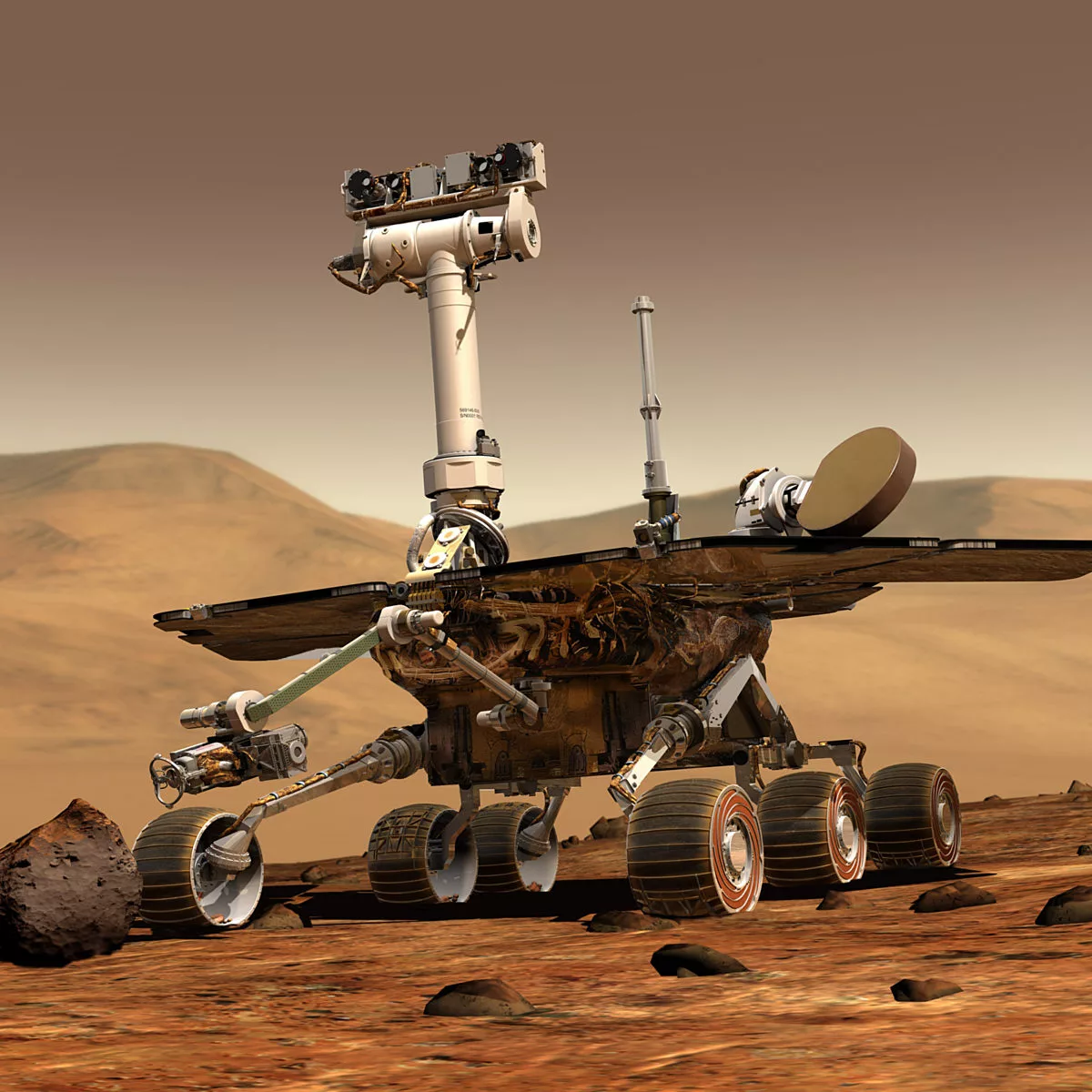
Mars Exploration Rovers Update: Opportunity Shoots the Moon on Arrival at Perseverance Valley
In another dynamic demonstration of what can be achieved when a team works together, Opportunity cruised to the top of Perseverance Valley, shot the moon, and drove into her 160th month of surface operations in May.

India enters the big league with new, powerful rocket
The countdown has begun for the first fully operational flight of the Indian Space Research Organization’s most powerful rocket to date: the Geostationary Launch Vehicle Mark 3, or GSLV-MK3.

LightSail 2 partner spacecraft ships safely to New Mexico
Georgia Tech's Prox-1 spacecraft has arrived at the Air Force Research Laboratory in Albuquerque, New Mexico, where it will be integrated with LightSail 2. The SmallSats will ride to orbit on a SpaceX Falcon Heavy rocket in December 2017 or later.

Parker Solar Probe: NASA renames upcoming mission to touch the Sun
NASA's Parker Solar Probe spacecraft will repeatedly dive through the Sun's corona, giving scientists their first-ever up-close look at our star.

Dawn Journal: Adaptations
On the other side of the solar system, invisible by virtue both of the blinding glare of the sun and by the vastness of the distance, Dawn is continuing its remarkable cosmic adventure.

The Planetary Society’s Canadian Initiative
It’s an exciting time for Canada in space. It’s also an exciting time for Canadian space advocacy, as The Planetary Society's Global Community Outreach Manager Kate Howells describes.

Pretty Pictures of the Cosmos: Waltzing Through the Universe
Award-winning astrophotographer Adam Block brings us more of his stunning images of the universe—this time of cosmic dances through space.
NASA's 2018 budget request is here, and we broke down the details
The White House's 2018 federal budget request includes $19.1 billion for NASA, which is a 3 percent drop from 2017. We broke down the details.

Orbital ATK discusses Antares rocket's future, confirms new NASA cargo mission
Company officials say they have no plans to retire Antares, which has secured its first mission order under the second round of NASA's commercial cargo flights, known as CRS-2.

Here's what you need to know about the Electron rocket, which is set to launch from New Zealand
Rocket Lab's Electron, a light-lift launcher for small satellites, is ready to make its debut test flight from a peninsula in New Zealand.
Field Report from Mars: Sol 4734
Opportunity has arrived at the head of Perseverance Valley—a possible water-cut valley.

Saturn's small satellites, to scale
Emily shares another of her popular size comparisons of solar system bodies, taking advantage of Cassini's recent views of Saturn's tiniest moons.

Cassini's 'Grand Finale' Portrait of Saturn
Amateur image processor Ian Regan shares a stunning mosaic of Saturn in all its ringed glory.

Jupiter from New Horizons
Using new image processing techniques, Alex Parker brings new life to an old image of Jupiter captured by the New Horizons mission on its way to Pluto over a decade ago.