

 Explore Worlds
 Find Life
 Defend Earth


All
All
 Sun
Sun Mercury
 Venus
Venus Earth
Earth Mars
Mars Jupiter
 Saturn
 Uranus
 Neptune
 Small Bodies
Stories, updates, insights, and original analysis from The Planetary Society.
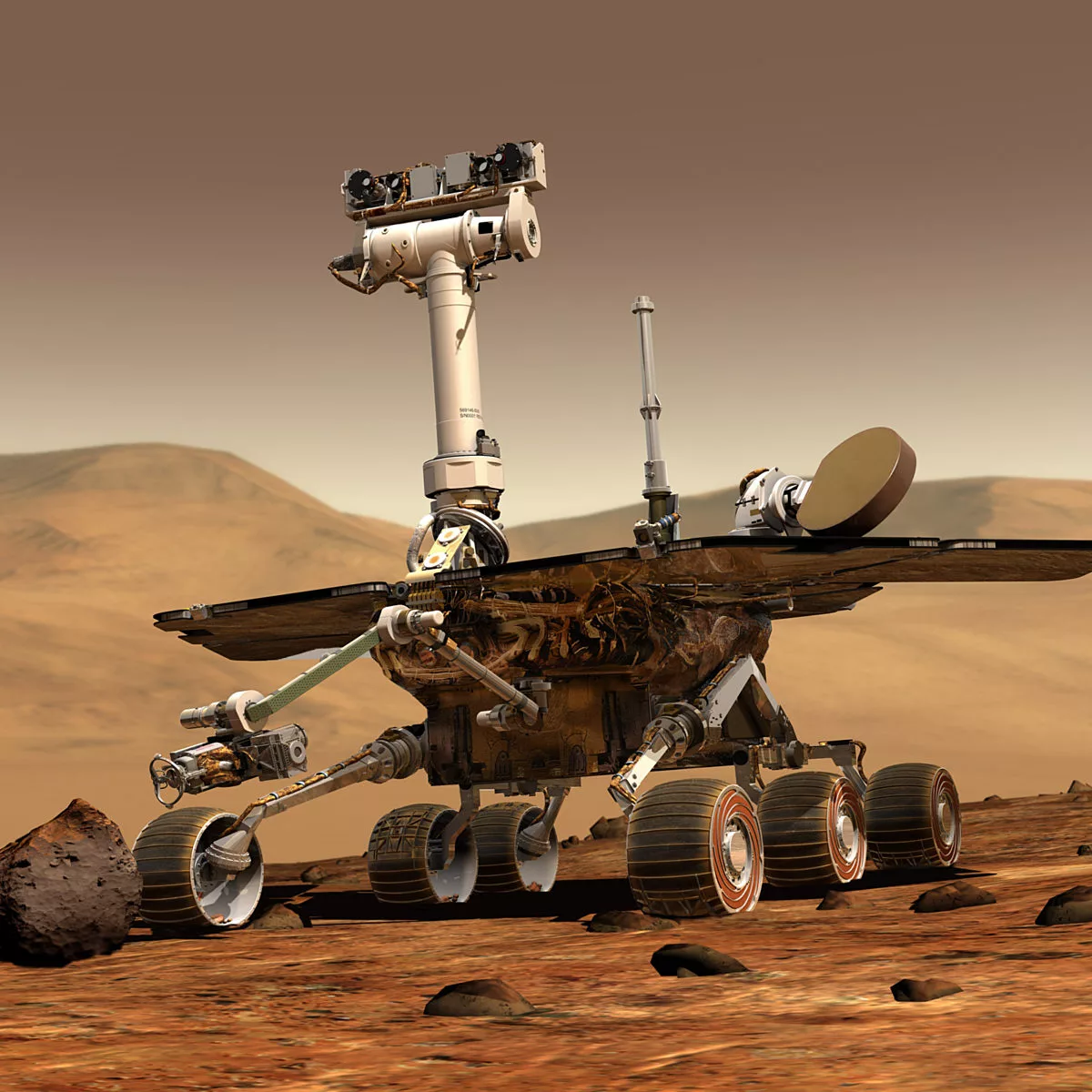
Mars Exploration Rovers Update: Opportunity Gets Extension, Returns Killer Panoramas, and Roves onto Mystery Rocks
While the winds of Martian spring blew through Meridiani Planum in September, Opportunity reformatted its Flash memory then continued exploring Wdowiak Ridge on the western rim of Endeavour Crater. Even though the Flash-related issues soon returned, the robot field geologist hardly seemed to notice as it sent home two spectacular panoramas, presented the scientists with a rocky Martian mystery, and delivered yet another September to remember for the mission. And that's not all.

Preparing for A-MAVEN Science!
How can we use MAVEN to learn about Comet Siding Spring, passing very close by Mars this month?

Mattias Malmer's amazing 3D views of Churyumov-Gerasimenko
I'm thrilled to be able to share with you all a spectacular set of images of Rosetta's comet, produced from NavCam data by a master space image processing enthusiast.

Mars Orbiter Mission activates all science instruments as NASA, ISRO form joint Mars working group
Mars Orbiter Mission (MOM) began its science activities fully on Wednesday with all five science instruments being activated. And on Tuesday, an ISRO-NASA Mars working group was formed which will

Mars Orbiter Mission delivers on promise of global views of Mars
Ever since I first learned about the capabilities of Mars Orbiter Mission's small payload of science instruments, I have been anticipating one type of data in particular: global color views of Mars captured in a single 2000-pixel-square frame. Just days after entering orbit, Mars Orbiter Mission has delivered on that promise.

Curiosity update, sols 748-763: Driving and Drilling at Pahrump Hills
The biggest news on Curiosity of late is that the rover has drilled her fourth full drill hole on Mars! Drilling happened at a site called

Brief mission update: Hayabusa2 has a launch date!
JAXA announced the launch date for their Hayabusa2 asteroid sample return mission today: November 30 at 13:24:48 Japan standard time (04:24:48 UT / November 29 at 20:24:48 PST)

Dawn Journal: 7 Years of Interplanetary Travel
Marc Rayman gives us an update on the Dawn mission, heading to Ceres, on the 7th anniversary of its launch.

Philae's landing day announced as Rosetta swings to comet's dark side
ESA announced today that Philae will be landing on November 12, 2014. What time the landing occurs depends on which landing site they use. If they go to the prime landing site,
Field Report from Mars: Sol 3790 — September 22, 2014
After a stand-down of activities to reformat its flash memory, Opportunity has re-commenced the long climb up this high and steep segment of the Endeavour crater rim.

Reflecting on the success of Mars Orbiter Mission
Mars Orbiter Mission successfully arrived at Mars on September 24, 2014, India's first interplanetary mission. What does this mean for India?

All That is Known About Bennu
The OSIRIS-REx Design Reference Asteroid (DRA) document is now available to the public. The DRA is a compilation of all that is known about the OSIRIS-REx mission target, asteroid (101955) Bennu.

MAVEN returns first images of Mars' atmosphere
On Sepember 22 at 02:24 UTC, Earth received word that MAVEN had ended its orbit insertion burn on time, completing its journey to Mars. Today MAVEN has released some of its very first data, taken by the Imaging Ultraviolet Spectrograph just eight hours after arrival.

How I will be watching Mars Orbiter Mission's arrival
Here are a few links to what will hopefully be working video feeds watching India's first-ever attempt to place a spacecraft into orbit around another planet. Begin watching in just a few hours, at 6:15 IST / 00:45 UT / 17:45 PDT for an orbit insertion burn scheduled to begin at 07:30 IST / 04:00 UT / 19:00 PDT!

A Tour of 67P...
Stuart Atkinson takes us on a stunning guided visual tour of Comet 67P/Churyumov–Gerasimenko.

Mars Orbiter Mission test firing successful; all ready for orbit insertion
There was celebration in the Mars mission control room in Bangalore on Monday following the success of the crucial four-second test firing of the Mars Orbiter Mission’s (MOM) 440-Newton liquid apogee motor. MOM will now go ahead with the nominal plan for the Mars orbit insertion on September 24 at 07:30 IST (02:00 UT / September 23 19:00 PDT).

SHARAD: Delving Deep at Mars
Some of Mars' most important secrets are hiding beneath the surface.

MAVEN orbit insertion timeline
Today's the day that MAVEN enters orbit at Mars, bringing the number of Mars orbiters up to four. So far everything looks good. The orbit insertion burn should begin tonight at 18:50 PDT / 01:50 UTC. I'll be on stage with Mat Kaplan and Rich Zurek at Planetary Radio Live, keeping up to date with the latest news from the spacecraft; here is a timeline in PDT, UTC, CEST, and IST to help you follow along.

More jets from Rosetta's comet!
Another lovely view of comet Churyumov-Gerasimenko contains jets. Bonus: Emily explains how to use a flat field to rid these glorious Rosetta NavCam images of faint stripes and specks.

Comet Siding Spring Mars encounter: One Mars Express plan becomes two
The Mars Express Flight Control Team at ESOC have been actively preparing for the flyby of comet C/2013 A1/Siding Spring on October 19. Initial estimates gave the possibility that Mars Express might be hit by 2 or 3 high-speed particles. Happily, additional observations by ground and space telescopes have shown the risk to be much lower – and perhaps even as low as zero. In today's blog post, the team explain how this (happy!) real-life, real-time development is affecting their preparations for fly-by.