

 Explore Worlds
 Find Life
 Defend Earth

All
All
 Sun
Sun Mercury
 Venus
Venus Earth
Earth Mars
Mars Jupiter
 Saturn
 Uranus
 Neptune
 Small Bodies
Stories, updates, insights, and original analysis from The Planetary Society.

Pretty Pictures of the Cosmos: Life and Death in the Universe
Astrophotographer Adam Block brings us images showcasing the evolutionary cycles in our universe.

New views of three worlds: Ceres, Pluto, and Charon
New Horizons took its first color photo of Pluto and Charon, while Dawn obtained a 20-frame animation looking down on the north pole of a crescent Ceres.

Shoemaker NEO Grant Winners Announced: Saving the World
The six winners of the 2015 Shoemaker NEO Grants will use the grants to upgrade their observatories to improve their abilities to study potentially dangerous asteroids.

Artist's Drive: A Sol 950 Colorized Postcard
Amateur image processor Damia Bouic shares the process behind creating stunning panoramas with Curiosity images.

PROCYON update: Asteroid 2000 DP107 target selected, ion engine stopped
PROCYON (PRoximate Object Close flYby with Optical Navigation) is a microsatellite that launched on December 3 as a secondary payload with Hayabusa2. The mission has now selected their asteroid flyby target -- a binary asteroid named 2000 DP107 -- but is reporting a problem with their ion engines.

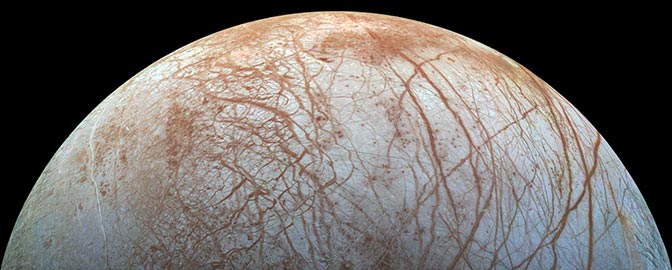
NASA's Mission to Europa May Get More Interesting Still
NASA officials have asked their European counterparts if they would like to propose contributing a small probe to NASA's Europa mission planned for the mid-2020s.

Curiosity update, sols 896-949: Telegraph Peak, Garden City, and concern about the drill
Since I last wrote about Curiosity drilling at Pink Cliffs, the rover has visited and studied two major sites, drilling at one of them. It has also suffered a short in the drill percussion mechanism that presents serious enough risk to warrant a moratorium on drill use until engineers develop a plan to continue to operate it safely.

Field Report from Mars: Sol 3978 - April 3, 2015
Larry Crumpler gives an update on Opportunity's exploration of Mars as it approaches the entrance to Marathon Valley.

A moon with atmosphere
What is the solar system moon with the densest atmosphere? Most space fans know that the answer is Titan. A few of you might know that Triton's is the next densest. But what's the third? Fourth? Do any other moons even have atmospheres? In fact, they do; and one such atmosphere has just been discovered.

Mars, In Depth
See the latest three-dimensional landscapes captured by the Mars Reconnaissance Orbiter.

Pretty Cassini pictures: animation of Iapetus' north pole, and other fun
Now that Cassini has returned to Saturn's equatorial plane, it has lots of opportunities to observe Saturn's moons. For about a week, Cassini has been taking regular sets of images of Iapetus, which I've assembled into an animation.

A New Path to Mars?
A new advocacy initiative for the Society: let's get humans to Mars.

OSIRIS-REx Begins ATLO (Assembly, Test, and Launch Operations)
The OSIRIS-REx mission passed another major milestone. We now have approval to build the spacecraft.

Mars Exploration Rovers Update: Opportunity Finishes First Marathon on Another Planet and Roves On
On March 24, 2015, after spending several weeks investigating some new rock types along the western rim of Endeavour Crater, Opportunity roved past 42.2 kilometers (26.2 miles) and put the first off-Earth marathon in her rear view mirror, driving the Mars Exploration Rovers mission back into the space history books.

The Lunar Chronology: What Happens When Science Does Its Thing
Scientist Stuart Robbins discusses dating the lunar surface is using impact craters.

Dawn Journal: Preparing to Photograph Ceres
Dawn's Chief Engineer and Mission Director, Marc Rayman, explains why we haven't seen any new images of Ceres—and when we can expect them.

Revitalized 0.81m telescope studying properties of NEOs
Thanks to a new focal reducer and re-aluminized mirror from a Shoemaker NEO grant, a 0.81-meter telescope in Italy is performing astrometric follow-up observations and physical studies of asteroids.
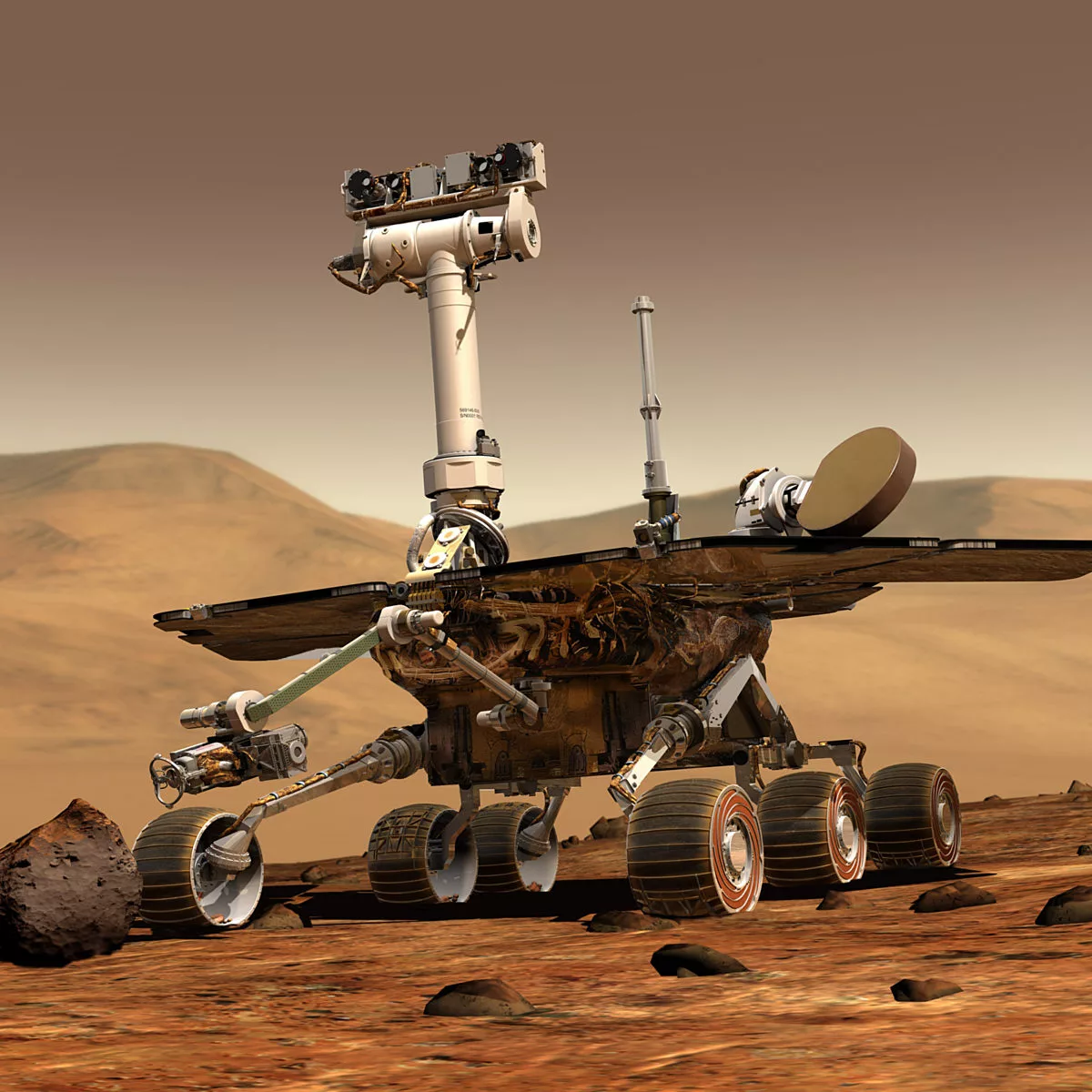
Field Report from Mars: Sol 3971 - March 26, 2015
Opportunity reaches a marathon milestone—in more ways than one. Larry Crumpler reports on the current status of the seemingly unstoppable Mars rover.

Ceres Gets Real; Pluto Lurks
Although we are still along way from understanding this fascinating little body, Ceres is finally becoming a real planet with recognizable features! And that's kinda cool.

LPSC 2015: Aeolian Processes on Mars and Titan
Planetary scientist Nathan Bridges reports on results from the Lunar and Planetary Science Conference about the action of wind on the surfaces of Mars and Titan.