

 Explore Worlds
 Find Life
 Defend Earth

All
All
 Sun
Sun Mercury
 Venus
Venus Earth
Earth Mars
Mars Jupiter
 Saturn
 Uranus
 Neptune
 Small Bodies
Stories, updates, insights, and original analysis from The Planetary Society.

A Sunset on Mars: Crafting a scene from archival data
Ever wanted to stand on Mars and watch a sunset? Unfortunately for many of us, it will never be something that we get to experience in person. But thanks to our robotic emissaries on Mars, and some careful processing of images from NASA's Planetary Data System, we can get a sense of what it’s like.

Mars Express VMC is back online
Mars Express' Visual Monitoring Camera is taking photos again! The camera was turned on for the first time in six months on Leap Day to take some lovely photos of Mars.

Continuing the Hunt for Exoplanets
Meg Schwamb highlights some of the upcoming space-based missions that will search for planets beyond our solar system.

Mars Exploration Rovers Update: Opportunity Scales Knudsen Ridge and Rocks On
As the Martian winter slowly begins to recede, Opportunity is working away on the steep slopes of Knudsen Ridge at the southern end of Marathon Valley, showing her mettle in some of the most challenging terrain of the rover’s 12+ years on the Red Planet.

MENCA brings divine wealth from Mars: First science results from the Mars Orbiter Mission
MENCA (Mars Exospheric Neutral Composition Analyser) is a quadrupole mass spectrometer onboard India's Mars Orbiter Mission, MOM. A report on measurements of neutral species accepted for publication in Geophysical Research Letters is the first peer-reviewed scientific result from the mission.

Dawn Journal: Success at Ceres
More than eight years after leaving Earth behind for an ambitious deep space adventure, the Dawn mission has now collected all of the data originally planned. Chief Engineer and Mission Director Marc Rayman brings us an update.

Atlanta Students Bring Mars to Earth
A group of students from Georgia, USA, were able to explore Mars through the Mars Express #VMCschools campaign, with a little help from The Planetary Society's image processing tutorials.

Pretty pictures: Cassini views of Titan's poles (with bonus Enceladus)
Image processing enthusiast Ian Regan produced a pretty view of Titan's lake-filled north pole, now visible to Cassini's cameras in the summer sun.

UPDATED: ESA activates a new old space camera
Inspired by the Mars Webcam on Mars Express, ESA's Cluster mission has turned on a camera on the Cluster spacecraft for the first time since their launch more than 15 years ago. UPDATE: It has now acquired images of Earth.

Light plays on a Martian crater rim
Recently, space image processing enthusiast Thomas Appéré noticed that Curiosity had taken five photos of exactly the same spot on the rim of Gale crater, identical but for being taken at different times of day. That spot was due north of the rover, so the rising and lowering Sun illuminates the rounded hummocks of the crater rim differently from early morning to early afternoon.
Field Report From Mars: Sol 4284 - February 11, 2016
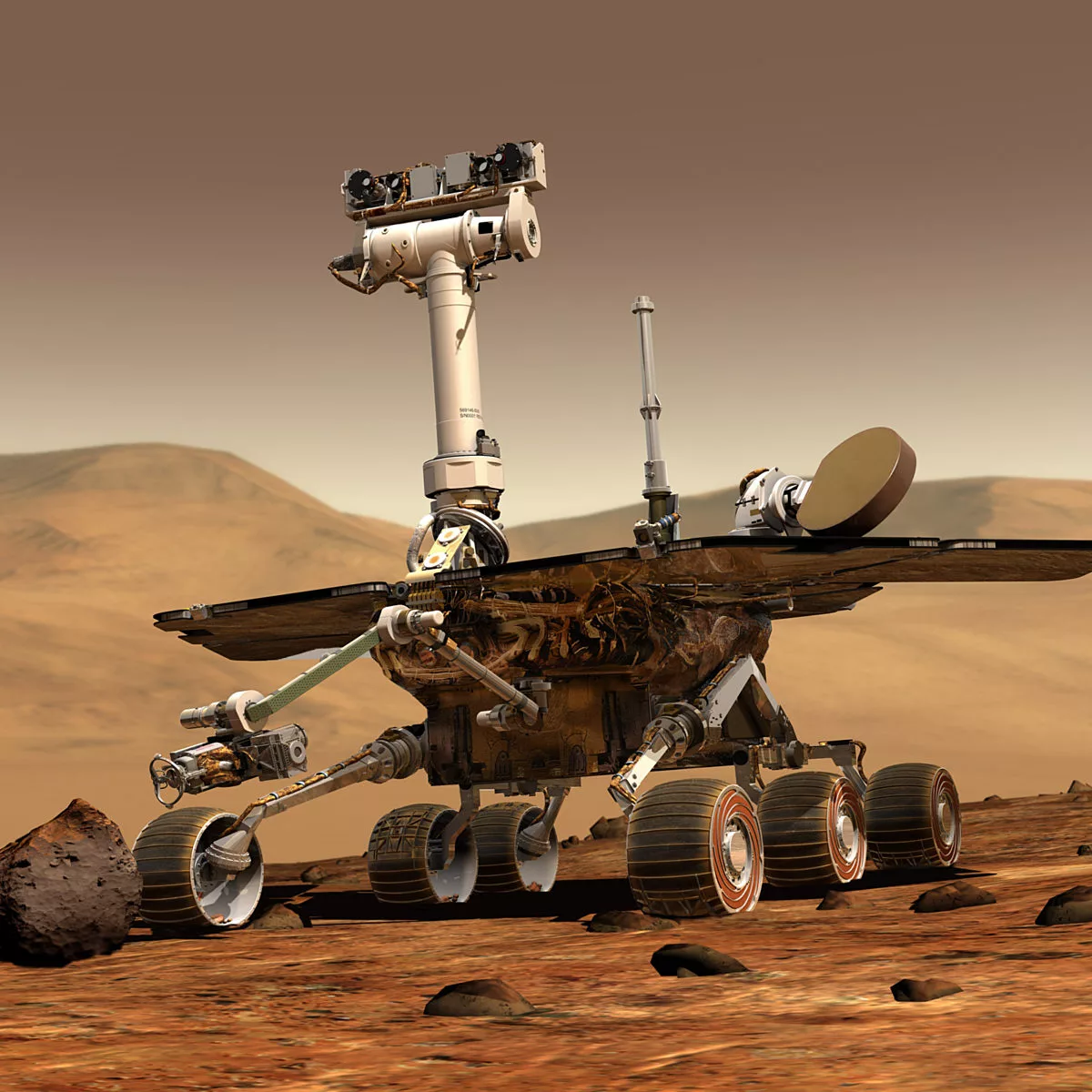
Opportunity is continuing to explore the outcrops Marathon Valley, on the west rim of Endeavour crater.

Curiosity update, sols 1218-1249: Digging in the sand at Bagnold Dunes
Curiosity has spent the last month sampling and processing dark sand scooped from the side of Namib Dune. The rover has now departed Namib and is preparing to cross the Bagnold dune field, while working to diagnose an anomaly with the CHIMRA sample handling mechanism.

HiRISE image coverage of the Curiosity field site on Mars, Version 3.0
There have been tons and tons of HiRISE images of the Curiosity landing region, and it has taken quite a lot of work for me to find, locate, and catalogue them. This post is a summary of what I've found; after five revisions and updates, it's now version 3.0 of the list.

Three Things to Look for in NASA’s Coming Budget Request
The 2017 budget season is almost here. Next week, the White House will release its budget request for NASA. Here are three things I will immediately look for upon its release.
Mars Exploration Rovers Update: Opportunity Turns 12! Embarks on Electric Slide
On January 24th, the veteran Mars Exploration Rover (MER) wrapped the last day of her 12th year of surface operations on Mars, marking an extraordinary, historic achievement for the Mars Exploration Rovers (MER) mission.

30th anniversary images of Uranian moons
January 24 was the 30th anniversary of the Voyager flyby of Uranus. Uranian moons have been on my mind ever since New Horizons sent us close-up images of Charon. On the occasion of the anniversary, Ted Stryk produced latest-and-greatest versions of the Voyager views of these worlds.

Dawn Journal: Measuring Light
Chief Engineer and Mission Director Marc Rayman explains some of the measurements the Dawn mission is taking at Ceres, most of which depend on sunlight.
Field Report From Mars: Sol 4270 - January 28, 2016
On January 23rd, Opportunity celebrated its 12th anniversary of landing on Mars.

Fun with a new data set: Chang'e 3 lander and Yutu rover camera data
Here, for the first time in a format easily accessible to the public, are hundreds and hundreds of science-quality images from the Chang'e 3 lander and Yutu rover.

Wide views of Mars from Mars Express
Geologist and amateur space image processor Justin Cowart has dug into the Mars Express archives and located some lovely, wide views across great swaths of the Martian globe.