

 Explore Worlds
 Find Life
 Defend Earth


An insider's look at the Nancy Grace Roman Space Telescope
What to expect from NASA’s next great observatory


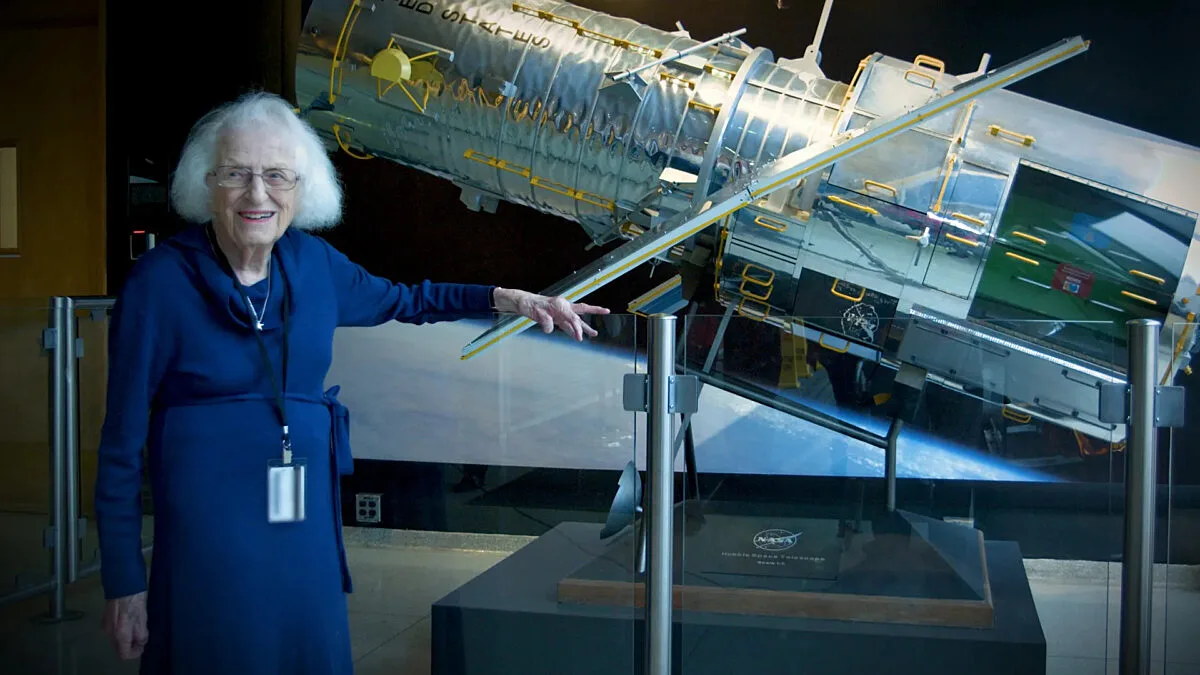
In 1959, Nancy Grace Roman became the first chief of astronomy at NASA. She worked tirelessly to advocate for space telescopes to study the Universe. Her leadership and perseverance paid off with some of NASA’s greatest achievements, including telescopes like the Hubble Space Telescope (HST) and the James Webb Space Telescope (JWST). Dr. Roman’s legacy is now firmly cemented by NASA’s newest flagship space telescope, the Nancy Grace Roman Space Telescope.
Roman, as those of us working on the telescope call it, is poised to make transformative discoveries across huge swaths of the astrophysics landscape. The telescope’s 2.4-meter primary mirror (the same size as the primary mirror on HST) is relatively modest compared to the standard set by JWST’s 6.5-meter mirror. What makes Roman unique are its two instruments.
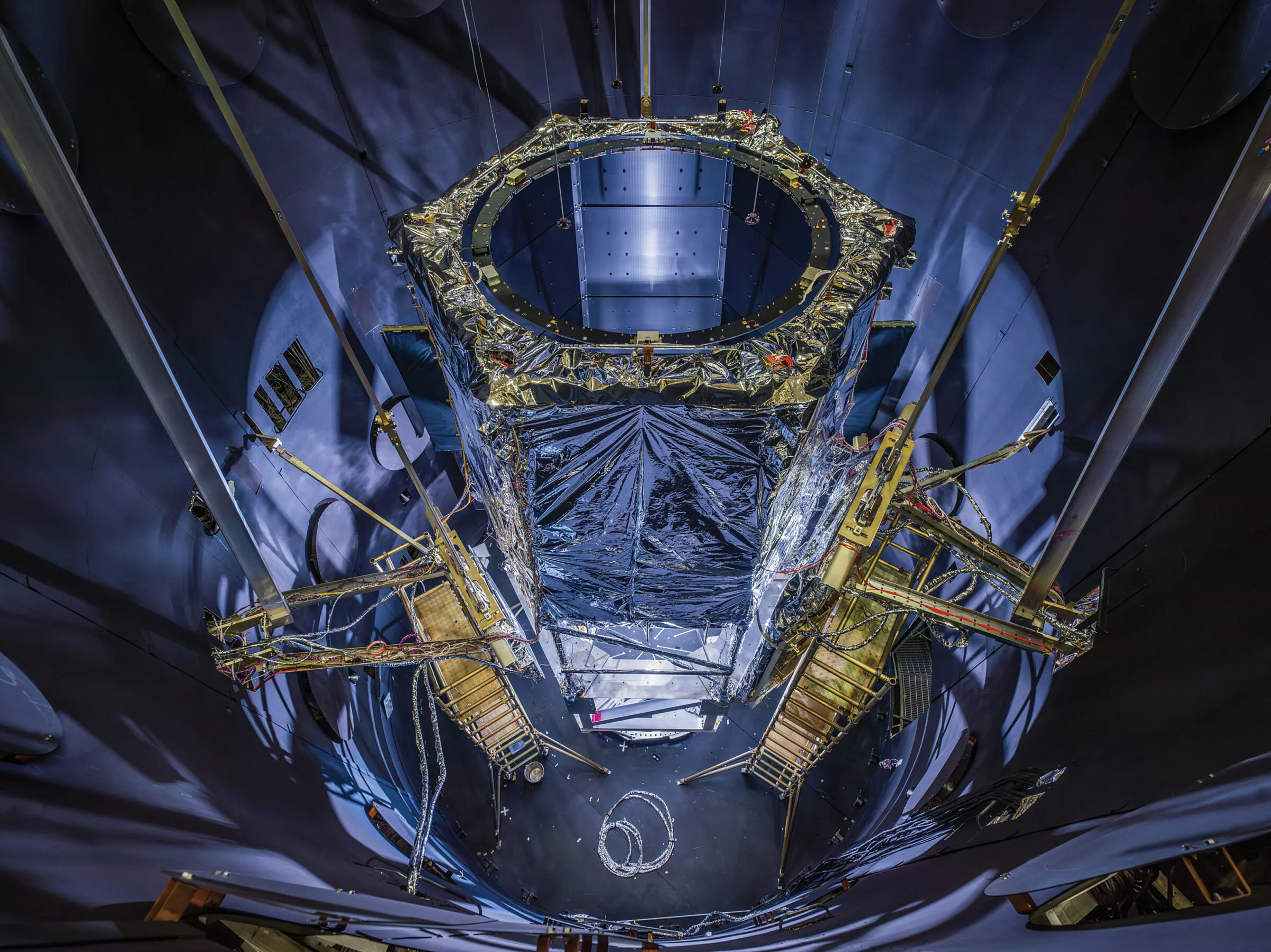
Roman’s science instrument is the Wide Field Instrument (WFI), a camera that can take optical and near-infrared images and spectra. The WFI contains 300 million pixels and will see an area of the sky about 100 times larger than the cameras on HST or JWST. The second instrument, the Roman Coronagraph Instrument, is designed to demonstrate the technology used to block starlight to directly image exoplanets orbiting nearby stars. As the Jet Propulsion Laboratory’s project scientist for Roman for the past 11 years, I am personally excited about both of these amazing tools. It has been my privilege to help push the coronagraph instrument through design, build, and delivery, and the WFI will allow me to push forward my own research in ways I have been dreaming about for over two decades.

From its position at the Earth-Sun Lagrange point 2 (L2), about 1.5 million kilometers (over 900,000 miles) from Earth, Roman will be thermally stable and able to make observations nearly 100% of the time. The WFI’s field of view and L2 orbit combine to make Roman about 1,000 times as fast as HST in surveying the sky. Likewise, thermal stability and new coronagraph technologies will provide greater than a 100-fold improvement in Roman’s ability to see faint exoplanets compared to HST and JWST.
Roman’s impressive new coronagraph technologies include silver-dollar-size deformable mirrors with thousands of pistons that allow the mirror’s shape to be modified to correct for telescope imperfections, as well as detectors that can count single photons. The WFI will have the largest number of near-infrared pixels ever flown on a space telescope, and the grand-piano-size Roman coronagraph is the most complex instrument ever built at NASA’s Jet Propulsion Laboratory. Despite the complexities of these instruments and the challenge of marrying them to a large telescope and getting everything tested and ready to fly into space, the Roman project, managed by NASA’s Goddard Space Flight Center, has another achievement to be proud of: staying on budget and on schedule. Its launch was even moved up by over half a year, with the launch window now opening on Aug. 30, 2026. I expect that Roman may be safely on its way to L2 by the time you read this article!
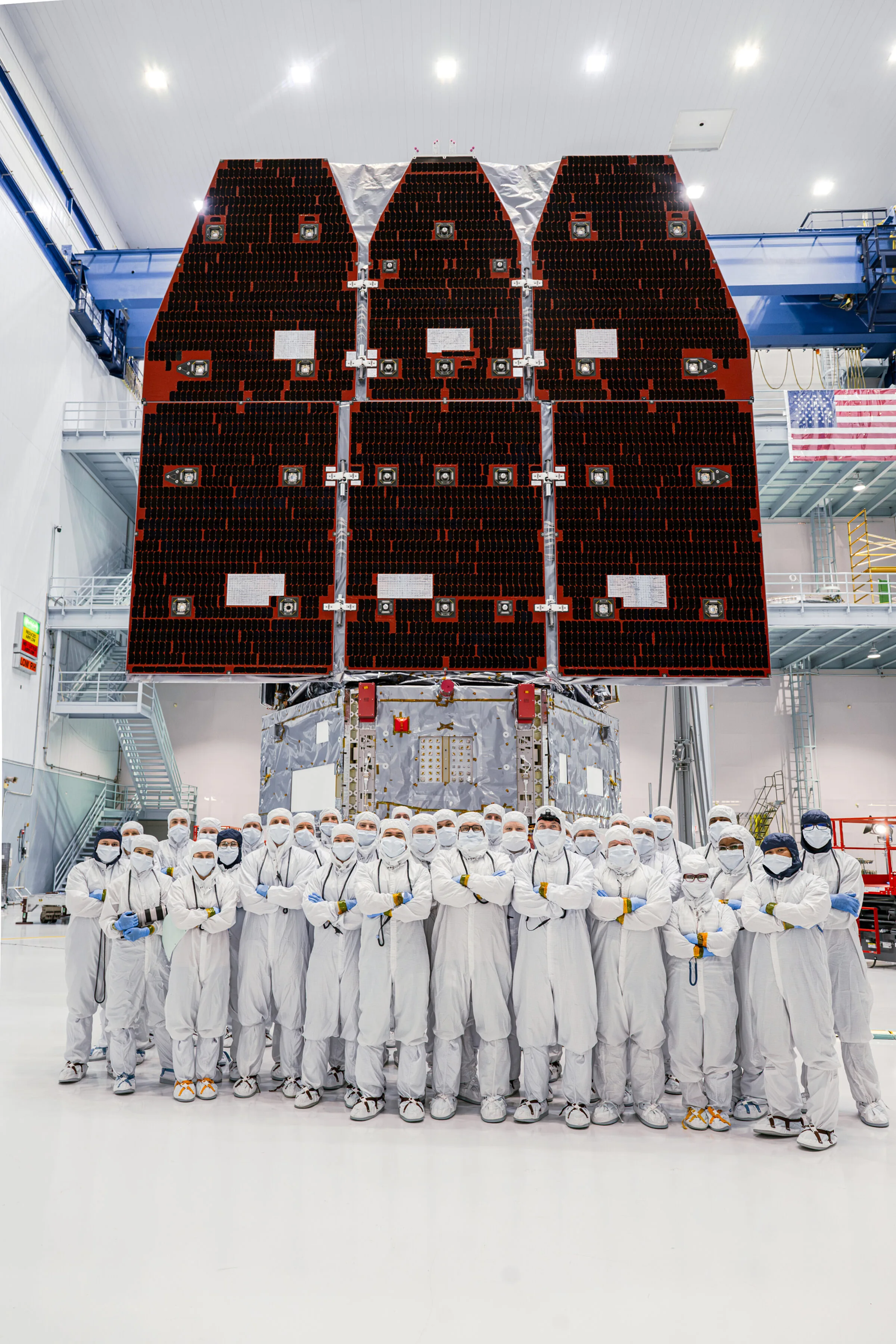
Roman comes with many science goals that will make use of its enormous field of view and advanced coronagraph. A primary driver for Roman is the study of dark energy. Despite being the dominant component of our Universe that drives its accelerating expansion, dark energy remains poorly understood. Roman will conduct surveys to study this mysterious force using three separate techniques: weak gravitational lensing, whereby foreground matter warps the observed shapes of background galaxies, allowing us to map out how cosmic structures evolve over time; the clustering of galaxies over cosmic time; and using a certain type of exploding star (so-called supernova Ia) as a “standard candle” to measure the expansion history of the Universe. Dark energy is my own area of expertise, and I am excited to see the gains Roman’s multipronged approach will make in this quickly evolving field alongside the European Space Agency’s Euclid mission, the National Science Foundation/Department of Energy Vera C. Rubin Observatory, and NASA’s SPHEREx space telescope. Roman’s WFI will also perform an extensive survey of the plane of our Milky Way galaxy, including a much deeper study of the center of the galaxy, which is densely packed with stars. These surveys will be complemented by coronagraph studies of nearby stellar systems, enabling more detailed studies of their planets and disks of asteroid and cometlike debris.
Additionally, 25% of Roman’s time will be made available for competitively selected surveys defined by the worldwide astronomy community. (Let us know if you have ideas!) Best of all, data taken by Roman will be accessible to anyone in the world as soon as it is processed. Anyone can download and work with Roman images and spectra.
Of particular interest to readers of The Planetary Report will be the ability of Roman to transform the study of exoplanets, planets outside our own Solar System. Since the discovery of the first exoplanets in the mid-1990s, the study of exoplanets has gone from a niche area to one of the most vibrant and fast-moving fields in astrophysics. The pace of exoplanet discovery has been driven in large part by new instruments and new telescopes, most notably NASA’s Kepler (launched 2009) and Transiting Exoplanet Survey Satellite (TESS, launched 2018), which together are responsible for more than half of the known exoplanets. Most of the exoplanets discovered by TESS and Kepler were found via the “transit” method, whereby the exoplanet passes in front of the star from our perspective and causes that star’s light to briefly dim. This technique is most sensitive to large planets (think Jupiter) and those close to the star (with orbital periods of days rather than years). This means that if an alien race were observing our Solar System from across the galaxy using only the transit method, they would miss discovering most of the planets, including Earth.
While Roman will observe exoplanet transits, it aims to address the detection gap by using an additional technique: microlensing. When one star passes in front of another, the foreground star acts as a lens, briefly magnifying the light of the background star. When the foreground star has a planet, that orbiting world causes a secondary smaller magnification. In some cases where there is no foreground star, a planet can cause microlensing of the background star anyway. We call these planets that are not bound to stars “rogue planets.” Trillions of these are thought to exist in our Milky Way galaxy alone. Microlensing is good at finding planets that are small or orbit far from their star (or are not orbiting a star at all in the case of rogue planets), making it an excellent way to survey planets big and small, near and far from their stars. With both microlensing and transit detection capabilities, Roman is expected to discover over 100,000 planets, enormously expanding the list of known exoplanets, which currently stands at around 6,000. These surveys will answer fundamental questions about planet formation and reveal the prevalence of planets like those in our Solar System, including Earth-like planets in the so-called “habitable zone” where liquid water can exist.
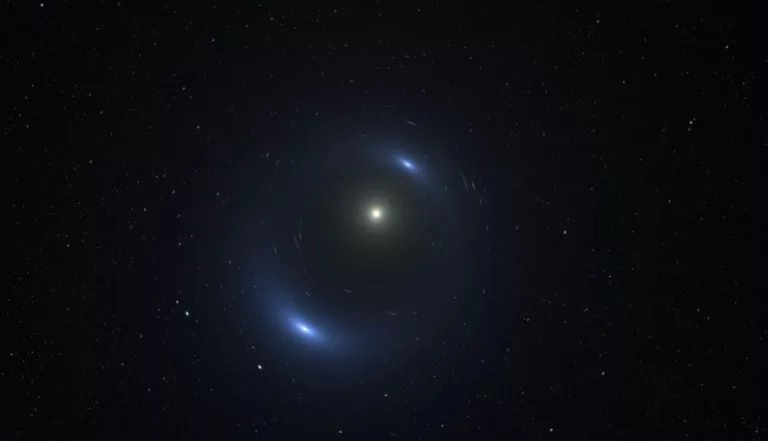
Roman will go a step beyond finding exoplanets — it will actually demonstrate the technologies needed to directly image these distant worlds. Most exoplanet detection techniques are indirect. We look for the dimming of a star (transits), the brightening of a star (microlensing), or even the wobble of a star (a method called radial velocities).
This tells us that a planet is there without actually observing the planet directly. To take images or spectra of exoplanets themselves, we must block out the bright light coming from the planet’s host star to allow the much fainter planet light to come through. Roman’s coronagraph will do just that, allowing the telescope to take reflected-light images of cold, Jupiter-like planets around Sun-like stars for the first time. Crucially, the technologies being tested on Roman’s coronagraph are precursors for a future coronagraph that could fly on NASA’s Habitable Worlds Observatory (HWO), which is currently in its mission concept phase. With a larger, more stable telescope, HWO would use the technologies developed and demonstrated by Roman to look for signs of life on a few dozen Earth-like planets around Sun-like stars. Thus, in addition to answering fundamental questions about the contents of the Universe, the formation and prevalence of planets, and the makeup of our Milky Way galaxy, Roman is a key stepping stone in NASA’s greatest quest: answering the age-old question, “Are we alone?”
You Power the Next Great Discovery!
Fund future scientific research that advances space science and exploration with your gift today.
Donate
The Planetary Report • September Equinox
Help advance space science and exploration! Become a member of The Planetary Society and you'll receive the full PDF and print versions of The Planetary Report.